Understanding the Medicine-Pediatrics Interview Landscape as an IMG
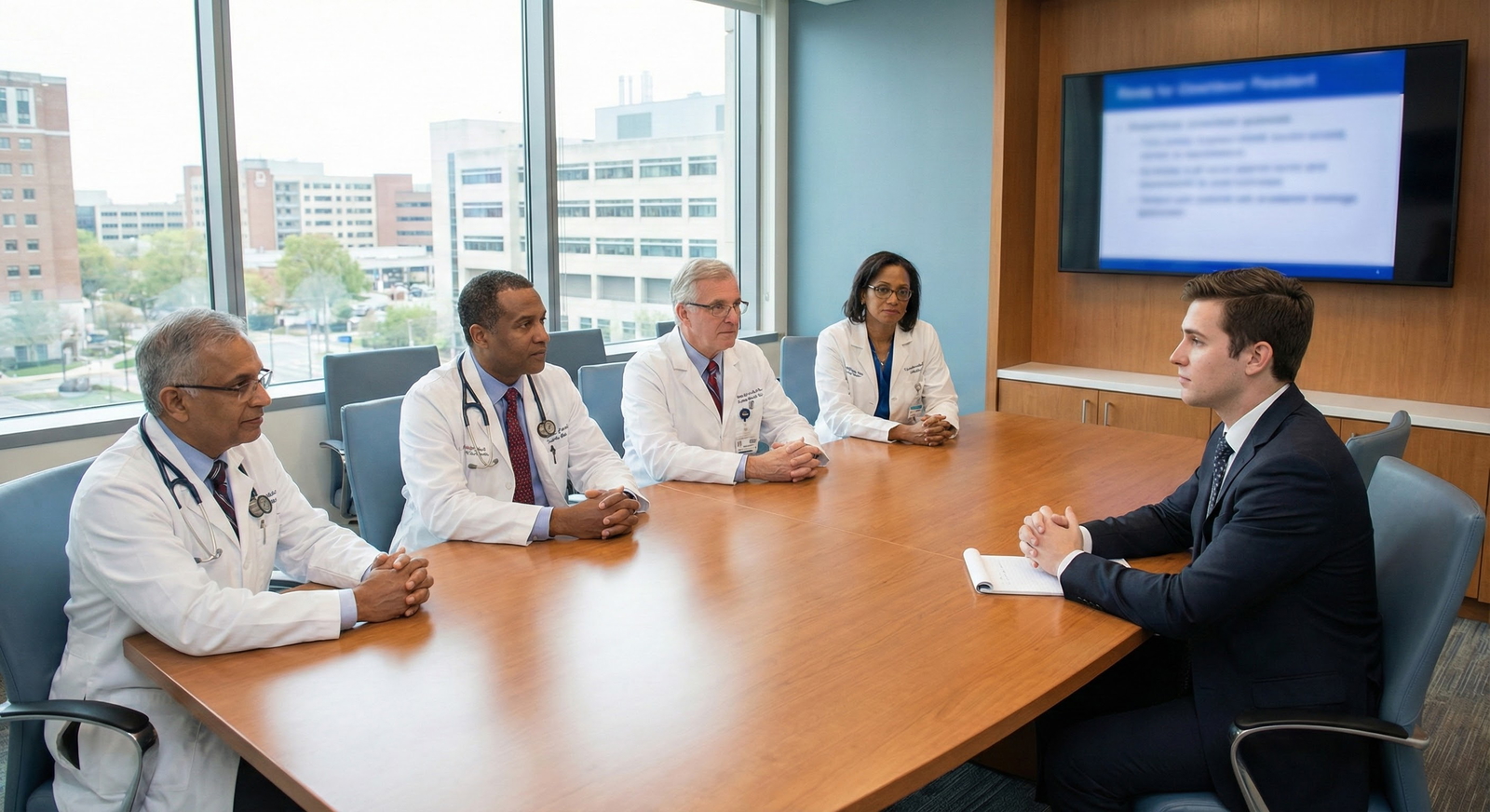
Medicine-Pediatrics (Med-Peds) residency is uniquely demanding and uniquely rewarding. As an international medical graduate, you’re often competing not only with US graduates but also with IMGs who may already have US clinical experience and strong networks. Thorough pre-interview preparation is the factor most within your control—and it can dramatically influence how programs perceive you.
Med-Peds programs are looking for applicants who:
- Are genuinely committed to both internal medicine and pediatrics
- Understand the identity and scope of Med-Peds as a specialty
- Demonstrate adaptability, cultural competence, and resilience
- Communicate clearly and work well on multidisciplinary teams
- Show potential to become leaders, educators, or advocates for vulnerable populations
As an IMG, you must also be prepared to address:
- Your pathway to the US system
- Gaps after graduation or between experiences
- Visa needs and long-term career goals in the US
- Differences in healthcare systems and how you’ve adapted
This article is designed as a practical IMG residency guide specifically for the medicine pediatrics match, with a focus on how to prepare for interviews long before you log into Zoom or walk into a conference room.
Step 1: Clarify Your Med-Peds Story and Career Vision
Before you start any formal residency interview preparation, you need a coherent, authentic narrative—especially important for an IMG applying to Med-Peds.
A. Understand What Makes Med-Peds Distinct
You should be able to explain, in 1–2 minutes, what Med-Peds is and why you chose it over:
- Categorical Internal Medicine
- Categorical Pediatrics
- Family Medicine
Core talking points to internalize (and personalize):
- Med-Peds provides full dual training in internal medicine and pediatrics (not a compromise between them).
- Graduates can practice both adult and pediatric medicine, often in underserved communities, complex care, transition clinics, or academic settings.
- The specialty emphasizes lifespan care, management of complex chronic conditions, and smooth transition from pediatric to adult care.
Action item:
Write a short paragraph answering:
“Why Med-Peds and not Internal Medicine, Pediatrics, or Family Medicine?” Then refine it into a 3–4 sentence spoken response.
B. Build Your Personal Med-Peds Narrative
As an IMG, you need to connect your background, experiences, and goals to Med-Peds in a way that feels logical and compelling.
Consider these prompts:
- A patient encounter that showed you the need for lifelong continuity of care
- Experiences with adolescents transitioning to adult care in your home country
- Exposure to both adult and pediatric medicine where you enjoyed the breadth and complexity
- Roles where you worked with families, not just individuals
Turn these reflections into a concise story you can use to answer:
- “Tell me about yourself.”
- “Why Med-Peds?”
- “Walk me through your journey from [home country] to applying in the US.”
Example structure:
- Background: Medical school, country, key clinical interests
- Trigger: A formative experience that highlighted Med-Peds-style thinking
- Exploration: How you sought dual exposure (rotations, electives, reading, mentors)
- Decision: Why you committed to Med-Peds and what you aim to do with the training
C. Connect Your Long-Term Goals to Med-Peds
Interviewers will ask about your future plans. Have a realistic, specific vision:
- “I’m interested in primary care for complex patients across the lifespan, especially in underserved communities.”
- “I see myself in academic Med-Peds, focusing on medical education and transitions of care for youth with chronic illness.”
- “I may pursue a fellowship, such as infectious disease or hospital medicine, but want a dual-trained perspective to care for young adults with complex conditions.”
Avoid sounding unsure or vague (“I don’t know, maybe hospitalist, maybe something else”). It’s okay not to be 100% certain, but show you’ve thought deeply about possibilities, especially those that fit Med-Peds.

Step 2: Systematic Program Research for Med-Peds IMGs
An essential part of pre-interview preparation is thorough research. For Med-Peds specifically, you must understand not only the program but also how its IM and Peds components integrate.
A. Create a Structured Research Template
Use a spreadsheet or document to record key data for each program. Suggested columns:
- Program name & location
- Program size (number of residents per year)
- Affiliated hospitals (adult + children’s)
- Unique Med-Peds features (transition clinic, global health, underserved care)
- Tracks & opportunities (primary care, hospitalist, research, advocacy)
- IMG friendliness (past IMGs in current residents list)
- Visa support (J-1, H-1B; check official info or ask at interview)
- Notable faculty or Med-Peds leaders
- Points you genuinely like about the program
- Questions to ask the program director, faculty, residents
This will help tailor your responses and your questions during the interview.
B. Study the Med-Peds Identity of Each Program
For each program, look for:
- Med-Peds continuity clinic structure (adult, pediatric, combined, or alternating)
- Dedicated Med-Peds rotations (transition clinic, combined wards, special electives)
- Integration with Internal Medicine and Pediatrics categorical programs
- Community vs tertiary care focus
Action item:
For every program you interview with, prepare a 2–3 sentence answer to:
“What specifically interests you about our Med-Peds program?”
Example:
“Your strong emphasis on transition-of-care for adolescents with chronic illness is very attractive to me, especially your combined Med-Peds clinic. I also value the opportunity to train at both [Adult Hospital] and [Children’s Hospital], which aligns with my goal of caring for complex patients across the lifespan in an academic setting.”
C. Evaluate IMG-Friendliness and Visa Reality
As an international medical graduate, part of your pre-interview preparation is understanding what’s realistic:
- Check if current residents include IMGs, particularly in Med-Peds.
- Review past NRMP data and program websites for explicit statements about IMGs.
- Note visa policies (from websites or email communication)—this will guide your questions.
You don’t want to make visa status the focus of your interview, but you should be ready to discuss it clearly and confidently when appropriate.
Step 3: Mastering Common Residency Interview Questions (Med-Peds & IMG-Focused)
Most programs will cover a similar set of core interview questions. For an IMG residency guide in Med-Peds, you should focus on both universal and IMG-specific angles.
A. Core General Questions
Common interview questions residency programs ask include:
- “Tell me about yourself.”
- “Why Medicine-Pediatrics?”
- “What are your strengths and weaknesses?”
- “Tell me about a challenging patient case.”
- “Describe a time you had a conflict on the team and how you handled it.”
- “How do you handle stress and burnout?”
- “Where do you see yourself in 5–10 years?”
For each, develop a structured answer:
- Use the STAR method (Situation, Task, Action, Result) for behavioral questions.
- Keep answers 2–3 minutes, focused, and with clear learning points.
Example (conflict question, abbreviated):
- Situation: “As an intern on a busy ward, the senior and I disagreed on the timing of discharging a complex pediatric patient…”
- Task: “My responsibility was to advocate for safe discharge while maintaining team cohesion.”
- Action: “I calmly presented my concerns with specific data, invited input from the nurse and social worker, and proposed a follow-up plan…”
- Result: “We agreed to delay discharge by 24 hours, arranged home support, and avoided a likely readmission. I learned how structured communication can resolve disagreement while protecting patient safety.”
B. Med-Peds-Specific Questions
Programs will test your understanding of the specialty and your fit:
- “Why did you choose Med-Peds instead of Internal Medicine or Pediatrics alone?”
- “What type of patients do you see yourself caring for in the future?”
- “How do you think your background will contribute to a Med-Peds residency class?”
- “Have you worked with adolescent or transition-age patients before?”
- “How do you stay current in both adult and pediatric medicine?”
Prepare examples from your clinical experiences that show:
- Comfort with complex patients
- Interest in lifespan care
- Insight into developmental differences between children and adults
C. IMG-Focused and Gap/Pathway Questions
As an IMG, anticipate questions such as:
- “Why did you decide to pursue residency in the US?”
- “How did you adapt from your home healthcare system to the US system?”
- “Can you explain the gap between graduation and this application cycle?”
- “What challenges have you faced as an international medical graduate?”
Your responses should:
- Avoid defensiveness or excessive apologies
- Emphasize growth, resilience, and proactive learning
- Clarify briefly and honestly (for gaps: exams, research, family, health, etc.)
Example (gap explanation):
“I graduated in 2020, and after that, I spent one year primarily focused on preparing for USMLE exams while working part-time in a clinical position in my home country. I then did two US clinical electives and participated in research in pediatric infectious diseases. This period helped me transition academically and clinically toward US training.”
D. Challenging or Ethical Scenarios
Programs may probe your ethical reasoning and professionalism:
- “Tell me about a time you made a mistake.”
- “Describe an ethical dilemma you encountered in clinical practice.”
- “How would you handle suspected child abuse or neglect?”
- “What would you do if you strongly disagree with an attending’s management plan?”
Prepare 2–3 sincere examples demonstrating:
- Honesty and accountability
- Patient-centered decision-making
- Respectful communication across hierarchy
- Cultural sensitivity, especially for issues involving families and children

Step 4: Practical Skills: Mock Interviews, Communication, and Cultural Nuances
Knowing how to prepare for interviews on paper is not enough; you must practice out loud, especially if English is not your first language or if you are new to US communication styles.
A. Conduct Structured Mock Interviews
Aim for at least 3–5 full mock interviews before your first real one.
Options:
- Senior residents or attendings you know from US rotations
- Faculty mentors from home or US institutions
- Friends also applying for residency (rotate interviewer/interviewee roles)
- Online services or IMG support organizations
Simulate the real experience:
- Wear your interview outfit
- Use the same video platform (Zoom, Teams, etc.)
- Sit in your planned interview setting
- Record the session (with permission) and review body language, clarity, and filler words
Focus on:
- Clear, concise answers
- Logical structure (beginning–middle–end)
- American-style professionalism: direct but polite, warm but not overly casual
B. Refine Your English and Medical Communication
Even with strong clinical knowledge, communication style matters greatly in the medicine pediatrics match.
Practical steps:
- Practice explaining clinical cases in English to friends or mentors.
- Read aloud from medical journals or Med-Peds blogs to strengthen fluency.
- Record yourself answering “Tell me about yourself” and “Why Med-Peds?”—listen for speed, clarity, and accent comprehensibility.
Focus on:
- Slowing down intentionally, especially when you’re nervous
- Enunciating medical terms (e.g., “bronchiolitis,” “hypertension,” “gastroenteritis”)
- Using patient-friendly analogies when describing experiences
C. Understand US Professional Norms and Small Talk
Residency interviews often include informal conversation with residents or faculty. Being comfortable with this makes you appear more integrated and team-ready.
Practice:
- Short small talk about: hobbies, weather, sports, city life, recent move, travel
- Describing your hobbies with 1–2 concrete examples (“I enjoy cooking, especially dishes from my home country like…”)
- Light humor, when appropriate, without being self-deprecating about your IMG status
Remember:
You do not need to pretend to be American. Be authentic, but aware of cultural expectations around:
- Punctuality
- Eye contact (via camera)
- Firm but not aggressive self-presentation
- Politeness (“Thank you for that question,” “I appreciate your time today”)
Step 5: Logistical and Technical Pre-Interview Checklist
Your content and communication are crucial, but many IMGs lose points on avoidable logistics, especially in virtual interviews.
A. Technical Set-Up (For Virtual Interviews)
At least one week before:
- Test your internet connection in the room you’ll use.
- Check audio (microphone and speakers/headset).
- Ensure your camera is clear and at eye level.
- Choose a neutral background (plain wall, tidy shelf; avoid distractions).
- Confirm you have required software updated (Zoom, Teams, Webex, etc.).
Day before:
- Restart your computer.
- Close unnecessary apps to reduce noise and lag.
- Have a backup device (phone or tablet with charger) ready.
- Print or save a hard copy of your schedule and contact email in case of technical issues.
B. Time Zone and Scheduling Concerns
As an IMG, you may be interviewing from another country:
- Double-check time zones—convert program’s time to your local time.
- Use an online world clock or calendar that adjusts automatically.
- Set multiple alarms 30–60 minutes before each interview block.
If you are asked to choose among dates and times:
- Respond promptly and professionally by email.
- Avoid last-minute changes unless absolutely necessary.
C. Professional Appearance and Environment
For both in-person and virtual settings:
- Dress in professional attire: usually a suit or formal jacket with conservative colors.
- Keep accessories minimal; choose neat, professional grooming.
- Ensure lighting is bright and directed toward your face, not behind you.
- Inform family or housemates of your schedule; minimize noise and interruptions.
Have on your desk (virtual or in-person):
- A notebook and pen
- Your question list for the program
- A bottle of water
- A printed CV or ERAS application (for your reference only)
Step 6: Strategic Questions to Ask and Post-Interview Follow-Up
Interviewers will expect you to ask insightful questions. This is a key part of residency interview preparation that many IMGs underestimate.
A. Prepare Targeted Questions for Med-Peds Programs
Avoid questions you could easily answer from the website. Ask about:
Training structure
- “How is time balanced between Internal Medicine and Pediatrics, and how often are rotations combined vs separate?”
- “What opportunities do residents have to participate in transition-of-care clinics?”
Resident support and culture
- “How does your program support residents who are interested in academic careers or global health?”
- “Can you tell me about how Med-Peds residents integrate socially and academically with categorical residents?”
Career outcomes
- “What are some common career paths of your recent Med-Peds graduates?”
- “How does the program support residents applying for fellowships?”
As an IMG, you may also carefully and briefly ask about:
Mentorship
- “Are there current Med-Peds residents or graduates who are IMGs, and is there any formal mentorship for international graduates?”
Visa (if not clearly stated elsewhere, and best asked to program coordinator or PD late in the day)
- “Could you clarify your program’s current approach to visa sponsorship for residents?”
Keep these questions polite, concise, and not repetitive across multiple interviewers from the same program.
B. Take Notes Immediately After Each Interview
While details are fresh:
Write down your impressions of:
- Program culture
- Strengths and concerns
- People you connected with
- Unique features of Med-Peds training there
Note specific details you may reference in a thank-you email or when forming your rank list.
C. Professional Thank-You Emails
Within 24–72 hours:
- Send a brief thank-you email to the program director and any interviewer whose email you have.
- Keep it professional and short, for example:
Dear Dr. [Name],
Thank you very much for taking the time to speak with me during my interview day on [date]. I enjoyed learning more about the Medicine-Pediatrics program at [Institution], particularly [specific feature—e.g., your transition clinic or advocacy projects]. Our conversation reinforced my interest in training at your program and in building a career caring for patients across the lifespan.
Sincerely,
[Your Name], MD
Do not make promises you’re not sure about (“I will rank your program #1”) unless you genuinely mean it and understand the implications.
Final Thoughts for IMGs Entering the Medicine-Pediatrics Match
Pre-interview preparation for an international medical graduate applying to Med-Peds is both strategic and introspective:
- You must understand Med-Peds deeply and articulate why it’s right for you.
- You need to anticipate common and IMG-specific interview questions and practice structured, confident responses.
- You must adjust to US professional norms and communication styles while staying authentic.
- You should research each program thoroughly to ask meaningful questions and assess fit.
- You must manage the logistics—technical, time zone, and personal presentation—so the focus remains on your strengths and story.
If you approach the process with discipline and reflection, you can turn your status as an international medical graduate into a strength—highlighting your adaptability, global perspective, and commitment to caring for patients from childhood through adulthood.
Frequently Asked Questions (FAQ)
1. As an IMG, how early should I start preparing for Med-Peds residency interviews?
Begin focused interview preparation as soon as you submit your ERAS application, ideally 2–3 months before interviews start. Use the early weeks to:
- Clarify your Med-Peds narrative and long-term goals
- Build your program research spreadsheet
- Start mock interviews and refine your English communication
By the time interview invitations arrive, you should only need fine-tuning, not last-minute preparation.
2. How can I stand out as an IMG in Medicine-Pediatrics interviews?
You stand out by:
- Showing a deep, specific understanding of Med-Peds (not generic “I like adults and kids”)
- Demonstrating resilience and adaptability through your journey from your home country to US training
- Presenting concrete examples of caring for complex and transition-age patients
- Being prepared, on time, and professionally engaged during every interaction
- Asking thoughtful, Med-Peds-focused questions that show genuine interest in the program
Your international background can be an asset—highlight your cross-cultural experience, language skills, and insights into global health and systems of care.
3. What are common mistakes IMGs make in residency interview preparation?
Frequent pitfalls include:
- Memorizing answers word-for-word, sounding rehearsed or unnatural
- Giving vague reasons for choosing Med-Peds (“I like everything”)
- Not practicing out loud, especially in English
- Ignoring technical preparation for virtual interviews (poor lighting, noise, unstable internet)
- Focusing too heavily on visa or salary questions instead of educational and clinical aspects
- Not researching individual programs and asking generic questions
Avoid these by practicing authentically, getting feedback, and treating interview day like a professional clinical encounter.
4. How should I address a long gap or low USMLE attempt as an IMG?
Be brief, honest, and growth-oriented:
- Acknowledge the issue clearly (gap, attempt, or low score).
- Provide a concise context (health, family, preparation, transition, etc.).
- Emphasize what you learned and changed afterward (study strategies, time management, seeking mentorship).
- Highlight more recent successes (strong Step 2, research, clinical performance) that show your current capability.
Programs understand that many IMGs have non-linear paths. They are more concerned with your trajectory and professionalism than with perfection.
By approaching your Medicine-Pediatrics residency interview preparation with intention, structure, and authenticity, you greatly increase your chances of success in the medicine pediatrics match—even as an international medical graduate navigating a new system.