Understanding the In-Person Interview as a US Citizen IMG
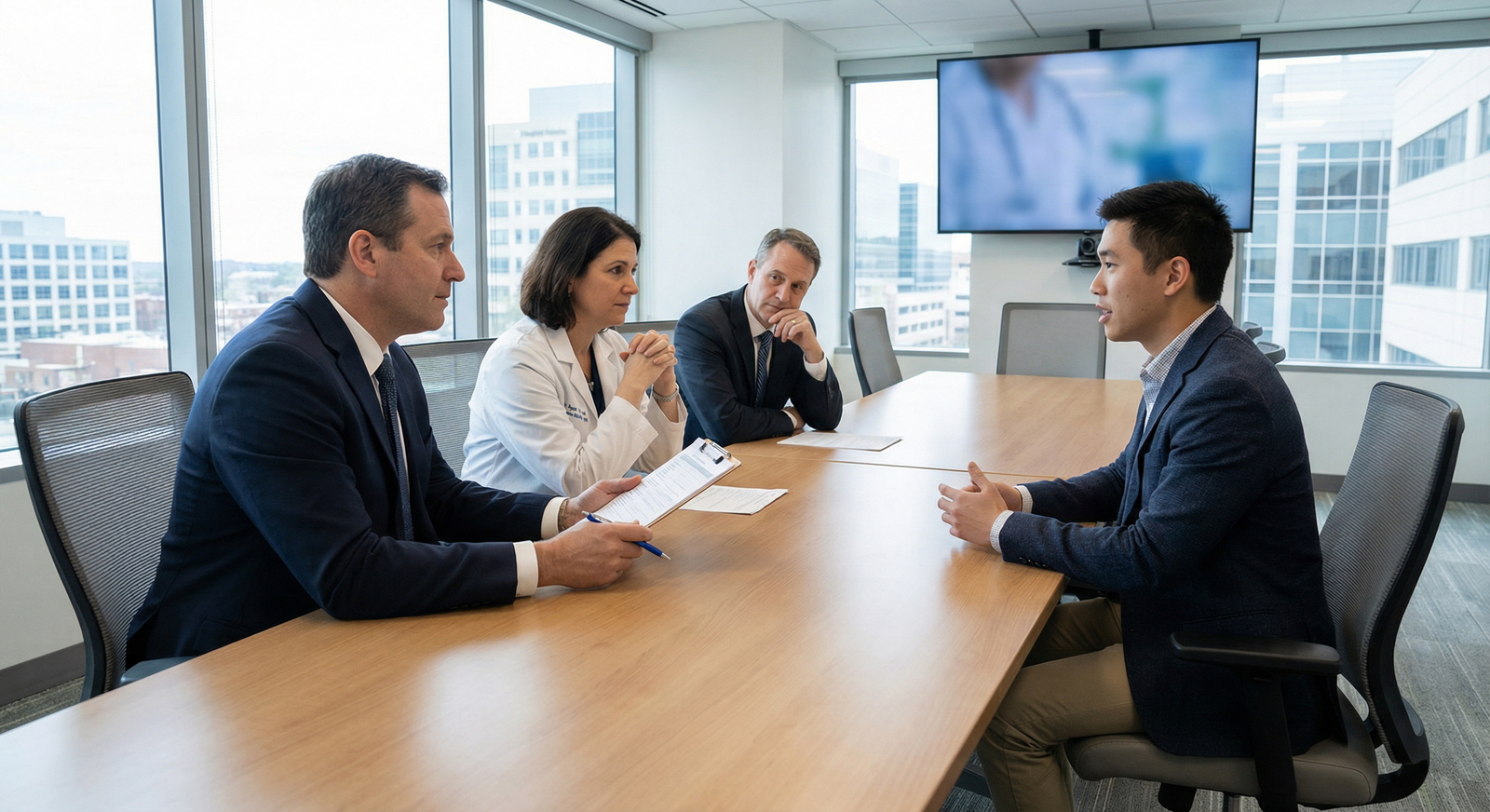
For a US citizen IMG (American studying abroad), the in person residency interview is often the single most important day of your application cycle. You’ve already overcome extra hurdles: international schooling, visas for clinical rotations, limited home‑institution advocacy, and sometimes bias about IMGs. The interview is your chance to reset the narrative and show programs you are not just “an IMG,” but an outstanding future colleague.
In-person interviews differ meaningfully from virtual ones:
- Programs are evaluating fit in real time—how you interact with faculty, residents, and staff.
- You are constantly “on stage”—from the moment you walk into the hotel lobby or shuttle, to the pre-interview dinner, to your goodbye at the end of the day.
- You have a unique chance to read program culture, resident morale, and interpersonal dynamics that can’t be captured on a website or Zoom screen.
This article breaks down a complete, step‑by‑step in-person interview strategy tailored to the specific realities of US citizen IMGs. You’ll learn what to do before, during, and after your interview day, what to wear interview day, and how to highlight your strengths as an American studying abroad.
Pre-Interview Preparation: Building a US-IMG-Focused Game Plan
Clarify Your Narrative as a US Citizen IMG
Before you prepare answers, you must clarify your story. Programs will almost always ask some version of:
- “Why did you go abroad to medical school?”
- “As a US citizen IMG, how do you see your path back to the US system?”
- “What advantages did you get from being an American studying abroad?”
Develop a tight, 60–90 second narrative that:
Explains, but doesn’t apologize
- Example:
“I chose to study in [Country] because it offered early, intensive clinical exposure and a diverse patient population. As a US citizen, I always knew I wanted to train and practice in the U.S., so I supplemented my education with US clinical rotations to learn the system and demonstrate that I can thrive here.”
- Example:
Highlights strengths of your path
- Comfort with resource-limited care or health system differences
- Exposure to diverse populations, languages, and cultural contexts
- Adaptability—navigating visas, housing, and cross-border regulations
Closes with your future focus
- “That experience shaped my interest in [specialty] and my commitment to practicing in underserved communities in the U.S.”
Practice this narrative until it feels conversational, not memorized.
Deep-Dive Program Research (Beyond the Website)
As a US citizen IMG, you cannot afford generic interest. You must show you’ve done serious homework.
For each program on your list, create a one-page “Program Snapshot” that includes:
Track record with IMGs and US IMGs
- Are there current or recent residents who are IMGs? US citizen IMG specifically?
- Check program website bios, Doximity, LinkedIn, or alumni pages.
Program priorities and differentiators
- Safety-net vs. tertiary referral center
- Community vs. university-affiliated
- Research or QI emphasis
- Global health, underserved care, or community outreach programs
Your specific “why this program” points
- 2–3 concrete elements you genuinely admire:
“I’m drawn to your strong inpatient experience at a county hospital, plus your structured mentoring program for interns and emphasis on resident autonomy.”
- 2–3 concrete elements you genuinely admire:
Use this data to:
- Customize your answers about fit and interest.
- Prepare smart, specific questions for faculty and residents.
- Strategically signal that you understand their environment and patient population.
Anticipate IMG-Specific Questions and Concerns
You may encounter questions unique to IMGs—or subtle biases. Typical areas:
Clinical Preparedness
- “How has your training abroad prepared you for residency in the U.S.?”
- “Tell me about your US clinical experience.”
Strategy:
- Emphasize your US clinical rotations and hands-on roles:
- Presenting patients
- Writing notes (even if unofficial)
- Participating in rounds and sign-out
- Highlight feedback you’ve received from US attendings:
“My attending in my internal medicine sub-I commented that my presentations were concise and that I integrated management plans effectively.”
Standardization and Exams
- “How did your school prepare you for the USMLE?”
- “How did you adapt to a US-based curriculum?”
Strategy:
- Discuss how you took initiative to align your study with US standards:
- USMLE prep courses
- NBME practice exams
- Extra reading from U.S. textbooks and guidelines
Transition to US Healthcare System
- “What challenges do you anticipate transitioning to the US system?”
- “How will you handle the steep learning curve?”
Strategy:
- Acknowledge reality and show a plan:
- Familiarity with Epic or common EMRs (if applicable)
- Experience with multidisciplinary rounds, discharge planning, follow-ups
- Willingness to ask for help early and often
Prepare 2–3 specific examples that demonstrate you have already functioned in the U.S. environment, not just observed it.
Logistics and Travel Strategy
As an American studying abroad, you may be flying in from overseas or from a different U.S. city between rotations. Poor logistics can sabotage performance.
Travel planning tips:
- Arrive at least 24 hours before the interview day if at all possible.
- Invest in direct flights or generous layovers—delays and missed connections are not worth the stress.
- Choose a hotel within 15–20 minutes of the hospital; avoid complex transit routes on interview morning.
- Do a dry run to the hospital the night before if you’re unfamiliar with the area.
- Back up everything:
- Confirm hotel, flights, and directions in writing.
- Save key addresses and contacts offline in case of no service or dead battery.
This investment in planning is especially critical if you’re managing jet lag from returning from your medical school country.
What to Wear, What to Bring, and Professional Presentation
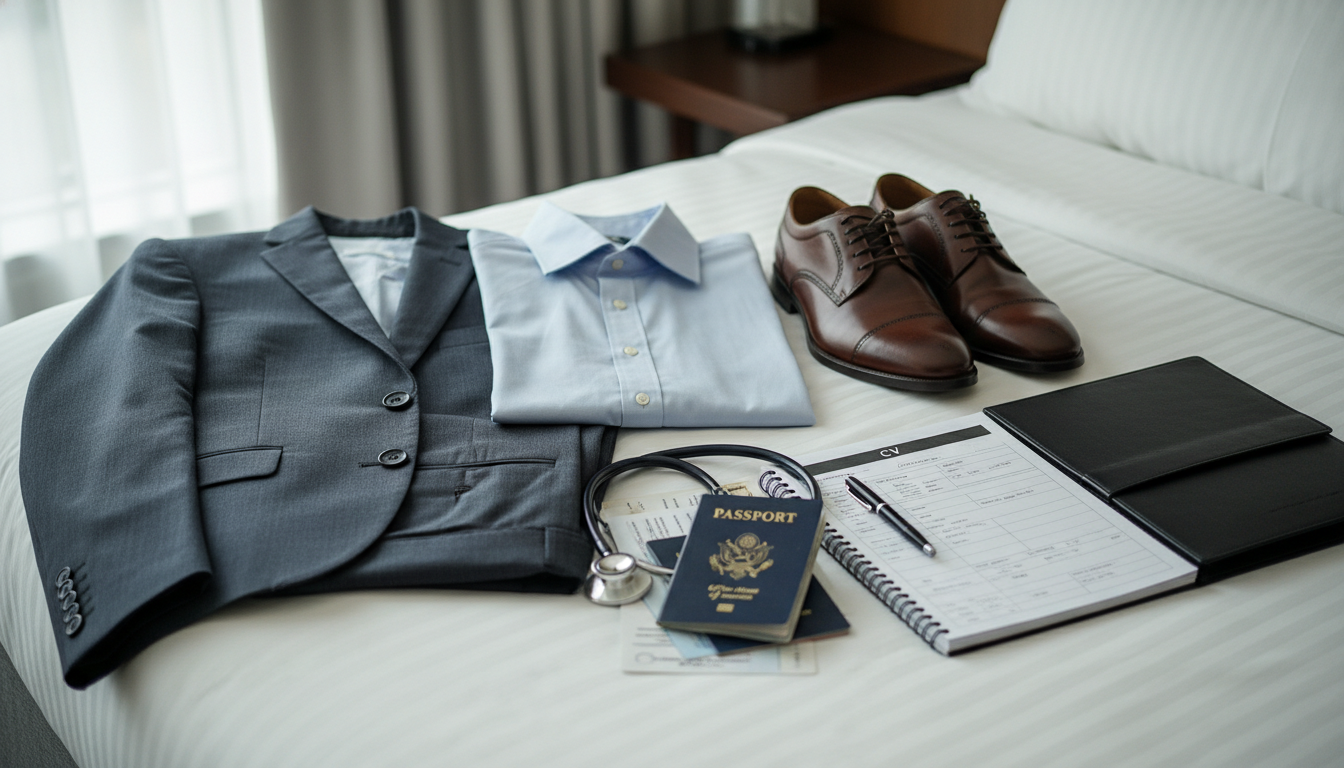
What to Wear Interview Day: Professional, Conservative, Comfortable
Programs should remember your answers, not your outfit. Your goal is to look polished, appropriate, and comfortable.
General guidelines (all genders):
Suit:
- Dark navy, charcoal gray, or black two-piece suit.
- Well-tailored but not too tight.
- Avoid bright colors, flashy patterns, or trendy cuts.
Shirt/Blouse:
- Light, neutral colors (white, light blue, pale pastel).
- Ironed and wrinkle-free.
- Avoid low necklines, very sheer fabrics, or loud prints.
Shoes:
- Closed-toe, clean, polished.
- Low to moderate heel for those who wear heels.
- Choose comfort: you may be walking long distances on hospital tours.
Accessories:
- Minimal jewelry; nothing that jingles or distracts.
- Conservative belt matching shoe color.
- Simple watch if you wear one.
Hair and Grooming:
- Neat and away from the face.
- Beards and facial hair groomed.
- Natural makeup (if worn), no heavy perfume/cologne—strong scents can be problematic in clinical spaces.
For US citizen IMG applicants, first impressions can matter even more; you do not want clothing to trigger unconscious “otherness” or “unprofessional” judgments. “Classic US professional” is your safest anchor.
What to Bring on the Interview Day
Pack a professional but simple bag—ideally a portfolio or slim briefcase rather than a backpack.
Include:
- Printed copies of:
- Your CV
- Personal statement
- ERAS application (or at least key sections)
- List of publications and presentations
- Notepad and pen
- Interview schedule and program information
- Small bottle of water and a light snack (granola bar, nuts)
- Breath mints (not gum)
- Phone charger or power bank
- Travel-sized stain remover pen, tissues
Leave anything bulky, flashy, or unnecessary at the hotel. You want to appear organized and streamlined.
Mastering the Interview Day: From Check-In to Farewell
The Hidden Interview: Every Interaction Counts
From the moment you step into the building—or shuttle, parking lot, or pre-interview breakfast—you are being observed. Administrative staff, residents, and faculty all share impressions.
Key behaviors:
Be early, not just on time
Aim for 15–20 minutes before the official start. Use this time to use the restroom, settle yourself, and review notes.Greet everyone warmly
Receptionist, coordinator, security guard—everyone. Programs often ask their staff for opinions about candidates’ professionalism.Be present, not on your phone
Put your phone away. Instead, chat with other applicants, ask about their travels, and build a positive, collegial energy.
As a US citizen IMG, demonstrating that you understand and fit into U.S. professional norms in all these micro-interactions can significantly help counteract bias.
In-Person Residency Interview Structure: What to Expect
Typical in-person residency interview days include:
- Program welcome and overview presentation
- Individual faculty interviews (2–5 sessions)
- Interviews with chief residents and/or current residents
- Hospital and clinic tours
- Noon conference or lunch with residents
- Optional pre- or post-interview social event or dinner
- Q&A sessions with program leadership
Each segment is part of your evaluation. Treat transitions and “unstructured time” as opportunities to learn and show your professionalism.
Core Interview Question Strategy
To perform consistently well, focus on frameworks rather than memorized scripts. Below are common categories, with example structures tailored to US citizen IMGs.
1. “Tell Me About Yourself”
Goal: Deliver a concise, chronological story that highlights your path and what matters to you.
Framework (60–90 seconds):
- Present: Who you are now (US citizen IMG at X school, applying in Y specialty).
- Past: Briefly, why medicine, why study abroad, key formative experiences.
- Future: What you’re looking for in residency and your career direction.
Example (abbreviated):
“I’m a US citizen who completed medical school at [School] in [Country], where I was drawn to the high-acuity clinical exposure and diverse patient population. Early on, I became interested in [specialty] while managing complex [relevant clinical scenarios]. I’ve since completed multiple US rotations, including [sub-I or key rotations], which confirmed that I value programs with strong inpatient training, close faculty mentorship, and a commitment to caring for underserved communities. Long term, I hope to practice in [type of setting] and stay involved in [teaching/research/community work].”
2. “Why Our Program?”
This is where your program-specific research pays off.
Framework:
- Start with 2–3 specific features you’ve researched.
- Link each feature to a personal goal or preference.
- End with enthusiasm about contributing.
Example:
“I’m particularly drawn to your program’s strong county hospital experience, your structured mentorship program for interns, and the emphasis on resident-led QI projects. As a US citizen IMG, I’m looking for a place with both high clinical volume and a supportive environment that helps me continue refining my skills in the U.S. system. I’m excited about the chance to contribute to your QI initiatives, especially in [specific area you’ve seen on their website].”
3. Clinical and Behavioral Scenarios
Program directors want to know how you think and behave under pressure. Use the STAR method (Situation, Task, Action, Result).
Common prompts:
- “Tell me about a challenging patient encounter.”
- “Describe a time you received critical feedback.”
- “Tell me about a mistake you made and what you learned.”
As a US citizen IMG, you can draw on both international and U.S. experiences—but when possible, include at least one U.S. clinical example to show direct applicability.
4. Addressing Red Flags (If Applicable)
If you have USMLE failures, time gaps, or academic struggles:
- Be direct, brief, and responsible.
- Avoid blaming others or your school.
- Emphasize insight and growth.
Example:
“I failed Step 1 on my first attempt. At the time, I underestimated the adjustment needed between my school’s curriculum and the USMLE focus. I restructured my approach completely—used NBME practice exams, joined a study group, and adjusted to more active learning. I passed on my second attempt with a [score/strong improvement]. More importantly, I’ve applied that experience to how I prepare for rotations and exams now—my subsequent clinical evaluations and exam performance reflect that change.”

Maximizing Interactions with Residents and Faculty
Resident Conversations: Your Best Source of Truth
Residents often have significant influence on rank lists. They also can provide candid insight into the program.
Goals during resident interactions:
- Show that you are collegial and easy to work with.
- Ask thoughtful, specific questions.
- Get honest data to inform your ranking decisions.
Sample questions for residents:
- “What do you see as the program’s greatest strength and an area it’s still working on?”
- “How approachable are the attendings when you’re unsure about a decision?”
- “How does the program support international graduates or those with non-traditional paths?”
- “Can you describe the culture around asking for help on busy call nights?”
As a US citizen IMG, you can also directly but tactfully ask:
- “Are there other IMGs or US citizen IMGs in your program, and how has their transition been supported?”
- “How do residents feel their diverse backgrounds are valued here?”
Watch for how residents interact with each other and with faculty; that often tells you more than rehearsed answers.
Faculty and Leadership: Signaling Maturity and Fit
When speaking with program directors and faculty:
- Anchor your answers in patient care, teamwork, and professionalism.
- Link your international perspective to benefits for their patient population:
- Cultural competence
- Language skills
- Empathy for immigrant or underserved communities
You might say:
“Practicing in [country] taught me to quickly build trust with patients from very different backgrounds, often in resource-limited settings. I’ve found that experience very helpful in my US rotations, especially with immigrant patients who may have similar concerns about access and trust in the healthcare system.”
Post-Interview Strategy: Reflecting, Ranking, and Following Up
Immediate Post-Interview Reflection
As soon as you return to your hotel or home, spend 10–15 minutes documenting:
- Names of interviewers and residents you met
- Program strengths and potential drawbacks
- Specific moments that stood out (positive or negative)
- Your gut impression of:
- Resident happiness
- Faculty supportiveness
- Educational environment
- IMG friendliness
As a US citizen IMG, keep special notes on:
- How many IMGs were present or referenced
- How comfortable you felt being transparent about your background
- Any explicit statements about how the program views IMGs or US IMGs
These notes will be invaluable later when constructing your rank list and writing thank-you emails.
Thank-You Emails: Strategic but Genuine
Most programs still appreciate brief thank-you emails, especially to:
- Program director
- Key faculty interviewers
- Residents who spent significant time with you (e.g., one-on-one lunch or tour)
Guidelines:
- Send within 24–72 hours.
- Keep them short (4–6 sentences).
- Reference 1–2 specific things from your conversation.
- Restate your interest, but avoid making promises to multiple programs about “ranking first.”
Example:
Subject: Thank You – [Your Name], [Specialty] Interview on [Date]
Dear Dr. [Last Name],
Thank you for the opportunity to interview at [Program Name] on [date]. I especially appreciated our discussion about how your residents are involved in caring for underserved patients at [hospital/clinic], and how the program supports them in balancing autonomy with supervision. As a US citizen IMG, I am excited by the prospect of training in an environment that values diverse paths to medicine while maintaining strong academic standards. I would be honored to contribute to your team.
Sincerely,
[Name], [AAMC ID]
Building a Thoughtful Rank List as a US Citizen IMG
When ranking programs, consider:
- Educational quality and clinical exposure
- IMG-friendliness and historical track record
- Support structures (mentorship, wellness, remediation if needed)
- Location and visa/logistics (if relevant for spouse/family)
- Your subjective sense of fit and belonging
Do not assume that “beggars can’t be choosers” because you are an IMG. Yes, you must be realistic, but you also deserve a program that will train and support you well. A lower-tier but supportive, IMG-friendly environment is often better than a prestige-focused program that leaves you struggling without mentorship.
FAQs: In-Person Interview Strategies for US Citizen IMGs
1. As a US citizen IMG, should I disclose or emphasize that I’m American?
You don’t need to “push” your citizenship status, but it’s appropriate to mention it naturally when telling your story:
“I’m a US citizen who completed medical school in [country] because…”
Frame it as a strength: you understand U.S. culture and healthcare needs, and you bring additional perspectives from training abroad. Let programs know you’re committed to building a career in the U.S., but avoid sounding defensive or like you’re seeking special treatment.
2. How different is the in-person residency interview from virtual, and should I prepare differently?
Content-wise, questions are similar. The major differences:
- You’re being evaluated continuously, from breakfast to the final goodbye.
- Program culture, resident interactions, and nonverbal communication are more visible.
- You must manage in-person logistics—travel fatigue, jet lag, navigating buildings.
Prepare for both formal and informal interactions: practice your answers, but also practice small talk, asking thoughtful questions, and staying engaged for several hours. Plan travel to minimize exhaustion.
3. What if my interviewer seems biased against IMGs or asks uncomfortable questions?
Stay professional and composed. If you sense bias:
- Answer factually and confidently.
- Emphasize your clinical readiness and US experience.
- Avoid becoming defensive or argumentative.
If you’re asked an inappropriate question (e.g., about marital status, family planning), gently redirect:
“I prefer to focus on my professional qualifications and how I can contribute as a resident. I’d be happy to talk more about my training and interests in [specialty].”
Note such incidents in your post-interview reflections—they may influence your rank list.
4. Should I wear anything that reflects my international background or medical school (pins, flags, etc.)?
In most cases, keep attire simple and professional. A small, tasteful lapel pin or subtle school emblem is fine if it feels important to you, but avoid anything that could be perceived as overly casual or distracting. Let your story and answers highlight your international background rather than relying on visual symbols. Your goal is to be remembered for your professionalism, insight, and interpersonal skills—not your accessories.
By approaching the in person residency interview with intentional preparation, clear storytelling, and awareness of how your US citizen IMG background can be a strength, you can transform the day from a source of anxiety into a genuine opportunity. You’ve already navigated a complex path as an American studying abroad; with a structured strategy, you can show programs that you are exactly the kind of resilient, adaptable, and thoughtful physician they want on their team.