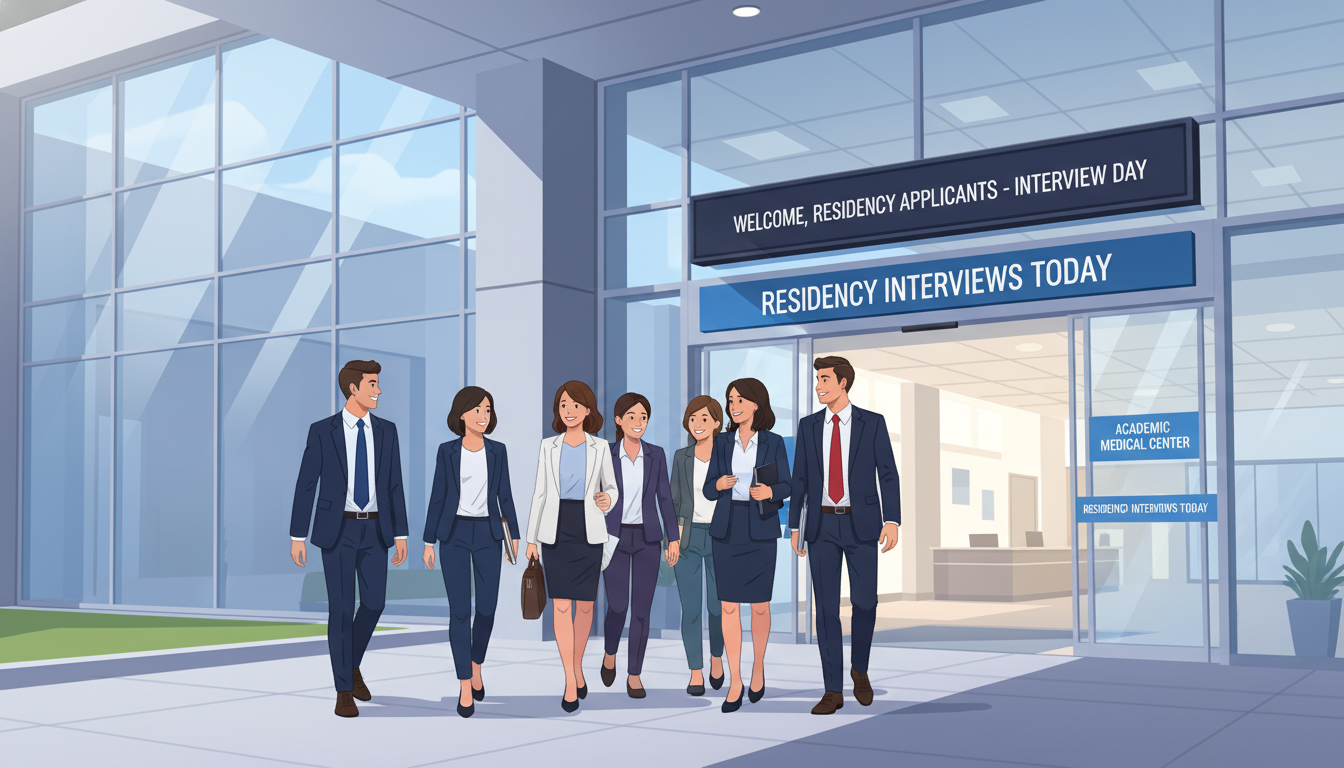
In-person residency interviews are back in full force at many programs, and they can be the decisive factor that separates strong applicants from matched residents. You’ve spent years building your application; now you need a clear, deliberate in-person interview strategy to show programs you’re ready for residency.
This guide walks through everything you need to know: from preparation before you step on the plane, to how you move through interview day, to post-interview follow-up. We’ll focus on practical, residency-specific advice you can use immediately.
Understanding the Purpose of the In-Person Residency Interview
Before you plan your strategy, you need to understand what programs are actually trying to learn about you during an in person residency interview. It’s much more than checking your knowledge.
What programs are really assessing
Fit with the program’s culture
- How you interact with residents, faculty, staff, and other applicants
- Whether your values align with the program’s mission (community focus, academic heavy, research-driven, etc.)
- Your interpersonal style: collaborative, respectful, teachable
Professionalism and reliability
- Punctuality, communication, and preparation
- How you handle minor stressors (flight issues, schedule delays, dense interview day)
- Appearance, demeanor, and judgment in social situations
Communication skills
- Clarity, organization, and concision in your answers
- Ability to explain complex ideas to different audiences
- Listening skills—do you actually answer the question asked?
Motivation and maturity
- Do you understand what residency in this specialty entails?
- Can you reflect on your strengths, weaknesses, and past challenges?
- Are you ready for the responsibilities of caring for patients as a resident?
Clinical and academic potential
- Not tested like an exam, but inferred from:
- How you talk about cases and clerkships
- How you discuss feedback you’ve received
- Your curiosity and approach to learning
- Not tested like an exam, but inferred from:
Your in-person interview strategy should aim to make it easy for interviewers to say, “I can see this person thriving here.”
Pre-Interview Preparation: Strategy Weeks Before You Arrive
Serious preparation starts long before you set foot in the hospital. This is where many applicants unintentionally separate themselves—positively or negatively.
1. Program-specific preparation
Build a 1-page “Program Snapshot” for every place you’ll visit. Include:
- Location, hospital types, key patient populations
- Program size, unique features (e.g., 4+2 schedule, night float, global health track)
- Research or clinical strengths (e.g., transplant, trauma, oncology, underserved care)
- Names of:
- Program Director and Associate PDs
- Chief residents
- People you requested or hope to meet (research mentors, subspecialty faculty)
- 3–4 specific reasons you’re genuinely interested in that program
- 3–5 tailored questions you can ask residents and faculty
This snapshot makes it easier to sound informed and intentional, not generic.
2. Crafting and practicing your narrative
You should be able to articulate, out loud and smoothly:
“Tell me about yourself” (60–90 seconds)
- Present → Past → Future structure:
- Present: who you are now (MS4, current interests, what you’re doing this year)
- Past: key experiences that shaped you
- Future: what you hope to become as a resident and physician
- Present → Past → Future structure:
“Why this specialty?”
- 2–3 experiences that illustrate your interest (not just “I like procedures”)
- Awareness of both the rewards and challenges of the field
“Why this program?”
- Specific reasons linked to your goals (not “great reputation” or “strong training” alone)
- Example:
- “Your 4+2 schedule, strong cardiology exposure, and the community-focused continuity clinic fit my goal of becoming a well-rounded general cardiologist working in a medically underserved area.”
Write bullet points, not scripts. Practice with friends, mentors, or in front of a camera. The goal is conversational and genuine, not memorized.
3. Behavioral questions: Structured preparation
Most residency interviews include behavioral questions like:
- “Tell me about a time you made a mistake.”
- “Describe a conflict you had on a team and how you handled it.”
- “Tell me about a stressful situation and what you did.”
Use the STAR framework (Situation, Task, Action, Result):
- Situation – Brief context
- Task – Your role/goal
- Action – What you did, focusing on your thinking and behavior
- Result – Outcome + what you learned
Prepare 6–8 flexible STAR stories that you can adapt to different questions:
- A time you led a team
- A time you handled conflict
- A time you made a mistake
- A challenging patient interaction
- A time you received critical feedback
- A time you failed or didn’t meet expectations
- A meaningful success you’re proud of
- A time you advocated for someone or something
Rotate these stories so you’re not repeating the same one all day.
4. Logistics strategy: Minimizing preventable stress
Treat logistics as part of your professional presentation.
Travel buffer
- Arrive the day before your interview—ideally by mid-afternoon
- Avoid last flights of the day when possible
- Keep all confirmations (flights, hotel, rental car/ride-share) in one folder or app
Documents and backup
- ID, insurance cards, program schedules/emails, a small notepad and pen
- Names and contact numbers for the program coordinator and hotel
Health and sleep
- Do not overhaul your sleep schedule right before traveling
- Hydrate aggressively, especially on flights
- Bring simple, non-perishable snacks (nuts, bars, trail mix) in case meals are delayed
You want to arrive calm and prepared, not rushed and exhausted.

Professional Presentation: What to Wear and How to Carry Yourself
Whether you love it or hate it, appearance is part of your in-person interview strategy. You want your clothing to fade into the background so attention stays on your words and personality.
What to wear: Interview attire basics
When thinking about what to wear interview day, prioritize:
- Professionalism
- Comfort for a long day
- Fit with hospital culture (slightly conservative is safest)
General guidelines
- Suit: Dark or neutral (navy, charcoal, black, dark gray). Pant or skirt suits are equally acceptable.
- Shirt/blouse: Solid or subtle pattern; avoid bright, distracting colors or very low necklines.
- Shoes: Closed-toe, clean, comfortable. You will walk and stand a lot—break them in beforehand.
- Accessories:
- Minimal jewelry and fragrance
- Professional bag or portfolio that can hold a folder and small items
- Watch (optional but useful for discreet time-checking)
Grooming considerations
- Hair: Neat and away from your face; avoid styles you’ll be adjusting constantly.
- Facial hair: Well-trimmed and intentional, or clean-shaven.
- Nails: Clean, short to moderate length, neutral colors if polished.
- Makeup: If you wear it, aim for understated and professional.
If you’re unsure, err slightly on the more formal side. Programs rarely penalize someone for being “too professional,” but they may notice clothing that feels casual or distracting.
Comfort and practicality
A common mistake is choosing clothing that “looks great” but fails during a 10-hour day and campus tour.
Sit, stand, and walk in your outfit before the actual day:
- Can you sit for long periods without discomfort?
- Does anything ride up, wrinkle excessively, or gape?
- Can you walk 10–15 minutes indoors/outdoors in those shoes?
Consider layering:
- Clinical buildings can be chilly; conference rooms can be warm
- A blazer or suit jacket helps you adapt to temperature differences
Non-verbal communication: Carrying yourself with confidence
Programs observe you not just in formal interviews, but all day: during tours, meals, and hallway transitions.
Focus on:
- Posture: Sit and stand upright, shoulders relaxed; avoid slouching or leaning back excessively.
- Eye contact: Natural, not staring; engage all members of a small group, not just one.
- Handshake or greeting:
- Follow local norms; many residencies are comfortable with a simple verbal greeting and nod.
- If shaking hands, firm but not crushing; brief, with eye contact and a greeting.
- Fidgeting:
- Minimize pen-clicking, hair-twisting, leg jiggling.
- Keep your hands comfortably on the table or in your lap when seated.
Your goal is to project calm, respectful engagement—even when you’re nervous.
Mastering the Interview Day: Start to Finish Strategy
The in person residency interview is more than just the 20–30 minutes you spend with each faculty member. Programs evaluate the entire interview day: pre-interview socials, morning check-in, tours, conference attendance, lunch, and closing sessions.
The night before: Setting yourself up to perform well
Organize your outfit, bag, and directions so there are no morning decisions.
Review your Program Snapshot and your 3–4 key talking points:
- Why this specialty
- Why this program
- What you bring to the class
- What you’re looking for in a residency
Set multiple alarms; confirm transportation time from hotel to the hospital.
Aim for a normal bedtime; avoid excess caffeine, alcohol, or heavy late meals.
If there’s a pre-interview dinner or social:
- Treat it as part of the interview—because it is.
- Be friendly, ask residents questions, and avoid dominating conversations.
- Limit alcohol (or skip it entirely); you want to wake up sharp.
Morning: Arrival and first impressions
Arrive 10–15 minutes early. When you check in:
- Introduce yourself clearly: name, medical school, specialty of interest if relevant.
- Be warm with staff and coordinators—many programs ask for their impressions.
In the initial group session or welcome presentation:
- Sit where you can see and engage; avoid hiding in the back.
- Take light notes on:
- Call schedule and caps
- Electives, research time, fellowship outcomes
- Any unique aspects you might mention in thank-you notes or ranking decisions
One-on-one and panel interviews: Tactics for strong conversations
Think of each interview as a collaborative conversation, not an oral exam.
1. Listen closely to the question.
- Take a breath before answering.
- It’s fine to ask for a moment: “That’s a great question—let me think for a second.”
- If you’re unsure what they mean, clarify: “Do you mean in terms of clinical work, or more generally?”
2. Answer with structure.
- For behavioral or reflective questions, use STAR.
- For opinion or “how would you” questions, use a simple framework:
- State your answer
- Give 1–2 reasons
- Add a brief example if possible
Example:
Q: “How do you handle feedback?”
A:
- State approach: “I actively seek out feedback because it’s the main way I grow clinically.”
- Reasons: “It helps me identify blind spots and shows attendings I’m invested in improving.”
- Example: “During my medicine clerkship…” (short STAR story)
3. Be honest and humble about weaknesses and mistakes.
Avoid the “fake weakness” trap (“I care too much”). Instead:
- Choose a real area for growth (e.g., time management, speaking up on rounds, documentation speed).
- Show insight:
- What led to the problem?
- What did you learn?
- What have you changed and how?
Programs are less interested in what your weakness is than in how you think about and address it.
4. Ask tailored, sincere questions.
Aim for questions that show you’ve thought about your fit:
To residents:
- “What do you think this program does better than others?”
- “What kind of resident tends to thrive here?”
- “How approachable are attendings when you need help at night?”
To faculty:
- “How do you see the program evolving over the next 3–5 years?”
- “How do residents get involved in quality improvement or research here?”
- “What qualities do you value most in your residents?”
Avoid questions easily answered on the website or in the welcome session.
Group settings: Tours, conferences, and meals
Programs watch how you act around peers and near-peers.
On tours:
- Stay engaged; don’t lag behind on your phone.
- Ask a few questions, but don’t dominate.
- If walking between sites, use the time for informal conversations with residents.
At lunch/meal:
- Be mindful that this is still the interview; many rank list discussions reference the lunch.
- Talk with different residents, not just one.
- Avoid controversial or polarizing topics unless residents raise them and it’s clearly safe; even then, keep it thoughtful and measured.
- Eat, but prioritize conversation over finishing your plate.
Managing nerves and difficult moments
Everyone has an awkward moment at some point. What matters is your response.
If you blank:
- Pause, breathe, and say:
- “I’m drawing a blank for a specific example, but in general I would approach it by…”
- If the question absolutely stumps you, you can say:
- “I haven’t encountered that exact situation yet, but here’s how I imagine I’d handle it…”
- Pause, breathe, and say:
If you stumble over words:
- Simply restart: “Let me rephrase that—what I mean is…”
If you sense you answered poorly:
- Briefly correct: “I realize I didn’t fully answer the second part of your question earlier—may I add one more thought?”
Your composure under minor stress is itself an important data point.

After the Interview: Debriefing, Follow-Up, and Strategy for Ranking
Your in-person strategy doesn’t end when you leave the hospital. The hours and days after interview day are crucial for consolidating impressions and planning your rank list.
Immediate post-interview debrief
While the day is fresh:
- On the ride back or that evening, jot down:
- Overall vibe: would you see yourself happy here long term?
- Strengths: clinical training, schedule, residents, fellowship placement, research, location
- Concerns: call structure, resident burnout, faculty support, ancillary staff, financial considerations
- Notable people you met (names, roles, brief notes)
- Any follow-up items: information to request, people to email
Use the same template for each program so comparisons later are easier.
Thank-you notes and follow-up contact
Programs vary widely in their expectations. When in doubt:
- Short, sincere, and specific thank-you emails are appropriate to:
- Program Director
- Any faculty who interviewed you (if you have their contact)
- Residents who spent extra time or significantly helped you
Tips:
- Send within 48–72 hours.
- Mention 1–2 specific things you discussed or appreciated.
- Keep it brief; they are busy.
Example structure:
- Thank them for their time.
- Mention something specific from your conversation or the day.
- Reiterate genuine interest (without implying ranking promises).
- Close warmly and professionally.
Avoid:
- Repeated follow-up emails asking for your exact rank or making promises.
- Overly enthusiastic or exaggerated language that feels insincere.
Strategic reflection for your rank list
When comparing programs after several in-person visits, consider:
Training quality and clinical exposure
- Will you see the bread-and-butter and the complex cases you need?
- How comfortable did senior residents seem managing patients?
Program culture and resident happiness
- Did residents appear genuinely supportive of each other?
- Did they feel comfortable speaking candidly, including about challenges?
Support, mentorship, and growth
- Access to faculty mentors in your interest areas
- Support for professional development, research, or specific tracks
Location and life outside the hospital
- Cost of living, commute, social support, family needs
- Can you realistically see yourself living there for 3–7 years?
Your gut feeling
- Where did you feel most at ease being yourself?
- Where did you leave thinking, “I could see these co-residents becoming my people”?
Rank programs in the true order of your preference, not based on where you think you’re “most likely” to match; the algorithm is designed to favor applicants’ preferences.
Common Mistakes to Avoid in In-Person Residency Interviews
Being aware of frequent pitfalls helps you actively avoid them.
Sounding generic
- Saying the same “Why this program” answer everywhere.
- Using stock phrases: “Great training,” “Strong reputation,” “I like teamwork” without details.
- Fix: Use your Program Snapshots and link program features to your goals.
Over-sharing or under-sharing in personal questions
- Over-sharing: going into very personal or emotionally heavy details you’re not comfortable discussing.
- Under-sharing: being so guarded that you seem distant or insincere.
- Fix: Decide in advance what topics you’re comfortable discussing and how.
Complaining about previous institutions or colleagues
- Speaking negatively about your medical school, attendings, or classmates reflects poorly on you.
- Fix: Even when discussing conflict or challenges, remain respectful and solution-oriented.
Dominating or withdrawing in group settings
- Talking too much, interrupting others, or always answering first.
- Or sitting silently, avoiding conversation, and seeming disengaged.
- Fix: Aim to contribute regularly but briefly; invite others in (“What did you think?”).
Poor time management in answers
- Monologue answers that run several minutes.
- Fix: Aim for 1–2 minute answers for most questions; ask if they want more detail.
Ignoring staff or residents in favor of “important people”
- Being polite only to the PD or faculty while ignoring coordinators or junior residents.
- Fix: Treat everyone with equal respect—programs notice.
Unprofessional online or social media behavior around interview travel
- Publicly critiquing programs, residents, or cities in real time.
- Posting identifiable or sensitive information from the day.
- Fix: Keep posts general or wait until after match; avoid negative commentary.
FAQs: In-Person Residency Interview Strategy
How important is the in person residency interview compared to the rest of my application?
For many programs, the in-person interview is one of the most heavily weighted components once you’ve reached the interview stage. Your scores, grades, and letters got you in the door; the interview often determines how highly you are ranked relative to other qualified applicants—especially on qualities like fit, communication, maturity, and professionalism.
What if I’m introverted or get very nervous in person?
You don’t need to be extroverted to do well. Focus on:
- Preparing your stories and answers so you’re not thinking from scratch.
- Practicing out loud to build familiarity and reduce anxiety.
- Setting small goals: ask 1–2 questions each session, speak with at least two residents at lunch.
- Using active listening and curiosity as your strengths—introverts often excel at thoughtful, meaningful one-on-one conversations.
Programs value calm, reflective, reliable residents just as much as outgoing ones.
How should I handle questions about my application “red flags” (gaps, failures, leaves)?
Be honest, concise, and growth-oriented:
- Briefly explain the context (without excessive detail).
- Take responsibility where appropriate.
- Emphasize what you learned and what has changed since.
- Provide evidence of improvement (e.g., later exam performance, strong clinical reviews).
Interviewers know that many excellent physicians have faced setbacks; they are evaluating your insight and trajectory.
Do I have to dress formally for pre-interview dinners or informal socials?
Unless the program explicitly says “casual,” aim for business casual at pre-interview events:
- Slacks or a modest skirt with a collared shirt or blouse
- Closed-toe shoes that are neat but don’t need to be as formal as interview shoes
Avoid overly casual clothing (athleisure, ripped jeans, graphic T-shirts). The goal is to look relaxed but professional—this is still part of the overall impression the program forms of you.
A thoughtful in-person interview strategy—built on preparation, professionalism, and authentic connection—helps programs see you as a future colleague, not just an application file. With deliberate planning and practice, you can walk into each interview day knowing you’re ready to show them who you are and why you belong in their residency.