Understanding the Internal Medicine Interview Landscape
Internal medicine (IM) is among the most popular residency specialties in the United States, which makes the IM match competitive across all applicant groups. Pre-interview preparation often becomes a key differentiator between equally qualified candidates.
Before jumping into the “how,” it helps to understand what programs are looking for during residency interview preparation:
- Clinical reasoning and maturity: How you think through patient care, ambiguity, and uncertainty
- Self-awareness and professionalism: Insight into your strengths, weaknesses, and growth
- Teamwork and communication: How you function on a multidisciplinary team
- Fit with the program culture: Your interests, values, and long-term goals
- Genuine interest in internal medicine: Your commitment to primary care, hospital medicine, subspecialty training, or academic medicine
Your pre-interview preparation should be designed to showcase these qualities consistently across your interview season, whether online or in-person.
Step 1: Strategic Self-Assessment and Application Review
Before you Google “how to prepare for interviews,” start with yourself. No amount of polished answers will help if you haven’t clearly thought through your story and your motivations.
Know Your Application Inside Out
Expect that every line of your ERAS application is fair game. Interviewers often have your:
- ERAS application and CV
- Personal statement
- Letters of recommendation summaries
- Medical school transcript and MSPE
Go through each section and anticipate what interview questions residency faculty might ask:
Personal Statement
- Why internal medicine specifically?
- What core themes are you emphasizing (e.g., patient relationships, critical thinking, advocacy, research)?
- What personal story or moment did you highlight? Be ready to expand on it.
Experiences and Activities
- Clinical rotations (especially IM sub-internships, acting internships, or away rotations)
- Research projects: your exact role, hypotheses, data, and conclusions
- Leadership roles: what you did, what changed because of your leadership
- Volunteer and community work: what population, what impact, what you learned
For each activity, prepare to answer:
- “Tell me more about this experience.”
- “What did you learn from it?”
- “How did it shape your path to internal medicine?”
Academic History and Red Flags
- Any leaves of absence, gaps, failures, or low scores
- Any Step exam retakes
- Disciplinary actions or professionalism concerns
Have a short, honest, non-defensive explanation ready:
- Brief context (only what’s necessary)
- What you learned
- Concrete steps you took to improve
- Evidence of sustained improvement since then
Clarify Your IM Career Goals
Programs do not expect you to have a subspecialty locked in, but you should have a plausible direction:
- Strong interest in primary care vs hospital medicine vs subspecialty
- Academic vs community-focused career
- Interest in research, quality improvement, medical education, health equity, or leadership
Prepare brief, realistic future plans:
“At this point, I’m most drawn to hospital medicine or a subspecialty like cardiology, but I’m very open. I know I want to train at a program that offers strong inpatient exposure, robust mentorship, and research opportunities so I can explore these interests further.”
This level of clarity signals maturity without sounding rigid.

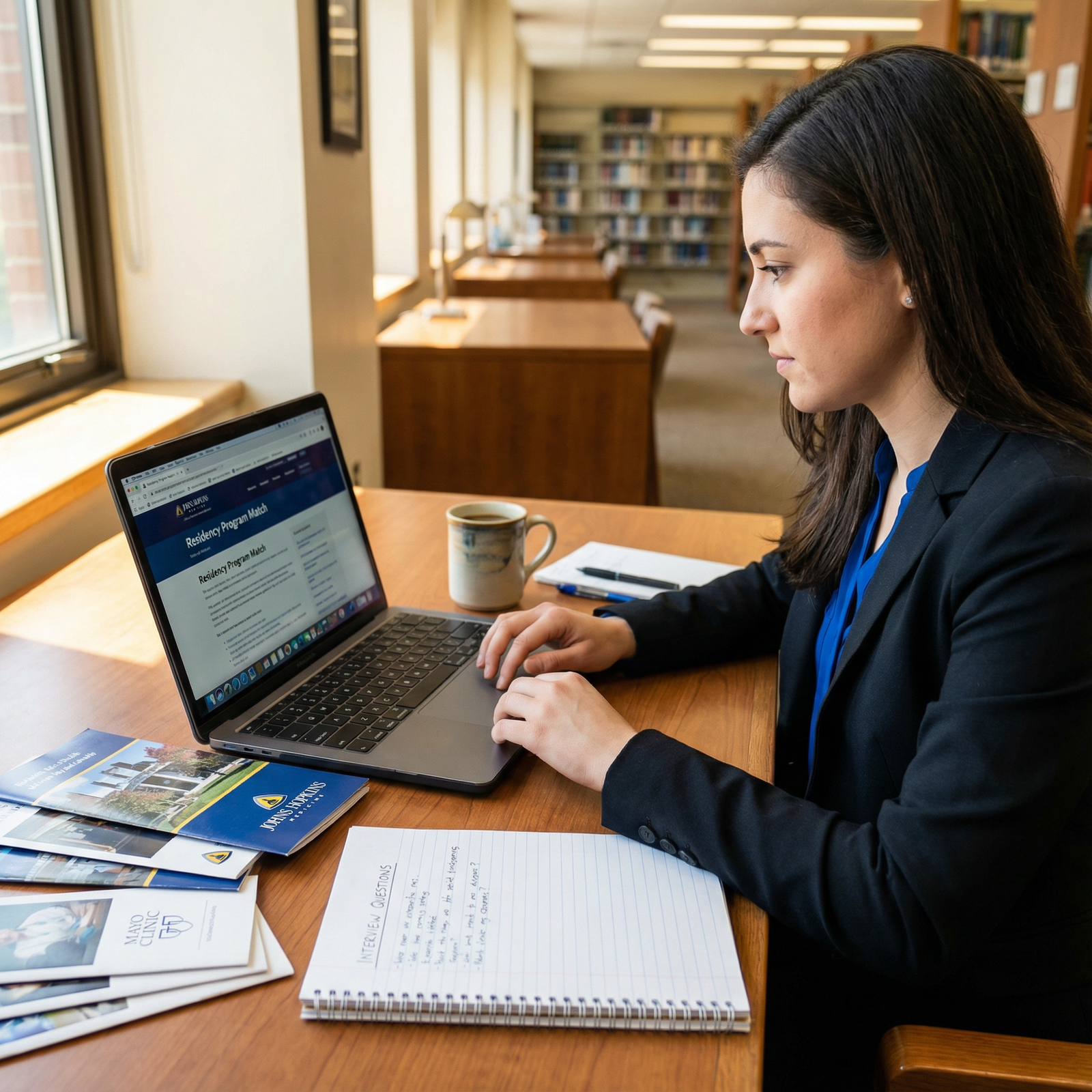
Step 2: Researching Programs and Building a Preparation System
Successful residency interview preparation goes beyond practicing answers; it includes knowing where you’re interviewing and what they value.
Deep Dive into Each Program
For every internal medicine residency program on your interview calendar, review:
Program Website
- Program mission and values
- Curricular structure (ward rotations, ICU, ambulatory blocks, night float)
- Tracks (primary care, physician-scientist, global health, QI, medical education)
- Patient population and affiliated hospitals
- Fellowship match lists and alumni outcomes
Social Media and Online Presence
- Program Twitter/X, Instagram, or LinkedIn accounts
- Resident-led content (takeovers, educational posts, wellness events)
- Recent achievements, awards, or innovations
Reputation and Culture
- Word-of-mouth from recent graduates or current residents
- The vibe from virtual open houses or pre-interview events
- Any unique strengths: e.g., safety-net hospital focus, VA exposure, global health electives, robust research infrastructure
From this, write a 1–2 paragraph summary for each program in a personal spreadsheet or notebook:
- What excites you most about this program?
- What questions do you still have?
- How does it align with your goals?
This will directly feed into “Why this program?” answers and your questions for faculty and residents.
Create an Interview Tracking System
Interview season can be chaotic. Build a system to stay organized:
Suggested Columns for a Spreadsheet:
- Program name and city
- Interview date and time (and time zone)
- Interview format (virtual/in-person) and platform (Zoom, Thalamus, Webex)
- Names and roles of scheduled interviewers (if provided)
- Key program features (e.g., 3+1 schedule, strong cardiology research, underserved patient focus)
- Your main reasons for interest
- Questions to ask (faculty vs residents)
- Impressions after the interview (strengths, concerns, culture feel)
- Post-interview communication sent (thank-you notes, follow-ups)
This system not only keeps you on track but later helps with ranking decisions.
Step 3: Mastering Common Residency Interview Questions
Knowing how to prepare for interviews in IM means anticipating what you’ll be asked and practicing out loud. You don’t want to sound scripted, but you do want clear, structured answers.
Below are core interview questions residency faculty commonly ask, with guidance and examples.
Foundations: The “Big Three”
“Tell me about yourself.”
- Aim for 1–2 minutes, conversational, not a full CV recitation.
- Structure: Past → Present → Future
Example outline for an IM applicant:
- Past: Where you grew up, undergrad focus, what drew you to medicine and IM
- Present: Your medical school focus, key experiences (sub-I, research, leadership)
- Future: What you’re seeking in an internal medicine residency and long-term goals
“Why internal medicine?”
- Anchor your answer in real patient or rotation experiences.
- Highlight internal medicine’s appeal:
- Longitudinal relationships and continuity
- Complex diagnostic reasoning
- Managing chronic disease and comorbidities
- Interdisciplinary care and systems thinking
Example angle:
“I enjoy working through diagnostic uncertainty, coordinating care for patients with multiple chronic conditions, and building longitudinal relationships. On my IM rotations, I appreciated how internists synthesized complex data and served as the central hub for each patient’s care.”
“Why our program?”
- This is where your program research pays off. Be specific:
- Curriculum elements (e.g., X+Y scheduling structure, global health track)
- Patient population (safety-net hospital, veterans, urban underserved, rural)
- Teaching culture, mentorship opportunities, research or fellowship strengths
Avoid generic answers that could apply to any IM program. Reference 2–3 concrete features plus how they fit your goals.
- This is where your program research pays off. Be specific:
Behavioral and Situational Questions
These probe professionalism, resilience, teamwork, and ethics. Use the STAR method: Situation, Task, Action, Result.
Common themes:
- Conflict with a team member
- Handling a difficult patient or family interaction
- Making or witnessing a medical error
- Responding to feedback or low evaluation
- Managing stress or burnout
Example:
“Tell me about a time you received critical feedback and how you responded.”
Possible STAR outline:
- Situation: Early in 3rd year IM clerkship; preceptor noted your presentations were disorganized.
- Task: Improve clarity and efficiency in presentations.
- Action: Sought specific expectations, watched senior residents, created a template, practiced on your own.
- Result: Presentations improved, feedback on later evaluation reflected this growth, you now mentor junior students on presentation structure.
Clinical Reasoning and IM-Specific Questions
Especially for academic programs, you might get:
- “Tell me about a challenging case you encountered in internal medicine.”
- “Describe a patient who changed the way you think about medicine.”
- “Walk me through your approach to a patient with shortness of breath / chest pain / sepsis.”
Tips:
- Avoid too much technical jargon; emphasize your clinical reasoning process.
- Show that you consider the whole patient: social determinants, family dynamics, outpatient follow-up.
- Reflect: What did you learn? How did it shape your approach?
Addressing Weaknesses or Gaps
Expect some version of:
- “What is your biggest weakness?”
- “Tell me about a time you failed.”
- “Is there anything in your application you’d like to explain?”
Effective answers:
- Choose a real but non-disqualifying weakness (e.g., time management early in school, overcommitting, difficulty delegating).
- Focus on insight and growth, not self-deprecation or blame.
- Describe specific steps you took and how you monitor yourself now.
Ineffective:
- “I care too much.”
- “I work too hard.”
Programs see through these; they’re missed opportunities to demonstrate maturity.
Questions You Should Ask
Your questions show what you value. Prepare at least 5–7 thoughtful ones, and tailor them to residents vs faculty:
To Residents:
- “What aspects of the program culture made you stay here for residency?”
- “How does the program respond when residents are struggling or burned out?”
- “How much autonomy do you have as interns and senior residents?”
To Faculty/Program Leadership:
- “How does the program support residents pursuing fellowships vs hospital medicine vs primary care?”
- “Can you describe how feedback and evaluation are given to residents?”
- “What changes or improvements are you currently working on in the residency?”
Don’t ask about things clearly explained on the website unless you are seeking clarification or deeper insight.

Step 4: Practical Mock Interview and Communication Skills
You will not know how to prepare for interviews effectively until you practice out loud, not just in your head.
Set Up Formal and Informal Mock Interviews
Use multiple sources for feedback:
- Medical school career office or advising dean
- IM faculty, chief residents, or fellows
- Peers or recent graduates who matched into internal medicine
Ask them to simulate:
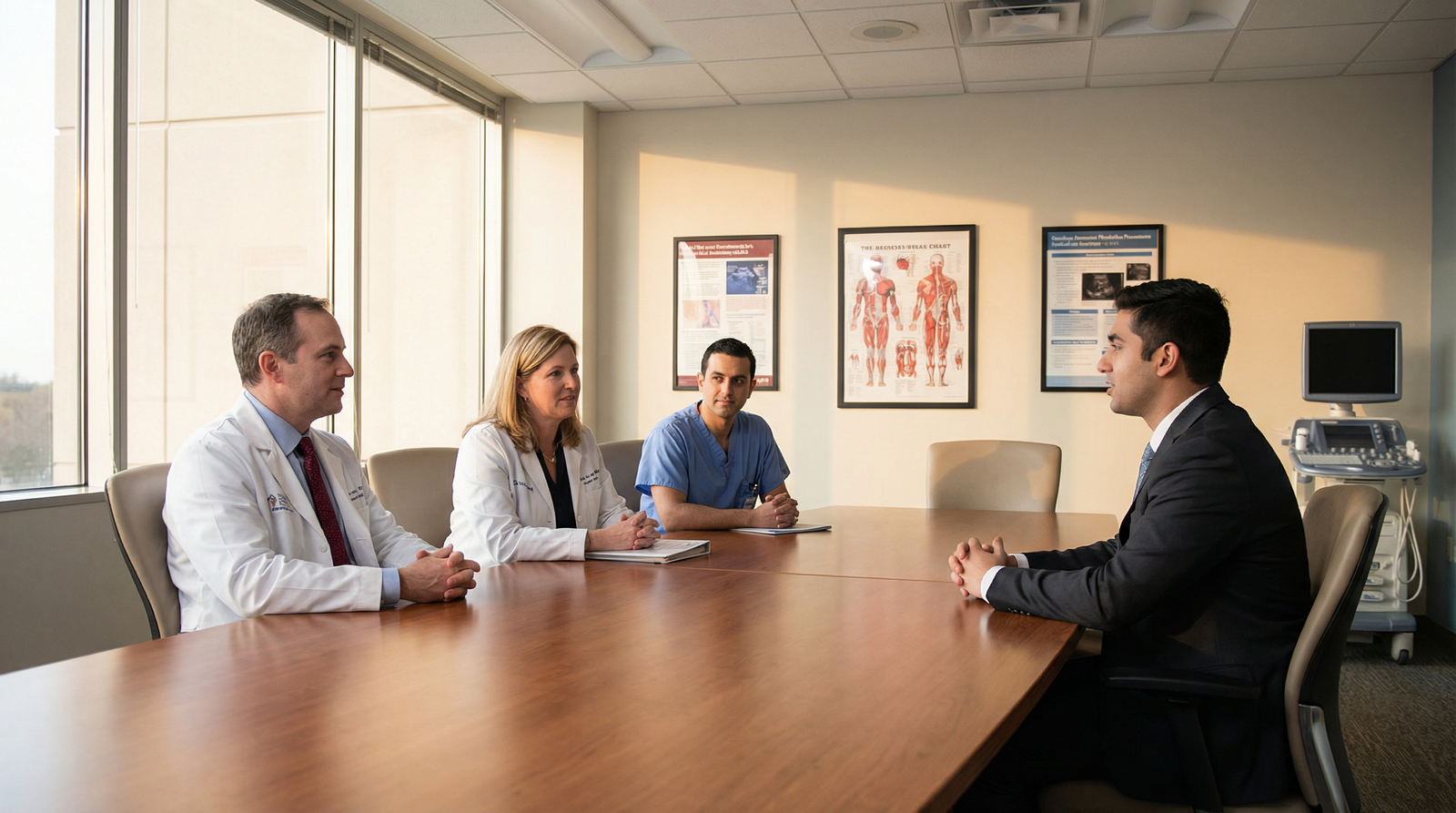
- Faculty interviews (focused on your application and clinical reasoning)
- Resident interviews (more about culture, fit, and personal interests)
Request feedback on:
- Clarity and structure of answers
- Eye contact (or screen focus, for virtual)
- Brevity vs rambling
- Nonverbal cues (fidgeting, posture, facial expressions)
- Tone (confident but not arrogant; personable but professional)
Refine Your Communication Style
Strive for:
- Concise answers (most responses 1–2 minutes)
- Structured responses using frameworks like STAR or Past–Present–Future
- Natural language—avoid memorized-sounding scripts
- Avoid filler phrases (“umm,” “like,” “you know”) as much as possible
Practice with a recorded mock session:
- Use Zoom/Teams to record a practice
- Watch yourself: posture, background, lighting, audio quality
- Identify habits to modify (looking off to the side, speaking too quickly, monotone voice)
Story Bank Technique
Compile a short list of 5–7 key stories that represent:
- A leadership challenge
- A teamwork success
- A conflict resolution
- Receiving and responding to feedback
- A meaningful patient encounter
- A time you made a mistake and learned from it
These stories can be adapted to many behavioral questions, making you more fluent and less anxious in the moment.
Step 5: Logistics, Professionalism, and Day-Before Checklist
Strong content can be undermined by poor logistics. Good pre-interview preparation includes attention to detail.
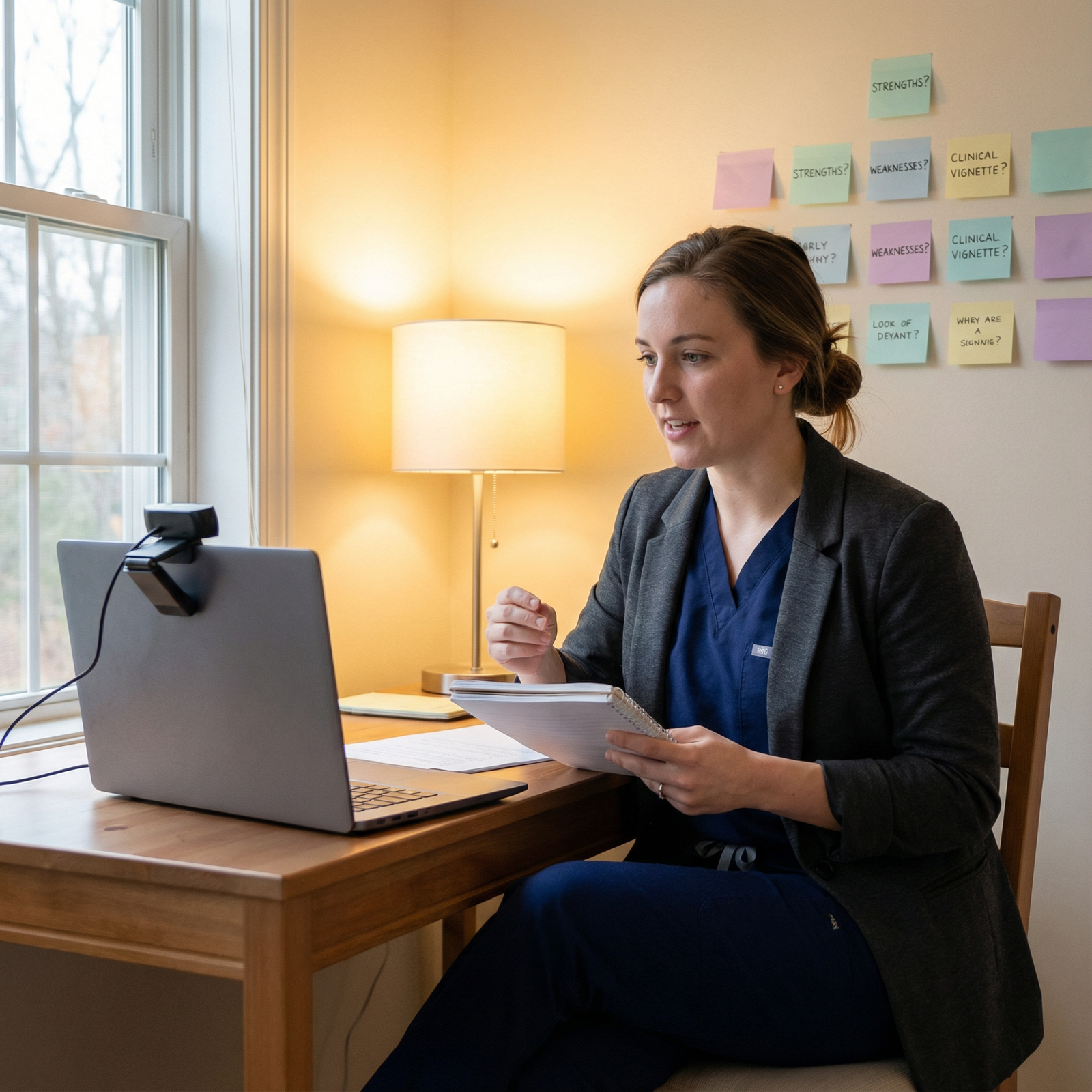
Virtual Interview Setup (Common for IM Match Cycles)
Technology
- Laptop (preferable to phone or tablet) with updated software
- Stable internet connection (test speed and stability)
- Good-quality webcam and microphone; use headphones if echo is a problem
- Test Zoom/Thalamus/Webex a few days before
Environment
- Neutral, uncluttered background (plain wall, bookshelf, tidy office space)
- Adequate lighting (face lit from the front, not backlit by a window)
- Quiet space; inform housemates/family of your interview time
- Turn off phone notifications; silence computer alerts
Professional Appearance
- Dress as you would for an in-person interview (jacket/blazer often recommended)
- Solid colors often look better on camera than busy patterns
- Maintain good posture and camera framing (head and upper torso visible)
In-Person Interviews
If your interview is on-site:
- Plan travel and lodging early to avoid last-minute issues
- Know the parking, building location, and arrival instructions
- Aim to arrive 15–20 minutes early
- Bring:
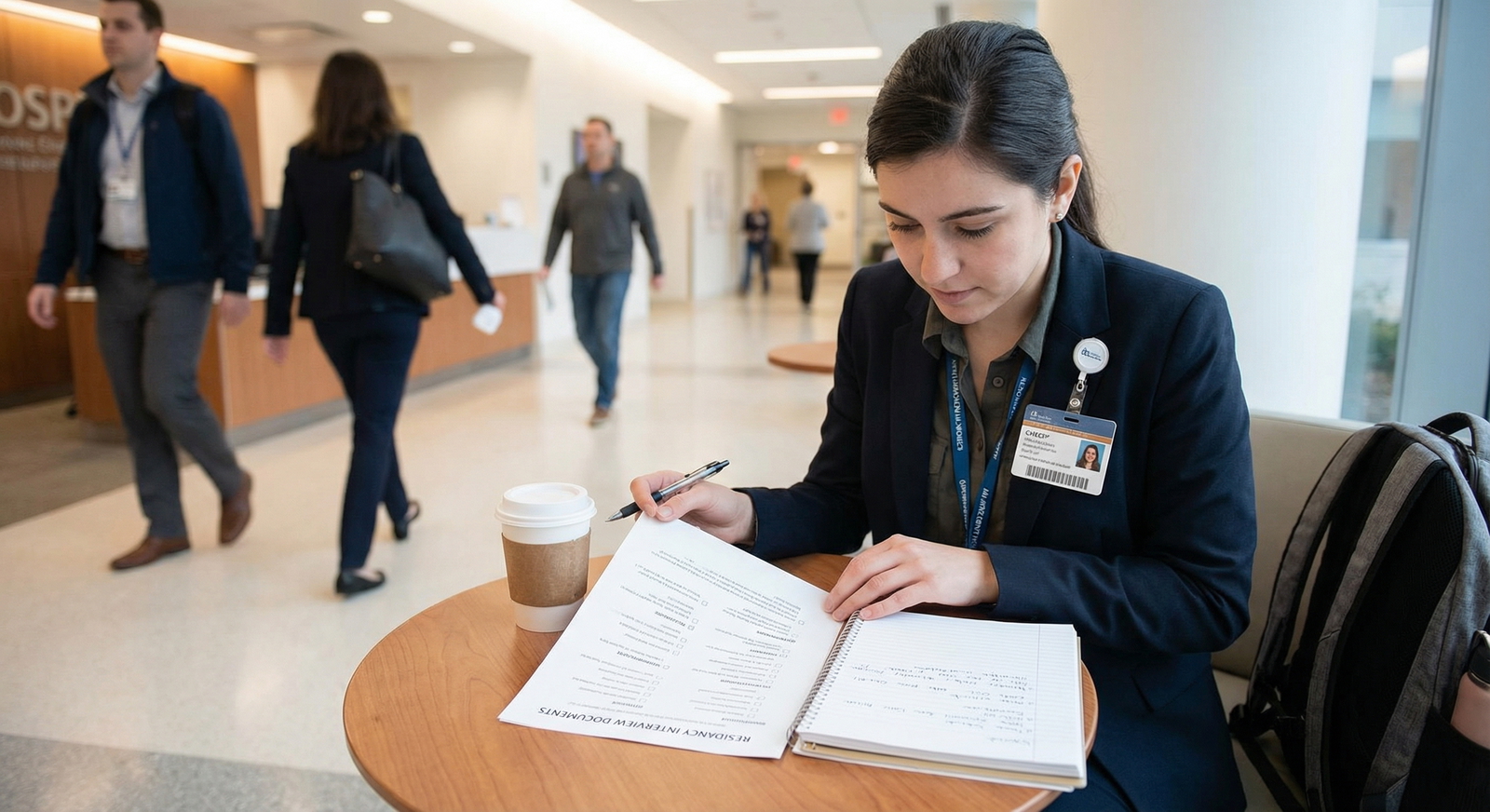
- A folder with: CV copy, list of questions, a notepad, pen
- A simple, professional bag (avoid bulky backpacks if possible)
The Day-Before Checklist
For every interview (virtual or in-person):
- Reconfirm the time and time zone
- Re-read your personal statement and ERAS application
- Review your program notes from your spreadsheet
- Print or open a short list of questions for faculty and residents
- Prepare a quick-reference “cheat sheet”:
- 3 reasons you’re excited about this program
- 2–3 key stories you might share
- Your future goals in IM, stated clearly
Prioritize sleep and hydration. Avoid cramming until midnight; a calm, focused mind will serve you better.
Professional Etiquette
- Address faculty as “Dr. [Last Name]” unless told otherwise
- Keep your email address and Zoom name professional
- If something goes wrong (internet crash, emergency):
- Email the program coordinator as soon as possible
- Briefly explain the issue and express continued enthusiasm
- Programs are usually understanding when you communicate promptly and respectfully
Step 6: Post-Interview Reflection and Follow-Up
Pre-interview preparation is incomplete if you don’t close the loop after each encounter; this also directly impacts your ranking process.
Immediately After the Interview
Within a few hours, jot down:
- Overall impression of the program’s culture
- What you liked most and any concerns
- Resident-faculty dynamics you observed
- New information learned (curriculum, mentorship, research)
- Answers to: “Can I see myself thriving here?”
These notes will blur quickly if you have many interviews close together.
Thank-You Emails
Practices vary by program, but thank-you emails are generally safe and professional:
- Send within 24–72 hours
- Keep it brief (3–5 sentences)
- Include:
- Personalized reference to your conversation (case discussed, shared interest, advice you appreciated)
- A sentence reaffirming your interest
- Your full name and AAMC ID (optional but useful)
Example:
Dear Dr. [Name],
Thank you for taking the time to speak with me during my interview at [Program]. I especially enjoyed our discussion about resident involvement in quality improvement on the general medicine wards, and I appreciated your insights on developing as a clinical educator. Our conversation reinforced my strong interest in [Program Name] as a place where I could grow both as an internist and teacher.
Sincerely,
[Your Name]
Follow each program’s policies regarding post-interview communication and signaling. Do not send statements that conflict with NRMP rules or your true intentions.
Putting It All Together: A Sample One-Week Pre-Interview Plan
To make this concrete, here is a sample plan for the week leading up to your first internal medicine residency interview.
7 Days Before:
- Review your entire ERAS application and personal statement
- Identify and refine 5–7 key stories for behavioral questions
- Set up at least one formal mock interview
5–6 Days Before:
- Deep-dive into the program website and social media
- Create or update the program’s row in your spreadsheet
- Draft 5–7 program-specific questions
3–4 Days Before:
- Conduct another mock interview (if possible with a different person)
- Record yourself answering core questions (“Tell me about yourself,” “Why IM?”)
- Adjust your communication style and body language based on playback
2 Days Before:
- Test your technology (virtual) or review travel logistics (in-person)
- Confirm interview time and time zone
- Choose and prepare your interview attire
Day Before:
- Briefly review your stories and program notes (no last-minute overhauls)
- Print any needed documents or open them in an easy-to-access folder
- Prepare your interview space (lighting, camera, background)
- Go to bed on time
By following a structured plan, you can enter each interview feeling prepared, authentic, and in control.
FAQs: Pre-Interview Preparation in Internal Medicine
1. How many mock interviews should I do for internal medicine residency?
Aim for 2–4 mock interviews before your first real interview. Include a mix of:
- At least one with a faculty member or advisor
- One with a peer or recent match who can give practical feedback
- If possible, a simulated virtual interview using the actual platform you’ll use
Beyond that, do focused practice on specific questions or weak areas rather than endless full-length mocks.
2. How different is residency interview preparation for internal medicine compared to other specialties?
Core principles are similar across specialties, but IM programs often emphasize:
- Complex clinical reasoning and comfort with diagnostic uncertainty
- Interest in chronic disease management and continuity of care
- Potential for subspecialty training or academic careers
Tailor your stories and motivations to reflect why internal medicine—not just “residency”—is right for you.
3. What if I don’t know my exact subspecialty interest yet?
That’s perfectly acceptable. Be honest and consistent:
- Express a few areas you’re considering (e.g., hospital medicine, cardiology, allergy/immunology)
- Emphasize that you’re looking for a program with broad exposure, mentorship, and exploration opportunities
- Avoid sounding completely directionless; instead, show curiosity and openness within the IM landscape
4. How should I handle a bad interview or tough question?
Everyone has an off day. After a difficult interview:
- Reflect briefly: What specifically went poorly? Content, nerves, logistics?
- Extract 1–2 lessons (e.g., practice a clearer explanation of a gap in your CV, have a backup Wi-Fi plan)
- Apply those lessons to the next interview and move on
Don’t dwell or catastrophize; the IM match is holistic, and one imperfect interview rarely determines your entire outcome.
Strong pre-interview preparation for internal medicine residency is not about perfection. It’s about deliberate practice, thoughtful self-reflection, and authentic communication of who you are as a future internist. With a structured approach and attention to both content and logistics, you’ll enter each interview ready to demonstrate that you’re prepared to join—and contribute meaningfully to—the world of internal medicine.