Understanding Your Goals as a Non‑US Citizen IMG in Cardiothoracic Surgery
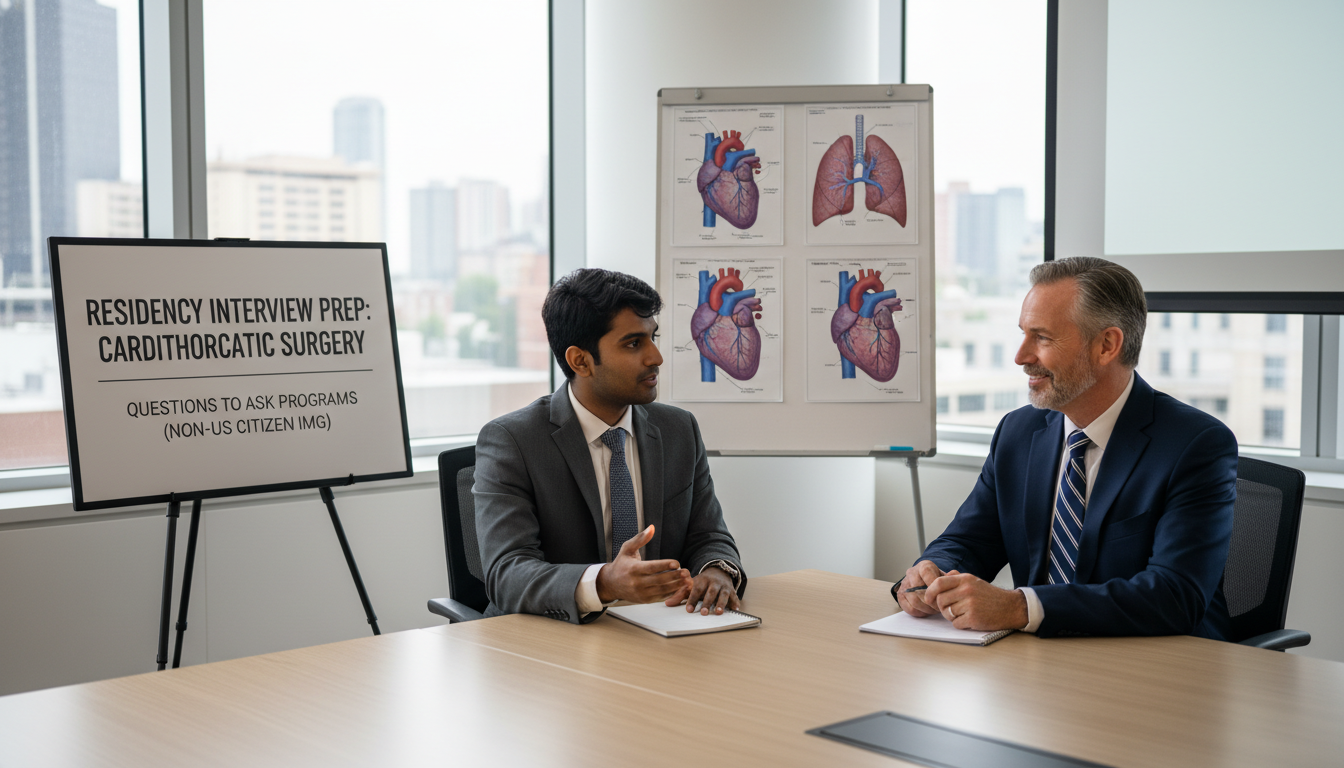
As a non-US citizen IMG considering cardiothoracic surgery residency or an integrated thoracic pathway, your interview is not just about answering questions well. It is equally about what you ask them.
For a foreign national medical graduate, cardiothoracic surgery is one of the most competitive and demanding pathways in the US system. You must make sure that:
- The program can legally and practically support your visa needs
- The training will position you competitively for fellowships or jobs
- The case volume and complexity justify years of intense heart surgery training
- The environment is supportive for an IMG living far from home
This article focuses on questions to ask residency programs—and just as importantly, how and when to ask them—so you can gather the information you need while still projecting professionalism, curiosity, and maturity.
Throughout, you’ll see suggested wordings you can adapt during interviews, second looks, or email exchanges. Use these as a menu, not a script; adjust for your personality and situation.
Core Strategy: How to Use Questions to Stand Out
Before listing specific questions, you should understand why your questions matter:
They reveal your priorities. Programs infer what you value from what you ask. Thoughtful questions about operative autonomy, mentorship, and research suggest you are serious about a career in cardiothoracic surgery—not casually exploring.
They demonstrate preparation. Asking generic questions that can be answered on the website (“How many residents do you have?”) wastes precious time. Asking focused questions that build on what you already learned shows respect and effort.
They help you compare programs realistically. Especially as a non-US citizen IMG, you need clarity on visas, board pass rates, and job placement. If you don’t ask about these, you risk discovering problems after matching.
They support future ranking decisions. After 8–15 interviews, details blend together. Clear, targeted questions help you collect specific data so your Rank Order List reflects reality, not just vague impressions.
Principles for Asking Strong Questions
- Prioritize what only insiders can tell you. Use questions to access information that websites or brochures cannot provide.
- Direct important questions to the right people.
- Visa and contracts → program coordinator / GME office
- Training, culture, autonomy → residents and faculty
- Long-term vision → program director / division chief
- Avoid hostile or accusatory wording. You can ask hard questions respectfully by focusing on curiosity and self-awareness.
- Prepare 10–15 “core” questions, then customize a smaller subset (3–5) for each program.
Essential Visa and Sponsorship Questions for Non‑US Citizen IMGs
For a non-US citizen IMG, the visa pathway is foundational. You cannot complete cardiothoracic surgery residency or integrated heart surgery training without the correct immigration support. Yet many applicants are hesitant to ask direct questions. You should not be.
These topics are critically important but can sometimes be more appropriate for pre- or post-interview emails with the coordinator rather than during your main faculty time. Residents, however, can often give you honest historical context.
Questions About Visa Types and Institutional Policy
To ask the program coordinator or GME office:
- “What visa types does your institution currently sponsor for residents in cardiothoracic surgery (e.g., J‑1, H‑1B)?”
- “Has the institution recently changed its policies about sponsoring H‑1B visas for residents or fellows?”
- “For non-US citizen IMGs, is there a preference for J‑1 vs H‑1B visas at your program, and what are the main considerations behind that preference?”
Why this matters:
- Some institutions never sponsor H‑1B for residency.
- Others sponsor H‑1B only for certain specialties or only at the fellowship level.
- J‑1 has implications for a home-country return requirement and future job options.
Questions About Consistency and Track Record
You want to know if the program has reliably supported foreign national medical graduates over time.
Suggested questions:
- “In the past 5–10 years, how many non-US citizen IMGs have matched into your cardiothoracic surgery pathway, and what visa types did they hold?”
- “Have there been any residents whose visas could not be renewed or transitioned, and what were the main challenges in those situations?”
- “Does the program or institution have an immigration attorney or dedicated office that works with residents on visa issues?”
Red flags:
- Vague answers like “We’ve had some IMGs… I’m not sure about the details.”
- No recent experience with non-US citizen IMGs in cardiothoracic surgery.
- Dependence on “case-by-case exceptions” instead of clear policy.
Questions About Long-Term Career and Visa Planning
Heart surgery training is long. You may complete general surgery plus CT fellowship, or an integrated 6–8 year pathway.
Ask:
- “For prior non-US citizen IMG residents or fellows, what pathways have they used after training—academic positions, J‑1 waiver jobs, or additional fellowships?”
- “Does your institution employ graduates on H‑1B or other visas after residency or fellowship, or do they typically move to other centers?”
- “Are there institutional policies that restrict hiring former J‑1 visa trainees into faculty positions here?”
Practical tip:
If the institution frequently hires its trainees as faculty but almost never hires previous J‑1 holders, that strongly affects your long‑term planning.
Training, Operative Experience, and Heart Surgery Exposure
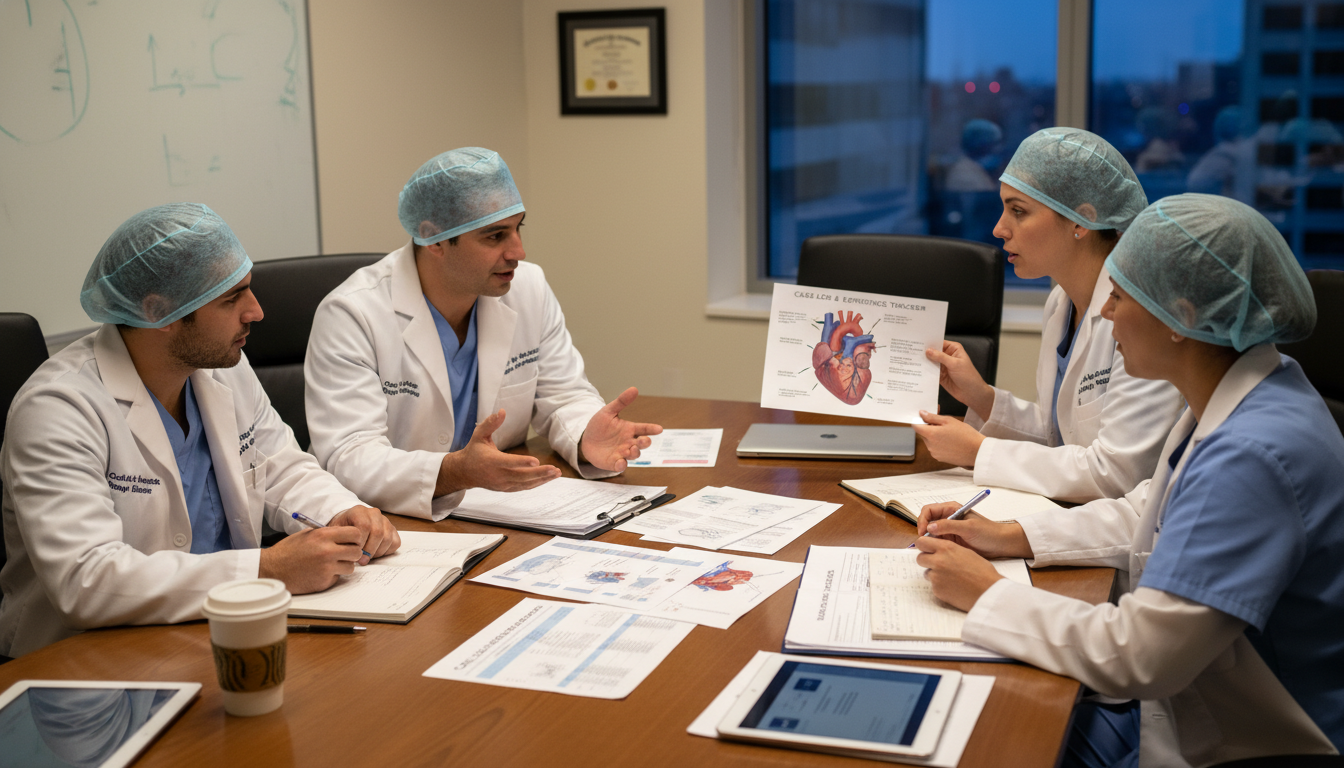
Cardiothoracic surgery is defined by hands-on operative training. You need detailed information about case volume, autonomy, and subspecialty exposure in adult cardiac, thoracic, aortic, and congenital surgery.
These are ideal questions to ask residents and faculty, especially during breakout rooms, socials, or one-on-one sessions.
Questions About Case Volume and Case Mix
For faculty or senior residents:
- “How does operative responsibility progress over the years in this program—for example, when do residents typically start acting as primary surgeon on CABG or valve cases?”
- “How do you ensure residents meet or exceed ACGME case minimums in adult cardiac, thoracic, and congenital or aortic work?”
- “Could you describe the typical case mix in a week for senior residents—roughly what proportion is CABG/valve, aortic work, lung resections, ECMO, LVAD, and transplant?”
For integrated programs (I‑6 pathway):
- “For the early years of the integrated pathway, how is operative experience balanced between general surgery rotations and cardiothoracic-specific exposure?”
- “What kind of early exposure do I‑6 residents get to the CT OR, and how does that differ from traditional fellows?”
Questions About Autonomy and Teaching Style
Understanding how residents are taught is as important as what they are taught.
Ask residents:
- “Can you describe a recent case where you felt you had significant autonomy? What level of supervision was involved?”
- “How do attendings handle situations when a resident is struggling with a technical step—do they quickly take over, or do they coach you through it?”
- “Are there any attendings who are particularly invested in teaching and letting residents operate, and how is that balanced with patient safety and efficiency?”
Ask faculty or PD:
- “What is your philosophy regarding progressive operative autonomy for trainees, especially in high-risk cardiothoracic cases?”
- “How do you balance the presence of fellows (if any) with resident operative experience?”
Questions About Subspecialty Exposure and Fellowship Preparation
Cardiothoracic surgery includes multiple niches: advanced heart failure, transplant, aortic surgery, structural heart, minimally invasive and robotic lung surgery, congenital heart surgery, and more.
Questions:
- “For residents interested in advanced heart failure, transplant, or structural heart disease, what opportunities exist for additional focused training or electives?”
- “Do residents have dedicated rotations at affiliated transplant or congenital centers, and how many cases do they typically log in those areas?”
- “How has the program supported residents applying for competitive fellowships—for example, in congenital heart surgery, advanced aortic surgery, or structural heart?”
This not only informs you, but also signals that you are thinking beyond basic qualification and toward an advanced career.
Culture, Support, and Life as a Non‑US Citizen IMG
Technical training is crucial, but your well-being and belonging as an IMG are equally important—especially when you are far from family and support systems.
This is where some of the most revealing interview questions for them should be directed primarily to current residents, including any who are foreign national medical graduates.
Questions About Overall Culture and Resident Support
Ask multiple residents (junior and senior):
- “How would you describe the culture of the program in a few words?”
- “When a resident is struggling—whether technically, academically, or personally—how does the program typically respond?”
- “Have there been any residents who left or were asked to leave recently, and what were the circumstances? How did the program handle that?”
You are not looking for gossip, but for patterns: supportive vs punitive, transparent vs secretive.
Questions Specifically About IMG Experience
As a non-US citizen IMG, you have unique adjustment challenges: cultural differences, communication style, documentation, and visa anxiety.
Ask:
- “Are there current or recent non-US citizen IMG residents in cardiothoracic surgery or other departments, and how has the institution supported them?”
- “Have IMG residents faced any particular challenges with credentialing, licensing exams, or orientation, and how were those addressed?”
- “Do faculty have experience working with international trainees, particularly around feedback, communication style, and expectations?”
If you meet an IMG resident:
- “From your perspective as an IMG, what has been most challenging here, and what has been most supportive?”
- “Looking back, would you choose this program again as a foreign national medical graduate? Why or why not?”
Questions About Wellness, Time Off, and Practical Life Issues
Cardiothoracic surgery residency is demanding; for an IMG without nearby family, support structure matters.
Ask residents:
- “How strict is the program about duty hour compliance, and do you feel your workload is sustainable?”
- “How easy is it to schedule vacation time for international travel to visit family, given OR responsibilities and call schedules?”
- “What formal resources exist for mental health support, and do residents feel comfortable using them without stigma?”
Ask coordinators or leadership (if timing feels appropriate):
- “Does the institution offer specific support for international residents—for example, help with Social Security, bank accounts, or driver’s license applications when they arrive?”
Answers here will tell you whether the program understands the real-life challenges of a non-US citizen IMG or assumes everyone has a local family safety net.

Academic Development, Research, and Career Outcomes
In a competitive field like cardiothoracic surgery, your academic portfolio and career trajectory matter enormously. This is particularly true for non-US citizen IMGs, who may face extra scrutiny when applying for fellowships or jobs.
Questions About Research Infrastructure and Expectations
Ask faculty or research director:
- “What research opportunities are most accessible to residents in cardiothoracic surgery—clinical outcomes, basic science, translational, or database studies?”
- “How many residents typically take a dedicated research year or two, and is that encouraged or optional?”
- “What support exists for residents to present at national meetings (AATS, STS, WTSA, EACTS)—for example, funding, protected time, or mentorship?”
Ask residents:
- “How easy is it in practice to get involved with research? Are there ongoing projects that need help, or do you have to create your own?”
- “How many manuscripts or abstracts do residents commonly have by graduation?”
This helps you gauge whether the program will support your long-term academic competitiveness, especially if you aspire to an academic career.
Questions About Career Outcomes and Alumni Network
You should clearly understand where graduates go and how successful they are.
Ask PD or senior faculty:
- “Where have your graduates gone in the last 5–10 years—academic centers, private practice, additional fellowships?”
- “Do you track board certification pass rates, and how have your residents performed on ABTS exams?”
- “Could you share examples of non-US citizen IMG graduates and the positions they currently hold?”
Ask residents:
- “How involved are alumni in mentoring current residents or helping with fellowship and job placement?”
- “Do you feel confident that the training and reputation here will position you well for your preferred career path?”
The specificity of their answers will tell you whether they truly know and support their graduates, or whether outcomes are more ad hoc.
High‑Impact Questions to Ask the Program Director
Time with the program director (PD) or division chief is valuable; you should not spend it on questions that others can answer. Focus on big-picture issues, program vision, and mentorship style.
Strategic Questions That Signal Maturity and Insight
Here are some high-yield examples of what to ask the program director:
Program Vision and Change
- “How do you see this cardiothoracic surgery program evolving over the next 5–10 years, particularly in areas like structural heart, transplant, and minimally invasive approaches?”
- “Are there any major changes anticipated in faculty composition, case volume, or hospital infrastructure that incoming residents should know about?”
Expectations and Feedback
- “What qualities do you value most in residents who are successful in this program?”
- “How is feedback delivered here—formally and informally—and how do you support residents who need extra help in certain domains?”
Support for Non‑US Citizen IMGs
- “From your perspective, what has helped non-US citizen IMGs succeed in this program in the past, and what challenges have they faced?”
- “Are there any institutional limitations or special considerations that non-US citizen IMG applicants should be aware of when planning a long-term career in the US?”
Balancing Service and Education
- “How do you monitor that clinical service demands do not overwhelm the educational and operative opportunities for residents, especially as health systems evolve?”
- “Have there been recent changes to the call structure or rotation design to improve resident education or well-being?”
How to Phrase Difficult or Sensitive Questions
You may want to inquire about recent accreditation visits, faculty departures, or resident conflicts. It’s possible to do this without sounding confrontational:
Instead of: “Why did three faculty leave recently?”
Use: “I noticed there have been some recent changes in faculty. How has that transition affected case volume and mentorship for residents?”Instead of: “Do you have problems keeping residents?”
Use: “How stable has resident retention been over the past few years, and what has the program learned from any cases where residents have left early?”
The PD’s reaction—transparent vs defensive—can be as informative as the words themselves.
Logistics: When and How to Ask Your Questions
Having strong questions is only half the task; timing and method also matter.
Before the Interview
- Review the program website, recent publications, and social media.
- Create a short list (3–5) of program-specific questions that build on what you already know.
- Prepare a separate list of logistical/visa questions for the coordinator if not already clarified.
During the Interview Day
- Use faculty interviews for questions about philosophy, mentorship, and long-term goals.
- Use resident-only sessions for honest discussions about culture, workload, and day-to-day reality.
- Use coordinator discussions for visas, benefits, and institutional bureaucracy.
Try to avoid asking the same question multiple times unless you are deliberately comparing perspectives.
After the Interview
If important topics remained unclear:
- Send a polite, concise email to the coordinator or PD:
- Thank them briefly for the interview.
- Ask 1–2 specific remaining questions (not 10).
- Emphasize that your goal is to understand whether you can thrive and contribute there as a non-US citizen IMG.
Properly handled, follow-up questions show professionalism and serious interest, not neediness.
Sample Question Bank (Quick Reference)
Below is a concise list of targeted interview questions for them, grouped by theme, tailored to a non‑US citizen IMG pursuing cardiothoracic surgery residency or integrated training.
Visa & Institutional Support
- What visa types do you sponsor for cardiothoracic surgery residents? Has this changed recently?
- How many non-US citizen IMGs have you trained recently, and what were their career outcomes?
- Is there an institutional immigration/visa office that works with residents, and how responsive is it?
Training & Operative Experience
- How does operative responsibility progress throughout training?
- How is case volume distributed among residents, particularly for high-complexity cases like aortic surgery and transplant?
- How do you balance trainee education with the presence of advanced practitioners or fellows?
Culture & IMG Experience
- How would you describe the culture of this program—collaborative, competitive, or something else?
- How has the program supported international residents adjusting to a new healthcare system and culture?
- How are conflicts between residents and faculty typically handled?
Research & Career Development
- What are the main research strengths of the division, and how involved are residents?
- Where have your graduates matched for fellowship or taken their first jobs in the last few years?
- How does the program help residents develop as surgeon-scientists or clinical leaders?
Big-Picture & PD-Specific Questions
- What makes a resident particularly successful in your program?
- How do you see this program changing over the next 5–10 years?
- From your perspective, what should a non‑US citizen IMG applicant consider most carefully when ranking programs in cardiothoracic surgery?
Use this bank as a worksheet: select those most relevant to your priorities and adapt the wording to your own voice.
FAQs: Questions to Ask Programs for Non‑US Citizen IMG in Cardiothoracic Surgery
1. Is it okay to ask detailed visa questions during the actual interview day?
Yes, but be strategic. High-level questions about the program’s experience with non-US citizen IMGs are appropriate for faculty or the PD. Technical questions about J‑1 vs H‑1B processes, timelines, and institutional rules are often best directed to the program coordinator or GME office, either before or after the interview. You should not leave visa issues unclear, but you also don’t want them to dominate your limited faculty face time.
2. How many questions should I ask each interviewer?
Aim for 2–3 focused questions per 20–30 minute interview, leaving time for them to ask you questions as well. Quality is more important than quantity. Avoid repeating the same question to every faculty member unless you are intentionally seeking varied perspectives (for example, about culture or operative autonomy).
3. What if a program seems annoyed by my questions about visa sponsorship or IMG support?
If polite, reasonable questions about visas or IMG experience are met with irritation, defensiveness, or very vague answers, that is important data. As a foreign national medical graduate, you need a program that understands and accepts your visa-related reality. Lack of transparency or discomfort with these topics can be a sign that the institution may not be a good long-term fit.
4. How can I remember all the answers after many interviews?
Create a structured notes template (for your personal use, not visible on camera):
- Visa policy & IMG history
- Case volume & operative autonomy
- Culture & support for IMGs
- Research & fellowship/job outcomes
- Unique pros/cons or “feel”
Immediately after each interview day, spend 10–15 minutes completing this template. These notes will be invaluable when building your Rank Order List and comparing programs for your cardiothoracic surgery residency or heart surgery training pathway.
As a non-US citizen IMG, your questions are a powerful tool—not only to evaluate programs, but to present yourself as a thoughtful, forward-looking future cardiothoracic surgeon. Plan them carefully, ask them confidently, and use the answers to build a residency path that truly supports your ambitions.