
Introduction: Turning Clinical Rotations into Interview Strengths
Residency interviews sit at the intersection of your medical education and your future career development. By the time you reach this stage, your application file—scores, grades, letters—is largely fixed. What changes the game now is how you communicate who you are, how you think, and how you’ve grown through your clinical rotations.
Programs use residency interviews to answer key questions:
- Can you function as an effective, reliable team member?
- Do your clinical experiences align with and support your chosen specialty?
- Have you developed mature communication skills with patients and colleagues?
- Will you thrive within this program’s culture and demands?
Your clinical rotations are your richest source of evidence for all of the above. When you discuss these experiences thoughtfully, you transform a list of clerkships into compelling stories that show judgment, professionalism, and readiness for residency.
This guide walks you through:
- Why clinical rotations matter so much in residency interviews
- How to prepare rotation-based stories and examples
- Strategies for tailoring your experiences to different programs and specialties
- Sample narratives and frameworks you can adapt
- Common pitfalls to avoid and practical tips to elevate your communication skills
By the end, you’ll be ready to talk about your rotations in a way that is clear, authentic, and strategically aligned with your residency goals.
Why Clinical Rotations Matter in Residency Interviews
Your core and elective clinical rotations are more than graduation requirements—they are the bridge between classroom learning and day-to-day clinical practice. Interviewers rely heavily on how you discuss these experiences to assess your preparedness for residency.
1. Evidence of Clinical Competence
Rotations demonstrate how you:
- Apply medical knowledge to real patients
- Perform core clinical tasks (history-taking, physical exams, presentations, documentation)
- Prioritize problems and think clinically under time pressure
In interviews, your goal is to show:
- Progression: how you grew from your first rotation to your sub-internship
- Reliability: examples of following through on patient care tasks
- Safety: awareness of your limits and appropriate escalation
Instead of just naming rotations (“I did internal medicine, surgery, pediatrics…”), focus on how those rotations sharpened specific competencies that matter for residency.
2. Proof of Commitment to Your Chosen Specialty
Program directors look for authentic, sustained interest in their field. Clinical rotations help demonstrate:
- Exploration: How you approached different specialties with an open mind
- Convergence: How certain experiences repeatedly drew you toward a specific field
- Consistency: Electives, sub-internships, or away rotations that align with your choice
For example, describing multiple internal medicine cases that highlight your enjoyment of longitudinal care, diagnostic reasoning, and complex comorbidity management sends a strong, coherent signal to IM programs.
3. Development of Communication and Teamwork Skills
Residency is team-based. Programs want residents who can:
- Communicate clearly with patients and families
- Present concisely to seniors and attendings
- Collaborate respectfully with nurses, consultants, and other team members
Clinical rotations are where your communication skills matured—especially in:
- Delivering difficult updates
- Navigating language or cultural barriers
- Negotiating care plans with multidisciplinary teams
Your interview stories should make it easy for programs to picture you fitting into their workflow as a professional colleague.
4. Insight Into Different Work Environments and Cultures
Interviewers are also curious about how you:
- Adapt to different institutions or systems
- Handle variation in attending styles and expectations
- Reflect on what environments bring out your best performance
Rotations across community, academic, VA, and safety-net hospitals can reveal your flexibility and help explain the kind of residency environment where you will thrive.

Preparing to Talk About Your Clinical Rotations Strategically
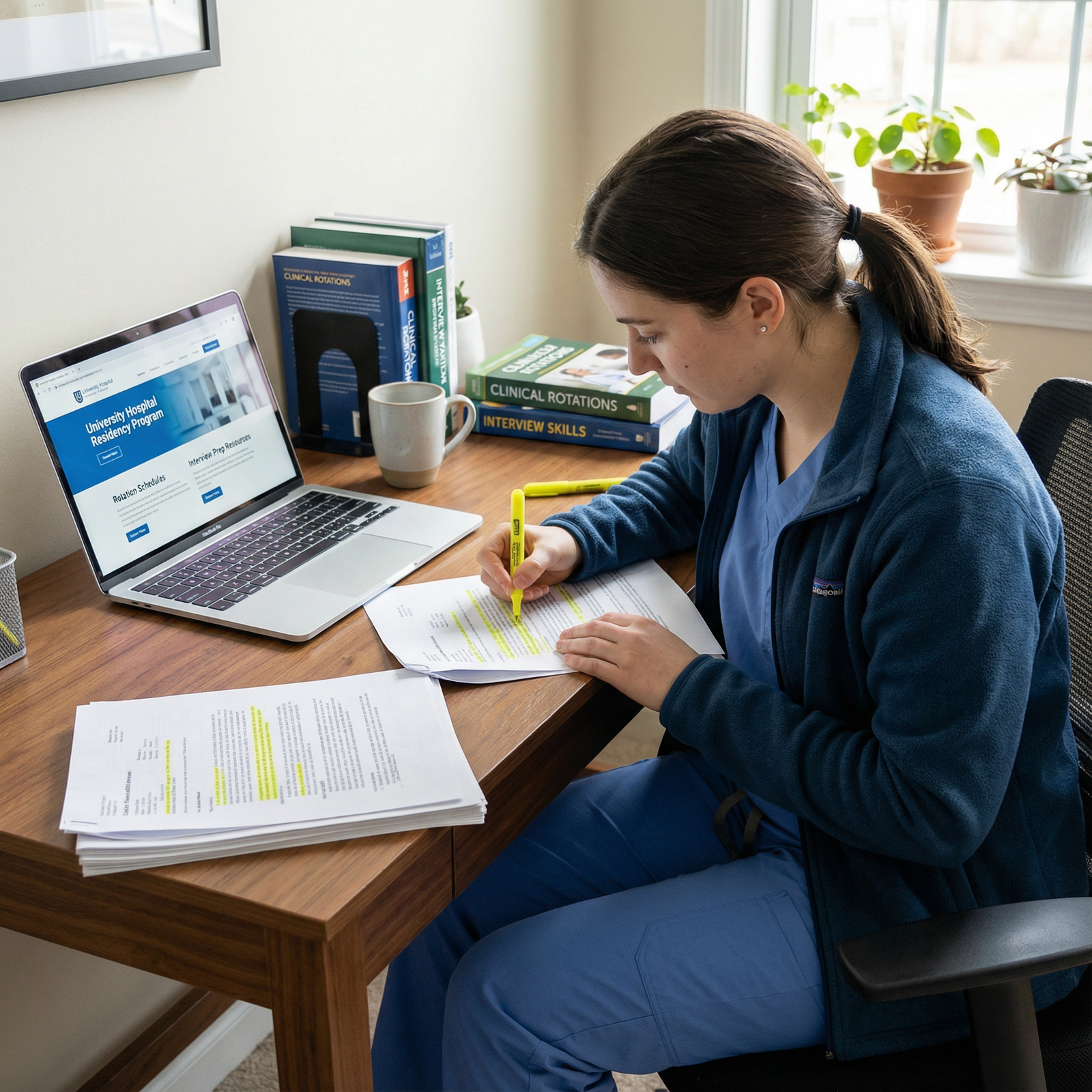
Thoughtful preparation is what separates vague, generic answers from compelling, memorable ones. Treat this as part of your residency interview prep—not an afterthought.
1. Systematically Review Each Rotation
Go rotation by rotation and jot down:
a. Key learning points
- Clinical skills: e.g., “became confident managing DKA admissions,” “refined approach to abdominal pain.”
- Professional growth: “learned to speak up on rounds,” “developed more concise presentations.”
b. Memorable patient encounters Look for cases that:
- Changed how you think about medicine or your specialty
- Challenged your assumptions or biases
- Made you reflect on ethics, professionalism, or communication
For each, note:
- Patient context (age, key diagnosis, setting—without identifiers)
- Your role and specific contributions
- What made the case educational or meaningful
c. Challenges and turning points Programs are very interested in “growth moments,” such as:
- Initial struggle with time management, later improved with a new system
- Difficult feedback you received and how you acted on it
- Emotionally taxing experiences (e.g., first patient death) and what you learned
You don’t need dozens of examples. Aim for:
- 2–3 strong stories per major core rotation
- 3–5 particularly strong stories closely aligned with your chosen specialty
2. Use a Structured Story Framework (Beyond Just STAR)
The STAR method (Situation, Task, Action, Result) is a solid start. For residency interviews, consider extending it to STARR-R:
- Situation – Briefly set the scene
- Task – Your responsibility or the problem you needed to solve
- Action – What you actually did (focus on your thought process)
- Result – What happened (clinical and/or team outcome)
- Reflection – What you learned or would do differently
- Relevance – How this experience prepares you for residency or your specialty
This last step—relevance—is where many applicants fall short. Don’t assume interviewers will automatically make the connection; spell it out.
3. Build a “Rotation Story Bank”
Create a simple document or spreadsheet with columns like:
- Rotation
- Short title (“Breaking bad news in IM,” “Managing patient anxiety in EM”)
- Skills demonstrated (communication, leadership, adaptability, clinical reasoning, etc.)
- Specialty relevance
During residency interviews, common questions such as:
- “Tell me about a challenging patient.”
- “Describe a time you made a mistake or almost made one.”
- “Share a clinical experience that confirmed your interest in this specialty.”
…can all be answered using stories from this bank. Having these prepared reduces anxiety and helps your answers stay focused and specific.
4. Practice Aloud With Feedback
Good communication skills require practice, not just thinking through answers silently.
- Rehearse stories with peers, residents, or faculty advisors
- Time your responses (most answers should be 1.5–3 minutes)
- Ask for concrete feedback:
- Was the story clear?
- Did my role come through, or did it sound like I was just watching?
- Did I articulate what I learned and why it matters for residency?
Consider recording yourself once or twice to refine your tone, pacing, and clarity.
Presenting Your Clinical Rotations Effectively During Residency Interviews
Once you’ve prepared, the next step is how you bring those experiences into the conversation in a natural, strategic way.
1. Tailor Rotation Stories to Each Program and Specialty
Research each residency program’s:
- Mission statement and values
- Patient population and clinical focus (e.g., underserved care, tertiary referral center)
- Educational strengths (e.g., simulation, research, global health)
Then align your clinical rotations with these themes. For example:
For a program focused on underserved populations:
Share a family medicine or internal medicine rotation story where you navigated social determinants of health, limited resources, or complex discharge planning.For a research-heavy academic program:
Link a clinical rotation case that sparked a clinical question, quality improvement project, or abstract you pursued.For procedures-heavy specialties (EM, anesthesia, surgery):
Discuss rotations where you developed procedural competence, attention to detail, and comfort under pressure.
Make it easy for interviewers to see:
“This applicant’s real-world clinical rotations and interests fit very naturally with what we do here.”
2. Use Clear, Descriptive, and Professional Language
When describing rotation experiences, aim for:
- Clarity over jargon: Your interviewers know the terminology, but clarity shows good communication habits.
- Conciseness: Don’t get lost in the medical minutiae that aren’t relevant to your learning point.
- Professional tone: Respectful and objective, especially when describing other team members or challenging interactions.
Example upgrade:
- Vague: “I saw a lot of interesting patients on my internal medicine rotation.”
- Specific and descriptive:
“During my internal medicine rotation at a safety-net hospital, I cared for a middle-aged patient with uncontrolled diabetes, heart failure, and unstable housing. Coordinating with social work, pharmacy, and case management showed me how complex care goes far beyond medication adjustments and confirmed how much I value longitudinal, team-based care.”
3. Be Candid About Challenges and Imperfections
Programs do not expect perfection. They do expect:
- Insight
- Accountability
- Growth
When discussing difficulties in your clinical rotations:
- Clearly state your role and responsibility
- Avoid blaming others (attendings, nurses, the system)
- Focus on what you changed afterward
Example framework:
“Initially, I struggled with X on my surgery rotation. After receiving feedback from my resident, I did Y and Y to improve. Over the next few weeks, that led to Z change in my performance, and I’ve carried that system into my later rotations.”
This kind of narrative shows emotional intelligence and willingness to evolve—traits highly valued in residency.
4. Turn Your Stories Into Conversations
Residency interviews are not oral exams; they’re professional conversations. After sharing a rotation experience, you can naturally invite dialogue:
- “I realized how much I enjoyed managing medically complex patients. How does your program expose residents to similar cases?”
- “That experience highlighted how important debriefing is after difficult events. What structures does your program have for resident support?”
- “Seeing a strong resident-led team made me excited about near-peer teaching. How early do your residents get involved in teaching medical students?”
This approach demonstrates curiosity, maturity, and genuine interest in how the program operates.
Sample Clinical Rotation Stories You Can Adapt
Below are expanded examples you can model and customize for your own experiences.
Example 1: Emergency Medicine – Prioritization and Teamwork
Question: “Tell me about a time you handled a high-pressure clinical situation.”
STARR-R Answer:
Situation:
“During my emergency medicine rotation at a busy urban hospital, we had an evening where the waiting room and department were both packed, and multiple ambulances arrived within minutes.”Task:
“As the medical student working closely with the senior resident, my task was to help with triage by obtaining focused histories and identifying any red flags that needed immediate attention.”Action:
“I quickly assessed a patient with chest pain whose initial triage note was brief. Recognizing concerning features in their history, I immediately notified the senior resident and helped initiate an EKG and labs. At the same time, I assisted the nurses by facilitating room placement and ensured vital signs were updated on several other patients.”Result:
“The patient with chest pain was found to have an NSTEMI and was rapidly started on appropriate therapy and admitted to cardiology. Overall, by coordinating with the nursing staff and communicating continuously with my senior, we helped streamline the flow of patients, and the team remarked that the department felt more organized despite the surge.”Reflection:
“I learned how crucial early recognition and clear, closed-loop communication are in high-acuity settings. I also realized the importance of staying calm and focusing on one task at a time, even when the environment feels chaotic.”Relevance:
“This experience confirmed that I enjoy fast-paced, team-based environments, and it strengthened my interest in emergency medicine, where these skills are essential.”
Example 2: Surgery – Curiosity and Active Learning
Question: “Describe a learning experience from your surgical rotation that stands out.”
Situation:
“During my general surgery rotation, I scrubbed into a complex laparoscopic colectomy on an elderly patient with multiple comorbidities.”Task:
“As the medical student, my role was to assist with retraction, anticipate instrument needs, and stay engaged in the operative plan.”Action:
“To prepare, I reviewed the patient’s imaging, read about the procedure, and discussed the operative steps with the resident beforehand. In the OR, I asked focused questions at natural pauses, such as why we chose a particular stapling device or how the surgeon assessed tissue perfusion. After the case, I followed the patient postoperatively, monitored for complications, and presented updates on rounds.”Result:
“The attending later commented that my preparation and questions elevated the educational value of the case for the entire team. Following the patient’s recovery from the OR to discharge helped me connect technical surgical decisions with real-world outcomes.”Reflection:
“I learned that being proactive—both in preparation and follow-through—maximizes learning during rotations. It also showed me how much I enjoy the combination of procedural work and longitudinal responsibility for postoperative care.”Relevance:
“These experiences contribute directly to my interest in surgery as a career, where thorough preparation, technical attention to detail, and commitment to patient outcomes are critical.”
Common Pitfalls When Discussing Clinical Rotations (and How to Avoid Them)
1. Listing Rotations Instead of Telling Stories
Avoid:
“I did my internal medicine rotation, then surgery, then pediatrics, and I learned a lot in all of them.”
Do instead:
Select 1–2 illustrative experiences per answer that show:
- A concrete challenge
- Your specific actions
- A clear takeaway
2. Making Yourself a Passive Observer
Avoid:
“I watched the team handle a complex patient…”
Do instead:
Highlight your contribution, even if it was at the student level:
- “I gathered the initial history…”
- “I noticed that…”
- “I advocated for…”
- “I followed up on…”
Programs know medical students have limited responsibility; they still want to see initiative and engagement.
3. Speaking Negatively About Rotations, Attendings, or Institutions
You may have had difficult experiences, but in interviews:
- Maintain professionalism
- Avoid blaming; focus on your response and growth
- Frame less-enjoyed rotations as clarifying your interests, not as “a waste”
Example:
“While I realized during my OB/GYN rotation that my interests aligned more with internal medicine, I’m grateful for the exposure to women’s health and procedural skills that I know will still be valuable in my future practice.”
4. Forgetting to Tie Back to Residency Readiness
Every strong rotation story should end with something like:
- “This prepared me for residency by…”
- “This is directly relevant to [specialty] because…”
- “From this, I developed [skill], which I know is crucial in [program/specialty].”
Without this step, your stories may sound interesting but not purposeful.
Integrating Clinical Rotations Into Different Interview Question Types
Many common residency interview questions can and should be grounded in clinical rotation experiences:
“Why this specialty?”
Anchor your answer in 2–3 rotation experiences that showed you what you value in clinical work.“Tell me about a mistake you made.”
Use a rotation case where you missed something or communicated poorly—and corrected it.“Describe a conflict with a team member.”
Draw from interdisciplinary interactions in rotations, focusing on resolution and professionalism.“What is your greatest strength/weakness?”
Use specific feedback and examples from rotations to back up your claims.
By repeatedly drawing from your rotation story bank, your entire interview narrative will feel cohesive, grounded in real patient care, and aligned with your long-term career development.
FAQ: Discussing Clinical Rotations in Residency Interviews
Q1: How many clinical rotation stories should I prepare for residency interviews?
Prepare:
- 3–5 strong stories closely aligned with your chosen specialty
- 1–2 stories each focused on communication, teamwork, dealing with mistakes, and handling stress
You can often reuse the same story for multiple question types by emphasizing different aspects (e.g., communication vs. leadership).
Q2: What if I didn’t enjoy a particular rotation or specialty? How honest can I be?
You can be honest, but stay professional and constructive:
- Avoid disparaging comments about specialties or teams
- Emphasize:
- What you learned despite not loving the field
- Skills gained that are transferable (e.g., procedural skills, counseling, pediatrics-based communication)
- How the experience clarified your genuine interests
Frame it as part of your career development, not a complaint.
Q3: How do I handle questions about a rotation where I struggled or received negative feedback?
Use a growth-focused framework:
- Briefly describe the challenge (e.g., slow documentation, disorganized presentations).
- Share the feedback you received.
- Explain the specific steps you took to improve (checklists, practice, asking for examples).
- Describe how your performance changed on later rotations.
- Conclude with how this process prepared you for feedback in residency.
Programs value residents who are coachable and reflective more than those who claim to have no weaknesses.
Q4: Should I discuss away rotations or sub-internships differently from core rotations?
Yes, highlight what makes them unique:
- Higher level of responsibility
- Closer approximation of intern duties
- Insights into culture and expectations at that specific institution
If you’re interviewing at a site where you did an away or sub-I:
- Mention specific patients, projects, or team interactions that made you want to return.
- Show that you understand the program’s workflow and values from first-hand experience.
Q5: How can international medical graduates (IMGs) best present their clinical rotations or observerships?
For IMGs, U.S. clinical experience is especially important. When discussing rotations, observerships, or externships:
- Emphasize how you adapted to the U.S. healthcare system, documentation norms, and team structure
- Highlight any hands-on responsibilities you had (within the limits of your role)
- Show how you built communication skills across cultural and system differences
- Make clear links between your international training, U.S. experience, and your readiness for residency in that environment
Leveraging your clinical rotations effectively in residency interviews requires structure, reflection, and purposeful communication. When you transform day-to-day clerkship experiences into well-crafted stories about growth and readiness, you give programs exactly what they need to confidently envision you as a future resident on their team.