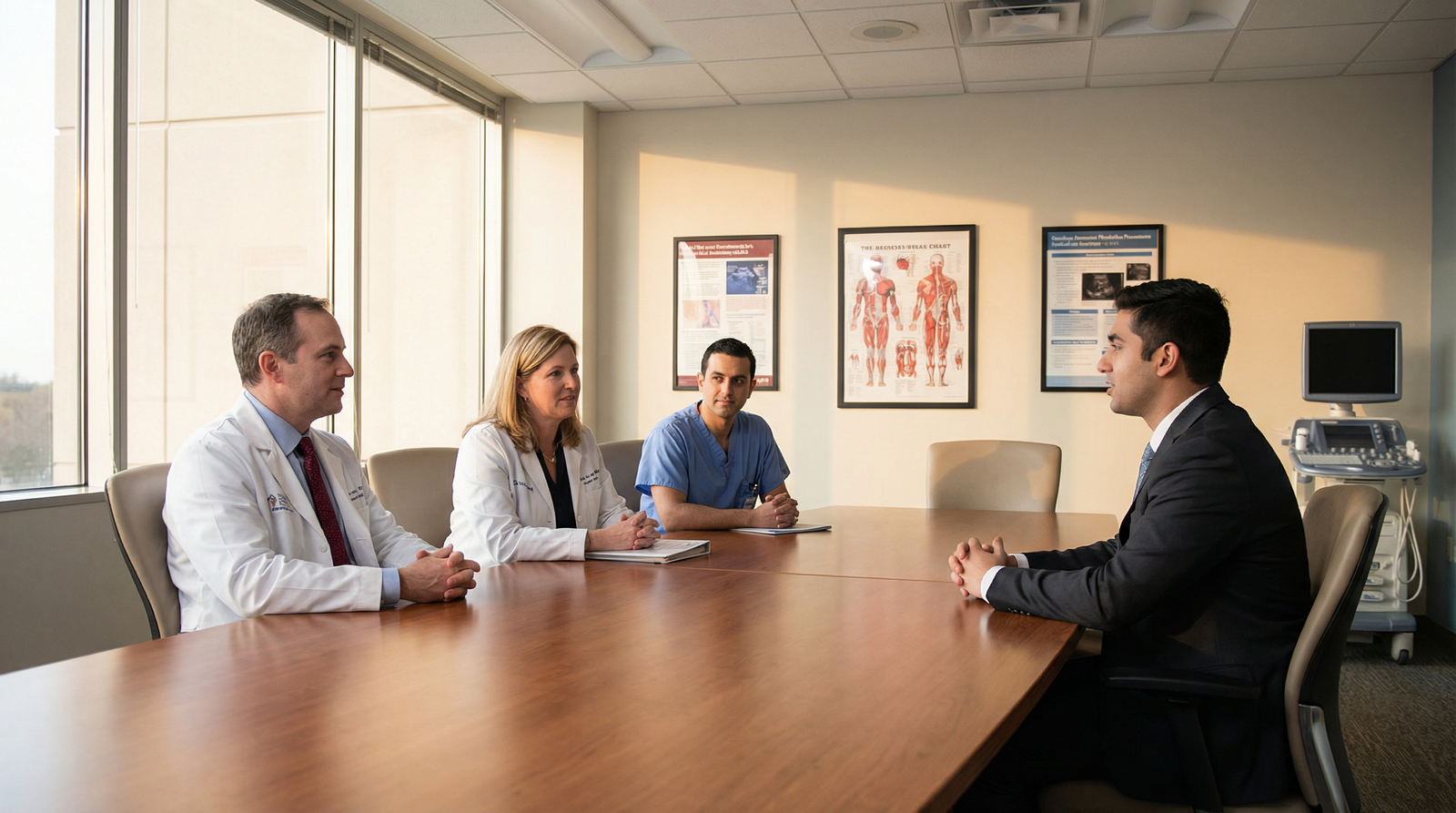
Why Your Questions Matter in Medicine-Psychiatry Residency
As an MD graduate preparing for the allopathic medical school match, the questions you ask during interviews can be as revealing as the ones you answer. This is especially true for a med psych residency (medicine psychiatry combined), where program structures, cultures, and long-term opportunities vary widely.
Thoughtful, specific questions to ask residency programs show that you understand the unique demands of dual training and that you’ve done your homework. They also help you assess whether a program can realistically support your clinical, academic, and personal goals.
This guide focuses on targeted, high-yield questions to ask programs—and how to interpret the answers—so you can approach interviews with clarity and confidence.
Core Strategy: How to Approach Questions as a Med-Psych Applicant
Before memorizing a list, you need a framework. The best questions to ask residency programs in medicine-psychiatry do three things:
- Clarify structure and training quality
- Reveal culture, support, and wellness
- Align with your long-term goals (clinical, academic, or leadership)
General Principles for Strong Questions
Be specific and anchored in the program’s reality.
Reference something from their website, brochure, or prior session:
“I noticed you have an integrated med-psych clinic in year 3…”Prioritize questions that help you rank programs.
If the answer wouldn’t change your rank list, it’s lower priority.Avoid questions easily answered online.
Use your time for nuances, not basic facts (e.g., salary, number of weeks of vacation).Adapt to the person in front of you.
You’ll ask different things of a program director vs a current resident vs a faculty mentor in consultation-liaison psychiatry.Keep timing in mind.
Ask bigger-picture training structure questions early, and culture/future-planning questions later in the day when you have context.
Key Questions to Ask Program Leadership (Program Director & APDs)
This is where “what to ask program director” matters most. Leadership can speak to curriculum, philosophy, accreditation, and outcomes. Below are high-yield categories and sample questions.
1. Program Structure, Integration, and Curriculum
For a medicine psychiatry combined program, the degree of integration vs. parallel training is critical.
Questions:
“How is the training integrated between internal medicine and psychiatry, versus being more of a ‘side-by-side’ dual program?”
- Listen for: Shared clinics, joint didactics, interdisciplinary supervision, co-attending models.
“Can you walk me through the typical progression of a med psych resident from PGY-1 through graduation?”
- Look for: Clear structure, logical progression of responsibilities, increasing autonomy.
“How closely does your curriculum follow ACGME requirements for both IM and Psychiatry, and where does your program intentionally go beyond the minimums?”
- Good signs: Confidence, specific examples of innovation or added integrated experiences.
“What opportunities exist for integrated med-psych experiences—such as combined clinics, C-L rotations with medical responsibility, or primary care behavioral health models?”
“Will I be fully board-eligible in both internal medicine and psychiatry on graduation, and have your graduates consistently met board requirements?”
- Red flag: Vague or evasive answers about board eligibility or variable track records.
Why this matters:
Many MD graduate residency applicants underestimate how different med psych residency structures can be. Some are deeply integrated; others are essentially two separate residencies. Your daily life and identity as a physician will depend heavily on this structure.
2. Call, Workload, and Service vs Education Balance
Dual training can be intense. You need to know whether the program is sustainable.
Questions:
“How are call schedules structured across medicine and psychiatry rotations for med-psych residents? Are there differences compared to categorical residents?”
“When I am on medicine, will I function identically to categorical medicine residents in terms of patient load and call? What about when I am on psychiatry?”
“How does the program monitor workload and duty hours specifically for combined residents, given that we rotate between two departments?”
“Can you provide examples of meaningful changes you’ve made to workload or rotations in response to resident feedback?”
- Good sign: Concrete examples, not generic reassurances.
How to interpret:
- High service, low education environments may feature heavy cross-cover responsibilities, frequent short-call shifts, and minimal protected teaching time.
- Balanced programs will describe deliberate efforts to keep med-psych residents from being “free floaters” who fill gaps wherever needed.
3. Identity, Mentorship, and Faculty Support
Med psych residents often worry about identity: “Am I an internist? A psychiatrist? Both? Neither?” Programs that address this well usually perform better overall.
Questions:
“How do you support the professional identity development of med-psych residents, so we don’t feel like visitors in both departments?”
“Do med psych residents have dedicated faculty mentors who are themselves dual-trained or work closely at the medicine-psychiatry interface?”
“How often do med psych residents meet with leadership for individualized career planning and feedback?”
“Can you describe the culture and collaboration between the internal medicine and psychiatry departments around this combined program?”
- Green flags: Joint faculty meetings, shared retreats, co-led conferences, visible enthusiasm for combined training.
Red flag:
If you hear that med psych residents are routinely “loaned” to cover deficits in either department without clear educational purpose, that’s worth noting.
4. Graduate Outcomes and Career Paths
For an MD graduate residency applicant, programs that can clearly articulate where their graduates go tend to have stronger mentorship and intentional training.
Questions:
“What have recent med psych graduates gone on to do in terms of fellowships, academic positions, community practice, or leadership roles?”
“Do graduates typically practice primarily in one specialty, or are they able to maintain a truly integrated medicine psychiatry combined practice?”
“How supportive is the program of pursuing additional training, such as addiction, C-L psychiatry, geriatrics, or hospital medicine fellowships?”
“Can you share examples of alumni who are working in innovative integrated care settings, such as collaborative care models or medically complex psychiatry units?”
What to listen for:
- Programs that track alumni and describe nuanced career trajectories usually have strong advising and networks.
- If most graduates abandon one specialty entirely, ask yourself whether that aligns with your goals.
5. Research, Quality Improvement, and Scholarly Work
If you’re interested in academic medicine, policy, or systems-level work, you need to know how well the program supports scholarship.
Questions:
“What kinds of research or QI projects do med psych residents typically engage in, and how are they supported?”
“Is there protected time for research or scholarly projects, especially in later years?”
“Are there faculty with ongoing funded or high-impact work at the interface of internal medicine and psychiatry?”
“How successful have residents been in presenting at national conferences or publishing during residency?”
Tip:
Even if you don’t plan an academic career, programs that foster scholarship often also foster critical thinking, mentorship, and professional growth—good for everyone.

Questions for Residents: Culture, Wellness, and Lived Experience
Current residents will give you the most candid view of daily life. This is often where the most meaningful interview questions for them emerge.
1. Daily Life and Rotation Experience
Questions:
“Can you describe a typical day for you on a medicine rotation? On a psychiatry rotation? On an integrated med-psych rotation?”
“Do you feel your responsibilities are comparable to categorical residents on each service, or are there key differences?”
“How consistent is your schedule from block to block, and how much unpredictability do you deal with?”
“What’s been the most challenging part of being in a combined program here, and how has the program helped—or not helped—address that?”
Why this matters:
Residents’ descriptions will give you a far more accurate sense of workload, supervision, and how it feels to move between two worlds regularly.
2. Resident Culture, Support, and Inclusion
Med psych residents can feel “in between” groups. Ask directly about inclusion and culture.
Questions:
“Do you feel fully accepted and integrated with both the internal medicine and psychiatry resident cohorts?”
“How do categorical medicine and psych residents view the med psych residents? As colleagues, as extra help, as something else?”
“How approachable are faculty and leadership when you raise concerns or need support?”
“Can you tell me about a time when a resident was struggling and how the program responded?”
“Have you ever felt pressure to choose one specialty ‘side’ over the other in terms of identity, opportunities, or respect?”
Green flags:
- Residents easily name supportive faculty and peers.
- Examples of concrete responses to stress or crises (altered schedules, meaningful wellness initiatives).
Red flags:
- Vague generalities: “We have wellness events” without examples.
- Comments suggesting med psych residents are routinely “stretched thin” without remediation.
3. Wellness, Burnout Prevention, and Psychological Safety
Med psych training is inherently demanding; you want a program that acknowledges this and plans for it.
Questions:
- “What are the biggest stressors for med psych residents here?”
- “How does the program support mental health care for residents, including confidentiality and access?”
- “Do you feel comfortable saying no or asking for help when you’re overwhelmed?”
- “Have there been any recent changes to duty hours, call, or rotations based on concerns about burnout?”
Interpretation:
You’re looking for a culture where burnout is openly discussed and mental health is normalized, not stigmatized—especially critical in psychiatry-related training.
4. Practical Logistics: Housing, Commute, Rotations Sites
This may not feel as “academic,” but logistics impact your quality of life.
Questions:
- “How many clinical sites do you rotate through, and what are the typical commute times?”
- “Are any rotations at community hospitals or VA sites, and how does that affect your schedule?”
- “Do residents typically live near the main hospital? Is parking/transportation a challenge?”
Tip:
Ask residents how they actually live—where they live, how they commute, what they do on a day off—to get a sense of practical fit.

Subtle but High-Yield Topics: What Many MD Graduates Forget to Ask
Beyond structure and culture, there are nuanced issues specific to med psych residency that you should address.
1. Board Exams and Preparation Support
Dual board eligibility means twice the exams and a more complex prep schedule.
Questions:
“How does the program support residents in preparing for both the internal medicine and psychiatry board exams?”
“Are there structured board review series, question banks, or funded courses for each specialty?”
“How do med psych residents typically perform on in-training exams and boards compared to categorical residents?”
Look for evidence that the program recognizes the extra cognitive load and plans accordingly.
2. Flexibility for Career Direction and Focus
Even within medicine psychiatry combined training, interests evolve.
Questions:
“If a med psych resident becomes more interested in a particular niche—like addiction, C-L, primary care behavioral health, or psychosomatic medicine—how much flexibility is there to tailor electives?”
“Can residents develop a longitudinal integrated clinic that aligns with their specific career interests?”
“Have residents been able to build tracks or niches, such as global health, health policy, medical education, or informatics, within the combined program?”
This helps you gauge how rigid or adaptable the training is.
3. Advocacy, Systems-Based Practice, and Integrated Care Leadership
Med psych graduates often end up in roles leading integrated care or advocating for vulnerable populations.
Questions:
“What opportunities are there to engage in systems-level work—such as improving care for patients with serious mental illness and medical comorbidities, or working on hospital-wide initiatives?”
“Are there experiences in collaborative care, population health, or quality improvement specifically focused on the med-psych interface?”
“Do residents receive formal training in leadership, teaching, or systems-based practice during residency?”
Programs that explicitly cultivate leadership in integrated care are well-positioned to prepare you for future roles.
4. Transition Support: From Residency to Practice or Fellowship
The transition after a med psych residency can be uniquely complex.
Questions:
“How does the program support residents in their final year as they apply to jobs or fellowships?”
“Are there networking opportunities with alumni or partner institutions that specifically need dual-trained physicians?”
“Do faculty actively help residents position themselves for hybrid roles that allow them to use both skill sets?”
Look for structured career planning—not just informal, last-minute advice.
Strategy: How to Organize Your Questions Across the Interview Day
You’ll interact with multiple people: program director, associate program directors, faculty, residents, possibly a chair or department leadership. Plan your questions accordingly.
Before the Interview
- Review the program’s website, recent publications, and any info sessions.
- Write down:
- 3–4 must-ask questions for leadership
- 4–6 must-ask questions for residents
- 2–3 backup questions for each group in case others get answered earlier
With the Program Director / Leadership
Focus on:
- Structure, integration, and curriculum
- Board eligibility and outcomes
- Oversight, evaluation, and response to feedback
- Support for med psych-specific identity and careers
Example sequence:
- “Can you walk me through the structure from PGY-1 to graduation?”
- “What are the signature integrated med-psych experiences here?”
- “How have you adapted the program based on resident feedback in the last few years?”
- “Where do your graduates go, and how do you help residents plan for those paths?”
With Faculty Interviewers
Focus on:
- Their view of med psych residents on their services
- Collaboration between medicine and psychiatry
- Teaching philosophy and supervision
Example questions:
- “How do you see med psych residents contributing uniquely to your service?”
- “Can you describe how supervision works when residents are managing both medical and psychiatric issues on the same patient?”
With Residents
Focus on:
- Daily reality, stressors, and support
- Culture and cohesion
- Practical life considerations
Example questions:
- “If you could change one thing about the program, what would it be?”
- “Do you feel the program delivers on what was described to you on interview day?”
- “How manageable is it to maintain relationships, hobbies, or family life here?”
At the End of the Day
You’ll often be asked, “Do you have any final questions?”
Use this for a synthesizing or values-level question, such as:
- “What do you think differentiates your med psych program most from others in terms of training philosophy or outcomes?”
- “Is there anything about the program you’re particularly proud of that we haven’t talked about yet?”
Putting It All Together: Building Your Personal Question List
To make this actionable, here’s a sample shortlist you might bring (tailor it to your priorities).
Top 10 High-Yield Questions for Medicine-Psychiatry Programs
Integration and Identity
“How is the medicine psychiatry combined training integrated here, and how do you help residents develop a coherent professional identity across both specialties?”Curriculum and Signature Experiences
“What are the signature med-psych experiences or rotations that you feel really define your program?”Workload and Support
“How do call schedules and workloads for med psych residents compare to categorical residents, and what changes have you made recently to improve the experience?”Culture Across Departments
“How would you describe the relationship between the internal medicine and psychiatry departments with respect to this combined program?”Mentorship
“Do med psych residents have dedicated dual-trained or med-psych-focused mentors, and how often do you meet to discuss career planning?”Graduate Outcomes
“What do most of your graduates do after residency, and how well do you feel the program prepares them for those roles?”Board Preparation
“How do you support residents in preparing for both medicine and psychiatry boards, and how have they performed historically?”Research and Scholarly Work
“What research or scholarly opportunities are available at the med-psych interface, and do residents have protected time for these interests?”Resident Experience and Well-Being (to residents)
“What are the biggest challenges of training here as a med psych resident, and do you feel the program genuinely listens and responds?”Fit and Differentiation
“In your view, what makes your med psych program stand out among other allopathic medical school match options for MD graduate residency applicants?”
Use this as a starting point and modify based on what you learn from each program’s materials and your evolving interests.
FAQs: Questions to Ask Programs for MD Graduate in Medicine-Psychiatry
1. How many questions should I ask during each interview?
Aim for 2–3 thoughtful questions per interview slot, depending on time. Prioritize depth over volume. It’s better to have a focused conversation on one rich topic than to fire off a list of superficial queries. Prepare a master list, but adapt to what has already been covered throughout the day.
2. Are there questions I should avoid asking?
Yes. Avoid:
- Questions easily answered online (salary, vacation days, basic rotation lists)
- Anything that suggests you haven’t read the website
- Overly personal or confrontational questions about residents or faculty
- Questions about how the program will rank you
Instead, frame sensitive topics openly but constructively, e.g., “How has the program addressed resident feedback about workload?” rather than “I heard your hours are terrible—why?”
3. How can I tailor my questions if I’m not sure about my long-term career plans?
Be honest and use questions to explore possibilities:
- “For residents who come in unsure whether they’ll lean more toward medicine, psychiatry, or a balanced blend, how do you help them clarify their path during training?”
- “What options have past residents discovered for integrated careers that they didn’t know about at the start?”
This shows self-awareness and openness rather than indecision.
4. Do my questions really affect how programs view my application?
Yes, indirectly. Strong, specific questions signal:
- Genuine interest in the program
- Maturity in understanding what medicine psychiatry combined training entails
- Thoughtful reflection on your future
While they won’t override your application metrics, they can reinforce a positive impression and help interviewers envision you as a colleague who engages thoughtfully with complex systems—exactly what med psych residency demands.
By approaching your interviews with a clear strategy and well-crafted questions to ask residency programs, you’ll be better equipped to identify where you’ll thrive as a dual-trained physician at the intersection of internal medicine and psychiatry.