
Why Your Questions Matter in General Surgery Residency Interviews
As an MD graduate targeting a general surgery residency, you’re not just being evaluated—you’re evaluating programs just as closely. The questions you ask programs during interviews, dinners, and informal conversations can reveal whether a residency will truly support your development as a surgeon.
Strong, thoughtful questions serve three purposes:
- Signal maturity and insight — You show you understand what a demanding general surgery residency entails.
- Help you compare programs — Especially when every program says it has “strong operative experience” and “great camaraderie.”
- Protect your long‑term goals and well‑being — You need to know: Will you actually learn to operate? Will you be supported? Will you match into the fellowship or practice you want?
This guide focuses on what to ask and whom to ask, tailored to the MD graduate in general surgery. It assumes you’ve already covered basic information from program websites and brochures, and focuses on deeper, higher‑yield questions.
Strategy: How to Ask Smart Questions (and Avoid Traps)
Before diving into sample questions, it helps to understand how to approach the conversation.
Principles for High‑Yield Questions
- Be specific, not generic. Instead of “How’s the operative experience?” ask, “By the end of PGY‑3, what typical cases are residents comfortably doing independently?”
- Target your audience. Some questions are best for the program director; others are ideal for residents or coordinators.
- Show you did your homework. Reference what you’ve read or heard: “I noticed your program recently expanded to a new community site…”
- Avoid prohibited topics. Don’t directly ask about rank lists, visas, or contractual obligations that the program can’t discuss under NRMP rules.
Who to Ask What
- Program Director (PD): Vision, curriculum, evaluation, institutional support, remediation policies, big‑picture strategy.
- Associate/Assistant PDs & Core Faculty: Education specifics, surgical training philosophy, mentorship, specialty tracks.
- Chiefs and Senior Residents: Actual operative autonomy, call realities, fellowships, culture, career preparation.
- Interns and Juniors: Day‑to‑day workload, wellness, teaching, administrative burdens, support.
- Program Coordinator: Logistics, scheduling, orientation, benefits, housing, time‑off requests.
- Chair or Division Chiefs: Departmental stability, research infrastructure, long‑term growth, reputation.
You don’t need to ask every question in this article; instead, choose what matters most for your goals and use the lists as a menu.

Core Questions for Program Directors and Faculty
Many MD graduate candidates in general surgery focus heavily on impressing program leadership but forget to extract key information. Below are targeted questions to ask a program director or core faculty, with notes on what to listen for.
1. Training Philosophy and Program Vision
Sample Questions:
- “How would you describe your overall philosophy of training a general surgeon at this institution?”
- “As an MD graduate from an allopathic medical school, I’m interested in broad operative training. How do you balance service needs with education and operative autonomy?”
- “Where do you see the program in five years in terms of case mix, faculty recruitment, and hospital resources?”
What you’re listening for:
- Do they describe a clear, intentional approach (graduated autonomy, robust simulation, structured teaching)?
- Is there recognition of the heavy service demands in general surgery residency, with concrete strategies to protect education time?
- Evidence of growth or stability (new ORs, trauma center upgrades, faculty recruitment) vs vague or defensive answers.
2. Operative Experience and Autonomy
This is critical for any MD graduate residency, but in general surgery it’s central to your future career.
Sample Questions:
- “Can you walk me through the typical operative case mix for a PGY‑2, PGY‑3, and chief resident?”
- “By the time residents graduate, what types of complex cases are they doing independently or with minimal supervision?”
- “How do you ensure residents get enough index cases across subspecialties like colorectal, HPB, vascular, and minimally invasive surgery?”
- “How is operative autonomy measured or tracked here, and how do you respond if residents are not meeting benchmarks?”
What you’re listening for:
- Specific numbers and examples, not just “we’re very busy.”
- Structured tracking (case log review, milestones, feedback) rather than ad‑hoc.
- Evidence that chiefs are primary surgeons on complex cases, and that juniors get meaningful early operative exposure.
3. Curriculum, Didactics, and Evaluation
Sample Questions:
- “What does a typical week of didactics look like for general surgery residents? How protected is that time from clinical duties?”
- “How do you integrate ABSITE preparation and board review into your curriculum?”
- “Can you describe your evaluation process for residents? How do you give feedback and help residents who are struggling?”
- “What has changed in the program in response to resident feedback over the last few years?”
What you’re listening for:
- Protected teaching time that is actually honored.
- A structured approach to ABSITE and board preparation (mock orals, question banks, formal review sessions).
- Clear remediation processes that are supportive rather than punitive.
- Concrete examples of program improvements based on resident input.
4. Program Stability and Leadership
Sample Questions:
- “How long have you and the core leadership team been in your roles, and what changes have you implemented recently?”
- “How stable is the surgical faculty, particularly in key services like trauma, colorectal, and vascular?”
- “Are there any significant institutional or structural changes on the horizon that might affect resident training (mergers, expansions, new hospitals)?”
What you’re listening for:
- Continuity in leadership and faculty.
- Honest discussion of challenges with clear plans (e.g., faculty recruitment, service redistribution).
- Assurance that current residents are not “guinea pigs” for an unstable or rapidly shifting environment.
High-Impact Questions for Residents: The Real Picture
Residents are your most reliable source for understanding how a general surgery residency truly functions. These are high‑yield interview questions for them—both formal and informal.
1. Daily Workflow and Workload
Sample Questions:
- “Can you walk me through a typical weekday for a PGY‑1 on your busiest service?”
- “On average, how many hours a week do you work, and how often do you hit or approach the 80‑hour limit?”
- “How often do you come in post‑call for urgent issues or cases?”
- “How are cross‑cover and night float structured, especially for junior residents?”
What you’re listening for:
- Reasonable alignment with ACGME duty hours (occasional surges are normal, chronic violation is a red flag).
- Systems in place to adjust workload when things are consistently over capacity.
- Intern experiences that include both floor management and progressive operative exposure.
2. Culture, Support, and Wellness
Sample Questions:
- “How would you describe the culture among residents? Among residents and faculty?”
- “Have there been any situations where you felt genuinely supported by the program during a personal or professional crisis?”
- “What strategies does the program have for resident wellness? Are they actually used, or do they exist only on paper?”
- “If you had the chance to choose again, would you still come here for your general surgery residency? Why or why not?”
What you’re listening for:
- Honest, nuanced answers—not just “we’re like a family.”
- Real examples of support (schedule adjustments, mentorship, mental health access).
- Willingness to discuss challenges and how they’re handled.
3. Education vs. Service
Sample Questions:
- “Do you feel the balance between education and service is appropriate?”
- “How often do you have to miss ORs or clinics due to floor work, consults, or pager demands?”
- “Have there been changes to redistribute non‑educational tasks (scribes, PAs, NPs, hospitalists) in the last few years?”
What you’re listening for:
- Recognition that service demands exist, but not at the expense of core operative and clinic experience.
- Examples of mid‑level support or structural changes that free residents for educational experiences.
- Honest answers about the most “malignant” rotations and whether they’re being actively improved.
4. Fellowship and Career Outcomes
For many MD graduates, the surgery residency match is a stepping stone toward subspecialty training. You want to know if the program can get you there.
Sample Questions:
- “What have recent graduates gone on to do—in terms of fellowships and practice types?”
- “For residents aiming for competitive fellowships (like surgical oncology, HPB, or CT), what kind of mentorship and support do they receive?”
- “How involved are residents in research, and how much of that is expected or optional depending on your career goals?”
- “Do graduates who want broad general surgery practice, especially in community or rural settings, feel well‑prepared?”
What you’re listening for:
- Clear data on fellowships and job placements (not just, “Our residents do fine.”).
- Examples of mentorship relationships that helped residents achieve specific goals.
- Flexibility: strong fellowship support and solid preparation for comprehensive general surgery practice.
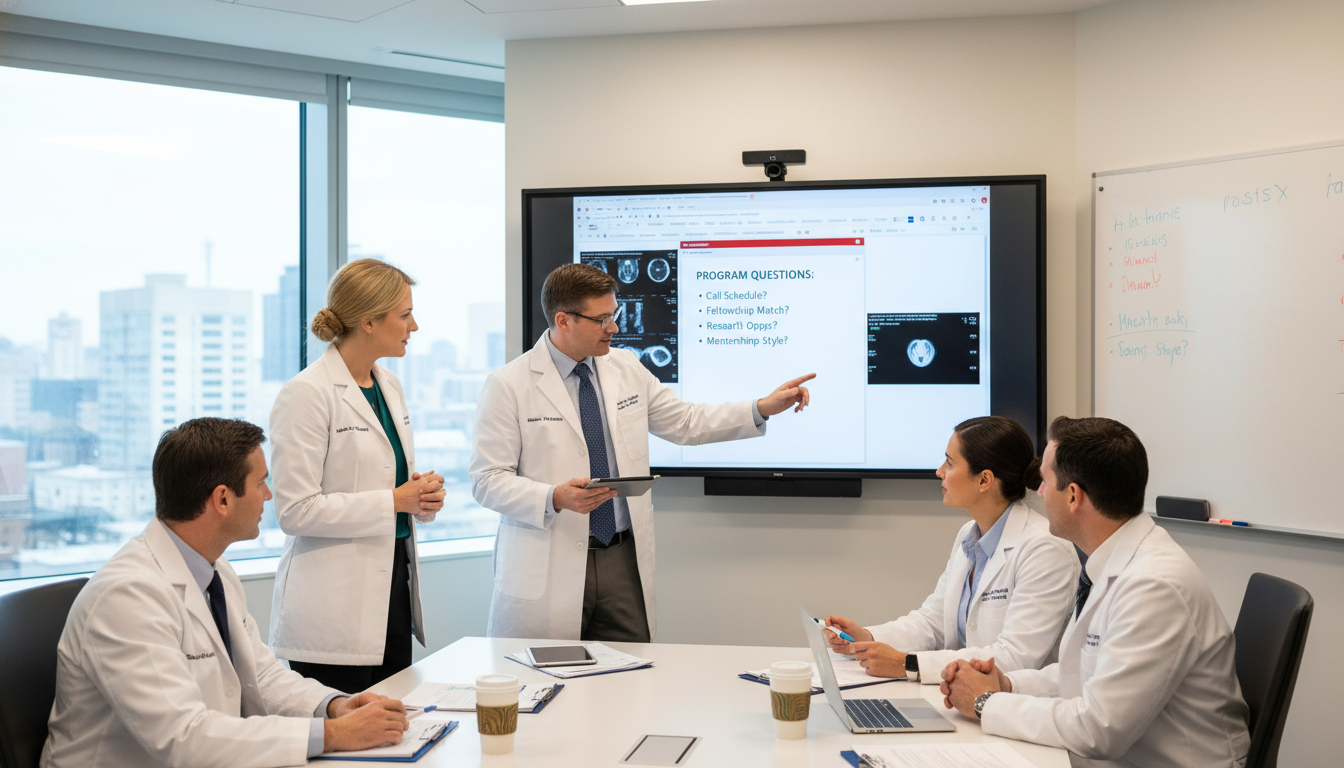
Targeted Topics: Operative Training, Research, and Lifestyle
Beyond broad culture and curriculum, MD graduate residency applicants in general surgery should explore three areas in more depth: operative training, research expectations, and resident life outside the hospital.
Deep Dive: Operative Training and Case Distribution
Questions for PDs and Senior Residents:
- “How are rotations structured to ensure exposure to core areas—trauma/acute care, colorectal, MIS, vascular, HPB, breast, and endocrine?”
- “Do residents consistently meet or exceed the ACGME case minimums? In which areas are you strongest or potentially thinner?”
- “How do you manage resident involvement when there are fellows on key services? Are there opportunities where residents are primary operators even with fellows in the program?”
- “Are there differences in operative opportunities between sites (academic vs community), and how are those balanced across residents?”
Red flags:
- Evasive answers about fellow impact.
- Statements like “you won’t have any trouble meeting minimums” with no specifics.
- Residents hinting that only a few “favorite” residents get the best cases.
Deep Dive: Research and Academic Development
In many allopathic medical school match environments, especially academic‑heavy ones, research output matters.
Questions to ask:
- “Is research required or optional for general surgery residents here? If required, how is time protected?”
- “How many residents typically take dedicated research years, and in what areas (basic science, clinical, outcomes, education)?”
- “What mentorship structure exists for residents interested in academic surgery?”
- “What institutional resources are available—biostatistics support, grant offices, databases, etc.?”
What you’re listening for:
- Clear, realistic expectations: some programs prioritize academic output, others focus more on clinical training.
- Concrete examples of recent resident publications or presentations.
- Alignment with your goals—if you want an academic trauma or HPB fellowship, research support is crucial; if you want a community general surgery practice, you may prefer less pressure for research productivity.
Deep Dive: Lifestyle, Logistics, and Location
Even in a demanding general surgery residency, your life outside the hospital matters.
Questions for Residents and Coordinator:
- “How easy is it to take vacation time at this program? Are there rotations where it’s particularly difficult?”
- “What is the process for scheduling time off for major life events (weddings, boards, family issues)?”
- “How commutable is housing to the main hospital and other sites? Do residents typically live nearby or spread across the city?”
- “What support does the program offer for parental leave or major health needs during residency?”
What you’re listening for:
- Transparent policies and actual examples.
- Reasonable flexibility within ACGME and institutional constraints.
- Realistic discussion of cost of living, commute times, and weather—things that genuinely affect your quality of life.
Key Interview Questions for Them: Program Directors, Faculty, and Residents
You don’t need to memorize a script, but it helps to have a structured list of “interview questions for them” that you can adapt in real time. Below is a consolidated set you can refine based on each program.
High-Yield Questions to Ask the Program Director
- “What characteristics do you see in residents who thrive in this general surgery residency?”
- “How do you advocate for residents at the institutional level—such as OR allocation, staffing, or new technology?”
- “What changes or improvements are you most proud of implementing in your time here?”
- “If there’s one thing you’re actively working on improving in this program right now, what is it?”
Smart Questions to Ask Faculty
- “How do you approach graduated autonomy in the OR? Can you share an example of how that looks with a chief and with a junior resident?”
- “What opportunities are there for residents to work closely with you in clinic, research, or elective rotations?”
- “How do you see the role of the general surgeon evolving, and how does this program prepare residents for that future?”
Candid Questions to Ask Residents
- “What surprised you most—good or bad—after you started here compared to interview day?”
- “What are the strengths of this program that are less obvious from the website or brochure?”
- “If you could change one thing about this program, what would it be—and do you feel leadership is receptive to that feedback?”
- “How do you and your co-residents support one another during tough rotations?”
Focused Questions for the Program Coordinator
- “How does the program handle schedule changes when residents have major life events or emergencies?”
- “What are the key logistical challenges new interns typically face, and how do you help them navigate those?”
- “Are there formal orientation or boot camp activities for incoming PGY‑1s?”
Practical Tips: Using Your Questions to Compare Programs
As you navigate the surgery residency match, you’ll likely interview at many programs that look similar on paper. The way programs answer your questions can help you construct a meaningful rank list.
1. Prepare a Core List Tailored to You
Before each interview day:
- Identify 8–10 priority questions from this guide that reflect your personal goals:
- Heavy early operative exposure?
- Strong trauma/acute care?
- Intensive research and academic support?
- Specific fellowship pipelines (MIS, HPB, vascular, trauma, surgical oncology)?
- Adjust a few questions to reflect program‑specific details from their website or residents’ bios.
2. Take Notes Right After Each Interview
After you leave (or log off) the interview:
- Jot down:
- How residents described their day‑to‑day life.
- How clearly leadership explained training philosophy and changes.
- Specific pros, cons, and “gut feel.”
- Note how they responded to your most important questions to ask residency programs—this often predicts your satisfaction later.
3. Watch for Consistency
Compare answers across:
- PD vs chief residents vs interns.
- Different interviewers within the same program.
Consistent stories about culture, workload, and operative exposure are reassuring; big discrepancies may signal issues with transparency, communication, or recent instability.
4. Avoid Over-Interpreting a Single Answer
No residency is perfect. Every program has:
- Tough rotations.
- Challenging personalities.
- Service-heavy stretches.
Focus on patterns:
- Do several residents independently mention feeling supported when struggling?
- Do multiple people describe genuine changes made based on resident feedback?
- Is there a coherent educational strategy that matches your priorities?
Frequently Asked Questions (FAQ)
1. As an MD graduate from an allopathic medical school, do I need to ask different questions than DO or IMG applicants?
The core content of what you should ask is similar: operative exposure, culture, workload, outcomes, and support. However, as an MD graduate, you may:
- Be more likely to consider academically heavy programs with strong research expectations, so ask more about research and fellowship pipelines.
- Want to clarify how the program supports residents aiming for highly competitive fellowships or academic surgery careers.
- Have access to more mentors from your allopathic medical school match network; use their insight to generate program‑specific questions.
2. Are there any questions I should avoid asking during the interview?
Yes. Avoid:
- Direct questions about how they will rank you or what position you might have on their list.
- Questions about specific salary negotiation or contract changes (those are standardized).
- Anything that pressures programs to reveal information barred by NRMP rules.
Instead, focus on:
- “What characteristics do you value in applicants who match here?”
- “How do you support residents as they navigate their own fellowship or job search?”
3. How many questions should I ask in each interview?
Aim for:
- 2–3 thoughtful questions for each faculty interviewer.
- 3–5 questions during resident panels or informal sessions.
- 1–2 targeted questions to the program director during a dedicated PD session.
Quality matters more than quantity. It’s better to ask a few insightful, specific questions than to rush through a long list without meaningful discussion.
4. What if a program seems annoyed when I ask detailed questions about workload or wellness?
How a program responds to these topics is highly informative:
- A healthy program should welcome honest questions about workload, duty hours, and wellness.
- Defensive, dismissive, or vague answers may be a red flag about transparency or culture.
- Gauge whether they acknowledge challenges and describe concrete steps they’re taking to address them.
You’re entering an intense, high‑stakes training environment. Programs that respect your need for information are more likely to respect you as a resident.
By approaching your general surgery interviews with deliberate, well‑crafted questions to ask residency programs—and listening carefully to the answers—you’ll be better prepared to choose a training environment that fits your goals, values, and future as a surgeon. Use these question frameworks, adapt them to each program, and let them guide you toward a confident, informed rank list.