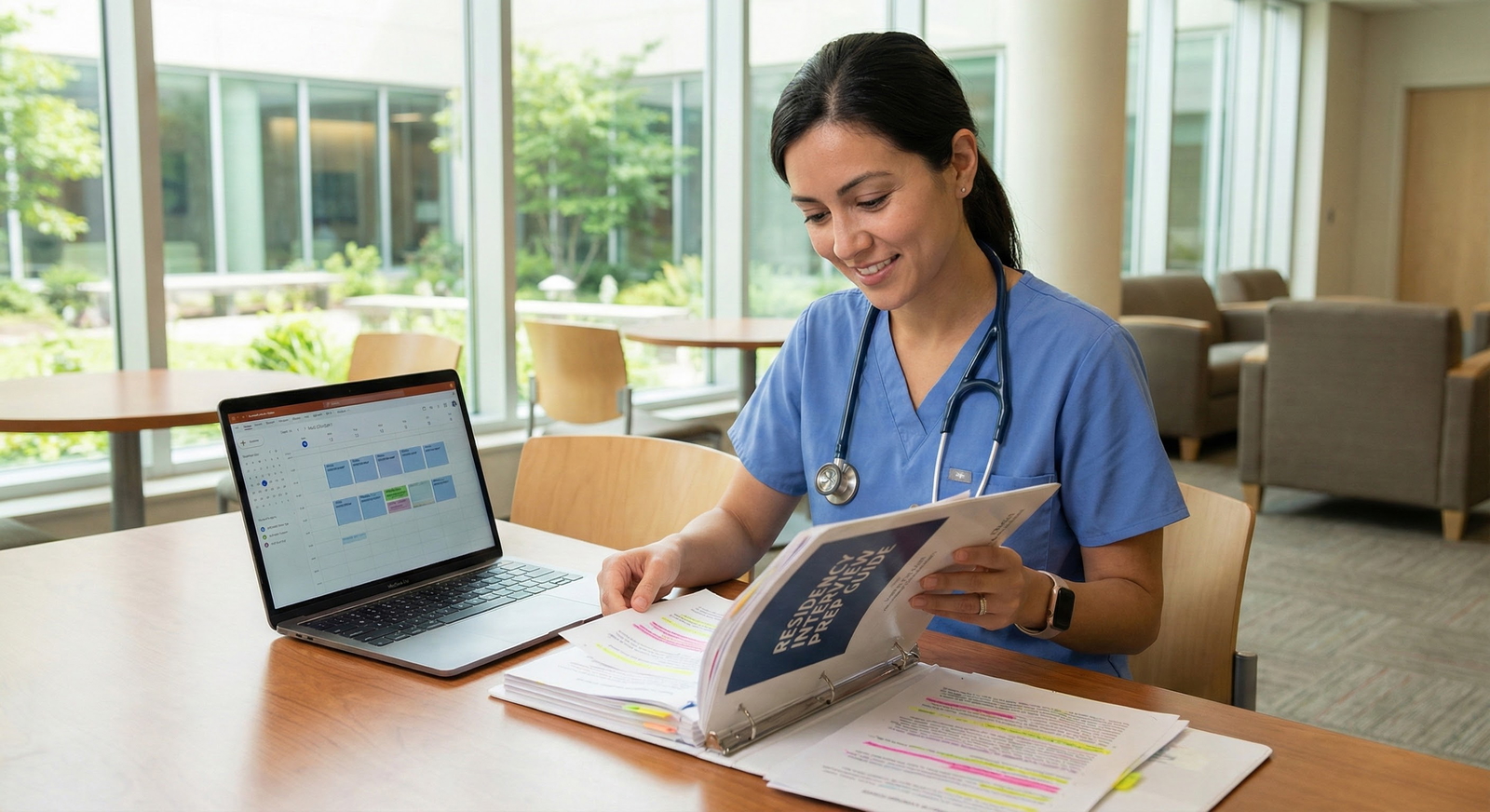
Understanding What Makes Global Health Residency Interviews Unique
For an MD graduate pursuing a global health residency track, pre-interview preparation goes well beyond memorizing common questions. Programs that emphasize global health and international medicine are assessing not only your clinical potential, but also your readiness to work across cultures, in low-resource settings, and often in complex political or humanitarian environments.
Unlike a standard allopathic medical school match interview, a global health–focused residency interview often probes:
- Your understanding of structural determinants of health
- Your commitment to health equity and social justice
- Your experience working with vulnerable or marginalized populations
- Your ability to function ethically and safely in international settings
- Your cultural humility and teamwork skills
A strong pre-interview preparation plan will help you:
- Articulate why you chose a global health residency track.
- Show alignment between your experiences, values, and the program’s mission.
- Navigate nuanced ethical questions about international medicine.
- Demonstrate insight, maturity, and realistic expectations about global health work.
This guide is designed specifically for the MD graduate residency applicant interested in global health, walking you through how to prepare for interviews step by step.
Step 1: Research Programs in Depth and Tailor Your Narrative
Before any residency interview preparation, you need a clear understanding of each program. For global health–oriented pathways, superficial research is not enough.
Go Beyond the Home Page
Start with the program’s website, but then dig deeper:
Global health track description
- Are there formal global health residency tracks, certificates, or concentrations?
- What types of rotations are offered (domestic underserved vs. international medicine placements)?
- Are there required global health seminars, journal clubs, or scholarly projects?
Partner sites and affiliations
- Which countries and institutions are listed as global health partners?
- What kind of work do residents do there (clinical service, research, education, systems strengthening)?
Faculty and leadership
- Who are the global health faculty leaders? What are their areas of expertise?
- Are there faculty whose work overlaps with your interests (e.g., refugee health, maternal and child health, HIV, health systems, humanitarian response)?
Curricular philosophy
- Do they emphasize capacity-building, bidirectional exchange, long-term partnerships, or short-term elective rotations?
- How do they discuss ethics and sustainability in global health?
Use this research to tailor your talking points. Programs expect MD graduate residency applicants to know specifically why they applied there, especially if they claim global health as a priority.
Clarify Your Fit and Value Add
Once you understand each program, ask yourself:
- How do my experiences demonstrate a sustained commitment to global or underserved populations?
- What skills or perspectives do I bring that align with this program’s global health mission?
- How does this specific program’s structure support my career goals (e.g., academic global health, policy, long-term international work, or local health equity)?
Write down 3–5 “fit statements” for each program, such as:
- “Your long-term partnership in rural Rwanda aligns with my prior work on community-based HIV care in East Africa.”
- “The combination of rigorous inpatient training and structured global health seminars would help me become both a strong clinician and a thoughtful global health practitioner.”
- “Your emphasis on building local capacity, rather than short-term ‘medical missions,’ matches my values and prior NGO experience.”
These statements will be useful in your answers and when they ask, “Why our program?” or “Why this global health track?”

Step 2: Build Your Core Global Health Story
For MD graduates in global health, your “personal pitch” should do more than say you want to “help people abroad.” Interviewers want to see that you:
- Understand global health as a discipline, not charity
- Can reflect critically on your experiences
- Have realistic expectations about the challenges
Craft a 60–90 Second Introduction
You’ll often be asked, “Tell me about yourself” or “Walk me through your journey to global health.” Prepare a concise, authentic narrative that covers:
Background and influences
- A formative experience (e.g., immigration, family background, or early exposure to inequality).
- How these influenced your interest in health equity or international medicine.
Key experiences
- One or two meaningful clinical or research experiences, ideally from medical school or post-baccalaureate years.
- What you did, where, and with whom (e.g., urban safety-net hospital, refugee clinic, rural clinic abroad, global health research collaboration).
Reflection and learning
- Specific lessons about culture, systems, or ethics—not just that it was “eye-opening.”
Current goals
- Why you’re pursuing an MD graduate residency with a global health focus.
- The kind of physician you want to become and how residency fits into that path.
Example outline:
“I’m originally from [country/city], and growing up in a community with limited access to primary care made me acutely aware of how geography and economics shape health. During medical school at [allopathic medical school], I worked in a student-run clinic serving newly arrived refugees and later spent two months at a partner site in [country], where I saw firsthand how chronic staffing shortages and supply chain issues affect care. Those experiences taught me the importance of systems-level approaches and cultural humility. They also motivated me to seek a residency with a structured global health residency track, where I can develop both strong clinical foundations and the skills to work effectively with underserved communities, whether locally or internationally.”
Align Your Story With Global Health Principles
Be prepared to demonstrate familiarity with core global health concepts, such as:
- Social and structural determinants of health
- Health equity and decolonizing global health
- Capacity-building versus short-term service
- The importance of bidirectional partnerships and local leadership
You don’t need to give a lecture, but you should be ready to briefly show that your interest in global health goes beyond travel and altruism.
Step 3: Anticipate and Practice High-Yield Interview Questions
Knowing how to prepare for interviews in global health–focused residencies means anticipating not only standard residency questions, but also those that probe ethics, cross-cultural skills, and resilience.
Core Residency Questions (With a Global Health Lens)
You’ll almost certainly get standard interview questions residency programs ask, such as:
“Why this specialty?”
– Connect your interest in the specialty (e.g., internal medicine, family medicine, pediatrics, EM) to its relevance for global or underserved settings.“Why this program?”
– Use your program-specific fit statements.“What are your strengths and weaknesses?”
– Choose strengths relevant to global health (e.g., adaptability, teamwork in diverse groups) and a genuine but improvable weakness.“Tell me about a time you faced a conflict on a team.”
– Highlight communication, humility, and respect across cultural or disciplinary differences.“Describe a clinical challenge and how you handled it.”
– If appropriate, select a scenario from an underserved or international context, and emphasize safety, ethics, and systems thinking.
Global Health–Specific Questions to Prepare For
Programs with a global health residency track will often ask targeted questions such as:
- “How have your global or underserved experiences shaped your career goals?”
- “What does ‘global health equity’ mean to you?”
- “Tell me about a time you worked with a population culturally different from your own.”
- “How do you think U.S.-based trainees should approach short-term international rotations?”
- “What ethical challenges in global health have you encountered or read about?”
- “How do you envision balancing local underserved work with international medicine?”
Prepare structured, reflective responses. Use the STAR framework (Situation, Task, Action, Result) to organize your stories:
- Situation – Provide context (where, with whom).
- Task – What was your role?
- Action – What you did and why.
- Result – What happened and what you learned.
Scenario-Based and Ethical Questions
You may be given hypothetical or real scenarios, for example:
- “You’re on a rotation in a resource-limited hospital where local clinicians routinely practice in ways that differ from U.S. guidelines. How do you respond?”
- “You observe a visiting volunteer physician providing care beyond their scope of training. What do you do?”
- “You’re working with an interpreter and suspect that nuanced information isn’t being fully communicated. How do you handle this?”
For these, emphasize:
- Respect for local expertise and systems
- Patient safety and adherence to ethical standards
- Humility, curiosity, and willingness to learn
- The importance of supervision, scope of practice, and institutional policies
Practice saying your answers aloud. This is a critical part of residency interview preparation; speaking them out will reveal unclear phrasing, jargon, or overly long explanations.

Step 4: Prepare Your Portfolio: Experiences, CV, and Talking Points
As an MD graduate residency applicant, your application materials are the foundation of your interview. Anything on your CV, ERAS application, or personal statement is fair game.
Be Ready to Discuss Every Global Health Entry
For each global health–related item on your CV (clinical rotations, research, volunteering, advocacy), outline:
What you actually did
- Your specific responsibilities
- Timeframe and level of supervision
What you learned
- A key clinical or systems insight
- A cultural or ethical lesson
How it influenced your trajectory
- How it shaped your interests or values
- How it prepared you for residency
Example: Instead of “I volunteered at a clinic in Guatemala,” be prepared to elaborate:
“During a four-week supervised elective at a long-standing partner clinic in Guatemala, I worked primarily in triage and patient education under local physicians’ supervision. I focused on counseling patients with diabetes and hypertension using locally available resources. It reinforced the importance of understanding the local health system, medication availability, and traditional health beliefs in developing realistic care plans.”
Clarify Your Research and Scholarly Work
If you have global health research:
- Be ready to explain your role, not just the project’s aims.
- Prepare a brief 2–3 sentence summary of the main findings or status.
- Reflect on challenges, especially around data collection, community engagement, or IRB/ethics.
Interviewers often ask:
- “Tell me about your research and what you found most interesting or challenging.”
- “How did you navigate ethical considerations in your project?”
Anticipate Questions on Gaps or Transitions
If you took time off for:
- Research fellowships
- International experiences
- Public health degrees
- Personal or family reasons
Prepare a concise, honest explanation that:
- Focuses on what you learned or gained, and
- Connects back to your readiness for residency.
Step 5: Develop Your Questions for the Interviewers
Asking thoughtful questions is a core part of residency interview preparation and signals genuine interest. For global health–focused programs, your questions should show that you understand the complexity of this work.
Questions About Global Health Structure and Ethics
Consider asking:
- “How does the program ensure that global health rotations are mutually beneficial for partner sites and not just visiting trainees?”
- “What structures are in place to prepare residents for safety, ethics, and cultural humility prior to international experiences?”
- “Can you describe how global health faculty collaborate with local partners in setting priorities for projects or research?”
Questions About Training and Opportunities
- “What are typical pathways for residents in your global health residency track after graduation?”
- “Are there opportunities for residents to pursue funded research, MPH degrees, or extended global health time?”
- “How have residents engaged with local underserved communities in addition to international sites?”
Questions About Support and Sustainability
- “How does the program support residents who are balancing clinical duties with global health projects?”
- “What has changed in your global health program over the past five years, and what directions are you hoping to grow?”
Avoid questions you could easily answer from the website (e.g., “Do you have a global health track?”) and instead dig deeper.
Prepare a list of 8–10 questions overall, then choose 3–5 to ask depending on the flow of the conversation and what has already been addressed.
Step 6: Logistics, Professionalism, and Mental Readiness
Even the most insightful answers won’t matter if you appear unprepared, disorganized, or unprofessional. MD graduate residency interviews—especially after an allopathic medical school match cycle that has normalized virtual formats—demand attention to both content and logistics.
Technical and Environmental Preparation (Especially for Virtual Interviews)
Check your technology
- Test your camera, microphone, and internet connection days beforehand.
- Have a backup device and hotspot if possible.
Create a professional setting
- Neutral, uncluttered background (avoid distracting posters unless subtle and professional).
- Good lighting from in front of you, not behind.
- Minimize background noise; inform housemates of your schedule.
Dress professionally
- Business formal (suit or professional equivalent), even for virtual interviews.
- Avoid overly bright or busy patterns.
Practice: Mock Interviews and Feedback
Effective residency interview preparation almost always includes mock interviews:
- Ask a mentor, advisor, or global health faculty member to conduct a mock session.
- Specifically request feedback on:
- Clarity of your global health narrative
- Depth and nuance of your ethical reflections
- Body language and tone
If you’re practicing alone:
- Record yourself answering 5–10 common interview questions residency programs use.
- Watch the recording to evaluate:
- Filler words (“um,” “like”)
- Eye contact (look at the camera, not your own image)
- Length of answers (aim for 1–2 minutes for most questions)
Mental and Physical Preparation
Global health interviews can surface emotionally charged topics: health inequity, trauma, disasters, your own experiences of discrimination, or moral injury. Prepare yourself emotionally:
- Think beforehand about how you’ll discuss difficult experiences while staying composed.
- If you’ve faced personal adversity (e.g., immigration, socioeconomic hardship), practice describing it in a way that is honest but not overwhelming to you or the listener.
On the day before and day of interviews:
- Prioritize sleep, hydration, and a consistent routine.
- Eat a light meal before the interview.
- Have water and a notepad nearby.
Step 7: Post-Interview Reflection and Follow-Up
Pre-interview preparation should also include a plan for what happens immediately after each interview.
Document Your Impressions
Right after each interview:
- Write down:
- Who you spoke with (names, roles).
- Key themes the program emphasized.
- Pros and cons, especially related to global health training and your long-term goals.
- Note any follow-up questions you still have.
These notes will be invaluable when creating your rank list and when responding to post-interview communication.
Thoughtful Thank-You Messages
While practices vary, it’s generally appropriate to send brief, personalized thank-you emails to interviewers within 24–48 hours.
In your message:
- Reference something specific you discussed (e.g., a particular partner site, research interest, or shared perspective on global health ethics).
- Reiterate your interest in the program’s approach to international medicine or local health equity.
- Keep it concise and professional.
Example:
“Thank you for taking the time to speak with me yesterday about your global health residency track. I appreciated learning more about your long-term partnership in [country] and how residents collaborate with local clinicians on quality improvement projects. Our conversation reinforced my sense that your program would be an excellent fit for my goal of combining strong clinical training with sustainable, equity-focused global health work.”
Avoid implying a ranking commitment unless you are absolutely certain and this aligns with NRMP rules and your own ethical standards.
Frequently Asked Questions (FAQ)
1. How should an MD graduate with limited global health experience approach these interviews?
You don’t need a long list of overseas rotations to be a strong candidate for a global health residency track. Focus on:
- Experiences with local underserved or immigrant/refugee populations.
- Work in community health, public health, or health policy.
- Demonstrating self-awareness, humility, and a commitment to learning.
Be honest about the extent of your experience, and emphasize your motivation, transferable skills, and plans for growth. Many programs value applicants who are early in their global health journey but deeply committed to equity and systems thinking.
2. What are some red flags to avoid when discussing global health?
Avoid:
- Describing experiences with a “savior” mentality or focusing only on what you gave, not what you learned.
- Criticizing partner countries’ systems or clinicians without context or humility.
- Overstating your role or skills during international rotations (e.g., implying unsupervised procedures beyond your training).
- Using language that exoticizes communities or reduces them to suffering.
Instead, highlight mutual learning, respect for local expertise, ethical reflection, and systems-level understanding.
3. How can I stand out among other strong applicants in global health?
To stand out:
- Show depth, not just breadth: one or two experiences you’ve thought deeply about are more compelling than a list of short trips.
- Demonstrate critical reflection on ethics, power, and sustainability in global health.
- Clearly articulate your long-term vision—for example, combining clinical work with policy, research, or education.
- Connect concretely how this specific program’s global health residency track will help you achieve that vision.
4. How different is residency interview preparation for global health from other tracks?
Most core principles are the same: professionalism, clear communication, doing your research, and practicing common interview questions. What’s different is the content focus:
- More questions about health equity, cultural competence, ethics, and international partnerships.
- Closer scrutiny of your motivation and expectations around international medicine.
- Greater emphasis on resilience, adaptability, and humility.
If you prepare thoroughly on these dimensions—along with standard clinical and behavioral questions—you’ll be well positioned for success in your global health residency interviews.