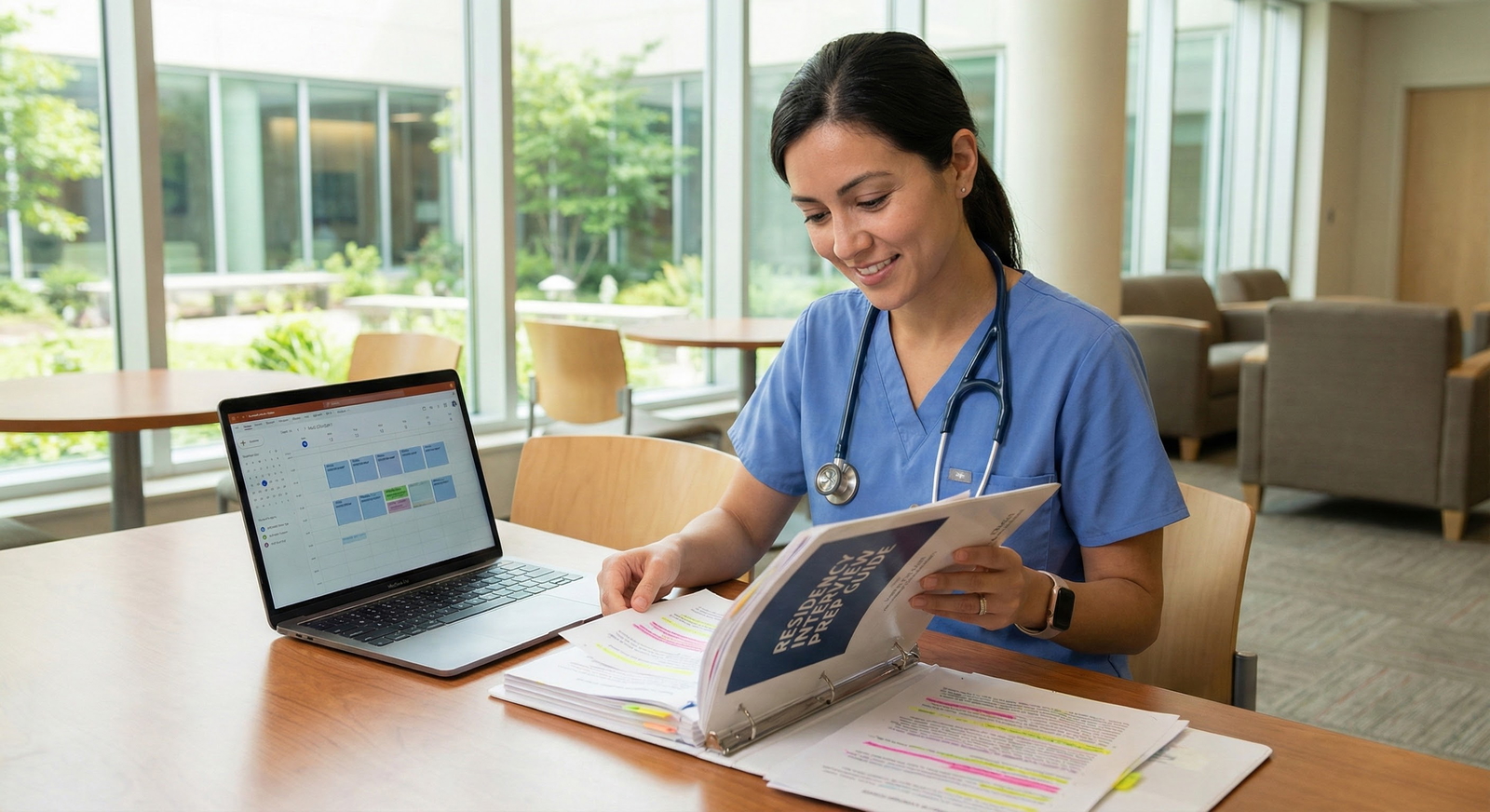
Understanding the Urology Residency Interview Landscape
Pre-interview preparation for an MD graduate in urology is not just about rehearsing answers; it’s about building a coherent, credible professional story and demonstrating that you are ready for the rigor of surgical subspecialty training. Urology is a small, competitive field with an early match, and faculty often know each other nationally. That makes your interview performance—and how you’ve prepared for it—especially important.
As an MD graduate from an allopathic medical school, you already meet a core expectation for many programs, but you’re also competing with other strong candidates. Thoughtful residency interview preparation can turn your “paper strength” (scores, grades, research, letters) into a compelling, memorable impression in person (or on screen).
This guide focuses on pre-interview preparation specific to the urology match, with practical strategies on:
- Understanding what programs look for in urology applicants
- Organizing your application materials and story
- Mastering common and specialty-specific interview questions residency programs will ask
- Planning for both in-person and virtual interview formats
- Navigating pre-interview socials and professional etiquette
Throughout, you’ll see how to adapt general guidance on how to prepare for interviews to the unique dynamics of urology residency.
1. Know the Urology Match and What Programs Value
1.1 The context: Urology and the allopathic medical school match
Urology participates in an early match separate from the main NRMP process, which compresses your timeline:
- Applications go out early.
- Interviews start sooner than many other specialties.
- Decisions about rank list strategy may be made while classmates are still scheduling first interviews.
As an MD graduate, you benefit from being in the traditional allopathic medical school match pipeline, with familiar transcripts (MSPE/Dean’s letter), grading systems, and standardized exams that PDs know how to interpret. However, the bar for urology is high, and PDs expect:
- Strong clerkship performance in core rotations
- Clear commitment to urology (sub-I, away rotations, research)
- Professionalism and self-awareness
- Capacity to function as a surgical trainee
Your pre-interview preparation should demonstrate all of these.
1.2 What urology PDs and faculty look for in interviews
Across programs, faculty often emphasize a few recurring themes:
Personality fit and professionalism
- Can this applicant work collaboratively in a small, tight-knit team?
- Will they take ownership yet be teachable?
- Do they seem reliable, respectful, and emotionally mature?
Grit and resilience
- Urology combines OR, clinic, call, and complex patients.
- Faculty look for applicants who can handle stress, setbacks, and long hours without losing empathy.
Authentic interest in urology
- Programs want to invest in people who will stay in the field.
- You’ll be expected to articulate why urology, not just why surgery or why medicine.
Potential for academic contribution
- Even community-based programs increasingly value residents who can read literature critically, contribute to QI or research, and represent the program well.
Communication skills
- Urology deals with sensitive conditions (incontinence, infertility, sexual dysfunction, GU malignancies).
- Your ability to communicate clearly, respectfully, and with tact is scrutinized.
When you plan your residency interview preparation, everything you do—what you read, which stories you refine, how you structure your day—should be aimed at showcasing these attributes.
2. Start with Self-Assessment and Application Review
Before practicing answers, you need absolute command of your own application. Interviewers will use it as their roadmap.
2.1 Re-read your own file like a program director
Print or open everything that a program can see:
- ERAS/SAU application
- Personal statement
- CV
- Experiences section (work, research, leadership, volunteering)
- Publications, presentations, posters
- Medical school transcript
- List of urology rotations and mentors
Go through these line by line and ask:
- Could I talk about this for 2–3 minutes if asked?
- What is the deeper story behind this bullet point?
- What did I actually learn or change as a result?
Flag anything that:
- You barely remember
- Looks “shiny but shallow” (e.g., your name on a paper where you did little work)
- Could prompt hard questions (e.g., academic difficulties, gap time, major specialty switch)
For each flagged item, prepare a clear, honest, and succinct narrative. Programs often probe these areas.
2.2 Build your personal “interview portfolio”
Create a simple document or notebook where you collect:
- 10–15 clinical stories from medical school (including at least 3–5 from urology)
- 5–7 examples of teamwork, conflict, or leadership scenarios
- 3–4 instances of failure or challenge and how you responded
- 2–3 “proudest accomplishment” stories
- Key details about each research project or QI initiative you list
For each story, note:
- Setting (rotation, year, institution)
- Your role (student leader, team member, first author, data manager)
- Actions you took
- Outcome or impact
- What you learned and how it changed your behavior
You’ll reuse these across multiple interview questions residency programs ask (e.g., “Tell me about a time you failed,” “Tell me about a leadership experience,” “Describe a conflict with a team member”).

3. Master Core and Urology-Specific Interview Questions
Most residency interview preparation revolves around practicing answers—but it’s not about memorizing scripts. Your goal is to be structured, specific, and authentic.
3.1 Core general questions: structure your responses
These are asked in nearly every specialty. Consider using concise frameworks like STAR (Situation, Task, Action, Result) or PAR (Problem, Action, Result).
Example: “Tell me about yourself.”
Aim for 60–90 seconds, connecting your background to urology:
- Brief origin: Education and key influences
- Pivotal medical school experiences
- Why urology, framed through specific experiences
- One or two strengths or interests you bring to a program
Avoid re-reading your CV. Instead, tell a coherent narrative: how your path led to urology residency.
Example: “Why urology?”
Move beyond generic answers like “I like surgery and clinic.” Include:
- A specific early patient or case that captured your interest
- One or two aspects of urology you find intellectually compelling (oncology, reconstruction, endourology, pediatrics, men’s health, etc.)
- Alignment with your personality and skills (procedural focus, long-term patient relationships, technology-driven field)
- A glimpse of your long-term goals (academic, community, subspecialty vs. general urology—without needing a fixed plan)
Example: “Why our program?”
This is where your program research (Section 4) pays off. Include:
- Two or three specific program features (e.g., strong robotics volume, early OR exposure, research infrastructure, community outreach, resident culture)
- How these align with your goals and learning needs
- Something that shows you understand their identity (e.g., “your strong VA system,” “your embedded FPMRS research group,” “your emphasis on resident autonomy in PGY4–5”)
3.2 Behavioral questions: be ready with concrete examples
Common behavioral interview questions residency programs ask include:
- “Tell me about a time you made a mistake.”
- “Describe a conflict with a team member and how you handled it.”
- “Tell me about a time you were overwhelmed and what you did.”
- “Describe a time you received critical feedback.”
For each, use a concise STAR structure and end with insight:
- What you learned
- How it changed your approach
- How it will make you a better resident and colleague
Avoid:
- Blaming others
- Presenting a “fake” weakness (e.g., “I work too hard”)
- Overly dramatic stories that raise concerns about judgment or professionalism
3.3 Urology-specific questions: anticipate and prepare
Because you’re applying for urology residency, expect specialty-tailored questions:
“What aspects of urology interest you most?”
- Be honest but flexible: “I’m particularly drawn to endourology and BPH surgery, but I’m very open at this stage and excited for broad exposure, including oncology and reconstruction.”
- Avoid sounding like you’ve already committed exclusively to a narrow subspecialty unless backed by strong evidence.
“What urology cases or patients have impacted you most?”
- Choose 2–3 cases that show emotional maturity, clinical reasoning, and empathy (e.g., new diagnosis of testicular cancer, complicated urinary retention, young patient with neurogenic bladder, patient discussing sexual dysfunction).
“How have you explored urology outside the classroom?”
- Away rotations or sub-I
- Research with urology faculty
- Urology interest group leadership
- Conferences (AUA, subspecialty meetings)
- Shadowing and longitudinal mentorship
“What do you see as key challenges in urology in the next decade?”
- Rising demand with aging population
- Healthcare access and disparities in urologic care
- Cost and availability of advanced technologies (robotics, lasers)
- Precision oncology and evolving systemic therapies
- Diversity in the urology workforce
Being able to speak at a high level about the field (not just your own experiences) demonstrates genuine commitment and awareness.
3.4 Ethical and clinical scenario questions
You may encounter short scenario prompts—for example:
- “A colleague on your team is cutting corners with notes and patient communication. What do you do?”
- “You observe an attending being disrespectful to OR staff. How do you respond?”
- “You’re asked to obtain consent for a procedure you don’t fully understand. What do you do?”
General principles:
- Patient safety and autonomy come first.
- Seek clarification when you lack understanding.
- Use institutional structures (chief resident, program leadership, compliance offices) when appropriate.
- Be respectful, avoid public confrontation; prioritize private, constructive discussion.
Programs want to see your judgment, not just “the right answer.”
4. Research Every Program and Prepare Tailored Questions
Thorough pre-interview preparation requires detailed understanding of each program so you can:
- Tailor your answers
- Ask thoughtful questions
- Decide if the program truly fits your needs
4.1 Systematic program research
For each program, create a simple one-page profile including:
- Program type: academic, hybrid, community
- Affiliated hospitals: university, VA, county, private
- Size and structure: number of residents per year, call schedule, rotation sites
- Clinical strengths: oncology, endourology, robotics, reconstruction, pediatric urology, FPMRS, transplant, trauma
- Research focus: NIH-funded labs, clinical trials, health services research, QI emphasis
- Notable faculty and their interests
- Resident culture and wellness initiatives
- Fellowship placement trends
Use:
- Program website and SAU directory
- Resident and faculty bios
- Published research and PubMed
- AUA or regional urology society materials
- Connections from your home or away rotations
4.2 Prepare specific, high-yield questions to ask
Interviewers expect you to have questions. Avoid generic ones that can be answered from the website. Instead, ask:
- About resident autonomy and graduated responsibility
- How the program supports resident research and conference travel
- Case volume and diversity (especially for bread-and-butter urology)
- Robotics training: console time, simulation, credentialing
- Education structure: didactics, M&M, journal clubs, boot camps
- Mentorship: how residents find mentors and plan careers
Examples tailored to urology:
- “How does the program ensure residents are comfortable with open procedures in an increasingly robotic environment?”
- “What opportunities exist for residents to get involved in urology outreach or global health?”
- “How are residents supported if they’re interested in a fellowship in oncology or FPMRS?”
Document these in your program profile so you can review them the night before.

5. Practical Preparation: Logistics, Communication, and Mock Interviews
Effective how to prepare for interviews guidance must include logistics and practice, not just content. Urology interviews often cluster tightly, and the early match compresses timelines.
5.1 Organize your interview calendar and travel
Even before interview invites arrive, prepare:
- A central calendar (digital or paper)
- A spreadsheet to track:
- Program name and location
- Interview date and format (virtual vs. in-person)
- Pre-interview social date and platform
- Interviewer names if provided
- Notes about the program
- Thank-you notes sent and follow-up
If in-person:
- Book flights and lodging early when possible; consider grouping geographically close programs.
- Allow buffer time for weather and travel delays.
- Keep all confirmation emails in a dedicated folder.
If virtual:
- Confirm time zones carefully.
- Download and test required software (Zoom, Webex, Teams, etc.).
- Verify meeting links and backup contact information for each program.
5.2 Prepare your professional materials
Set aside time to:
- Update and polish your CV (consistent formatting, no typos).
- Review your personal statement; anticipate questions about it.
- Prepare a concise one-page “cheat sheet” with:
- 5 key strengths you want to highlight
- 3–4 defining stories
- Your top reasons for pursuing urology
- A brief version of your “Why this program?” points for each interview
Also, standardize your professional email signature (full name, MD, contact info, medical school).
5.3 Plan your interview attire and professional appearance
For both virtual and in-person urology interviews:
- Wear a conservative suit (jacket and pants or skirt) in navy, gray, or black.
- Choose a simple shirt or blouse; avoid loud patterns.
- Keep jewelry and accessories minimal.
- Ensure your white coat (if worn at pre-interview events) is clean and well-fitted.
- Neatly groomed hair and facial hair; attention to overall cleanliness and polish.
Try on your full outfit in advance, including shoes, so you’re not troubleshooting on interview day.
5.4 Mock interviews: practice with feedback
Mock interviews are arguably the single most valuable component of residency interview preparation.
Sources:
- Your medical school’s career advising or student affairs office
- Urology faculty mentors or fellows
- Senior residents who recently matched in urology
- Peers for low-stakes practice
Structure:
- Simulate timing: 15–20 minutes per mock session.
- Combine general questions with urology-specific and behavioral questions.
- Use video recording (even from your phone) to review body language, eye contact, pacing, filler words.
Ask for concrete feedback on:
- Clarity and structure of your answers
- Overuse of jargon or vague phrases
- Level of enthusiasm and engagement
- Whether your commitment to urology feels authentic and well-reasoned
Commit to iterative improvement. Record practice answers for tricky questions (e.g., “Why did you get this grade?”, “Why urology over general surgery?”) and refine until you can deliver confident, natural responses.
6. Optimizing for Virtual and In-Person Formats
Even as in-person visits return, many programs still use virtual interviews. Pre-interview preparation must cover both.
6.1 Virtual urology interview setup
Environment:
- Choose a quiet, private space where you won’t be interrupted.
- Use a neutral, uncluttered background; avoid backlighting.
- Place light sources in front of you or at a 45-degree angle.
- Position the camera at eye level; test framing so your upper torso and face are visible.
Technology:
- Use a reliable laptop or desktop; avoid interviews on a phone.
- Test your internet speed; if unstable, explore backup options (ethernet cable, different location).
- Confirm your username and profile photo are professional.
- Close all unnecessary apps and notifications before the interview.
Practice:
- Record yourself on the same platform the program will use.
- Check audio clarity, volume, and potential echo.
- Practice looking at the camera when answering, not just the screen.
6.2 In-person interview strategies
For in-person urology residency interviews:
- Plan your travel to arrive the day before, ideally early enough to rest.
- Check parking, building access, and security procedures ahead of time.
- Bring:
- A small portfolio or folder
- Extra copies of your CV
- A notepad and pen
- A list of your interviewers’ names and roles (if provided)
On the day:
- Aim to arrive 10–15 minutes early (not excessively early).
- Silence your phone completely.
- Introduce yourself warmly to coordinators, residents, and faculty. Everyone’s impression counts.
- Take brief notes between interviews; you’ll forget details later.
6.3 Pre-interview socials: professional yet relaxed
Urology is a small specialty; social events matter. For pre-interview socials (virtual or in-person):
- Dress business casual unless told otherwise.
- Assume that even informal settings are part of your evaluation.
- Prepare a few light, non-controversial conversation topics:
- City life and housing
- Favorite rotation experiences
- Hobbies and wellness routines
- How residents spend time outside the hospital
Avoid:
- Complaints about other programs or colleagues
- Alcohol overuse (if present)
- Oversharing about personal or political topics
Ask residents:
- What they like most and least about the program
- How the culture feels day-to-day
- How well they feel supported by faculty and leadership
- What they wish they had known before matching there
These insights help you later when making your rank list.
Frequently Asked Questions (FAQ)
1. How early should I start residency interview preparation for the urology match?
Begin at least 2–3 months before you expect interviews to start. Early tasks include:
- Reviewing your application and identifying key stories
- Doing initial mock interviews with advisors or faculty
- Researching programs and building your program profiles
- Setting up your calendar system and, if needed, travel planning templates
As invitations arrive, you’ll refine your preparation for each specific program.
2. Will I be asked clinical or technical questions in urology residency interviews?
Most programs do not heavily test detailed technical knowledge in interviews. However, you should be prepared to:
- Discuss urology cases you’ve seen at a conceptual level
- Describe your clinical reasoning and patient communication
- Talk broadly about common conditions (e.g., BPH, kidney stones, prostate cancer) and your learning from them
If you’re asked something highly technical that you don’t know, it is better to admit your limits, discuss how you would approach learning, and show humility and curiosity.
3. How can I stand out as an MD graduate from an allopathic medical school match background?
Standing out isn’t about having the “flashiest” CV; it’s about coherence and authenticity:
- Present a clear, well-supported narrative for why you chose urology.
- Highlight meaningful experiences where you took initiative or showed leadership.
- Demonstrate genuine interest in each program through tailored questions and comments.
- Show that you are reflective, teachable, and aware of both your strengths and areas for growth.
Your consistent professionalism across emails, socials, and interviews also distinguishes you.
4. What should I do the day before and the morning of the interview?
Day before:
- Review your program profile and your key stories.
- Confirm logistics (links, addresses, times, time zones).
- Lay out your outfit and materials.
- Limit late-night cramming; aim for a reasonable bedtime.
Morning of:
- Eat a light, familiar meal.
- Do a brief warm-up: review your “Tell me about yourself,” “Why urology,” and “Why this program?”
- Check your technology (for virtual) or travel time (for in-person).
- Take 2–3 minutes for calming breathing to center yourself.
Then, focus on being present and curious. Programs don’t expect perfection; they’re looking for a future colleague they can trust and enjoy working with.
Thoughtful pre-interview preparation transforms anxiety into readiness. By understanding the expectations of the urology match, mastering your own story, and approaching each program with genuine curiosity, you position yourself as the kind of MD graduate any urology residency program would be fortunate to train.