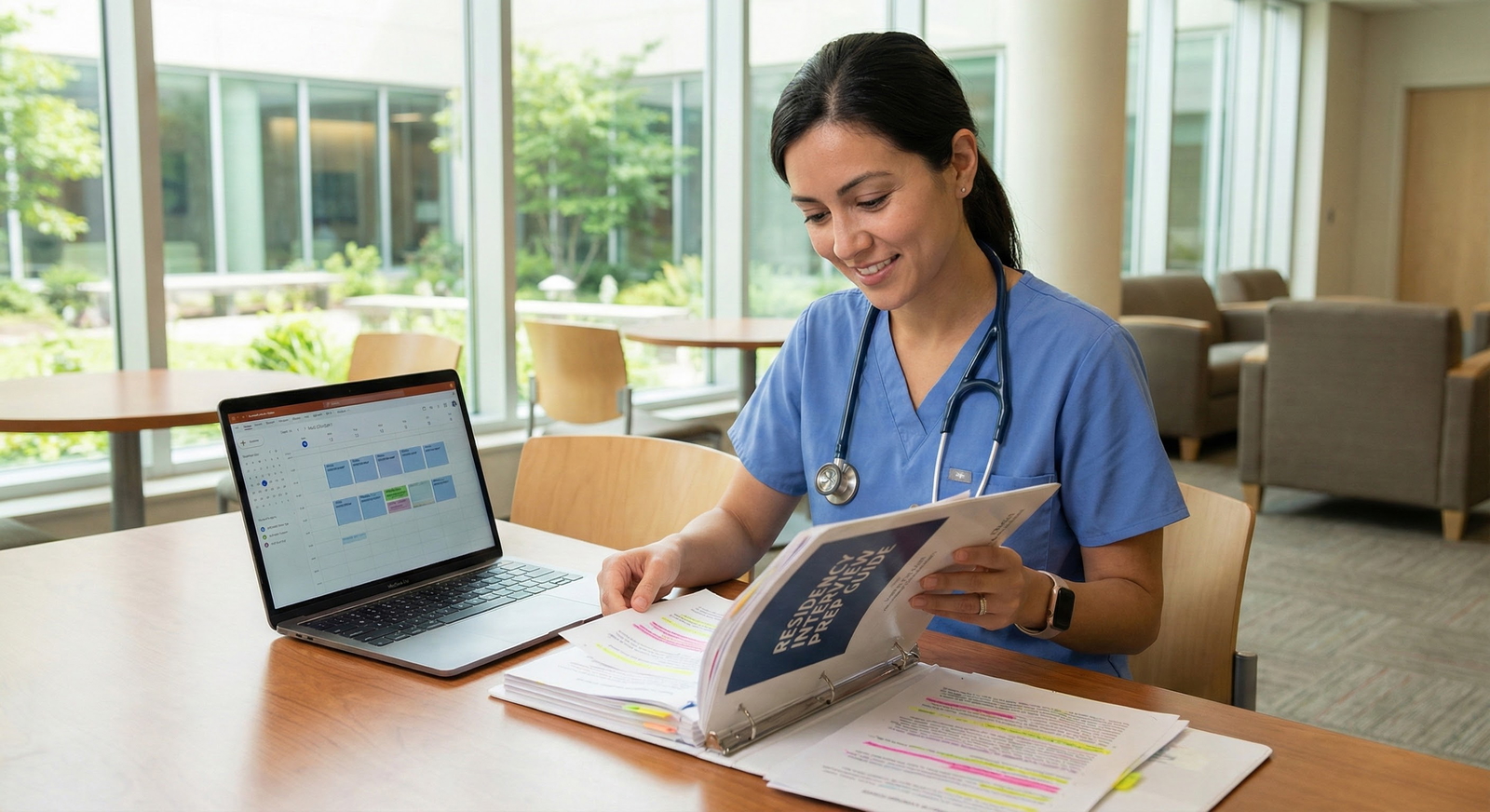
Understanding the Med-Peds Interview Landscape
Medicine-Pediatrics (Med-Peds) draws applicants who thrive on complexity, continuity, and caring for patients across the lifespan. Your pre-interview preparation should reflect that same combination of breadth and depth. Strong residency interview preparation is not just about rehearsing answers—it’s about learning how to present your authentic clinical identity, your career goals, and your understanding of what makes Med-Peds unique.
This guide focuses on pre-interview preparation specifically for Med-Peds, covering:
- Understanding what programs look for in Med-Peds candidates
- Researching programs strategically
- Preparing your core stories, answers, and questions
- Polishing your application materials and online presence
- Practicing for behavioral and specialty-specific interview questions
- Planning logistics and professional etiquette
Throughout, you’ll see specific examples, phrasing suggestions, and actionable steps you can implement right away as you prepare for the medicine pediatrics match.
1. Clarify Your Med-Peds Identity Before Interview Day
Before you start rehearsing answers, you need clarity about who you are as a Med-Peds applicant. Programs often say they are looking for “Med-Peds people”—you should be ready to show that you are one of them.
1.1 Understand What Med-Peds Programs Value
Most Med-Peds programs look for applicants who demonstrate:
- Genuine commitment to dual training
- You understand both the medicine and pediatrics sides of the field and why you want both.
- Intellectual curiosity and versatility
- Comfort with complexity, multi-morbidity, and transitions of care.
- Resilience and adaptability
- The ability to function in different team cultures and clinical environments.
- Teamwork and communication skills
- Working smoothly with nurses, therapists, social workers, and other residents.
- Longitudinal thinking
- Interest in continuity, chronic disease management, and life-course perspectives.
- Alignment with Med-Peds pathways
- Such as primary care, hospital medicine, transitional care, academic medicine, global health, health equity, or subspecialty plans.
As you prepare, ask yourself: Where have I already demonstrated these qualities, and how can I tell those stories clearly?
1.2 Articulate Your Why: Medicine, Pediatrics, and Med-Peds
You will almost certainly be asked some version of:
- “Why Med-Peds?”
- “Why not internal medicine alone or pediatrics alone?”
- “How did you decide Med-Peds was right for you?”
Prepare concise, layered answers that:
- Start with your core motivation
- A specific patient, clinical experience, or pattern that drew you to caring for patients across ages.
- Highlight the harmony between medicine and pediatrics in your thinking
- How each side complements the other for you.
- Connect directly to Med-Peds training and careers
- Transitional care, high-utilizer populations, congenital disease into adulthood, etc.
Example framework:
“I was drawn to Med-Peds because I found myself consistently interested in how pediatric conditions evolved into adulthood and how adult diseases affected younger patients with chronic illness. During my rotation on the pediatric cardiology service, I cared for a teenager with complex congenital heart disease and started wondering what her care would look like in her 30s and 40s. Later, on adult cardiology, I admitted a young adult with congenital heart disease who had transitioned from pediatrics and was struggling to navigate the adult system. Those experiences highlighted for me that I don’t just enjoy both pediatrics and medicine—I think naturally in terms of transitions, long-term trajectories, and family systems. Med-Peds offers the training structure that best aligns with that way of thinking.”
Write out your own version, then refine it until it feels both polished and natural.
1.3 Define Your Emerging Career Direction (With Flexibility)
Programs know you may change direction, but they want to see informed curiosity, not vague indecision. Before interview season, spend time reflecting on:
- Are you leaning toward:
- Primary care / community Med-Peds?
- Hospital medicine (adult, pediatric, or combined)?
- A subspecialty (e.g., adult cardiology, pediatric ID, med-peds hospitalist)?
- Academic medicine, health services research, or medical education?
- Global health or public health?
You don’t need a finalized plan, but you should be able to say:
- “Here’s what I’m currently most interested in…”
- “Here’s what experiences led me there…”
- “Here’s how Med-Peds training positions me well for that path…”
Action step: Write a 3–4 sentence “current career interest” summary you could share with faculty or residents during interviews. Keep it open-ended but specific enough to show you’ve thought about it.

2. Research Programs Strategically and Efficiently
Deep, targeted research is a cornerstone of effective residency interview preparation. In Med-Peds, this is especially important because programs vary significantly in size, culture, and career pathways.
2.1 Build a Structured Program Research Template
Create a simple table or document for each program with headings like:
- Program Basics
- Number of residents per year
- Hospital systems covered (academic, community, children’s hospital, VA, etc.)
- Training Structure
- Rotation schedule and block structure
- Med vs peds balance in intern year
- Continuity clinic model (combined Med-Peds clinic vs separate IM/Peds clinics)
- Inpatient vs outpatient balance
- Curriculum Features
- Transition-of-care experiences
- Med-Peds-specific conferences
- Global health or advocacy tracks
- Research or QI requirements
- Fellowship and Career Outcomes
- Recent graduates’ paths
- Strength of subspecialty training environments
- Culture and Values
- Emphasis on wellness, mentorship, advocacy, DEI
- Program size, “feel,” and resident camaraderie
- Your Personalized Notes
- Why this program appeals to you
- Specific med peds residency faculty or residents whose work interests you
- Questions you want to ask during interviews
Filling this out for each program will help you:
- Give program-specific answers to “Why our program?”
- Ask targeted, thoughtful questions
- Decide how well each program aligns with your goals
2.2 Use Multiple Sources for Program Insight
Go beyond the program’s main website:
- Program social media (X/Twitter, Instagram, TikTok, LinkedIn)
- Look for resident-led content, photos of conferences, retreats, advocacy work, and social events.
- Virtual open houses and webinars
- Many Med-Peds programs offer these; attend when possible and take notes.
- Med-Peds national organizations
- National Med-Peds Residents’ Association (NMPRA) materials, Med-Peds-specific webinars, etc.
- Current and former residents
- Reach out to alumni from your school who matched into Med-Peds, or Med-Peds residents you met on rotations.
Document what you learn right away; you will forget details during the busy medicine pediatrics match season if you rely on memory alone.
2.3 Align Your Story With the Program’s Strengths
As you research, notice:
- Which programs emphasize primary care and underserved populations?
- Which highlight complex inpatient medicine and pediatric subspecialties?
- Which invest heavily in research, QI, or medical education?
- Which have strong Med-Peds identity (Med-Peds clinic, retreats, Med-Peds leadership)?
For each program, prepare:
- One or two specific reasons it fits you (beyond geography or “it’s strong clinically”).
- One or two questions that arise directly from your research, such as:
- “I saw that your graduates often go into combined Med-Peds hospitalist roles. How do you structure training for residents interested in that path?”
- “I noticed your dedicated transition clinic. Could you share more about resident involvement in that clinic and any related QI projects?”
This level of specificity shows you have done your homework and see yourself as a potential member of that community.
3. Craft and Practice Your Core Interview Content
Once you know who you are as a Med-Peds applicant and what programs offer, you can prepare your core content: the stories, examples, and frameworks you will rely on to answer common interview questions residency programs ask.
3.1 Identify 8–10 Anchor Stories
Anchor stories are versatile experiences you can use in different contexts. Aim for diversity across:
- Clinical rotations (medicine, pediatrics, sub-internships, Med-Peds electives)
- Leadership and teamwork
- Conflict or challenging feedback
- Quality improvement or research
- Service, advocacy, or global health
- Personal challenges or growth experiences
For each story, outline:
- Situation – Brief context
- Task – What your role or responsibility was
- Action – What you did, what decisions you made
- Result/Reflection – Outcome and what you learned
This is the STAR method (Situation, Task, Action, Result), a useful framework for behavioral questions such as:
- “Tell me about a time you made a mistake.”
- “Tell me about a time you had a conflict with a team member.”
- “Describe a challenging patient interaction and what you learned.”
Example anchor story outline:
- Situation: Night float on pediatric wards, covering a child with new-onset seizures who decompensated.
- Task: As the cross-cover student, you needed to recognize deterioration, call for help, and communicate clearly.
- Action: Noticed subtle changes in vital signs, quickly reassessed, called for senior help and PICU team, communicated to family, documented events.
- Result/Reflection: Child stabilized, you learned the importance of early escalation, explicit communication, and using closed-loop communication in crises.
Once outlined, practice telling each story in 1–2 minutes. You should sound structured but not memorized.
3.2 Prepare Answers to High-Yield Med-Peds Questions
Expect general residency interview questions and Med-Peds-specific ones. Prepare talking points (not scripts) for:
“Tell me about yourself.”
- 60–90 seconds
- Brief background → key clinical interests → why Med-Peds → what you’re looking for in a program.
“Why Med-Peds?” / “Why not choose just medicine or pediatrics?”
- Emphasize synergy, transitions, continuity, and specific experiences.
“Why our program?”
- Use your program research: med-peds residency size, curriculum, unique clinics, career outcomes, culture.
“What are your career goals?”
- Share your current direction plus 1–2 specific interests (e.g., transitions of care for congenital heart disease, Med-Peds hospitalist, global health in resource-limited settings).
“What are your strengths and weaknesses?”
- Choose strengths relevant to Med-Peds: adaptability, longitudinal thinking, team-based care.
- For weaknesses, pick a real area you’re working on with concrete improvement steps (e.g., delegation, documentation efficiency).
“Tell me about a time you had to manage complex care or multiple chronic conditions.”
- A great opportunity to highlight your natural Med-Peds mindset.
“How do you handle uncertainty or ambiguity?”
- Demonstrate structured thinking, seeking supervision appropriately, and using evidence-based resources.
“Tell me about a time you advocated for a patient or family.”
- Med-Peds heavily values advocacy and systems thinking.
Write bullet-point answers and practice saying them out loud, refining for clarity and authenticity.
3.3 Anticipate Med-Peds-Specific Topics
Interviewers may explore:
- Transitions of care
- Be ready to discuss why transitions matter and any experiences you’ve had with adolescents moving into adult systems.
- Dual board-eligibility and training demands
- Show you understand the workload and are prepared for the challenges.
- Identity as a Med-Peds physician vs “split” identity
- Reflect on how you see yourself functioning as a bridge between adult and pediatric systems.
- Long-term patient relationships
- Talk about how you value continuity and family-centered care.
Example answer snippet for transitions:
“I think of transitions as a vulnerable time where patients can fall through the cracks—especially adolescents with chronic conditions like diabetes, sickle cell disease, or congenital heart disease. During my pediatrics rotation, I cared for a 17-year-old with CF who was anxious about switching to adult providers. That experience highlighted for me the importance of structured transitions, clear communication between pediatric and adult teams, and preparing patients well in advance. Med-Peds training uniquely positions us to lead that work, and that’s something I’m very excited about.”

4. Deliberate Practice: Mock Interviews and Feedback
Skillful interviewing is learned by doing. Even strong communicators benefit from structured practice in how to prepare for interviews effectively.
4.1 Set Up Multiple Types of Mock Interviews
Try to schedule at least:
- One formal mock interview
- With a faculty advisor, dean’s office, or career services professional.
- One peer-based mock interview
- With classmates also applying to the medicine pediatrics match or other specialties.
- One self-recorded session
- Using your phone or computer to record yourself answering common interview questions residency committees tend to ask.
Ask your mock interviewers to simulate:
- Standard faculty interviews (open-ended questions, conversational tone)
- Behavioral interviews (focus on “tell me about a time…” scenarios)
- Med-Peds-specific interviews (why Med-Peds, transitions, dual identity)
4.2 Focus Feedback on Specific Dimensions
Give your reviewers a checklist so the feedback is actionable:
- Content clarity
- Are your main points clear and logically organized?
- Do your answers actually address the question asked?
- Conciseness
- Are you staying within 1–2 minutes per answer?
- Do you wander or repeat yourself?
- Professionalism and warmth
- Do you appear engaged, respectful, and personable?
- Do you show appropriate enthusiasm without exaggeration?
- Nonverbal communication
- Eye contact (or camera focus for virtual)
- Posture and facial expressions
- Hand gestures and fidgeting
- Med-Peds narrative
- Do you consistently and naturally integrate your Med-Peds identity?
- Do listeners walk away understanding why Med-Peds is the right fit for you?
Review any recorded videos yourself. You may notice distracting habits—like saying “um” excessively or speaking too quickly—that you can consciously work to improve.
4.3 Develop a Strategy for Difficult or Unexpected Questions
Pre-interview preparation also involves rehearsing how you’ll respond when you’re caught off guard. Practice:
- Taking a brief pause
- “That’s a thoughtful question; let me think for a moment.” (Then answer.)
- Clarifying questions
- “Just to make sure I understand, are you asking more about my clinical experiences or my long-term goals?”
- Redirecting to your strengths gracefully
- If asked about an area you haven’t experienced directly, acknowledge that, then relate it to something you have done and want to learn.
Example difficult question:
“Tell me about a time you failed and how it changed you.”
Effective answer structure:
- Briefly describe the situation.
- Take ownership (no blaming).
- Explain how you processed the failure.
- Share specific changes you made and results.
Avoid defensiveness or overly dramatic vulnerability; aim for mature reflection and growth.
5. Optimize Your Professional Materials and Digital Presence
Long before the interview day, programs may form impressions of you through your application, emails, and online presence. Aligning these elements is an important part of pre-interview preparation.
5.1 Revisit Your ERAS Application, CV, and Personal Statement
Before each interview block:
- Review your ERAS experiences and CV
- Be sure you can comfortably discuss any activity, even one from early in medical school.
- Re-read your Med-Peds personal statement
- Your spoken narrative should be consistent with what you wrote, though not identical.
- Identify key points you want interviewers to remember
- A particular research project, a Med-Peds elective, advocacy work, or a formative life experience.
Programs may base some interview questions on these documents, so they should feel familiar to you. If there are gaps or unusual aspects (leaves of absence, career changes, changes in specialty interest), prepare a brief, honest, and non-defensive explanation.
5.2 Polish Your Email and Communication Habits
You’re communicating professionalism with every email you send. Before interview season:
- Create a professional email signature:
- Name, medical school, expected graduation year, contact info.
- Proofread all messages for:
- Correct program name
- Correct spelling of PD and coordinator names
- Clear subject lines (e.g., “Interview Confirmation – [Your Name], Med-Peds”)
- Respond promptly to:
- Interview invitations and scheduling messages
- Pre-interview day instructions or survey links
These details reinforce to programs that you are conscientious and reliable.
5.3 Curate Your Online Presence
Programs may look you up. Do a quick professional audit:
- LinkedIn
- Update with accurate education and experiences.
- Ensure your photo and headline communicate professionalism.
- Public social media (Instagram, X/Twitter, TikTok, etc.)
- Remove or privatize anything unprofessional or that could be misinterpreted.
- Be thoughtful about posts involving patients, colleagues, or institutions (HIPAA and professionalism).
- Professional websites or portfolios
- Make sure content is up to date and free of errors.
You don’t need to have a big professional online brand, but you do want consistency with your application and an absence of red flags.
6. Plan Logistics and Day-of Readiness
Even the strongest preparation can be overshadowed by technical issues or poor logistics. A key part of how to prepare for interviews—especially in hybrid or virtual formats—is making sure the day runs smoothly.
6.1 Prepare for Virtual Interviews (If Applicable)
For virtual interviews (still common in many specialties):
- Technology check
- Test your internet speed and video platform (Zoom, Thalamus, etc.).
- Have headphones ready to reduce echo and improve sound clarity.
- Camera and audio
- Place your camera at eye level.
- Use a neutral, uncluttered background.
- Ensure good lighting (facing a window or using a soft light source).
- Environment
- Choose a quiet space where you won’t be interrupted.
- Inform roommates or family of your interview times.
- Silence phones and notifications.
Do a trial run in full interview attire to verify your appearance on camera.
6.2 Prepare for In-Person Interviews
If your Med-Peds interviews are in person:
- Travel and timing
- Arrive in town the night before if possible.
- Plan for traffic, weather, and parking time.
- What to bring
- Copies of your CV and ERAS application (even if rarely used).
- A small notebook and pen.
- A list of questions for residents and faculty.
- Professional attire
- Ensure it fits well and is comfortable for a full day.
- Consider layers for variable hospital and conference room temperatures.
- Comfortable, polished shoes for walking.
6.3 Establish a Pre-Interview Routine
Having a consistent routine reduces anxiety and improves performance. The day before and the morning of each interview:
Day Before:
- Review your program-specific notes (30–45 minutes).
- Review your anchor stories and Med-Peds talking points (30 minutes).
- Choose your outfit and check for wrinkles or stains.
- Confirm equipment and links for virtual interviews or travel details for in-person sessions.
- Set a reasonable bedtime; avoid last-minute cramming.
Morning Of:
- Do a brief warm-up:
- Answer 2–3 common interview questions out loud.
- Practice your “tell me about yourself” and “why Med-Peds” responses once.
- Eat something light but sustaining.
- Do a short relaxation exercise if you’re anxious (deep breathing, stretching, short walk).
- Log in or arrive early (10–15 minutes).
Plan a short decompression ritual after each interview as well—jot down notes about the program, your impressions, and any follow-up questions while details are still fresh.
Frequently Asked Questions (FAQ)
1. How is Med-Peds interview preparation different from categorical medicine or pediatrics?
You still need strong general residency interview preparation, but Med-Peds requires additional emphasis on:
- Explaining why dual training is right for you.
- Demonstrating comfort with transitions of care and complex, multi-system illness.
- Showing you understand the demands and benefits of maintaining two identities and two board certifications.
- Connecting your career interests (e.g., hospital medicine, primary care, subspecialty) explicitly to the Med-Peds training framework.
Your stories and examples should frequently highlight the integration of adult and pediatric thinking, even when they come from single-discipline rotations.
2. What are some common interview questions residency programs ask specific to Med-Peds?
In addition to standard questions, Med-Peds programs often ask:
- “Why Med-Peds rather than internal medicine or pediatrics alone?”
- “How do you envision using your dual training in your career?”
- “Tell me about an experience that solidified your decision to pursue Med-Peds.”
- “How do you see yourself contributing to transitions of care between pediatric and adult systems?”
- “How do you handle balancing multiple responsibilities across different services or teams?”
Preparing for these ahead of time will help you speak confidently and authentically.
3. How can I show genuine interest in a program without sounding generic?
Use specific details from your research and experiences:
- Reference a particular clinic, track, or elective you read about.
- Mention resident or faculty talks you attended (e.g., a Med-Peds open house webinar).
- Connect a program feature to your own goals, e.g., “I’m especially excited about your Med-Peds transition clinic because of my interest in working with adolescents with chronic disease as they move into adult care.”
Avoid vague phrases like “strong clinical training” unless you follow them with concrete examples: “I’m drawn to your strong clinical training, especially the dedicated time in the combined Med-Peds clinic where residents care for both adults and children longitudinally.”
4. How many mock interviews should I do, and when should I start?
Aim for 2–4 mock interviews:
- Start about 4–6 weeks before your first scheduled interview.
- Front-load at least one formal mock early to identify major areas for improvement.
- Time at least one practice session closer to interview season to refine your Med-Peds-specific content and ensure your answers still feel natural.
Spread them out enough that you can incorporate feedback between sessions. The goal is not memorization but comfort, clarity, and authenticity.
By approaching pre-interview preparation for Med-Peds systematically—clarifying your identity, researching programs deeply, developing strong stories, practicing intentionally, and managing logistics—you position yourself to use each interview day to its full potential. Your goal is to leave programs with a clear picture of you as a future Med-Peds physician: thoughtful, resilient, and genuinely excited to care for patients across the lifespan.