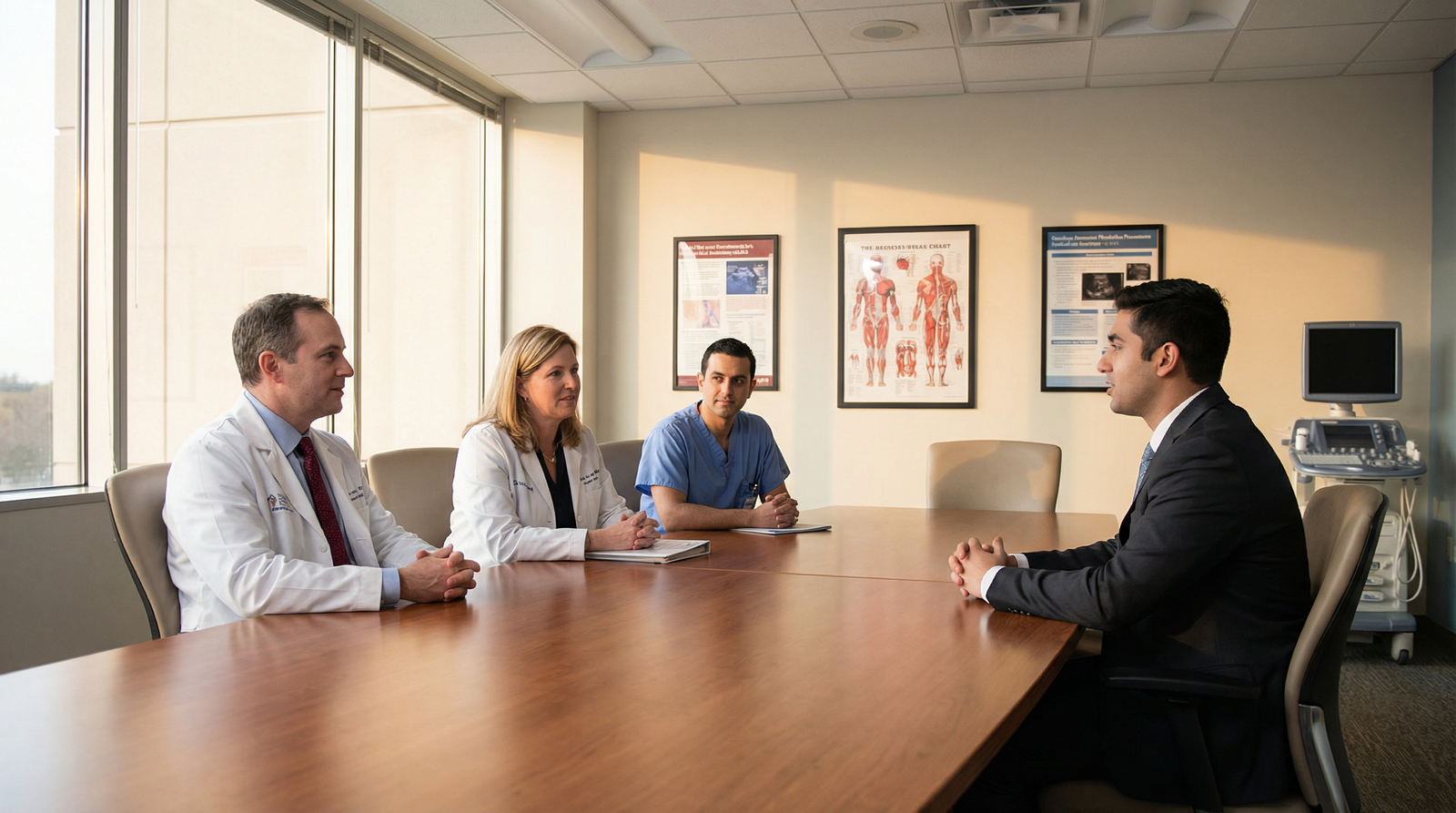
Understanding the Unique Nature of Med-Psych Residency Interviews
Combined medicine-psychiatry programs attract a distinct type of applicant: people who think in systems, tolerate ambiguity, and care about both bodies and minds. Your pre-interview preparation should reflect that dual identity.
While much of residency interview preparation is universal, med psych residency interviews often emphasize:
- Integration of internal medicine and psychiatry thinking
- Comfort with complex, comorbid medical and psychiatric presentations
- Longitudinal patient care and continuity
- Interdisciplinary collaboration and communication
- Professional identity as a future “bridge” between two specialties
Before you start practicing answers, step back and clarify three core questions for yourself:
Why medicine-psychiatry combined?
Not just “because I like both,” but how you see yourself using both skill sets in real practice.What kind of med-psych physician do you want to become?
Academic vs community; inpatient vs outpatient; consultation-liaison vs primary care for serious mental illness; addiction vs psychosomatics, etc.Why this particular program?
Each med psych residency has a different balance of medicine vs psychiatry, different cultures, and different strengths.
Writing out your thoughts now will help you sound clear, grounded, and authentic later.
Step 1: Clarify Your Med-Psych Story and Brand
Your “brand” is not a slogan; it’s the coherent thread connecting your experiences, values, and goals. Strong medicine psychiatry combined applicants can articulate a narrative that makes the dual pathway feel inevitable and necessary.
A. Build Your Medicine-Psychiatry Narrative
Start by mapping your experiences into three buckets:
- Clinical: Rotations, sub-internships, consult services, emergency psychiatry, CL medicine, primary care for SMI, addiction medicine, etc.
- Scholarly: QI projects, research, presentations, case reports, poster sessions, teaching.
- Personal: Life experiences, advocacy, volunteer work, or family exposure that shaped your interest in comorbid mental and medical illness.
Then, connect them with “because” statements:
- “I did X experience, which showed me Y, and that pushed me toward Z goal.”
Example narrative elements:
- Internal medicine rotation on a hospitalist service where unmanaged psych illness repeatedly complicated discharges.
- Psychiatry consult-liaison experience that showed how physical illness shapes mood, behavior, and adherence.
- Work in a free clinic where SMI patients with diabetes or heart failure consistently fell through the cracks.
Tie these into a coherent arc:
“Across my medicine and psychiatry rotations, I kept seeing medically complex patients whose psychiatric illness made it nearly impossible to deliver good care. Over time, it became clear that I didn’t just want to consult on either side—I wanted to be the physician comfortable managing both domains so patients don’t get lost between services.”
B. Define Your Med-Psych “Angle”
Programs don’t expect you to commit to a subspecialty now, but they do expect some sense of direction. Clarify a few “angles” that genuinely fit you:
- Psychosomatic medicine / CL psychiatry focus
- Primary care for serious mental illness
- Addiction medicine with complex medical comorbidities
- Integrated care models (collaborative care, FQHCs)
- Health services research on high-utilizer populations
- Policy/advocacy for mental health parity and access
Prepare 2–3 sentences tying your angle to your past experiences and future goals:
“Long term, I see myself working in an integrated primary care-psychiatry clinic for patients with serious mental illness, where I can manage both their cardiometabolic risk and psychiatric stability.”
C. Translate Your Story into Interview-Ready Points
You will be asked some variation of:
- “Tell me about yourself.”
- “Why medicine-psychiatry combined?”
- “Where do you see yourself in 5–10 years?”
Draft a concise “core story” (60–90 seconds) including:
- Your path into medicine
- Key med-psych formative experiences
- The kind of work you hope to do as a combined-trained physician
Write it, refine it, then practice aloud until it sounds natural—not memorized.

Step 2: Researching Programs with a Med-Psych Lens
Strong residency interview preparation is targeted, not generic. The more specifically you understand each medicine psychiatry combined program, the stronger and more relevant your answers will be.
A. Use a Structured Research Template
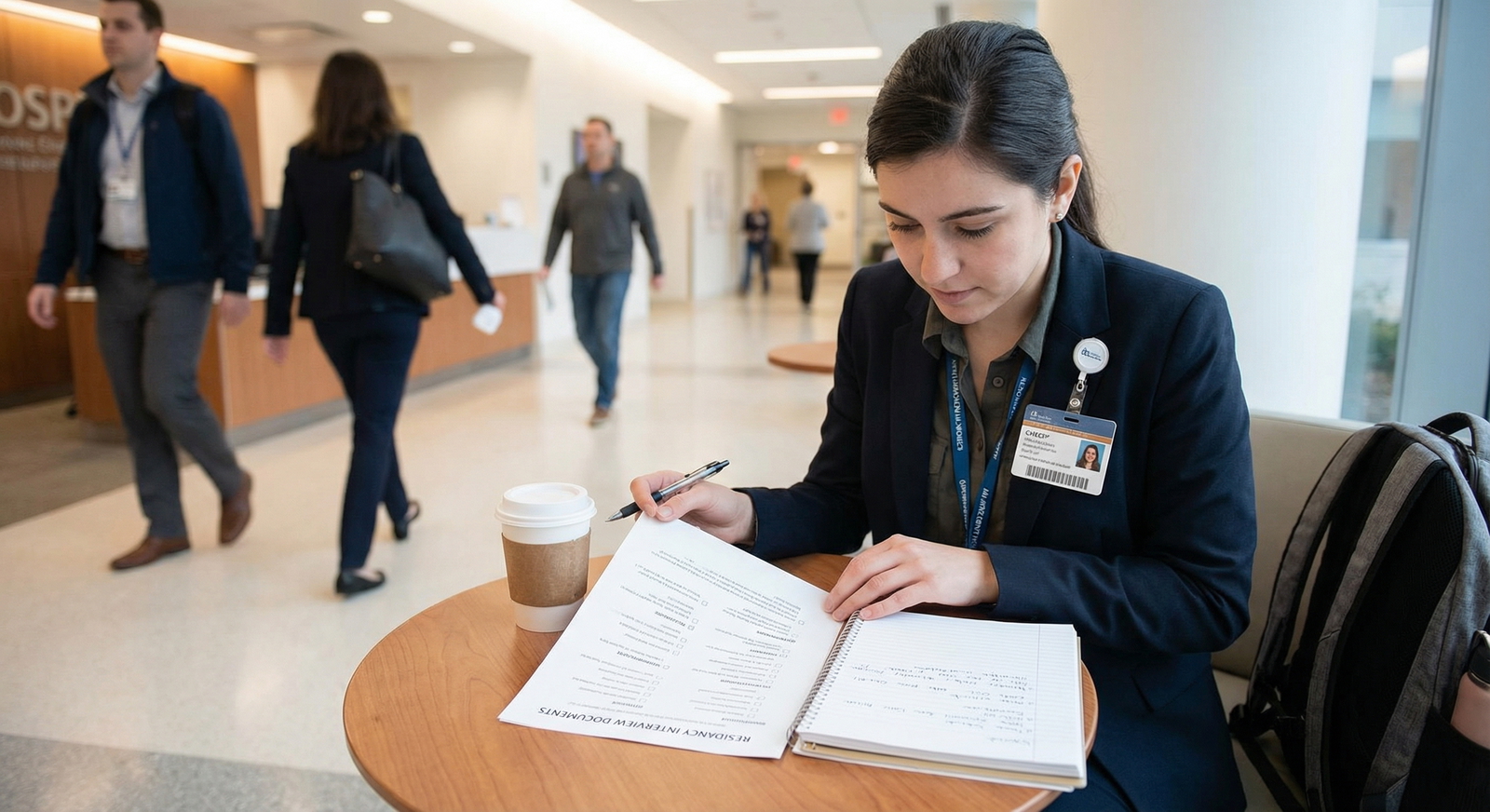
For each program, create a one-page summary (digital or on paper) with:
Program Basics
- Length and structure (usually 5 years; how are medicine and psychiatry blocks arranged?)
- Number of residents per year
- Home institutions for medicine and psychiatry (are they both strong and well-regarded?)
Clinical Focus
- Does the program emphasize:
- CL psychiatry?
- Inpatient medicine vs ambulatory?
- Integrated clinics?
- Addiction? Geriatrics? Neuropsychiatry?
- Any specialized med-psych services (e.g., behavioral health homes, integrated HIV clinics)?
Curriculum Highlights
- Unique rotations (e.g., primary care for SMI, VA integrated care, transplant psychiatry, gender-affirming care clinics)
- Longitudinal med-psych experiences
- Call structure and balance between medicine and psychiatry responsibilities
Scholarly and Career Outcomes
- Resident research themes
- Graduates’ fellowships (addiction, CL, geriatrics, cardiology, hospitalist medicine, etc.)
- Proportion going into academic vs community roles
- Opportunities for MPH, MSCR, or other degrees
Culture and Fit
- How residents describe the program’s personality (supportive, intense, academic, mission-driven)
- Diversity, equity, and inclusion initiatives
- Wellness resources and how they’re actually used
Use the program’s website, resident bios, social media, and virtual open houses to fill these in before interview day.
B. Develop Program-Specific “Why Us?” Talking Points
For each program, identify 3–5 concrete reasons it fits your goals:
Instead of:
“You’re a strong program with lots of opportunities, and I like that you value both medicine and psychiatry.”
Say something like:
“I’m particularly drawn to your longitudinal integrated clinic for patients with serious mental illness and cardiometabolic disease, the built-in research time during PGY-3, and the way your graduates have gone into integrated primary care and CL psychiatry—both of which align with my interests.”
Write one short paragraph per program that you can adapt to questions like:
- “What interests you about our program?”
- “How do you see yourself using what we offer here?”
C. Prepare Resident- and Faculty-Targeted Questions
Residency interview preparation is not just about answering interview questions residency programs ask you; it’s also about asking them high-yield, insightful questions.
Questions for residents (focus on lived reality):
- “How do you experience the integration between medicine and psychiatry training here, day to day?”
- “On busy medicine months, how does the program help you maintain your psychiatric skills, and vice versa?”
- “What kinds of patients do you see most often who really require both medicine and psychiatry expertise?”
- “Can you tell me about a resident who has a career trajectory similar to what I’m describing?”
Questions for program leadership/faculty:
- “How has the curriculum evolved in the past few years to better integrate medicine and psychiatry?”
- “What differentiates your med psych graduates from categorical IM or psychiatry graduates in your view?”
- “If you had additional resources tomorrow, what aspects of the med psych program would you expand or add?”
Have 6–8 questions ready; you won’t ask them all, but you’ll always have something thoughtful to draw from.
Step 3: Anticipating and Practicing Core Interview Questions
Med-psych residency interview preparation should include both general and specialty-specific questions. Practice out loud, ideally with a mentor, friend, or mock interview setting.
A. Foundational Questions You Must Nail
These appear in nearly every residency interview:
- “Tell me about yourself.”
- “Why this specialty?” → specifically “Why medicine-psychiatry combined?”
- “What are your strengths and weaknesses?”
- “Tell me about a challenging clinical situation and how you handled it.”
- “Describe a time you received critical feedback.”
- “Tell me about a time you worked in a team and there was conflict.”
- “What do you like to do outside of medicine?”
Use structured approaches like STAR (Situation, Task, Action, Result) for behavioral questions. Keep answers focused and concrete.
Example (feedback question):
- Situation: “On my psychiatry clerkship, my attending noted that my notes were too detailed and hard to quickly interpret.”
- Task: “I needed to adapt my documentation to better serve the treatment team.”
- Action: “I asked for specific examples of what to change, studied sample notes, and practiced summarizing mental status exams more concisely. I checked back in a week later for more feedback.”
- Result: “By the end of the rotation, my notes were consistently praised for clarity and brevity—skills I’ve since carried into my medicine rotations as well.”
B. Med-Psych–Specific Questions to Expect
You should be ready for nuanced questions that probe your understanding of integrated care:
- “Tell me about a patient where both medical and psychiatric issues were central to their care.”
- “How do you think being dually trained will change the way you manage patients compared to a traditional internist or psychiatrist?”
- “What do you see as the major systems-level barriers for patients with comorbid serious mental and medical illness?”
- “Describe a situation where medical and psychiatric teams disagreed on the plan. How did you navigate that?”
- “How do you conceptualize capacity and decision-making in medically ill patients with psychiatric comorbidities?”
When possible, use real clinical examples:
“On my medicine rotation, I cared for a man with uncontrolled diabetes and recurrent DKA who also had schizophrenia and severe paranoia about the healthcare system. The psychiatry team focused on antipsychotic adjustments, while the medicine team emphasized insulin and diabetes education. I realized that his mistrust stemmed from past hospitalizations where he felt coerced. I spent time building rapport, acknowledging his fears, and coordinating with both teams so we had a unified plan. That experience crystallized why I want to be able to manage both his metabolic disease and his psychiatric illness, instead of handing off pieces of his care.”
C. Handling Red Flags and Difficult Topics
If there is a potential “red flag” in your application—USMLE/COMLEX failure, leave of absence, course remediation, professionalism concern—prepare a concise, non-defensive explanation that covers:
- Brief context
- What you learned
- Concrete steps you took to remediate
- Evidence of sustained improvement
Example:
“I failed Step 1 during a period when I was struggling to adjust to a new caregiving responsibility at home. I worked with my dean and a counselor to create a structured study plan, reduced my extracurricular workload, and passed comfortably on my retake. Since then, I’ve passed Step 2 on the first attempt and consistently honored my clinical rotations, which I think better reflect my current performance and coping strategies.”
Keep the tone accountable, not self-punishing.
D. Virtual Interview Skills (If Applicable)
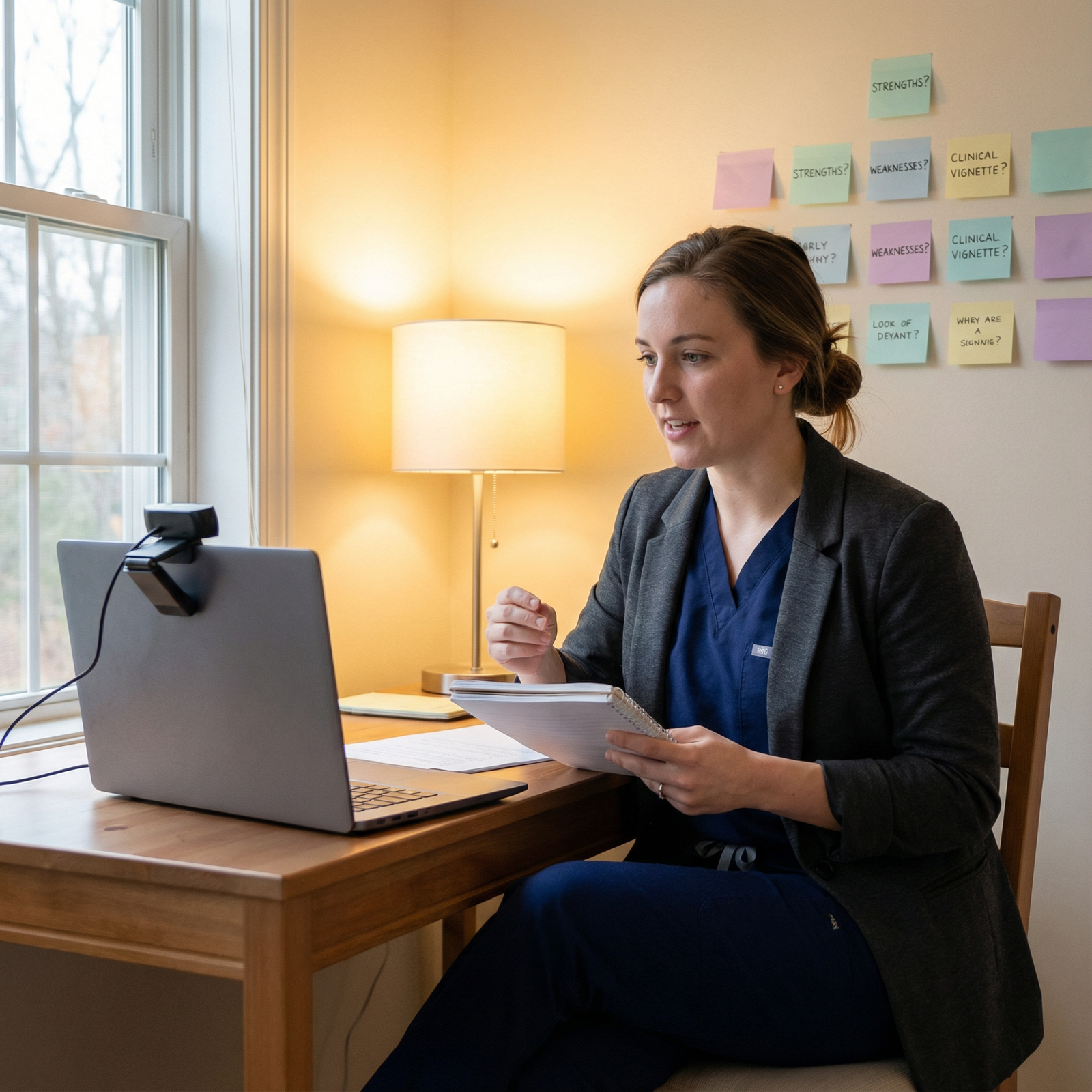
If interviews are virtual, this is an essential part of how to prepare for interviews:
- Test your audio, video, and internet connection beforehand.
- Choose a neutral, quiet, well-lit background.
- Place your camera at eye level and look into it when speaking.
- Practice with the exact platform (Zoom, Thalamus, ERAS) you’ll be using.

Step 4: Developing a Smart Preparation Strategy and Timeline
Good residency interview preparation is deliberate rather than last-minute. Create a plan that includes content, logistics, and self-care.
A. Four-Week Pre-Interview Timeline
4 weeks before interviews start
- Clarify your med-psych story and long-term career interests.
- Update your CV and re-read your personal statement.
- Create your program research template.
- Identify a mentor or advisor willing to do a mock interview.
3 weeks before
- Complete research sheets for the first 5–8 programs on your schedule.
- Draft and refine your answers to core and med-psych–specific questions.
- Practice 1–2 mock interviews (with feedback).
- Decide on interview outfits and ensure they fit and feel comfortable.
2 weeks before
- Continue building program profiles as more invites come in.
- Refine your resident and faculty question lists.
- Do targeted practice for areas you struggle with (e.g., “Tell me about yourself,” behavioral questions).
- If interviews are virtual, perfect your tech setup.
1 week before
- Confirm all interview dates, times, and time zones.
- Print or save easily accessible one-page summaries for the week’s programs.
- Review each program’s website the night before the interview.
- Prepare easy, healthy meals for interview days if you’re at home.
- Practice 5–10 minutes of grounding or mindfulness daily to manage anxiety.
B. Logistics: Small Details that Make a Big Difference
- Professional Attire: Solid colors, minimal patterns, comfortable shoes. Avoid anything that will distract you or require constant adjustment.
- Documents: Keep an organized digital folder with your ERAS application, personal statement, CV, and any research abstracts or posters.
- Time Zone Management: If applying across the country or internationally, double-check each program’s time zone. Put it in your calendar correctly with alerts.
For in-person interviews:
- Plan travel with buffer time for delays.
- Bring a small folder with printed copies of your application, questions, and a notepad.
- Note nearby coffee, food, and rest spots so you’re not scrambling.
Step 5: Presenting as a Future Colleague, Not Just an Applicant
Programs are selecting future colleagues they will enjoy teaching and working alongside. Your pre-interview preparation should help you embody that level of professionalism, curiosity, and collegiality.
A. Show That You Think Like a Med-Psych Physician
Bring integrated thinking into your answers:
Instead of:
“I like that psychiatry lets you talk to patients more, but I also enjoy the complexity of internal medicine.”
Try:
“What excites me about med psych is the chance to fully care for patients whose medical and psychiatric conditions are constantly affecting each other—like managing antipsychotic-induced metabolic syndrome, or supporting a patient with COPD who has panic attacks every time they feel short of breath. I want to be the physician who can address both domains rather than splitting them between services.”
When discussing cases, highlight:
- Interaction between physical and mental health
- Systems-level barriers (insurance, fragmentation of care, stigma)
- How your approach integrates both medicine and psychiatry principles
B. Demonstrate Self-Awareness and Teachability
Combined programs are intense. Interviewers want to see that you can:
- Reflect on your own limitations
- Seek help appropriately
- Learn from mistakes
Good lines to incorporate naturally:
- “I didn’t recognize at first how much my own anxiety about missing things was driving me to overtest, but feedback from my attending helped me recalibrate.”
- “I realized I was assuming nonadherence was simply ‘noncompliance,’ when in fact, untreated depression and transportation barriers were the main drivers.”
C. Communicate Respectfully and Effectively
In both medicine and psychiatry, communication is central. During interviews:
- Listen actively; don’t interrupt.
- Answer the question asked, then stop—avoid rambling.
- If you don’t understand a question, ask for clarification.
- If you need a moment to think, say: “That’s a great question; let me think for a second,” then respond.
Practice maintaining a calm, grounded presence. This is especially relevant for psychiatry leaders assessing your suitability for emotionally intense work.
D. Protect Your Energy and Wellness
Residency interview preparation shouldn’t come at the cost of your own mental health—a value especially important in psychiatry.
- Build in recovery time between interviews, if possible.
- Maintain sleep, exercise, and nutrition routines.
- Limit post-interview overanalysis; keep brief notes and move on.
- Connect with peers going through the process; normalize stress and uncertainty.
Taking care of yourself now signals that you’ll be able to set boundaries and practice sustainably in residency.
Frequently Asked Questions (FAQ)
1. How is interview preparation for medicine-psychiatry combined programs different from categorical programs?
You’ll still need general residency interview preparation—clear communication, behavioral questions, knowledge of your application—but med psych residency interviews add distinct layers:
- Strong emphasis on integration: how you think about the interplay between physical and mental health.
- Interest in systems thinking and care for complex, underserved populations.
- Questions probing your ability to work across disciplines and manage ambiguity.
Plan extra time to develop your med-psych narrative, prepare integrated case examples, and understand each program’s specific approach to combining medicine and psychiatry.
2. What types of interview questions residency programs in med psych commonly ask?
Common medicine psychiatry combined interview questions include:
- “Why medicine-psychiatry rather than doing one specialty and consulting with the other?”
- “Describe a patient whose care would have been better with an integrated med-psych approach.”
- “How do you manage patients who repeatedly present with both medical and psychiatric crises?”
- “Tell me about a time you managed your own emotional response to a challenging patient.”
Prepare 2–3 real cases that illustrate:
- Complex comorbidity
- Ethical or capacity issues
- Systems barriers to care
…and practice walking through them concisely.
3. How can I demonstrate genuine interest in med psych if my CV looks more “ordinary” or categorical?
You don’t need a perfect “med psych–branded” CV. To highlight genuine interest:
- Reframe your existing experiences (e.g., internal medicine rotations with complex psychosocial dimensions, psychiatry cases with significant medical issues).
- Emphasize your reflections on fragmentation of care and desire to provide more integrated, continuous care.
- Show you’ve researched the field: know what med-psych graduates do, common career paths, and why this dual training is necessary for your goals.
Your insight and self-awareness often matter more than a perfectly curated application.
4. How early should I start preparing for medicine-psychiatry residency interviews?
Ideally, begin structured preparation 4–6 weeks before interviews start:
- Weeks 1–2: Clarify your story, research the field of combined medicine-psychiatry, and review your application.
- Weeks 2–3: Do deeper program research and practice answers to core questions.
- Weeks 3–4: Mock interviews, refine your integration-focused examples, set up logistics.
Starting early gives you time to develop a nuanced, confident narrative about why medicine-psychiatry is the right path—and to show up as the thoughtful, integrated thinker programs are seeking.
Thoughtful pre-interview preparation allows you to show programs who you already are becoming: a physician capable of navigating the complex interface between body and mind, and a future colleague they can trust with their patients and their team.