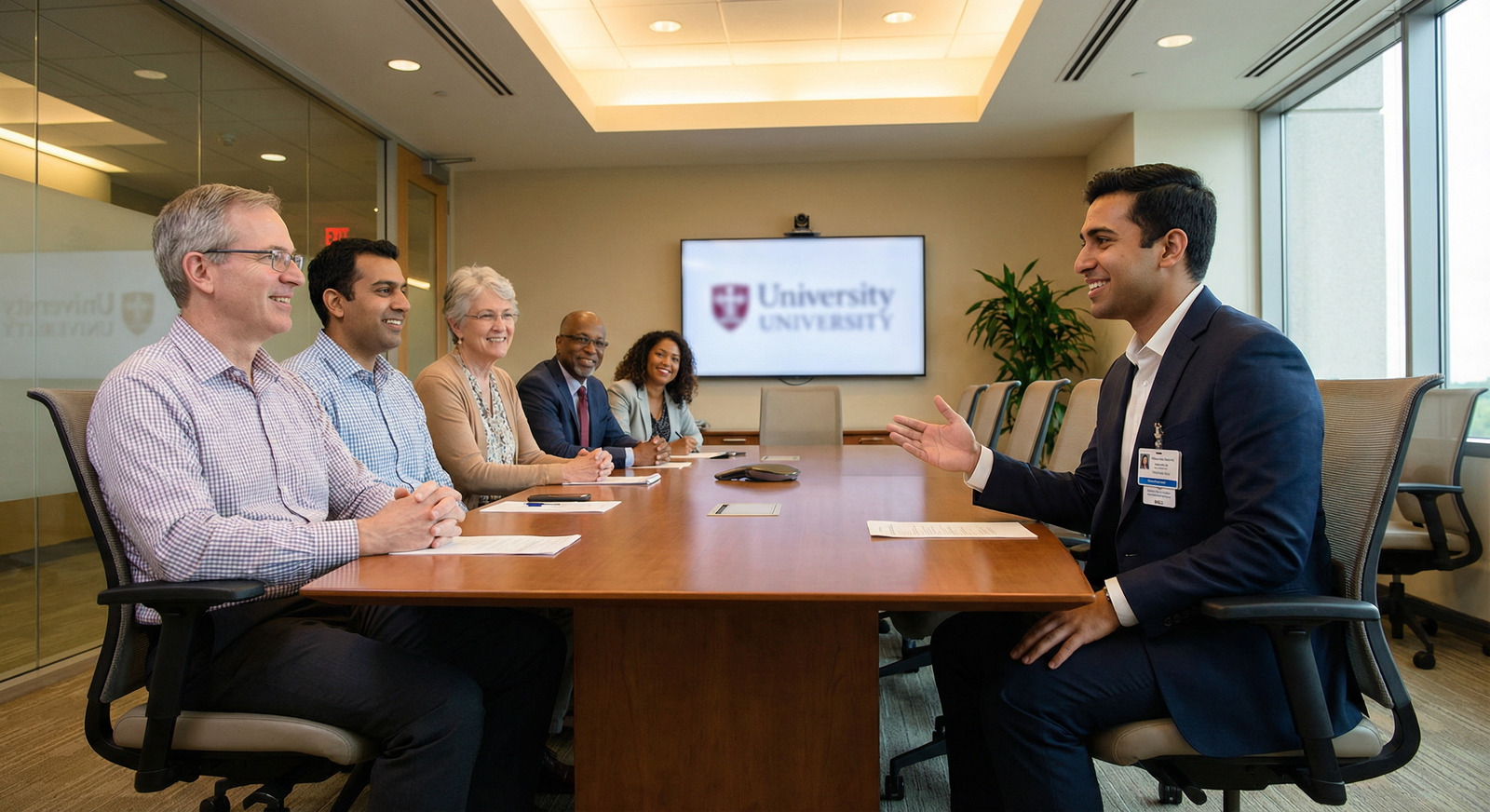
Understanding the Landscape: What Makes Medical Genetics Interviews Unique?
Medical genetics residency interviews sit at the intersection of internal medicine/pediatrics and highly specialized genomic science. Effective pre-interview preparation requires understanding what programs are looking for and how this specialty’s expectations differ from other fields.
What Programs Are Really Assessing
Beyond your CV, programs use the medical genetics residency interview to evaluate:
Maturity in handling uncertainty
Genetic information often brings ambiguity and probabilistic risk. Programs look for candidates who can think probabilistically and tolerate not having black‑and‑white answers.Communication skills with vulnerable patients and families
You’ll be explaining complex information to patients facing serious diagnoses, reproductive decisions, and lifelong implications. Programs care deeply about your empathy and clarity.Ethical reasoning and professionalism
Genetics intersects with prenatal testing, predictive testing, incidental findings, privacy, and discrimination. Your ethical framework is central to your candidacy.Curiosity and commitment to lifelong learning
Genomics changes rapidly. Interviewers look for evidence that you enjoy learning new science and can keep up with emerging tests, guidelines, and therapies.Fit with a multidisciplinary, consult-heavy specialty
Medical genetics often functions as a consult and outpatient specialty involving collaboration with maternal-fetal medicine, oncology, neurology, pediatrics, and laboratory medicine. Teamwork and adaptability are crucial.
When planning how to prepare for interviews, keep these themes at the center of your pre-interview work. Everything—from how you describe your research to how you answer behavioral questions—should reinforce that you’re well-suited to this type of work.
Academic & Clinical Preparation: Refreshing the Foundations
Before you walk into any medical genetics residency interview, ensure your scientific and clinical foundation feels fresh. You don’t need to re-learn all of medical school, but a targeted review will improve your confidence and performance.
Core Scientific Concepts to Review
You’re not being tested like a board exam, but you should be comfortably conversant in:
Basic Human Genetics
- Mendelian inheritance patterns: autosomal dominant, autosomal recessive, X-linked, mitochondrial
- Penetrance, expressivity, variable expressivity, anticipation
- De novo versus inherited variants
Genomic Technologies
- Karyotype and FISH: what they detect, common indications
- Chromosomal microarray
- Single-gene testing vs. gene panels vs. exome/genome sequencing
- Polygenic risk scores (basic understanding)
- Limitations: variants of uncertain significance (VUS), false positives/negatives
Core Disease Areas
- Common syndromic diagnoses (e.g., Down syndrome, Marfan syndrome, neurofibromatosis type 1, fragile X)
- Common indications for referral: developmental delay, dysmorphic features, recurrent pregnancy loss, strong family cancer history, cardiomyopathy, neonatal hypotonia, congenital anomalies
Ethical & Legal Frameworks
- GINA (Genetic Information Nondiscrimination Act): what it does and doesn’t protect
- Informed consent and pre-/post-test counseling principles
- Reproductive ethics: prenatal diagnosis, carrier screening, preimplantation genetic testing
You don’t need to have all details memorized; you do want to be capable of a coherent, confident conversation if an interviewer brings up a case or asks how you would think through testing options.
Clinical Skills and Approach to Genetic Patients
Review how you would:
- Take a three-generation pedigree and what key information you’d collect
- Approach a child with multiple congenital anomalies or unexplained developmental delay
- Counsel a patient with a strong family history of cancer about genetic testing
- Think through next steps after receiving a VUS result
Actionable step:
Pick 3–5 classic scenarios (e.g., cardiomyopathy in a 35-year-old with family history of sudden death; couple with two miscarriages; newborn with dysmorphic features and hypotonia) and write out a brief, structured approach: what you’d ask, tests you’d consider, and how you’d counsel.
This preparation doesn’t have to be perfect; its primary purpose is helping you talk comfortably and concretely about clinical genetics during the interview.

Crafting Your Story: Aligning Your Application with Medical Genetics
The strongest applicants can clearly articulate why medical genetics and why now—and connect that story to their prior experiences. This is critical for the genetics match process because many interviewers will actively test your commitment and understanding of the specialty.
Clarify Your Personal “Why Genetics?”
Write down answers to these prompts:
- When did you first seriously consider medical genetics?
- What experiences solidified your interest (clinical, research, personal/family)?
- What aspects of the field energize you the most (e.g., solving diagnostic puzzles, counseling, lab integration, systems-level impact, research)?
- How do you see yourself using genetics in 10 years (e.g., clinician-educator, lab-based, cancer genetics, prenatal, metabolic, undiagnosed diseases program)?
Your goal is not to produce a dramatic story but to create a cohesive, authentic narrative. For example:
“I first became interested in medical genetics during my pediatrics rotation, caring for a child with an undiagnosed neurodevelopmental condition. I saw how not having a diagnosis affected the family’s planning and access to resources. Later, during my research year in a neurogenetics lab, I experienced the other side—slow, careful variant interpretation and discovery. I realized I enjoy both the science and the communication piece, and medical genetics allows me to bridge those worlds for patients.”
Connect Your Experiences to the Specialty
Map your CV experiences to skills relevant to genetics:
Research
- Variant interpretation, molecular biology, bioinformatics, epidemiology, or any data-driven projects
- Emphasize how you handled uncertainty, worked with large datasets, or communicated complex results
Clinical Rotations
- Experiences in pediatrics, internal medicine, oncology, neurology, maternal-fetal medicine, or NICU that involved diagnostic odysseys or counseling
- Any exposure to genetics consults or clinics—describe your role
Nonclinical Experiences
- Teaching, tutoring, or mentoring → translates into patient education
- Ethics committee, advocacy work, or community outreach → shows sensitivity to ethical and psychosocial dimensions
- Leadership roles → relevant to multidisciplinary team environments
Before interviews, make a simple “experience-to-skill map”:
| Experience | Skills Showcased | Link to Medical Genetics |
|---|---|---|
| Neurogenetics research | Data analysis, scientific curiosity, persistence | Prepared me to interpret genetic data and stay updated with rapidly evolving evidence |
| Peds clinic with developmental delay cases | Longitudinal care, family counseling | Highlighted need for timely genetic evaluation and careful communication |
| Ethics elective | Structured ethical reasoning | Helps address complex decisions around predictive testing and reproductive choices |
Reviewing this table the night before interviews will help you naturally tie your background to genetics during questions.
Program Research: Targeted Preparation for Each Institution
One of the most overlooked aspects of residency interview preparation is program-specific research. In a relatively small specialty like medical genetics, programs often have distinct identities, strengths, and niche focuses. Demonstrating that you understand these differences will significantly improve your interview performance and perceived fit.
Essential Elements to Research
For each program on your interview list, create a brief one-page summary (digital is fine) that covers:
Program Structure
- Combined vs. categorical pathways (e.g., pediatrics-genetics, internal medicine-genetics, categorical medical genetics)
- Length of training and timeline of genetics vs. primary specialty years
- Integration of adult vs. pediatric genetic services
Clinical Focus Areas
- High-volume clinics: cancer genetics, cardiovascular genetics, prenatal, metabolic, neurogenetics, skeletal dysplasias, undiagnosed diseases programs
- Hospital or centers of excellence (e.g., metabolic disease center, fetal therapy center)
Research and Scholarly Opportunities
- Notable labs, principal investigators, or NIH-funded projects
- Opportunities in translational genomics, bioinformatics, gene therapy, or implementation science
- Protected research time for residents
Educational Philosophy and Culture
- Structure of didactics, case conferences, journal clubs, variant review meetings
- Involvement of genetic counselors and lab directors in education
- Program size and faculty-to-resident ratio
Unique Features
- Partnerships with public health, statewide newborn screening programs, or population genomics initiatives
- Integrated laboratories or in-house sequencing
- Strong ties to oncology, cardiology, neurology, or OB/MFM
Using Research Effectively During Interviews
Once you’ve gathered this information, use it to:
Tailor your “Why this program?” answer
Reference specific clinics, faculty interests, or training structures that align with your goals.Prepare program-specific questions
Instead of generic questions, ask about:- “How do residents participate in the [name] Undiagnosed Disease Program?”
- “Could you describe how the combined IM-genetics pathway integrates inpatient consults vs. outpatient clinics in the second year?”
- “How are residents involved in variant review or tumor board discussions?”
Signal genuine interest for the genetics match
In a small specialty, word travels quickly, and enthusiasm matters. Demonstrated, thoughtful interest can differentiate you from peers with similar metrics.

Systematic Interview Practice: From Common Questions to Genetics-Specific Scenarios
As you think about how to prepare for interviews, combine traditional residency interview preparation with medical genetics–specific content. Build a structured practice plan over several weeks rather than cramming the night before.
Core Behavioral and Motivational Questions
Most programs will ask some variation of standard interview questions residency programs commonly use:
- “Tell me about yourself.”
- “Why medical genetics?”
- “Why this program?”
- “What are your long-term career goals?”
- “Tell me about a patient who impacted you.”
- “Describe a conflict you had on a team and how you handled it.”
- “Tell me about a time you made a mistake in patient care or research and what you learned.”
- “What are your strengths and weaknesses?”
Actionable practice strategy:
- Write bullet-point answers, not scripts, for each question.
- Use the STAR format (Situation, Task, Action, Result) for behavioral questions.
- Record yourself answering 3–4 questions at a time on video. Watch and adjust:
- Are your answers concise (1–2 minutes each)?
- Do you clearly state your role and what you learned?
- Is your body language open and engaged?
Genetics-Specific Interview Questions to Expect
Programs often include scenario-based or specialty-focused questions to assess your readiness and insight:
- “How did you become interested in medical genetics, given it’s a relatively small specialty?”
- “What do you think will be the biggest challenges facing medical genetics in the next 10 years?”
- “How would you explain a variant of uncertain significance to a worried family?”
- “What is your approach when a patient wants genetic testing that you believe is not indicated?”
- “How do you stay current with rapidly evolving genomic literature?”
- “Tell me about an ethical dilemma you anticipate facing in genetics practice.”
Consider practicing answers to questions like:
Example question: “How would you counsel a 25-year-old woman with a strong family history of breast cancer who is considering BRCA testing?”
Your answer could include:
- Clarifying her personal and family history
- Explaining what the test can and cannot tell her
- Discussing possible results (pathogenic, negative, VUS) and their implications
- Emotional and psychosocial considerations
- Shared decision-making and respecting autonomy
You’re not being graded for exam-level detail; instead, interviewers are listening for logical structure, empathy, and appreciation of complexity.
Virtual Interview Logistics and Performance
If your genetics match season involves virtual interviews:
Technical setup
- Test your video platform (Zoom, Thalamus, ERAS-integrated systems) in advance.
- Use a neutral, well-lit background; avoid clutter and strong backlighting.
- Confirm audio quality with an external mic or headphones if needed.
Professional presence
- Dress in standard professional attire (e.g., suit or equivalent).
- Maintain eye contact by looking toward the camera, not the screen thumbnail.
- Keep a water bottle and printed copy of your CV within reach.
Managing interview fatigue
- Schedule short breaks between sessions if the platform allows.
- Keep a notepad with names/roles of each interviewer and program-specific notes.
- Stand and stretch briefly between interviews to reset your energy.
Ethics, Communication, and Self-Awareness: The Intangibles Programs Value Most
Beyond academic preparation and polished answers, strong performance in a medical genetics residency interview depends on how you handle ethics, communication challenges, and self-reflection.
Preparing for Ethical and Psychosocial Questions
Common themes include:
- Predictive testing in minors
- Prenatal diagnosis and pregnancy termination
- Incidental or secondary findings from exome/genome sequencing
- Privacy concerns and familial disclosure of results
- Equity and access to genetic services
You are not expected to know every guideline but should demonstrate:
- Awareness that these issues are complex and often lack easy answers
- Respect for patient autonomy and shared decision-making
- Understanding of the importance of informed consent and non-directive counseling
- Sensitivity to cultural, religious, and social factors
Preparation strategy:
- Read 2–3 short position statements (e.g., from ACMG or ASHG) on testing in children, incidental findings, or direct-to-consumer testing.
- Practice explaining, in plain language, how you’d approach:
- A parent wanting predictive testing for a late-onset condition in their child
- A patient asking whether to share their genetic result with relatives
- A family overwhelmed by information after a complex test result
Showcasing Communication Skills
Interviewers often mentally translate “How you’re communicating with me now” into “How you will communicate with vulnerable families later.”
Demonstrate that you can:
Translate complexity without condescension
Use brief, clear explanations and simple analogies.Check for understanding
In interviews, you can model this by occasionally pausing: “Does that address what you were asking?” or “Would you like me to expand on any part of that?”Balance data with empathy
When discussing difficult cases, focus as much on the human impact as the scientific puzzle.
Reflective Practice and Growth Mindset
Medical genetics is a field where evidence changes rapidly and uncertainty is common. Programs favor applicants who are:
- Comfortable saying, “I don’t know, but here’s how I’d find out”
- Open about mistakes and what they learned
- Eager for constructive feedback
Reflect before interviews on:
- A time you changed your mind about a clinical decision after new evidence
- A case where you initially missed something important and how you corrected it
- How you’ve responded when research results didn’t support your hypothesis
Discussing these moments honestly and non-defensively can strengthen your candidacy.
Practical Timeline and Checklist: Putting It All Together
To make your pre-interview preparation for medical genetics both effective and sustainable, use a structured timeline.
4–6 Weeks Before Interviews
- Skim a concise clinical genetics text or review articles on:
- Basic genetic principles
- Common syndromes and testing strategies
- Make your experience-to-skill map linking CV items to genetics.
- Start compiling program-specific one-pagers for each interview site.
- Identify 1–2 mentors or advisors willing to do a practice interview with you.
2–3 Weeks Before Each Interview
- Draft bullet-point answers to:
- Core behavioral questions
- “Why medical genetics?”
- “Why this program?”
- Practice aloud (ideally on video) for 30–45 minutes every few days.
- Review key ethical frameworks (GINA basics, predictive testing in minors, concept of non-directiveness).
3–5 Days Before Each Interview
- Re-review that program’s one-pager:
- Faculty interests
- Notable clinics and research opportunities
- Program structure
- Prepare 3–5 thoughtful questions tailored to that program.
- Confirm logistics:
- Interview schedule and time zones
- Platform links and technical setup
- Dress and background for virtual interviews
Day Before the Interview
- Light review only: skim your own CV and personal statement.
- Rehearse your opening answers:
- “Tell me about yourself.”
- “Why medical genetics?”
- Sleep and hydration take priority over last-minute cramming.
Day of the Interview
- Have these items ready:
- Printed CV and personal statement
- Short notes on the program and your questions
- Pen and notepad for names and impressions
- After the interview:
- Write brief reflections about each program: culture, strengths, concerns, and how you felt during the day. This will be invaluable later when crafting rank lists for the genetics match.
FAQs: Pre-Interview Preparation in Medical Genetics
1. How is residency interview preparation different for medical genetics compared to other specialties?
While many elements of residency interview preparation are universal (behavioral questions, professionalism, program research), medical genetics places greater emphasis on:
- Comfort with uncertainty and probabilistic thinking
- Ability to communicate complex concepts empathetically
- Understanding of ethical and psychosocial dimensions of genetic information
- Evidence of sustained interest in a rapidly evolving, highly specialized field
You’ll still need strong general interview skills, but you should dedicate additional time to reviewing core genetics principles, ethical issues, and how your background specifically aligns with this specialty.
2. Do I need extensive genetics research to be a competitive candidate?
Extensive genetics research is helpful but not mandatory. Programs are interested in:
- Demonstrated curiosity about science and genomics
- Any research experience that shows you can handle data, think critically, and communicate results
- Willingness and ability to engage with rapidly evolving evidence
If you don’t have genetics-specific research, highlight experiences that involved complex problem-solving, ethical reflection, or patient/family communication. Be honest about your background, and emphasize your commitment to growing into the field.
3. What are common interview questions residency programs in genetics ask?
In addition to standard questions (“Tell me about yourself,” “Why this program?”), medical genetics programs frequently ask:
- “Why medical genetics, and how did you discover this interest?”
- “How do you see genetics shaping medicine in the next decade?”
- “Describe an ethical issue you anticipate facing in genetics practice.”
- “How would you explain uncertain or inconclusive genetic test results to a patient?”
- “Tell me about a challenging patient interaction and what you learned.”
Preparing concise, reflective answers to these types of questions—and practicing them out loud—is a key part of how to prepare for interviews in this field.
4. How can I best show programs that I’m serious about a career in medical genetics?
You can convey genuine commitment by:
- Articulating a clear, thoughtful “Why genetics?” story
- Demonstrating basic literacy in genetic concepts and ethical issues
- Asking specific questions about each program’s clinics, research, and training structure
- Highlighting relevant experiences (clinical, research, or personal) that led you toward genetics
- Showing a long-term vision for your career (even if it’s flexible) and how their program’s strengths align with that vision
Consistency across your application, your interview answers, and your questions to programs will reassure interviewers that you’ve chosen medical genetics deliberately and are ready for the next step in your training.
Thoughtful, structured pre-interview preparation will not only improve your performance on interview day, but also help you clarify what you truly want from a medical genetics residency. That clarity will serve you well throughout the genetics match process and into your future career.