Introduction: Why Behavioral Questions Matter in Residency Interviews
Residency interviews are one of the most consequential milestones in your medical career. They influence not only where you will train, but also the mentors you will meet, the patient populations you will serve, and the professional identity you will build.
Beyond assessing your academic record and clinical knowledge, programs are increasingly relying on behavioral interview questions to understand who you are as a colleague, team member, and future physician. These questions are designed to uncover how you think, how you respond under pressure, and how you’ve handled real-world challenges in the past.
Behavioral questions usually start with prompts like:
- “Tell me about a time when…”
- “Give me an example of…”
- “Describe a situation where…”
They probe deeply into your interpersonal skills, professionalism, ethics, communication, and resilience—core attributes for success in any residency program and long-term medical career.
This guide will help you:
- Understand why behavioral questions are used in residency interviews
- Recognize common behavioral question themes you’re likely to encounter
- Use the STAR Method to structure strong, memorable answers
- Build a personal story bank tailored to different programs
- Manage anxiety so you can perform at your best on interview day
By approaching behavioral questions intentionally, you can transform what many applicants fear into one of the strongest parts of your interview performance.
Understanding the Purpose of Behavioral Interview Questions
Why Programs Use Behavioral Questions
Residency programs receive hundreds to thousands of applications each year. Many candidates have strong scores, solid clinical evaluations, and compelling personal statements. Behavioral questions help interviewers differentiate between otherwise similar applicants by assessing traits that are harder to capture on paper.
Programs use behavioral questions to:
Predict Future Behavior in Clinical Settings
The central assumption behind behavioral interviewing is:
“Past behavior is the best predictor of future behavior.”
If you previously navigated a complex conflict professionally, took responsibility for an error, or responded constructively to feedback, interviewers will have more confidence that you will do so again as a resident.Assess Core Residency Competencies
Most programs evaluate candidates on competencies aligned with ACGME core domains, such as:- Interpersonal and communication skills
- Professionalism and ethics
- Systems-based practice and teamwork
- Practice-based learning and improvement
- Leadership and initiative
Behavioral questions give interviewers concrete evidence of these competencies in action.
Evaluate “Fit” with Program Culture
Residency programs vary in their culture, expectations, and mission. Behavioral questions help reveal:- How you collaborate with others
- Your approach to work-life balance and wellness
- Your response to stress, long hours, and uncertainty
- Your alignment with the program’s values (e.g., service to underserved populations, research focus, diversity and inclusion)
What Interviewers Are Listening For
When you answer a behavioral question, interviewers focus less on whether you tell a “perfect” story and more on:
- Self-awareness – Do you recognize your strengths and areas for growth?
- Ownership – Do you take responsibility for your actions and decisions?
- Growth – Did you learn something meaningful and change your behavior?
- Specificity – Are your examples concrete and detailed, or vague and generic?
- Professionalism – Do you speak respectfully about patients, peers, and supervisors?
Keeping these goals in mind will help you choose and frame your stories strategically.
Common Behavioral Interview Question Themes in Residency Interviews

While questions vary by specialty and program, most behavioral questions fall into predictable themes. Preparing in advance for these themes will make your Residency Interviews far less stressful.
1. Teamwork and Collaboration
Residency is fundamentally a team sport. Programs want to know how you function within multidisciplinary teams and how you handle interpersonal differences.
Typical questions:
- “Describe a time you worked as part of a team. What role did you play, and what was the outcome?”
- “Tell me about a situation where you had to work with someone who was difficult to get along with. How did you handle it?”
- “Give an example of how you’ve worked with nurses, allied health professionals, or other team members to improve patient care.”
What interviewers are looking for:
- Respectful collaboration with diverse team members
- Ability to manage disagreement constructively
- Willingness to listen and adjust your approach
- Focus on shared goals (patient safety, quality of care)
Example angles you might use:
- Coordinating care during a busy inpatient rotation
- Resolving differing opinions between team members about a plan of care
- Advocating for a patient based on nursing concerns
2. Conflict Resolution and Difficult Interactions
Conflict is unavoidable in clinical training. Programs want residents who can address conflict professionally and de-escalate tense situations.
Typical questions:
- “Share an example of a conflict you faced in a professional setting. How did you resolve it?”
- “Describe a time when you had to give negative feedback to a peer. What was your approach, and what was the outcome?”
- “Tell me about a disagreement with a supervisor or attending. How did you handle it?”
What interviewers are looking for:
- Calm, respectful communication under stress
- Efforts to understand the other person’s perspective
- Focus on resolving issues rather than assigning blame
- Willingness to seek help or mediation when needed
Caution:
Avoid stories where you simply “won” an argument. Instead, focus on how you preserved relationships and improved the situation.
3. Adaptability, Resilience, and Stress Management
Residency involves high demands, long hours, and frequent changes. Behavioral questions in this area explore how you cope, adapt, and maintain professionalism.
Typical questions:
- “Tell me about a time you faced a significant challenge during your medical training. How did you overcome it?”
- “Describe a situation in which you had to adapt to a major change in your work or academic environment.”
- “Share a time you felt overwhelmed. How did you manage the situation?”
What interviewers are looking for:
- Evidence of healthy coping strategies (not just ‘I worked harder’)
- Insight into your stress triggers and limits
- Willingness to seek support (peers, supervisors, counseling, wellness resources)
- Examples of bouncing back from setbacks (exam failure, personal hardship, clinical error)
4. Leadership and Initiative
Even as a trainee, you will frequently be in leadership roles—whether as a senior on call, a quality-improvement project lead, or a patient advocate.
Typical questions:
- “Provide an example of a time when you took the initiative on a project or task. What prompted you to act?”
- “Describe a leadership experience you’ve had. What challenges did you face, and how did you address them?”
- “Tell me about a time you led a team through a stressful situation.”
What interviewers are looking for:
- Ability to organize and motivate others
- Comfort with decision-making and accountability
- Openness to feedback and shared leadership
- Focus on patient care, safety, or educational improvement
Leadership doesn’t have to mean holding an official title. Informal leadership—like coordinating team tasks on a busy service—is equally valuable.
5. Time Management, Organization, and Prioritization
Residents constantly juggle competing demands: pages, notes, admissions, discharges, didactics, and personal responsibilities.
Typical questions:
- “How have you managed competing demands on your time? Give an example of a challenging situation.”
- “Describe a situation where you had to prioritize multiple tasks. How did you decide what to tackle first?”
- “Tell me about a time when you missed a deadline or dropped a ball. What happened and what did you learn?”
What interviewers are looking for:
- A structured approach to prioritizing tasks
- Attention to patient safety and time-sensitive needs
- Willingness to communicate and ask for help
- Insight into your own planning and organizational style
Preparing Strong Behavioral Answers Using the STAR Method
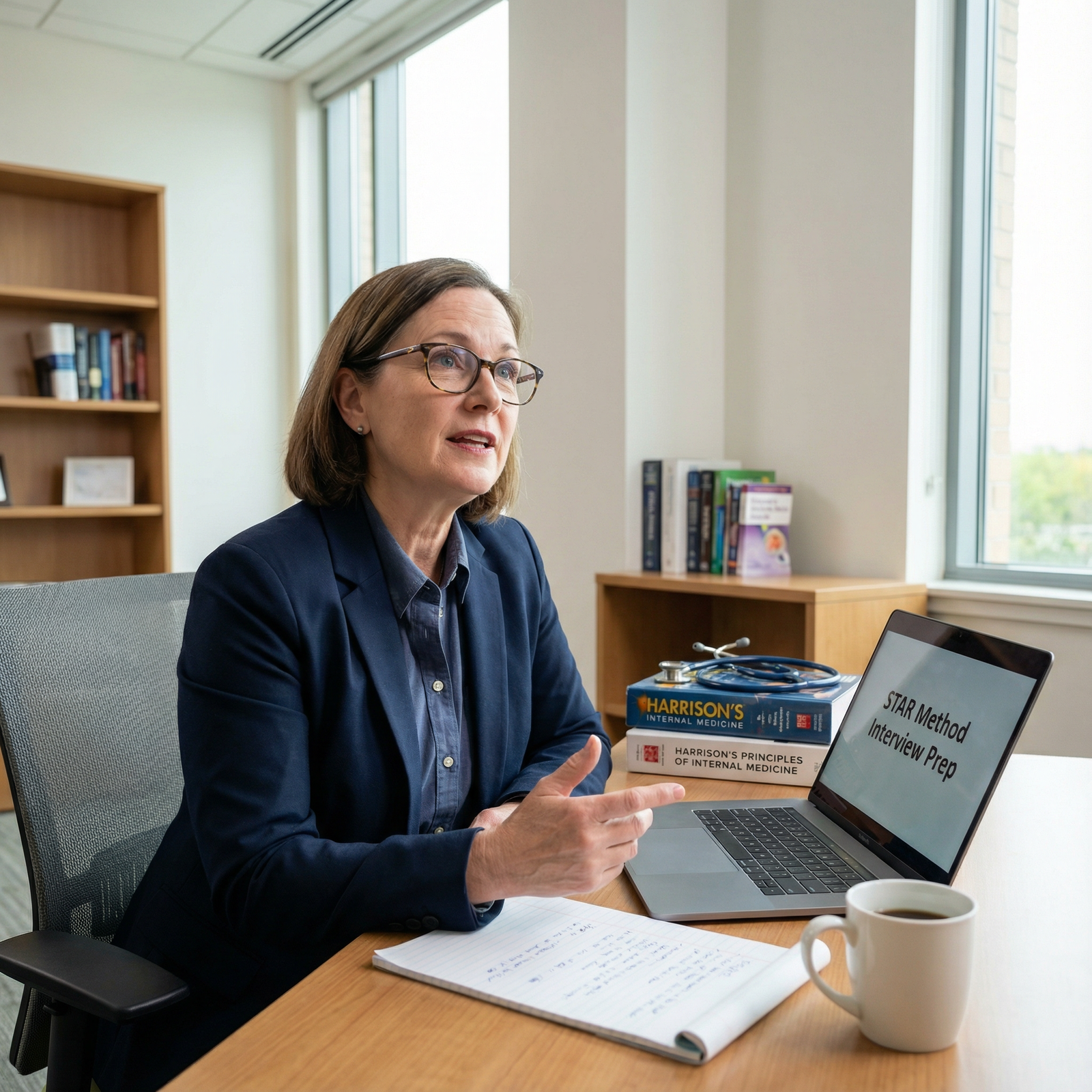
The STAR Method is one of the most effective tools for Interview Preparation, especially for behavioral questions. It ensures your responses are structured, specific, and memorable.
The STAR Framework
S – Situation
Briefly set the context. Where were you? What was happening? Who was involved?T – Task
What was your specific responsibility, challenge, or goal in that situation?A – Action
What did you personally do? Focus on your behaviors, decisions, and reasoning.R – Result
What happened? What was the outcome, and what did you learn? Whenever possible, tie this to how it has shaped your current practice as a future resident.
Example: STAR Method in Action
Question: “Describe a time when you had to work as part of a team.”
Situation:
“During my pediatrics rotation on the inpatient service, our team admitted several children with complex medical needs during a single overnight call, and the census suddenly became very high.”Task:
“As the sub-intern, I was responsible for helping organize the workflow for morning rounds and ensuring critical tasks for our sickest patients were prioritized before conference.”Action:
“I created a brief triage list highlighting which patients were unstable or had pending time-sensitive tasks, and I shared it with the intern and senior resident. I then volunteered to pre-round on the more stable patients and update the nursing team, while the intern focused on those requiring closer monitoring. I also communicated directly with the charge nurse to clarify which labs and imaging were most urgent and coordinated with the team to divide responsibilities.”Result:
“As a result, we completed essential tasks for our highest-risk patients before rounds, minimized delays in imaging, and avoided missing any critical labs. Our attending later commented that the team managed the surge effectively and highlighted how our communication with nursing helped maintain patient safety. For me, it reinforced the value of clear prioritization and proactive collaboration—skills I know will be essential as a resident.”
Why this works:
- It is specific and concrete
- It highlights teamwork, initiative, prioritization, and communication
- It includes reflection and a clear takeaway linked to residency
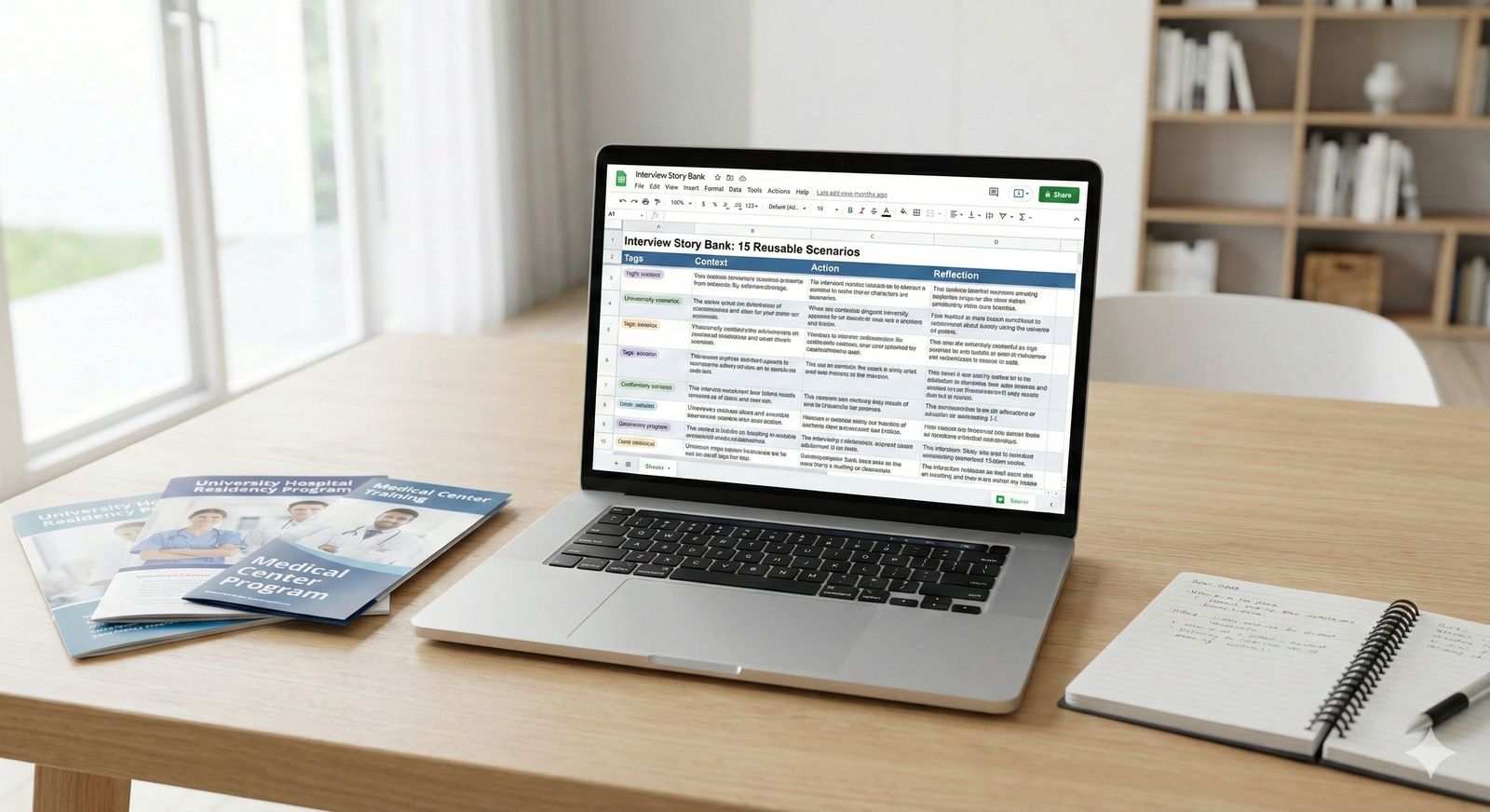
Building Your Personal Behavioral Story Bank
Instead of trying to think of examples on the spot, create a story bank before interview season:
List Core Themes
Create columns for teamwork, conflict, resilience, leadership, time management, ethics, feedback, and mistakes.Identify 2–3 Stories per Theme
Draw from:- Clinical rotations and sub-internships
- Research or quality-improvement projects
- Volunteer work and community service
- Student organizations or leadership roles
- Personal challenges that affected training (used thoughtfully and professionally)
Write Brief STAR Outlines
You don’t need a script, but jot bullet points for each element (S, T, A, R). Practice telling each story out loud in 1–2 minutes.Highlight Overlapping Stories
Some stories fit multiple categories. For example, a QI project may demonstrate teamwork, leadership, and resilience. These are especially high-yield.Update Regularly
As you complete new rotations or projects, add more recent examples. Interviewers often appreciate fresh, late-clinical stories.
Practicing and Refining Your Delivery
Strong content is only half the battle; how you deliver your answers matters as well.
- Practice out loud – Alone, with a peer, mentor, or advisor.
- Record yourself – Check your pace, tone, and clarity. Aim for confident but conversational.
- Stay within 1–2 minutes per answer – Long, meandering stories can lose your audience.
- Focus on your role – Avoid saying only “we”; clarify what you did.
- Be honest and natural – It’s fine to pause and think; you don’t need a rehearsed monologue.
Tailoring Your Behavioral Answers to Each Residency Program
Behavioral questions are also an opportunity to demonstrate that you are a strong fit for a specific program and specialty.
Research the Program’s Values and Culture
Before each interview:
- Review the program’s mission statement and core values
- Look for keywords on their website: underserved care, research, innovation, diversity, wellness, teaching, advocacy, global health, community engagement
- Read about their curriculum structure and resident-led initiatives
Align Your Stories with Program Priorities
If a program emphasizes:
Team-based care & interdisciplinary collaboration
- Highlight stories involving nurses, social workers, pharmacists, or interprofessional communication.
Research and academic productivity
- Prepare behavioral examples describing perseverance in a project, dealing with data setbacks, or working through IRB delays.
Community service and health equity
- Use examples from free clinics, outreach programs, or advocacy work.
Wellness and psychological safety
- Provide examples of how you responded to stress, set boundaries, or supported peers.
You don’t need to force-fit your stories, but small framing decisions can signal that you understand and value what the program cares about.
Managing Anxiety and Performing Under Pressure

Feeling nervous before Residency Interviews—especially behavioral questions—is completely normal. The goal isn’t to eliminate anxiety but to manage it so you can think clearly and communicate effectively.
Practical Strategies to Reduce Interview Stress
Prepare, Don’t Memorize
- Build your story bank and practice STAR answers, but avoid scripting word-for-word.
- Flexibility reduces panic if a question isn’t exactly what you anticipated.
Use Mindfulness and Grounding Techniques
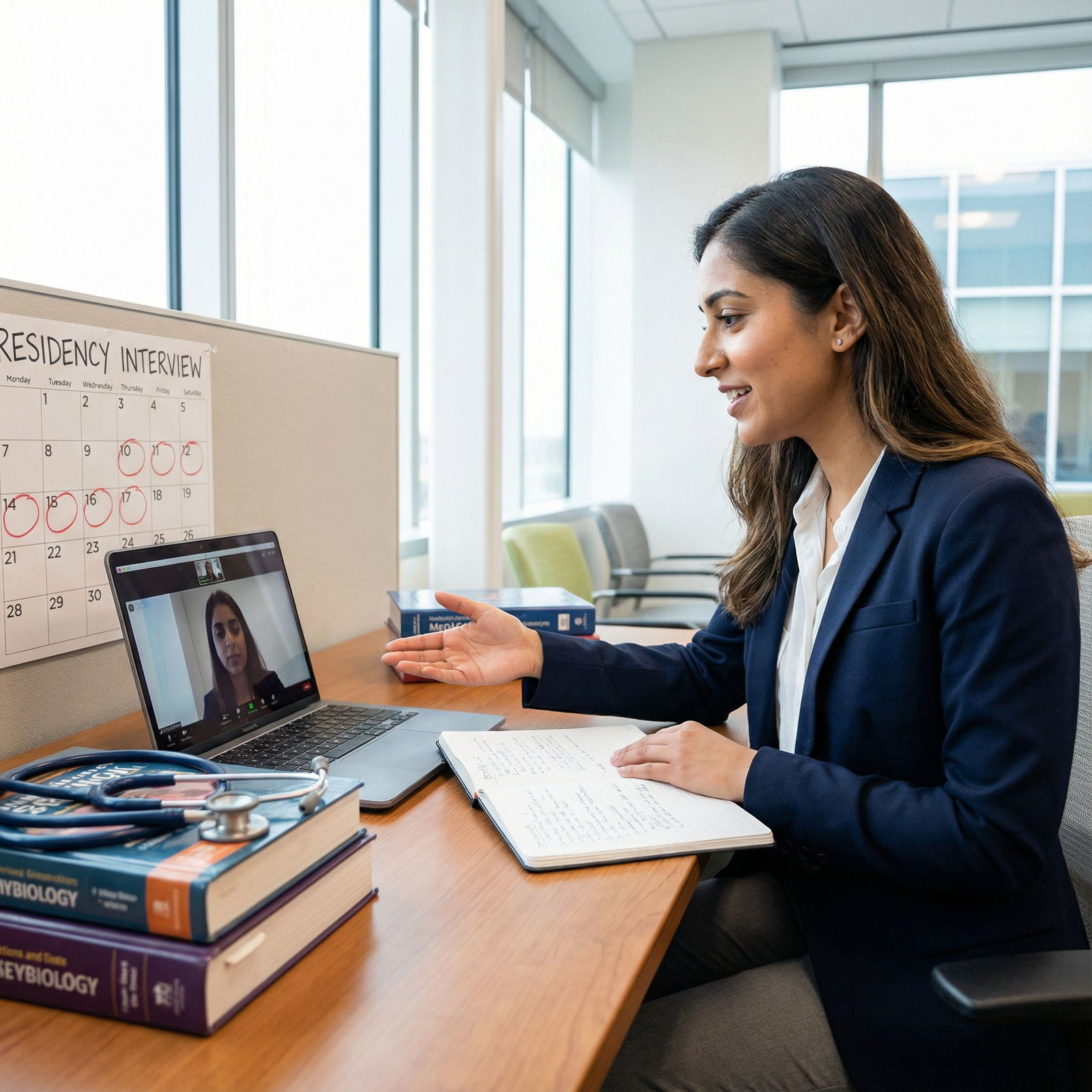
- Practice slow, deep breathing before logging into a virtual interview or entering the room.
- Use simple grounding strategies (e.g., feel your feet on the floor, notice the chair’s support) to anchor yourself.
Normalize Pausing
- It’s acceptable to say, “That’s a great question—let me think for a moment.”
- A brief pause to organize your thoughts often leads to a more coherent STAR answer.
Reframe the Interview as a Two-Way Conversation
- Remember: you are also evaluating them.
- Prepare thoughtful questions about the program’s culture, teaching style, and resident support. This shifts you from a “please choose me” mindset to a collaborative one.
Debrief After Each Interview Day
- Jot down questions you were asked—especially behavioral ones.
- Reflect on what went well and what you’d like to sharpen for the next interview.
- Over time, this reflection process significantly boosts your confidence.
Conclusion: Turning Behavioral Questions into Your Strength
Behavioral questions are not traps; they are invitations to show residency programs how you think, collaborate, and grow as a clinician and colleague. By:
- Understanding why programs rely on these questions
- Anticipating common themes and building a versatile story bank
- Using the STAR Method to structure clear, impactful answers
- Tailoring your examples to each program’s values and mission
- Managing anxiety through preparation and mindfulness
…you can approach your Residency Interviews with genuine confidence.
Ultimately, success in behavioral interviewing is less about having heroic stories and more about demonstrating authenticity, reflection, and growth. Programs are looking for residents who are coachable, resilient, ethical, and committed to their patients and teams. Thoughtful, well-prepared answers are one of the most powerful ways to convey that you are ready for the next step in your medical career.
Frequently Asked Questions About Behavioral Residency Interview Questions
Q1: What are the most important qualities residency programs look for during behavioral interviews?
Programs typically focus on qualities such as:
- Teamwork and collaboration
- Communication skills (with patients and colleagues)
- Professionalism and integrity
- Resilience and adaptability under stress
- Willingness to learn from feedback and mistakes
- Commitment to patient-centered care and safety
Use behavioral questions to show specific examples of these traits in action, rather than just describing yourself with adjectives.
Q2: How can I effectively incorporate research, QI, or leadership experiences into behavioral answers?
Use the STAR Method to link your academic or leadership work to clinical competencies:
- Situation/Task: Briefly describe the project goal (e.g., improving handoff quality, investigating an outcome, leading a student organization).
- Action: Highlight what you did—problem-solving, managing a team, handling setbacks, changing strategy after data review.
- Result: Focus on impact (even if modest): improved process, lessons learned, a poster/presentation, changes in your approach to patient care, or enhanced collaboration skills.
Frame these experiences not just as accomplishments but as training in teamwork, resilience, and systems-based practice.
Q3: What if I can’t think of an example during the interview or my mind goes blank?
This happens more often than you think. You can:
- Take a breath and say: “I’m thinking through which example best fits your question—give me just a moment.”
- If truly stuck, you can pivot slightly:
- “I’m having trouble thinking of a perfect example in the moment, but a related situation that comes to mind is…”
- Use a different but relevant domain (e.g., research or volunteer work) if you don’t have a clinical example.
After the interview, add that question to your preparation list so you’re ready next time.
Q4: Is it okay to talk about mistakes or negative experiences in behavioral questions? Won’t that make me look bad?
Handled well, discussing a mistake can actually strengthen your candidacy. Programs know that errors and missteps are inevitable in training. What matters is:
- You take responsibility rather than blame others.
- You describe concrete steps you took to address the situation.
- You highlight what you learned and how your practice has changed.
For example, discussing a missed lab follow-up that led you to adopt a new tracking system shows growth, accountability, and commitment to patient safety.
Q5: Can I ask my interviewers behavioral-style questions about the program?
Yes—and doing so can demonstrate maturity and insight into residency life. For example:
- “Can you tell me about a time when residents in your program advocated for a change, and how the program responded?”
- “Describe a challenging situation the residency faced recently (e.g., schedule changes, COVID surges). How did leadership and residents work together to address it?”
These questions can give you valuable information about program culture, responsiveness, and support structures, while also signaling that you think in systems and value collaboration.
For more support in your Residency Match and Applications phase, consider reviewing additional resources focused on Interview Preparation, sample behavioral questions by specialty, and mock interview practice sessions through your medical school or national organizations. Thoughtful preparation now will pay dividends throughout your medical career.