
Why Your Questions Matter as a Non‑US Citizen IMG in Interventional Radiology
For a non-US citizen IMG or foreign national medical graduate, the residency interview is not just about answering questions—it’s your best opportunity to gather critical information about visa support, training quality, and long‑term career prospects. In a competitive field like interventional radiology (IR), the questions you ask programs can significantly influence both your IR match outcome and your future in the US healthcare system.
This guide focuses on smart, high‑yield questions to ask programs—and how to ask them—specifically tailored for non‑US citizen IMG applicants targeting integrated or independent interventional radiology residency.
You’ll get:
- Targeted questions to ask residency leadership, faculty, and residents
- Special sections on visa sponsorship, research, IR case volume, and job placement
- Example phrases and interview questions for them that show insight and maturity
- A framework for what to ask program directors vs residents vs coordinators
Use this as a customizable question bank to prepare for your IR interviews and virtual meet‑and‑greets.
Core Strategy: How to Approach Asking Questions
Before diving into specific question lists, it helps to have a strategy.
1. Principles for Strong Questions
Your questions should be:
- Specific – Show you’ve read the website and know the basics.
- Open‑ended – Invite detailed answers (“How” and “What” rather than “Do you…?”).
- Tailored to IR – Reflect understanding of IR workflows, call, and procedural training.
- Sensitive to your status – As a non-US citizen IMG, you must ask about visas and support without sounding uncertain about your own value.
Example framing:
- Instead of: “Do you sponsor visas?”
- Use: “For your recent non‑US citizen IMG residents, what types of visas have you typically sponsored, and how has that process worked at your institution?”
2. Match Your Questions to the Interviewer
Think in terms of who you’re speaking with:
- Program Director (PD) / Associate PD – Curriculum, vision, evaluation, visas, match trends, institutional support.
- IR Faculty – Case mix, autonomy, research, procedure complexity, fellowship/job outcomes.
- Current Residents (IR and DR) – Culture, workload, real daily life, how IMGs are treated.
- Program Coordinator / GME Office – Visa processing details, licensing, logistics, onboarding.
You don’t need to ask everything in every interview—select 5–8 key questions per interview and adapt based on conversation flow.
Essential Questions About Training, Case Volume, and IR Practice
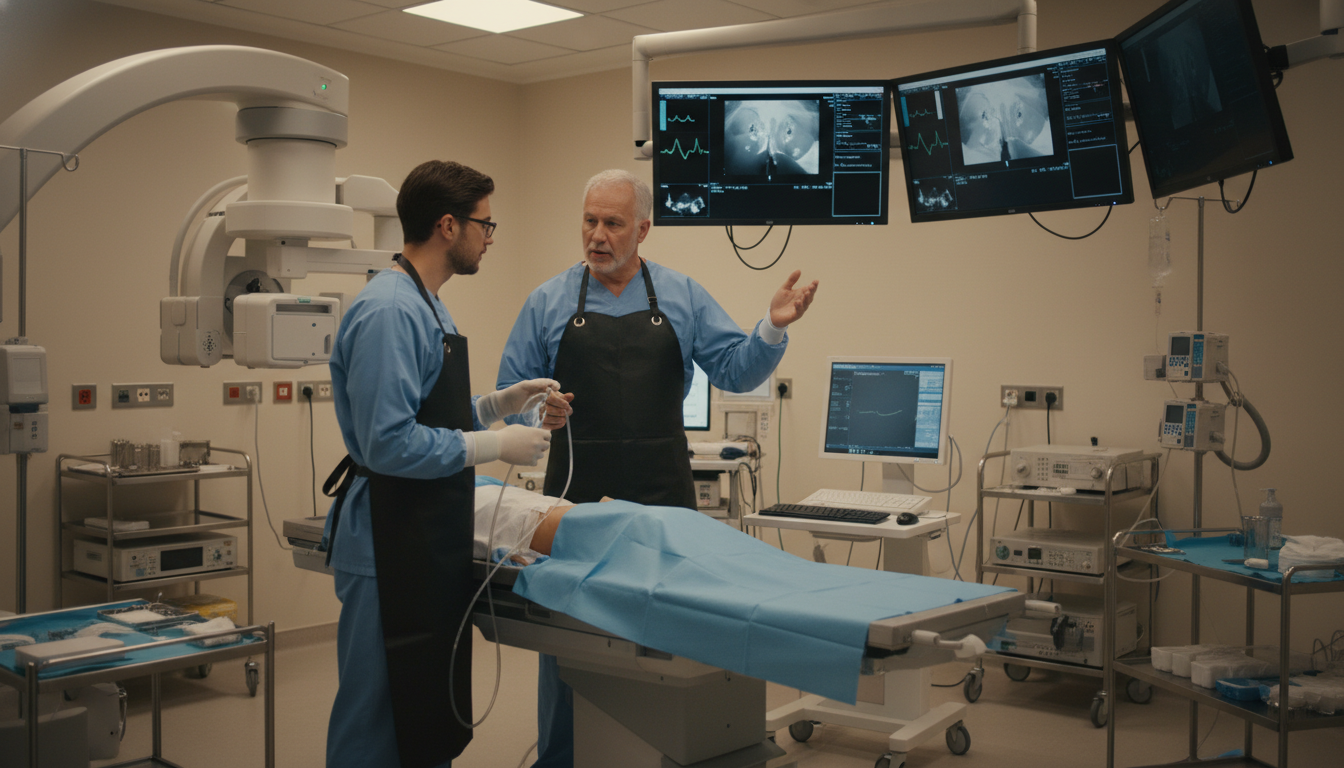
For an interventional radiology residency, the core of your training is the quality and breadth of procedural experience. As a foreign national medical graduate, you especially want to ensure that the program will prepare you to be competitive for US jobs or fellowships after graduation.
A. Understanding IR Case Volume and Complexity
Ask these to PDs or IR faculty:
- “How would you describe the case mix in your IR practice—what are the main types of procedures (oncologic, PAD, venous, trauma, hepatobiliary, neuro, etc.) that residents are most exposed to?”
- “Could you share how resident case volumes compare to the minimum IR‑DR board requirements, and where your graduates usually stand by the end of training?”
- “At what level of training do residents typically begin performing more complex procedures (e.g., TIPS, Y-90, complex PAD, advanced venous interventions) with increasing autonomy?”
Follow‑up if relevant:
- “Do residents get structured clinic experience in IR—longitudinal follow‑up, pre‑procedural consultations, and post‑procedure management?”
- “How are night and weekend emergencies handled—what kinds of emergent IR cases do your residents typically see on call?”
These questions demonstrate you understand that IR is not just procedures, but longitudinal and emergent care.
B. Autonomy, Supervision, and Progressive Responsibility
This is critical for IR training quality:
- “How do you structure graduated responsibility in the IR suite from PGY‑2/PGY‑3 through the later years?”
- “By the final year of the integrated IR residency, what level of independence do residents typically have in performing common interventions?”
- “How do faculty balance supervision and autonomy, especially for residents who are already technically strong but still developing decision‑making skills?”
For non-US citizen IMG applicants who may have prior procedural experience abroad, you can tailor this:
- “Some of my prior training included basic ultrasound‑guided procedures in [your country]. How does your program incorporate or evaluate prior international procedural experience when assigning responsibility?”
C. Integrated vs Independent IR Pathways
If you’re applying to integrated IR:
- “For the integrated IR residents, how is the transition from DR-focused years to IR-heavy years structured to ensure they are prepared for procedural volume and clinical responsibilities?”
- “How much interaction is there between integrated IR residents and DR residents—are IR residents fully integrated into the DR resident body during early years?”
If you’re considering independent IR later (for DR‑applicants):
- “How many of your DR graduates typically match into independent IR each year, and are there any internal priority pathways?”
This helps you gauge how IR-focused the environment really is.
Must‑Ask Questions on Visas, Support, and Non‑US Citizen IMG Issues
As a non-US citizen IMG, some questions are not optional—they’re vital for your career and immigration plans. Programs vary widely in how comfortable they are sponsoring visas and supporting foreign national medical graduates.
A. Visa Sponsorship and Institutional Policies
These questions can go to the PD or, more often, the program coordinator or GME office (PDs may not know all technical details):
- “For your current non‑US citizen IMG residents, what types of visas are most commonly used (e.g., J‑1 vs H‑1B), and has that changed in recent years?”
- “Does your institution currently support H‑1B visas for residency, or do you work exclusively with J‑1 sponsorship through ECFMG?”
- “Have you had any recent non‑US citizen IMG residents whose visa status affected their ability to continue training or take on moonlighting? How did the program and institution handle that?”
If you care about long‑term US plans:
- “For prior non‑US citizen IMG graduates from your IR program, were they generally able to transition to fellowships or attending positions in the US after training, despite visa constraints?”
- “Does your GME office or institution provide legal support or guidance around waiver jobs, H‑1B transfer, or other post‑residency visa options?”
These are sensitive but necessary questions. Ask them respectfully and fact‑focused.
B. Institutional Experience with Non‑US Citizen IMGs
You want to know if they are used to working with applicants like you:
- “Approximately what proportion of your residents are international medical graduates or non‑US citizens?”
- “Can you share examples of how the program has supported foreign national medical graduates in navigating licensing, visas, or cultural transitions?”
- “How do you approach US clinical experience requirements for incoming non‑US citizen IMGs—are there particular rotations or structures that help them adapt in the first year?”
From current residents (ideally another IMG):
- “As a non‑US citizen IMG, have you felt supported by the program in terms of visa logistics and understanding your unique challenges?”
- “Were there any unexpected obstacles related to your non‑US citizen status during onboarding, credentialing, or rotations, and how did the program help resolve them?”
C. State Licensing and Boards Concerns
Some states have additional rules affecting IMGs:
- “Have there been any challenges with state licensure or eligibility for IMGs entering your program, and how does your team prepare incoming residents for that process?”
- “At what point in training does the program support residents in registering for USMLE Step 3 and obtaining full licensure?”
This helps ensure no late surprises that might affect your training timeline.
Culture, Support, and Daily Life: What to Ask Residents and Faculty
Technical training is only part of your IR residency experience. As a non-US citizen IMG, you’re also evaluating how you’ll be treated as a colleague and as a person in a new country and system.
A. Evaluating Program Culture and Inclusion
Ask current residents (ideally in a virtual social or breakout room):
- “How would you describe the culture among residents here—more collaborative or more independent? Are people generally social outside of work?”
- “Have you observed any issues with discrimination, microaggressions, or bias, and if so, how did leadership respond?”
- “For residents who are international or from traditionally underrepresented backgrounds, how inclusive has the environment felt?”
To faculty or PD:
- “How do you approach resident well‑being and burnout prevention, especially in a demanding field like IR?”
- “Can you share an example of a time when a resident was struggling (personal or professional) and how the program supported them?”
These questions are insightful without sounding accusatory.
B. Workload, Call, and Balance
For IR residents, call structure and work hours dramatically shape your training.
To residents:
- “What does a typical week look like for an IR resident in terms of time in the lab, clinic, wards, and call responsibilities?”
- “How is IR call structured for integrated IR residents—home call vs in‑house, frequency, and typical overnight case volume?”
- “Do you feel your workload is sustainable, and do you have time for reading, research, or personal life?”
To PD/faculty:
- “How has the call system or workflow changed in recent years in response to resident feedback or ACGME requirements?”
- “How do you ensure IR residents still receive strong DR training and board preparation while managing procedural and call responsibilities?”
These show that you care about training quality and well-being, not just numbers.
C. Support Systems for International Residents
Specifically important for non‑US citizen IMGs:
- “Are there any institutional resources for international residents, such as orientation programs, mentorship, or international clubs?”
- “How does the program help incoming residents with housing, transportation, and community integration, especially if they are moving from abroad?”

Research, Career Outcomes, and Post‑Residency Planning
IR is an evolving, research‑heavy specialty. For a non‑US citizen IMG, your research and networking during residency can be especially important in compensating for initial disadvantages in the job market.
A. Research Opportunities and Expectations
To faculty and PD:
- “What types of research projects are residents commonly involved in—clinical outcomes, device trials, quality improvement, basic science?”
- “Is there protected research time for IR residents, and if so, how is it structured?”
- “How many residents typically present at national meetings (SIR, RSNA, etc.) each year, and does the department support travel and registration costs?”
If you already have a research interest:
- “I am particularly interested in [e.g., oncologic interventions / PAD / health disparities in IR]. Are there specific faculty mentors or ongoing projects in those areas where a resident might get involved?”
This shows initiative and genuine interest.
B. Fellowship and Job Placement for Non‑US Citizens
Even though IR is itself a subspecialty, many graduates pursue sub‑subspecialty focus or specific job types.
Key questions:
- “Where have recent graduates from your IR program gone in terms of academic vs private practice, and geographic distribution?”
- “Have your non‑US citizen IMG graduates faced unique challenges in obtaining jobs or academic positions, and how has the program supported them?”
- “Do faculty actively help residents with networking and introductions for jobs and fellowships?”
Follow‑up for visa‑sensitive applicants:
- “Have any of your previous non‑US citizen IMG residents pursued J‑1 waiver positions or H‑1B‑sponsored jobs after graduating from IR here? Were they generally successful?”
These questions are extremely valuable in predicting your long‑term trajectory.
C. Board Exams and Educational Structure
To PD or chief residents:
- “How is preparation for ABR Core and IR/DR exams integrated into the curriculum?”
- “Do you provide formal board review sessions, question banks, or didactic structures specifically for IR content?”
- “What has been your board pass rate over the last several years for IR/DR graduates?”
Consistent board success is a strong indicator of educational quality.
Practical Tips: Using These Questions Effectively
Having a long list is helpful, but your use of it matters.
1. Prioritize Based on Your Needs
As a non‑US citizen IMG aiming for an interventional radiology residency, these are usually top‑priority categories:
- Visa support and institutional experience with IMGs
- IR case volume, autonomy, and training structure
- Program culture and support for international residents
- Career outcomes and job placement for non‑US graduates
Before each interview, select:
- 2–3 questions about training/IR structure
- 2 questions about culture/well‑being
- 2–3 questions about visas and careers (customized per program)
2. Avoid Redundant or Easily Searchable Questions
Don’t waste valuable time asking for information that’s clearly listed on the website (e.g., number of residents, basic rotation schedule). Instead, build on that information:
- “I saw on your website that residents rotate at [X, Y, and Z hospitals]. How do these sites differ in terms of IR case mix and resident responsibility?”
3. Phrase Questions Positively and Professionally
You can ask difficult things without sounding negative:
Instead of:
- “I heard residents here are overworked. Is that true?”
Use:
- “How has the program adapted work hours and schedules to meet both ACGME requirements and resident well‑being, especially during busy IR rotations?”
Instead of:
- “Do you have problems with visa delays?”
Use:
- “When there have been visa or credentialing delays for incoming non‑US citizen IMG residents in the past, how has the program accommodated those situations?”
4. Take Notes and Compare Across Programs
After each interview:
- Write down the actual answers to your key questions.
- Compare programs on:
- Visa friendliness and support
- Case volume and complexity
- Culture and behavior toward IMGs
- Outcomes for international graduates
This helps you create a realistic rank list for the IR match based on your specific circumstances as a foreign national medical graduate.
FAQ: Questions to Ask Programs for Non‑US Citizen IMG in Interventional Radiology
1. Is it acceptable to ask directly about visa sponsorship during interviews?
Yes. For a non-US citizen IMG, asking about visa sponsorship is expected and appropriate. Frame it professionally and fact‑based:
- “What types of visas does your institution typically sponsor for residents?”
- “Do you currently support H‑1B for IR or primarily J‑1 through ECFMG?”
Avoid sounding apologetic; you’re clarifying essential logistics, not asking for a favor.
2. Who is the best person to ask detailed visa questions—program director or coordinator?
The program coordinator or GME office often has the most accurate, up‑to‑date information on visas and immigration policies. The program director can describe the program’s general stance and history with non‑US citizen IMG residents. Ideally, you ask:
- PD: Overall comfort and track record with IMGs and visas.
- Coordinator/GME: Specifics of J‑1 vs H‑1B, timelines, legal support.
3. How many questions should I ask at the end of each interview?
Generally, 2–4 focused questions per interviewer is appropriate. For a 15–20 minute interview:
- Prepare 5–6 questions in total, then choose the most relevant based on the flow.
- Always keep at least one question about training or program vision, not only visas or logistics, to show broader interest in IR and education.
4. What if a program seems vague or uncomfortable answering visa questions?
That’s important data. If a program:
- Avoids direct answers
- Says, “things might change” but offers no specifics
- Has no recent non‑US citizen IMG residents
…you should be cautious. You can follow up by email with the coordinator or GME, but if clarity is still lacking, consider how risky it might be to rely on that program for your IR match. There are programs with clear, supportive structures for foreign national medical graduates—prioritize those where possible.
By preparing thoughtful, well‑targeted interview questions for them, you not only learn whether each interventional radiology residency is a good fit—you also demonstrate maturity, insight, and professionalism. For a non‑US citizen IMG, this combination can significantly strengthen your IR match chances and help you choose a program that will truly support both your training and your life in the United States.