Understanding the Unique Position of a Non-US Citizen IMG in Pathology
As a non-US citizen IMG (international medical graduate) aiming for a pathology residency, your pre-interview preparation must address three overlapping dimensions:
- General residency interview preparation – what every applicant must do.
- Pathology-specific preparation – how to demonstrate genuine interest and fit for pathology.
- Visa and foreign national issues – what programs may worry about when interviewing a foreign national medical graduate.
Interviewers typically assess four major questions:
- Can you do the work of a pathology resident in our system?
- Will you fit our culture and work well with our team?
- Are you genuinely committed to pathology (not using it as a backup)?
- Are there any risks (communication, professionalism, visa/immigration, adaptability)?
Your pre-interview preparation should be designed to systematically answer these questions before you even walk into the (virtual or in-person) interview.
Step 1: Clarify Your Pathology Story and Career Direction
Before you rehearse answers, you need a clear narrative about who you are as a non-US citizen IMG pursuing pathology.
Build Your “Pathology Story”
Programs are wary of applicants who treat pathology as a “backup.” Your story must convincingly explain why pathology and why you. Reflect on:
First exposure to pathology
- Was it a specific autopsy, diagnostic dilemma, or pathologist mentor?
- Did you enjoy microscope work, pattern recognition, or clinicopathologic correlation?
Sustained interest
- Electives in pathology (home or abroad)
- Research in pathology or related fields
- Presentations (e.g., at pathology conferences, journal clubs)
Specific aspects you enjoy
- Diagnostic reasoning
- Morphology and pattern recognition
- Molecular pathology and precision medicine
- Teaching and multidisciplinary tumor boards
- Quality and patient safety
Action exercise (15–20 minutes):
Write brief bullet points for:
- A defining moment when you realized you liked pathology
- Two concrete experiences that deepened that interest
- One or two role models (pathologists) and what you learned from them
- 2–3 ways you’ve already invested in pathology (electives, research, observerships, reading, courses)
These notes will later feed into answers like:
- “Tell me about yourself.”
- “Why pathology?”
- “Why not internal medicine/surgery?”
- “How do you see your career evolving?”
Define Your Long-Term Goals (But Keep Them Flexible)
Pathology interviewers like to see direction, but not rigid inflexibility. Consider:
- Are you leaning toward AP-only, CP-only, or AP/CP combined? (Most US programs are AP/CP.)
- Are there subspecialties you find interesting (hematopathology, cytopathology, molecular, neuropathology, etc.)?
- Do you see yourself in academia, community practice, industry, or public health?
You don’t need fixed answers. A balanced response might be:
“I am open, but right now I am particularly interested in hematopathology and molecular pathology because of my exposure during electives. I see myself in an academic setting where I can combine diagnostics with teaching and collaborative research.”
This signals direction, curiosity, and realism.
Step 2: Research Programs Strategically as a Foreign National Medical Graduate
As a non-US citizen IMG pursuing pathology, you must research not only academic features of programs, but also visa policies and IMG-friendliness.
Build a Structured Program Research Sheet
For each program, create a simple spreadsheet or document with:
Basic program information
- Type: Community, university, hybrid
- Size: Number of residents per year
- Location: City, state, cost of living highlights
Pathology training features
- AP/CP structure, rotations
- Subspecialty exposure (hematopathology, cytology, dermpath, molecular, transfusion medicine, etc.)
- Autopsy volume and surgical pathology case mix
- Research opportunities and expectations
- Fellowship programs available in-house
IMG- and visa-related factors
- Types of visas sponsored (J-1 only? J-1 and H-1B?)
- Proportion of IMGs in the current residency
- Presence of non-US citizen IMG residents (check website, social media, or LinkedIn)
- Any explicit statements about not sponsoring visas (important to note and avoid wasting time)
Program culture & fit
- Teaching environment (resident reviews, alumni feedback)
- Call schedule and support systems
- Diversity, inclusion, and support services for international trainees
Talking points for interviews
- Specific faculty whose work aligns with your interests
- Unique features (e.g., strong transfusion medicine rotation, high-volume cancer center, molecular lab)
- Reasons you would thrive there
By the time you’re interviewing, you should be able to answer:
- “What interests you about our program?”
- “How do you see yourself using our resources?”
- “In what ways do you think you’d fit in here?”
with specific, evidence-based comments rather than generic compliments.
Visa Considerations to Prepare Before Interviews
As a non-US citizen IMG, expect questions—direct or indirect—about your visa status. Before the interview season:
Understand the basic differences between J-1 and H-1B
- J-1 sponsored by ECFMG; often easier for many programs
- Some programs will not sponsor H-1B due to cost or institutional policy
- J-1 often has a two-year home-country requirement; understand what that means
Know your own situation clearly
- Will you require a visa?
- Are you open to J-1, or only H-1B? (Being flexible helps, but be honest.)
- Are you already in the US on another status (e.g., F-1, OPT)?
You do not need to give legal advice—just show clarity and preparedness. A concise answer might be:
“I will require visa sponsorship. I am fully eligible for a J-1 and open to that option. If the institution sponsors H-1B, I would also be interested, but I understand that depends on program policy.”
Step 3: Master Core Residency Interview Questions (Pathology-Focused)
A big part of residency interview preparation is practicing answers to common interview questions residency programs use. For pathology and non-US citizen IMGs, some questions require extra nuance.
High-Yield General Questions and How to Approach Them
“Tell me about yourself.”
Use a 60–90 second structured answer:- Background (country, medical school, graduation year)
- Key experiences that led you toward pathology
- Current focus (research, observerships, clinical practice)
- One or two strengths relevant to pathology
Example structure:
- Start with where you’re from and brief academic background
- Mention experiences that sparked interest in pathology
- Highlight 1–2 relevant skills (attention to detail, analytic thinking, teaching)
- End by tying it to your interest in their program or training in the US
“Why pathology?”
Go beyond “I like microscopy.” Include:- Intellectual aspects: diagnostic puzzles, correlation with clinical findings
- Patient impact: how accurate pathology is critical for therapy
- Fit with your personality: analytical, detail-oriented, comfortable with indirect patient care
- Experiences that confirmed this choice (rotations, research, mentors)
“Why the US, and why now?” (Common for non-US citizen IMG)
Programs may wonder about your motivations and stability:- High-quality training and structured residency
- Exposure to multidisciplinary teams and advanced diagnostics
- Interest in academic pathology or subspecialty training widely available in the US
- Explain any gaps honestly and briefly, with what you learned and how you stayed engaged with medicine
“What are your strengths and weaknesses?”
Choose strengths that matter in pathology:- Meticulous attention to detail
- Ability to synthesize large amounts of information
- Comfort with prolonged focused work
- Collaborative and responsive to feedback
For weaknesses:
- Avoid clichés like “I’m a perfectionist” unless you explain concretely.
- Choose something realistic but improvable (e.g., public speaking, time management) and explain what you are doing to address it.
“Tell me about a challenge or clinical difficulty you faced.”
As a foreign national medical graduate, examples might include:- Adapting to a new healthcare system
- Navigating language or cultural barriers with patients
- Overcoming limited resources in your home country
- Balancing clinical responsibilities with studying for USMLE
Focus on:
- Specific situation
- Actions you took
- What you learned and how it made you a better future resident
Pathology-Specific Interview Questions
Expect questions directly testing your commitment and understanding of the specialty:
“What do you see as the future of pathology?”
- Mention molecular diagnostics, digital pathology, integration with AI, multidisciplinary care.
“How do you handle repetitive work or long microscope sessions?”
- Discuss focus habits, systematic approaches, and appreciation for pattern recognition.
“Have you had hands-on experience in pathology?”
- Talk about electives, autopsies, sign-out observation, grossing, or lab exposure.
“Do you see yourself as AP, CP, or both?”
- For most AP/CP programs: express interest in both, perhaps with current stronger interest in one area but openness to exploring.
“How would you explain pathology’s role to a patient or a non-medical person?”
- Show that you understand the clinical relevance in simple language.
Special Questions for Non-US Citizen IMGs
You may be asked—directly or indirectly—about:
Gaps after graduation
- Explain clearly: research, preparation for USMLE, family responsibilities, clinical work in home country.
- Emphasize how you maintained clinical and academic engagement.
US Clinical Experience (USCE) or lack thereof
- For pathology, observerships, research, and lab work count.
- Explain what you learned about the US healthcare system and pathology practice.
Long-term plans: returning home vs. staying in the US
- Be honest but diplomatic. Many programs understand multiple possibilities.
- Focus on how their training will be central to your career, wherever you practice.
Practicing answers out loud—in English—is critical, especially if English is not your first language. Aim for clear, concise, confident communication.
Step 4: Develop a Focused Study and Review Plan Before Interview Day
Pathology residency interviews rarely test your detailed medical knowledge formally, but you should demonstrate familiarity with the field and current trends.
Core Knowledge Areas to Refresh
Basic pathology concepts
- General pathology: inflammation, neoplasia, healing, cell injury
- How pathology findings guide clinical management (e.g., receptor status in breast cancer, molecular markers in lung cancer)
Your own projects and experiences
- Be ready to describe your research: question, methods, results, and what you learned
- For case reports or posters: know the main teaching points
- For electives/observerships: recall specific experiences and discuss what they taught you about pathology practice
Healthcare systems and quality concepts
- Error prevention in the lab
- Turnaround times and quality metrics
- Role of pathologists in tumor boards and multidisciplinary care
Current developments in pathology
- Digital pathology and slide scanning
- Role of molecular diagnostics, NGS, and personalized medicine
- Use of AI and machine learning (with realistic expectations, not hype)
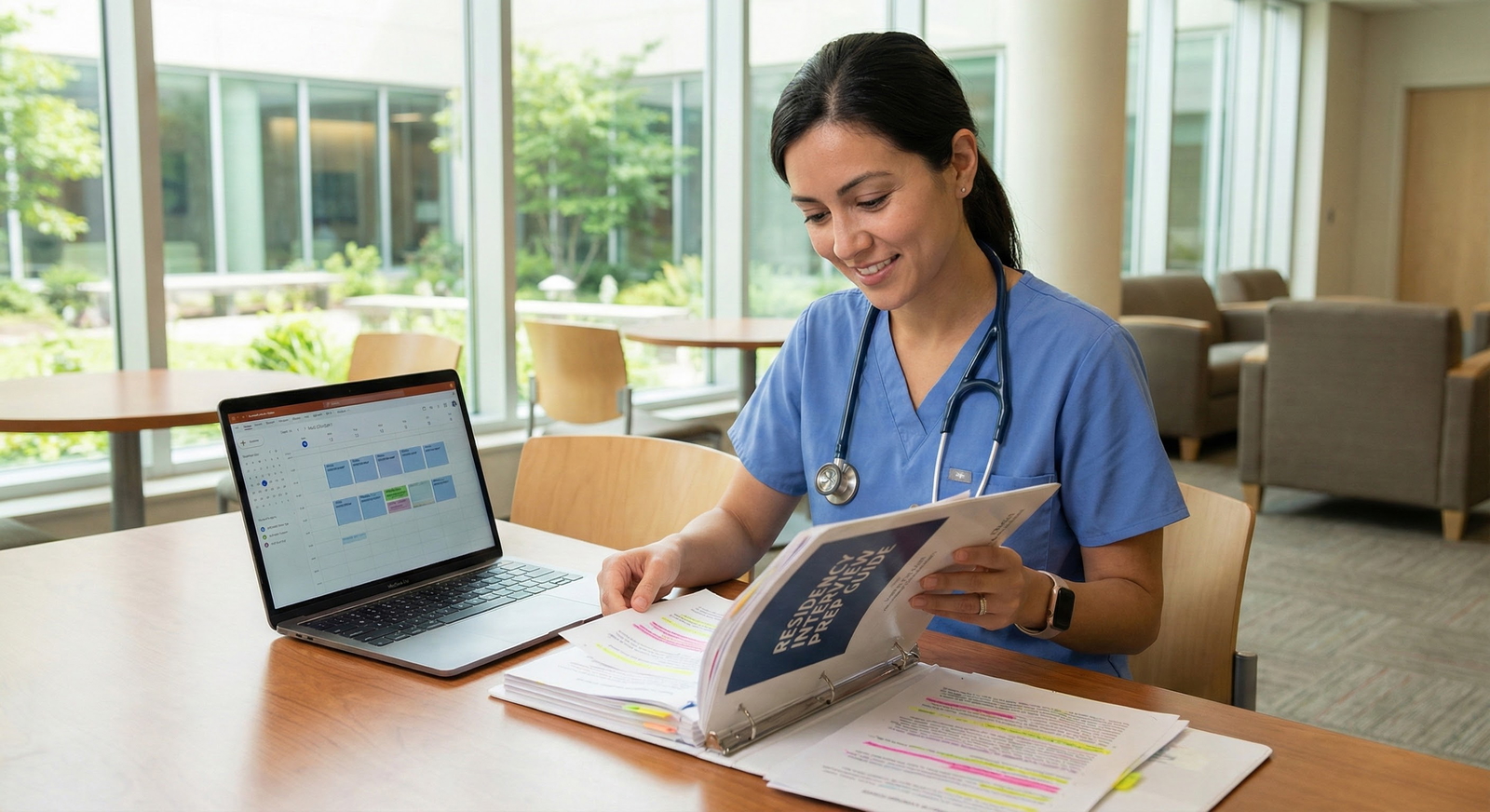
Suggested Pre-Interview Review Plan (Starting 2–3 Weeks Before)
Week 1–2:
- Read your CV and personal statement carefully; know every detail you wrote.
- Review fundamental pathology concepts from a concise resource (e.g., review book, high-yield notes).
- Review your own research/observerships, including basic methods and major findings.
Week 2–3:
- For each scheduled program, spend 30–60 minutes reviewing website, faculty interests, and unique strengths.
- Prepare 3–4 program-specific points you can reference in answers.
- Practice your “Tell me about yourself” and “Why pathology?” answers out loud.
Last 3–4 days before interview:
- Light review only – avoid cramming.
- Focus on sleep, logistics, and practicing clear communication.
Step 5: Practical Logistics and Communication Skills for a Strong Impression
Even with strong content knowledge, poor logistics or weak communication can harm an otherwise excellent application—especially for international graduates.
Setting Up for Virtual Interviews
Most pathology interviews are now virtual or hybrid. For a non-US citizen IMG, this is often beneficial but requires careful planning.
Technology check
- Stable internet connection; test at the same time of day as the interview.
- Updated Zoom/Teams/WebEx client.
- Functional webcam and microphone; consider using wired headphones to avoid audio problems.
Environment
- Quiet, well-lit room with a neutral or professional background.
- Avoid distractions in the frame; no clutter, bright windows, or background noise.
- Have a backup location or plan in case of connectivity issues.
Professional appearance
- Dress as you would for an in-person interview (formal business attire).
- Test how your outfit appears on camera (colors, contrast with background).
Time zones
- Triple-check time zone differences between your location and the program.
- Set reminders at least 24 hours and 1 hour before the interview.
- Consider planning to be “on call” and fully prepared at least 30 minutes before the scheduled start.
Communication and English Fluency
Interviewers know English might be your second or third language. They do not expect perfection—but they must be confident you can communicate clearly in a clinical setting.
To improve:
Practice speaking out loud
- Record yourself answering common questions.
- Notice pace, pronunciation, and filler words (“um,” “like,” “you know”).
- Aim for slightly slower than your normal conversational speed.
Simplify your sentences
- You do not need complex phrases; clarity is more important than sophistication.
- Use straightforward vocabulary, especially when nervous.
Pause and think
- It is acceptable to say, “That’s a good question. Let me think for a moment,” and pause for 2–3 seconds.
- This often leads to more thoughtful answers.
Address misunderstandings politely
- If you did not understand a question, ask: “I want to be sure I answer correctly—may I clarify what you mean by…?”
- Clarifying is better than guessing and answering incorrectly.
Professional Etiquette During the Interview
Greeting and introductions
- Briefly greet each interviewer; maintain a friendly but professional demeanor.
- Use titles (Dr. [Last Name]) unless they ask you to use first names.
Body language
- Maintain eye contact by looking at the camera periodically.
- Sit upright; nod occasionally to show engagement.
- Avoid multitasking or shuffling papers excessively.
Answer length
- Aim for 1–2 minutes per answer unless asked to go deeper.
- If you tend to talk too long, practice concise answers beforehand.
End of interview
- When asked if you have questions, always have 2–3 thoughtful questions prepared (training, mentorship, evaluation, fellowships), not questions easily answered on the website.
- Thank each interviewer sincerely for their time and insight.
Step 6: Prepare Your Own Questions and Post-Interview Strategy
Interviewers judge you partly by the quality of questions you ask. As a non-US citizen IMG in pathology, your questions should show maturity and awareness of your specific situation.
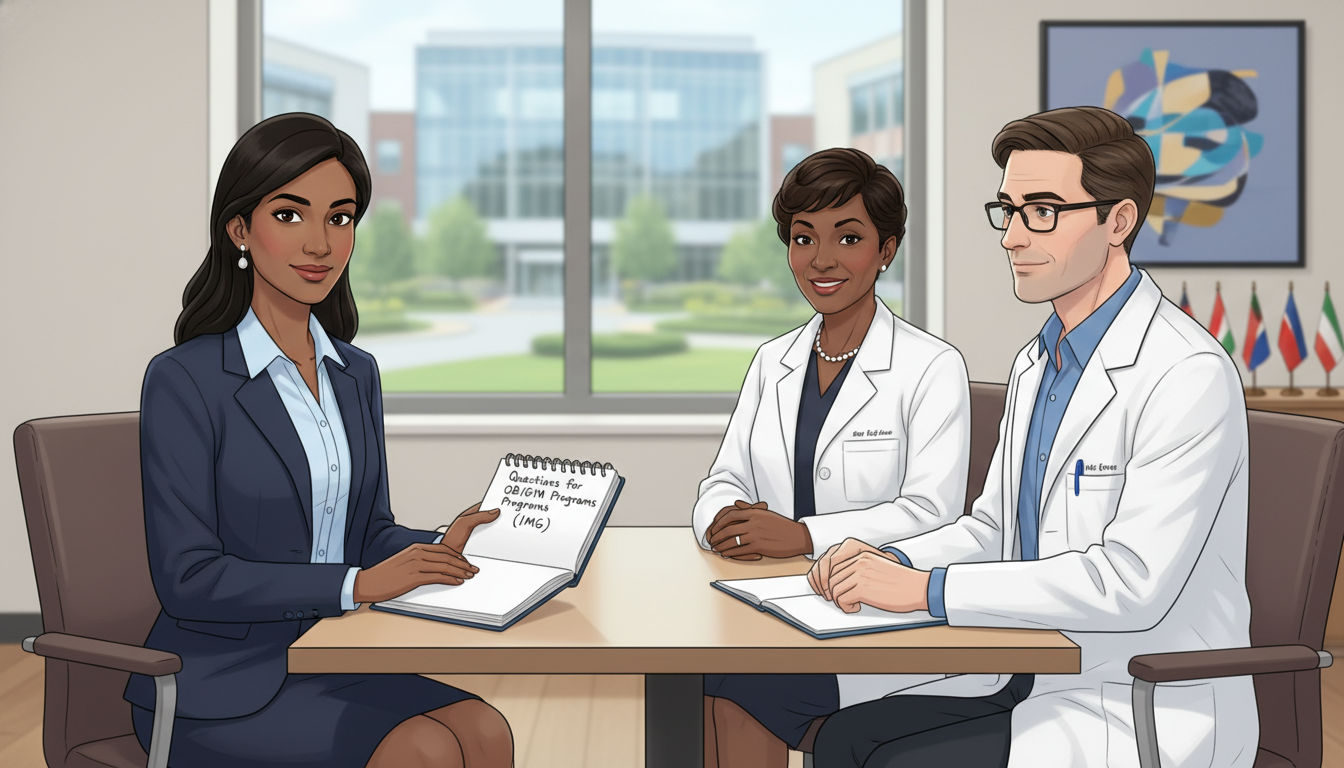
Questions to Ask Programs (Adapt to Each Interview)
Training and curriculum:
- “How is feedback given to residents, especially early in training?”
- “How is progressive responsibility handled in surgical pathology sign-out?”
- “What exposure do residents have to molecular pathology or digital pathology?”
Culture and support:
- “How would you describe the relationship between residents and faculty here?”
- “What kind of support systems are in place for residents who may be far from home or new to the country?”
IMG and visa considerations (tactfully):
- “I am a non-US citizen IMG and will require visa sponsorship. Could you tell me about the types of visas your institution typically sponsors for pathology residents?”
- “Are there other international graduates in the program, and do you have any specific support for them as they adapt to training here?”
Career development:
- “What have recent graduates from your program gone on to do in terms of fellowships or practice settings?”
- “How does the program support residents who want to pursue academic vs. community careers?”
Post-Interview Steps
Immediately after each interview:
- Within a few hours, write down:
- Who interviewed you (names and roles).
- Specific things you liked or did not like.
- Any important program details you learned.
- Your emotional impression (“Could I see myself there?”).
This helps significantly later when you create your rank list.
Thank-you notes:
- Some programs explicitly state they do not expect or read thank-you emails. If so, follow instructions.
- If not discouraged, send short, specific thank-you emails to the program director or key interviewers within 24–72 hours:
- Thank them for their time.
- Mention a specific topic you enjoyed discussing.
- Briefly reiterate interest in the program.
Avoid promises like “I will rank you number one” unless you truly intend that and understand the implications.
Frequently Asked Questions (FAQ)
1. As a non-US citizen IMG, how much does my visa status affect my pathology match chances?
Visa status does matter, but its impact varies by program. Some institutions cannot sponsor H-1B and will only consider J-1. Others may not sponsor any visas at all. However, many pathology programs are historically IMG-friendly and familiar with J-1 sponsorship. Your role in pre-interview preparation is to:
- Identify programs that sponsor your visa type ahead of time.
- Be clear and honest about your needs.
- Demonstrate that you are organized, informed, and easy to work with regarding immigration matters.
Strong credentials, clear communication, and evident commitment to pathology can outweigh many visa concerns.
2. I have limited US clinical experience in pathology. How can I still present a strong application during interviews?
For pathology, US observerships, research, and laboratory exposure can be very valuable. In interviews:
- Highlight any structured pathology observerships or visiting rotations.
- Emphasize what you learned about US lab operations, sign-out processes, and quality assurance.
- If most of your exposure is from your home country, describe cases and responsibilities clearly, showing that your experience is transferable.
- Show that you understand the US healthcare context through reading, webinars, or virtual conferences.
Programs primarily want to know that you understand what pathology work really involves and that you can adapt to their system.
3. What are the most common mistakes non-US citizen IMGs make in residency interview preparation for pathology?
Common pitfalls include:
- Giving generic answers like “I like microscope work” without deeper reflection on the specialty.
- Not knowing basic details about the program or failing to articulate why they are interested in that specific training environment.
- Overly long, unfocused answers, often due to nervousness or unfamiliarity with English communication in an interview context.
- Not being clear about visa needs, or seeming uninformed about basic visa types.
- Underestimating the importance of logistics (time zones, technology, camera/microphone quality) in virtual interviews.
Focused preparation on these points can significantly differentiate you from other applicants.
4. How early should I start preparing for pathology residency interviews, and how much time should I spend?
Ideally, begin structured preparation about 2–3 weeks before the start of interview season:
- Week 1: Clarify your pathology story, review your CV and personal statement, and identify your core strengths and weaknesses.
- Week 2: Research programs in detail, prepare tailored talking points, and start formal mock interviews.
- Week 3: Refine answers, focus on communication skills, and finalize your virtual interview setup.
You do not need to prepare all day, every day. Consistent, focused effort—about 1–2 hours per day—is usually sufficient. The key is to practice speaking your answers out loud and to understand each program well enough to have a genuine, informed conversation.
Careful pre-interview preparation tailored to your unique position as a non-US citizen IMG in pathology will not only boost your confidence but also signal to programs that you are thoughtful, committed, and ready to thrive in their residency.