Understanding the Diagnostic Radiology Interview Landscape as a Non‑US Citizen IMG
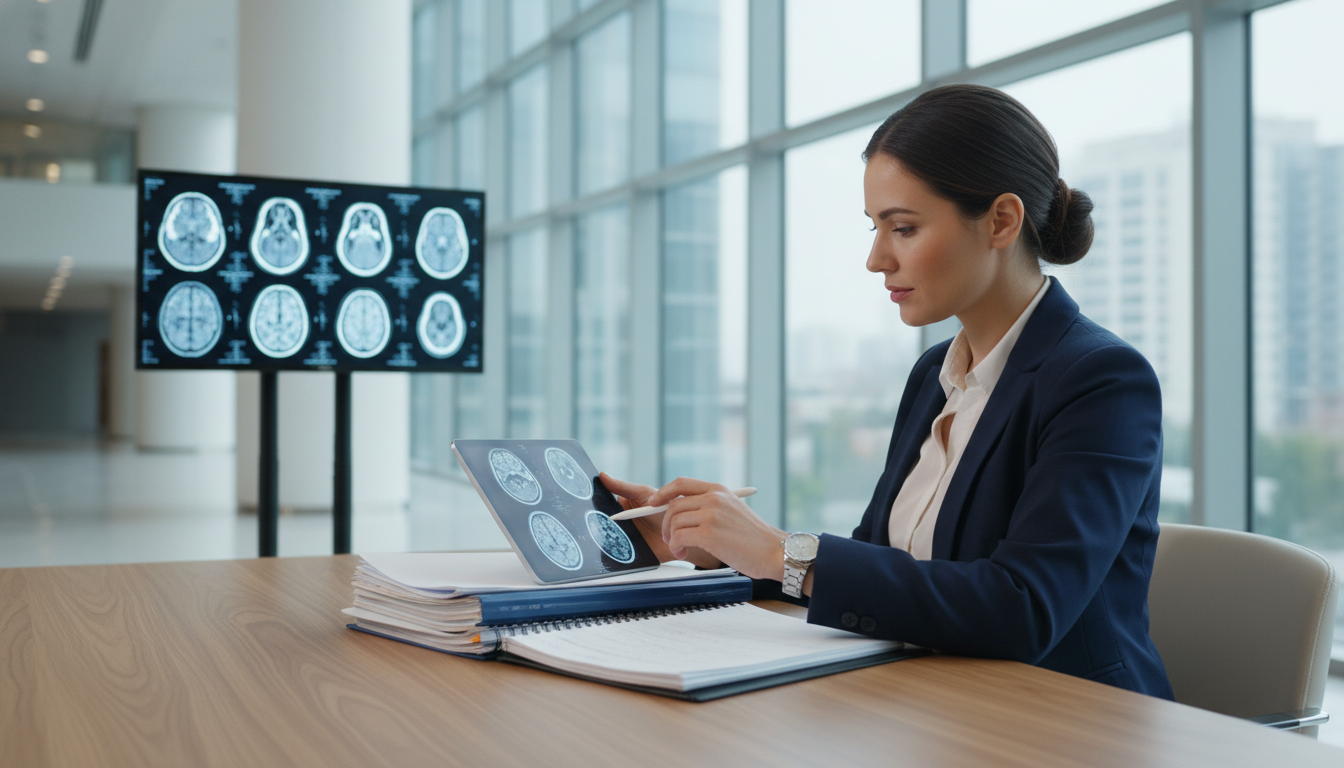
Diagnostic radiology is one of the most competitive specialties in the U.S., and the bar is even higher for a non‑US citizen IMG or foreign national medical graduate. Program directors must be convinced that you are not only academically strong, but also an excellent communicator, a reliable team member, and someone who understands the realities of practicing radiology in the U.S. system.
Before you think about residency interview preparation, you need to understand what programs are evaluating:
Clinical and technical readiness
Are you comfortable with imaging modalities (CT, MRI, US, plain films), basic interpretation, radiation safety, and appropriateness criteria for imaging?Communication skills
Can you explain imaging findings clearly to clinicians and patients in English? Can you write structured, concise reports?Fit for radiology culture
Are you self-directed, detail-oriented, comfortable with long reading sessions at a workstation, and able to manage multiple urgent tasks (stat reads, calls, procedures)?Commitment to radiology as a career
Do you have a coherent, experience-based story of why radiology and why in the U.S.?Visa and long-term plans
As a foreign national medical graduate, programs will think about visa logistics, your likelihood of staying in the U.S., and how you fit with their institutional policies.
Understanding these expectations will shape how you prepare—what you read, what examples you choose, and how you frame your answers.
Step 1: Strategic Self-Assessment and Program Research
Pre-interview preparation begins weeks before your first diagnostic radiology match interview invitation. The goal: know yourself and know your programs.
A. Clarify your radiology “story”
Expect every interviewer to explore variations of “Tell me about yourself” and “Why radiology?” To prepare:
Timeline your journey
- When did you first get exposed to imaging?
- What specific experiences confirmed your interest (e.g., elective in neuroimaging, interventional radiology observation, teleradiology experience)?
- Key steps you took: research projects, QI projects, radiology observerships, radiology electives.
Identify 3–5 defining experiences For each one:
- Situation: Where and when?
- Role: What was your responsibility?
- Action: What did you do?
- Outcome: What did you learn or change?
Example:
- “As a final-year student, I spent two months in the emergency department closely collaborating with radiology. Interpreting urgent CT scans for trauma and stroke alongside the radiologist showed me how imaging decisions directly change management. That led me to pursue a dedicated radiology observership where I learned structured reporting and appropriateness criteria.”
Align your story with radiology traits Highlight:
- Analytical thinking and pattern recognition
- Comfort with technology and computers
- Attention to detail and patient safety
- Enjoyment of teaching and multidisciplinary discussion
You should be able to tell your story in:
- A 30-second version (for “Tell me about yourself” opening)
- A 2-minute version (when they show genuine interest)
Practice both aloud.
B. Analyze your CV from a radiology perspective
Go line by line through your CV with one question: “How could this be discussed in a radiology residency interview?”
Research
Be prepared to explain:- Your study question and why it mattered
- Your exact role (data collection, statistics, writing, imaging analysis)
- Any imaging-related projects: even if not radiology specialty, highlight imaging methods or diagnostic aspects.
Clinical rotations
Emphasize:- Rotations where imaging heavily influenced care (emergency, oncology, neurology, surgery)
- Any radiology electives or observerships, especially in the U.S.
- Situations where imaging changed your diagnostic reasoning.
Leadership and volunteering
Translate experiences into radiology-relevant skills:- Organized schedules or teams → ability to manage workflow and on-call pressures
- Teaching juniors → readiness to teach students and residents in readout sessions
- Quality improvement → likely to participate in peer review or protocol optimization.
Gap years or non-clinical time
Have a clear, positive explanation:- Research, exam preparation, family commitments, or additional training
- Emphasize how you stayed clinically or academically engaged.
C. Program-specific research: go beyond the website
For effective residency interview preparation, superficial research is not enough. Aim to know what makes this diagnostic radiology residency unique.
Core information to gather
- Number of residents per year
- Presence of ESIR (Early Specialization in Interventional Radiology)
- Major hospital sites (academic, community, VA, children’s hospital)
- Strongest subspecialties (e.g., neuro, body imaging, MSK, breast, IR)
- Call structure and night float system
- Resident-run vs. staff-run services
- Board pass rates and fellowship placements.
Sources to use
- Program website and social media (Twitter/X, Instagram, LinkedIn)
- FREIDA and program’s NRMP charting outcomes
- Alumni or current residents on LinkedIn (if appropriate, send brief, polite messages)
- Online forums (with caution—verify information).
Create a one-page “program sheet” For each interview:
- Top 3 strengths of the program for you
- One or two concerns or questions
- Faculty or resident names you may meet (program leadership, PD, APD, chief residents)
- At least 3 customized questions you plan to ask.
This preparation will help you answer “Why our program?” authentically and ask thoughtful questions during the interview.
Step 2: Mastering Common Residency Interview Questions (Radiology-Focused)
Diagnostic radiology interviewers tend to mix general interview questions residency applicants often face with specialty-specific topics. As a non-US citizen IMG, you should prepare for three layers:
- Universal residency questions
- Radiology-specific questions
- IMG- and visa-related questions
A. Core general questions and how to prepare
Use a structured method like the STAR (Situation, Task, Action, Result) or PAR (Problem, Action, Result) framework for behavioral questions.
Tell me about yourself.
- 3-part structure:
- Brief background (medical school, country, notable theme of your journey)
- Key experiences leading to radiology
- What you’re looking for in a residency and future goals.
- 3-part structure:
Why radiology? Combine:
- A clinical reason (e.g., enjoyed diagnostic reasoning, working with imaging to solve complex cases)
- A personality fit reason (e.g., analytical, pattern recognition, technology-oriented)
- A long-term vision (subspecialty interest, academic vs. community practice, global radiology, teleradiology, etc.)
What are your strengths and weaknesses?
- Strengths: choose 2–3 that match radiology (detail orientation, systematic thinking, communication with teams, reliability). Pair each with a brief example.
- Weaknesses: pick something real but improvable (e.g., “tendency to be overly thorough when first learning a system”) and show how you are actively addressing it (e.g., using checklists, timeboxing tasks).
Describe a conflict with a colleague and how you handled it.
- Highlight professionalism, listening, and collaborative problem-solving.
- Avoid blaming; show maturity and insight.
Tell me about a mistake you made.
- Choose a non-catastrophic but meaningful example.
- Focus on owning responsibility and specific steps you took to prevent recurrence.
B. Radiology-specific interview questions
Interviewers will also explore your understanding of the specialty:
Why diagnostic radiology and not another specialty?
- Reference your clinical experiences where imaging played a critical role.
- Explain how you considered other specialties but found radiology best matched your skills and interests.
What subspecialty are you interested in?
- It’s okay to be undecided. You can say:
- “I am particularly interested in neuroradiology and emergency radiology because I enjoy acute care decision-making, but I am open to exploring all areas during residency.”
- Tie interest to concrete experiences, not abstract reasons.
- It’s okay to be undecided. You can say:
How do you see the role of AI in radiology?
- Show you understand both the potential and limitations:
- “AI will likely augment radiologists by assisting with repetitive tasks, triage, and detection, but radiologists will still integrate findings, communicate with clinicians, and manage complex and ambiguous cases.”
- Show you understand both the potential and limitations:
What do you think will be the biggest challenges in radiology in the next 10 years?
- Possible themes:
- Increasing imaging volume vs. burnout
- Maintaining quality and safety
- Adapting to new technologies (AI, advanced imaging)
- Ensuring access to imaging worldwide.
- Possible themes:
Describe a radiology-related case that influenced you.
- Example structure:
- A complex CT in trauma that changed management
- A missed finding and what you learned about systematic viewing
- A case that demonstrated how radiology can avoid unnecessary surgery.
- Example structure:
C. Questions tailored to non-US citizen IMG applicants
As a non-US citizen IMG or foreign national medical graduate, you must be prepared for questions about:
Transition to the U.S. healthcare system
- “What differences have you noticed between your home country and the U.S. system?”
- Emphasize:
- Team-based care
- Protocolized imaging
- Focus on quality/safety and documentation
- Use of structured reporting and multidisciplinary conferences.
Visa and long-term plans
- “What are your plans after residency?”
- Give a sincere but reassuring answer:
- Interest in fellowship and long-term U.S. practice, academic or community
- Or combination of U.S. training and eventual contribution to your home country—but emphasize commitment to completing training.
Communication in English
- You may not be asked directly, but your answers will be evaluated for clarity.
- Practice speaking clearly at a moderate pace; avoid overly complex vocabulary.
Gaps or nontraditional paths
- Prepare a confident, short explanation for any gaps, failed attempts, or extended time away:
- Highlight growth, skills acquired, and how you are now better prepared for residency.
- Prepare a confident, short explanation for any gaps, failed attempts, or extended time away:
D. Preparing high-quality questions to ask the program
Remember that you are also interviewing the program. Asking excellent questions is a key part of residency interview preparation.
Examples of strong questions for diagnostic radiology:
- “How do residents typically transition from being supervised to more independent on call?”
- “What systems are in place to support residents when workload is high or during night float?”
- “How does the program support residents who are interested in research or academic careers?”
- “How are feedback and performance evaluations shared with residents?”
- “What qualities do successful residents in your program usually share?”
Avoid questions easily answered on the website (e.g., vacation days, board pass rate, whether they have IR) unless you need clarification.
Step 3: Building Content Knowledge and Clinical Readiness
You are not expected to interpret complex MRIs like an attending radiologist in residency interviews. However, demonstrating baseline radiology literacy shows seriousness and preparation.
A. Review essential radiology fundamentals
Focus on:
Basic imaging modalities
- When to use X-ray vs. CT vs. MRI vs. ultrasound vs. nuclear medicine
- Pros, cons, and limitations of each modality.
Radiation basics
- Relative radiation doses for common studies (CXR vs CT chest vs CT abdomen/pelvis)
- Concept of ALARA (As Low As Reasonably Achievable)
- Awareness of contrast reactions and nephrotoxicity.
Appropriateness criteria
- At least a general familiarity with the idea that certain indications have recommended imaging pathways (e.g., ACR Appropriateness Criteria).
B. Use accessible resources tailored to pre-residency level
In the months before interview season, build a structured reading plan:
Introductory textbooks or resources
- “Felson’s Principles of Chest Roentgenology” (for chest)
- Basic radiology review books or case-based introductions
- Online radiology teaching websites and free case libraries.
Practice cases
- Work through simple teaching files: CXR, abdominal plain films, common CT findings (appendicitis, stroke, pulmonary embolism).
- Focus on:
- Recognizing normal vs abnormal
- Establishing a structured search pattern.
You don’t need to mention specific book titles in interviews, but being able to say, “I have been systematically reviewing core radiology concepts and cases, especially chest and emergency imaging,” shows initiative.
C. Prepare to discuss your radiology experiences concretely
If you have observerships, electives, or research in radiology, prepare 2–3 detailed stories:
- What was a typical day like?
- How did you contribute (shadowing, research, QA/QI, presenting cases)?
- What practices did you see that impressed you (e.g., multidisciplinary tumor boards, structured reporting, double reading of critical studies)?
This depth of reflection distinguishes you from applicants who only have superficial exposure.
Step 4: Communication, English Fluency, and Cultural Competence
For many non-US citizen IMG applicants, the biggest anxiety around residency interview preparation is not content, but communication. Program directors need to be confident you can communicate clearly with colleagues and patients in English.
A. Targeted language practice
Even if your English is strong, spoken practice is essential:
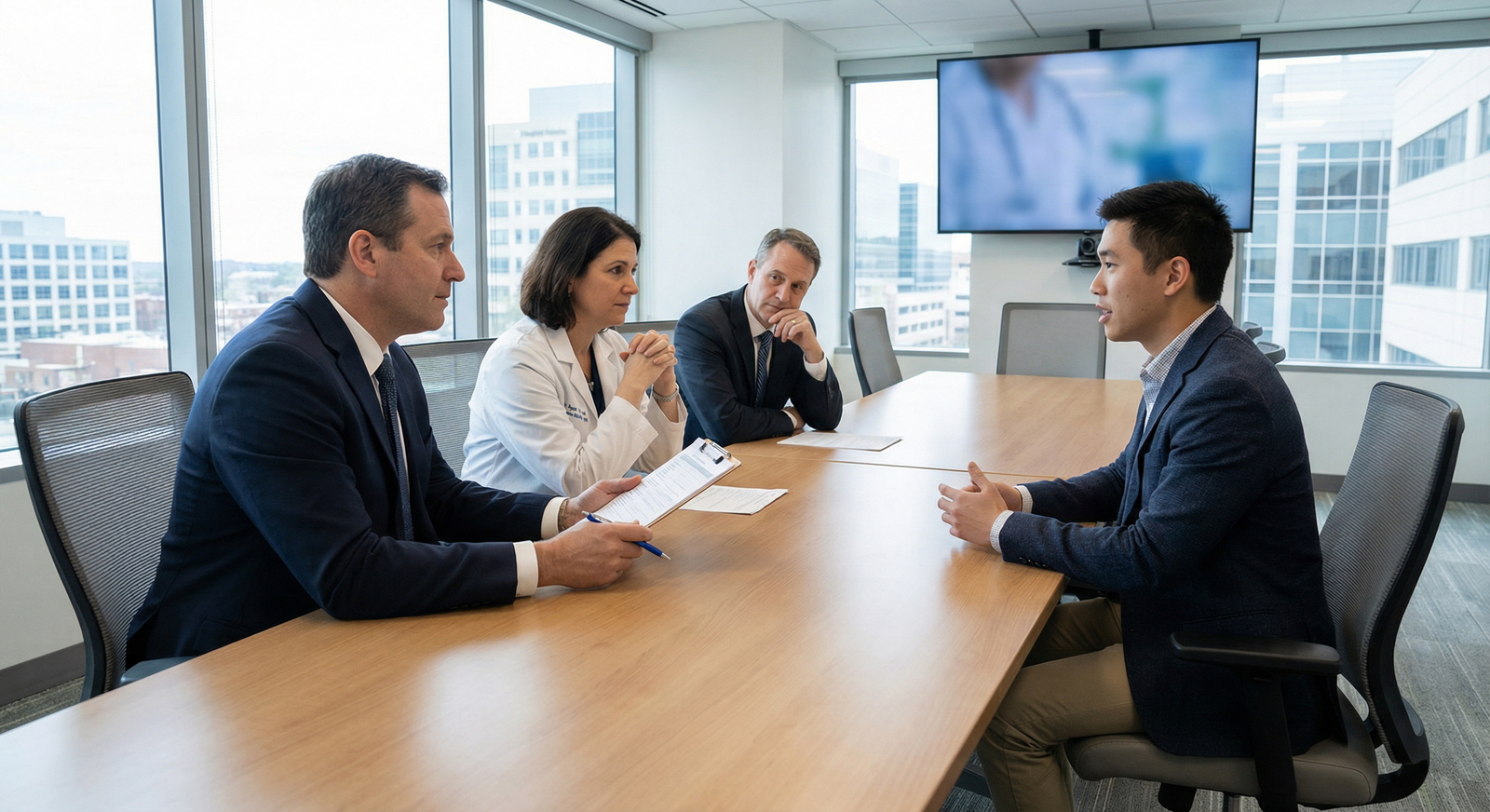
Mock interviews
- Ask friends, mentors, or other residents (if available) to conduct full-length mock interviews.
- Record yourself to identify:
- Speaking speed
- Filler phrases (“um,” “like,” “you know”)
- Overly complicated sentences.
Focus on clarity, not accent
- Accents are widely accepted; the key is intelligibility.
- Short, direct sentences are better than long, complex ones.
Technical vocabulary
- Practice pronouncing and using key radiology and clinical terms:
- “Computed tomography,” “magnetic resonance imaging,” “ultrasound,” “contrast,” “ischemia,” “metastasis,” “pulmonary embolism.”
- Practice pronouncing and using key radiology and clinical terms:
B. Cultural awareness in U.S. training environments
Understanding professional expectations in U.S. academic medicine helps you avoid misinterpretations:
Communication style
- Usually direct but polite.
- It is acceptable to say “I don’t know, but I would look it up by…” rather than guessing confidently.
Hierarchy and teamwork
- Recognize the hierarchy (attending → fellow → resident → student), but also that U.S. culture encourages residents to speak up about concerns, especially patient safety issues.
Professional boundaries
- Maintain respectful but professional relationships with residents, faculty, staff.
- Avoid overly personal comments, jokes that might be misinterpreted, or sharing too much personal detail early in conversations.
C. Handling difficult or unexpected questions
During residency interview preparation, practice graceful responses to:
Questions you cannot answer
- “I’m not sure about that, but based on my understanding, I would approach it by…”
- Demonstrate reasoning rather than pretending knowledge.
Ethical or controversial topics
- Acknowledge complexity and focus on patient-centered care, professionalism, and guidelines.
Personal questions that feel sensitive
- You may gently set boundaries:
- “That’s a bit personal, but broadly, my long-term goal is to contribute to radiology both clinically and through teaching.”
- You may gently set boundaries:
Step 5: Logistics, Technology, and Professional Image
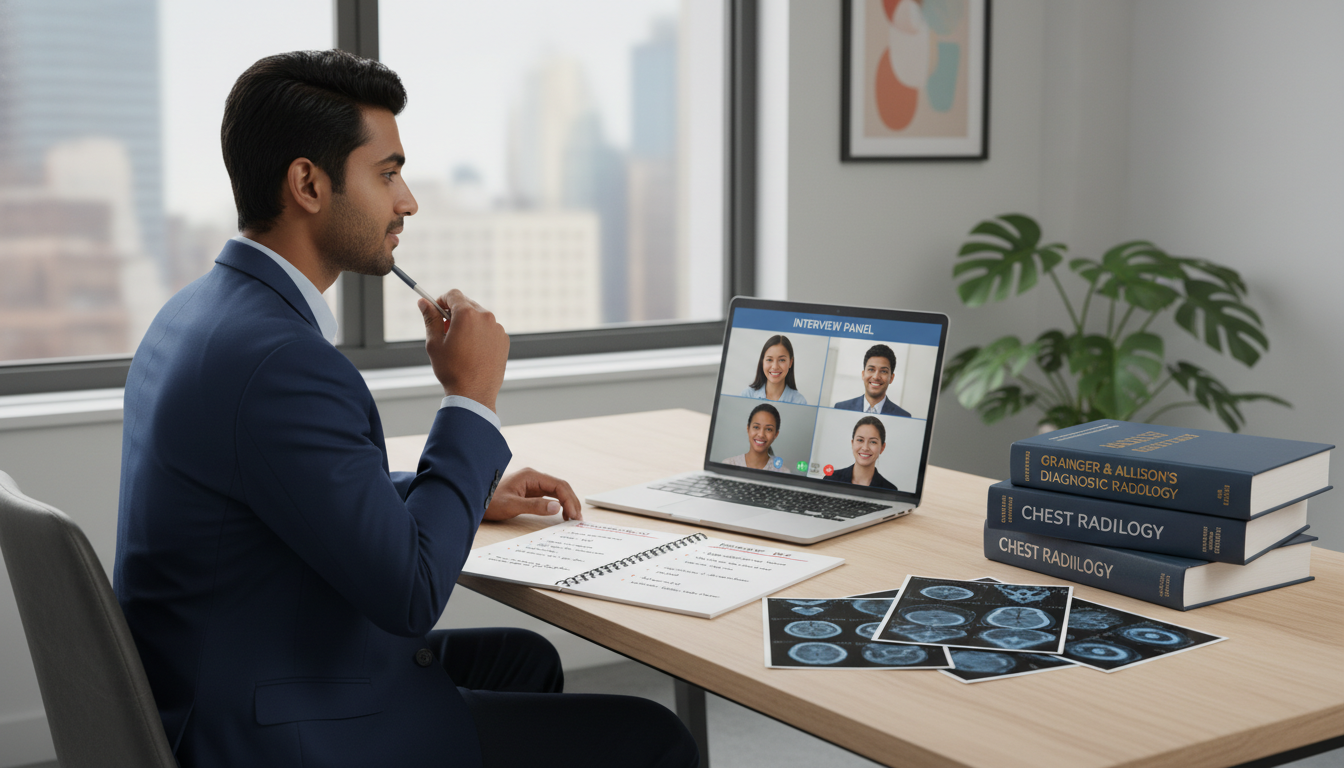
Many diagnostic radiology interviews are now virtual or hybrid. For a non-US citizen IMG, interviews may happen across different time zones, which adds complexity. Good residency interview preparation must include logistics and technology.
A. Technical setup for virtual interviews
Equipment
- Stable internet connection (test speed beforehand).
- Laptop or desktop with a reliable camera and microphone.
- Wired headphones or good-quality earbuds to reduce echo.
Environment
- Neutral background (plain wall or simple bookshelf).
- Good lighting (natural light from in front of you, not behind).
- Quiet room with minimal interruptions.
Test platforms
- Test Zoom, Microsoft Teams, Webex, or any platform specified by programs.
- Set your display name to your real name as used in ERAS.
B. Time zone management
As a foreign national medical graduate, your interview may be scheduled in U.S. time while you are abroad:
- Convert all interview times using a reliable world clock website or phone app.
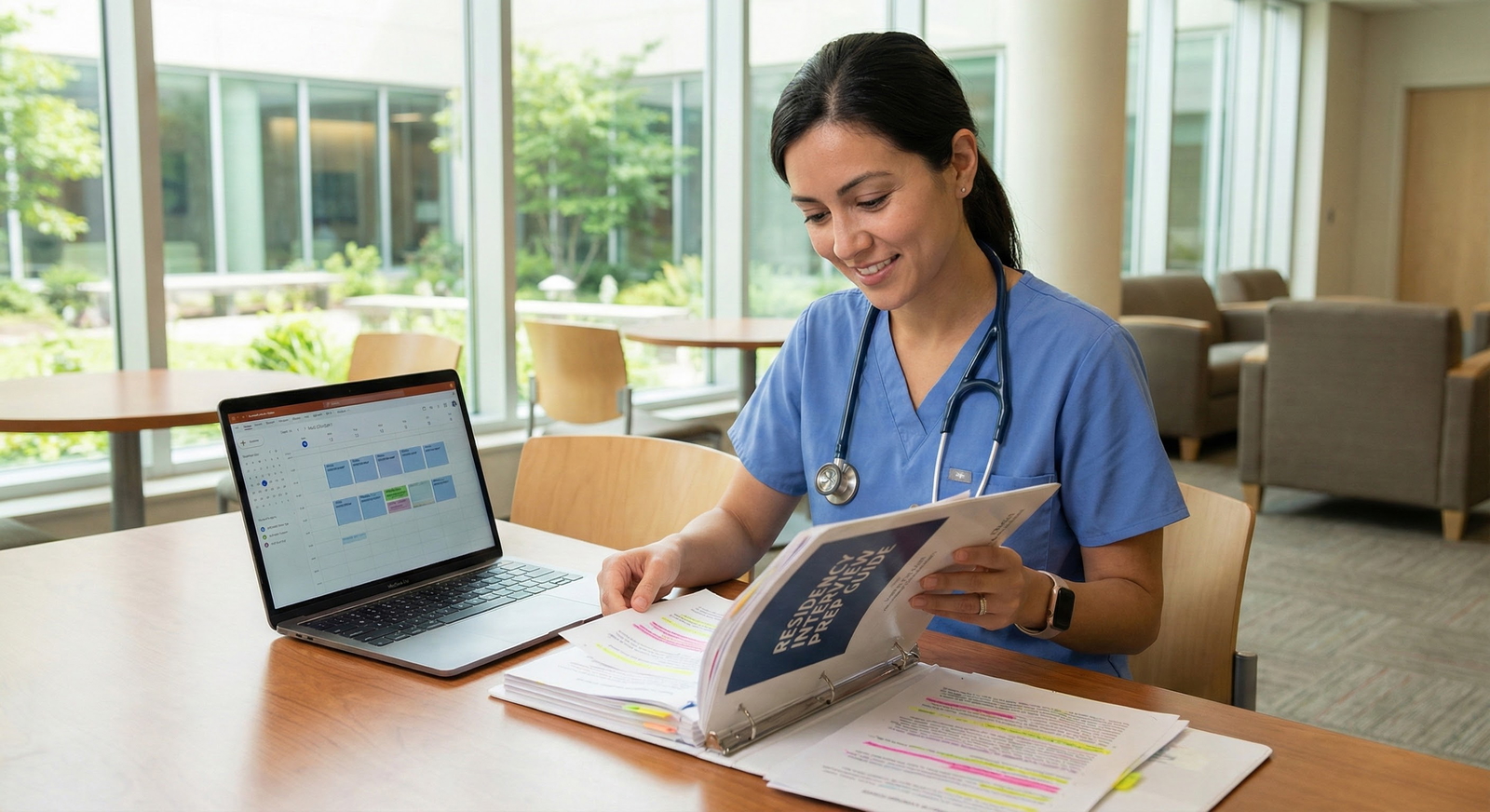
- Build a personal interview calendar in your local time.
- Practice your routine at that time of day in advance—especially if interviews are very early or very late in your local time.
C. Professional dress and body language
Attire
- Business formal: suit jacket, shirt/blouse, conservative colors.
- Even for virtual interviews, dress as if in-person (at least from the waist up).
Body language
- Look into the camera when speaking to simulate eye contact.
- Sit upright, nod occasionally to show engagement.
- Keep your hands relaxed; avoid fidgeting.
D. Organizing documents and notes
Before each interview:
Keep a printed or digital copy of:
- Your ERAS application and personal statement
- Your CV
- Program-specific sheet (from Step 1)
- List of questions you want to ask.
Avoid reading directly from notes. Use them as backup, not a script.
Step 6: Practice, Feedback, and Continuous Improvement
Residency interview preparation is a skill—your performance will improve with deliberate practice.
A. Simulate full interview days
- Schedule 2–3 practice sessions where you:
- Dress professionally.
- Sit at your interview setup for 2–3 hours.
- Have someone rotate through roles (faculty, resident, chief resident).
- Practice both group and one-on-one formats.
B. Get specific feedback
Ask for feedback on:
- Clarity and organization of answers
- Nonverbal communication
- Use of examples (too vague vs. too detailed)
- Any language or pronunciation issues affecting understanding.
As a non-US citizen IMG, practicing with someone familiar with U.S. culture (e.g., a U.S.-trained physician, resident, or faculty) can be especially helpful.
C. Build a personal “interview journal”
After each real or mock interview:
- Write down:
- Questions asked (especially new or challenging ones)
- Your answers and how you felt they landed
- What you would improve next time.
Over time, this will become a powerful preparation tool and will reduce your anxiety, because fewer questions will feel “new.”
FAQs: Pre-Interview Preparation for Non-US Citizen IMG in Diagnostic Radiology
1. As a non-US citizen IMG, do I need extensive U.S. clinical experience in radiology to match into a radiology residency?
No, it is not absolutely required, but it is very helpful. U.S. radiology observerships or electives show that you understand the American practice environment. If you lack direct U.S. radiology experience, highlight:
- Any U.S. clinical electives in other specialties where imaging was crucial
- Radiology rotations at your home institution with meaningful responsibility
- Radiology-related research, quality improvement, or case presentations.
Regardless, you must be able to clearly explain why you want to train in the U.S. and how you have prepared for that transition.
2. How technical should my answers be during interviews?
Aim for clinically informed but not overly technical. You are interviewing as a future resident, not a fellow. Focus on:
- Understanding of when and why imaging is ordered
- Basic awareness of modalities, benefits, and risks
- Enthusiasm for learning more.
Avoid long, highly technical explanations unless specifically invited, and ensure everything you say is correct at a basic level.
3. How can I stand out among many strong radiology applicants as a foreign national medical graduate?
You stand out by combining:
- A coherent, experience-based story of why radiology and why this program
- Evidence of initiative (self-study, radiology readings, conferences, research, teaching)
- Strong communication skills and professionalism
- Demonstrated resilience and adaptability—key strengths of many IMGs.
Your international background can be an asset: emphasize cultural competence, diversity of clinical experience, and your ability to work with varied patient populations.
4. What is the best way to prepare for interview questions residency programs ask about visas and long-term plans?
Be honest, concise, and reassuring:
- Know which visas you are eligible for (typically J-1; some programs sponsor H-1B).
- Express a clear intention to complete residency (and likely fellowship) in the U.S.
- If you hope to eventually contribute to your home country, frame it as an additional goal, not a competing one.
Avoid uncertain or vague answers like “I’m not sure; I’ll see what happens,” which may worry programs.
By approaching residency interview preparation as a structured process—self-assessment, program research, content review, communication practice, and logistics management—you significantly improve your chances of a successful diagnostic radiology match as a non-US citizen IMG. Your goal is to present yourself not just as a strong applicant on paper, but as a future colleague who will thrive in U.S. radiology training.