Understanding the Nuclear Medicine Residency Landscape Before Interviews
Pre-interview preparation for a nuclear medicine residency is not just about practicing answers—it starts with understanding the field, the training structure, and each program’s unique identity. That context shapes everything from how you present yourself to the questions you ask.
The structure of nuclear medicine residency training
Nuclear medicine residency pathways can vary by country and institution, but in many regions they follow one of these models:
- Dedicated Nuclear Medicine Residency (often 3 years after a preliminary/transitional year or completed diagnostic radiology training)
- Dual or combined pathways
- Diagnostic Radiology–Nuclear Medicine tracks
- Nuclear Medicine incorporated into Diagnostic Radiology with optional additional fellowship
- Post-radiology specialization (1–2 year focused nuclear medicine or molecular imaging fellowship)
Before interviews, clarify which model each program follows:
- Does the program accept radiology residents for subspecialty training only, or direct nuclear medicine residents as well?
- Is there exposure to hybrid imaging (PET/CT, SPECT/CT, PET/MRI) integrated into the curriculum?
- Are there ACGME or equivalent accreditation details relevant to your path?
This basic structure will help you target your talking points (e.g., more emphasis on radiology background vs internal medicine, research vs clinical skills).
Why pre-interview preparation matters especially in nuclear medicine
Nuclear medicine is a smaller, more specialized field than many other residencies. That creates a few realities:
- Programs are tight-knit: Faculty often know each other nationally; word-of-mouth and fit matter.
- Applicant pools are smaller and more focused: You can’t rely on being “one of many.” Your motivation for nuclear medicine must be clear and specific.
- Rapidly evolving field: Theranostics, molecular imaging, and novel radiotracers are changing the discipline quickly. Programs look for candidates who can grow with the field.
For the nuclear medicine match, your interview performance often has an outsized impact. Thoughtful, specialty-specific preparation is one of the strongest levers you control.
Researching Programs Strategically: Laying the Foundation
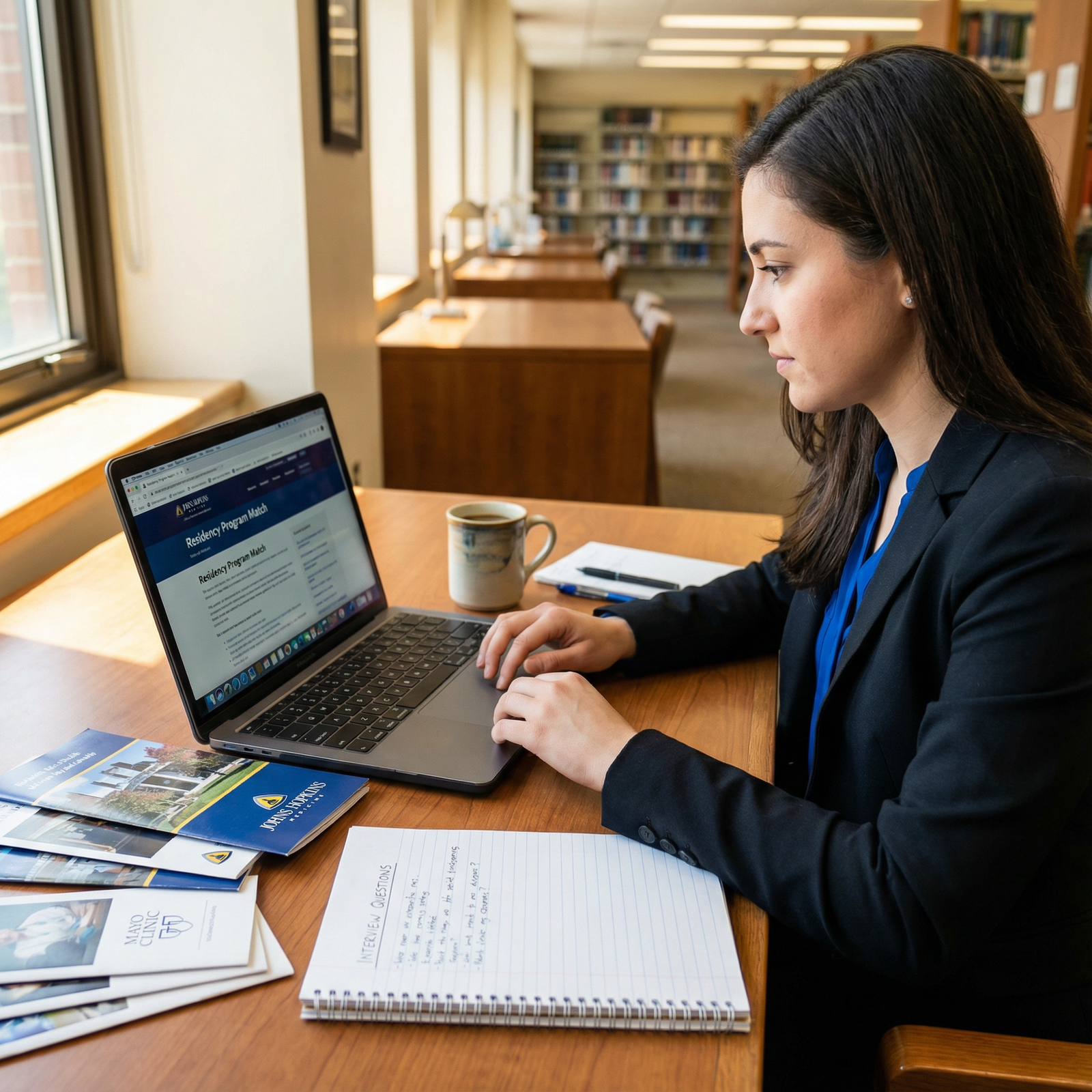
Thorough program research is the cornerstone of effective residency interview preparation. It informs how you answer questions, how you frame your interests, and how you decide where you truly fit.
Step 1: Understand each program’s clinical profile
For each program, build a short, structured profile. A simple template:
- Institution type: University, community, hybrid, VA-affiliated, cancer center, etc.
- Clinical volume and mix
- PET/CT volume (oncologic PET vs cardiac PET vs neuro-PET)
- SPECT/CT cases (bone scans, cardiac SPECT, V/Q scans, etc.)
- Outpatient vs inpatient balance
- Theranostics and targeted therapy
- Lu-177 DOTATATE, Lu-177 PSMA, I-131 MIBG, Ra-223, I-131 for thyroid disease
- Role of nuclear medicine in multidisciplinary tumor boards
Sources to use:
- Program website (curriculum, case volume, rotations)
- Institutional nuclear medicine or radiology pages
- Published outcome or research data in nuclear medicine/molecular imaging
- Faculty profiles on PubMed or Google Scholar
How to use this in the interview:
If Program A is a theranostics-heavy center, emphasize your interest in targeted radionuclide therapy, your research in oncology, or your comfort managing complex cancer patients. If Program B is strong in cardiac imaging, speak to your interest in cardiology interfaces and quantitative imaging.
Step 2: Evaluate educational structure and mentorship
When comparing programs:
Educational design
- How many didactic hours per week?
- Is there a formal curriculum in radiation safety, radiopharmacy, physics?
- Access to radiology conferences and tumor boards?
Faculty composition
- Nuclear medicine physicians vs dual-certified radiologists
- Presence of key opinion leaders in PET/CT, theranostics, or quantitative imaging
- Opportunities for direct mentorship: small faculty group can mean closer relationships.
Resident/fellow experience
- Number of residents per year
- Fellowships available (e.g., PET/MR, oncologic imaging)
- Graduates’ career paths: academic vs private practice vs industry
Use this to form specific questions (e.g., “How are residents integrated into multidisciplinary conferences for theranostics patients?”) rather than generic ones.
Step 3: Investigate research and innovation opportunities
Many nuclear medicine residencies emphasize research due to the field’s rapidly evolving nature.
Consider:
- Is there a molecular imaging research center, cyclotron, or radiochemistry lab?
- Are residents supported to attend conferences such as SNMMI or EANM?
- What are the recent publications from the department?
- Is there integration with:
- Oncology or hematology
- Cardiology
- Neurology (e.g., amyloid or dopamine transporter imaging)
If you have past research, line it up with program strengths. If not, think about how you’d like to get involved and be ready to describe specific project ideas or areas of curiosity.
Core Residency Interview Preparation Skills for Nuclear Medicine
Beyond program research, you need focused residency interview preparation. This includes clarity on your story, practicing common interview questions, and tailoring your narrative to nuclear medicine specifically.
Clarifying your narrative: Why nuclear medicine, why now?
Your “why nuclear medicine” answer is non-negotiable. Programs expect more than “I like imaging.”
Reflect on:
- Initial exposure
- A specific patient case involving a PET/CT or I-131 therapy
- A rotation or elective that stood out
- What captured you
- The functional and molecular focus vs purely anatomical imaging
- The bridge between diagnostics and therapy (theranostics)
- Longitudinal patient relationships in thyroid disease or radionuclide therapy clinics
- How it fits your skills and personality
- Enjoyment of complex image interpretation and pattern recognition
- Comfort with physics, quantitative analysis, and technology
- Collaboration with oncologists, surgeons, endocrinologists, cardiologists
Aim for an answer that is:
- Concrete (anchored in a story or moment)
- Specialty-specific (shows understanding of nuclear medicine, not just “radiology”)
- Forward-looking (how this prepares you for your career goals)
Example structure:
- Brief story of your first meaningful exposure to nuclear medicine
- What you learned about the field from that experience
- How that aligns with your strengths and long-term goals
Practicing high-yield interview questions for nuclear medicine
You should prepare for general interview questions residency programs commonly ask, but also for nuclear medicine–specific questions. Use mock interviews with mentors or peers, and record yourself when possible.
Common general questions:
- “Tell me about yourself.”
- “Walk me through your CV.”
- “What are your strengths and weaknesses?”
- “What has been your biggest challenge in medical school or training so far?”
- “Describe a conflict with a colleague and how you handled it.”
- “Where do you see yourself in 5–10 years?”
Nuclear medicine–specific questions you might encounter:
- “Why did you choose nuclear medicine over diagnostic radiology or another specialty?”
- “What aspects of theranostics interest you most?”
- “Tell me about a case where nuclear medicine changed management for a patient.”
- “How do you see the role of PET/CT evolving in oncology?”
- “What are the key safety considerations when ordering and performing radionuclide therapies?”
- “What is your experience with hybrid imaging modalities (e.g., PET/CT, SPECT/CT)?”
Prepare 2–3 flexible examples you can adapt for multiple questions, such as:
- A complex patient case (ideally involving imaging or nuclear medicine)
- A research or quality-improvement project
- A time you received critical feedback and grew from it
Using the STAR method for structured answers
To keep answers organized and concise, use the STAR method:
- Situation – Brief context
- Task – Your responsibility
- Action – What you did
- Result – The outcome and what you learned
Example (professionalism question):
- Situation: On a clinical rotation, you noticed a mislabeling of radiopharmaceutical dose syringes.
- Task: Ensure patient safety while maintaining a respectful environment.
- Action: You double-checked patient identifiers, notified the technologist and attending, helped correct the error, and participated in a brief root-cause discussion.
- Result: No patient harm, improved labeling protocol, and a discussion at the next safety meeting. You emphasize awareness of safety culture in nuclear medicine.
Practice 6–8 STAR stories covering:
- Teamwork
- Leadership
- Conflict resolution
- Ethical dilemmas
- Quality improvement
- Teaching or mentoring
- Handling mistakes
Specialty-Specific Preparation: Showing You Understand Nuclear Medicine
Program directors want to see that you not only like nuclear medicine as an idea, but that you understand what day-to-day practice entails and where the field is heading.
Refreshing key clinical concepts (without over-lecturing)
You are not being tested like an oral board exam, but you should be comfortable discussing major nuclear medicine domains at a conceptual level:
Oncologic imaging
- Role of FDG PET/CT in staging and response assessment
- Emerging tracers (PSMA, DOTATATE, others)
- How nuclear medicine findings influence treatment decisions
Cardiac nuclear medicine
- Basics of myocardial perfusion imaging (SPECT/PET)
- Indications and limitations compared with other cardiac imaging modalities
Endocrine/niche areas
- Thyroid uptake scans and I-131 therapy for hyperthyroidism and differentiated thyroid cancer
- Bone scans for metastatic disease
Theranostics
- Concept of using the same or similar radiopharmaceuticals for both diagnosis and therapy
- Familiarity with at least one therapy: Lu-177 DOTATATE or PSMA, I-131, etc.
You are not expected to recite half-lives and decay schemes, but you should avoid confusing fundamental concepts (e.g., mixing up PET and SPECT, or misunderstanding hybrid imaging).
How to prepare efficiently:
- Review 1–2 concise nuclear medicine textbooks or online resources.
- Skim recent overview articles on theranostics and PET in oncology.
- Review your own nuclear medicine or radiology rotation notes.
Understanding workflow and interprofessional collaboration
Nuclear medicine is inherently team-based. Before interviews, think through:
- Relationship with technologists and radiopharmacists
- Coordination with referring clinicians (oncology, endocrinology, cardiology, surgery)
- Multidisciplinary tumor boards: what role nuclear medicine physicians play
Be ready with:
- An example of working effectively with allied health professionals
- A story where you bridged communication between teams
- An example of advocating for a patient during a complex diagnostic or treatment decision
Showing awareness of the field’s future
Programs favor residents who think ahead. Prepare to discuss:
- Growing impact of theranostics in oncology and endocrinology
- Integration of quantitative imaging (SUV-based metrics, radiomics)
- The intersection with AI and machine learning in image interpretation
- Potential shifts in practice models: hospital-based, outpatient centers, industry roles (e.g., radiopharmaceutical companies)
You do not need to be a domain expert, but you should display curiosity and an openness to lifelong learning.
Example talking point:
“I’m particularly interested in how theranostics is reshaping the management of metastatic prostate cancer. I’d like to train in an environment where I can see PSMA-based imaging and therapy integrated into multidisciplinary care and perhaps contribute to clinical trials in that space.”

Practical Steps: How to Prepare for Interviews Day-by-Day
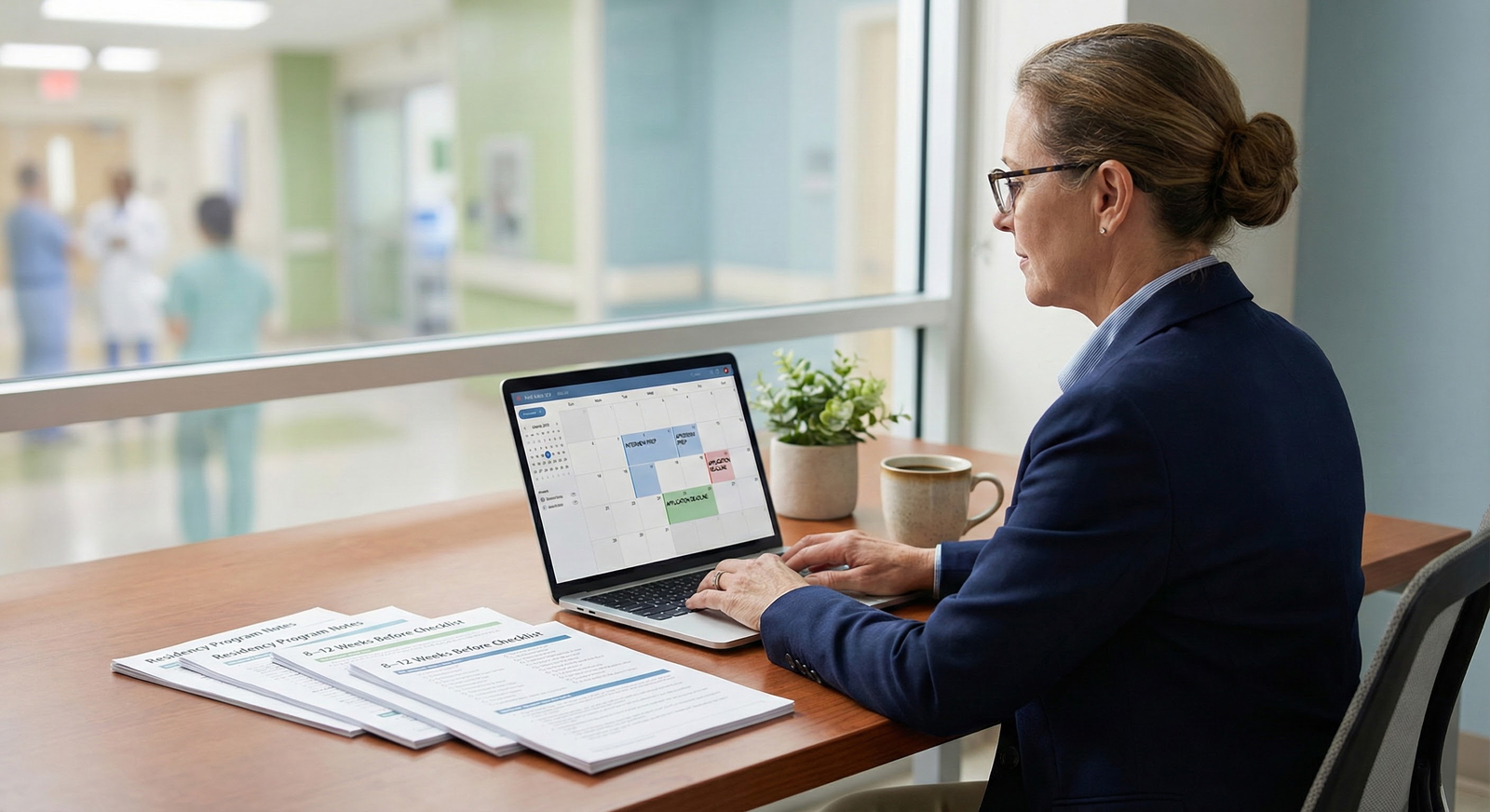
Turning strategy into action requires a concrete plan. Start your pre-interview preparation at least a few weeks before your first interview.
2–4 weeks before interviews: Foundation building
Organize your application materials
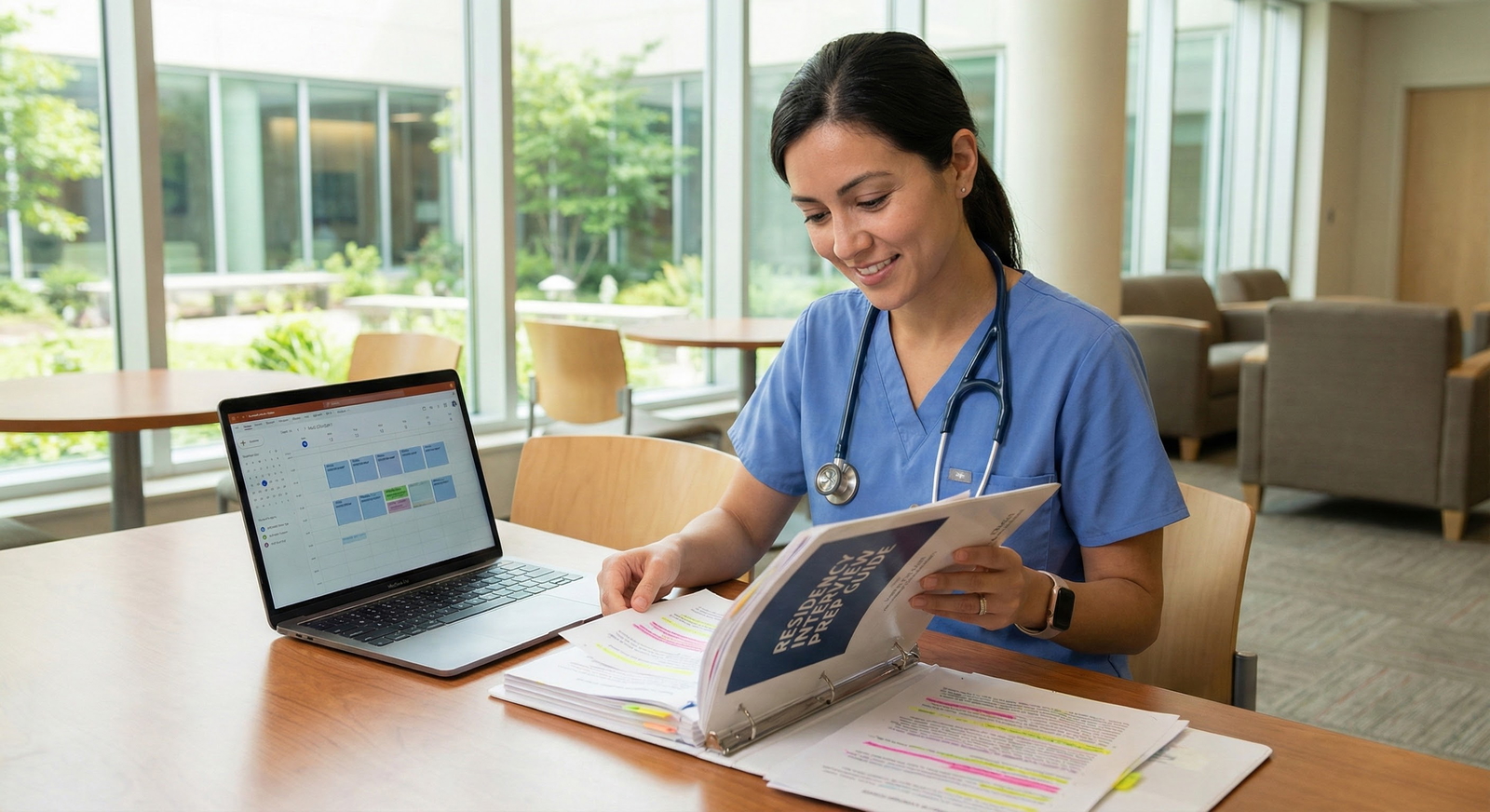
- Re-read your ERAS or equivalent application, CV, and personal statement.
- Highlight experiences you’re likely to be asked about.
- Identify any “red flags” (gaps, exam failures, career changes) and prepare calm, honest explanations.
Draft your personal narrative
- Write 2–3 versions of “Tell me about yourself,” tailored in length (30 seconds, 2 minutes).
- Refine your answer to “Why nuclear medicine?” and “Why this program type?”
Create a program-by-program document
- One page per program: key strengths, faculty of interest, case mix, unique features.
- Add 5–7 individualized questions to ask each program (avoid generic questions easily answered on the website).
Review clinical concepts briefly
- Spend focused blocks on PET/CT, SPECT, theranostics, thyroid nuclear medicine, and safety.
- Aim for comfort and conceptual clarity, not memorization.
Schedule mock interviews
- With mentors (ideally in radiology or nuclear medicine), peers, or advisors.
- Ask for honest feedback on clarity, confidence, and specialty-specific depth.
1 week before: Refinement and rehearsal
Practice aloud daily
- Focus on your opening (“Tell me about yourself”), “Why nuclear medicine,” and 5–10 common questions.
- Time your responses to keep them concise (1–2 minutes per answer usually suffices).
Refine your questions for programs
- Examples:
- “How are residents involved in theranostic clinics and multidisciplinary tumor boards?”
- “What research support exists for residents interested in molecular imaging?”
- “How is call structured, and what kind of backup and supervision is available?”
- Examples:
Rehearse your “closing statement”
- How you might answer: “Is there anything else you’d like us to know?”
- Include a brief recap of your fit, enthusiasm, and what you hope to contribute.
Plan logistics
- For virtual interviews: test your camera, microphone, and internet on the same platform.
- For in-person: confirm travel plans, directions, parking, and schedule.
1–2 days before: Final checks and mindset
Review each program’s file
- Re-read your one-page notes and updated faculty info.
- Check for any recent major news: new theranostics program, major grants, new leadership.
Prepare physical and digital setup
- Outfit: conservative, professional, comfortable.
- For virtual interviews:
- Neutral background, good lighting, camera at eye level.
- Print a copy of your CV and program notes.
Sleep and mental preparation
- Protect your sleep the night before.
- Brief relaxation or mindfulness exercises can help manage anxiety.
- Mentally rehearse focusing on genuine conversation rather than a “performance.”
On interview day: Execution and adaptability
- Arrive early (or log in early for virtual).
- Bring a small notebook with key points and questions.
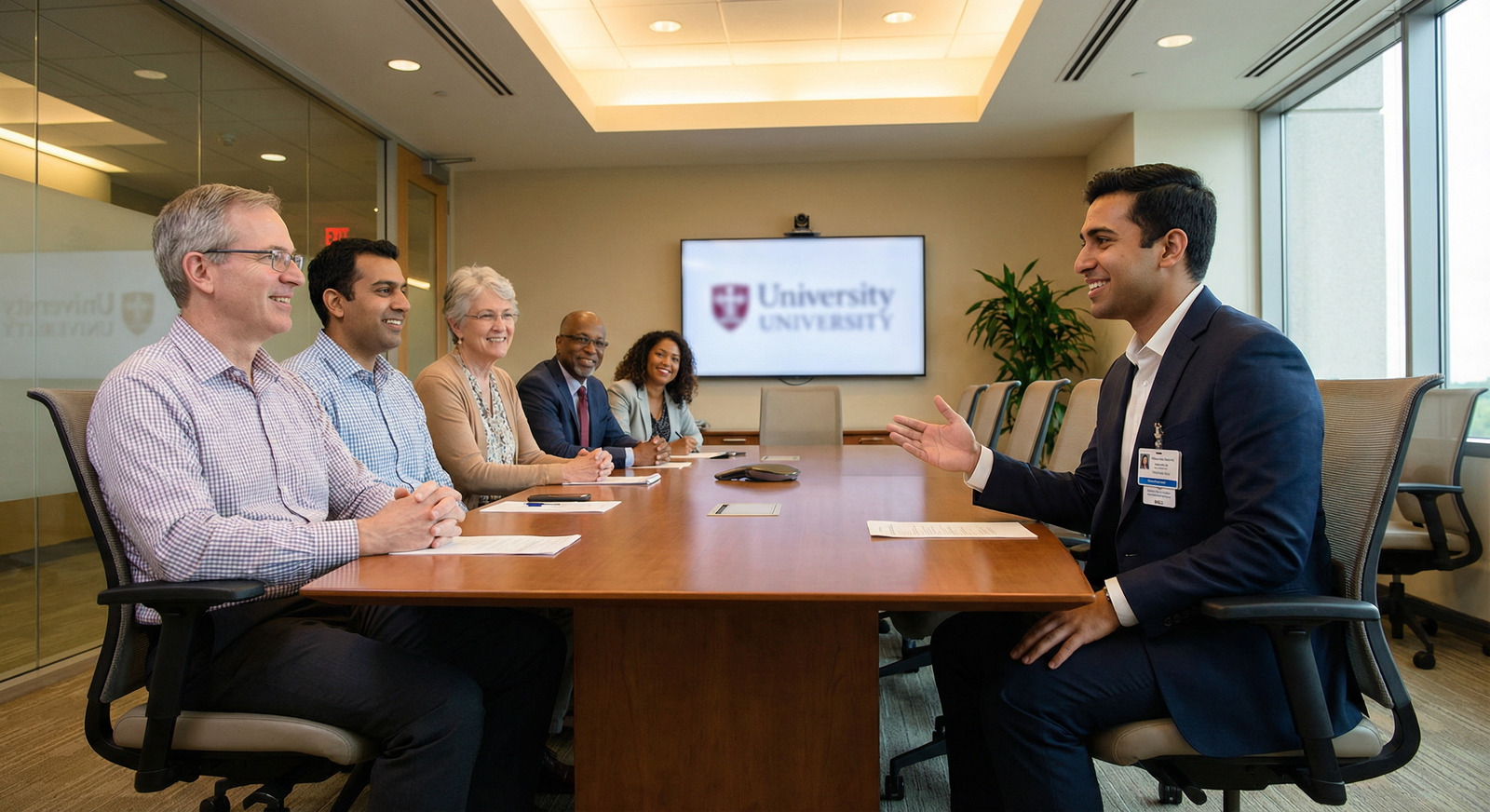
- Listen actively during each conversation; tailor your responses instead of repeating rehearsed scripts.
- Note important details after each interview block:
- Faculty names, specific interactions, program strengths/concerns, your overall feel.
- These notes are invaluable later when making your rank list.
Professionalism, Communication, and Non-Verbal Signals
Your knowledge and preparation only go so far if your communication and professionalism are lacking. Programs pay close attention to how you present yourself.
Verbal communication
- Be clear and concise: Avoid long, meandering answers.
- Avoid jargon overload: Show you know the field, but do not overcomplicate explanations.
- Own your experiences: Use “I” when describing what you actually did, “we” when emphasizing team effort.
- Be honest: If you do not know something, it’s better to say, “I’m not sure, but here’s how I would approach learning about it,” than to guess incorrectly with false confidence.
Non-verbal communication
- Eye contact: Consistent but not intense; look at the camera in virtual interviews.
- Posture: Upright but relaxed; avoid fidgeting.
- Facial expression: Attentive and engaged; nod when listening.
- Tone: Warm, interested, and respectful.
These subtle cues often matter as much as the content of your answers in forming an impression of your professionalism and collegiality.
Handling challenging or unexpected questions
At some point, you may face:
- An ethical dilemma question
- A request to discuss a failure or weakness
- A question you truly do not know the answer to
Approach these calmly:
- Take a breath; it’s acceptable to pause briefly before responding.
- Use structure (e.g., STAR) for behavioral questions.
- For knowledge-style questions, focus on your thought process and how you would seek guidance or literature rather than bluffing.
After the Interview: Reflection and Next Steps
Pre-interview preparation extends into how you consolidate what you learned during the interview day.
Structured post-interview reflection
Soon after each interview, jot down:
- Overall impression of the program culture
- Strengths:
- Case mix, theranostics, research, mentorship, location
- Concerns or uncertainties:
- Call schedule, case volume, support systems, leadership transitions
- People you connected with:
- Residents/fellows, specific faculty, program leadership
- Your “gut feeling”:
- Could you see yourself thriving here for several years?
This will be invaluable when finalizing your rank list in the nuclear medicine match.
Thank-you notes and professionalism
Practices vary, but if you choose to send thank-you notes:
- Keep them brief and sincere.
- Reference a specific part of your conversation.
- Avoid statements that can be interpreted as promises or commitments that violate match rules.
- Email is generally sufficient and widely accepted.
Frequently Asked Questions (FAQ)
1. How is residency interview preparation for nuclear medicine different from other specialties?
Preparation overlaps with other specialties in core ways—practicing behavioral questions, organizing your CV, and researching programs. What’s different is the need for specialty-specific clarity:
- You must convincingly articulate why nuclear medicine, not just imaging in general.
- You should show a basic understanding of theranostics, PET/CT, and hybrid imaging.
- Programs are often smaller and more specialized, so fit, interest in the field’s evolution, and long-term commitment are heavily emphasized.
2. Do I need prior radiology or nuclear medicine experience to be a competitive applicant?
Strong prior imaging experience helps, but it’s not an absolute requirement for every program. What matters most is:
- Demonstrated genuine interest in nuclear medicine (electives, shadowing, research, attendance at imaging conferences).
- Ability to articulate how nuclear medicine aligns with your skills and future plans.
- Willingness to learn the necessary physics, safety, and imaging principles.
If your direct experience is limited, invest time before interviews in shadowing, reading, and speaking with nuclear medicine physicians so your answers are informed and concrete.
3. What are some red flags in nuclear medicine residency interviews?
Potential red flags include:
- Vague or superficial answers to “Why nuclear medicine?”
- Confusing nuclear medicine with general radiology or another specialty.
- Little awareness of where the field is heading (e.g., theranostics, molecular imaging).
- Inability to discuss your own experiences in a reflective, thoughtful way.
- Poor professionalism: arriving late, disrespectful behavior toward staff, or disparaging remarks about other programs or specialties.
Most red flags can be prevented with honest self-reflection, early pre-interview preparation, and mentorship.
4. How technical should I be when discussing nuclear medicine during interviews?
Aim for a balanced level of technical detail:
- Show that you understand key concepts and can discuss them intelligently.
- Avoid excessive jargon or trying to “teach” the interviewer advanced physics.
- Focus on clinical relevance: how nuclear medicine influences patient management and multidisciplinary care.
If an interviewer is very technical, follow their lead. If they stay big-picture, emphasize your clinical understanding and curiosity rather than granular technical detail.
Deliberate, structured pre-interview preparation will help you present your most authentic and well-informed self on interview day. By understanding the nuclear medicine residency landscape, refining your narrative, and aligning your interests with program strengths, you position yourself strongly for the nuclear medicine match—and for a career at the forefront of molecular imaging and theranostics.