Understanding the Nuclear Medicine Residency Interview Landscape
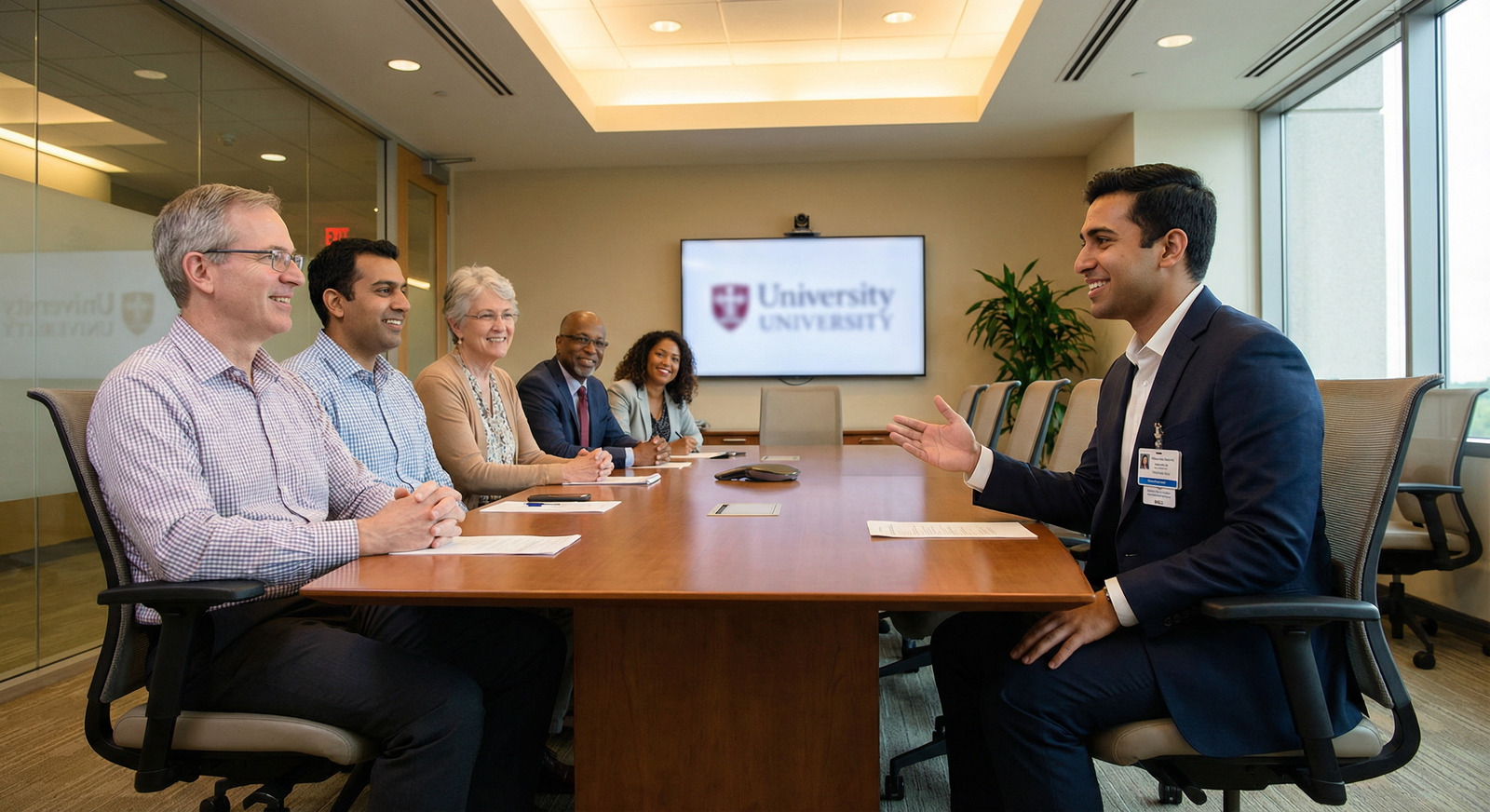
Nuclear medicine is a small, highly specialized field. For an MD graduate, the nuclear medicine residency interview is both familiar (similar structure to other allopathic medical school match interviews) and unique (deep focus on imaging physics, radiopharmaceuticals, and multidisciplinary collaboration).
Before working through how to prepare for interviews, it helps to understand how programs typically evaluate candidates:
What programs are looking for
Clinical maturity as an MD graduate
- Solid clinical reasoning and patient-centered thinking.
- Awareness of how imaging fits into care pathways (oncology, cardiology, neurology, endocrinology).
Genuine interest in nuclear medicine
- Clear, specific reasons for choosing nuclear medicine over radiology, radiation oncology, or internal medicine.
- Exposure to nuclear medicine (electives, shadowing, research, case conferences).
Technical curiosity and comfort with physics
- Openness to learning imaging physics, instrumentation, and quantitative analysis.
- Ability to explain complex ideas clearly to non-physicists (e.g., patients, administrators).
Teamwork and communication
- Nuclear medicine sits at the interface of many specialties. Programs want people who collaborate well with oncologists, surgeons, radiologists, and technologists.
- Strong written and verbal communication for reports, tumor boards, and consultations.
Professionalism and reliability
- Punctuality, preparedness, ethical decision-making.
- Good fit with a small team-based culture.
Keeping these expectations in mind will sharpen your residency interview preparation and help you tailor your examples and stories.
Step 1: Deep Program Research and Strategic Targeting
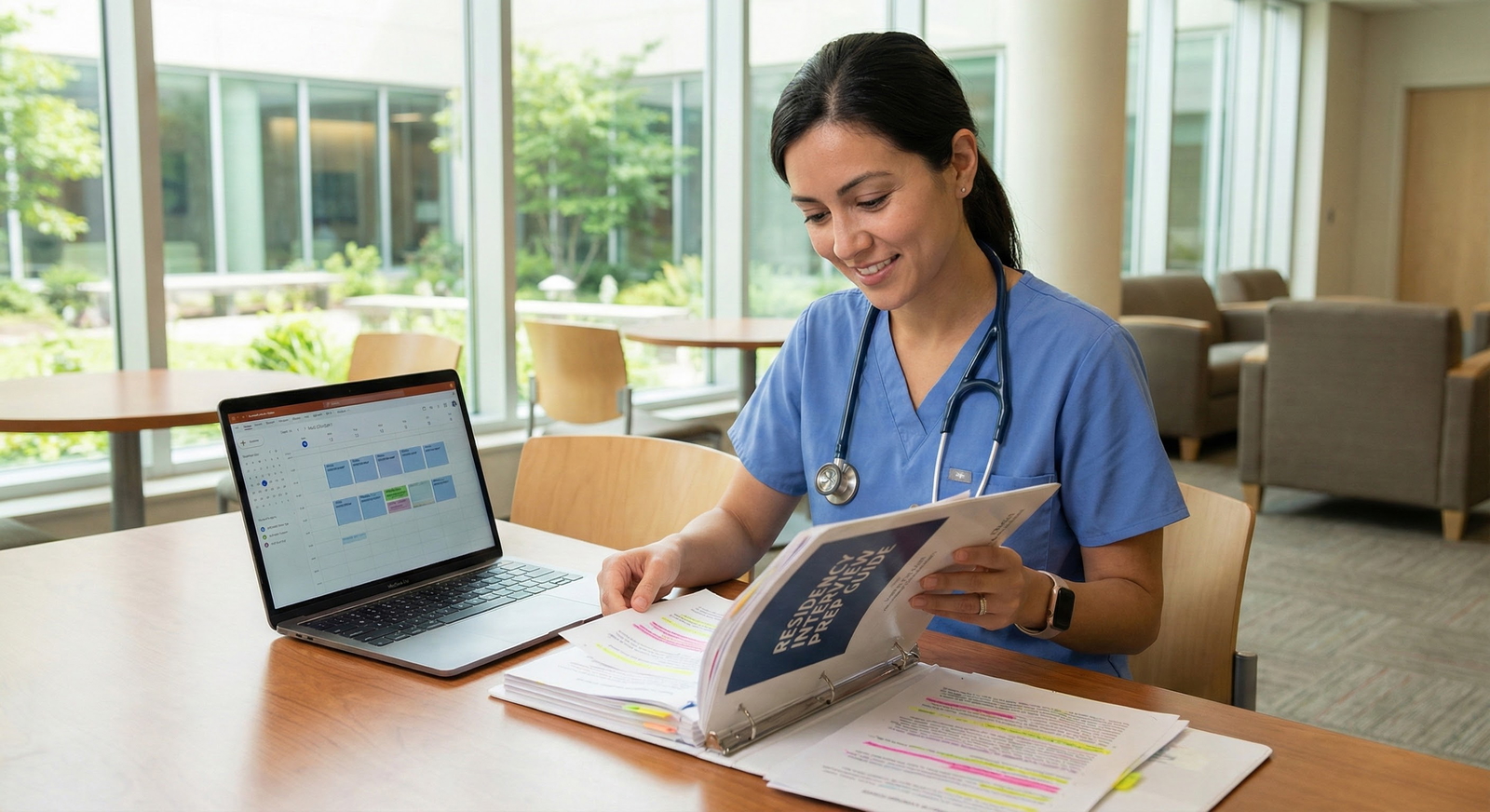
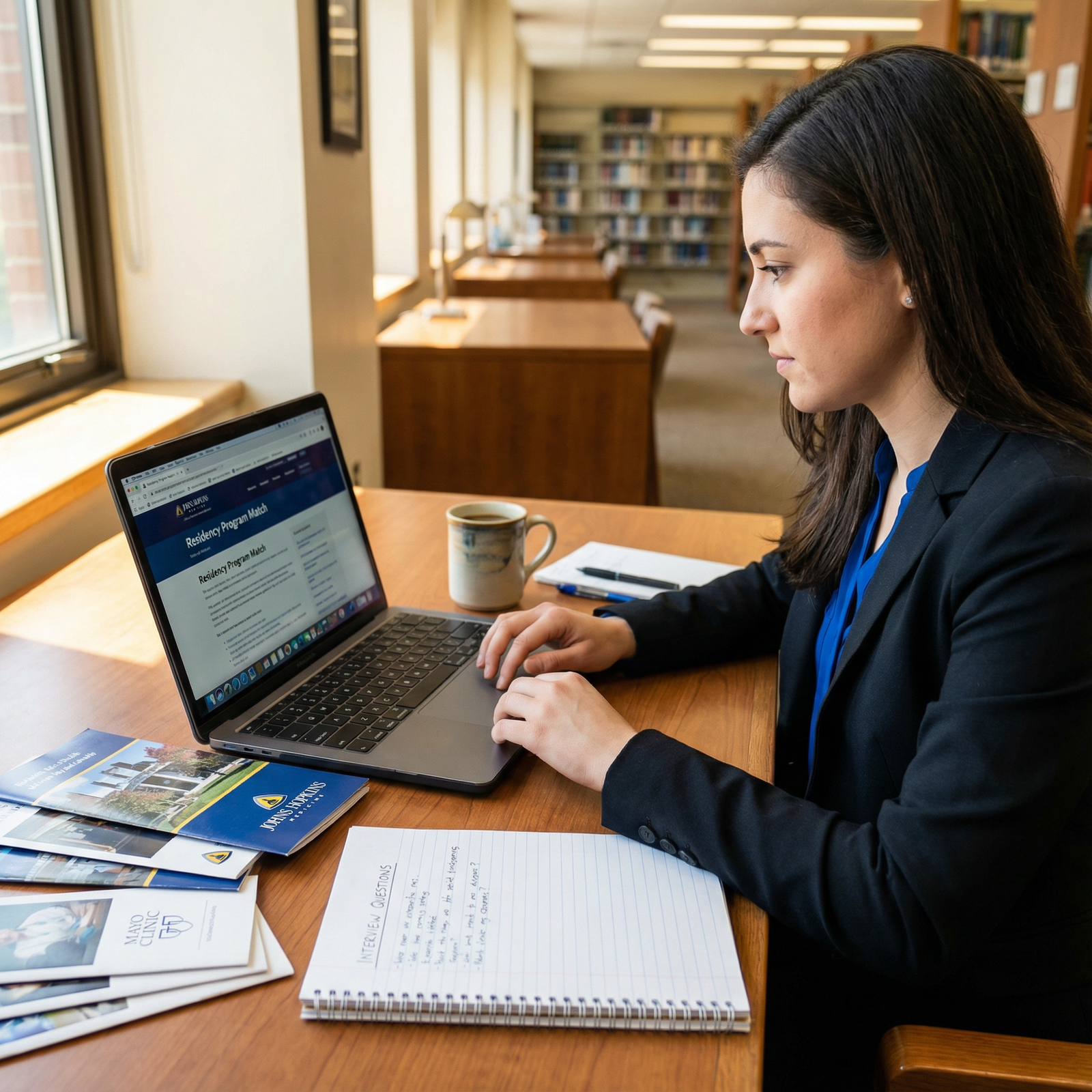
Effective pre-interview preparation starts long before you sit down with a faculty member. As an MD graduate planning for the nuclear medicine match, you should have an organized system for approaching each program.
A. Build a Program Dossier
For each program where you have an interview, create a 1–2 page “program dossier” you can review before interview day. Include:
Program basics
- Institution name, location, program length (1, 2, or 3 years depending on pathway).
- Program director and key faculty (particularly in areas of your interest: PET/CT, theranostics, cardiac imaging, pediatric nuclear medicine).
Clinical profile
- Main clinical strengths: e.g., strong oncology PET/CT, robust cardiac nuclear imaging, theranostics program (Lu-177, I-131, etc.).
- Affiliated centers: cancer center, children’s hospital, VA hospital, research institutes.
Case mix and modalities
- Modalities emphasized: SPECT, SPECT/CT, PET/CT, PET/MR, radioiodine therapy, Lu-177 DOTATATE, PSMA therapies.
- Volume and diversity of cases (if available from website, reports, or alumni).
Training environment
- Call responsibilities.
- Teaching structure: didactic lectures, physics curriculum, journal clubs, tumor boards.
- Opportunities for multidisciplinary conferences.
Research and academic focus
- Ongoing trials or research themes (e.g., theranostics, quantitative PET, AI in imaging).
- Expectations for resident research or QI projects.
Culture and outcomes
- Alumni placements (fellowships, jobs, academic vs. private).
- Any notes on program culture from residents, virtual events, or forums.
This dossier will directly help with interview questions residency programs often ask:
- “Why are you interested in our program?”
- “How do you see yourself fitting into our environment?”
- “What areas of nuclear medicine excite you most?”
B. Clarify Your Fit and Priorities
As part of your nuclear medicine residency interview preparation, be explicit with yourself about:
Your career goals
- Academic vs. community practice.
- Research-intensive vs. clinically focused.
- Interest in subspecialty niches (e.g., neuroimaging PET, cardiac, pediatrics, theranostics).
Location and lifestyle
- Geographic preferences and constraints.
- Family considerations, cost of living, support systems.
Program features that matter most
- High theranostics volume.
- Formal physics curriculum.
- Protected research time.
- Strong mentorship.
Write these down. Then, for each program, note how it does or does not align. This will help you ask genuinely meaningful questions and evaluate whether to rank that program highly in the allopathic medical school match.

Step 2: Crafting Your Personal Narrative for Nuclear Medicine
The most successful MD graduate residency interviews tell a coherent story: why you chose medicine, how you discovered nuclear medicine, and where you want to go in your career. This is especially important in a niche field like nuclear medicine, where genuine commitment matters.
A. Develop Your Core Story
Before you focus on specific interview questions residency programs might ask, build a clear narrative with three pillars:
Origin: Why medicine, and why you as a physician
- Short, honest explanation of what drew you to medicine.
- Emphasize themes that still matter: curiosity, service, problem-solving, interdisciplinary thinking.
Discovery: How you found nuclear medicine
- Be specific: a particular rotation, attending, patient, or case.
- Example:
“During my internal medicine sub-I, I followed a patient with suspected recurrence of lymphoma. The PET/CT changed the management entirely, and the nuclear medicine attending walked me through how metabolic imaging could tell us more than size alone. That combination of physiology, imaging, and direct impact on management is what drew me in.”
Direction: What you want to do within nuclear medicine
- Identify areas of keen interest (e.g., oncologic PET, neuroimaging, theranostics, quantitative imaging).
- Outline a plausible early-career vision: academic clinician, imaging researcher, leader of a theranostics program, etc.
- Convey flexibility: you are interested in learning broadly but have areas you’re particularly excited about.
B. Align Your Story with Your Application
Programs will often cross-reference what you say with your ERAS application and personal statement. Ensure consistency by:
- Reviewing your personal statement and CV before each interview.
- Identifying 3–4 key experiences that support your nuclear medicine interest:
- Clinical elective or sub-I in nuclear medicine or radiology.
- Research in imaging, oncology, cardiology, or related fields.
- Presentations or posters with an imaging component.
- Participation in tumor boards or imaging conferences.
Turn each of these into a short narrative:
- Situation → Your role → What you did → Outcome → What you learned (and how it pushed you toward nuclear medicine).
C. Prepare “Anchor Stories” for Behavioral Questions
When planning how to prepare for interviews, especially behavioral ones, it’s helpful to have a small set of “anchor stories” you can adapt. Nuclear medicine programs, like all residency programs, use behavioral questions to assess professionalism, communication, and resilience.
Prepare 6–8 stories covering:
- A time you:
- Led a team or project.
- Managed a conflict with a colleague or consultant.
- Made a mistake and took responsibility.
- Advocated for a patient.
- Worked under pressure or time constraints.
- Overcame a setback (e.g., exam failure, research challenge, personal obstacle).
Use the STAR method (Situation, Task, Action, Result) and always end with:
- “What I learned was…” and
- “Since then, I’ve applied that by…”
These stories can be flexibly adapted to many behavioral interview questions residency programs commonly ask.
Step 3: Mastering Nuclear Medicine–Specific Content
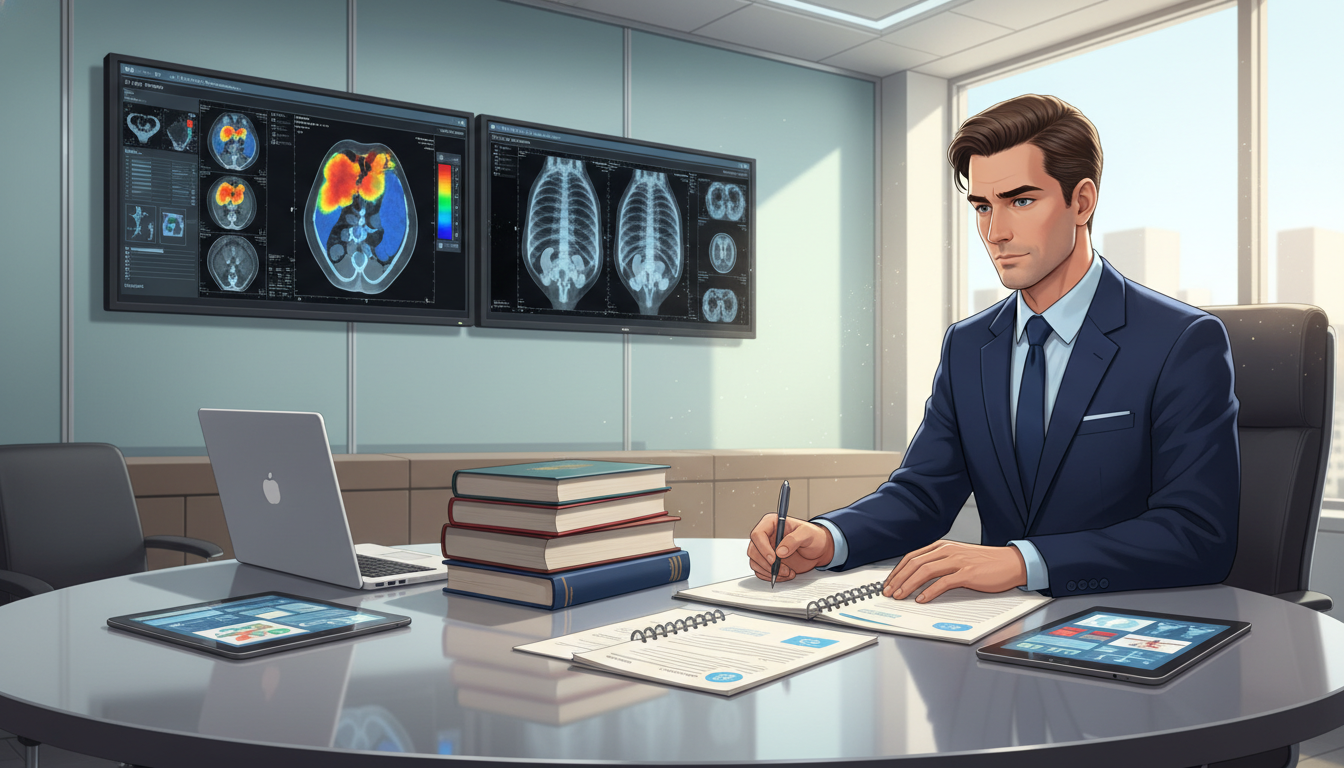
As an MD graduate, you’re not expected to be a nuclear medicine expert before residency, but you should show informed curiosity and a baseline understanding of the field’s scope. Strong pre-interview preparation here helps you stand out in the nuclear medicine match.
A. Core Clinical Knowledge to Review
Focus on demonstrating conceptual understanding rather than memorizing physics equations. Key areas:
Fundamental modalities
- Planar scintigraphy & SPECT/SPECT-CT
- PET/CT and PET/MR
- Concept: functional vs. anatomical imaging, and why hybrid imaging is powerful.
Common radiopharmaceuticals and indications
You should be able to briefly explain:- Tc-99m agents (bone scans, renal scans, HIDA, MAA for lung perfusion).
- I-123 / I-131 for thyroid imaging and therapy.
- F-18 FDG PET for oncology, inflammation, and infection.
- Common PET tracers: PSMA, DOTATATE, amyloid, etc. (general knowledge is enough).
- Basic therapeutic agents: I-131, Lu-177 DOTATATE, Lu-177 PSMA.
Nuclear medicine in patient management
- How imaging or therapy changes staging or treatment plans:
- Lymphoma staging and response assessment with FDG PET.
- Cardiac perfusion imaging guiding CABG vs PCI vs medical therapy.
- Thyroid cancer staging and radioiodine therapy.
- Neurodegenerative disease workup using amyloid or FDG PET.
- How imaging or therapy changes staging or treatment plans:
Be able to give 1–2 concrete examples of how nuclear medicine influences decisions in:
- Oncology
- Cardiology
- Endocrinology
- Neurology
B. Basic Physics and Safety Concepts
You don’t need in-depth physics, but you should know:
- Concept of radioactive decay, half-life, and tracer principle.
- Basics of detectors (gamma camera vs PET).
- Importance of ALARA (As Low As Reasonably Achievable) and radiation safety.
- Differences between diagnostic and therapeutic doses.
If asked and you’re unsure, it’s better to say:
- “I have a foundational understanding, but I’m looking forward to the structured physics curriculum in residency to deepen that knowledge.”
C. Staying Current: Read Before Interviews
In pre-interview preparation, set aside time to read:
- A brief review article or chapter on:
- Overview of nuclear medicine or molecular imaging.
- Recent developments in theranostics (PSMA, neuroendocrine tumors).
- Program-specific publications:
- Skim recent papers by key faculty at each program, especially if you mention interest in research.
- Note 1–2 key takeaways or questions you could bring up politely if appropriate.
This level of preparation signals serious interest and sophistication for the nuclear medicine residency.
Step 4: Systematic Practice for Interview Performance
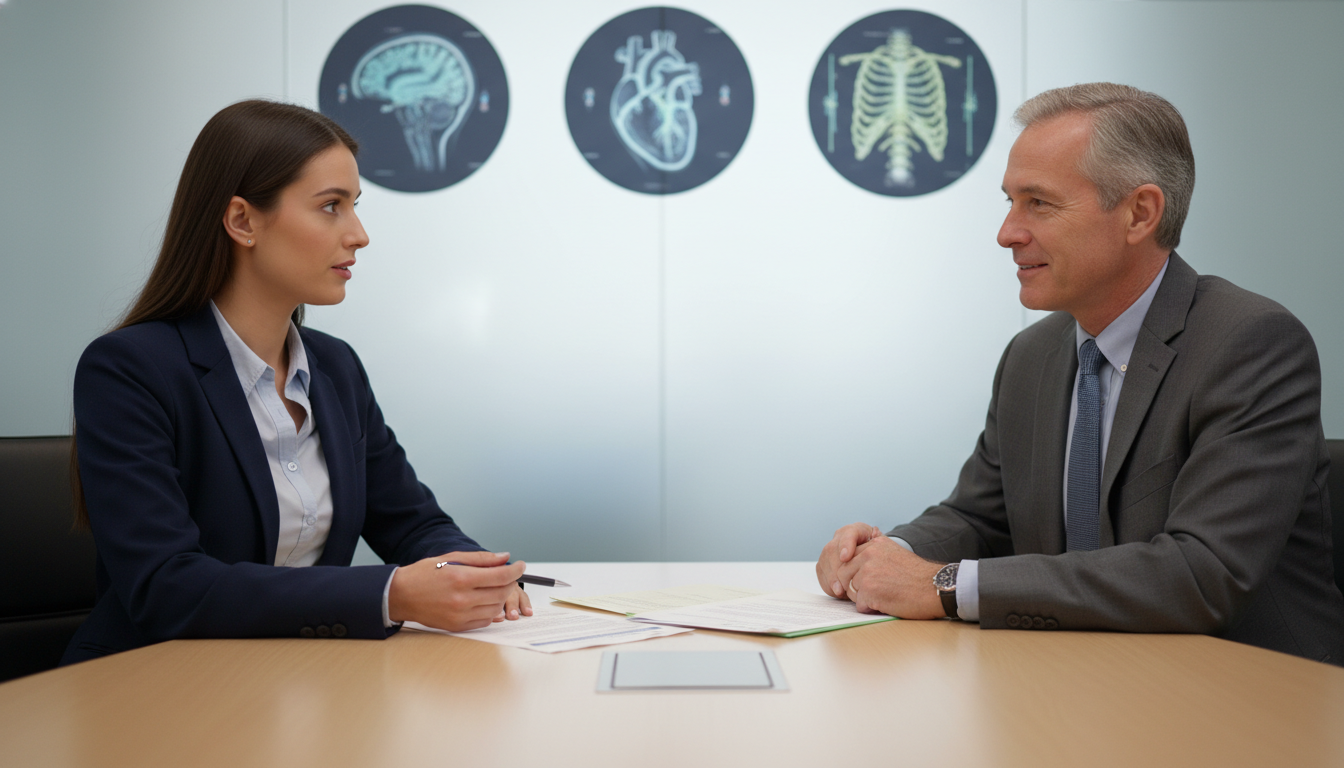
Knowing content is only half the battle. How you communicate and present yourself during the nuclear medicine residency interview is critical.
A. Core Interview Questions to Practice (with Nuclear Medicine Spin)
Common “general” questions, tailored for nuclear medicine:
“Tell me about yourself.”
- 60–90 seconds.
- Structure: background → medical school highlights → how you found nuclear medicine → what you’re looking for in a residency.
“Why nuclear medicine?”
- Specific, evidence-based.
- Incorporate:
- A clinical story.
- What you enjoy intellectually (molecular imaging, physiology, quantitative analysis).
- How you see the field evolving (theranostics, precision medicine).
“Why our program?”
- Draw on your program dossier:
- Clinical strengths (e.g., high theranostics volume, strong PET/CT caseload).
- Educational structure.
- Faculty research aligning with your interests.
- Regional or institutional appeal.
- Draw on your program dossier:
“What are your career goals?”
- Concept of where you see yourself 5–10 years post-residency.
- Honest but flexible:
- “I’m leaning toward an academic career leading a theranostics program, but I’m open to evolving as I gain more exposure during residency.”
“What are your strengths and weaknesses?”
- Strengths: tailor to nuclear medicine (attention to detail, comfort with data and technology, interdisciplinary communication).
- Weaknesses: genuine but improvable (e.g., delegating, overcommitting) and show active efforts to improve.
“Tell me about a challenging patient case.”
- Doesn’t have to be a nuclear medicine case (you’re still an MD resident-level applicant), but ideally shows how imaging played a role or how you coordinated interdisciplinary care.
“Tell me about a time you worked in a team.”
- Highlight interprofessional collaboration: residents, nurses, technologists, consultants.
“What questions do you have for us?”
- Always have 3–5 thoughtful, program-specific questions prepared.
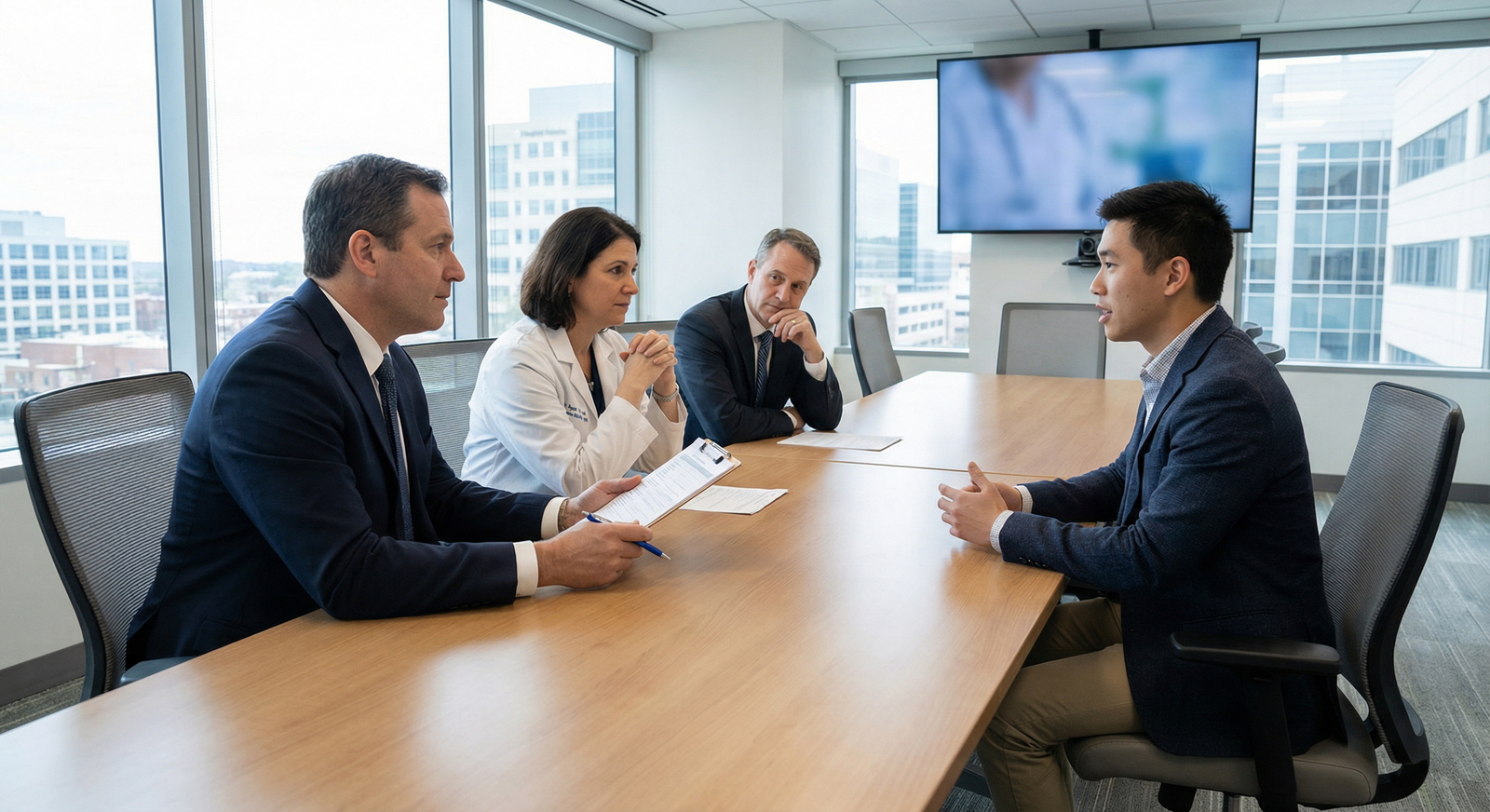
B. Mock Interviews and Feedback
To refine your residency interview preparation:
Do multiple mock interviews
- With faculty in radiology/nuclear medicine if available.
- With advisors or mentors experienced in the allopathic medical school match.
- With peers (record on video for self-review).
Simulate realistic conditions
- Wear your interview outfit.
- Use Zoom or similar platforms if your real interviews will be virtual.
- Practice managing brief delays or tech issues calmly.
Ask for specific feedback
- Clarity and structure of answers.
- Non-verbal communication: eye contact, posture, fidgeting.
- Use of filler words (“um,” “like,” “you know”).
C. Communication Style for a Technical Field
Nuclear medicine demands that you explain complex concepts to a range of audiences. In the interview:
- Use simple, precise language for complex ideas.
- Demonstrate that you can:
- Translate technical concepts into patient-friendly explanations.
- Describe why imaging findings matter for management.
Example:
- Instead of: “PET provides superior sensitivity for metabolic abnormalities.”
- Say: “PET lets us see how active a tumor is metabolically, which often helps us detect disease earlier and monitor treatment more accurately.”
Step 5: Logistics, Professionalism, and Mindset
All the intellectual preparation in the world can be undermined by poor logistics or unprofessional presentation. This step is often underestimated in residency interview preparation.
A. Practical Logistics Checklist
For in-person interviews:
- Confirm:
- Date, time, and time zone.
- Interview schedule and format.
- Hotel and transportation plans.
- Bring:
- Printed copies of your CV, personal statement, and research abstracts.
- A small notebook and pen.
- Any requested documents (IDs, vaccination records, etc.).
- Plan:
- Arrival at least the day before.
- 2 alarms for wake-up.
- Extra time to find the hospital/clinic.
For virtual interviews:
- Test:
- Internet connection (use a wired connection if possible).
- Audio and video quality.
- Familiarity with platform (Zoom, Teams, WebEx).
- Prepare:
- Neutral, well-lit background.
- Professional attire, fully (not just from the waist up).
- Backup plan (hotspot, phone number for program coordinator).
B. Professional Appearance and Demeanor
- Attire:
- Conservative suit or professional business attire.
- Minimal, professional accessories.
- Demeanor:
- Polite, confident, and engaged.
- Treat everyone—from coordinators to faculty—with equal respect.
- Demonstrate curiosity and humility, especially when discussing physics or advanced topics.
C. Frame Your Mindset for Success
Interview days can be exhausting, especially when you have several nuclear medicine interviews in a short period.
- Reframe anxiety as excitement.
- Physiologically they’re similar; tell yourself “I’m excited” rather than “I’m nervous.”
- Focus on mutual fit, not just performance.
- You are also evaluating whether the program is right for you.
- Accept imperfection.
- You may stumble on a question. Recover calmly:
- “That’s a great question. Let me think for a moment.”
- “I’m not certain about the exact answer, but here’s how I would approach thinking about it…”
- You may stumble on a question. Recover calmly:
D. Post-Interview Follow-Through
After each interview:
- Take structured notes immediately
- Program culture.
- Strengths and weaknesses.
- Conversations with specific faculty and residents.
- Your feelings about fit and potential happiness there.
- Thank-you emails
- Many programs don’t require them, but a brief, genuine note can reinforce interest.
- Mention something specific you discussed.
- Do not make statements that violate NRMP rules (e.g., promising rank positions).
These notes will be crucial when you create your rank list for the nuclear medicine match and compare programs rationally rather than based solely on emotions from months earlier.
FAQ: Pre-Interview Preparation for MD Graduate in Nuclear Medicine
1. As an MD graduate, how much nuclear medicine knowledge am I expected to have before residency interviews?
Programs do not expect you to be a nuclear medicine expert. They do expect:
- Basic understanding of what nuclear medicine is and where it fits in patient care.
- Familiarity with core modalities (SPECT, PET/CT) and common applications (oncology, cardiology, thyroid).
- Evidence of genuine interest, such as electives, shadowing, or reading in the field.
If you can talk coherently about how nuclear medicine influences patient management and show curiosity to learn more, you are at the right level for the nuclear medicine residency interview.
2. How can I stand out in a small, competitive nuclear medicine match?
You stand out by:
- Demonstrating authentic, well-founded interest (not “backup plan” energy).
- Showing a clear, coherent narrative for why nuclear medicine suits your skills and goals.
- Being knowledgeable about the program and asking thoughtful, specific questions.
- Highlighting relevant experiences: imaging-heavy rotations, research related to oncology/cardiology/neurology, participation in tumor boards.
- Displaying professionalism, maturity, and strong communication—especially important in a field that relies on interdisciplinary collaboration.
3. What are the most important things to research about each program before the interview?
Prioritize:
- Clinical strengths and case mix (oncologic PET, theranostics, cardiac, pediatrics).
- Faculty interests and ongoing research.
- Structure of training (didactics, physics, call, conferences).
- Culture and resident experience (if possible from residents, open houses, or recorded sessions).
- Graduate outcomes and career paths.
This research directly informs your answers to “Why our program?” and helps you decide how to rank programs in the allopathic medical school match.
4. How should I prepare if I don’t have a dedicated nuclear medicine rotation on my transcript?
You can still be a strong applicant by:
- Highlighting related experiences: radiology, oncology, cardiology, endocrinology, or neurology rotations where imaging played a major role.
- Seeking short observerships, shadowing experiences, or tumor board attendance before interviews if possible.
- Reading a concise overview textbook chapter or review article on nuclear medicine and theranostics.
- Emphasizing transferable strengths: interest in physiology and imaging, attention to detail, comfort with technology, collaborative mindset.
Be honest about your limited exposure but show that you’ve actively worked to learn about the field and are committed to it long-term.
By approaching your pre-interview preparation in this structured way—understanding the field and programs, crafting a clear personal narrative, mastering core nuclear medicine concepts, and polishing your interview skills—you will position yourself strongly for the nuclear medicine match and for a successful MD graduate residency in this dynamic, rapidly evolving specialty.