Understanding the Ophthalmology Interview Landscape
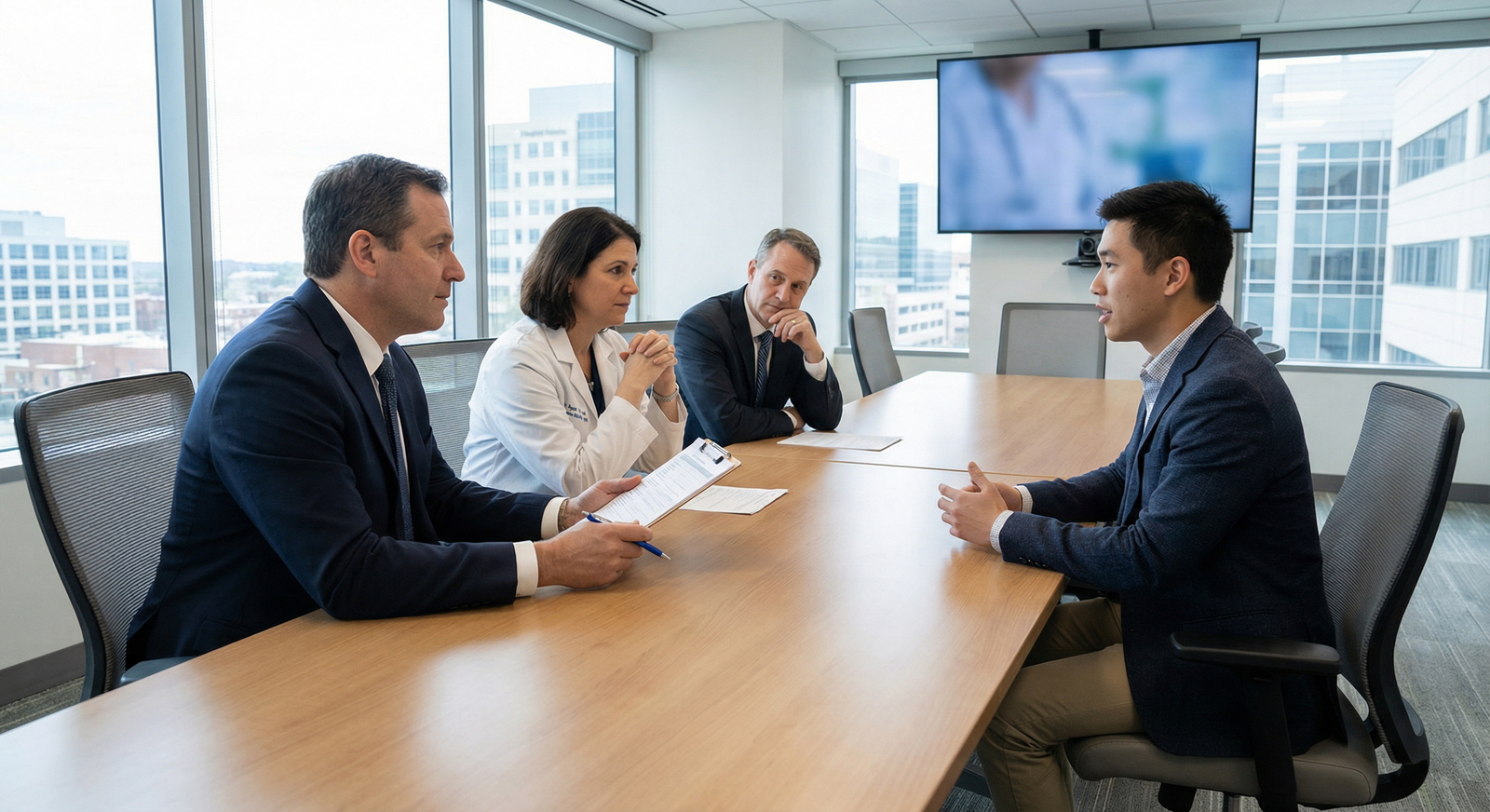
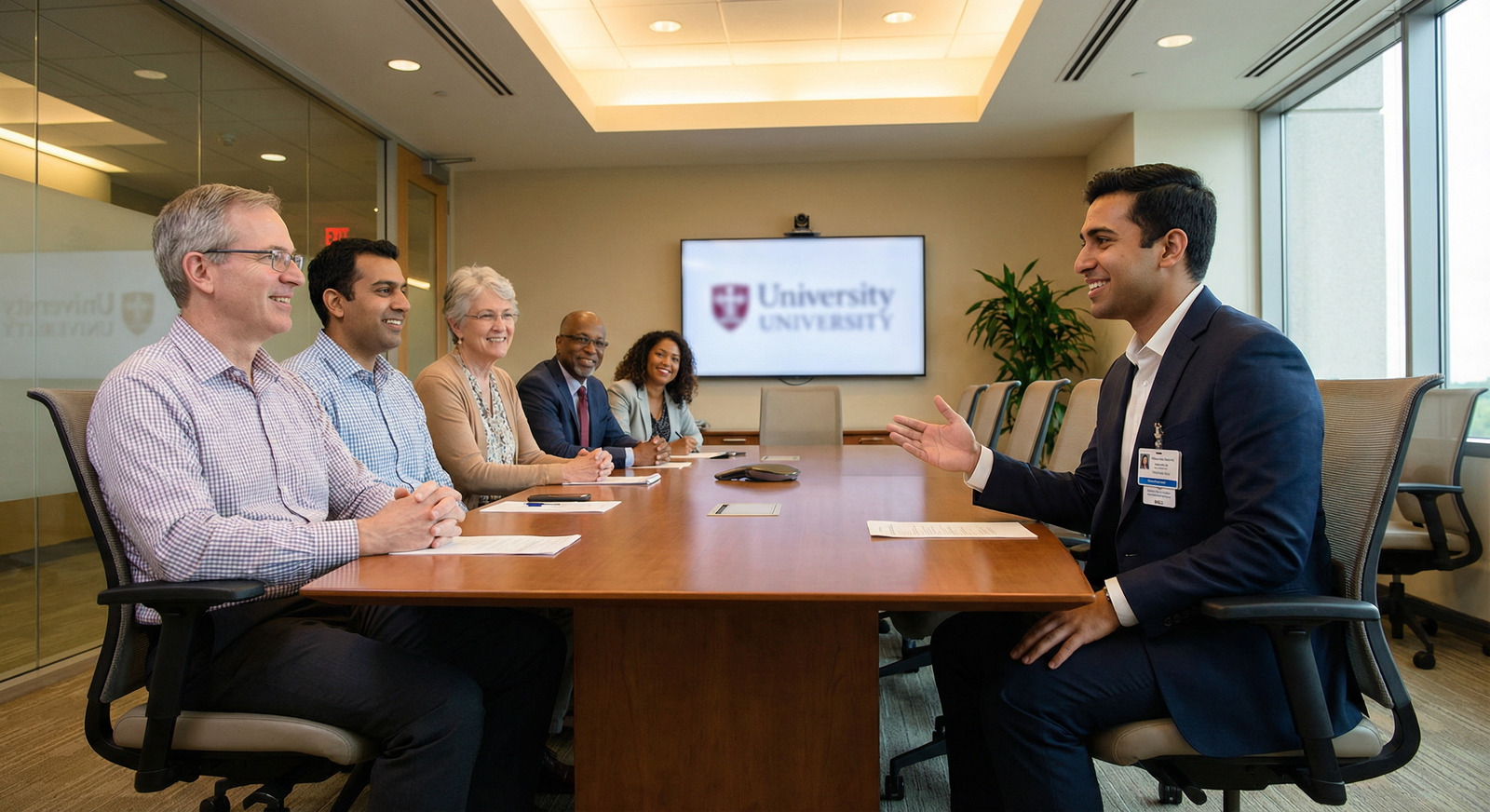
Ophthalmology is one of the most competitive specialties, and strong pre-interview preparation can make the difference between a successful ophtho match and a disappointing season. By the time you receive invitations, programs already know you look good on paper. The residency interview is your opportunity to demonstrate who you are as a clinician, colleague, and future ophthalmologist.
Why pre-interview preparation matters so much in ophthalmology:
- High applicant quality: Most candidates have strong scores, research, and letters; interviews often become the primary differentiator.
- Small specialty, tight community: Program directors often know one another and talk; impressions travel.
- Early timeline and unique process (SF Match): The ophthalmology residency application cycle runs earlier than most other specialties, compressing your preparation window.
- Clinical skills and personality fit: Ophthalmology requires fine motor skills, attention to detail, and patient-centered communication. Programs probe for these traits through behavioral and scenario-based questions.
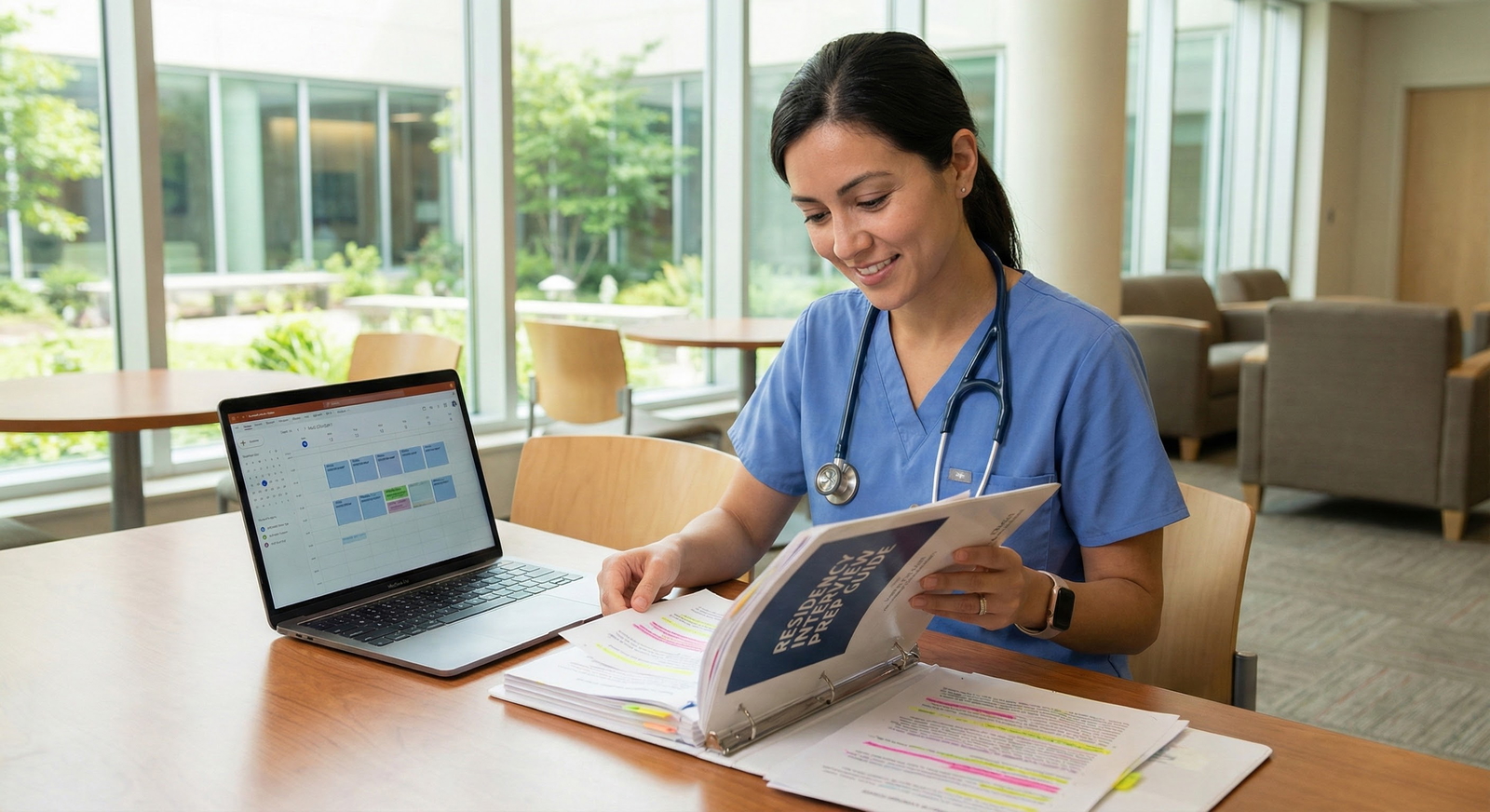
Effective residency interview preparation should start weeks before your first interview—ideally even before submission of your SF Match application. The goal is not to memorize scripts, but to build clear, authentic storylines and polished communication skills tailored to ophthalmology.
In this guide, we’ll walk through a step-by-step approach to how to prepare for interviews in ophthalmology: research, self-assessment, question strategy, logistics, and practice—plus specific tips unique to ophtho.
Step 1: Clarify Your Story and Career Vision
Before you dive into interview questions, you need a clear internal narrative: who you are, why ophthalmology, and where you’re headed.
Define your core themes
Almost every program will ask some variation of:
- “Tell me about yourself.”
- “Why ophthalmology?”
- “Why our program?”
- “Where do you see yourself in 5–10 years?”
Prepare by clarifying 3–4 core themes that will thread through your answers. Examples:
- Passion for visual function and microsurgery
- Commitment to underserved eye care or global ophthalmology
- Strong interest in research (e.g., retina, glaucoma, AI in imaging)
- Dedication to medical education or academic medicine
- Emphasis on teamwork, communication, and patient-centered care
Write these themes out and ensure they connect with:
- Your clinical experiences
- Ophthalmology exposures (electives, research, shadowing)
- Non-clinical background (music, art, engineering, etc.)
- Long-term goals (subspecialty interest, practice type, academic vs private, rural vs urban)
Craft a compelling “Tell me about yourself”
This is often your first question and sets the tone for the interview. Aim for 60–90 seconds, with a clear structure:
Brief intro
- Where you grew up, undergrad/medical school
- Any defining background elements (e.g., immigrant family, first-gen, unusual path)
Key experiences that shaped you
- One or two high-yield experiences (clinical, research, leadership) that highlight your strengths
Transition to ophthalmology and your goals
- Briefly link your experiences to why you’re now sitting in an ophthalmology interview and what you hope to contribute
Example skeleton:
“I grew up in a small town in Arizona where access to specialty eye care was limited, and I first became aware of ophthalmology when my grandmother nearly lost her vision to uncontrolled glaucoma. In medical school at X, I was drawn to rotations that required fine motor skills and visual pattern recognition, and my research in retinal imaging technology opened my eyes to the field’s blend of medicine, surgery, and innovation. Through volunteer work at our student-run eye clinic, I saw how restoring vision transforms patients’ independence and quality of life. Long term, I hope to build a career as an academic ophthalmologist focused on improving access to retinal care in underserved communities, while contributing to resident education.”
Align your career goals with ophthalmology’s realities
Programs want to see a realistic understanding of the field. Reflect on:
- Which aspects of ophthalmology resonate most? (e.g., surgical precision, chronic disease management, rapid visual outcomes)
- Are there subspecialties that interest you now (e.g., cornea, retina, pediatrics, oculoplastics)?
It’s fine not to know yet—just be authentic and open. - Do you foresee yourself in:
- Academic medicine
- Private practice
- Hybrid models
- Community-based or global health settings
Be prepared to articulate why—and that you understand ophthalmology’s evolving practice environment (technology, demographics, access to care).
Step 2: Program and Specialty Research
Strong answers in any ophthalmology residency interview rely on two types of knowledge:
- Understanding the specialty’s big picture
- Understanding each program’s unique strengths and culture
Know the field: current trends and challenges
Expect questions that probe your understanding of ophthalmology as a discipline:
- “What do you see as the biggest challenges facing ophthalmology?”
- “How do you think AI will affect our field?”
- “What excites you about the future of ophthalmology?”
Prepare by briefly reviewing:
- Demographic trends: Aging population, increasing diabetic eye disease, growing cataract burden.
- Technologic advances:
- OCT, wide-field imaging, intraoperative OCT
- MIGS, femtosecond lasers
- AI-assisted screening and diagnostics
- Tele-ophthalmology and community screening
- Access and equity issues:
- Disparities in cataract surgery access
- Screening for diabetic retinopathy and glaucoma in underserved areas
- Global blindness prevention efforts
Have 1–2 thoughtful points you can weave into answers to demonstrate insight and curiosity.
Deep-dive program research
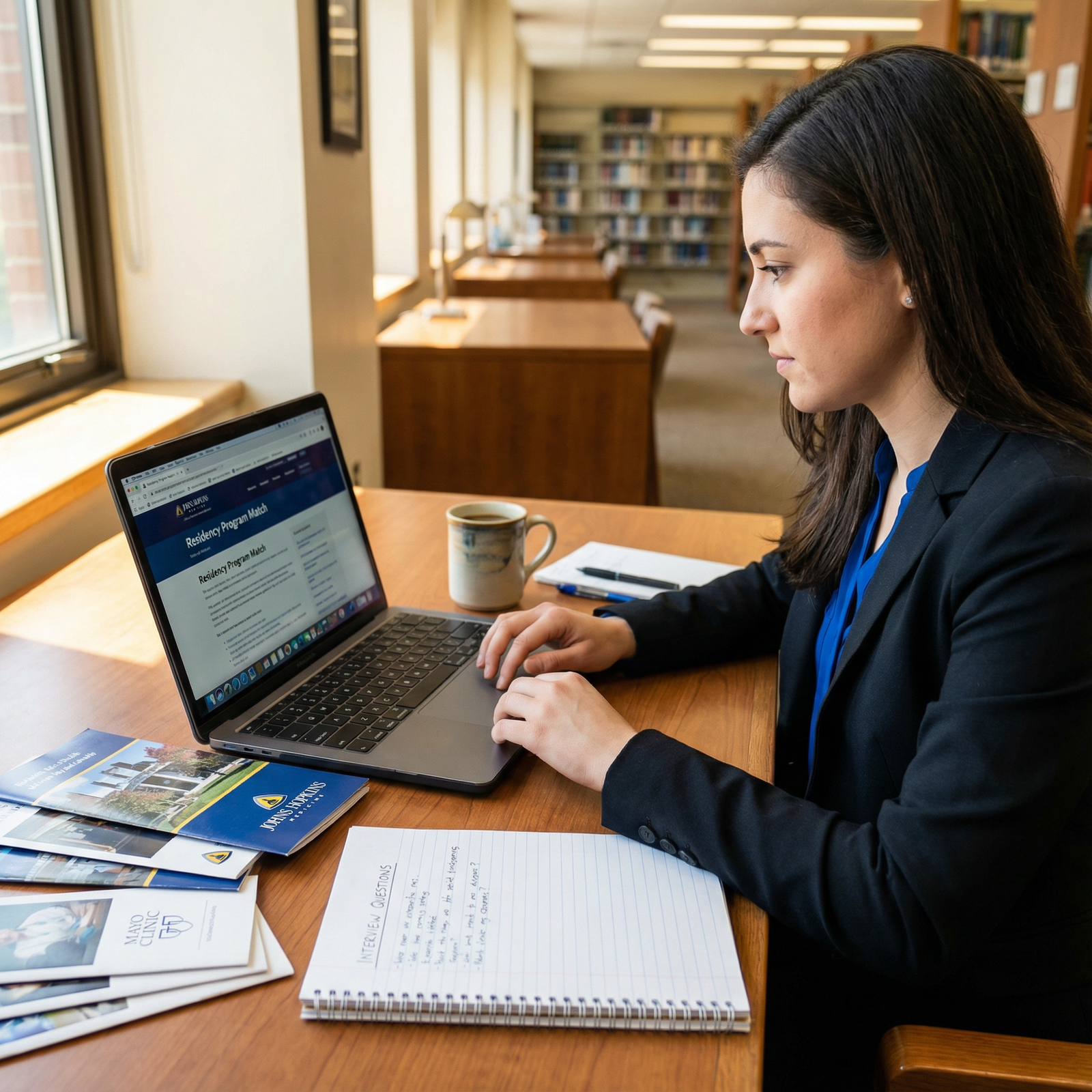
When you’re asked, “Why our program?” generic answers fall flat. Use a structured research approach:
Website review
- Curriculum (e.g., early surgical exposure, continuity clinics)
- Subspecialty strengths (retina, cornea, oncology, uveitis, etc.)
- Research focus areas and major labs
- Call schedule and resident autonomy
- Community clinics, VA affiliations
Resident perspective
- Read resident bios: training backgrounds, interests, diversity.
- Look for resident-led initiatives (Q&I projects, outreach, journal clubs).
- Follow the program’s official and resident-run social media accounts.
Institutional features
- Tertiary referral center vs community-based program
- Patient population diversity
- Volume and variety of pathology
- Surgical volume and case complexity
Your fit
Identify 2–3 specific, honest reasons you would thrive there:- “Strong exposure to complex uveitis and ocular immunology, which aligns with my interest in autoimmune eye disease.”
- “Robust commitment to urban underserved patients, similar to my work at our free eye clinic.”
- “Opportunities to collaborate with the biomedical engineering department on imaging projects.”
Write down bullet points for each program in a simple spreadsheet or document you can review quickly before each interview.
Step 3: Mastering Common and Specialty-Specific Questions
The heart of residency interview preparation is practice with high-yield questions. For an ophtho match, you’ll encounter both generic residency questions and ophthalmology-specific topics.
Core behavioral and fit questions
For each question, aim to answer in 1–2 minutes using a framework like STAR (Situation, Task, Action, Result):
Common questions:
- Tell me about yourself.
- Why ophthalmology?
- Why this program?
- What are your strengths and weaknesses?
- Tell me about a time you made a mistake and how you handled it.
- Describe a conflict with a team member and how you resolved it.
- Tell me about a difficult patient encounter.
- How do you handle stress and prevent burnout?
- Discuss a time you received critical feedback.
Actionable tip:
Build a “story bank” of 8–10 specific experiences you can adapt:
- A clinical challenge
- Leadership or teamwork experience
- Research hurdle
- Ethical dilemma
- Time you failed or underperformed
- Quality improvement or systems issue
Write 3–4 bullet points for each: what happened, what you did, what you learned, and how it makes you a better future ophthalmologist.
Ophthalmology-specific questions
Anticipate questions that probe your commitment to the specialty:
- “When did you decide on ophthalmology, and why?”
- “What experiences confirmed your interest in ophthalmology?”
- “What do you think makes a great ophthalmologist?”
- “Which aspect of ophthalmology appeals to you the most—medical retina, anterior segment, glaucomatous disease, etc.?”
- “Tell me about an ophthalmology patient encounter that stood out to you.”
- “What do you think you’ll find most challenging about this field?”
You may also encounter light clinical reasoning:
- “A patient presents with sudden painless vision loss in one eye. How would you approach this?”
- “How would you explain cataract surgery to a patient with limited health literacy?”
These are not board exams; interviewers are assessing:
- Your ability to reason logically at your training level
- Communication clarity and empathy
- Comfort with uncertainty and asking for help
Interview questions about research and your CV
Given ophthalmology’s academic orientation, research often features prominently:
- “Tell me about your research project on [topic from your CV].”
- “What did you personally contribute to that study?”
- “What was the biggest challenge and how did you address it?”
- “If you had more time, what would be the next step in this project?”
Preparation steps:
- Re-read every abstract, poster, and paper on your CV.
- Be ready to:
- Summarize your project in 30–60 seconds in plain language.
- Explain your specific role (data collection, analysis, manuscript drafting, IRB, etc.).
- Describe key findings and why they matter in ophthalmology or medicine.
- Have at least one example showing how research taught you:
- Resilience
- Critical thinking
- Collaboration
- Humility
Important: Never exaggerate your contributions—ophthalmology is a small world, and integrity is non-negotiable.

Step 4: Logistics, Professionalism, and First Impressions
Your interview performance is shaped not only by what you say, but how you present yourself and manage the day. This is especially important in a small specialty like ophthalmology, where impressions spread quickly.
Professional appearance for ophthalmology interviews
Whether in-person or virtual, aim for conservative, polished attire:
- Suits: Dark or neutral color (navy, charcoal, black). Skirt or pants are both fine; choose what makes you most comfortable.
- Shirt/top: Light-colored, non-distracting, no loud patterns.
- Shoes: Closed-toe, comfortable, professional. You may walk between clinics and conference rooms in in-person interviews.
- Accessories: Minimal; avoid anything noisy or distracting.
- White coat: Typically not needed for interview day unless explicitly requested.
For virtual interviews:
- Use a neutral, uncluttered background; consider a solid wall or simple bookcase.
- Ensure front-facing lighting (lamp or window behind your screen, not behind you).
- Position your camera at eye level; test how you appear in-frame (head and shoulders).
- Dress fully in interview attire (including bottoms)—it affects your posture and mindset.
Technical preparation for virtual interviews
Given ongoing use of virtual interviews in many ophtho programs:
- Test your platform (Zoom, Teams, WebEx) a few days prior.
- Check:
- Camera and microphone quality
- Internet connection stability
- Audio echo or background noise issues
- Have a backup plan:
- Hotspot on your phone
- Secondary device if your primary fails
- Contact email/phone for the program’s coordinator
Print or have easily accessible:
- A one-page interview schedule
- List of faculty and residents you’ll meet
- Bullet points about the program
- Your own questions for them
Managing timing and energy
Interview days are often long, with multiple faculty and resident sessions. To perform consistently:
- Sleep well for several nights before, not just the night prior.
- Plan hydration and snacks (especially for virtual interviews).
- Warm up your voice and facial muscles before logging in; a short mock question with a friend can help.
- Have water nearby, but avoid loud cups or bottles.
Punctuality is essential:
- For in-person: Arrive at least 15–20 minutes early.
- For virtual: Log into the platform 10–15 minutes early; test audio/video.
Step 5: Building Confidence Through Deliberate Practice
Confidence in interviews comes from repetition and reflection, not memorization. Your goal is to sound natural and conversational while still being clear and structured.
Create a practice schedule
Once you start receiving invites, treat interview prep like a short, intensive rotation. For 2–3 weeks before your first interview:
- Daily (15–20 minutes):
- Practice 1–2 common questions out loud.
- Refine key answers (Tell me about yourself, Why ophthalmology?, Why our program?).
- Twice weekly (30–60 minutes):
- Full mock interviews with a mentor, advisor, recent applicant, or peer.
- Record yourself (video) at least a couple of times.
- Weekly:
- Review your story bank and update it based on recent experiences or feedback.
Incorporate feedback and reflection
After each mock interview:
- Note which questions felt weak or overly rehearsed.
- Ask your mock interviewer to comment on:
- Clarity and concision
- Body language and eye contact
- Use of filler words (“um,” “like”)
- Overall impression of warmth and professionalism
Keep a simple log:
- What went well
- What to improve
- Specific action steps
Over time, you should see:
- More consistent pacing
- Less rambling and fewer tangents
- Stronger transitions between ideas
- Greater comfort with pausing and thinking before answering
Handling challenging or unexpected questions
You may encounter:
- Very open-ended questions:
- “What else should we know about you?”
- “What questions do you wish we had asked?”
- Stress or curveball questions:
- “Teach me something non-medical in 60 seconds.”
- “Convince me not to go into ophthalmology.”
Strategies:
- Pause briefly and breathe—it’s acceptable to say, “That’s a great question, let me think for a moment,” then respond.
- Stay aligned with your core themes: teamwork, patient-centered care, curiosity, resilience.
- If you don’t know an answer (especially for any clinical prompt), say so honestly, then outline your approach to finding the answer or seeking help.
Programs often value humility and teachability over encyclopedic knowledge.
Step 6: Questions You Should Ask Programs
Your questions communicate your priorities, preparation level, and whether you can envision yourself at the program. Avoid questions easily answered on the website; focus instead on deeper, experience-based topics.
To faculty/interviewers
Consider 2–3 of the following, tailored to each program:
- “How would you describe the culture among residents and faculty here?”
- “What changes or improvements has the program made based on resident feedback in the last few years?”
- “How do you support residents interested in [research/education/global ophthalmology/innovation]?”
- “What distinguishes graduates from this program when they enter fellowship or practice?”
- “How is autonomy fostered and supervised at different stages of training?”
To current residents
Residents are often your most reliable source of information on day-to-day life:
- “What do you enjoy most about training here? What would you change if you could?”
- “How manageable is the call schedule and workload? Do you feel supported on difficult nights?”
- “How is the surgical training—case volume, complexity, and graduated responsibility?”
- “How does the program respond when a resident is struggling (academically, clinically, or personally)?”
- “What is it like to live in this city/region on a resident salary?”
Always listen closely—the content and tone of responses provide valuable insight into program culture and resident well-being.
Putting It All Together: A Sample Preparation Timeline
Here’s a sample 3–4 week pre-interview preparation schedule for ophthalmology:
3–4 weeks before first interview
- Refine personal story and core themes.
- Re-read your personal statement, CV, and research projects.
- Build story bank and outline answers to:
- Tell me about yourself.
- Why ophthalmology?
- Why this program? (generic template to customize later)
- Begin light reading on ophthalmology trends (AAO resources, major journals, reputable blogs).
2 weeks before
- Start regular mock interviews.
- Create program-specific notes and question lists.
- Finalize wardrobe and, if virtual, test your tech setup.
- Practice concise research summaries (30–60 seconds each).
1 week before
- Increase frequency of short, daily practice sessions.
- Hone answers to weaknesses, failure, and conflict questions.
- Confirm interview schedules, time zones, and contact info.
- Rehearse with a friend simulating back-to-back interviews.
Day before each interview
- Review:
- Program notes (2–3 key points you’ll emphasize).
- Your story bank (so examples are fresh).
- Your questions for faculty and residents.
- Lay out clothes and check logistics (transport, platform links).
- Plan meals and hydration; aim for a relaxed evening and solid sleep.
Day of interview
- Briefly review notes in the morning—then put them away.
- Do a 5–10 minute warm-up: a few practice questions out loud.
- Focus on being present, curious, and authentic in each interaction.
- After the interview, jot down impressions and details while fresh in your mind, to help with future decisions and thank-you messages.
FAQs: Pre-Interview Preparation in Ophthalmology
1. How is ophthalmology interview preparation different from other specialties?
Ophthalmology interviews often emphasize visual sciences, microsurgery interest, and research more heavily than some other fields. Because the ophtho match is highly competitive and the community is small, programs scrutinize fit, professionalism, and genuine commitment closely. You should be especially prepared to discuss:
- Your exposure to ophthalmology (shadowing, electives, research)
- The balance of medical and surgical aspects that attracts you
- Understanding of the field’s technological and demographic trends
2. How many practice interviews should I do before my first real interview?
Aim for at least:
- 2–3 formal mock interviews with faculty, advisors, or residents (ideally including at least one ophthalmologist or recent ophtho graduate).
- Several shorter sessions with peers where you rotate asking common interview questions residency programs commonly use.
Quality matters more than quantity; prioritize detailed feedback and reflection after each session.
3. What if I haven’t done much ophthalmology research—will that hurt my interviews?
Many successful applicants match without extensive research, especially at programs less focused on academics. In interviews:
- Be honest about your research background.
- Emphasize other strengths: clinical skills, service, leadership, teaching.
- Show curiosity about scholarship, including QI, education, or clinical projects.
- If asked, you can say you’re excited to explore research opportunities in residency, and mention specific areas you might like to learn more about.
What matters most is that your story is coherent and authentic, not that every box is checked.
4. How should I prepare for potential technical or clinical ophthalmology questions?
You’re not expected to be a mini-fellow. However:
- Review the basics of the eye exam (visual acuity, pupils, EOMs, fundus).
- Be able to broadly discuss common conditions (cataract, glaucoma, AMD, diabetic retinopathy) in simple terms.
- If presented with a scenario you’re unsure about, explain your reasoning process and emphasize that as a student you’d involve your attending, consult appropriate guidelines, and prioritize patient safety.
Interviewers are primarily evaluating your reasoning, humility, and communication—not your detailed subspecialty knowledge.
By approaching pre-interview preparation in ophthalmology systematically—clarifying your story, researching programs, mastering common questions, refining logistics, and practicing deliberately—you position yourself to make a strong, authentic impression across all your interviews. This investment of time and effort often translates directly into a more confident performance and, ultimately, a more successful ophthalmology residency match.