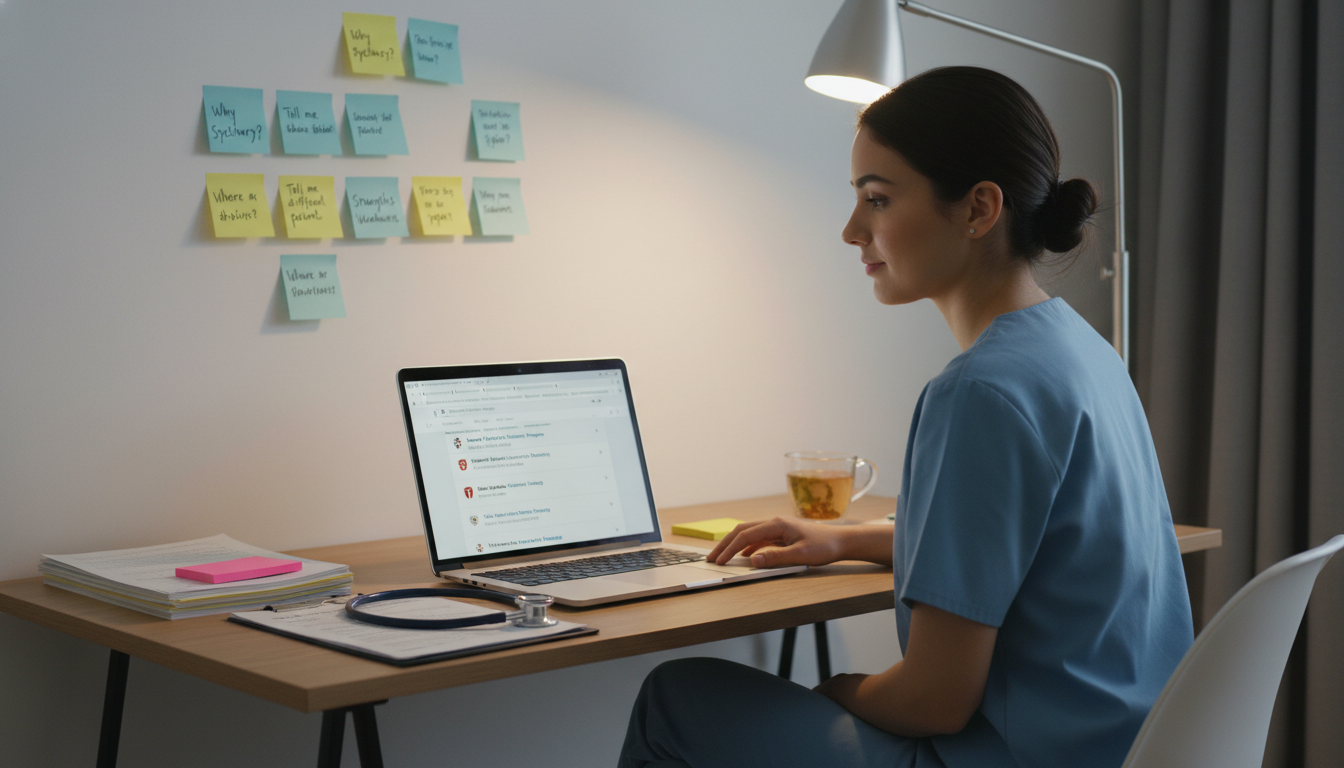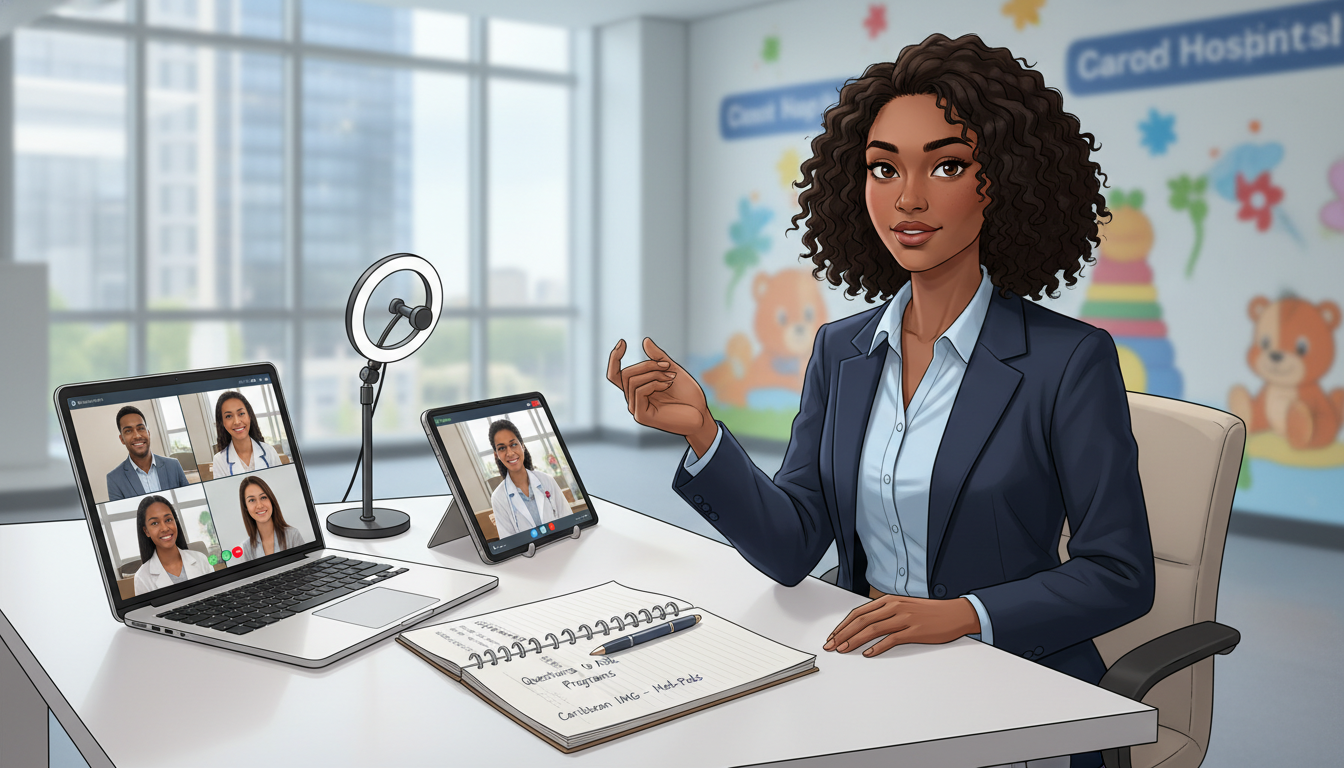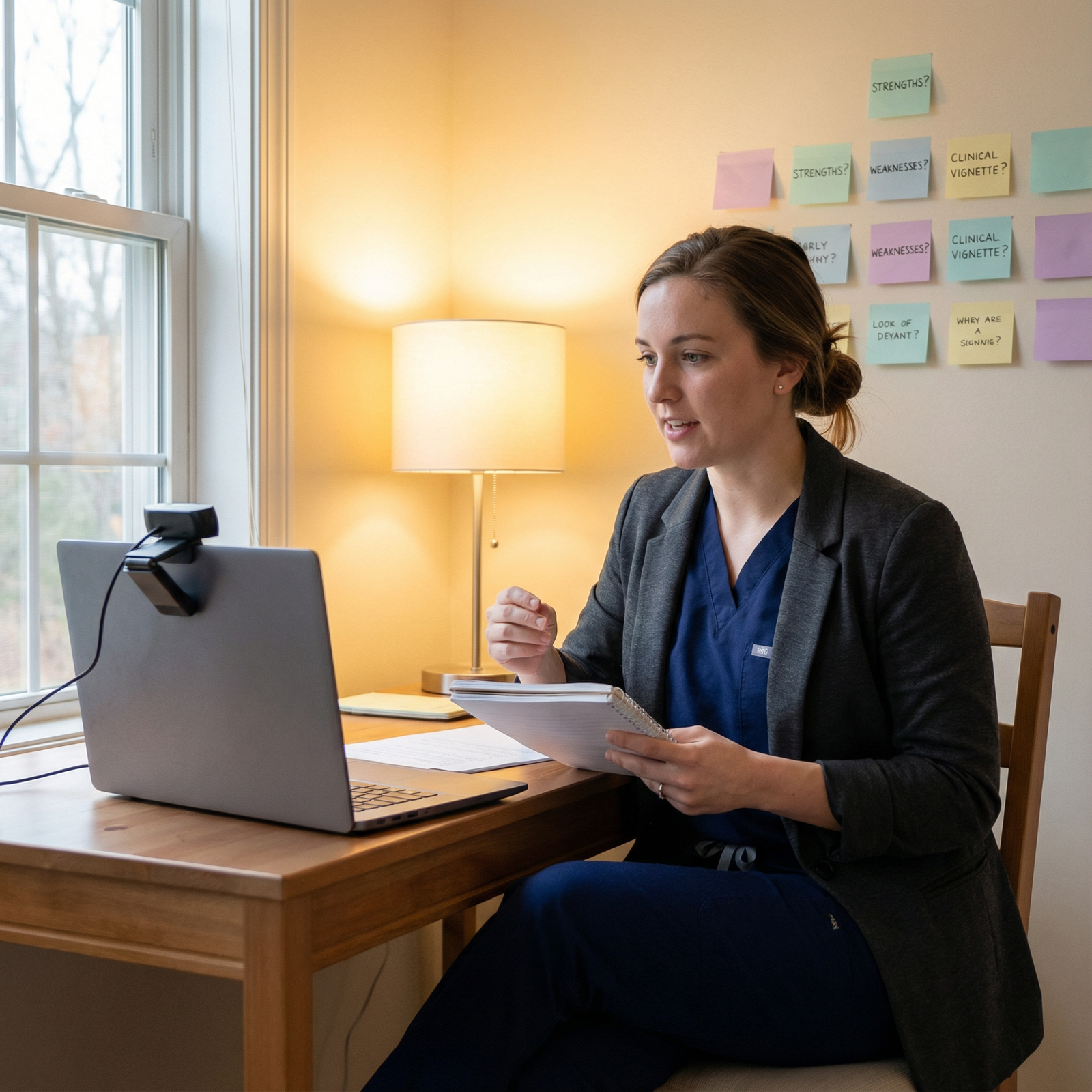
Understanding the Ophthalmology Residency Interview Landscape
Ophthalmology is one of the most competitive specialties in the allopathic medical school match. For an MD graduate residency applicant, the pre-interview preparation phase can make the difference between an average performance and a truly compelling one.
Unlike many other specialties, the ophtho match has:
- A separate, earlier application and interview timeline (often through SF Match)
- A relatively small number of spots per program
- High concentration of strong applicants, many with research and strong board scores
Because the applicant pool is so strong, your interview performance often becomes the key differentiator. Programs know that you have already met a high academic bar; what they want to understand is:
- Who you are as a colleague and future ophthalmologist
- How you think through clinical and ethical scenarios
- Whether you will fit and thrive within their team and training environment
This guide focuses on pre-interview preparation: what to do in the weeks and days before you step into the virtual or in-person interview room, so that you can perform confidently and authentically.
Step 1: Clarify Your Story and Motivation for Ophthalmology
Before any residency interview preparation, you must be crystal clear on your own story. For an MD graduate residency applicant in ophthalmology, this is non-negotiable because programs will always probe:
- “Why ophthalmology?”
- “Why not internal medicine/surgery/another field?”
- “Why this program?”
Build a Coherent Professional Narrative
Your narrative should connect:
Early exposure or interest
- Shadowing an ophthalmologist
- A personal or family experience with eye disease
- A favorite neuroscience or vision-related course
Medical school experiences that deepened your interest
- Ophthalmology elective or sub-internship
- Research in visual sciences, retina, glaucoma, cornea, neuro-ophthalmology, etc.
- Relevant extracurriculars (free eye clinics, screenings, community vision outreach)
Evidence of fit with the field
- Manual dexterity, attention to detail, comfort with microsurgery
- Longitudinal patient relationships (e.g., chronic glaucoma, diabetic retinopathy)
- Interest in technology, imaging, and innovation (OCT, lasers, surgical techniques)
Clear future goals
- Academic vs. private practice inclinations (even if you’re open-minded)
- Interest in specific subspecialties or patient populations
- Desire to contribute via research, quality improvement, global ophthalmology, or education
Actionable Exercise: 2-Minute Story
Write and rehearse a 2-minute personal narrative that answers:
- Who you are (brief background)
- How you discovered ophthalmology
- What confirmed this choice
- What you’re looking for in a residency
- Where you see yourself in 5–10 years in ophtho
You shouldn’t memorize it word-for-word, but you should be able to give a confident, natural version every time. This becomes your base for common interview questions residency programs ask about your motivations.
Step 2: Deep-Dive into Your Application and Ophthalmology Content
In an ophthalmology residency interview, anything in your application is fair game. Thoroughly knowing your own file is one of the most high-yield ways to prepare.
Know Your CV and Personal Statement Cold
Review:
- Every research project
- Every publication, poster, and presentation
- Major activities and leadership roles
- Key clinical experiences, especially ophthalmology rotations
For each entry, prepare to answer:
- What was the purpose of the project or role?
- What was your specific contribution?
- What did you learn?
- What would you do differently if you repeated it?
This is particularly important for the allopathic medical school match applicant who has multiple research experiences listed. Interviewers will quickly detect if you can’t discuss your own work.
Practice “Mini-Stories” for Key Experiences
For each standout item on your CV, prepare a 30–60 second mini-story:
- Situation: Context (What was going on?)
- Task: Your role
- Action: What you did
- Result: What happened and what you learned
For example, for a retina research project:
- Situation: “I joined a retina imaging study evaluating OCT-A findings in diabetic retinopathy.”
- Task: “I was responsible for data extraction and helped refine inclusion criteria.”
- Action: “I noticed variability in image quality, so I worked with the PI and imaging techs to develop a standard grading scheme.”
- Result: “This improved inter-rater reliability and led to a stronger manuscript, teaching me how small process improvements can meaningfully impact research quality.”
Refresh Core Ophthalmology Knowledge
You won’t be expected to know subspecialty-level details, but ophtho match interviewers appreciate when you have a solid foundation. Pre-interview, review:
- Basic eye anatomy: anterior segment, posterior segment, extraocular muscles, optic nerve
- Common conditions: cataract, glaucoma, diabetic retinopathy, AMD, retinal detachment, keratoconus, uveitis
- Basic eye exam concepts: visual acuity, IOP, slit lamp basics, fundus exam, visual fields
- Key systemic connections: diabetes, hypertension, autoimmune disease, neurologic conditions
You may get:
- Clinical scenario questions (e.g., “How would you approach a patient with acute vision loss?”)
- Questions about how your internal medicine knowledge integrates with ophthalmology
A quick review using:
- A concise ophthalmology review text or notes from your rotation
- Online videos or tutorials on eye exam technique and common pathology can boost your confidence substantially before interview day.

Step 3: Master Common Residency Interview Questions (With an Ophtho Twist)
Even though ophthalmology has its own unique features, the core categories of interview questions residency programs use are similar to other specialties. Pre-interview, you should systematically prepare for:
1. Motivation and Fit Questions
Examples:
- “Why ophthalmology?”
- “Why did you choose to apply to our program?”
- “What makes you a good fit for ophthalmology?”
- “What are you looking for in a residency program?”
Preparation tips:
- Link your answers to specific features of ophthalmology (microsurgery, imaging, visual function, impact on quality of life).
- For program-specific questions, use details from your research on the program (more on that later).
- Avoid generic answers that could apply to any specialty (e.g., “I like helping people”; instead, focus on restoring vision, chronic disease management, high-tech procedures).
2. Behavioral and Situational Questions
Programs want to see how you act in complex, real-world situations. Use the STAR method (Situation, Task, Action, Result) for structure.
Common types:
- Conflict: “Tell me about a conflict with a team member and how you handled it.”
- Failure: “Describe a time you failed or made a mistake in patient care.”
- Leadership: “Tell me about a time you led a team through a challenge.”
- Ethics: “Describe an ethical dilemma you faced in clinical work.”
Ophthol-specific twist:
- Think of situations during your ophtho clinic or OR experiences:
- A difficult patient upset about vision outcome
- Coordinating care with optometrists or retina/surgery colleagues
- Dealing with a complication or unexpected finding
Prepare at least 6–8 strong stories that can be adapted to multiple questions:
- 2–3 about teamwork/collaboration
- 2 about challenges/failures and growth
- 2 about leadership/initiative
- 1–2 about patient-centered care and communication
3. Strengths and Weaknesses
Examples:
- “What are your greatest strengths?”
- “Tell me about an area you’re working to improve.”
For strengths:
- Choose 2–3 that are highly relevant to ophthalmology:
- Fine motor skills and comfort with procedures
- Detail-oriented nature
- Patience and communication with elderly patients
- Problem-solving with complex diagnostic images
For weaknesses:
- Be honest but strategic. Avoid red flags like “I have trouble being on time.”
- Use a format:
- Genuine area of growth
- Specific steps you are taking to improve
- Evidence of progress
Example:
“In the past, I sometimes hesitated to speak up in large group settings. Recognizing that ophthalmology requires clear communication in multidisciplinary settings, I volunteered to present more frequently at case conferences and led a quality improvement presentation on diabetic eye screening. Over time, I’ve become more comfortable sharing my thoughts in front of a group and have received positive feedback from faculty.”
4. Career Goals and Future Plans
Examples:
- “Where do you see yourself in 10 years?”
- “Are you interested in fellowship training?”
- “How do you see your role in academic vs. community ophthalmology?”
You don’t need everything set in stone, but have:
- A plausible direction (e.g., “I’m very interested in retina or cornea, but open to exploring during residency.”)
- A connection to how the program can help you get there (strong surgical volume, research opportunities, mentorship, etc.)
Step 4: Research Programs Strategically and Prepare Personalized Questions
In the allopathic medical school match, particularly for competitive fields like ophthalmology, programs strongly value applicants who demonstrate genuine interest. Pre-interview research is essential.
How to Research Ophthalmology Residency Programs
Use:
- Official program websites
- SF Match and AAMC listings
- Faculty and resident profiles
- Recent publications from department faculty
- Social media (program Twitter/X, Instagram, etc., if used professionally)
Focus on:
- Clinical strengths (e.g., strong retina service, busy cornea transplant program, large glaucoma population)
- Surgical volume and training structure
- Call structure and graduated responsibility
- Research infrastructure (labs, trials, imaging)
- Resident life, culture, wellness resources
- Community and patient population
Create a one-page summary for each program:
- Unique features that resonate with you
- Names of key faculty whose work you know
- Specific clinics or rotations you’re excited about
- Any connection with your past experiences or goals
Prepare Strong Questions to Ask Interviewers
Programs judge you not only on how you answer questions but also on what you ask. Generic questions signal superficial preparation. Before each interview, prepare:
- 3–5 questions for faculty
- 3–5 questions for residents
Examples for faculty:
- “How does your program support residents interested in [retina/cornea/glaucoma/neuro-ophthalmology] research?”
- “Can you describe how surgical autonomy progresses from PGY-2 to PGY-4 in your program?”
- “What changes or improvements are you most excited about in the program over the next few years?”
Examples for residents:
- “What aspects of your training here best prepared you for independent practice or fellowship?”
- “How would you describe the culture among residents and between residents and faculty?”
- “Is there anything you wish you’d known about this program before you started?”
Avoid questions with answers easily found on the website unless you’re asking for additional nuance or updates.
Step 5: Simulate the Interview Environment and Format
Knowing how to prepare for interviews is not just about content; it’s also about format and delivery. Ophthalmology programs may use:
- Traditional one-on-one interviews
- Panel interviews
- Multiple mini-interviews (MMIs) in some institutions
- Virtual interviews via Zoom, Teams, or similar platforms
Conduct Mock Interviews
Schedule at least:
- 1–2 mock interviews with faculty (ideally in ophthalmology or other specialties)
- 1–2 with peers or mentors familiar with residency interview preparation
Ask for specific feedback on:
- Clarity and organization of answers
- Nonverbal communication (eye contact, posture, fidgeting)
- Tone (confident but not arrogant; enthusiastic but not rehearsed)
- Overuse of filler words (“um,” “like,” “you know”)
If your medical school offers a formal mock residency interview program, take advantage of it early in interview season.
Practice Answering Aloud, Not Just in Your Head
The brain often tricks us into thinking we’re prepared when we only rehearse internally. Pre-interview:
- Record yourself answering common questions
- Play back and look for:
- Rambling vs. concise answers
- Confusing explanations of research or projects
- Overly rehearsed or robotic delivery
Aim for:
- 1–2 minute answers for most questions
- 2–3 minutes for more complex behavioral or “tell me about yourself” questions
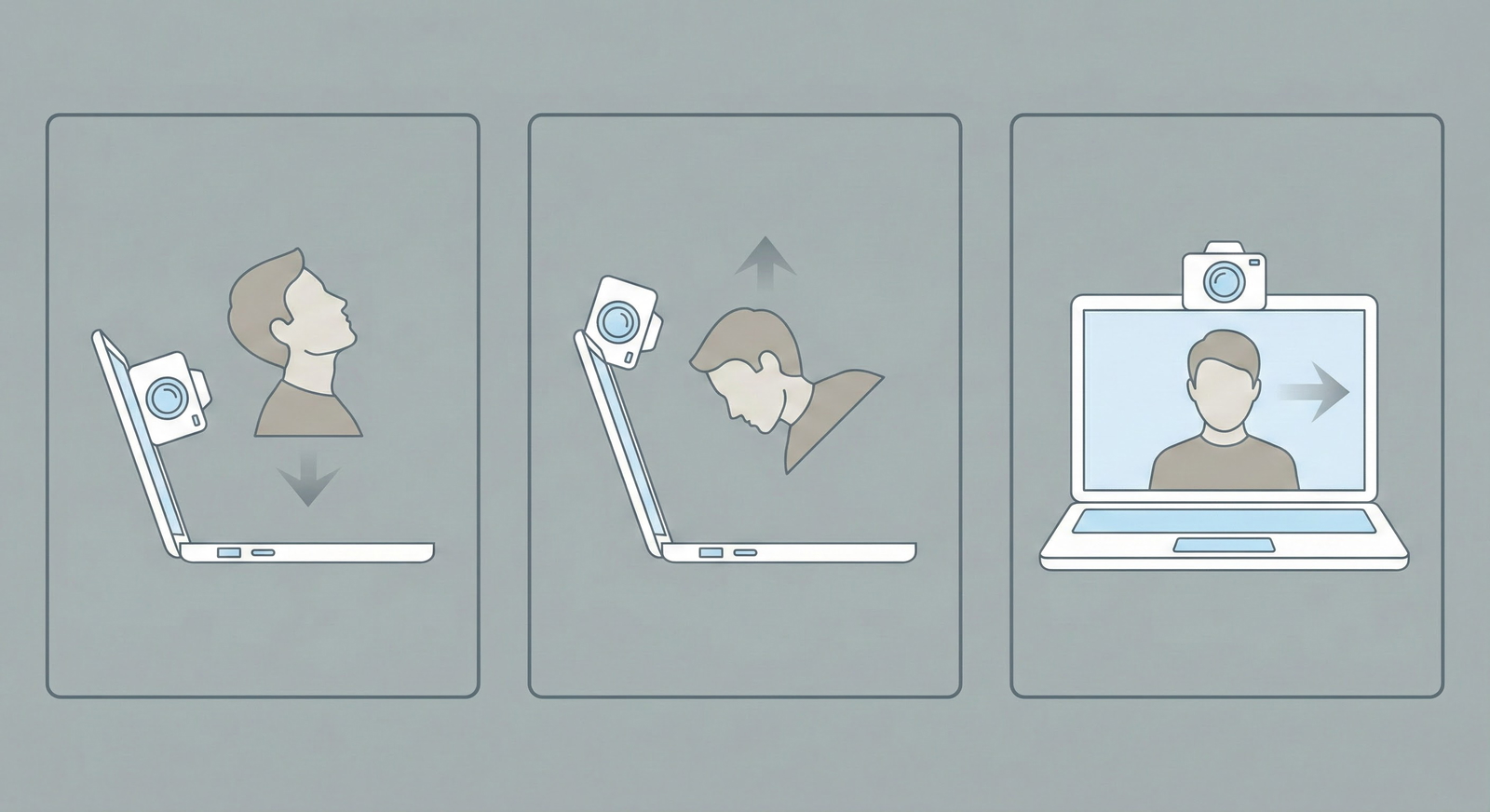
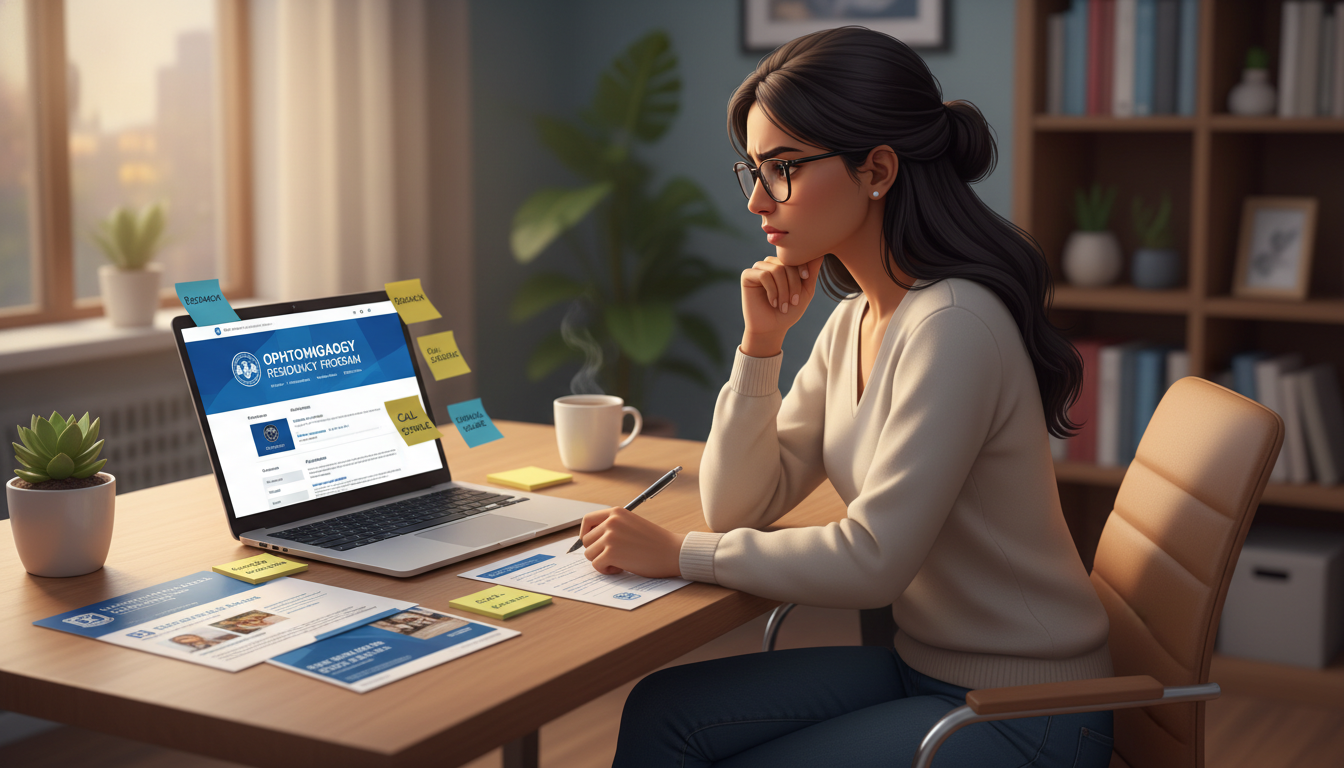
Prepare for Virtual Interview Logistics
For MD graduate residency applicants interviewing virtually:
- Choose a quiet location with reliable internet
- Use a neutral, uncluttered background (or professional virtual background if needed)
- Test your:
- Camera (eye level, good framing)
- Microphone (clear audio, no echo)
- Lighting (natural light from front or ring light; avoid strong backlighting)
Pre-interview checklist:
- Install and update Zoom/Teams or other required software
- Test the exact meeting link, login, and audio/video settings
- Have a backup device (tablet/phone) nearby in case of technical issues
- Keep program contact info handy to notify them promptly if something fails
For in-person interviews:
- Confirm transportation and lodging well in advance
- Look up parking, campus maps, and time to walk between buildings
- Aim to arrive 30–45 minutes early to buffer any unexpected delays
Step 6: Fine-Tune Professionalism, Attire, and Materials
Choose Specialty-Appropriate Professional Attire
For ophthalmology, standard residency interview attire is:
- Conservative, well-fitted suit (dark or neutral colors)
- Simple dress shirt or blouse
- Minimal jewelry, neutral makeup if worn
- Clean, polished shoes
For virtual interviews:
- Dress fully in professional attire (top and bottom), not just the visible half
- Avoid distracting patterns that may distort on camera
Prepare and Organize Your Materials
Have the following prepared and easily accessible (physically or digitally):
- Updated CV
- Personal statement
- List of programs with key notes and questions
- Spreadsheet or document to track:
- Interview dates
- Faculty you met
- Key impressions and quotes
- Follow-up items
For research-heavy applicants:
- A brief “elevator pitch” summary for each major project (question, methods, findings, your role)
Step 7: Mental Preparation, Mindset, and Posture as a Colleague
Ophthalmology is a close-knit field. Programs are not just selecting trainees; they’re choosing future colleagues they’ll likely interact with for years in a relatively small specialty community.
Adopt the “Future Colleague” Mindset
Instead of seeing yourself as a student being graded, approach interviews as:
- A professional conversation between peers at different stages
- An opportunity to understand if this environment fits your growth style
- A chance to showcase how you will contribute as a teammate
This mindset shift:
- Reduces anxiety and imposter syndrome
- Encourages you to ask more thoughtful, genuine questions
- Helps you project maturity and confidence
Manage Stress and Performance Anxiety
Pre-interview:
- Establish a simple routine:
- Light exercise the day before
- Reasonable sleep schedule
- Hydration and balanced meals
- Practice brief grounding techniques:
- Slow, deep breathing before logging on or entering the room
- Positive self-talk anchored in your preparation (“I know my story; I’ve done the work; I belong here.”)
Prepare for minor setbacks:
- If you stumble on a question, do not panic. You can:
- Pause, take a breath, and say, “Let me think for a moment.”
- Ask for clarification if the question is unclear.
- Redirect to something you know while still addressing the core question.
Frequently Asked Questions (FAQ)
1. How early should I start my ophthalmology residency interview preparation as an MD graduate?
Start at least 4–6 weeks before your first scheduled interview. Use the earlier weeks for:
- Deep review of your CV and personal statement
- Practicing core interview questions
- Refreshing ophthalmology fundamentals
Then, in the 1–2 weeks before each specific interview, focus on:
- Detailed program research
- Tailoring your question lists
- Practicing mock interviews, especially in the actual format (virtual vs. in-person) you’ll use.
2. Are ophthalmology residency interview questions very different from other specialties?
Many core interview questions residency programs use are similar across specialties (motivation, strengths/weaknesses, professionalism). However, ophthalmology may more often explore:
- Your comfort with microsurgery and procedures
- Experience with or interest in visual sciences
- Understanding of ophthalmology’s integration with systemic disease
- Reasons for choosing a relatively small and specialized field
Your preparation should therefore combine general residency interview preparation with ophthalmology-specific examples, stories, and knowledge.
3. How much ophthalmology medical knowledge is expected in residency interviews?
You are not expected to function at a resident level, but programs appreciate:
- A clear grasp of basic ophthalmology concepts
- Ability to discuss common conditions
- Evidence that you have seriously explored the field (via rotations, electives, or research)
Focus on being able to explain your experiences and interests clearly rather than memorizing obscure details. If presented with a clinical scenario you don’t fully know, describe how you would think through it systematically and when you would seek help.
4. What should I do after the interview day to strengthen my application?
Immediately after each interview:
- Write down:
- Faculty and residents you met
- Specific details you liked about the program
- Any concerns or lingering questions
- This will help later when forming your rank list and, if appropriate at your institution, writing any thank-you notes.
If you choose to send thank-you emails (following your medical school’s and programs’ guidelines):
- Keep them short, specific, and sincere
- Reference a particular topic or case you discussed
- Reiterate 1–2 reasons the program aligns with your interests
Finally, reflect on your own performance:
- What answers felt strong?
- Where did you feel less confident?
- Adjust your preparation accordingly for the next interview.
By investing thoughtfully in pre-interview preparation—clarifying your story, mastering your application, anticipating common questions, researching programs, and practicing your delivery—you put yourself in the best possible position to stand out in the highly competitive ophtho match. As an MD graduate residency applicant, you already bring a strong foundation; the interview is your chance to demonstrate that you are not only capable, but ready to become a trusted, thoughtful, and skilled future ophthalmologist.