Ophthalmology residency interviews move quickly, and it’s easy to walk away realizing you never asked the most important questions. Strong applicants don’t just prepare to answer questions—they come ready with thoughtful, targeted questions to ask programs in ophthalmology that show genuine interest and help them build a realistic rank list.
Below is a comprehensive, practical guide to questions to ask residency programs, tailored specifically to ophthalmology. You’ll find:
- Strategic categories of questions
- Sample phrasing you can adapt
- What the answers actually mean
- Which questions are best for residents vs. faculty vs. program directors
Use this as a menu, not a script. The goal is to choose questions that match your priorities and the stage of the ophtho match process you’re in.
Understanding Your Goals: Why Your Questions Matter
Before building your list of interview questions for them, clarify what you want to learn from each program. In ophthalmology, subtle differences can have a huge impact on your training experience and career trajectory.
Consider your priorities in these domains:
- Clinical exposure
- Volume and variety of pathology (retina vs cornea vs glaucoma vs oculoplastics, etc.)
- Balance of clinic, OR, and call
- Surgical training
- Hands-on opportunities early vs late
- Autonomy vs supervision
- Education and mentorship
- Teaching culture
- Faculty accessibility
- Research support
- Program culture and wellness
- Resident camaraderie
- Support on tough days, especially during busy call blocks
- Location and lifestyle
- Cost of living, commute, partner/family considerations
- Career outcomes
- Fellowship placement
- Job placement (academic vs private practice)
Once you’re clear on your priorities, you can tailor what to ask program directors, residents, and faculty to get the most useful, honest information.
Core Questions to Ask Program Directors and Faculty
Program directors (PDs) and faculty give you the “official” perspective: vision, structure, and how they see the program evolving. These questions to ask residency leadership help you understand if the program’s mission aligns with your goals.
1. Questions About Program Philosophy and Training Goals
These reveal what the program values and how they define success.
Sample questions:
- “How would you describe the type of ophthalmologist your program is designed to graduate?”
- “What would you say are this program’s greatest strengths compared to other ophthalmology residency programs?”
- “If I spoke with your graduates five years out, what do you hope they would say about their training here?”
- “How has the program changed over the last 3–5 years, and what changes do you anticipate in the near future?”
What to listen for:
- Specificity vs vague generalities
- Alignment with your goals (e.g., surgical excellence, academic careers, comprehensive community practice)
- Evidence of continuous improvement and adaptability
If a PD can clearly articulate the program’s identity and trajectory, that’s a good sign of stable, intentional leadership.
2. Questions About Clinical and Surgical Experience
In ophthalmology, the depth and breadth of hands-on training is critical. Avoid just asking about numbers (“How many cataracts?”). Ask questions that reveal how you’ll develop skills and autonomy.
Sample questions:
- “How do you structure residents’ progression of responsibility in clinic and the OR across the three years?”
- “When do residents typically start performing cataract surgery as primary surgeon?”
- “Can you walk me through a typical week for a first-year vs third-year resident?”
- “How do you ensure residents gain adequate exposure to subspecialties like retina, glaucoma, cornea, peds, and oculoplastics?”
- “Have recent graduates felt fully prepared for independent practice or fellowship from a surgical standpoint?”
Follow-up probes:
- “Could you share approximate ranges for cataract numbers and other key procedures in recent graduating classes?”
- “If a resident feels underexposed in a particular subspecialty, how flexible is the program in adjusting rotations?”
What to listen for:
- Structured progression vs random exposure
- Transparent discussion of surgical numbers and case mix
- Responsiveness to residents who want more experience in a particular area
This is one of the most important domains in any ophthalmology residency—make sure you leave interviews with a clear sense of the hands-on training.
3. Questions About Call, Workload, and Support
Ophthalmology call can be intense, particularly in trauma-heavy or tertiary referral centers. Your questions should help you understand the balance between strong clinical exposure and reasonable workload.
Sample questions:
- “How is call structured (home vs in-house, frequency, junior vs senior responsibilities)?”
- “What kind of support does a first-year have on call—for example, backup from seniors or attendings?”
- “How has the call schedule changed over time in response to resident feedback or ACGME requirements?”
- “On a typical clinic day, about how many patients does a resident see, and how much time do they have for notes and follow-up?”
What to listen for:
- Clear, specific structure (e.g., “q4 home call with backup,” “night float system”)
- Whether junior residents are adequately supervised and supported
- Awareness of burnout and policies to address it
Your goal isn’t to find a program with no call—that doesn’t exist—but to understand how the program balances learning, service, and wellness.
4. Questions About Education, Conferences, and Teaching
Programs vary widely in how they structure didactics. Ophthalmology has an enormous knowledge base, and your learning environment matters.
Sample questions:
- “How are didactics structured across the three years—lectures, case conferences, wet labs, journal clubs?”
- “How do you protect education time from clinical responsibilities?”
- “Do residents receive formal training in teaching medical students or junior residents?”
- “How does the program prepare residents for OKAPs and the written and oral boards?”
What to listen for:
- Protected time vs “when clinic is slow”
- A deliberate curriculum aligned with OKAPs and boards
- Opportunities to teach and present cases
Ask for concrete examples—e.g., weekly schedules, types of conferences—rather than accepting generic answers like “We have great didactics.”
5. Questions About Research and Academic Opportunities
If you’re academically inclined, or even just curious, ophthalmology offers a wide range of research opportunities. If you’re not research-oriented, you still want to know what’s required.
Sample questions:
- “What research opportunities are available for residents, and how do residents typically get involved?”
- “Is there a formal expectation or requirement for scholarly projects or presentations?”
- “Are there dedicated research blocks, or is research done alongside clinical duties?”
- “Could you share examples of recent resident projects or publications?”
What to listen for:
- Clear structure and support (mentorship, statisticians, funding)
- Flexibility for different interests (clinical, basic science, QI, education)
- Whether research is token (“required poster”) vs meaningful engagement
Match your questions to your goals—don’t oversell your research interest if you’re not truly committed, but do ask enough to understand how academic the program is.
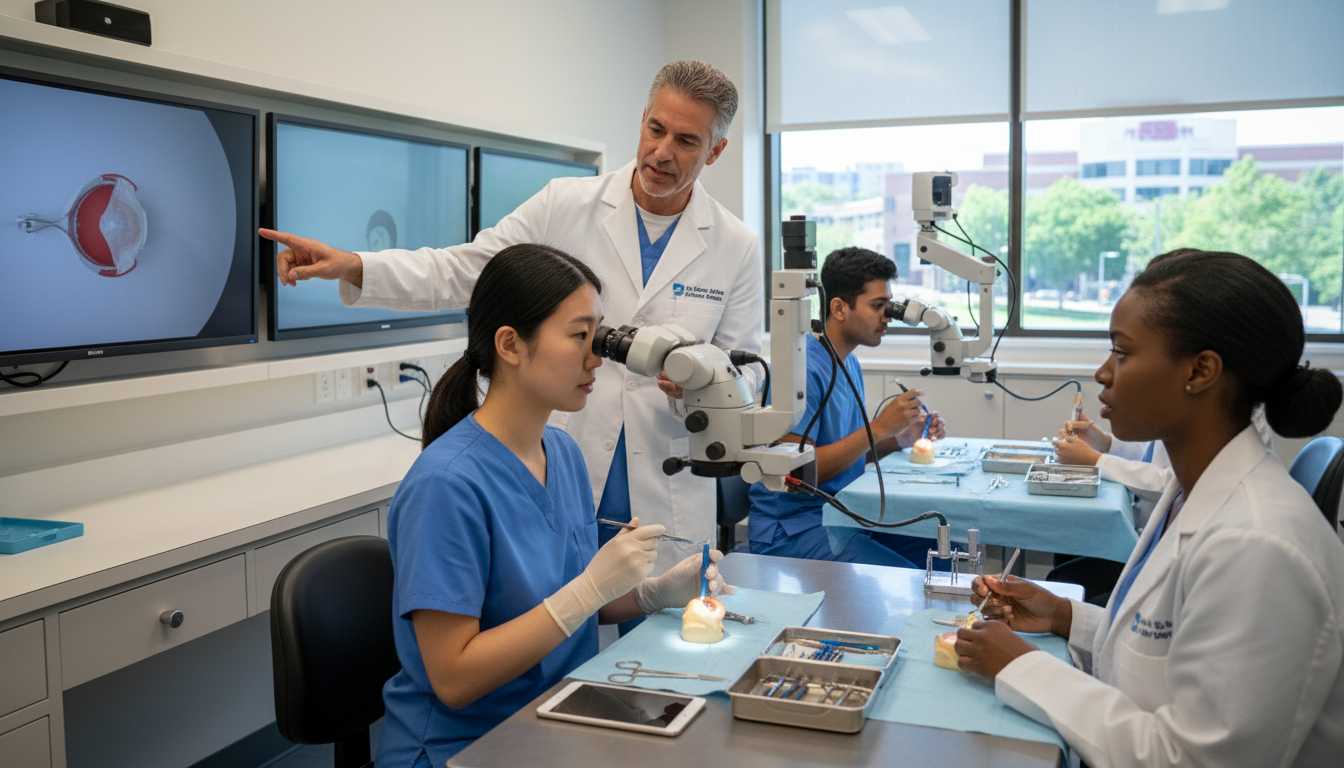
Essential Questions to Ask Residents: The Unfiltered View
Residents are your best source for learning what day-to-day life is truly like. They know the unwritten rules, the hidden strengths, and the real pain points.
1. Questions About Culture, Morale, and Support
You’ll spend three years immersed in this environment; you need to know how it feels from the inside.
Sample questions:
- “How would you describe the culture among residents here?”
- “What qualities do you think make someone a good fit for this program?”
- “If you could change one thing about the program, what would it be?”
- “Have there been any major challenges for residents recently, and how did the program respond?”
- “Do you feel comfortable going to leadership if you’re struggling, clinically or personally?”
What to listen for:
- Whether residents seem genuinely comfortable and collegial
- Specific examples of support (time off during crises, schedule adjustments, wellness resources)
- Honest acknowledgment of challenges, not just “Everything is perfect”
Pay attention to body language and tone as much as the words—do residents hesitate, glance at faculty nearby, or seem rehearsed?
2. Questions About Day-to-Day Workflow
These practical details often make or break your happiness.
Sample questions:
- “What does a typical day look like for a PGY-2 here? What time do you usually arrive and leave?”
- “How much autonomy do you have in clinic and the OR, and does it change a lot from PGY-2 to PGY-4?”
- “How do attendings differ in their teaching styles? Are most people hands-on, or do they let you try things independently?”
- “How well is ancillary support (scribes, techs, photographers, anesthesia) integrated into your workflow?”
What to listen for:
- Reasonable expectations vs chronic overwork
- Variability in attending teaching styles and whether residents adapt well
- Adequate support to focus on learning rather than purely clerical tasks
You’re trying to visualize yourself as a resident in that clinic or OR—does it seem energizing or draining?
3. Questions About Surgical Experience From the Resident Perspective
Residents will tell you how the numbers translate into confidence.
Sample questions:
- “How early did you feel like you started getting meaningful surgical experience?”
- “Do you feel on track surgically compared to your peers at other programs?”
- “Have there been residents recently who felt underprepared in any area, and how did the program handle that?”
- “How are complex or rare cases assigned—do seniors get them by default, or is there a fair system?”
What to listen for:
- Whether seniors feel confident entering fellowship or practice
- Whether juniors feel optimistic about reaching that same point
- Any patterns of residents scrambling for cases late in training
Residents can often provide more nuanced and emotionally grounded insight than faculty on this topic.
4. Questions About Life Outside the Hospital
Fit is not just about the hospital—it’s about where you’ll live your life.
Sample questions:
- “What do you like most and least about living in this city/area?”
- “Where do most residents live, and what’s the commute like?”
- “How manageable is the cost of living on a resident salary here?”
- “What do you all usually do for fun or to decompress outside of work?”
What to listen for:
- Whether residents have lives outside of residency
- Genuine enjoyment vs resignation about the location
- Practical issues (housing, transportation, safety)
Ophthalmology is demanding; having a supportive environment outside of work helps you sustain performance and well-being.
Strategic Questions to Refine Your Rank List
As you move deeper into the ophtho match cycle, your questions should become more focused on differentiation. These advanced questions to ask residency programs can reveal key distinctions between programs that might seem similar on paper.
1. Questions About Fellowship and Career Outcomes
Even if you’re undecided about fellowship, it’s valuable to see where graduates end up.
Sample questions (PDs/faculty):
- “What have your graduates pursued over the last 5–10 years in terms of fellowships and practice settings?”
- “How supportive is the program of residents applying for competitive fellowships like retina, cornea, and plastics?”
- “What kind of mentorship do residents receive when applying for fellowships or first jobs?”
Sample questions (residents):
- “How involved are faculty in helping you with fellowship/job applications and letters?”
- “Do you feel you have the network and support you need to reach your career goals?”
What to listen for:
- Consistent patterns of strong fellowship placement if that’s your goal
- Support for both academic and community career paths
- Active mentorship rather than residents “figuring it out alone”
2. Questions About Program Stability and Leadership
Residency is a multi-year commitment; you want reasonable confidence the program will remain strong throughout your training.
Sample questions:
- “How long have you been program director, and what are your main goals for the next few years?”
- “Have there been any major leadership changes or institutional shifts recently?”
- “How does the department interact with the broader institution—are there any big changes anticipated (new facilities, mergers, service line expansions)?”
What to listen for:
- Stable leadership with a clear vision
- Transparent acknowledgment of change and realistic plans
- Confidence from residents that changes have been navigated well
If there has been recent turmoil, your goal is to understand whether it’s stabilizing or still in flux.
3. Questions About Feedback, Evaluation, and Resident Voice
You want a program where you’re evaluated fairly and have a meaningful voice in improvements.
Sample questions:
- “How are residents evaluated clinically and surgically, and how often do they receive formal feedback?”
- “What mechanisms exist for residents to give feedback about rotations, faculty, and the program as a whole?”
- “Can you describe a specific example where resident feedback led to a concrete program change?”
What to listen for:
- Regular, constructive feedback rather than rare, high-stakes evaluations
- Genuine resident involvement in program improvement
- Evidence that leadership listens and acts
This is a key marker of a healthy training environment.
4. Questions to Avoid—or Ask Carefully
Some questions can come across poorly if asked at the wrong time or in the wrong way.
Overly aggressive questions about vacation or moonlighting on day one of interviews.
- Better: ask residents informally, or phrase neutrally:
- “How is vacation typically scheduled?”
- “Are there any moonlighting opportunities, and if so, how are they structured to maintain education as the priority?”
- Better: ask residents informally, or phrase neutrally:
Questions easily answered by the website or brochure, like:
- “How many residents per year?”
- “Do you have a glaucoma specialist?”
- Instead, build on that information:
- “I saw on your website that you have a strong glaucoma division. How involved are they in resident teaching and surgery?”
Overly negative or confrontational questions (e.g., “Why are your surgical numbers lower than other programs?”)
- Better:
- “How do you ensure residents meet or exceed surgical case minimums, and how have numbers trended over the last few years?”
- Better:
Putting It All Together: Interview Day Strategy
You don’t need to ask every question in this guide. The key is preparation and intentionality.
Step 1: Rank Your Priorities
Before interview season:
- List your top 5–7 priorities (e.g., surgical volume, city, fellowship placement, culture).
- For each priority, choose 2–3 questions that will reliably illuminate that domain.
Step 2: Tailor Questions Per Person
Think about what to ask program directors, faculty, and residents separately:
- Program director/faculty:
- Program philosophy, structure, outcomes, changes, vision
- Residents:
- Culture, day-to-day life, workflows, hidden strengths/challenges
- Fellowship directors or subspecialty faculty:
- Advanced training opportunities, niche interests, long-term mentorship
Step 3: Use Questions to Show Genuine Interest
Thoughtful questions signal that:
- You understand ophthalmology as a specialty
- You’ve done your homework
- You’re picturing yourself at their program
Instead of:
- “So, what questions should I be asking you?”
Try:
- “Based on where you see this program headed in the next 3–5 years, what kind of resident do you think will thrive here?”
Step 4: Take Structured Notes
Right after each interview day, jot down:
- Direct answers to your key questions
- Your gut feelings about culture and fit
- Standout positives and any red flags
Later, these notes will be invaluable when you’re building your rank list and trying to distinguish between strong programs.
FAQs: Questions to Ask Programs in Ophthalmology
1. How many questions should I ask during each interview?
Aim for 1–3 thoughtful questions per interviewer, depending on time. In a 15–20 minute interview, asking one strong question and one follow-up is often ideal. During resident-only sessions, you can ask more, but still try not to dominate the conversation.
2. Is it okay to ask about surgical numbers directly?
Yes—but do it in context. Rather than “What are your cataract numbers?”, try:
- “How do your residents’ cataract and key procedure numbers compare to national averages?”
- “What systems are in place to ensure all residents meet or exceed surgical case requirements?”
You can cross-check later with ACGME case logs or alumni if needed.
3. Can I ask about weaknesses of the program without sounding negative?
You can, if you phrase it constructively. For example:
- “Every program has areas it’s working to improve—what are the current priorities for improvement here?”
- “What feedback have you received from recent graduates, and how are you responding to it?”
This shows maturity and insight rather than criticism.
4. Should I ask the same questions at every program?
Have a core set of “comparison” questions you ask everywhere (e.g., surgical autonomy, call structure, fellowship outcomes) so you can compare programs fairly. But also tailor a few questions to each program’s unique features to demonstrate genuine interest.
Thoughtful, well-chosen questions to ask programs in ophthalmology do more than fill awkward silences—they help you evaluate fit, signal professionalism, and ultimately make a confident, informed decision in the ophtho match. Use this guide as a toolkit, adapt it to your personality and priorities, and you’ll be well-prepared to turn your interviews into real conversations about your future training.