Understanding the Pathology Residency Interview Landscape as an MD Graduate
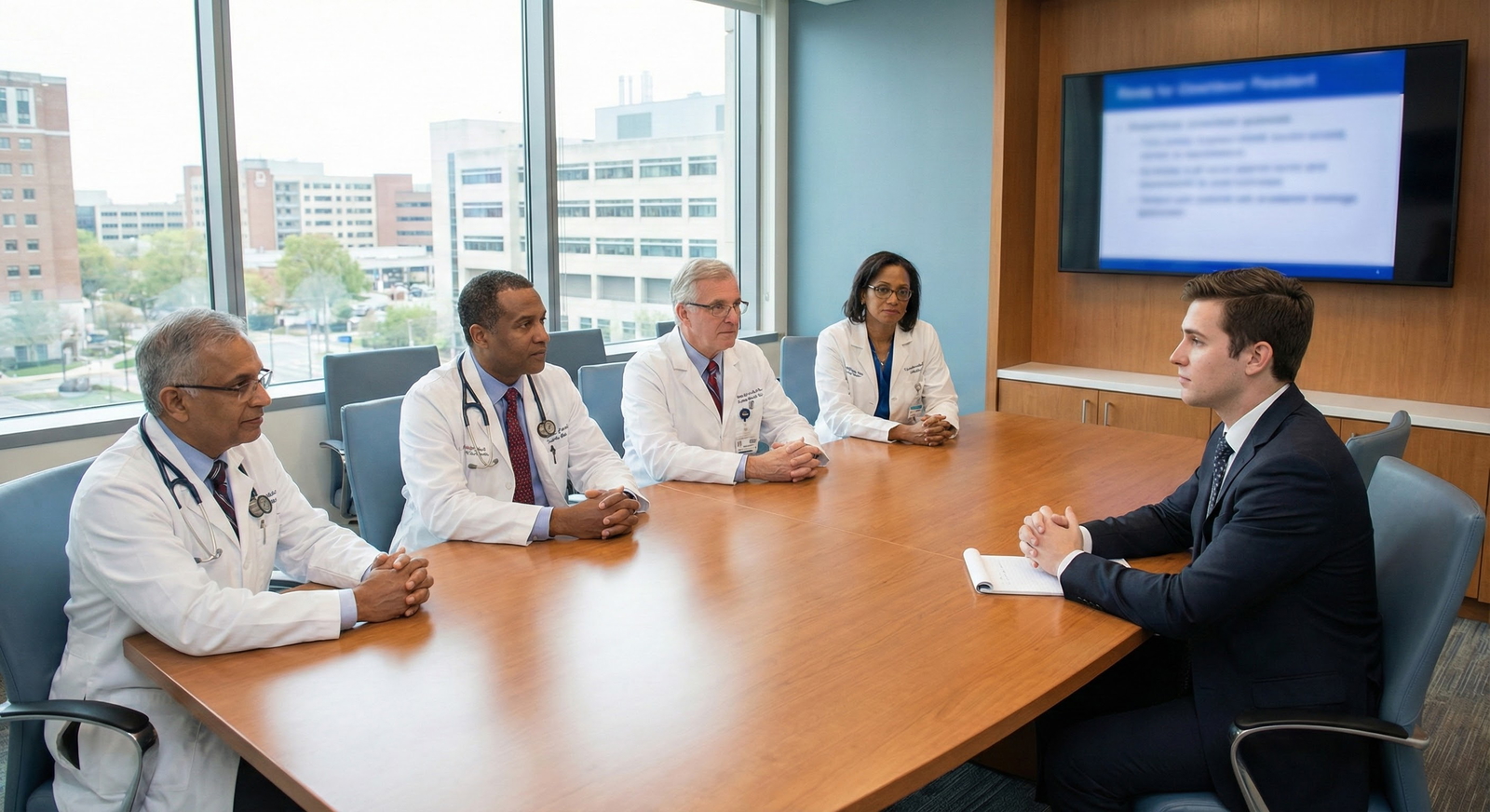
As an MD graduate preparing for pathology residency, your pre-interview preparation can significantly influence your chances of a successful allopathic medical school match. Pathology is a relatively small specialty, and programs often have a tight-knit culture. That means your professionalism, insight into the field, and fit with the department can stand out just as much as your board scores.
Before you dive into specific residency interview preparation strategies, it helps to understand:
What programs are evaluating:
- Your genuine interest in pathology as a career
- Your understanding of what pathologists actually do, day-to-day
- Your ability to work in a team (with clinicians, lab staff, residents)
- Your communication skills (written and verbal)
- Your maturity, resilience, and professionalism
- Your potential for academic productivity (research, QA/QI, teaching)
What’s unique for pathology applicants:
- Many interviewers will ask about your exposure to grossing, sign-out, autopsy, and lab medicine
- They may probe why you chose pathology instead of more “patient-facing” specialties
- They may ask how you handle detail-oriented, repetitive tasks and long-term case follow-up
- They often care about your comfort with technology, digital pathology, and data
Your goal in pre-interview preparation is to demonstrate that you are a thoughtful, motivated MD graduate who understands the realities of a pathology residency and is prepared to contribute meaningfully to a department.
Step 1: Deep Dive into Pathology as a Career
Many MD graduates underestimate how much programs will test their understanding of the specialty. Before you walk into any pathology residency interview, you should be able to speak clearly and confidently about the field.
Clarify Your Personal “Why Pathology?”
One of the most common interview questions residency programs ask in pathology is some version of:
- “Why pathology?”
- “What attracted you to pathology instead of another specialty?”
- “When did you decide to pursue pathology?”
You should be prepared with a concise, authentic narrative that connects:
- Your experiences (rotations, electives, research, mentors)
- Your personality and strengths (analytical, detail-oriented, enjoy puzzles, etc.)
- Your long-term goals (academic practice, community practice, fellowship interest)
Example structure:
- Initial exposure: “I first became interested in pathology during my second-year pathology course, when I realized I was drawn to diagnostic reasoning and patterns in histology.”
- Clinical confirmation: “During my third-year clerkships, I noticed I was always curious about the pathology behind the diseases we were treating, and I enjoyed reviewing pathology reports and imaging correlations.”
- Focused experiences: “My fourth-year elective in surgical pathology and my work with Dr. X in hematopathology research confirmed that I enjoy the microscopic work, the multidisciplinary tumor boards, and the role pathologists play in directing patient management.”
- Forward-looking statement: “I see myself in an academic pathology department, involved in diagnostic work, teaching residents and students, and contributing to translational research.”
Avoid generic phrases like “I like working behind the scenes” unless you can expand on them with specific, personal examples.
Understand the Day-to-Day of Pathology Residency
To prepare for interview questions residency programs ask about “What do you think pathology residents do?” you should:
- Talk with recent pathology residents or fellows (even via email or LinkedIn)
- Revisit your own pathology electives and take notes on what you saw
- Read a brief overview of AP/CP (anatomic pathology and clinical pathology) rotations at a few programs
Be ready to describe:
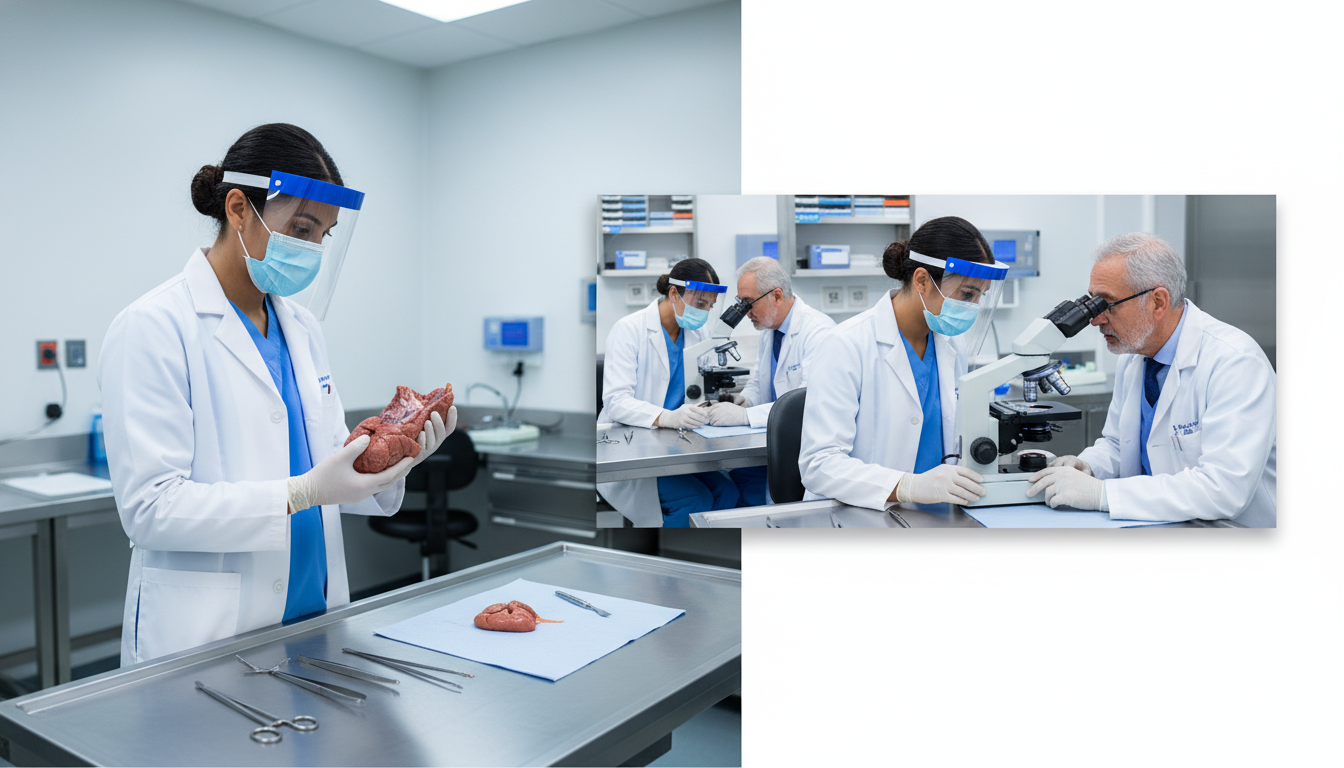
- Anatomic Pathology (AP):
- Grossing specimens
- Microscopic sign-out with attendings
- Frozen sections and intraoperative consultations
- Autopsies (where still done)
- Clinical Pathology (CP):
- Clinical lab management (chemistry, hematology, microbiology)
- Transfusion medicine and blood bank rotations
- Molecular diagnostics and cytogenetics
- Lab quality, regulations, and patient safety
You don’t need subspecialty-level knowledge, but you do need a realistic sense of the workflow to show you know what you are choosing.
Step 2: Program-Specific Research and Strategy
An MD graduate residency applicant in pathology should never walk into an interview with only superficial knowledge of the program. Program directors can immediately tell who has done their homework.
Build a Structured Research Template for Each Program
Create a simple one-page document per program (digital or printed) with:
Program basics:
- Location and primary hospital(s)
- Number of residents per year
- AP/CP vs AP-only vs CP-only offerings
- Length of training and typical call structure
Curriculum highlights:
- How are AP and CP rotations structured?
- Are there early subspecialty exposures (e.g., heme, derm, neuropathology)?
- Is there mandatory research time? How long?
Faculty and subspecialties:
- Major subspecialty divisions (e.g., GI, breast, cytopathology, molecular)
- Notable faculty whose interests align with yours (e.g., hematopathology, informatics)
- Division directors or vice-chairs you might meet
Research and academic environment:
- Recent resident publications or posters (often on program website)
- Ongoing projects in areas you care about (e.g., AI in pathology, molecular diagnostics)
- Presence of MD/PhD faculty and research institutes
Program culture and outcomes:
- Fellowship placement list for the last 3–5 years
- Mix of academic vs community job placements
- Reported strengths (e.g., strong CP training, heavy surgical pathology volume)
- Any known challenges (e.g., high workload, limited exposure to certain subspecialties)
This single-page summary is a powerful tool for residency interview preparation because it helps you:
- Customize your answers to “Why our program?”
- Ask specific, thoughtful questions
- Avoid confusing programs with one another on interview day
Tailor Your Talking Points to Each Program
Based on your research, jot down:
- 2–3 program-specific features that truly appeal to you
- 1–2 experiences in your background that align with those features
Example:
- Program strength: Robust hematopathology service and partnership with a major cancer center.
- Your background: Hematology-oncology research and an elective in hematopathology.
- Talking point: “I’m particularly interested in programs like yours with strong heme-path exposure and integrated cancer care, because my research in AML and elective with Dr. X highlighted how crucial specialized pathology input is for complex oncology cases.”
This level of specificity signals seriousness and fit during the pathology match process.
Step 3: Master Core Interview Questions for Pathology
Knowing how to prepare for interviews means anticipating the most common interview questions residency programs ask and aligning your answers with your application narrative and the expectations of a pathology residency.
Behavioral and Traditional Questions
Prepare concise, structured responses (often in STAR format: Situation, Task, Action, Result) to questions like:
- “Tell me about yourself.”
- 60–90 seconds, focused on your path through medical school, key experiences, and how they led you to pathology.
- “What are your strengths and weaknesses?”
- Strength: Choose one or two relevant to pathology (e.g., attention to detail, persistence, teamwork).
- Weakness: Be honest but professional, and describe specific steps you are taking to improve.
- “Describe a conflict you had with a team member and how you resolved it.”
- Emphasize communication, respect, and patient-centered thinking.
- “Tell me about a time you made a mistake.”
- Show insight, accountability, and what you learned.
Pathology-Specific Questions You Should Expect
Because you are applying to pathology, incorporate examples from your pathology exposure:
“What experiences confirmed your interest in pathology?”
- Reference specific rotations, sign-outs, or research projects.
- Mention what you found satisfying (e.g., correlating gross and microscopic findings, contributing to a multidisciplinary tumor board).
“How do you see the role of a pathologist in the healthcare team?”
- Emphasize:
- Diagnostic expertise
- Consultation with clinicians
- Lab stewardship and quality
- Patient safety and cost-conscious care
- Emphasize:
“What areas of pathology are you most interested in?”
- It’s okay to be undecided, but mention a couple of areas you found compelling (e.g., hematopathology, GI pathology, molecular diagnostics), and tie them to your experiences.
“How do you handle repetitive or detail-heavy tasks?”
- Show that you understand repetitive tasks (e.g., screening slides, reviewing lab reports) are essential to accuracy and safety.
- Highlight strategies to maintain focus and quality over time.
“Where do you see yourself in 5–10 years?”
- Have a realistic projection:
- Likely fellowship interest
- Academic vs community vs hybrid
- Possible involvement in teaching or research
- Have a realistic projection:
Addressing Red Flags and Gaps Proactively
If your application includes any potential red flags—such as:
- A gap year
- A USMLE/COMLEX failure or low score
- Limited pathology exposure
- A late decision to enter pathology
Prepare a direct, honest explanation:
- Provide context without making excuses.
- Emphasize what you learned and what has changed since.
- Highlight evidence of resilience and subsequent strong performance.
Practicing these explanations in advance can help you stay calm and concise during the interview.

Step 4: Practical Interview Skills and Logistics
Excellent content knowledge and introspection will only go so far if your delivery and logistics are unprepared. This section focuses on the practical side of residency interview preparation, especially in the era of virtual and hybrid interviews for the allopathic medical school match.
Mock Interviews: Your Most Effective Rehearsal Tool
Before your first real pathology residency interview, schedule at least:
1–2 formal mock interviews with:
- A faculty advisor
- A pathology mentor
- Your school’s career development office
2–3 informal practice sessions with:
- Peers applying to any specialty
- Friends or family, particularly for non-technical questions
Ask your mock interviewers to focus on:
- Clarity and concision of your answers
- Non-verbal communication: eye contact, posture, facial expressions
- Your ability to convey genuine enthusiasm and curiosity
- Overuse of filler words (“um,” “like,” “you know”)
- Any signs of defensiveness when asked tough questions
Record at least one session (with consent) and review your performance; this is one of the fastest ways to refine how to prepare for interviews effectively.
Preparing for Virtual Pathology Interviews
Most pathology residency programs have adopted some form of virtual interviewing. Take this as seriously as an in-person interview.
Technical checks:
- Reliable internet connection (consider a wired connection if possible)
- Working camera and microphone (test audio-video on the platform the program uses)
- Neutral, professional background (plain wall or tidy bookshelf; avoid clutter)
- Good lighting (soft light from in front, not behind)
Professional appearance:
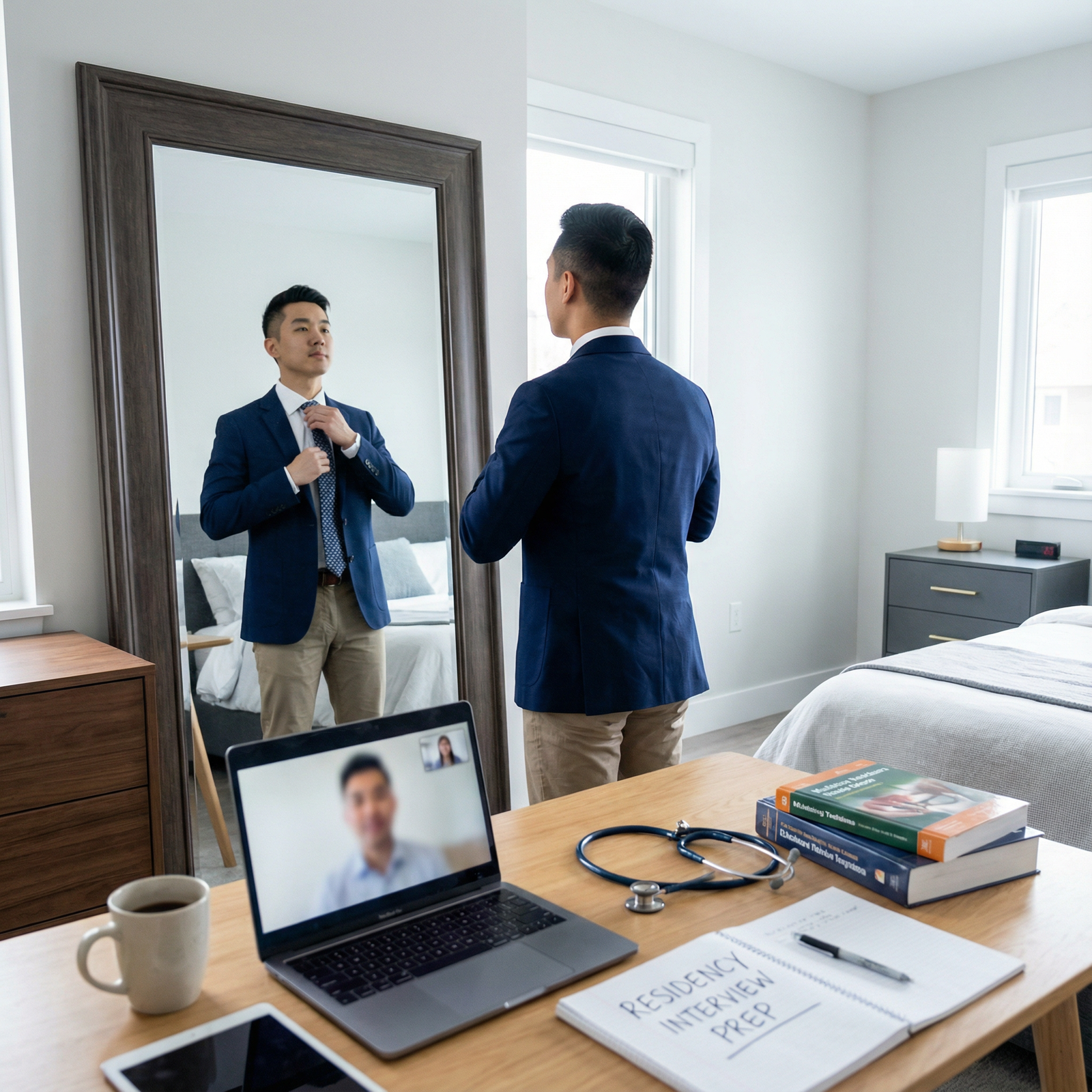
- Dress in business formal (suit jacket, dress shirt/blouse; tie optional but common for men)
- Avoid loud patterns or bright colors that distract on camera
- Maintain good posture and keep hands generally visible but not fidgeting
Environment:
- Quiet space with minimized interruptions (silence notifications, inform roommates/family)
- Water nearby
- Printed or digital copy of:
- Your CV and personal statement
- Program-specific notes and questions
Conduct a full “dress rehearsal” at least once to ensure you are completely comfortable with the setup.
Preparing for In-Person Interview Days (If Applicable)
If a program offers or requires in-person visits:
- Organize travel and lodging early; aim to arrive the night before to avoid delays.
- Confirm interview schedule and any social events (pre-interview dinners) with residents.
- Pack:
- Printed copies of your CV
- Notepad and pen
- Comfortable but professional shoes (you may walk a lot on tours)
- Allow extra time to find parking and the meeting location on the hospital campus.
During in-person tours, pay attention to:
- Resident workspaces and pathology labs
- Microscopes and grossing facilities
- Interactions between residents and faculty
- General mood: stressed, collaborative, supportive?
These observations will help you evaluate program fit beyond what’s said formally.
Step 5: Strategically Preparing Questions to Ask Programs
Thoughtful questions signal maturity, insight, and genuine interest. They are also your chance to gather critical data to guide your pathology match decisions.
Categories of High-Yield Questions
Prepare a set of questions grouped into categories:
Curriculum and Training:
- “How is time divided between AP and CP during the first two years?”
- “How much exposure do residents get to subspecialty sign-out versus general sign-out?”
- “Are there opportunities for residents to attend tumor boards or multidisciplinary conferences?”
Supervision and Autonomy:
- “How does resident responsibility grow from PGY-1 to PGY-4?”
- “Can you describe how independent sign-out is handled for senior residents?”
Call Responsibilities:
- “How is call structured here? Is it home call or in-house?”
- “What are typical call duties for pathology residents at your program?”
Research and Academic Opportunities:
- “What types of research projects do residents commonly participate in?”
- “Are there formal mentorship structures for residents interested in academic pathology?”
- “Is there funding or protected time for conference travel and presentations?”
Program Culture and Support:
- “How would you describe the relationship between residents and faculty?”
- “What qualities tend to characterize residents who thrive in this program?”
- “How does the program support resident wellness and work-life balance?”
Career Outcomes:
- “What fellowships have your recent graduates pursued?”
- “How does the program help residents prepare for fellowship applications?”
- “What proportion of your graduates go into academic vs community practice?”
Tailoring Questions for Different Interviewers
You’ll often meet a mix of:
- Program director/associate program director
- Core faculty
- Fellows
- Current residents
Match questions to the person:
- Program Director: Curriculum structure, evaluation, career outcomes, program vision
- Faculty: Subspecialty training, mentorship, research opportunities
- Residents: Day-to-day schedule, workload, culture, support, hidden strengths/weaknesses
- Fellows: Fellowship preparation, how well the residency prepared them, real-world experience
Avoid questions that can easily be answered on the program’s website unless you’re asking for clarification or deeper context.
Step 6: Final Pre-Interview Checklist and Post-Interview Strategy
As your pathology residency interviews approach, consolidate your preparation into a clear, actionable checklist.
1–3 Days Before Each Interview
- Review your:
- Personal statement
- ERAS application
- Research abstracts and publications (be prepared to discuss them)
- Re-read your one-page program summary and refine your:
- “Why this program?” talking points
- Targeted questions for faculty and residents
- Practice a rapid-fire review of:
- “Tell me about yourself.”
- “Why pathology?”
- “Why our program?”
- “What are your career goals?”
Prepare any required technology or travel logistics, including:
- Meeting platform links and backup plans
- Time zone conversions
- Directions and parking if in person
During the Interview Day
- Keep a notepad (physical or digital) to jot down:
- Names and roles of interviewers
- Key details about the program mentioned during the day
- Your immediate impressions (pros, cons, “feel” of the program)
- Maintain professionalism throughout:
- Resident-only sessions are still part of the evaluation (but also where you can get candid insights)
- Demonstrate:
- Curiosity (ask good questions)
- Collegiality (engage with other applicants respectfully)
- Enthusiasm for pathology as a career
Post-Interview Reflection and Thank-You Notes
After each interview:
- Within 24 hours, spend 10–15 minutes answering:
- What did I like most about this program?
- What concerns do I have?
- How did I feel about the residents’ satisfaction and faculty support?
- Could I see myself living in this location for several years?
These notes will be invaluable when creating your rank list during the pathology match.
Regarding thank-you notes:
- Many allopathic medical school match programs indicate that thank-you emails are optional.
- If you choose to send them:
- Keep them short and specific (2–4 sentences).
- Mention one or two points from your conversation.
- Send within 2–3 days.
- Do not use thank-you notes to attempt to negotiate rank or make misleading “I will rank you #1” statements.
FAQs: Pre-Interview Preparation for MD Graduates in Pathology
1. How much pathology experience do I need before interviewing?
Programs understand that not every MD graduate had extensive pathology rotations. However, they do expect:
- At least one meaningful exposure to pathology (elective, observership, research, or a generous pathology presence in your clerkships).
- A thoughtful understanding of why pathology fits you.
- The ability to articulate what pathologists do and what residency entails.
If your exposure is limited, emphasize the quality of your experiences and demonstrate you have actively sought information (speaking to pathologists, reading, attending pathology conferences).
2. What kinds of interview questions residency programs in pathology typically avoid?
Most programs will not ask:
- Highly technical pathology questions aimed at “pimping” you.
- Personal questions unrelated to training (e.g., marital status, plans for children, immigration status, etc.). If such questions arise, you can politely redirect and answer only what you feel comfortable sharing.
Pathology residency interviews are generally conversational and focus on your motivation, experiences, and fit with the program.
3. How should I discuss research if I have limited or no publications?
Be honest and specific:
- Highlight any scholarly activity you have: poster presentations, QA/QI projects, case reports, or data collection.
- Emphasize skills you gained: critical thinking, literature review, working in teams, perseverance.
- If you lack research, express interest in participating in future projects and ask about resident research opportunities during interviews.
Programs in pathology often value curiosity and willingness to engage more than an extensive publication list, especially for MD graduate residency applicants early in their careers.
4. How different is residency interview preparation for pathology compared to more clinical specialties?
Core principles—professionalism, clear communication, self-awareness—are the same. Differences include:
- Greater emphasis on understanding a lab-based, diagnostic specialty rather than direct patient care.
- More discussion of AP/CP structure, lab management, and subspecialty interests.
- Less focus on bedside skills and more on analytic thinking, attention to detail, and comfort with behind-the-scenes work.
If you structure your preparation around understanding the specialty, researching programs, practicing common questions, and refining your delivery, you’ll be well-positioned for successful pathology residency interviews and a strong allopathic medical school match outcome.