Preparing for a pediatrics residency interview begins long before you shake hands with the program director or log into Zoom. Strong pre-interview preparation can turn a decent application into a compelling, memorable impression—and in a competitive peds match, that can make all the difference.
Below is a structured, step-by-step guide tailored specifically to pediatrics applicants, focusing on what you should be doing in the weeks leading up to interview day.
Understanding the Purpose of Pediatrics Residency Interviews
Before diving into how to prepare for interviews, it helps to understand what pediatrics programs are trying to evaluate.
What Programs Are Really Looking For
In pediatrics residency, interviewers are assessing:
Commitment to pediatrics
- Do you understand what day-to-day pediatric care involves?
- Have you sought out experiences that confirm your interest in working with children and families?
Interpersonal and communication skills
- Can you build rapport quickly?
- Are you able to explain complex issues clearly and empathetically—skills crucial for interacting with both kids and their caregivers?
Teamwork and professionalism
- Pediatrics is highly collaborative, involving nurses, social workers, therapists, and subspecialists.
- Interviewers want to see humility, reliability, and respect for others.
Self-awareness and teachability
- Can you reflect honestly on your strengths and weaknesses?
- Are you coachable, open to feedback, and motivated to grow?
Alignment with the program’s mission
- Does your story fit what the program values—community health, advocacy, complex tertiary care, academic research, etc.?
Keeping these goals in mind will help you shape your preparation and responses in a targeted way.
Step 1: Know Your Application Better Than Anyone Else
Everything you’ve submitted can—and likely will—be fair game in your residency interview. A key part of pre-interview preparation is a deep, honest review of your own file.
Review Your Personal Statement
Re-read your pediatrics personal statement carefully:
Identify your core themes
- Why pediatrics? (e.g., continuity of care, preventive medicine, child development, advocacy)
- What values define you as a future pediatrician? (e.g., compassion, curiosity, equity, cultural humility)
Prepare to expand on your stories
- If you shared a specific patient encounter, think: What did you learn? How did it influence your approach to children and families?
- Avoid repeating the same narrative word-for-word—interviewers want deeper reflection.
Action step: Write out 2–3 bullet points under each major story in your personal statement that highlight:
- What happened
- How it shaped your interest in pediatrics
- What it reveals about your character or values
Revisit Your ERAS Experiences and Activities
Interviewers often scan your activity list while you talk.
Know your timeline
- Be prepared to explain gaps, transitions, or changes (e.g., extra research year, specialty switch, leave of absence).
Prepare for “Tell me about…” prompts
- Clinical experiences with children (wards, NICU, PICU, outpatient)
- Research projects, especially those related to pediatrics or child health
- Leadership and teaching roles (tutoring, mentoring, volunteering with kids)
- Community service or advocacy (school-based programs, vaccine drives, shelters)
For each activity, outline:
- Your specific role and responsibilities
- A challenge you faced and how you addressed it
- A key skill you developed (e.g., communication with families, working in a team, time management)
- How it prepared you for pediatrics residency
Know Your CV and Any Red Flags
If you have anything that might raise questions—USMLE/COMLEX failures, repeated coursework, a leave of absence—prepare a calm, concise explanation that includes:
- What happened (factual, no excuses)
- What you learned
- What has changed in your habits or systems since then
- How your later performance shows growth
Practicing this ahead of time prevents you from getting flustered in the moment.
Step 2: Deep-Dive into Each Pediatrics Program
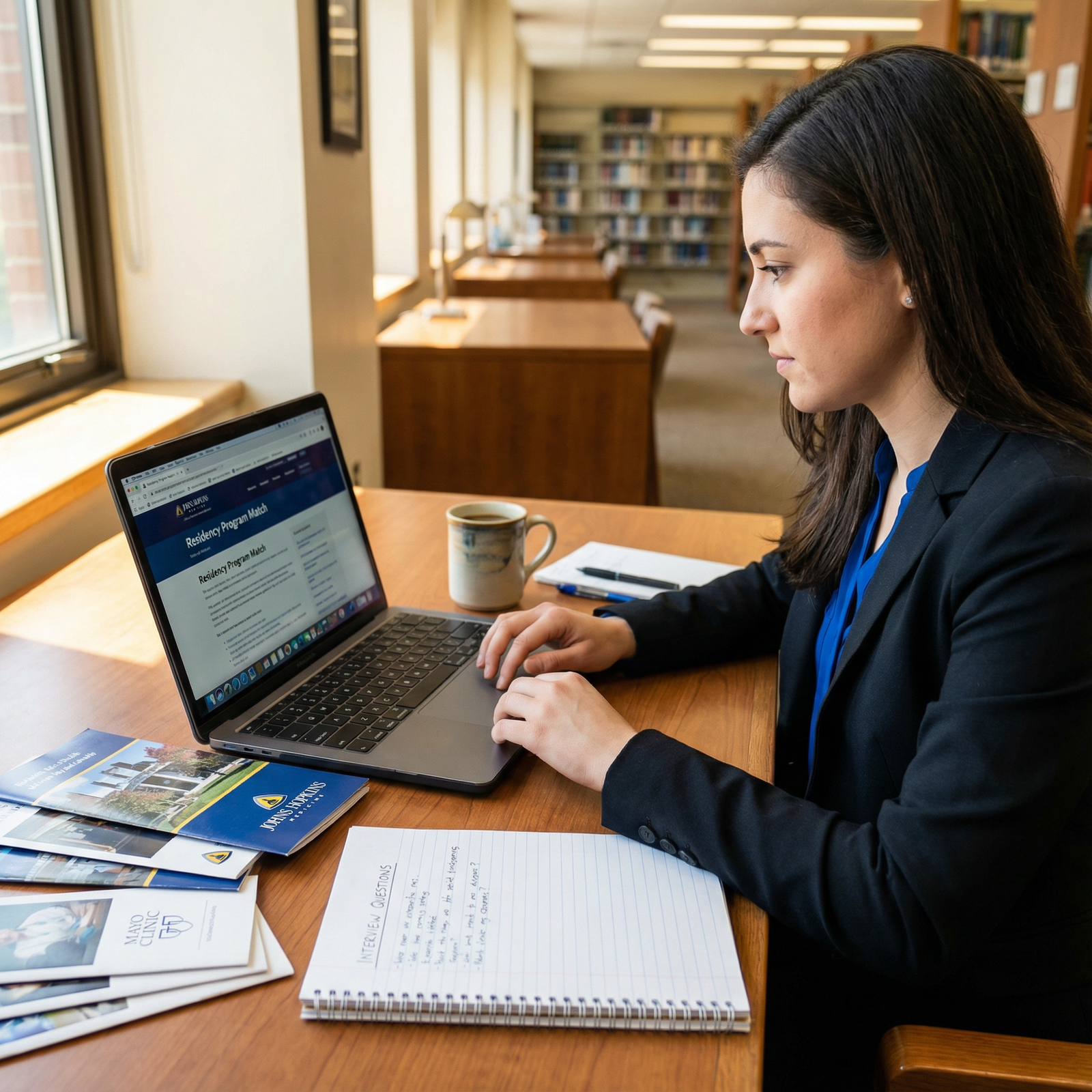
Thorough program research is one of the most important components of residency interview preparation—and a common area where applicants underprepare.
What to Research About Each Program
Create a simple template (spreadsheet or note) for each program with sections like:
Program structure
- Size of the residency (small, medium, large)
- Call schedule and rotation structure (ward months, NICU/PICU, electives)
- Continuity clinic model (community clinic, academic clinic, FQHC)
Clinical focus areas
- Strong general pediatrics vs. subspecialty presence
- Level of NICU and PICU
- Exposure to underserved populations, rural outreach, global health
Educational environment
- Morning report, noon conferences, simulation curriculum
- Mentorship structure (advisors, scholarly mentors)
Program culture
- Mission and values (diversity, advocacy, research, primary care)
- Resident wellness initiatives
- How residents describe the program in online videos, social media, or forums
Location and community
- Patient population (urban, suburban, rural, immigrant, low-income)
- Opportunities for advocacy or community engagement
Where to look:
- Program website (curriculum, resident roster, leadership bios)
- Social media (Instagram, X, YouTube for resident life and culture)
- Program brochures or virtual open-house recordings
- Publications or community projects related to child health
Using Your Research Strategically
Your pre-interview preparation should go beyond passive reading—convert research into talking points.
For each program, prepare:
3 reasons you are genuinely interested in this program, each tied to something specific:
- “I appreciate your strong emphasis on community pediatrics and school-based clinics…”
- “I’m especially drawn to your robust NICU experience and early exposure to high-acuity pediatric care…”
2–3 program-specific questions that show you have done your homework:
- “I saw that your residents participate in a longitudinal advocacy curriculum. Could you share an example of a project a recent resident led?”
- “I noticed you have a strong refugee health clinic; how are residents involved, and what support is there for trauma-informed care training?”
This not only helps you stand out but also clarifies whether a program truly fits your goals.

Step 3: Mastering Common Pediatrics Residency Interview Questions
A central part of residency interview preparation is anticipating and practicing the most common interview questions residency programs use—especially those that highlight your fit for pediatrics.
Classic General Questions (and How to Approach Them)
“Tell me about yourself.”
- Keep it 2–3 minutes.
- Use a simple structure:
- Where you’re from / a core aspect of your background
- Key experiences that led you to medicine, then pediatrics
- Who you are now as a future pediatrician and what you’re seeking in residency
“Why pediatrics?”
- Go beyond “I love kids.”
- Incorporate:
- Specific experiences (e.g., continuity with families, NICU experience, school-based programs)
- Alignment with pediatric values (prevention, advocacy, early intervention)
- Your long-term vision (primary care pediatrics, hospitalist, subspecialty, advocacy, academic medicine)
“Why this program?”
- Use your research.
- Connect your goals to specific features of the program.
- Avoid generic statements that could apply to any residency (e.g., “strong teaching” or “supportive environment” without elaboration).
“What are your strengths and weaknesses?”
- Choose 2–3 strengths that are valuable in pediatrics (e.g., patience, communication, cultural humility, teamwork).
- For weaknesses:
- Pick something real but not disqualifying (e.g., perfectionism, difficulty delegating, overcommitting).
- Describe concrete steps you are taking to improve.
- Show progression over time with a brief example.
Pediatrics-Specific Interview Questions
Programs often probe your comfort and insight into pediatric care. Examples include:
- “Tell me about a memorable pediatric patient encounter.”
- “How do you approach talking with parents when you disagree with their decisions?”
- “How would you handle a situation where a family refuses vaccines?”
- “What challenges do you foresee in caring for adolescents?”
- “How do you adjust your communication when speaking with a 4-year-old vs. a 14-year-old?”
When answering:
- Emphasize developmentally appropriate communication.
- Show understanding of family dynamics and shared decision-making.
- Convey empathy and nonjudgment, while still respecting evidence-based care.
- Highlight your awareness of social determinants of health (housing, access, food, safety, school).
Behavioral Questions Using the STAR Method
Behavioral questions evaluate how you’ve acted in real situations:
- “Tell me about a time you made a mistake.”
- “Describe a conflict with a team member and how it was resolved.”
- “Tell me about a time you advocated for a patient.”
- “Describe a stressful situation and how you handled it.”
Use the STAR format:
- Situation – Brief context
- Task – Your role or responsibility
- Action – What you did (focus here)
- Result – What happened and what you learned
Example (advocacy-focused):
- Situation: A teenager with poorly controlled asthma frequently missing appointments.
- Task: As the student on the team, you were responsible for helping coordinate follow-up.
- Action: You explored social barriers (transportation, parental work schedule), involved social work, arranged for a school-based nurse to assist, and scheduled telehealth visits.
- Result: The patient attended follow-up appointments and had fewer ED visits; you learned the importance of holistic, team-based care.
Ethical and Scenario-Based Questions in Pediatrics
Pediatrics often raises complex ethical considerations:
- “An adolescent comes alone and asks for contraception but does not want their parents to know. How do you respond?”
- “A parent insists on antibiotics for a viral illness—what do you do?”
- “You suspect child abuse. How do you proceed?”
When approaching these:
- Ground your answer in:
- Safety of the child
- Confidentiality laws (acknowledging variation by jurisdiction)
- Clear communication and education
- Involvement of the appropriate team members (attending, social work, CPS when required)
Mention that, as a resident, you would:
- Ensure immediate safety
- Involve your attending
- Follow institutional protocols and legal requirements
- Document carefully and objectively
Step 4: Structured Practice and Mock Interviews
Knowing how to prepare for interviews is different from actually practicing. Structured rehearsal helps your answers feel natural rather than memorized.
Create a Personal Question Bank
Build a list of questions to practice regularly, including:
- General questions (tell me about yourself, why pediatrics, why this program)
- Behavioral questions (team conflict, leadership, stress, mistakes)
- Pediatric-specific communication and ethics scenarios
- Questions about your research, QI projects, or leadership experiences
- “Curveball” questions (something unique or unexpected you’ve been asked before)
Add questions after each interview to refine your list for future practice.
Mock Interviews: Who and How
Who to practice with:
- Mentors in pediatrics (faculty or fellows)
- Chief residents or senior residents
- Career advisors or your school’s residency prep office
- Peers applying into pediatrics or other specialties
How to structure mock interviews:
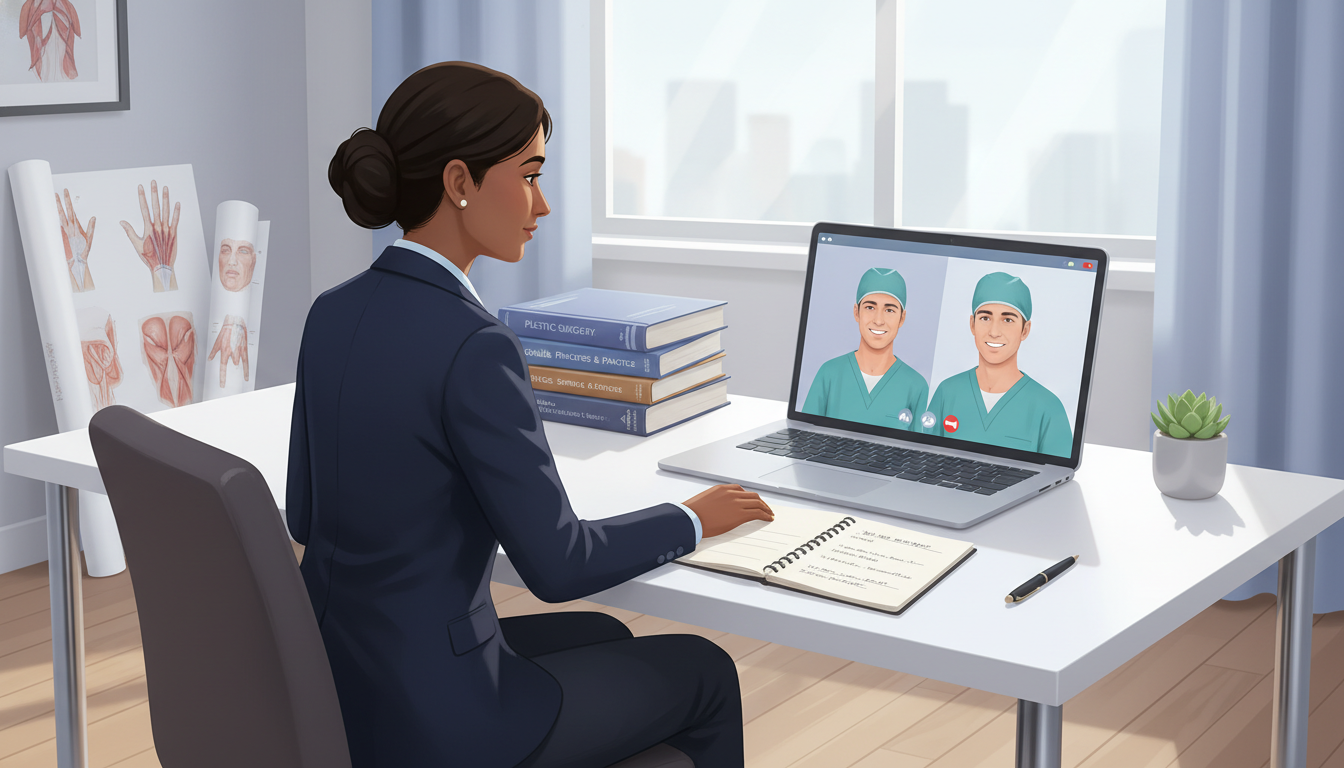
Simulate real conditions:
- Wear interview attire
- Use a similar platform (Zoom, Teams) or in-person setup
- Time your responses (aim 1–2 minutes for most answers)
Ask for targeted feedback on:
- Clarity and organization
- Nonverbal communication (eye contact, posture, hand gestures)
- Use of specific pediatric examples
- Whether your interest in pediatrics and the program feels genuine
Recording and Self-Review
If possible, record yourself (especially for virtual interviews):
- Note filler words (“um,” “like,” “you know”)
- Check if you speak too fast or too softly
- Watch your facial expressions and body language
- Evaluate whether your answers actually address the question asked
Focus on one or two improvement goals each session so the process doesn’t become overwhelming.

Step 5: Logistics, Presentation, and Mindset
Even the best content can be overshadowed by disorganization or appearing unprofessional. Pre-interview preparation also includes meticulous attention to details around presentation and logistics.
Professional Appearance for Pediatrics Interviews
Pediatrics tends to be slightly more relaxed in culture, but residency interviews are still formal.
Attire
- Neutral-colored suit (navy, charcoal, black) or equivalent professional outfit.
- Simple shirt or blouse (avoid loud patterns).
- Comfortable, clean shoes.
- Minimal, professional accessories.
Grooming
- Clean, neat appearance.
- Hair styled away from the face.
- If you wear makeup or jewelry, keep it subtle; the goal is to look polished, not flashy.
Consider that programs may imagine you in a clinic interacting with children and parents—professional, approachable, and calm.
Virtual Interview Setup (If Applicable)
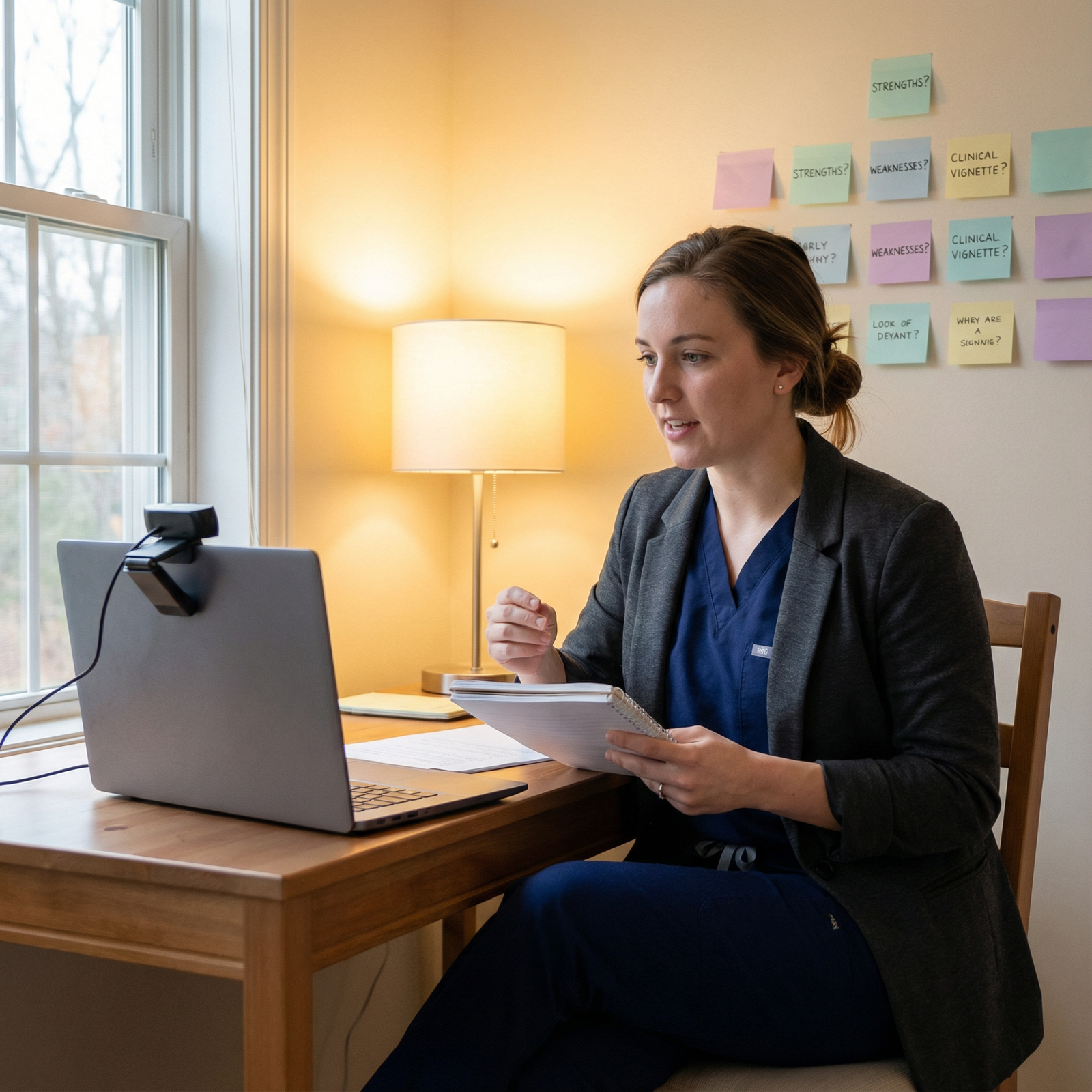
For remote pediatrics residency interviews, your environment matters:
Space
- Quiet, private area with a neutral or professional background.
- Avoid clutter or distracting decorations.
Lighting
- Face a light source or window.
- Avoid intense backlighting that causes silhouette.
Technology
- Test your internet connection, camera, microphone, and platform (Zoom, Teams, etc.).
- Have a backup plan (phone hotspot, alternative device) if possible.
- Close unnecessary applications to prevent notifications and lags.
Materials
- Printed or digital copy of your CV and personal statement.
- Brief notes about the program (key points and questions).
- Pen and notebook for jotting down names or follow-up points.
Time Management and Scheduling
If you have multiple interviews:
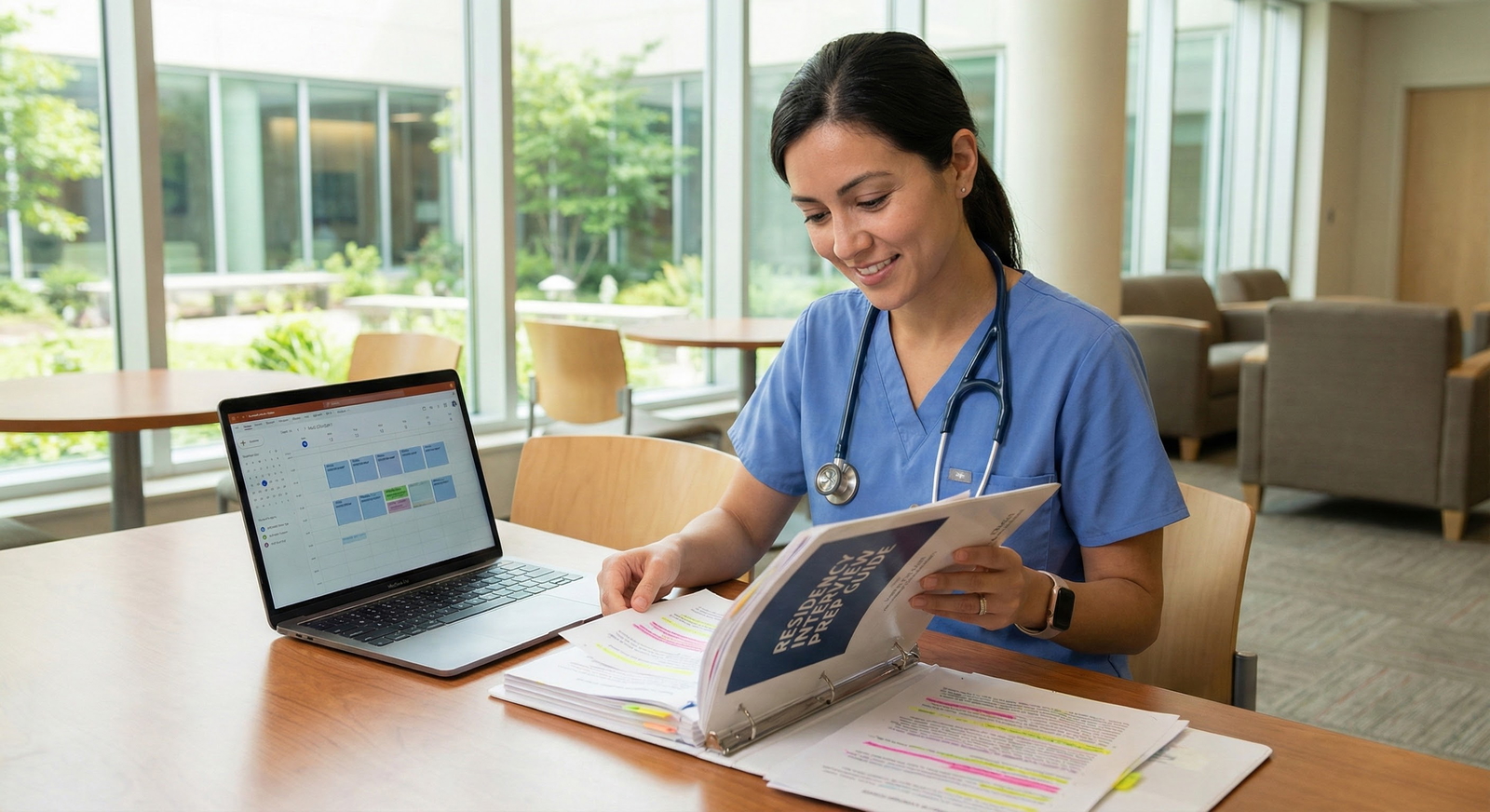
Keep a central calendar with:
- Dates and times (and time zones)
- Interview format and schedule
- Names of interviewers if provided
Allow buffer time:
- At least 15–20 minutes before each interview session to log in, center yourself, and review notes.
- Avoid scheduling interviews back-to-back when possible, especially on the same day.
Plan around major exams, clinical responsibilities, and personal obligations to reduce stress.
Mental Preparation and Self-Care
Residency interview season can be intense. Pre-interview preparation includes safeguarding your mental and physical health:
Maintain regular sleep, meals, and exercise as best you can.
Practice brief grounding or breathing techniques before each interview:
- 4-count inhale, 4-count hold, 4-count exhale.
- A short walk or stretching routine.
Reframe nerves as excitement and investment in your future.
Remind yourself: Programs invited you because they already see you as capable. The interview is about fit, not proving your worth from zero.
Step 6: Preparing Thoughtful Questions for Your Interviewers
Nearly every pediatrics residency interview will end with, “What questions do you have for us?” This is both a chance to learn and to demonstrate genuine interest.
Types of Questions to Prepare
Aim for 3–5 good questions per program, then choose what fits each interviewer.
For Program Directors / Associate PDs:
- “What qualities do you think distinguish your residents?”
- “How has your program evolved in recent years, and what changes do you anticipate in the next few years?”
- “How do you support residents who are interested in advocacy / research / global health / medical education?”
For Pediatric Faculty Interviewers:
- “How do you see residents integrate into your clinical team?”
- “What opportunities are there for residents to get involved in quality improvement projects or teaching medical students?”
- “How does the program support residents developing a niche or academic interest?”
For Chief Residents or Current Residents:
- “What does a typical day look like on wards, NICU, and your continuity clinic?”
- “What are the strengths and growth areas of the program?”
- “How does the program respond when residents are struggling—academically or personally?”
- “What do you like most, and what would you change if you could?”
Avoid questions that can be easily answered on the website or in the brochure, unless you’re asking for details or real-life examples that go beyond the posted information.
Putting It All Together: A Sample 2-Week Pre-Interview Plan
Here is an example of how to structure your final two weeks of pre-interview preparation before your first pediatrics residency interviews:
Day 1–2: Self-Review
- Re-read your personal statement and ERAS application.
- List key stories and experiences you want to highlight.
- Prepare concise explanations for any red flags.
Day 3–4: Program Research
- For 3–5 upcoming programs, complete your research template.
- Draft 3 reasons you’re drawn to each and 3 program-specific questions.
Day 5–7: Question Bank and Mock Interviews
- Build or refine your question bank (general, behavioral, pediatrics-specific).
- Schedule and complete at least one mock interview with a mentor and one with a peer.
- Record yourself and identify 2–3 improvement points.
Day 8–10: Practice and Refinement
- Practice “tell me about yourself,” “why pediatrics,” and “why this program” daily.
- Rotate through behavioral and ethics questions using the STAR method.
- Continue brief, focused mock sessions (15–20 minutes) with friends/colleagues.
Day 11–12: Logistics and Environment
- Try on your interview outfit and check for fit and comfort.
- Set up and test your virtual environment (if applicable).
- Prepare your notes, checklist, and schedule.
Day 13–14: Mental Rehearsal and Rest
- Light review of question bank and program notes.
- Short visualization exercises: picture yourself arriving calm, greeting faculty, answering questions confidently.
- Prioritize rest the night before—avoid last-minute cramming.
By interview day, you should feel prepared, centered, and ready to show programs who you are as a future pediatrician.
FAQs: Pre-Interview Preparation in Pediatrics
1. How early should I start residency interview preparation for pediatrics?
Begin general preparation (reflecting on your experiences, clarifying your “why pediatrics,” drafting a question bank) as soon as you submit applications. More intensive practice—mock interviews, program-specific research—should start 2–4 weeks before your first scheduled interview and continue throughout interview season.
2. What are the most important interview questions residency programs in pediatrics will ask?
Nearly all pediatrics residency programs will ask some version of:
- “Tell me about yourself.”
- “Why pediatrics?”
- “Why our program?”
- “Tell me about a challenging patient or situation and how you handled it.”
- “What are your strengths and weaknesses?”
- “What do you see yourself doing in 5–10 years?”
In addition, expect pediatrics-specific scenarios about communicating with parents, vaccine hesitancy, adolescent confidentiality, and child protection concerns.
3. How can I highlight my interest in pediatrics if I have limited pediatric rotations or electives?
Focus on transferable skills and themes:
- Experiences with vulnerable populations, chronic illness, education, or counseling.
- Advocacy or community service, particularly with children or families.
- Research or quality improvement that touches child health, prevention, or health equity.
Tie these back explicitly to pediatrics values—continuity, prevention, family-centered care, and advocacy—and explain how your limited early exposure makes you eager for more intensive pediatric training.
4. How many mock interviews should I do before my first real pediatrics interview?
Aim for at least 2–3 structured mock interviews:
- One with a faculty mentor (ideally in pediatrics)
- One with a senior resident or chief resident
- One with a peer for extra practice and comfort
After that, shorter, focused practice sessions can help maintain your skills without leading to over-rehearsed, robotic answers.
Thoughtful, deliberate pre-interview preparation will allow you to walk into every pediatrics residency interview with clarity, confidence, and authenticity. By knowing your story, understanding each program, and practicing your communication, you position yourself not just to match, but to match into a pediatrics residency program where you can truly thrive.