Understanding the Plastic Surgery Residency Interview Landscape
Plastic surgery residency—especially the integrated pathway—is among the most competitive matches in medicine. That reality makes pre-interview preparation not just helpful, but essential. If you’re targeting an integrated plastics match, your interview performance can be the deciding factor between an offer and a “close but not quite” outcome.
Before you rehearse answers, you need to understand what interviewers are actually assessing:
- Clinical maturity and judgment – Can you think through complex problems and patient-centered decisions?
- Technical curiosity and spatial thinking – Do you have the mindset for meticulous, three-dimensional work?
- Resilience and humility – How do you respond to setbacks, criticism, and steep learning curves?
- Team compatibility – Will you fit into the culture and work well under pressure with diverse personalities?
- Professionalism – Are you reliable, ethical, and self-aware?
- Commitment to plastic surgery – Do you understand the breadth of the field, beyond cosmetic surgery, and have a realistic view of the lifestyle?
Your application got you the interview; your preparation determines whether you convert that interview to a rank.
Step 1: Clarify Your Message and Personal Brand
Before specific residency interview preparation tactics, you need a clear sense of what you stand for as a candidate. This is your “personal narrative”—not something fake or manufactured, but a coherent way of presenting your authentic path.
Define Your Core Themes
Review your CV, ERAS application, and personal statement. Identify 3–4 core themes that tie your story together. For example:
Technical and artistic inclination
- Sketching, sculpting, CAD design, mechanical tinkering
- OR experiences where you gravitated to delicate procedures
Longitudinal commitment to plastic surgery
- Early exposure to reconstructive cases
- Consistent shadowing, sub-internships, research, electives
Service and reconstruction
- Burn patients, cleft care, global surgery trips, trauma reconstruction
- Desire to restore form and function to marginalized populations
Innovation and research orientation
- Device development, tissue engineering, outcomes research
- Quality improvement projects in surgical care
Choose themes that are true for you and that plastic surgery programs value. Then organize your experiences around those themes so your story feels cohesive.
Craft Your “Anchor” Stories
Interviewers remember stories, not bullet lists. Develop 6–8 strong, versatile stories that can answer many common interview questions residency programs ask:
Categories to cover:
- Leadership and teamwork
- Example: Leading a QI project in the OR, coordinating volunteers for a surgical mission trip.
- Challenge or failure
- Example: A poor exam score, a difficult team dynamic on surgery, an OR complication you witnessed.
- Ethical or professionalism dilemma
- Example: Witnessing unprofessional behavior, handling a confidentiality issue, speaking up about a safety concern.
- Research and persistence
- Example: A stalled project, IRB problems, negative results, revising a rejected manuscript.
- Patient impact
- Example: A reconstructive case that changed how you view surgery, a complex family discussion.
- Adaptability and resilience
- Example: COVID disruptions, personal responsibilities, schedule changes during sub-internships.
Use the STAR framework to structure each story:
- Situation – Brief context
- Task – What needed to be done / your role
- Action – What you did (focus here)
- Result – What happened and what you learned
Write these out, refine them, and practice telling them in 1.5–2 minutes each.

Step 2: Master the Content – Know Yourself, the Field, and the Program
Strong residency interview preparation for plastic surgery requires content knowledge in three domains: yourself, the specialty, and each program.
A. Know Yourself: Internal Preparation
You should be able to discuss any part of your application confidently and consistently.
Review your entire application line by line
- Every activity, honor, language, hobby, and publication.
- Be ready for: “Tell me about this,” “What was your role here?” or “Why did this matter to you?”
Prepare concise “micro-stories”
- For each research project:
- Background – Why important?
- Your role – What exactly did you do?
- Findings – 1–2 key results or takeaways
- Next steps – Where the project is headed, if known.
- For each leadership role:
- The problem you addressed
- The change you implemented
- The impact (metrics if possible)
- For each research project:
Align your answers with your themes
- When discussing experiences, subtly reinforce your core narrative: e.g., technical curiosity, reconstruction interest, research drive, patient-centered mindset.
Anticipate sensitive topics
- USMLE/COMLEX score dips
- Leaves of absence
- Remediation or professionalism notes
- Significant time gaps Prepare a calm, honest, growth-focused explanation:
- Briefly state what happened without over-defensiveness.
- Explain what you learned and what you’ve changed.
- Redirect to evidence that you’ve improved (later scores, strong clerkship comments).
B. Know Plastic Surgery: Specialty-Specific Preparation
You are not expected to have fellowship-level knowledge, but you are expected to have a realistic, nuanced understanding of plastic surgery.
Key domains to review:
Major subspecialties:
- Hand and peripheral nerve
- Craniofacial and pediatric plastics
- Microsurgery and free tissue transfer
- Burn and complex wound reconstruction
- Aesthetic surgery (face, breast, body)
- Gender-affirming surgery
- Oncologic reconstruction (breast, head and neck, sarcoma)
Common reconstructive principles:
- Reconstructive ladder and elevator
- Form, function, and aesthetics
- Multidisciplinary care (ENT, ortho, onc, trauma, pediatrics)
Big-picture trends and issues:
- Expanding scope of practice (e.g., lymphedema surgery)
- Diversity, equity, and inclusion in plastic surgery
- Access to care for reconstructive needs versus cosmetic focus in media
- Burnout and wellness in a demanding surgical career
- Innovation (3D printing, regenerative medicine, robotics, AR/VR planning)
You should be ready for questions like:
- “What draws you specifically to plastic surgery over other surgical fields?”
- “How do you see the balance of reconstructive and aesthetic surgery in your future?”
- “What are some challenges you think plastic surgeons will face in the next decade?”
Avoid shallow answers like “I love art and surgery” without elaboration; always connect it to patient impact, problem-solving, and multidisciplinary care.
C. Know the Program: Targeted Research
Demonstrating that you understand a program—beyond geography and prestige—is one of the highest-yield strategies in how to prepare for interviews.
For each program, research:
Basic structure
- Integrated vs. independent positions
- Program size (numbers per year)
- Major affiliated hospitals (academic, community, VA, children’s)
- Rotation structure: hand, burn, microsurgery, trauma, cosmetic, off-service months
Educational strengths
- Known subspecialty strengths (e.g., craniofacial powerhouse, busy microsurgery service)
- Simulation labs and microsurgical training facilities
- Research infrastructure and funding
- Global surgery or outreach opportunities
Faculty and resident profiles
- Program director (PD) and chair: their interests and published work
- Select faculty with overlapping interests (research or clinical)
- Resident bios: backgrounds, research interests, notable achievements
Culture and priorities
- Emphasis on research vs. clinical volume
- Level of early OR autonomy
- Wellness initiatives, mentorship structure
- Recent changes—new chair, program expansion, newly accredited fellowship
Use this research to tailor your answers and questions:
“What specifically interests you about our program?”
→ You should be able to name concrete features: case mix, specific faculty, or training philosophy.“What kind of environment do you think you will thrive in?”
→ Connect your learning style to how their program is structured.
Step 3: Prepare for Common Residency Interview Questions
Plastic surgery interviews will overlap with general surgery-style questions but with an additional layer focused on creativity, aesthetics, and complex multidisciplinary care.
Core “Tell Me About Yourself” and Fit Questions
“Tell me about yourself.”
- 60–90 seconds.
- Brief personal background → key educational highlights → why plastic surgery.
- End by tying your past to what you’re seeking in residency.
Example structure:
- Origin / early interest (1–2 lines)
- Pivotal medical school experiences (2–3 lines)
- Why plastic surgery + your main goals (2–3 lines)
- What kind of program you are looking for (1–2 lines)
“Why plastic surgery?”
- Go beyond “art + science.”
- Include:
- Reconstructive impact on function and identity
- Breadth of cases from head to toe, all ages
- Long-term relationships with patients (burn, craniofacial)
- Unique problem-solving and innovation opportunities
- If you have a defining case or experience, describe it concisely.
“Why integrated plastics instead of general surgery first?”
- Emphasize:
- Early, focused development of skills unique to plastics
- Commitment to the breadth of the field, including microsurgery and craniofacial
- Efficient training path that maximizes exposure and longitudinal mentorship
- Emphasize:
“Why our program?”
- Use your prior research to identify 3–4 specific reasons:
- Volume and variety of reconstructive cases
- Unique fellowships or microsurgery lab
- Residents’ academic productivity or culture of mentorship
- Geographic or personal connections (only if genuine and not the only reason)
- Use your prior research to identify 3–4 specific reasons:
Behavioral and Situational Questions
Expect scenario-based questions that assess judgment and communication:
- “Tell me about a conflict you had on a team and how you handled it.”
- “Describe a time you made a mistake in patient care or academics.”
- “How do you handle stress when multiple demands are placed on you?”
- “What would your co-residents say is the most challenging thing about working with you?”
Use STAR and always end on growth and insight, not just the problem itself.
Ethics, Professionalism, and Self-Awareness
Plastic surgery deals with identity, aesthetics, scars, and expectations. Programs often probe values:
- “How would you handle a patient asking for a procedure you don’t think is appropriate?”
- “What do you think about the commercialization of plastic surgery on social media?”
- “How do you think about the balance between reconstructive and purely aesthetic work?”
Show that you can:
- Respect autonomy while practicing beneficence and non-maleficence.
- Acknowledge complexity and gray zones.
- Recognize the importance of mental health, expectations management, and team-based care (psych, social work, etc.).
Academic and Career Goals
Be prepared for:
- “Where do you see yourself in 10 years?”
- “Are you interested in fellowship training? In what area?”
- “What kind of balance between clinical work, research, and teaching do you envision?”
You don’t need to lock yourself into a subspecialty, but you do need:
- A plausible direction (e.g., microsurgery, craniofacial, academic career, private practice).
- Evidence that you understand the training demands.
- Alignment with opportunities the program can realistically provide.

Step 4: Practice Delivery – From Mock Interviews to Technical Setup
Content mastery is only half the equation. The other half is how you deliver it: clear, confident, and personable.
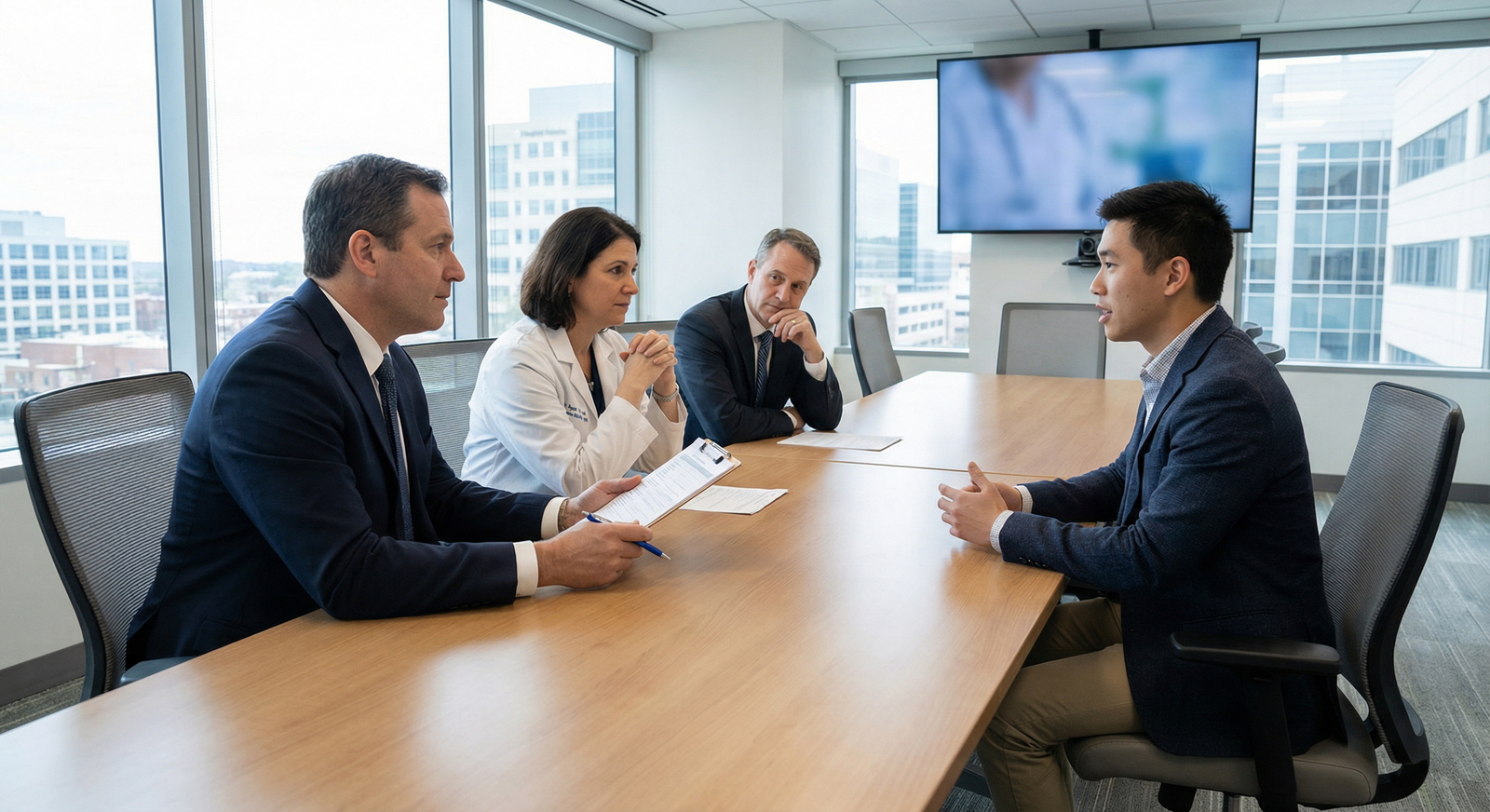
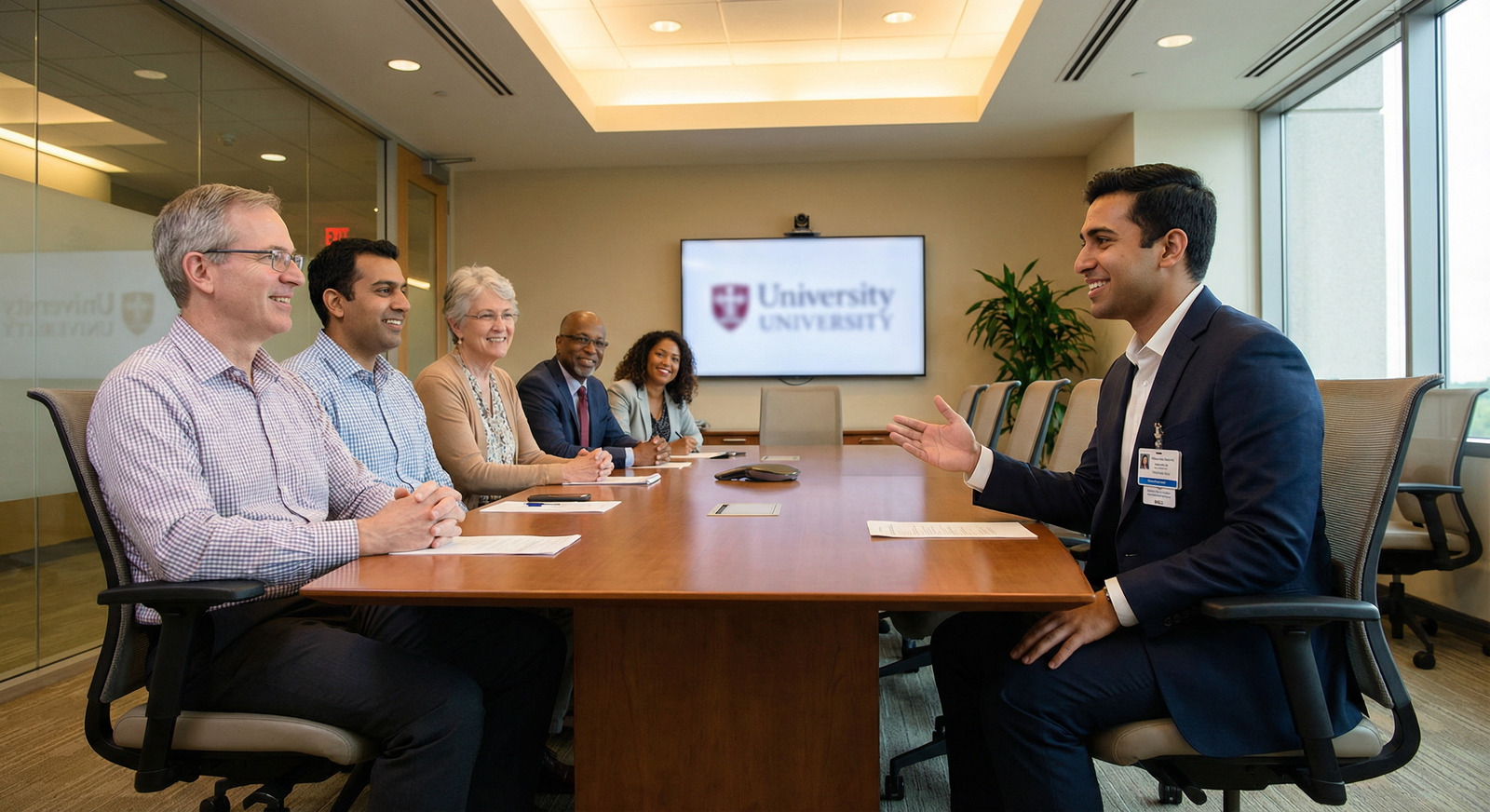
Conduct Structured Mock Interviews
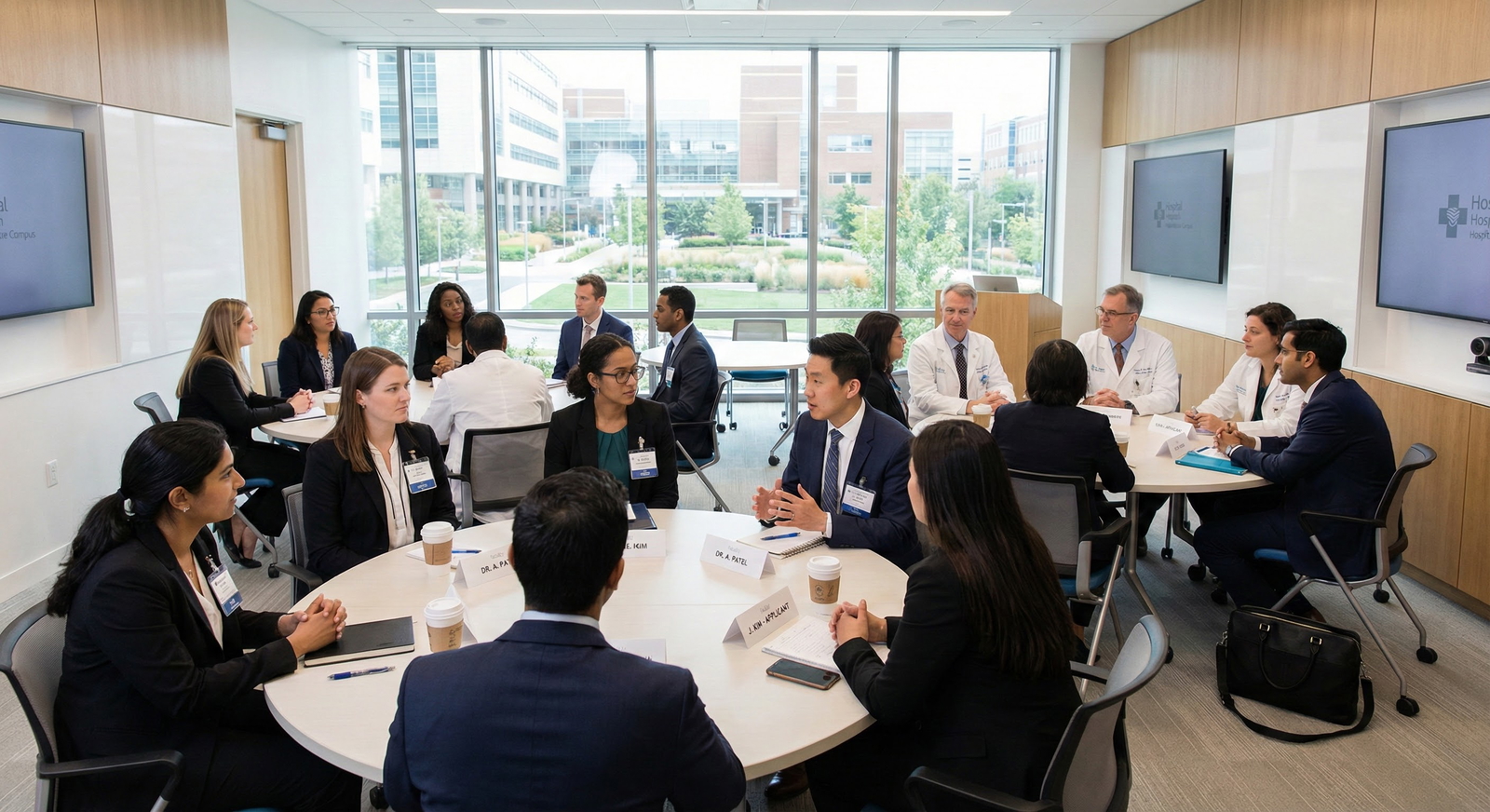
Use multiple interviewers
- Attendings (ideally surgeons) if available.
- Residents in surgery or plastics.
- Mentors who matched recently in competitive specialties.
Simulate real conditions
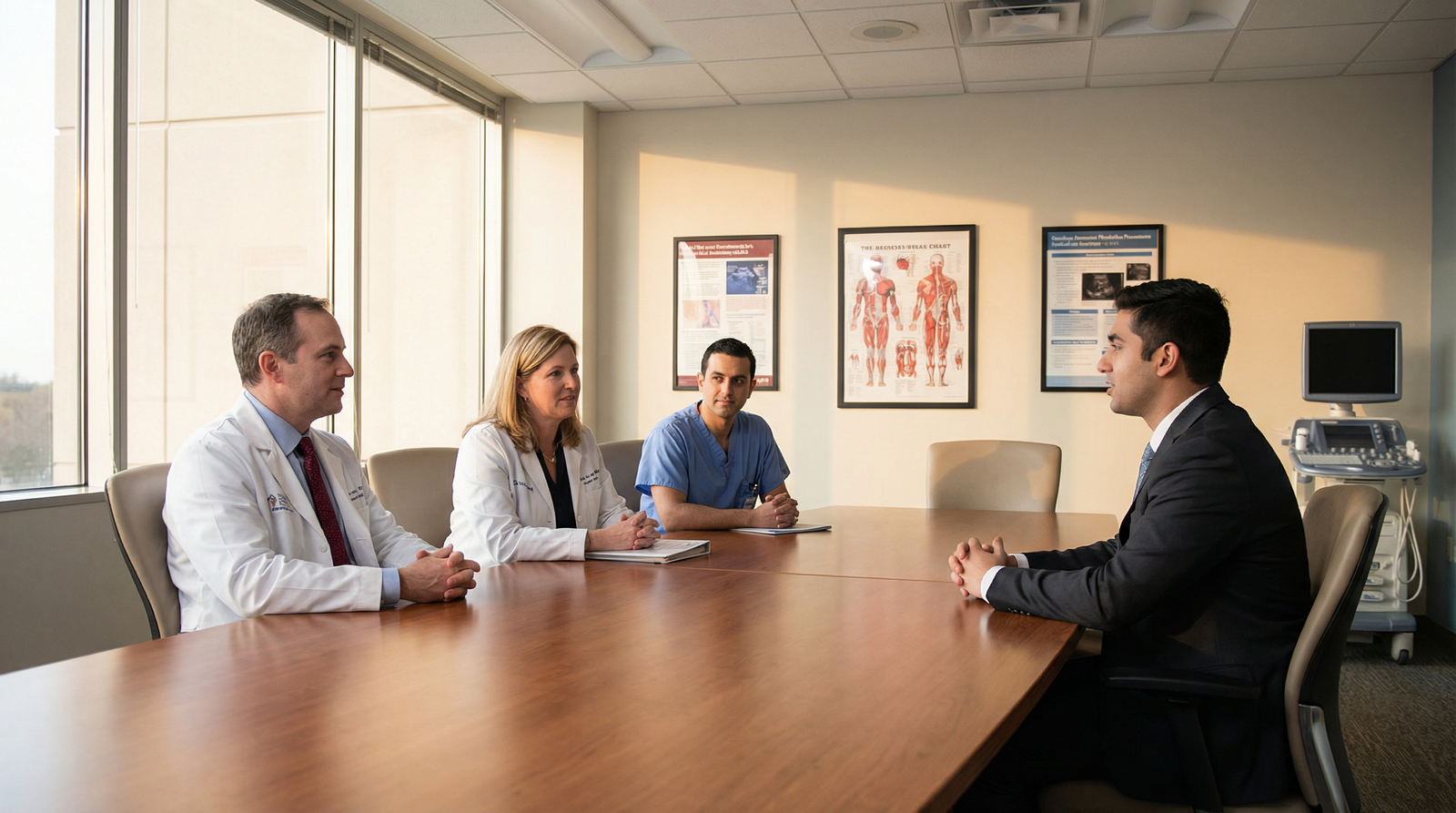
- Time limits: 20–30 minutes of questions.
- Mix of open-ended, behavioral, and program-fit questions.
- Video recording (if possible) to review posture, filler words, and eye contact.
Target feedback Ask reviewers to comment specifically on:
- Clarity and conciseness of your answers.
- Whether your interest in plastic surgery comes across convincingly.
- Whether your stories feel authentic and not scripted.
- Any red flags: arrogance, defensiveness, lack of self-awareness.
Refine, don’t memorize
- Aim for bullet points, not word-for-word scripts.
- You should be able to answer questions in different ways while keeping core messages consistent.
Virtual Interview Setup (Still Common in Many Programs)
Even if your season includes in-person days, many plastic surgery programs still use virtual formats for certain components. Treat the technical setup as part of your residency interview preparation:
Camera, lighting, and audio
- Use a laptop or high-quality webcam at eye level.
- Face a window or soft front light; avoid strong backlighting.
- Use wired or quality wireless headphones to minimize echo.
- Test sound levels and background noise.
Background and framing
- Neutral, uncluttered background: bookshelf, plain wall, or tasteful academic decor.
- Remove distractions (posters, unmade beds, busy artwork).
- Frame from chest up; maintain a bit of space above your head.
Technical redundancy
- Test your internet connection at the same time of day as your interviews.
- Have a backup device (tablet/phone) and hotspot ready.
- Keep program contact emails/phone numbers accessible in case of issues.
If any technical problem occurs, calmly acknowledge it, fix what you can, and email the coordinator afterward if needed—a small professionalism test you can actually pass if handled well.
In-Person Interview Logistics
When invited for in-person days:
- Travel planning
- Arrive at least the night before.
- Factor in weather risks and backup flights if traveling long distances.
- What to bring
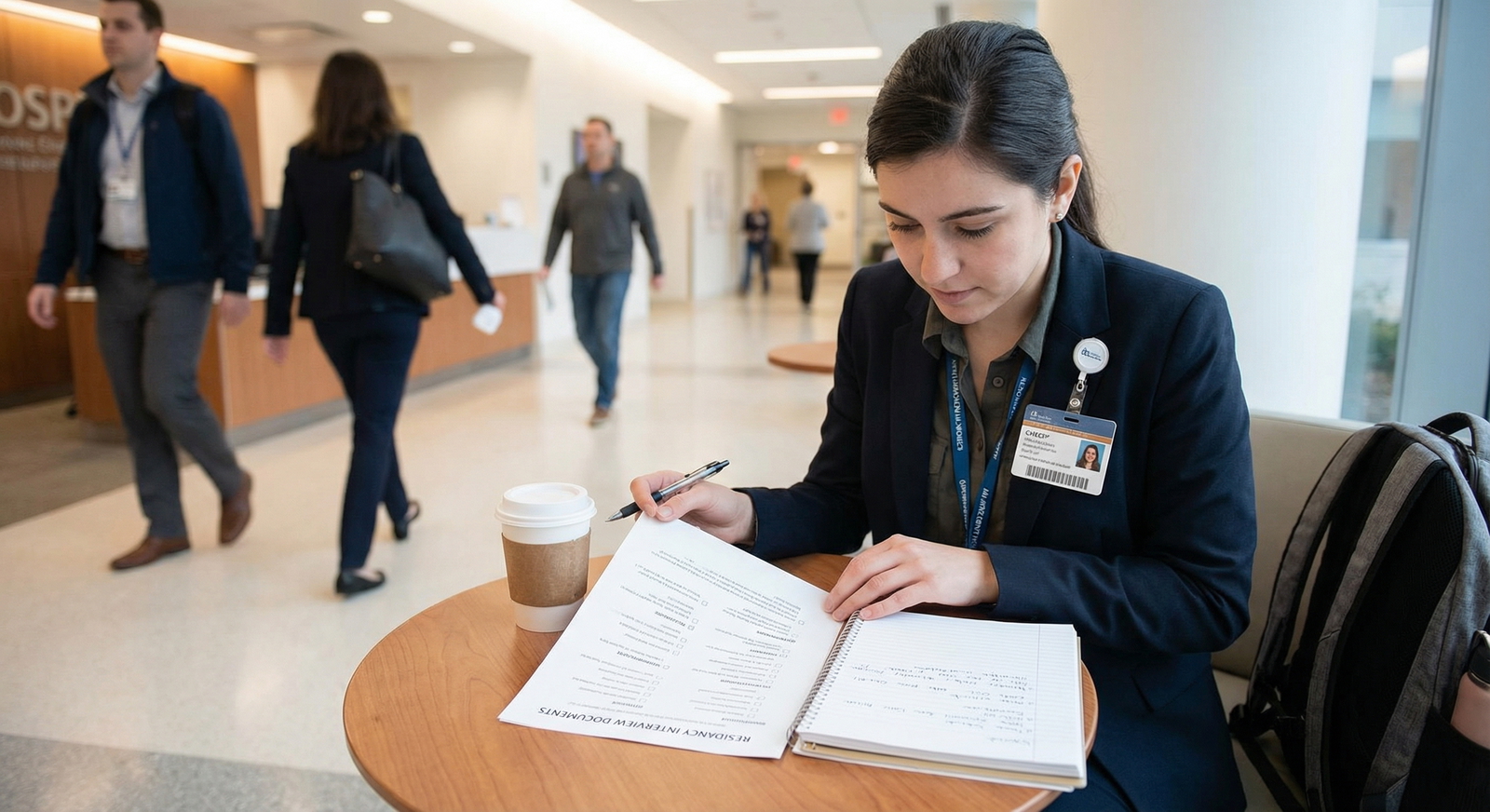
- Printed interview schedule and contact info.
- A small notebook or padfolio; a pen.
- Simple portfolio with a few copies of your CV (not always needed, but good to have).
- During pre-interview dinners
- Treat these as informal interviews.
- Ask genuine questions, but avoid complaining about other programs or the process.
- Limit alcohol; prioritize being sharp and present the next morning.
Step 5: Optimize Professional Presentation and Questions
Professional Attire and Nonverbal Communication
For both virtual and in-person:
Attire
- Dark suit (navy, black, charcoal) with conservative shirt or blouse.
- Avoid flashy patterns, noisy jewelry, or anything you’ll fidget with.
- Comfortable, professional shoes if in person (you may walk a lot).
Nonverbal cues
- Sit upright, with shoulders relaxed.
- Maintain eye contact (look at the camera in virtual setups).
- Use natural hand gestures without overdoing them.
- Nod or verbally acknowledge to show you’re listening.
Prepare High-Quality Questions for Programs
Interviewers use your questions to gauge your preparation, curiosity, and fit. Avoid questions that can be easily answered by the website.
Consider targeted questions like:
About training and mentorship
- “How do residents typically get involved in research here, and how is mentorship structured?”
- “How early do residents start getting autonomy in the OR, and how does that progress across the years?”
About culture
- “How would you describe the culture among residents and between residents and faculty?”
- “How does the program support wellness and prevent burnout, especially during busy rotations?”
About specific interests
- “I’m interested in microsurgery and complex reconstruction. What opportunities do residents have to take increasing responsibility on those services?”
- “Are there opportunities for global surgery or outreach work with this program?”
Prepare a short, flexible list of 10–12 questions you can draw from and tailor to each interviewer’s background.
Plan for Post-Interview Actions
While not strictly “pre-interview,” knowing your plan now reduces stress later:
- Notes immediately after each interview
- Jot down impressions: culture, strengths, potential concerns.
- Record specific conversations that stood out (for future reference).
- Thank-you emails
- Some programs explicitly discourage them; follow instructions.
- If allowed, send brief, personalized messages highlighting one or two specifics from the conversation.
- Ranking strategy
- Decide ahead of time what matters most to you: case volume, geography, research, mentorship, family/friend support.
Having this framework pre-built lets you process interviews more systematically and avoid last-minute panic when ranking opens.
Final Checklist: Week Before and Day Before the Interview
Week Before
- Review your:
- CV, ERAS, personal statement.
- 6–8 core stories (STAR).
- Top reasons for plastic surgery and for integrated training.
- Revisit:
- Plastic surgery basics and trends.
- Program-specific notes and research.
- Do:
- At least 1–2 full mock interviews.
- A technical run-through for virtual interviews.
Day Before
- Confirm interview times and time zones.
- Lay out your interview attire.
- Charge all devices; update Zoom or other platforms.
- Light review of your stories and program notes—no cramming.
- Prioritize sleep and hydration; light exercise helps manage stress.
Morning Of
- Eat something light but sustaining.
- For virtual:
- Log on 10–15 minutes early.
- Close unrelated apps; silence notifications.
- For in-person:
- Aim to arrive 15–20 minutes early to the location.
- Use any waiting time to center yourself, not to scroll social media.
You want to walk in (or log on) calm, focused, and present, ready to show programs not just that you want plastic surgery, but that you are ready to join and contribute to their community.
FAQs: Pre-Interview Preparation in Plastic Surgery
1. How many mock interviews should I do for a plastic surgery residency?
Aim for 3–5 structured mock interviews with different types of interviewers (faculty, residents, peers). Beyond that, focus on targeted practice: refining your core stories and answers to key questions, rather than repeating full simulations excessively, which can make you sound over-rehearsed.
2. Do I need deep technical knowledge of plastic surgery procedures for interviews?
You do not need to know operative steps in detail, but you should:
- Understand the major subspecialties and their goals.
- Be able to discuss why patients need reconstructive vs. aesthetic procedures.
- Show awareness of current issues and innovations (e.g., microsurgery, craniofacial care, lymphedema surgery, 3D planning).
Focus on thoughtful understanding rather than textbook-level details.
3. How do I handle a question about a weak area in my application?
Address it directly, briefly, and constructively:
- State what happened without blaming others.
- Explain what you learned and the concrete changes you made.
- Provide evidence of improvement (later rotation comments, research productivity, better exam performance).
Programs in competitive fields like plastic surgery respect insight and growth more than defensiveness.
4. Should I tailor my answers differently for academic versus more clinically focused programs?
Yes. Your core story should stay consistent, but emphasize different aspects depending on the program:
- For research-heavy, academic programs: highlight your scholarly interests, comfort with scientific literature, and desire to innovate or teach.
- For clinically intense or community-affiliated programs: emphasize your love of high-volume operative work, efficiency, and commitment to excellent patient care.
Always remain honest; the goal is good mutual fit, not just matching anywhere.
With deliberate, structured pre-interview preparation tailored to the unique demands of plastic surgery residency, you can walk into each interview ready to communicate who you are, why plastics, and why you would be an asset to that specific program—maximizing your chances in an extremely competitive integrated plastics match.