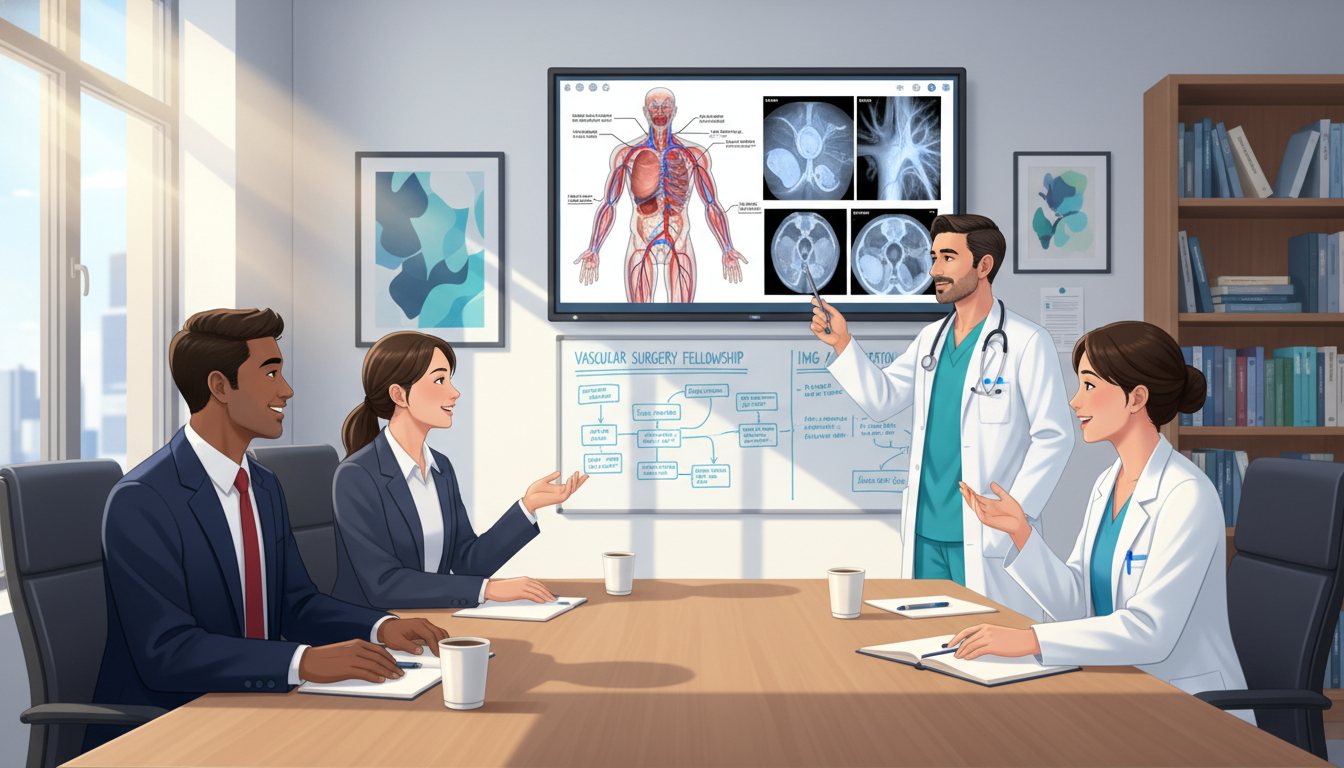
Understanding the PM&R Residency Interview Landscape as a DO Graduate
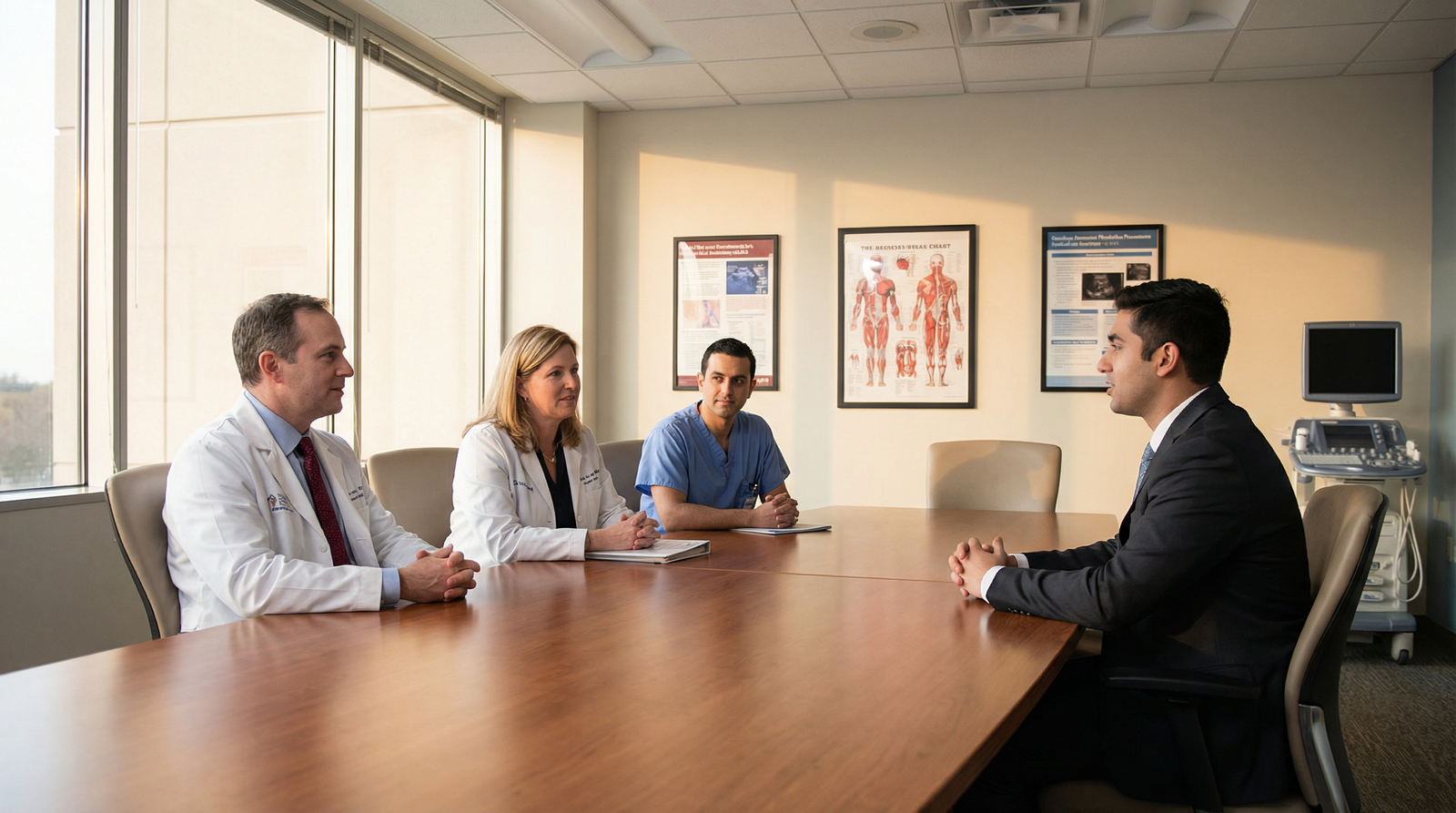
Physical Medicine & Rehabilitation (PM&R), or physiatry, has become increasingly competitive, and the residency interview is a crucial step in securing a spot. As a DO graduate, you bring a strong foundation in holistic, function-focused care—qualities that align naturally with PM&R—but you also need a deliberate strategy to stand out in the osteopathic residency match and the broader physiatry match.
Pre-interview preparation is far more than “reading about the program the night before.” It’s a structured process that begins months before interview season and continues up to the minute you log into your virtual call or walk into the conference room.
This guide will walk you through a step-by-step approach to pre-interview preparation tailored specifically to DO graduates pursuing PM&R residency, covering:
- How to research programs strategically and know your audience
- How to prepare your personal narrative as a DO applying to PM&R
- How to master common and specialty-specific interview questions residency programs use
- How to rehearse effectively (mock interviews, behavioral questions, and scenarios)
- Practical logistics and professional presence, including virtual etiquette
- Special considerations for DO graduates in the osteopathic residency match
Throughout, you’ll see concrete examples and actionable advice you can implement immediately.
Step 1: Know Your Programs and the PM&R Landscape
Before you think about how to prepare for interviews, you need to know who you are speaking to and what they value.
Research Each PM&R Program in Depth
Do more than skim the website. Create a program research spreadsheet where each row is a program and columns include:
- Program mission & culture (e.g., academic vs community, rehab hospital vs university-based)
- Clinical strengths (TBI, SCI, stroke, MSK, sports, pediatrics, pain, EMG, spasticity)
- Didactics and board preparation structure
- Osteopathic recognition or DO-friendly history
- Fellowship opportunities and alumni outcomes
- Call schedule and inpatient vs outpatient balance
- Unique features (adaptive sports, research labs, global health)
- Current residents’ backgrounds (MD/DO mix, prior careers, interests)
Use:
- Program websites and social media (Twitter/X, Instagram, LinkedIn)
- AAPM&R and AAP sites
- FREIDA and NRMP data
- Virtual open houses and Q&A webinars
- Resident-run blogs or podcasts
Actionable tip: After researching, write a one-paragraph “Program Snapshot” for each site:
“X PM&R is a university-based program with strong inpatient stroke and TBI exposure, an embedded VA rotation, and a growing sports/spine division. They emphasize interprofessional rehab teams and resident-led QI projects. Several current residents are DOs, and the program director is active in AAPM&R.”
This snapshot will later help you customize your answers like “Why our program?” and “How do you see yourself fitting here?”
Understand What PM&R Programs Look For
PM&R residencies typically value:
- Genuine understanding of physiatry (not a “backup” plan)
- Commitment to functional outcomes and team-based care
- Longitudinal patient relationships and chronic disease management
- Interest in neurorehab, MSK, and/or pain, even if you’re not yet decided
- Communication skills and empathy
- Adaptability and resilience (common with rehab patients’ long recoveries)
- For DO graduates: comfort with OMT/OMM and a holistic perspective on function, even if OMT is not heavily used
Example: If a program emphasizes neurorehab and TBI, and you’ve done an inpatient rehab rotation with stroke/TBI patients, you should be ready to talk specifically about how that experience confirmed your interest in PM&R and shaped your career goals.
Step 2: Build Your PM&R-Specific Personal Narrative as a DO
Your story is what will differentiate you from other applicants with similar board scores and grades. Pre-interview preparation means knowing your story so well that you can adapt it to many questions without sounding scripted.
Clarify Your “Why PM&R?” and “Why Physiatry?” Story
Every PM&R interview will include some version of this. You should be able to answer it in 2–3 minutes, weaving:
Initial exposure
- A meaningful patient encounter
- A key mentor or rotation
- Personal or family experience with disability or rehab
Evolving understanding
- What you learned about function, quality of life, and interdisciplinary teams
- Specific PM&R settings you enjoyed (inpatient rehab, consult service, EMG lab, MSK clinic)
Current vision
- How PM&R matches your values and strengths
- What aspects of physiatry excite you most (e.g., improving independence, adaptive sports, interventional procedures)
Example structure:
“I first encountered PM&R during my second year on an inpatient rehab elective, working with a young stroke patient re-learning to walk. What struck me wasn’t just the medical complexity but how the team—PT, OT, speech, nursing, and the physiatrist—worked together to restore his independence. Over time, I realized I’m most fulfilled when I can follow patients longitudinally and celebrate functional gains, even when the ‘cure’ isn’t possible. PM&R lets me combine my interest in neurology and musculoskeletal medicine with my desire to work on a team focused on real-world outcomes. That’s why I’m committed to a career in physiatry.”
Integrate Your Osteopathic Identity Authentically
In a DO graduate residency path, your osteopathic training is an asset, especially in PM&R, where function, biomechanics, and holistic care are central.
Prepare a clear, concise explanation of how your DO background enhances your fit for PM&R:
- Understanding of structure-function relationships
- Training in MSK exam skills and palpation
- Comfort with non-pharmacologic and multimodal pain management
- A holistic perspective on mind-body interaction and lifestyle factors
- Where appropriate: experience using OMT in pain or rehab settings
Example talking point:
“My osteopathic training taught me to look beyond imaging and lab results to how the patient functions in daily life. In MSK and rehab settings, I found that approach especially helpful in understanding gait abnormalities and compensatory patterns. Even when I don’t use formal OMT techniques, the hands-on exam skills and functional focus I gained as a DO naturally complement the goals of PM&R.”
Be ready to apply this to questions like:
- “How has being a DO shaped your view of patient care?”
- “How do you see OMT fitting into your future practice, if at all?”
- “What do you think DO graduates bring to PM&R?”
Craft a Coherent Career Trajectory
You don’t need to have your entire life planned, but you should express direction:
- Possible interest areas: sports and spine, interventional pain, TBI, SCI, pediatrics, cancer rehab, EMG, amputee care
- Academic vs community career, research interest, teaching aspirations
- Interest in fellowships (even if undecided)
Example:
“Right now, I’m especially drawn to sports and spine within PM&R because it combines MSK medicine, procedures, and return-to-activity goals. I’m also open to neurorehab, and I see residency as a chance to explore both. Long term, I envision working in an academic or hybrid setting where I can combine clinical care with teaching residents and medical students.”
Having this clarity makes your answers more compelling and aligned with programs’ strengths.
Step 3: Mastering Common and PM&R-Specific Interview Questions
Residency interview preparation means going beyond “thinking about” answers—actually saying them out loud, refining, and personalizing them.
Core General Residency Interview Questions
You should prepare structured responses to standard interview questions residency committees ask:
Tell me about yourself.
- 60–90 seconds, professional summary, not your entire life story
- Present → Past → Future format often works well
Example outline:
- Present: “I’m a fourth-year DO student at [school], currently on my PM&R sub-I.”
- Past: “I grew up in [place], studied [major], and became interested in medicine through [brief anecdote].”
- Future: “I’m now excited to pursue PM&R, particularly [areas], and I’m looking for a program with [attributes] like yours.”
Why this specialty (Why PM&R)?
- Use your “Why PM&R?” story from above.
Why our program?
- Reference specific features: rotations, patient population, mentorship, location, resident culture.
- Tie each feature to your goals.
Strengths and weaknesses.
- Strengths linked to PM&R: communication, team collaboration, patience, adaptability, procedural interest, empathy.
- Weakness framed with growth: “I used to… I learned… Now I…”
Tell me about a time you had a conflict / made a mistake / received feedback.
- Use the STAR method (Situation, Task, Action, Result).
What do you do for wellness / outside of medicine?
- Show you’re a well-rounded, resilient person.
PM&R- and Physiatry-Specific Questions
Prepare for physiatry match–focused questions that test your understanding of the field:
- “What do you think is the role of a physiatrist on the rehab team?”
- “Describe a patient who solidified your interest in PM&R.”
- “How do you handle working with patients with chronic disability or uncertain prognosis?”
- “What aspects of PM&R are you most and least interested in?”
- “How do you define ‘function’ in clinical terms?”
- “Where do you see the field of PM&R heading in the next 10 years?”
- “How will you handle emotionally difficult cases, such as spinal cord injury or severe TBI?”
Example answer structure (role of physiatrist):
“I see the physiatrist as the central coordinator of a patient’s rehab journey: synthesizing medical issues, functional goals, and the contributions of each therapy discipline. We define realistic, patient-centered objectives, manage medical complications, guide intensity and focus of therapies, and continually reassess progress. Ultimately, our role is to help patients achieve maximal independence and quality of life, even when full recovery isn’t possible.”
Behavioral and Scenario-Based Questions
Interviewers may ask situational questions to assess clinical judgment and professionalism:
- “Tell me about a complex patient you’ve cared for and your role on the team.”
- “Describe a time when you had to deliver difficult news.”
- “How would you handle a patient who is not motivated to participate in rehab?”
- “What would you do if you strongly disagreed with an attending’s plan?”
Use STAR and emphasize:
- Team communication
- Respect and professionalism
- Patient-centered care
- Awareness of your limitations as a learner
Actionable exercise:
Make a list of 15–20 likely questions (general + PM&R-specific) and draft bullet-point outlines. Don’t memorize paragraphs; aim for flexible talking points you can adapt.
Step 4: Rehearsal, Mock Interviews, and Feedback
Knowing what to say is only half the battle; how you say it matters just as much.
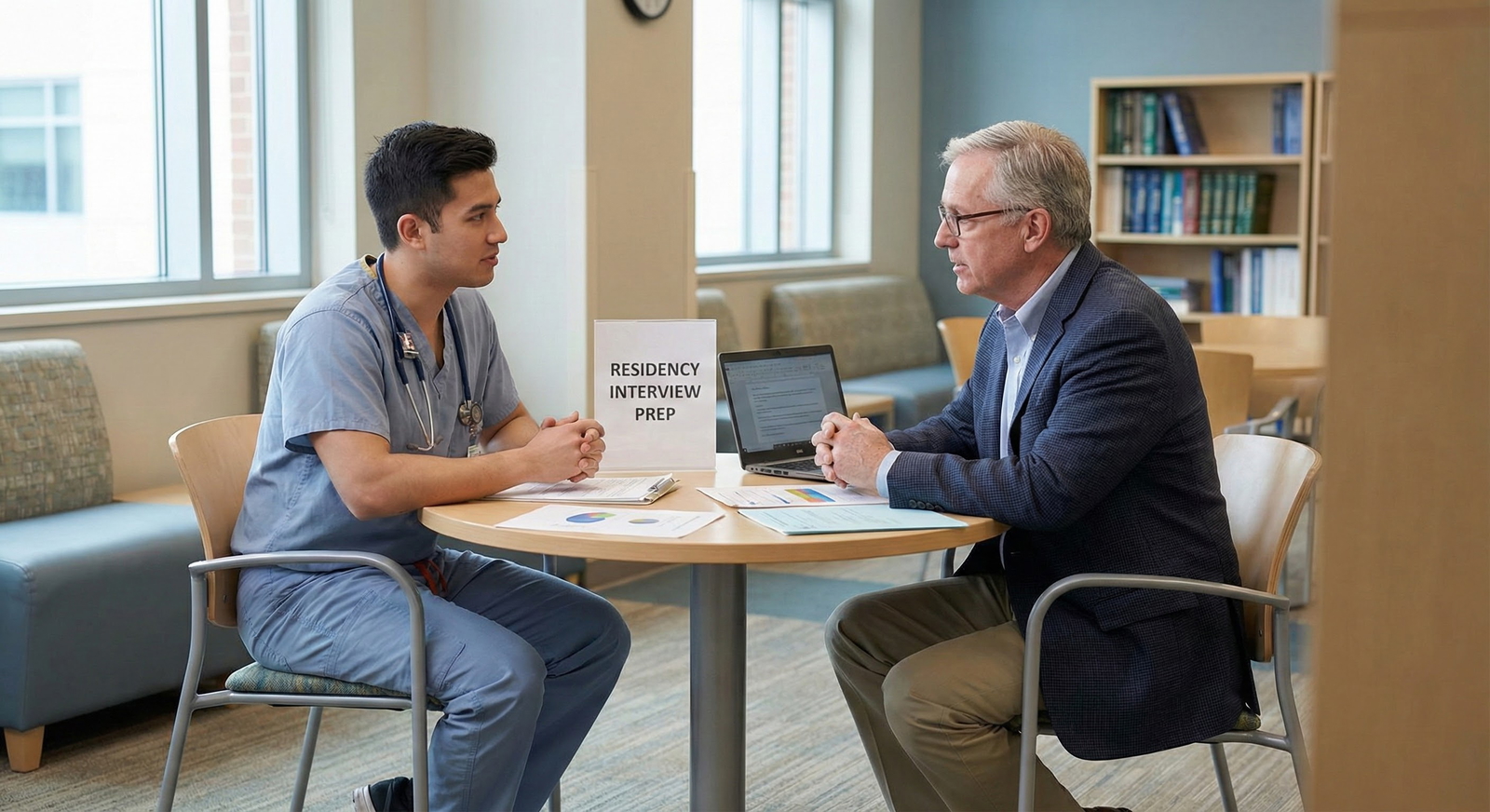
Conduct Structured Mock Interviews
Arrange multiple mock interviews:
- With your medical school’s career advisor or residency office
- With PM&R faculty or fellows, if available
- With trusted mentors (even in other specialties)
- Peer mock interviews with classmates
Simulate both:
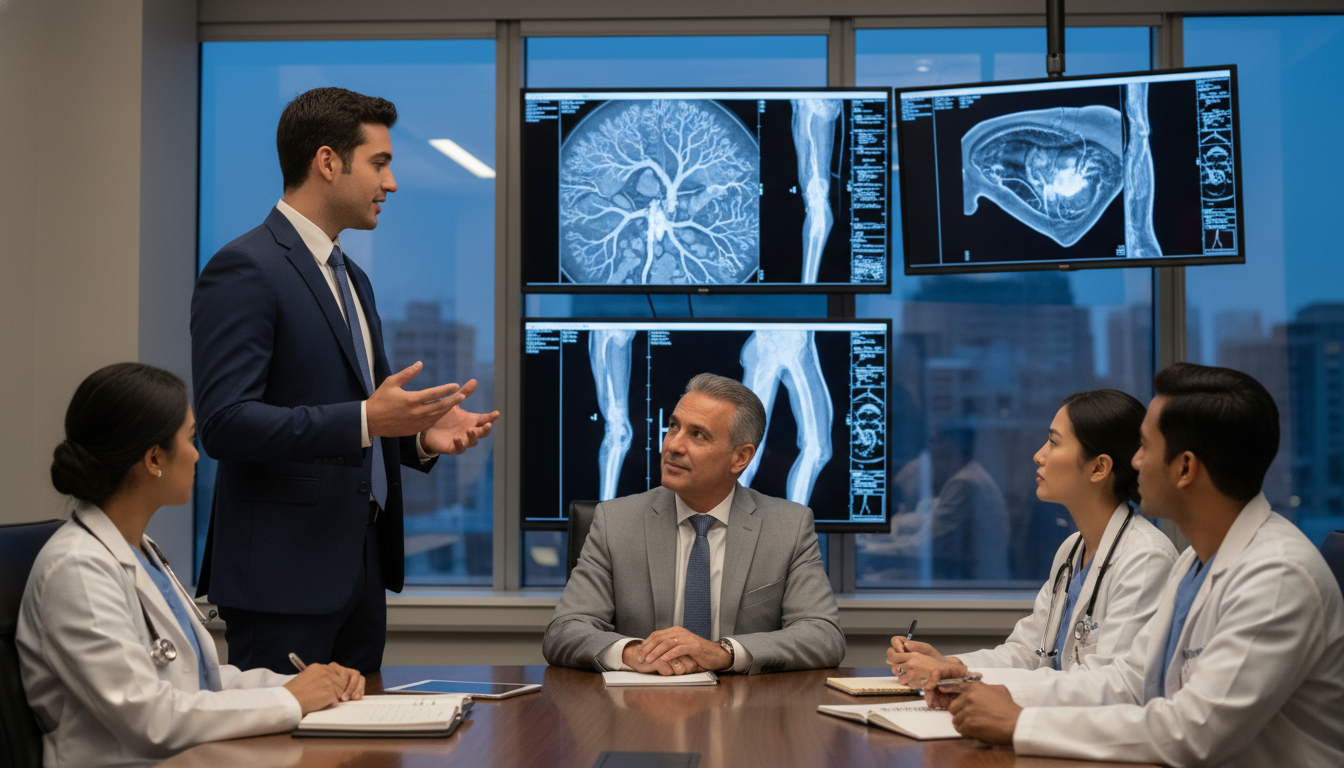
- Traditional interviews (1-on-1, small panel)
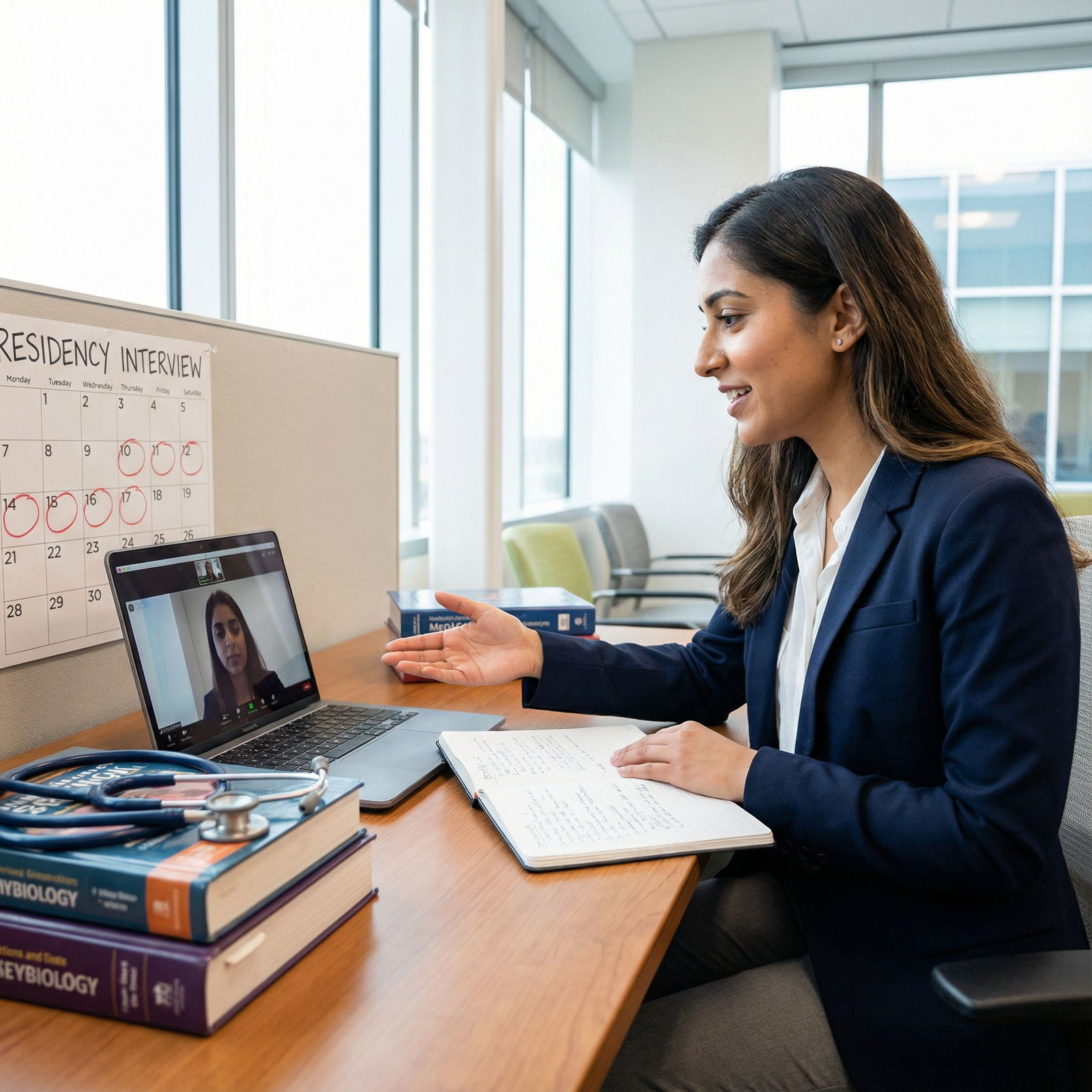
- Virtual interviews (Zoom, Teams) to get used to camera, eye contact, and delays
Treat them like the real thing:
- Wear interview attire
- Sit at your planned interview location
- Use your actual webcam and microphone
Ask for specific feedback on:
- Clarity and organization of answers
- Filler words (“um,” “like”) and rambling
- Non-verbal communication (posture, eye contact, facial expression)
- Enthusiasm and energy level
- How well your story communicates your interest in PM&R
Record Yourself and Self-Critique
Record short practice sessions:
Answer 3–4 questions in a row
Watch the recording and take notes:
- Do you look engaged and interested?
- Are you speaking too fast or too slowly?
- Do your answers feel structured and purposeful?
- Are you smiling occasionally and using natural gestures?
Develop a Flexible Answer Framework
To avoid sounding rehearsed, practice frameworks, not scripts. For each major question, know:
- Opening sentence (sets direction)
- 2–3 key points with 1–2 examples
- Closing sentence (ties back to PM&R or the program)
Example – “Why this program?” framework:
- Start with overarching reason: “There are three main reasons your program is a great fit for me…”
- Point 1: Clinical strengths aligning with your interests
- Point 2: Educational culture (mentorship, didactics, resident autonomy)
- Point 3: Location or personal fit (family ties, lifestyle, diverse patient population)
- Close: Tie it together with your goals
Practicing frameworks makes your answers sound natural yet complete.
Step 5: Logistics, Professional Presence, and Day-of Preparation
Excellent content can be overshadowed by poor logistics or unprofessional presentation. Pre-interview preparation includes all the practical details.
Polish Your Application and Know It Cold
You must be able to comfortably discuss any part of your application:
- ERAS personal statement (especially if PM&R-specific)
- Research projects (role, methods, findings, implications)
- Quality improvement or leadership roles
- OMT/OMM or osteopathic projects
- Significant volunteer work or life experiences
- Any gaps, red flags, or step failures—have a concise, honest explanation and evidence of growth
Re-read your entire application before each interview day, especially if it’s been months since you wrote it.
Plan Program-Specific Questions to Ask Interviewers
You will almost always be asked, “What questions do you have for us?” Arriving unprepared here can signal lack of interest.
Prepare 3–5 thoughtful questions per program, such as:
- “How do residents at your program typically differentiate themselves—through research, teaching, or specific clinical tracks?”
- “Can you describe how residents are supported in exploring subspecialties like sports and spine or TBI?”
- “How does the program foster wellness and resilience, especially during heavier inpatient rotations?”
- “What qualities do you see in residents who thrive here?”
- “How have alumni from this program typically structured their careers—fellowships, academic vs community roles?”
Avoid questions easily answered on the website (e.g., “How many residents per year?”) unless you are asking for clarification or nuance.
Virtual Interview Setup (Very Common in PM&R)
For many programs, especially in the current era, interviews remain virtual. Your environment should project focus and professionalism.
Checklist:
- Background: Neutral, uncluttered, no distracting posters; a simple bookshelf or plain wall is ideal.
- Lighting: Soft, even light from in front of you (window or lamp); avoid strong backlighting.
- Camera angle: At or slightly above eye level.
- Audio: Test microphone; consider wired headphones or a dedicated mic.
- Internet: Use wired connection if possible; test speed and stability.
- Username: Professional Zoom/Teams name (First Last, DO).
Day before:
- Test platform (Zoom, Teams, WebEx, etc.).
- Update software; disable automatic updates during interview time.
- Close unnecessary applications and browser tabs.
Day of:
- Log in 10–15 minutes early.
- Silence phone and notifications.
- Have water nearby, plus your program snapshot notes out of camera view.
In-Person Interview Logistics
If in-person interviews are offered:
- Arrive in town the night before when possible.
- Know transportation and parking arrangements.
- Bring:
- Folder with copies of your CV
- Small notebook and pen
- A printed schedule if provided
- Wear comfortable yet professional shoes; you may be touring facilities.
Professional Attire and Body Language
For all interview formats:
Attire:
- Dark suit (navy, charcoal, black) with conservative shirt/blouse.
- Minimal, professional accessories.
- Hair neat, facial hair trimmed if present.
Body language:
- Sit upright but relaxed.
- Maintain appropriate eye contact (look at the camera in virtual settings).
- Nod and smile periodically to show engagement.
- Avoid fidgeting or swiveling in your chair.
Post-Interview Reflection and Notes
Immediately after each interview day:
- Write brief notes on:
- Program culture and “feel”
- People who stood out (names, roles, specific conversations)
- Pros and cons from your perspective
- Anything you wish you had answered differently (for practice next time)
These notes will help during rank list creation and when writing thank-you emails if you choose to send them.
Step 6: DO-Specific Considerations in the Osteopathic and Combined Match
As a DO graduate entering PM&R, you likely navigate both osteopathic residency match options (where applicable) and the unified ACGME physiatry match. PM&R is historically DO-friendly, but you still want to present your osteopathic training strategically.
Addressing DO vs MD Questions (If They Arise)
Most programs won’t explicitly ask, but you should be prepared for subtle versions such as:
- “Why did you choose an osteopathic school?”
- “How do you see your DO training influencing your career?”
Frame your answer around:
- Values that led you to osteopathic medicine (holistic view, primary care exposure, mind-body connection)
- Skills gained that particularly support a career in PM&R (MSK exam, functional thinking)
- Comfort working alongside MD colleagues in integrated environments
Example:
“I chose an osteopathic school because the philosophy of treating the whole person and emphasizing function over disease labels resonated with how I’d seen good medicine practiced. That lens has been especially valuable in PM&R, where we constantly ask, ‘What does this finding mean for what the patient can do?’ In my clinical rotations, I’ve worked seamlessly with MD and DO physicians and know I’ll continue to practice in integrated teams.”
Highlighting OMT Appropriately
If you have genuine OMT/OMM experience or interest, integrate it authentically:
- Discuss using OMT for acute or chronic MSK pain, headaches, or functional complaints.
- Emphasize safety and evidence-informed decision-making.
- Clarify you’re adaptable to programs with minimal OMT use, while still leveraging DO skills in exam and functional assessment.
Avoid implying that you plan to practice as a full-time manual therapist unless that’s truly your path and the program supports it.
Handling Potential Red Flags as a DO Applicant
If you have:
- Non-traditional pathway
- Lower board scores or a failure
- Extended graduation timeline
Prepare concise, honest explanations plus evidence of improvement:
- State the issue plainly without dwelling on it.
- Explain contributing factors (briefly, without making excuses).
- Highlight concrete steps you took to remediate (tutoring, changed study strategies, improved time management).
- Point to subsequent success (improved grades, stronger clinical evaluations, research productivity).
Example:
“I failed COMLEX Level 1 on my first attempt due to poor test-taking strategies and trying to juggle too many commitments. I met with our learning specialist, restructured my study schedule, and focused on question-based learning. On my second attempt, I passed comfortably, and since then I’ve consistently scored in the upper half on shelf exams and received strong clinical evaluations. I feel that experience has made me more disciplined and resilient.”
Frequently Asked Questions (FAQ)
1. How early should I start residency interview preparation for PM&R?
Begin 3–4 months before interviews typically start. Early steps include:
- Researching programs and creating your spreadsheet
- Drafting and refining your personal statement
- Identifying PM&R mentors who can help you with mock interviews
- Collecting PM&R-specific experiences and patient stories
By 4–6 weeks before interviews, you should be doing focused mock interviews, refining your answers to common questions, and solidifying your “Why PM&R?” narrative.
2. Are there PM&R-specific resources I should review before interviews?
Yes. Helpful resources include:
- AAPM&R and AAP websites for understanding the field’s scope and trends
- Basic review of common PM&R topics: TBI, SCI, stroke rehab, spasticity, MSK and back pain, amputee care
- Recent review articles or guidelines on pain management, neurorehab, or functional outcomes
- Program websites’ descriptions of their services and clinics
You don’t need fellowship-level knowledge, but you should demonstrate a functional understanding of what physiatrists do and current issues in rehab medicine (e.g., opioid prescribing, value-based care, post-acute care transitions).
3. How can I stand out as a DO graduate in the physiatry match?
To stand out:
- Clearly connect your osteopathic philosophy to PM&R’s focus on function, whole-person care, and MSK medicine.
- Highlight hands-on skills and experiences using OMT or advanced MSK exams, when relevant.
- Show sustained, genuine commitment to PM&R: electives, sub-Is, research, volunteer work, conference attendance (e.g., AAPM&R Annual Assembly).
- Communicate clearly, confidently, and enthusiastically about your fit with physiatry and each specific program.
Your goal is for interviewers to think: “This applicant really understands our field and will be a great colleague.”
4. What are the most important things to review the night before each interview?
The night before, focus on:
- Re-reading the program’s website and your Program Snapshot notes
- Reviewing your own ERAS application and personal statement
- Skimming your list of practice questions and talking points
- Preparing 3–5 program-specific questions to ask
- Double-checking your technical setup (for virtual interviews) or logistics (for in-person)
Then get a good night’s sleep. At this point, trust your preparation and concentrate on being present, authentic, and engaged during the interview.
By approaching pre-interview preparation as a structured, multi-step process—grounded in genuine understanding of PM&R and your strengths as a DO graduate—you’ll enter each interview day ready to communicate clearly, connect with faculty and residents, and present yourself as a future physiatrist who will enhance any program’s community.