Understanding the Urology Match Landscape as a Caribbean IMG
For a Caribbean medical school graduate, applying to urology in the United States is ambitious—but absolutely possible with the right strategy and early, disciplined preparation. Urology is a competitive, early match specialty. As a Caribbean IMG, you face two simultaneous challenges:
- Specialty competitiveness: Urology has fewer positions, heavy research emphasis, and programs that often favor applicants known to them.
- IMG status and school location: Many programs still prefer US MD seniors, and some historically do not consider IMGs at all.
Your pre-interview preparation must therefore be more structured, more data-driven, and more deliberate than average. The interview is not just a conversation; it’s your chance to overcome any bias associated with “Caribbean medical school residency” applicants and to show you are at the level of top US graduates.
Before you ever step into a Zoom room or a conference room, you should:
- Understand where Caribbean IMGs have matched in urology previously.
- Study SGU residency match and other Caribbean school match lists (Ross, AUC, Saba) to see which programs have a track record of taking Caribbean IMGs.
- Be honest about how your USMLE scores, research, and letters stack up.
- Customize your interview preparation so you can clearly and confidently explain how your path through a Caribbean medical school has prepared you for a demanding surgical subspecialty.
Everything you do before interview day—research, question practice, storytelling, logistics—should support one goal: walking into interviews as the most prepared candidate in the room.
Step 1: Researching Programs Strategically as a Caribbean IMG
Your pre-interview prep starts long before your first official invitation. For urology, knowing your programs cold is a significant competitive advantage.
1. Identify programs that consider Caribbean IMGs
Start with objective evidence:
Review Caribbean match lists
Look at SGU residency match data and match lists from your specific school and peer Caribbean schools:- Which urology programs have taken Caribbean graduates in the past 5–10 years?
- Are there repeated matches at the same institutions?
- Do you see any urology match patterns (e.g., more community-based academic programs, strong regional preferences)?
Check program websites and FREIDA
Some programs explicitly mention whether they accept IMGs or require USMLE Step 1/2 thresholds. Note:- USMLE requirements
- Visa sponsorship (if applicable to you)
- Whether they list current residents with Caribbean or IMG backgrounds
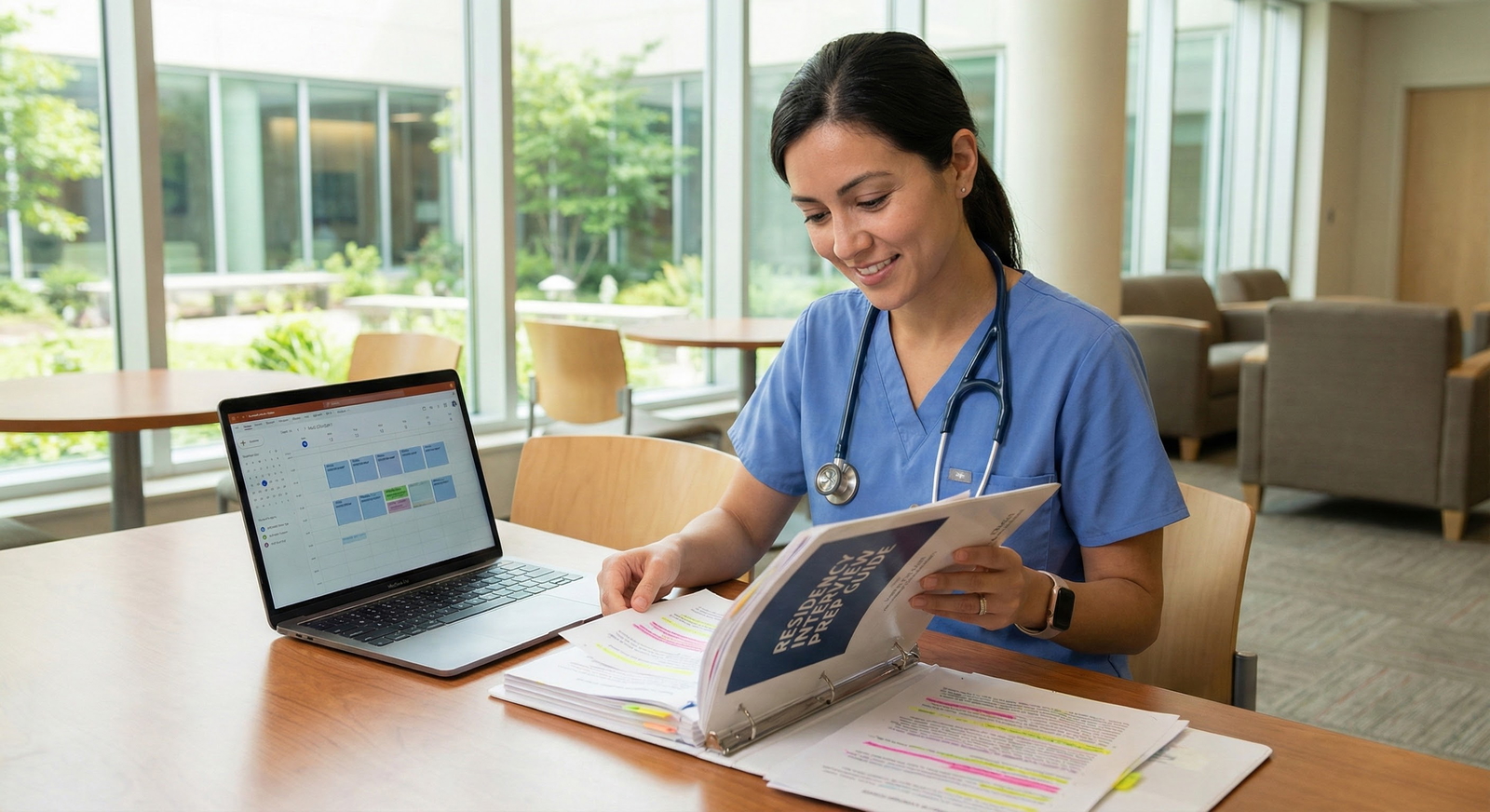
Create a spreadsheet with:
- Program name, location, type (academic, hybrid, community)
- Known Caribbean/IMG residents or alumni
- Contact with the program (elective rotation, research, mentor)
- Personal rank of interest (1–5)
This spreadsheet becomes a critical tool for your residency interview preparation and for customizing your answers.
2. Deep-dive into each program before interviews
Before every interview, you should be able to answer:
- What makes this urology program different from others I’m applying to?
- How does this program train in:
- Endourology
- Oncology
- Robotics
- Reconstruction / FPMRS
- Pediatric urology (if applicable)
- What is the program’s structure?
- Resident complement by year
- Call system, early operative exposure
- Sites of training (VA, county hospital, cancer centers)
- Who are the key faculty?
- Program Director and Chair
- Faculty whose research matches your interests
- Any faculty you’ve met at conferences or on away rotations
Use:
- Program websites
- Recent resident/faculty publications (PubMed search)
- Social media (program Twitter/X, Instagram, YouTube)
- Virtual open house recordings
Knowing these details allows you to answer “Why our program?” with specificity instead of generic statements.

Step 2: Building and Refining Your Personal Story
As a Caribbean IMG going for a competitive field, your story matters enormously. Programs want to know who you are, how you handle adversity, and why you chose urology.
1. Clarify your urology narrative
You will almost certainly get one or more of the following interview questions (residency):
- “Why urology?”
- “How did you become interested in urology?”
- “Tell me about a meaningful urology patient or experience.”
Prepare your answers by mapping out:
- Origin moment(s):
- First exposure (e.g., shadowing, anatomy, early clinical experience)
- A specific patient, case, or mentor who changed your thinking
- Reinforcement experiences:
- Sub-internships or electives in urology
- Research, QI projects, conferences (AUA, sectional meetings)
- Longitudinal experiences with urologic oncology, kidney stone clinics, BPH clinics, etc.
- Alignment with your traits:
- Hands-on procedures, long-term patient relationships, technology (robotics, lasers)
- Problem-solving (diagnostics, imaging, complex reconstructions)
- Your enjoyment of teamwork in the OR and clinic
Aim for a 1–2 minute, structured response that connects:
Background → Exposure → Reflection → Confirmation
Example structure:
- Briefly where you started and what you thought you wanted.
- The first meaningful exposure to urology.
- Specific experiences that deepened your interest (including research and cases).
- What you now understand about the field and why it fits you.
2. Addressing the Caribbean route confidently (without apology)
Many urology interviewers will subconsciously wonder about your choice of a Caribbean medical school. Be ready to answer some version of:
- “Tell me about your path to medicine.”
- “Walk me through how you ended up at your medical school.”
- “What did you gain or learn from your training environment?”
Your goal is to be honest, confident, and forward-looking, not defensive. For example:
- Own your path:
- “I was committed to pursuing medicine, and the Caribbean route offered me a clear path and early clinical exposure.”
- Emphasize growth and resilience:
- Rigorous basic science coursework
- Adjusting to a new country and healthcare system
- High stakes of USMLE performance and how you responded
- Highlight what you did with your opportunities:
- Strong clinical evaluations in US hospitals
- Research initiatives
- Meaningful mentorships with US faculty
Avoid:
- Blaming others or circumstances
- Over-explaining your application history
- Sounding apologetic for being from a Caribbean school
You are not asking for a favor. You are presenting yourself as a strong urology candidate who brings global perspective and proven resilience.
3. Building 4–6 cornerstone stories
For behavioral and situational questions, have 4–6 versatile stories you can adapt for:
- Leadership
- Teamwork and conflict
- Failure or setback
- Ethical dilemma / professionalism
- Dealing with stress or high workload
- Working with a difficult patient or colleague
Use the STAR or PAR framework:
- S/T (Situation/Task) – What was going on? What was your role?
- A (Action) – What did you do?
- R (Result) – What changed? What did you learn?
Example (failure/setback as a Caribbean IMG):
- S: First attempt at a research project where IRB was delayed; you underestimated the process.
- A: Sought mentorship, restructured the project, learned IRB requirements thoroughly, created a template for future students.
- R: Completed a smaller but publishable project; helped subsequent students move faster; learned to anticipate regulatory hurdles.
Write these stories out, refine them, and practice speaking them aloud until they feel natural.
Step 3: Mastering Common Urology and General Residency Questions
Your residency interview preparation should make you fluent, not scripted. Focus on categories of questions more than memorized lines.
1. Core general questions (for all specialties)
Expect these commonly asked interview questions (residency):
- “Tell me about yourself.”
- “Why this program?”
- “Why this city/region?”
- “What are your strengths and weaknesses?”
- “Tell me about a time you had a conflict with a team member; how did you handle it?”
- “Describe your most meaningful clinical experience.”
- “Where do you see yourself in 5–10 years?”
As a Caribbean IMG, you should weave in:
- Your adaptability to new systems and environments
- How you quickly integrated into US clinical settings
- Your willingness to seek feedback and improve
2. Urology-specific questions
For the urology match, programs often ask:
- “What aspects of urology interest you most—oncology, endourology, reconstruction, pediatrics?”
- “Tell me about a urology case that impacted you.”
- “What urology research have you done, and what did you learn?”
- “Do you see yourself in academics, private practice, or undecided?”
- “What do you think are the major challenges facing urology in the next decade?”
Prepare:
- 1–2 urology cases you can discuss clearly: indication, patient context, procedure, outcome, your role.
- Short explanations of any urology research on your CV:
- Your exact role
- Methods and major result
- What you personally learned (e.g., study design, data analysis, teamwork)
3. Program fit, culture, and red-flag questions
You may be asked:
- “What do you look for in a residency program?”
- “Tell me about a time you were under significant stress.”
- “Describe a time you received critical feedback and how you responded.”
- “Is there anything in your application you’d like to explain?”
As a Caribbean IMG, be especially prepared to:
- Discuss any USMLE setbacks (if applicable) with clarity and ownership:
- Briefly explain
- State what you changed
- Provide evidence of improved performance afterward
- Show that you understand the rigors of a urology residency:
- Long hours
- Early responsibility
- Frequent call and OR time
- Emphasize that you know what you’re signing up for, ideally supported by:
- Sub-I’s in urology
- Time spent with residents
- Realistic expectations

Step 4: Structured Practice: Mock Interviews, Communication, and Nonverbal Skills
Interview performance is a skill, not a personality trait. You can—and should—train for it.
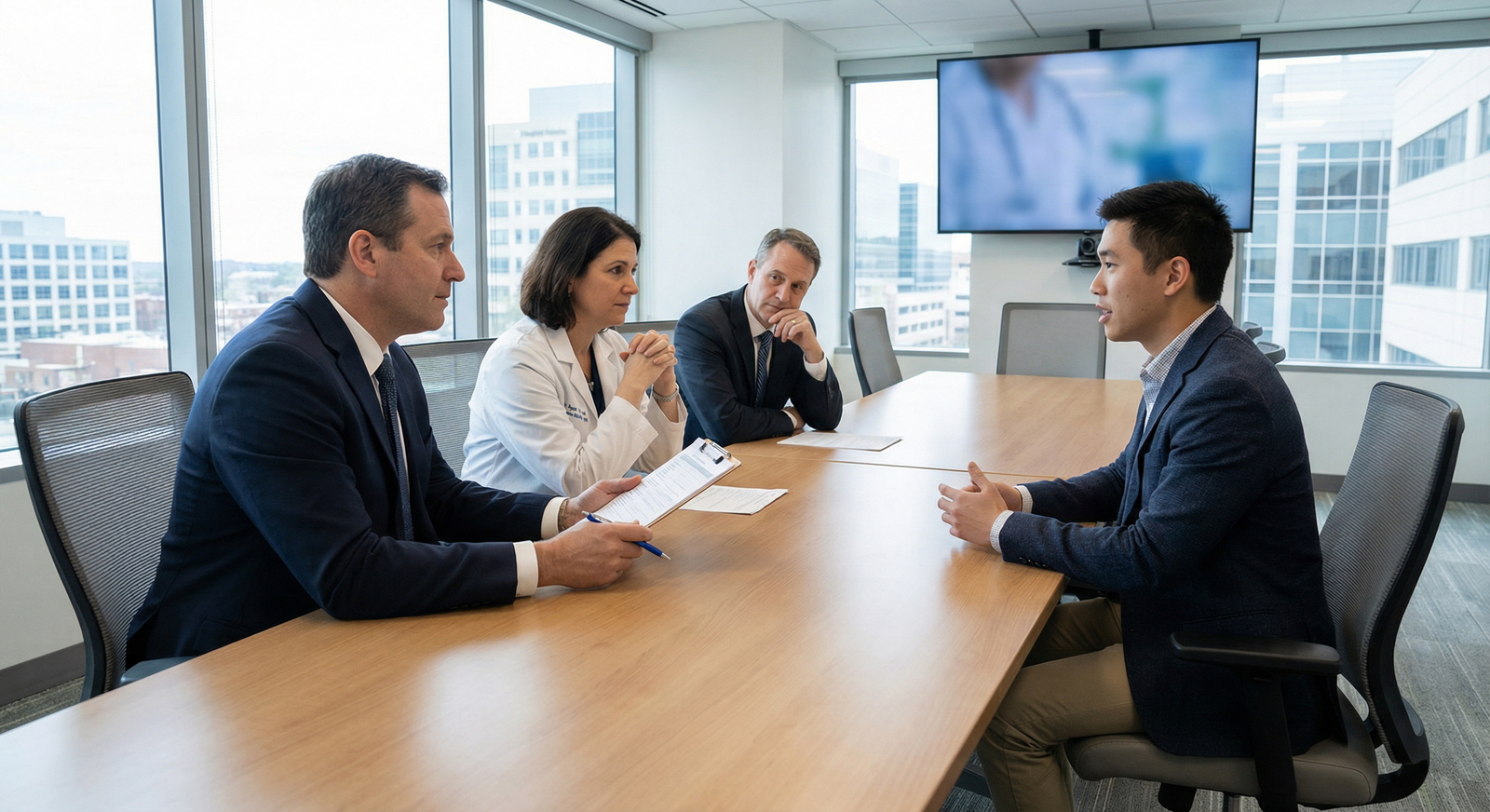
1. Conduct multiple mock interviews
Aim for at least:
- 2–3 general interview mock sessions
- 2–3 urology-focused mock sessions
- 1–2 panel-style interviews if possible
Sources for mock interviews:
- Faculty mentors (especially surgeons or urologists)
- Your Dean’s office or career advising center
- Residents you met on urology rotations
- Professional coaching services (if accessible)
- Peers applying in competitive specialties (radiology, ortho, ENT, etc.)
Ask mock interviewers to focus feedback on:
- Clarity and conciseness of answers
- Overuse of filler words (“um,” “like”)
- Eye contact and body language
- Whether your Caribbean background and urology interest are coming across as strengths
- How you handle difficult or unexpected questions
2. Practice “tell me about yourself” and “why urology” until they are effortless
These two are your anchor answers. They set the tone and often create the first impression.
Tell me about yourself should:
- Be 1–2 minutes
- Give a logical arc from background → medical school → urology interest → who you are today
- Orient the interviewer to your key strengths and themes (resilience, adaptability, curiosity, work ethic)
Why urology should:
- Demonstrate understanding of the field’s realities (good and bad)
- Link your experiences and traits to specific aspects of urology
- Convey genuine enthusiasm, not generic admiration
Record yourself (audio or video). Identify:
- Rambling or off-topic detours
- Overly rehearsed or robotic delivery
- Lack of emotion or enthusiasm
Polish until your delivery is natural, confident, and concise.
3. Sharpen your communication style
In surgical specialties, interviewers often value:
- Direct, clear language
- Organized thinking (chronology, step-by-step logic)
- Composure under mild pressure
Work on:
- Answering in structured formats (e.g., “three things come to mind…”).
- Pausing briefly to think before answering a complex question.
- Not being afraid to say, “That’s a great question; I’d like to think for a second,” followed by a reasoned response.
As a Caribbean IMG, your accent or speech pattern may be slightly different from typical US applicants. That’s not a problem, but you should:
- Speak a bit slower than you think you need to.
- Enunciate clearly.
- Check via mock interviews if anything is consistently misunderstood and adjust phrasing or speed, not your identity.
Step 5: Practical Logistics: Virtual and In-Person Interview Readiness
Even the best content can be undermined by poor logistics. Caribbean IMGs often face extra complexity—time zones, travel from another country, and sometimes less consistent internet access. Plan these details well before interview season.
1. Virtual interview setup
Most urology programs maintain virtual or hybrid interview formats. For each virtual interview:
Technology:
- Stable, high-speed internet; test at several times of day.
- Laptop or desktop (avoid phone/tablet if possible).
- Backup device and hotspot option.
- Updated Zoom/Webex/Teams clients; test log-ins in advance.
Environment:
- Neutral, uncluttered background (plain wall, bookshelf, or tidy office).
- Good lighting (natural light facing you, or a ring light).
- Quiet space—turn off phone notifications, inform roommates/family.
Professional appearance:
- Suit (jacket, tie for men; suit jacket/blouse for women or equivalent professional attire).
- Conservative colors; avoid loud patterns.
- Grooming consistent with OR/professional expectations.
Do at least one full-dress, full-length mock interview in your exact setup to identify any distractions.
2. In-person interview logistics
If some urology interviews are in-person:
- Arrange flights and lodging early, especially if traveling from the Caribbean or another country.
- Buffer at least:
- 1 day before for arrival and rest
- Extra time for weather or connection delays in winter
- Save all addresses, parking details, and contact numbers in one document.
- Prepare a small professional folder:
- Extra copies of your CV and personal statement
- Notepad and pen
- Interview schedule
For both virtual and in-person, time zone awareness is crucial. As a Caribbean IMG, double-check:
- Time of interview in program’s local time
- Corresponding time in your location
- Daylight savings changes if applicable
Aim to log in 10–15 minutes early or arrive on site 20–30 minutes early.
3. The “day before” checklist
The night before any interview:
Review your:
- Program notes (key faculty, unique aspects)
- Personal statement and ERAS application (so you’re fluent in everything you wrote)
- Key stories and answers (especially “Tell me about yourself,” “Why urology?”)
Prepare:
- Outfit, ironed/pressed and laid out
- Device charged; charger packed
- Printed schedule and contacts (for in-person)
- Light meals and hydration plan (avoid trying new or heavy foods)
Aim to get 7–8 hours of sleep. Your cognitive sharpness is part of your performance.
Step 6: Questions You Should Ask Programs (and What They Reveal)
Your questions tell interviewers what you value and how much you’ve researched their program. As a Caribbean IMG seeking a urology residency, thoughtfully chosen questions also help you assess if the program will truly support you.
1. Core categories of questions to prepare
Have 3–5 strong questions ready in each category:
Training and operative exposure
- “How is resident autonomy in the OR structured from PGY1 to PGY5?”
- “How do you ensure residents get sufficient exposure to robotics/endourology/reconstruction?”
Education and mentorship
- “How are research mentors assigned, and how early can residents get involved in projects?”
- “How often do residents meet with the PD or faculty mentors for feedback?”
Culture and support
- “How would you describe the culture among residents—collaborative, competitive, or something else?”
- “What kind of formal or informal support exists for resident wellness?”
IMG and diversity considerations
- “Have you had international medical graduates in your program, and what has helped them succeed here?”
- “How do you support residents transitioning from different medical education systems?”
These are particularly relevant to Caribbean IMGs and help you gauge how inclusive and supportive the environment might be.
2. Tailoring questions to the program
Avoid generic questions that could apply to any program. Instead, use your prior research:
- Reference recent changes:
- “I noticed the program recently added a robotics block at Hospital X—how has that changed resident experience?”
- Reference faculty interests:
- “I read Dr. Y’s recent paper on bladder cancer biomarkers; what opportunities exist for residents to work with that lab?”
Having program-specific questions demonstrates that your interest is genuine and that you’ve done the work.
FAQs: Pre-Interview Preparation for Caribbean IMG in Urology
1. As a Caribbean IMG, how early should I start residency interview preparation for urology?
For a competitive field like urology, start at least 6–9 months before interview season:
- 9 months out:
- Identify potential programs, review SGU residency match or your school’s match data, and list urology programs open to Caribbean IMGs.
- 6 months out:
- Refine your CV, solidify your personal statement themes, and begin mock interviews focusing on “Tell me about yourself” and “Why urology.”
- 3 months out:
- Intensify mock interviews (1–2 per week), refine your stories, and set up your virtual interview environment.
- 1 month out:
- Shift into program-specific preparation, practicing “Why this program?” and updating your notes before each interview.
2. How can I address concerns about being from a Caribbean medical school during urology interviews?
You don’t need to apologize for your path. Instead:
- Explain your choice honestly and concisely.
- Emphasize what your training gave you:
- Resilience, adaptability, and strong US clinical exposure.
- Highlight objective performance:
- Strong USMLE scores, solid letters, research productivity, and positive clerkship evaluations.
- Show that you’ve matched or exceeded the expectations of your training environment.
The key is to shift the narrative from “defensive explanation” to “evidence of growth and determination.”
3. What unique aspects of urology should I be ready to discuss in interviews?
Be prepared to speak intelligently about:
- The breadth of urology:
- Oncology, endourology, BPH, stone disease, incontinence, pediatrics, male infertility, reconstruction.
- The procedural nature of the field:
- Endoscopic stone surgery, TURP, robotic prostatectomy, cystoscopy, etc.
- The longitudinal relationships with patients (e.g., cancer survivorship, chronic stone formers).
- The role of technology:
- Robotics, lasers, image-guided procedures.
Demonstrate that you understand both the appealing and challenging aspects: call burden, emergency cases (obstructing stones, trauma), and the need for lifelong learning as technology evolves.
4. What is the most overlooked part of pre-interview preparation for Caribbean IMGs in urology?
Two areas are commonly underappreciated:
Program-specific research:
Many applicants give generic answers to “Why our program?” As a Caribbean IMG, having detailed, specific reasons for each urology program (based on rotations, research, resident structure, and faculty interests) can clearly distinguish you.Communication polish:
Strong content alone isn’t enough. Practicing:- Clear, concise answers
- Natural, confident body language
- Well-structured storytelling
can dramatically change how interviewers perceive your readiness for a demanding surgical specialty.
By starting early, preparing methodically, and owning your Caribbean pathway with quiet confidence, you can enter the urology match interviews as a compelling, well-prepared candidate who is ready to contribute from day one.