Understanding the Landscape: EM-IM Combined Residency Interviews
For an MD graduate pursuing an Emergency Medicine-Internal Medicine (EM IM combined) residency, pre-interview preparation is more than memorizing answers. You are interviewing for a dual-identity role—someone who can thrive on the front lines in the ED and manage complex, longitudinal medical care on the wards and in clinic. Programs are assessing whether you understand this combined pathway and whether you are ready for its rigor.
As an allopathic medical school match candidate, you often have strong clinical exposure and letters, but the difference between “getting an interview” and “getting ranked to match” usually lies in how well you prepare and perform during the interview phase.
This guide focuses on how to prepare for interviews specifically for EM-IM combined programs, from strategic self-assessment and program research to practicing core interview questions residency programs commonly ask.
Key goals of pre-interview preparation:
- Clarify your “why” for EM-IM (and not EM alone or IM alone)
- Connect your story across emergency medicine and internal medicine interests
- Demonstrate maturity, resilience, and team skills
- Show a realistic understanding of training demands and career paths
Step 1: Clarify Your EM-IM Identity and Career Vision
Before you open a single program website, you need a sharp internal narrative. EM-IM combined programs will probe your motivations deeply. If your explanation is vague or generic, you risk being seen as someone who “couldn’t decide” rather than someone who purposefully chose a dual pathway.
Define Your Core Motivations
Reflect and write out answers to these questions:
Why EM and why IM?
- EM: What excites you about high-acuity care, rapid decision-making, shift work, and undifferentiated complaints?
- IM: What appeals to you about longitudinal relationships, diagnostic complexity, and systems-based care?
Why both together?
Consider:- Desire to bridge acute and chronic care
- Interest in critical care, hospitalist-ED interfaces, or complex chronic disease in high-acuity settings
- Future goals in administration, global health, or rural practice where broad skill sets are crucial
What EM-IM career paths are you considering?
Examples:- Academic EM-IM attending splitting time between ED and inpatient service
- Critical care fellow (via IM or EM pathways) with a hybrid practice
- Leadership roles in hospital operations, quality, or patient flow
- Underserved or rural practice with both ED and inpatient responsibilities
Write a one- to two-paragraph statement linking these ideas. This will help you later when answering “Tell me about yourself” and “Why EM-IM?” questions.
Build a Coherent Personal Narrative
Your pre-interview preparation should include crafting a concise “professional identity statement” that threads together your path:
- Background: Where you attended medical school, influential rotations, and mentors.
- Clinical themes: Moments when you gravitated toward both ED and IM settings.
- Values: What kind of physician you want to be in challenging, high-acuity environments and in longitudinal care.
- Future direction: How EM-IM training specifically advances those goals.
Example (for practice):
“I’m an MD graduate from an allopathic medical school who’s drawn to both the immediate, high-stakes decision-making in the ED and the longitudinal, diagnostic complexity in internal medicine. On my ED rotations, I valued stabilizing acutely ill patients; on wards and in clinic, I appreciated unpacking the social and medical contributors to their illness and planning long-term care. EM-IM offers a structured way to develop both identities and positions me well for a career at the intersection of emergency care, inpatient medicine, and system-level quality improvement.”
Refine this statement and practice saying it out loud until it feels natural.
Step 2: Research EM-IM Programs Strategically
Different EM-IM programs have distinct cultures and strengths even within the same specialty combination. Your pre-interview preparation should focus on understanding each program well enough that your questions and comments sound informed and specific.
Use a Structured Research Template
Create a spreadsheet or document for each program with headings such as:
- Location & hospital system: Urban, suburban, rural; academic vs. community.
- Clinical strengths:
- ED volume and acuity
- ICU exposure
- Subspecialty services (e.g., toxicology, ultrasound, global health, QI)
- EM-IM specific structure:
- Number of EM-IM residents per year
- How rotations alternate between EM and IM
- Combined conferences or tracks
- Fellowship preparation:
- EM fellowships: toxicology, ultrasound, EMS, sports medicine, research
- IM fellowships: cardiology, pulmonary/critical care, ID, nephrology, etc.
- Critical care pathways via either EM or IM boards
- Culture and support:
- EM-IM program leadership stability
- Mentoring structure for combined residents
- Wellness efforts and call schedules
- Unique opportunities:
- Leadership training, quality improvement, administration
- Dual or combined fellowships
- Research or scholarly project expectations
Populate this information using:
- Program websites and FAQs
- EMRA and SAEM combined program pages
- Program social media (e.g., X/Twitter, Instagram)
- Virtual open houses and information sessions
- Conversations with current or former residents (when possible)
Identify “Program-Specific Fit” Points
For each program, note 3–5 specific ways you might fit:
- “Strong IM-based critical care training aligns with my interest in future ICU practice while maintaining ED shifts.”
- “Robust ultrasound curriculum in both ED and medicine wards supports my procedural and diagnostic interests.”
- “High-volume trauma center combined with complex medicine patients will prepare me for academic tertiary care practice.”
Keep this list handy before each interview day so you can weave these points into your answers and questions.

Step 3: Core Residency Interview Preparation Skills for EM-IM
Even the most compelling application can fall flat without deliberate residency interview preparation. As an MD graduate, you’ve likely experienced some interviews, but EM-IM programs demand a nuanced approach.
Master the Foundational Questions
Practice these high-yield interview questions residency programs almost always ask—and tailor them to EM-IM:
“Tell me about yourself.”
Include:- Brief background (school, key experiences)
- Your evolving interest in EM and IM
- Your career direction in EM-IM
“Why Emergency Medicine-Internal Medicine combined?”
You must go beyond:- “I like both.”
- “I couldn’t decide.” Instead, explain:
- The unique patient care continuum you want to inhabit
- How your experiences showed you the limitations of training in only one field
- Concrete career scenarios where dual training matters (e.g., ED-to-ICU transitions, high-risk discharges, complex comorbidity management)
“Why our program?”
Integrate program-specific details:- “Your structure of alternating EM and IM months with dedicated EM-IM mentorship would help me maintain both skill sets.”
- “Your track record of graduates going into critical care and ED leadership aligns with my goals.”
“What are your strengths and weaknesses?”
- For strengths, highlight traits valuable in both EM and IM: composure under pressure, thoroughness, systems thinking, interprofessional communication.
- For weaknesses, choose something real but improvable (e.g., delegating tasks, over-documenting early on) and show specific steps you are taking to improve.
“Tell me about a challenging case or a time you made a mistake.”
For EM-IM, ideal examples:- A complex, undifferentiated patient whose acute stabilization required thinking ahead to inpatient and outpatient implications.
- An error or near-miss where you demonstrate responsibility, reflection, and change in practice.
Behavioral and Scenario-Based Questions
EM-IM programs often explore your performance in high-pressure and ethically complex situations.
Prepare structured responses using the STAR method (Situation, Task, Action, Result):
- Team conflict: Disagreement with a consultant, nurse, or senior resident.
- Ethical dilemma: Capacity assessment in a patient wanting to leave AMA; resource allocation in a crowded ED.
- Systems issue: Noticing patterns like frequent 30-day readmissions from ED discharges and how you responded.
Example prompt to practice:
- “Describe a time you had to advocate for a patient’s care across different settings (e.g., ED to floor, floor to ICU, or discharge planning). How did you navigate this?”
Prepare for EM-IM–Specific Probing
Programs may test whether you truly understand what you are signing up for:
- “What do you see as the main challenges of EM-IM training compared with categorical EM or IM?”
- “How do you think you’ll maintain skills in both specialties over five years?”
- “What would you do if midway through residency you felt pulled more strongly to one specialty?”
Think through:
- The high call/shift volume.
- Switching cognitive gears between rapid ED care and detailed ward care.
- Identity management (“Am I an ED doc or an internist?”) and how you’ll use mentors and peers.
Step 4: Align Your Experiences and Documents With Your Interview Story
Your personal statement, ERAS application, and letters of recommendation have already shaped how programs see you. Pre-interview, you want to ensure that what you say out loud perfectly aligns with what they have read.
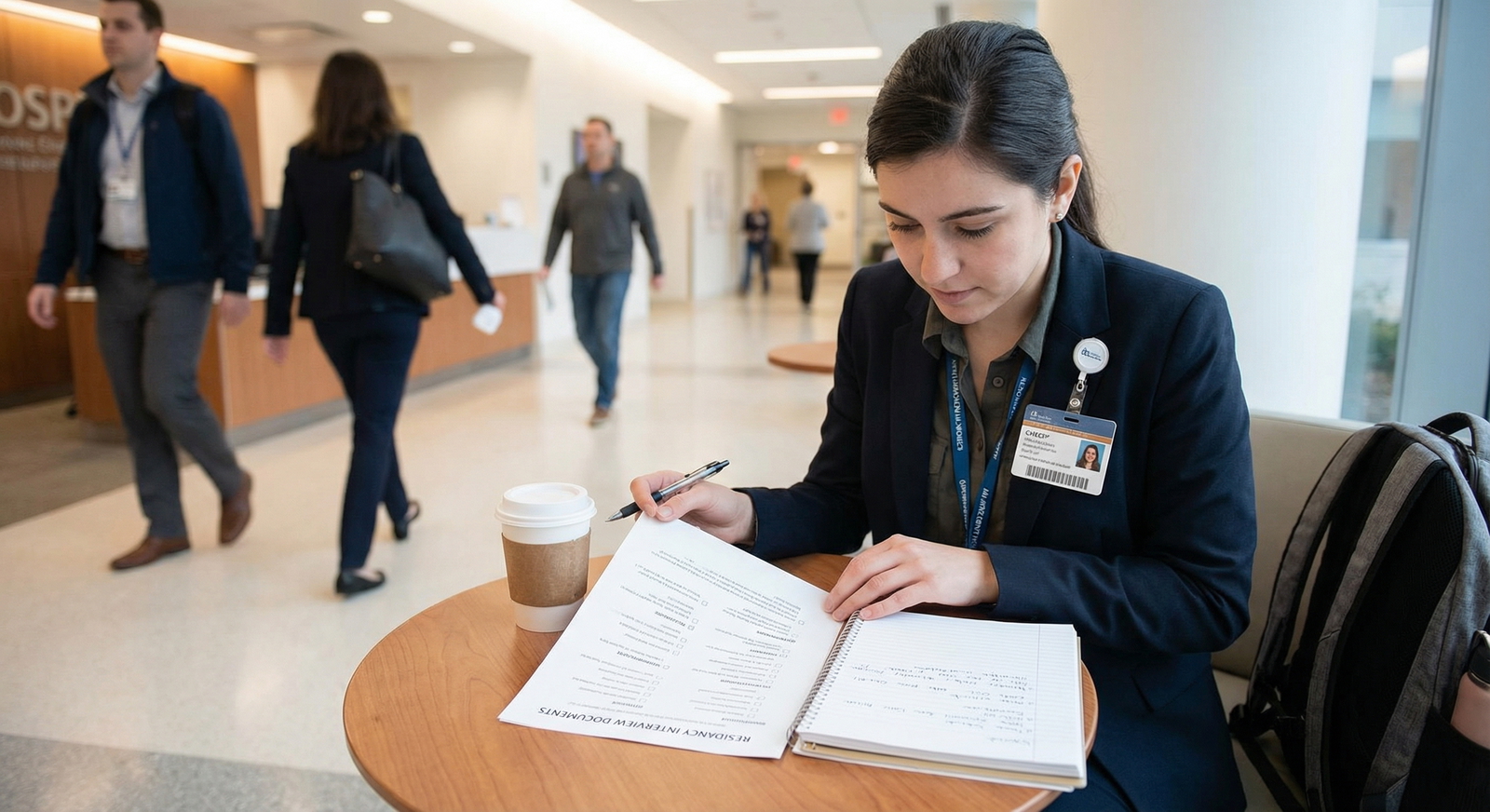
Re-Review Your Own Application Materials
A common pitfall is forgetting what you wrote months earlier. Before each interview:
- Re-read:
- Personal statement(s)
- ERAS experiences and meaningful reflections
- Any EM-IM specific supplemental information
- Highlight:
- 3–4 “anchor experiences” that best show your EM-IM potential (e.g., ED resuscitation, complex IM inpatient case, QI project bridging ED and inpatient care, research in acute care outcomes).
Expect questions like:
- “Tell me more about your project on reducing ED re-visits.”
- “What was your role in this multidisciplinary QI initiative?”
- “What did you learn about caring for patients with multi-morbidity in the ED?”
Prepare 1–2 minute concise summaries of each experience:
- Context (where/when, your role)
- What you did
- Impact (on patients, team, or system)
- What you learned that is relevant to EM-IM
Tighten an EM-IM–Relevant Skill Set
As you think about how to prepare for interviews, frame your skill set in EM-IM language:
- Acute care skills: Rapid assessment, initial resuscitation, prioritizing sick vs. not sick.
- Longitudinal and diagnostic skills: Constructing thorough differentials, managing chronic diseases, coordinating care.
- Systems thinking: Understanding readmissions, social determinants of health, and resource utilization.
- Communication:
- Delivering difficult news
- Coordinating with consultants
- Managing family expectations in high-acuity and chronic care settings
When asked about strengths, examples, or team roles, choose stories that illustrate how you already think and act at the EM-IM interface.

Step 5: Practical Logistics and Professionalism Before Interview Day
Even the strongest EM-IM candidate can lose ground due to preventable logistical errors. Solid pre-interview preparation also includes technical readiness, appearance, timing, and etiquette.
Plan for Virtual vs. In-Person Interviews
Most programs now conduct virtual interviews, occasionally with hybrid options. Prepare for both.
Virtual Interview Preparation
- Technology check:
- Stable internet (use Ethernet if possible)
- Test camera, microphone, and platform (Zoom, Thalamus, Teams)
- Backup device and charger nearby
- Environment:
- Neutral background (plain wall or neat bookshelf)
- Good lighting (facing you, not behind you)
- Minimal noise; tell roommates/family about the schedule
- On-screen presence:
- Look at the camera when answering (practice to make it feel natural)
- Position camera at eye level
- Keep notes off to the side; avoid visibly reading from scripts
In-Person Interview Preparation
- Travel:
- Arrive in town the day before; know the route and parking.
- Bring copies of your CV, a small notebook, and a pen.
- Hospital navigation:
- Have the exact address, building, and floor.
- Budget extra time for security or parking delays.
Professional Attire and Body Language
For both virtual and in-person formats:
Attire:
- Conservative professional suit (jacket and matching pants or skirt)
- Neutral colors (black, navy, gray)
- Minimal jewelry and fragrance
- Clean, neat appearance; avoid anything that could distract more than your words
Body language:
- Sit upright with open posture
- Nod to show engagement; avoid fidgeting
- Keep hands visible but not overly animated
Email, Scheduling, and Communication Etiquette
Professionalism in communications is part of evaluation.
- Respond promptly to interview offers; spots may be limited.
- Use a professional email address and signature block.
- Confirm details:
- Date, time zone, platform or location
- Interview schedule (if provided)
- Pre-interview messages:
- If you must reschedule, do so early, politely, and with a brief explanation.
- Check grammar and tone in correspondences with coordinators and faculty.
Step 6: Develop Strong Questions for Programs
Programs expect you to ask informed questions. This is not just a formality—your questions signal how seriously you’ve thought about EM-IM training.
High-Yield EM-IM–Focused Questions to Consider
Adapt these to each program:
Training structure and identity
- “How does the program help EM-IM residents maintain both identities and skill sets across five years?”
- “What are common challenges EM-IM residents face when switching between EM and IM rotations, and how are they supported?”
Mentorship and career development
- “Is there a formal mentorship structure specifically for EM-IM residents?”
- “Can you share recent examples of EM-IM graduates’ career paths from this program?”
Clinical experiences
- “How do EM-IM residents integrate into the ED and IM teams? Are there rotations uniquely tailored to EM-IM?”
- “What kind of critical care and resuscitation experience do EM-IM residents gain compared with categorical residents?”
Research, QI, and leadership
- “What opportunities exist for EM-IM residents to participate in projects that bridge ED and inpatient medicine—like throughput, readmissions, or transitions of care?”
- “How are residents supported to attend conferences or present scholarly work?”
Wellness and work-life balance
- “How does the program monitor and promote wellness, especially for EM-IM residents managing two sets of rotations and schedules?”
Prepare a small list of 6–8 questions and choose the most appropriate ones depending on whether you’re speaking with program leadership, current residents, or faculty.
Step 7: Build a Deliberate Practice Plan Before Each Interview
To solidify your residency interview preparation, treat it like a clinical skill. Passive reading is not enough; you need active, repeated practice.
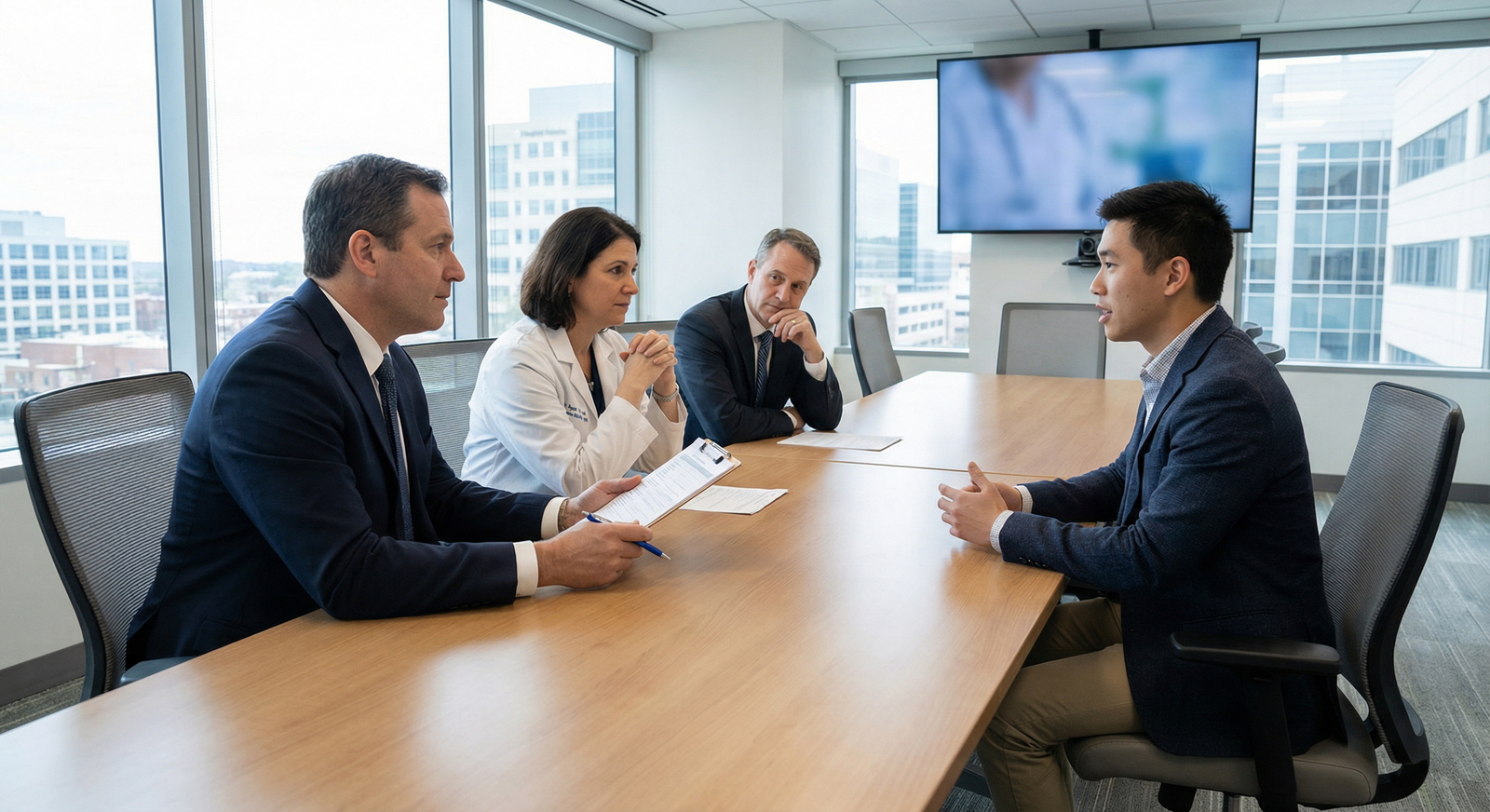
Conduct Mock Interviews
- Ask:
- Faculty mentors (especially EM, IM, or EM-IM)
- Career advisors
- Trusted peers
- Simulate:
- 30–45 minute interview
- Behavioral questions
- EM-IM specific questions (“Why combined?” “Challenges of dual training?”)
- Request feedback on:
- Clarity and conciseness
- Non-verbal communication
- Over- or under-emphasized parts of your story
Record at least one mock interview (audio or video) and review it critically.
Script Bullet Points, Not Memorized Speeches
Write down:
- Bullet points for major answers (Tell me about yourself, Why EM-IM, Strengths/weaknesses).
- 4–5 stories that can flexibly answer different behavioral questions (conflict, leadership, mistake, resilience, system failure).
Avoid word-for-word memorization. Interviewers can usually tell when you are reciting; aim instead for a polished but conversational tone.
Pre-Interview Day Routine
The day before each interview:
- Review your:
- Program notes
- Bullet points for key questions
- List of questions to ask the program
- Plan:
- Outfit
- Technology setup (if virtual)
- Transportation (if in-person)
- Sleep:
- Protect your rest; fatigue can unsettle even the best-prepared candidate.
The morning of the interview:
- Eat a light, sustaining meal.
- Do a quick 5–10 minute warm-up:
- Say your “Tell me about yourself” aloud.
- Answer a couple of sample questions to get into speaking rhythm.
- Take a few deep breaths to center yourself.
FAQs: EM-IM Combined Residency Pre-Interview Preparation
1. How is pre-interview preparation for EM-IM different from categorical EM or IM?
For EM-IM, you must articulate not just why you like both specialties individually but why you need combined training to achieve your goals. Programs will probe your awareness of the workload, identity shifts, and length of training. Your preparation should focus heavily on your long-term vision and on demonstrating that you understand EM-IM as a deliberate choice, not indecision.
2. What interview questions should I expect specifically about EM-IM?
Common EM-IM–specific questions include:
- “Why EM-IM instead of categorical EM or IM?”
- “How do you envision your career after EM-IM—what will your practice look like?”
- “What challenges do you anticipate in a five-year combined program, and how will you handle them?”
- “Tell me about a clinical experience that confirmed your interest in both acute and longitudinal care.”
Preparing clear, honest answers to these ahead of time is critical.
3. How can I show I’m a strong fit as an MD graduate residency applicant from an allopathic school?
Highlight the advantages of your allopathic medical school match training:
- Breadth and depth of clinical exposure
- Strong letters from EM and IM faculty
- Experience in both ED and inpatient/internal medicine environments Then connect those to specific features of EM-IM programs (e.g., high-acuity ED, complex internal medicine populations, opportunities in critical care and quality improvement).
4. How much should I talk about future fellowship plans (e.g., critical care) during interviews?
It’s acceptable—and often positive—to express interests such as critical care, hospital medicine, or administration if you’re clear that you remain open to growth and new opportunities. Frame them as interests rather than rigid expectations, and show that you understand the flexibility of EM-IM training (e.g., potential to pursue fellowships via emergency medicine internal medicine pathways). Programs want to see both direction and adaptability.
By approaching pre-interview preparation as intentionally as you approached your clinical rotations, you’ll be able to present yourself as a thoughtful, well-informed EM-IM candidate—one who understands the unique demands of combined training and is ready to contribute to both the ED and the inpatient medicine team from day one.