Understanding the Interventional Radiology Match Landscape
Interventional Radiology (IR) has rapidly evolved into a highly competitive, procedure-focused specialty combining diagnostic imaging with minimally invasive therapies. As an MD graduate pursuing an interventional radiology residency, your pre-interview preparation must be strategic, structured, and tailored to both IR and the unique structure of the allopathic medical school match.
The IR Match Pathways (I‑R vs ESIR vs Independent)
Before deep interview preparation, confirm exactly which IR pathway(s) you’re pursuing; this will shape how you present yourself:
Integrated IR (I‑R) Residency
- 6-year program (1 prelim + 5 IR/DR years, depending on structure).
- You match directly from medical school.
- You train in both Diagnostic Radiology and Interventional Radiology leading to dual board eligibility.
- Interviewers expect you to show early, sustained commitment to IR.
Early Specialization in IR (ESIR) within DR Residency
- Match into a Diagnostic Radiology residency with ESIR opportunities.
- You complete concentrated IR rotations and procedures during DR.
- Later complete an Independent IR Residency (typically 1–2 years).
Independent IR Residency
- Entered after DR residency; not usually for immediate MD graduates but relevant if you’re dual-applying or planning long-term.
For MD graduate residency applicants targeting the allopathic medical school match, most IR interviews will be for Integrated IR programs and/or DR with ESIR options. Each interview will probe:
- Your understanding of IR’s scope.
- Your technical curiosity and procedural aptitude.
- Your ability to function on multidisciplinary teams.
- Your fit for a demanding, call-heavy, high-acuity specialty.
Understanding this context helps you craft your narrative and align your pre-interview preparation.
Step 1: Clarify Your IR Story and Professional Identity
Before you rehearse answers or memorize details about programs, you need a clear, authentic story that explains:
- Why IR?
- Why you?
- Why now?
Build Your IR Narrative
Residency interviewers want to know that you understand what IR actually is in practice and that your interest runs deeper than “I like procedures.” Start by outlining your IR journey:
Exposure Milestones
- First meaningful introduction to IR (e.g., case during surgery or ICU rotation, IR elective, shadowing).
- Key experiences: IR consults, inpatient follow-ups, multidisciplinary tumor boards, call shifts, or IR clinic.
Defining IR Experiences Pick 2–3 specific, vivid clinical moments:
- A complex TIPS procedure for refractory ascites.
- Y‑90 radioembolization for hepatocellular carcinoma.
- Trauma embolization saving a hemodynamically unstable patient.
- Uterine fibroid embolization with dramatic symptom relief.
- PERT team call where IR was central to PE management.
For each, clarify:
- What you observed or did.
- What skills you saw IR physicians using (decision-making, imaging interpretation, procedural finesse, communication).
- How it shaped your decision to pursue IR.
Long-Term Vision
- Are you drawn to:
- Acute/emergent IR (trauma, bleeding)?
- Oncologic IR (TACE, Y‑90, ablations)?
- Venous disease, PAD, women’s health, or dialysis access?
- Do you envision an academic, community, or hybrid career?
- Any early interest in research niches (e.g., tumor ablation, device development, image-guided biopsies, AI in imaging)?
- Are you drawn to:
Write this narrative out in bullet form. You’ll refine it into responses for:
- “Tell me about yourself.”
- “Why interventional radiology?”
- “Where do you see yourself in 10 years?”
Align Your Story With IR-Specific Qualities
Interventional radiology residency directors look for candidates who demonstrate:
- Technical curiosity and dexterity – interest in anatomy, devices, imaging modalities, and procedural steps.
- Team-based communication – ability to collaborate with surgeons, oncologists, hospitalists, ICU staff.
- Comfort with acutely ill patients – IR often handles unstable patients and urgent bleeds.
- Resilience and composure – ability to function in long hours, middle-of-the-night calls, emotionally charged situations.
- Diagnostic radiology foundation – enthusiasm for imaging, pattern recognition, and radiologic-pathologic correlation.
In preparing for your interviews, map each core quality to at least one specific example from your training or experiences.
Step 2: Master the Fundamentals of IR Content Knowledge
You won’t be expected to operate like a fellow, but as an MD graduate applying to an interventional radiology residency, you should demonstrate both breadth and realism in your understanding of day-to-day IR.
Core Clinical Domains to Review
Review key areas that may be referenced in casual or formal interview conversation:
Vascular and Interventional Oncology
- TACE, Y‑90, bland embolization.
- Percutaneous ablations (RFA, microwave, cryoablation).
- Biopsies, port placements, venous access.
Nonvascular Interventions
- Drainages (biliary, abscess, nephrostomy).
- Gastrostomy/jejunostomy tube placements.
- Vertebroplasty/kyphoplasty basics.
Vascular Interventions
- PAD interventions (angioplasty, stenting).
- DVT/PE management concepts (thrombolysis, thrombectomy, IVC filters—current evidence and cautious use).
- Dialysis access interventions.
Neuro-Interventional Concepts (high-level)
- Not necessarily primary IR, but having awareness of stroke systems of care and endovascular stroke therapy is helpful, especially where IR and neurointerventional teams overlap.
You don’t need textbook-level detail, but you should be able to:
- Explain what an IR attending’s week looks like (clinic, consults, procedures, follow-up).
- Describe common inpatient consult questions (e.g., “Should this patient get a filter?”, “Can you drain this abscess?”, “Is this patient a candidate for TIPS?”).
- Discuss how IR interacts with other services (oncology, surgery, GI, nephrology, vascular surgery).
Stay Current With IR Trends
Program directors often explore whether you’re engaged with the evolving nature of IR. Before interviews:
- Skim position papers/guidelines from:
- SIR (Society of Interventional Radiology) – especially on IR as a clinical specialty, outpatient IR, and patient-centered care.
- Review major trends:
- Shift toward clinic-based practice and longitudinal patient care.
- Growth of oncologic IR and interventional oncology clinics.
- Debates around:
- Use of IVC filters.
- Best practices for PAD interventions.
- Role of IR in PE response teams (PERT).
You’re not being tested like an oral boards candidate; the goal is to sound informed, curious, and realistic about the field.

Step 3: Structured Residency Interview Preparation
This is where most MD graduate residency applicants gain a decisive edge. Highly competitive IR programs expect you to come in polished. Think of residency interview preparation as three intertwined tracks:
- Self-focused preparation (your story and strengths).
- Program-focused preparation (fit and specific knowledge about each site).
- Skill-focused preparation (communication, presence, timing).
3.1 Core Interview Questions for IR Applicants
Use these as a structured framework for how to prepare for interviews:
“Tell me about yourself.”
Your answer should:
- Be 2–3 minutes max.
- Start with your background (where you grew up or major stage in life), then medical school, then IR journey.
- Highlight 2–3 themes that match IR: procedural interest, teamwork, patient communication, resilience.
Example structure:
- 20–30 seconds: Where you’re from + brief academic path.
- 40–60 seconds: Key medical school experiences (research, leadership, IR exposure).
- 40–60 seconds: Why IR, where you’re headed, and what you’re looking for in a program.
“Why Interventional Radiology? Why not surgery, cardiology, or another procedural specialty?”
Here, program directors are assessing:
- Depth of your IR understanding vs superficial reasoning.
- Realistic appreciation of IR call, emergent work, and clinic.
- Your awareness of the diagnostic radiology component.
Craft a 1–2 minute answer that includes:
- Specific experiences that exposed you to IR.
- Elements of IR that resonate with you (image-guided precision, minimally invasive therapies, continuity via clinic).
- Evidence you have explored alternatives (e.g., surgery, vascular surgery, cardiology) and still chose IR.
“Why our program?”
Avoid generic answers. For every program, know:
Program structure
- Number of IR residents per year.
- Strengths (oncologic IR, trauma, PAD, women’s health, pediatric IR, research).
- Relationship with DR department.
Clinical volume and diversity
- Level 1 trauma center?
- Major cancer center?
- Transplant program?
Culture and educational features
- Simulation lab?
- IR clinic structure?
- Research mentorship?
Tie these features to your goals:
- “I am particularly interested in oncologic IR, and your close partnership with the cancer center and high volume of Y‑90 and TACE cases aligns with my long-term goal of practicing in an academic IR/onco setting.”
“Tell me about a time you dealt with a difficult team situation / conflict / failure.”
This is common in interview questions residency committees use to distinguish mature, self-reflective applicants. Use the STAR framework:
- Situation – Brief context.
- Task – Your role.
- Action – What you did, focusing on judgment, communication, adaptability.
- Result – Outcome + what you learned.
Choose examples that highlight:
- Working with nurses or residents during rapid response or a busy call night.
- Conflicts or miscommunications handled respectfully.
- Owning a mistake (e.g., miscommunication about orders, delay in follow-up) and how you corrected it.
Clinical/ethical scenarios
You may be asked IR-adjacent scenarios like:
- “What would you do if a consultant pressures you to perform a procedure you feel is not indicated?”
- “How would you handle a patient or family refusing a recommended procedure?”
Show:
- Patient-centered reasoning.
- Respect for evidence-based decision-making.
- Professional communication with referring services.
- Seeking senior guidance when appropriate.
3.2 Program-Specific Research
Before every interview:
Review the program’s website:
- IR faculty and subspecialty interests.
- Major clinical strengths (e.g., PAD, IO, PE response team).
- Case numbers if available.
Look at recent publications of key IR attendings/interviewers (PubMed or Google Scholar).
- If their work overlaps with your interests, note a specific paper or topic for questions.
Study the program’s conference structure:
- IR didactics?
- Morbidity and mortality (M&M) schedule?
- Multidisciplinary tumor boards?
This pre-work supports strong questions like:
- “I saw Dr. X’s work on endovascular management of chronic DVT; how involved are residents in these cases and related research?”
- “How does your IR clinic integrate with oncology and surgery clinics for longitudinal patient care?”
3.3 Mock Interviews and Feedback
To refine your residency interview preparation:
- Do at least two mock interviews:
- One traditional (faculty or advisor).
- One peer-based, recorded on video.
Ask for feedback on:
- Clarity and structure of responses.
- Nonverbal communication (eye contact, posture, pacing).
- Overuse of filler words (um, like, you know).
Consider building a personal interview “one-pager”:
- Bullet answers to:
- Why IR?
- Why this program?
- Strengths and weaknesses.
- Key challenging cases you’ve seen.
- 3–4 main talking points that set you apart.
Review this before each interview day, not to sound scripted, but to stay consistent and clear.
Step 4: Presenting Your IR-Relevant Experiences Strategically
As an MD graduate residency applicant in IR, your file will often be dense with projects, electives, and activities. Your task before interviews is to transform your CV into compelling stories.
IR-Specific Clinical Experiences
Identify 3–5 clinical experiences you want to highlight:
- IR electives or sub-internships
- Be able to describe:
- Typical day on the service.
- Procedures you scrubbed into or helped with.
- What you learned clinically and professionally.
- Be able to describe:
- Non-IR rotations with IR relevance
- ICU: Interpreting imaging, participating in multi-specialty discussions about bleeding control, PE management.
- Surgery: Perioperative planning that involved IR.
- Medicine: Co-management of patients after IR procedures.
Frame these as:
- Evidence of your commitment.
- Context for how you understand IR’s role in hospital and outpatient care.
Research and Quality Improvement
In a competitive IR match (IR match rates are often lower than broader DR match), research can differentiate you, but it doesn’t have to be IR-only:
- IR-focused projects
- Outcomes of TACE/Y‑90, complication rates of drains, PAD interventions, etc.
- Radiology-adjacent projects
- Imaging-based QI, workflow improvements, radiation safety.
- Other clinical research
- Emphasize what you learned about study design, critical appraisal, and how it informs your evidence-based approach to IR.
Prepare short, structured summaries:
- Research question.
- Your specific role.
- Key findings (if available).
- What the project taught you about IR, collaboration, or scientific thinking.
Leadership, Teaching, and Communication
IR residency directors value residents who can:
- Explain procedures and risks clearly to patients.
- Lead teams under pressure.
- Contribute to education (medical students, residents, nurses).
Select 1–2 experiences that demonstrate this:
- Teaching sessions you led.
- Leadership roles in interest groups (especially radiology/IR).
- Peer mentoring or curriculum development.
Be ready to connect these to IR’s clinical demands:
- “My experience organizing and teaching ultrasound workshops strengthened my ability to explain complex imaging concepts in simple terms—something I see as central to discussing IR procedures with patients and families.”
Step 5: Logistics, Professionalism, and Interview Day Strategy
Even the most polished content can be undermined by poor execution. Pre-interview preparation for MD graduates in interventional radiology must also address logistics and professionalism.
5.1 Technical and Practical Setup (Virtual and In-Person)
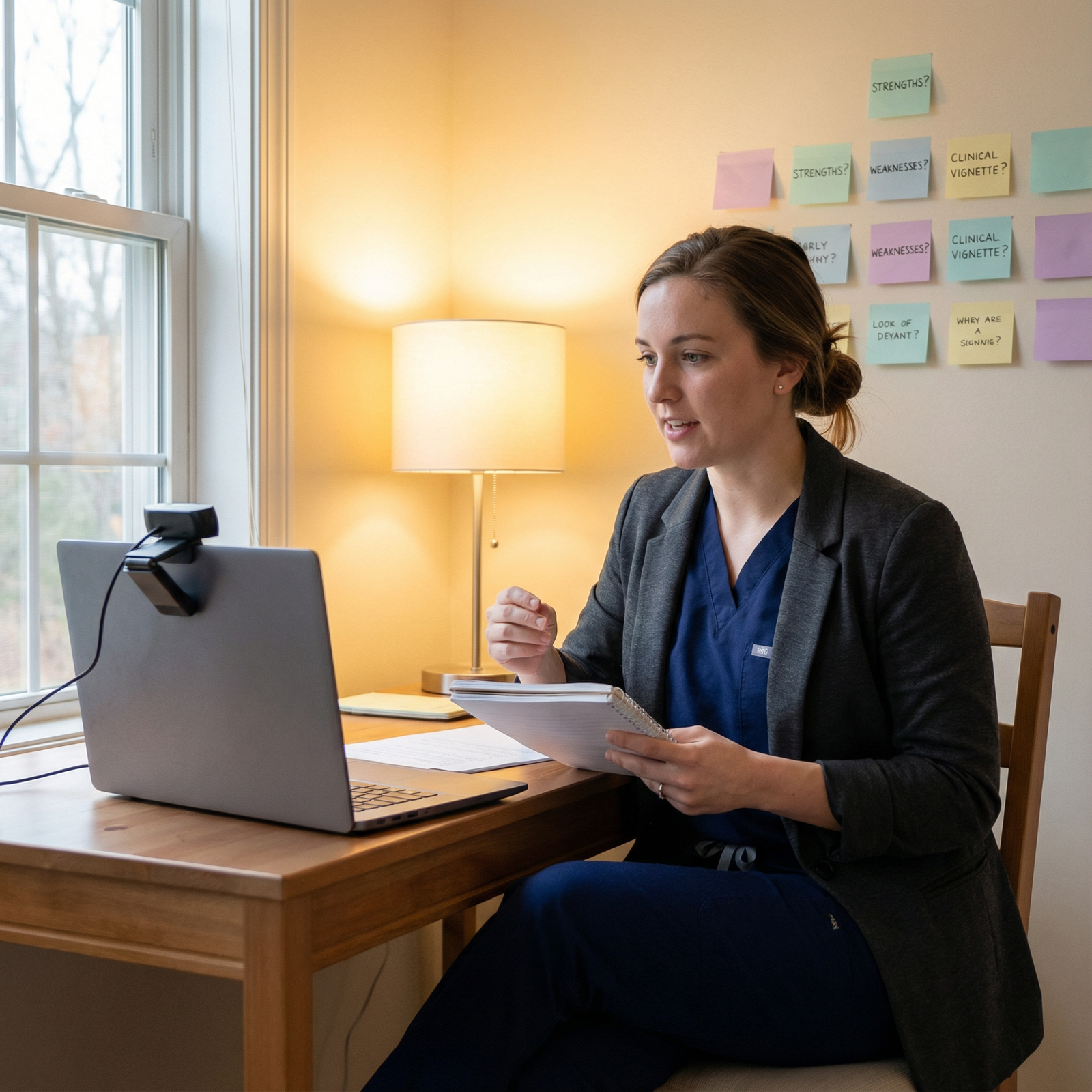
If virtual:
Environment
- Quiet, uncluttered background.
- Good lighting (front-facing, not backlit).
- Neutral, professional backdrop.
Technology
- Test your webcam, microphone, and internet on the platform used (Zoom, Thalamus, ERAS, etc.).
- Use headphones if needed to reduce echo.
- Keep your device plugged in or fully charged.
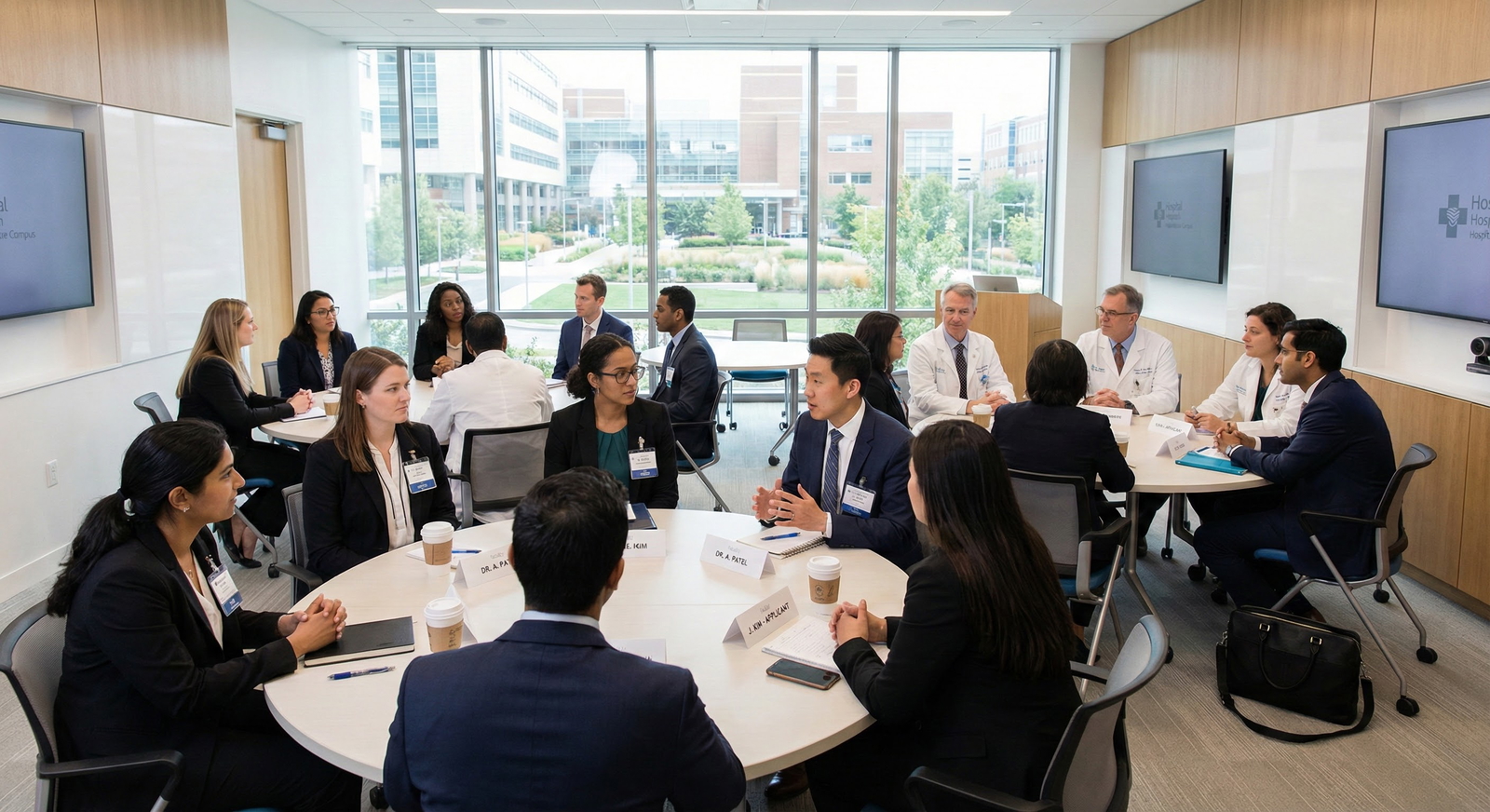
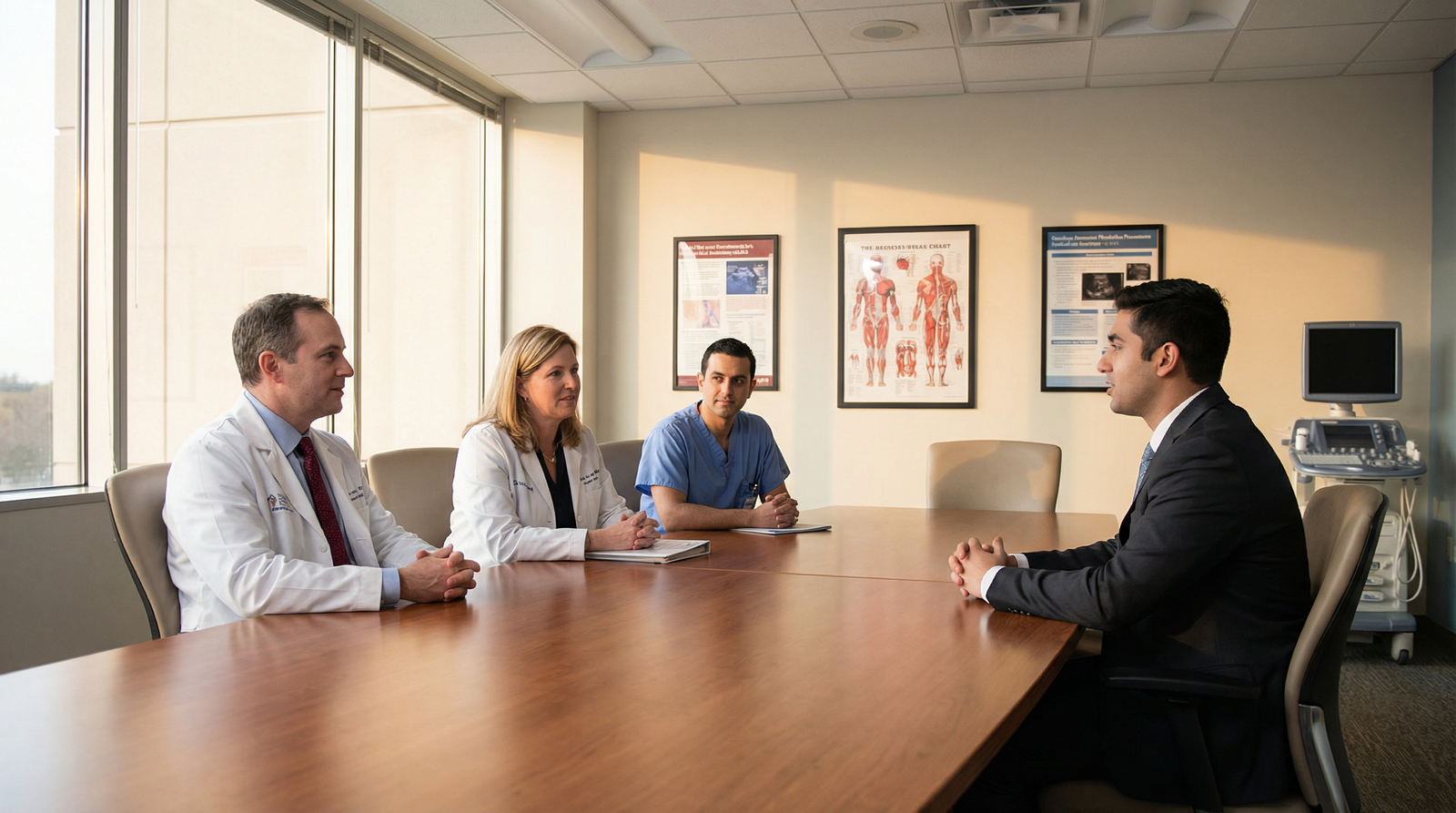
If in-person:
- Travel logistics
- Arrive in the city at least the day before.
- Confirm directions, parking, and entry procedures.
- Materials
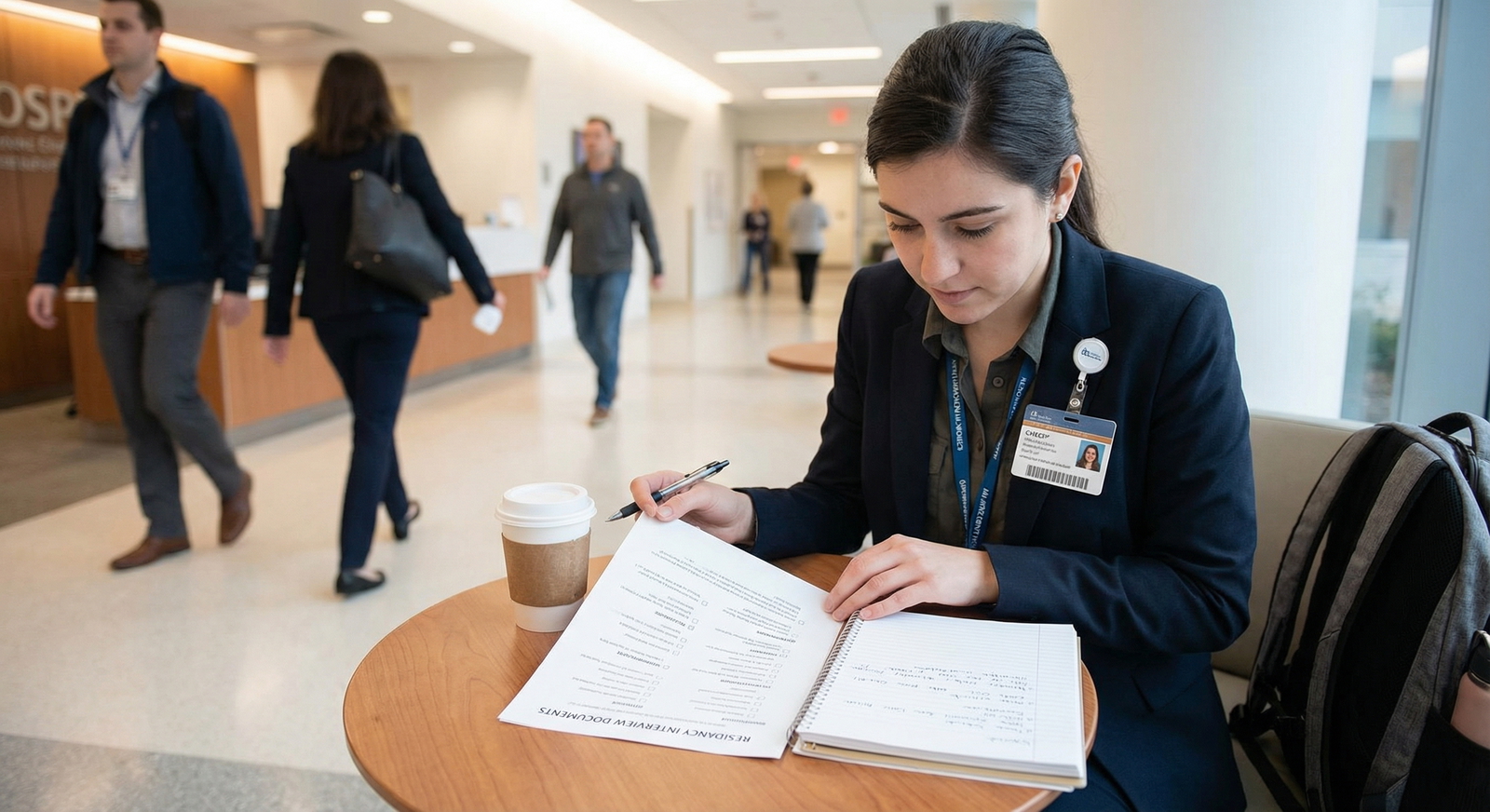
- Printed or digital copy of your CV and personal statement.
- Notebook + pen for quick notes after each interview.
- Small folder for any program handouts.
5.2 Professional Appearance and Demeanor
Attire
- Conservative business suit (dark or neutral color).
- Neat, professional grooming.
Body language
- Sit upright, natural but attentive posture.
- Make consistent eye contact (look at camera when virtual).
- Nod to show engagement without overdoing it.
Communication style
- Speak clearly, at a moderate pace.
- Pause briefly before answering challenging questions to gather thoughts.
- Avoid self-deprecation; be humble but confident.
5.3 Asking Insightful Questions
Toward the end of interviews, you’ll usually be asked, “What questions do you have for us?” This is a critical opportunity to:
- Demonstrate genuine interest.
- Clarify program features that matter to your training.
- Show that you understand what an IR residency entails.
Prepare a bank of questions you can tailor:
To program leadership:
- “How has your IR training changed in the last 5 years, and how do you see it evolving?”
- “How do residents participate in clinic and longitudinal follow-up of IR patients?”
- “What opportunities exist for residents to get involved in teaching or curriculum development?”
To residents:
- “What does a typical day on IR look like here for a junior vs senior resident?”
- “How is autonomy developed over the course of training?”
- “How is the call schedule, and how supported do you feel on call?”
Avoid questions you could easily answer from the website (e.g., “How long is your program?”). Instead, demonstrate that you’ve read the basics and are now digging deeper.
5.4 Post-Interview Reflection and Organization
Immediately after each interview day:
- Take 5–10 minutes to jot down:
- Who you spoke with and any personal details or shared interests.
- Unique attributes of the program (IR clinic structure, case mix, culture).
- Overall impressions: strengths, any concerns, gut feeling.
This helps later when:
- Creating your rank list.
- Writing thank-you emails (if you choose to send them).
- Recalling specific programs after many interviews.
Organize programs in a spreadsheet:
- Columns for:
- IR case volume/style.
- Clinic emphasis.
- Research opportunities.
- Culture/fit.
- Geographic/life considerations.
- Notes from interviews.
Step 6: Managing Stress, Authenticity, and the IR Match Realities
The allopathic medical school match—especially for a field as competitive as interventional radiology—can be stressful. Solid pre-interview preparation includes mental and strategic planning.
6.1 Balancing Confidence and Humility
As an MD graduate residency candidate, your goal is to project:
- Confidence in your preparation and capabilities.
- Humility about how much you still have to learn.
Phrases that help:
- “I haven’t independently managed that scenario yet, but during my IR elective I saw…”
- “From my perspective as a medical student, it seemed that…”
- “I’m excited to develop more experience in…”
These show insight into your current training level while emphasizing a growth mindset.
6.2 Dual-Application Strategy (IR + DR)
Many applicants to interventional radiology residency also apply to diagnostic radiology programs, often aiming for ESIR. If this applies to you:
Be transparent but thoughtful:
- IR programs know many applicants dual-apply.
- Emphasize: “My clear long-term goal is to practice interventional radiology; I see both Integrated IR and DR with ESIR as viable paths.”
Tailor your emphasis:
- For IR interviews, highlight your IR focus.
- For DR interviews, emphasize your enthusiasm for imaging while noting your interest in IR as a subspecialty if appropriate.
6.3 Self-Care During Interview Season
Schedule sanity
- Avoid booking interviews so tightly that you’re exhausted and distracted.
- Keep some buffer days for rest and catch-up.
Daily routine stabilizers
- Exercise, even briefly.
- Good sleep hygiene, especially the night before interviews.
- Simple, healthy meals; avoid heavy, sleep-disrupting foods.
Support
- Stay in touch with peers who are also interviewing.
- Decompress after tough interviews instead of overanalyzing every detail.
Frequently Asked Questions (FAQ)
1. How competitive is the IR match for an MD graduate, and how does that affect my interview preparation?
Interventional radiology is among the more competitive specialties in the allopathic medical school match, with relatively few positions compared to applicant interest. This means:
- You must treat every interview as high-yield.
- Your residency interview preparation should be more intensive than for less competitive fields:
- Multiple mock interviews.
- Strong, polished answers to “Why IR?” and “Why this program?”
- Clear understanding of IR as a clinical, not just procedural, specialty.
- Apply broadly and consider including diagnostic radiology programs with ESIR if your goal is to maximize paths to IR.
2. What IR-specific topics should I be ready to discuss during interviews?
Be ready for high-level, non-technical discussions around:
- Common IR procedures: embolization, ablation, drains, nephrostomies, ports, PAD interventions.
- IR’s role in:
- Oncology (TACE, Y‑90).
- Trauma and acute bleeding.
- PE and DVT management.
- Chronic disease management (PAD, venous disease, dialysis access).
- Trends such as:
- Growth of IR clinics and longitudinal care.
- Ongoing debates (e.g., IVC filters, PAD intervention strategies).
- You do not need detailed step-by-step procedural knowledge, but you should sound familiar, interested, and engaged with the field.
3. How should I answer if asked about weaknesses or concerns on my application (e.g., a low Step score or leave of absence)?
Approach these questions with honesty, context, and growth:
- Briefly state the issue without being defensive.
- Provide context (health, family, adjustment issues) if relevant but avoid oversharing.
- Emphasize:
- What you changed (study strategies, time management, support).
- Subsequent improvement (later exam scores, strong clinical evaluations, research productivity).
- Connect this to IR if appropriate:
- “Learning to manage that challenge taught me resilience and better self-awareness—skills I know I’ll need in a demanding specialty like IR.”
4. Do I need a large amount of IR research to match into interventional radiology?
IR research helps, but it is not mandatory to have extensive IR research to match, especially if:
- You have strong overall academic performance and clinical evaluations.
- You demonstrate sustained clinical interest in IR (electives, shadowing, IR interest group involvement).
- You can articulate a thoughtful understanding of the specialty and your place in it.
If you do have IR or imaging-based research:
- Be ready to discuss it clearly and confidently.
- Show how it influenced your understanding of IR and your career goals.
By approaching pre-interview preparation methodically—strengthening your narrative, mastering core IR concepts, structuring your answers, and managing logistics and stress—you position yourself as a compelling, well-informed candidate for interventional radiology residency. This preparation not only improves your IR match prospects but also lays the foundation for your future identity as a clinical, procedure-focused physician in a rapidly evolving specialty.