Understanding the Plastic Surgery Residency Interview Landscape
For an MD graduate targeting plastic surgery, pre-interview preparation is not optional—it is a core strategic phase of the allopathic medical school match. Integrated plastic surgery residency is among the most competitive specialties in the United States. Programs receive hundreds of applications for only a few spots, and by the time you reach the interview stage, every candidate on the list has strong metrics.
The interview is therefore less about proving you’re “qualified” and more about demonstrating:
- Fit with the program’s culture and training model
- Genuine commitment to plastic surgery as a career
- Maturity, professionalism, and insight
- Potential as a future academic, reconstructive, or aesthetic leader
- Ability to work effectively on a high-performing, high-stress surgical team
Your pre-interview preparation should be deliberate and structured, not ad hoc. Think of it as your “pre-op planning” for one of the most important procedures of your career: each residency interview day.
Key goals of pre-interview preparation:
- Master your own story and application.
- Understand each program and its expectations.
- Anticipate and practice core and specialty-specific interview questions.
- Prepare polished, thoughtful questions to ask programs.
- Optimize logistics, technology, and your professional image.
- Build a sustainable strategy for multiple interviews over several weeks.
The following sections walk step-by-step through how to prepare for interviews as an MD graduate seeking a plastic surgery residency position.
Step 1: Foundation Work – Know Yourself and Your Application
Before focusing on “how to prepare for interviews,” you must build a solid foundation: a deep, honest understanding of your own narrative, strengths, limitations, and goals.
1.1 Clarify Your Professional Narrative
Plastic surgery program directors want to know who you are, not just what you’ve done.
Outline your story in a way that’s coherent and compelling:
Origin story
- When and how did you become interested in plastic surgery?
- Was there a key patient, mentor, or experience?
Evolution of interest
- How did your interest mature from curiosity into commitment?
- Which rotations, research projects, or electives solidified your path?
Current vision
- Where do you see yourself in 5–10 years?
- Academic vs. private practice? Reconstructive vs. aesthetic? Hand, craniofacial, microsurgery, or general plastics?
Personal values
- What professional values guide you? (e.g., meticulousness, innovation, advocacy, humanism)
Write this out as a 1–2 page personal “interview brief.” You won’t read from it, but articulating it in writing sharpens your thinking and helps you respond fluidly and consistently.
1.2 Master Your ERAS Application and CV
On interview day, the file in front of your interviewer is your application—every bullet point is fair game for questions.
Do a line-by-line review of:
Clinical experiences and sub-internships
- Recall specific cases, your role, what you learned, and any complications.
- Be ready with concrete examples of teamwork, communication, and clinical reasoning.
Research projects
- For each: know the aim, your role, methods, results, limitations, and future directions.
- If you have plastic surgery or surgical research, you’ll almost certainly be asked about it.
Leadership and extracurriculars
- Think through impact: what changed because you were in that position?
Red flags or anomalies
- Leaves of absence, USMLE/COMLEX failures, late specialty switch, or academic concerns.
- Prepare a brief, honest, and mature explanation that shows insight and growth, not excuses.
Make a table with each CV entry and, in a second column, 1–2 “talking points” you can use to discuss it.
1.3 Refine Your Plastic Surgery “Why This Specialty”
In an integrated plastics match, programs expect depth of commitment:
Be prepared to answer:
- “Why plastic surgery?”
- “Why integrated over general surgery then fellowship?”
- “What aspects of plastic surgery excite you the most?”
- “Which patient population or problem do you want to focus on?”
Use specific experiences:
- A complex reconstruction case you followed end-to-end
- A microsurgery case that highlighted the marriage of technical precision and creative problem-solving
- A patient whose quality of life transformation influenced your thinking
Avoid generic answers (“I like working with my hands” or “I like variety”) without attaching them to real, vivid examples.

Step 2: Deep Dive into Programs – Strategic Research and Fit
Effective residency interview preparation depends heavily on understanding where you’re interviewing and tailoring accordingly.
2.1 Build a Program Research Template
Create a standardized template (spreadsheet or document) for each program, including:
Program overview
- Hospital system, patient population, geographic location
- Program size, number of integrated positions
Training structure
- Distribution of PGY years between general surgery and plastic surgery rotations
- Early versus late exposure to plastics
- Availability of subspecialty rotations (craniofacial, hand, microsurgery, burn, aesthetics)
Faculty and interests
- Key faculty in areas that match your interests (e.g., microsurgery, gender-affirming surgery)
- Recent publications or major research themes
Research environment
- Required research time (e.g., 1–2 dedicated research years)
- T32 or other funded research tracks
- Opportunities for basic science, translational, or outcomes research
Program culture and values
- Emphasis on autonomy vs. supervision
- Operative volume and case diversity
- Wellness initiatives, mentorship structure, resident support
Recent news and achievements
- Awards, grants, new programs or partnerships
- Expansion of services or new fellowship programs
Fill in this template using:
- Program websites and social media (especially Instagram and X/Twitter)
- FREIDA and ACGME information
- Recent plastic surgery conferences and abstracts
- Publications from key faculty (PubMed search with program name)
2.2 Use Research to Tailor Your “Why This Program”
For each interview, craft 2–3 specific reasons you’re interested in that program. Avoid generic statements like “strong training” or “high volume.”
Examples:
- “I’m particularly drawn to your early and sustained exposure to microsurgery starting in PGY-2, and the chance to work with Dr. X on perforator flap research.”
- “The integrated 2-year research track aligns well with my interest in health services research around access to reconstructive care for underinsured populations.”
- “Your program’s mix of county, VA, and private hospital experiences would allow me to care for diverse patient populations while gaining strong aesthetic training.”
Having these in mind will make your answers to “Why our program?” more compelling and grounded.
2.3 Identify Alumni and Resident Perspectives
Reach out to:
- Recent MD graduates from your medical school who matched into that plastic surgery residency
- Residents you met during away rotations or at conferences
- Mentors who know the program culture
Ask specific questions:
- What do residents here value most about the program?
- What type of resident tends to thrive in this environment?
- How would you describe the operative experience by PGY level?
- What would you want an applicant to know before interviewing?
Incorporate these insights into your preparation and into nuanced questions during the interview.
Step 3: Mastering Residency Interview Questions – Especially for Plastics
A central part of residency interview preparation is deliberate, structured practice with common and specialty-specific questions. For an MD graduate targeting a plastic surgery residency, you must be ready for both standard behavioral questions and plastics-focused discussions.
3.1 Core Behavioral and Fit Questions
Anticipate and prepare for:
- “Tell me about yourself.”
- “Walk me through your path to plastic surgery.”
- “What are your strengths as a resident? What are your weaknesses?”
- “Describe a time you had a conflict with a team member. How did you handle it?”
- “Tell me about a time you made a mistake in patient care.”
- “Describe a stressful situation and how you managed it.”
- “How do you cope with long hours and high-pressure environments?”
- “What do you look for in a residency program?”
- “What will be the biggest challenge for you during residency?”
Use the STAR (Situation–Task–Action–Result) structure to keep answers clear and concise. Focus on:
- Specific examples, not vague claims.
- Self-awareness and insight.
- Growth—what you learned and how you changed your behavior.
3.2 Plastic Surgery–Specific Interview Questions
Plastic surgery programs frequently probe your understanding of the specialty and your level of commitment.
Be ready for:
- “Why plastic surgery instead of another surgical field?”
- “What areas of plastic surgery interest you most and why?”
- “Tell me about a plastic surgery case that impacted you.”
- “How do you see yourself balancing reconstructive and aesthetic practice in the future?”
- “What do you think is the future of plastic surgery over the next decade?”
- “Tell me about a technical skill you are proud of and how you developed it.”
Also, expect clinical scenario or judgment questions, for example:
- “You’re a PGY-2 on call and consulted for a traumatic hand injury. How would you approach this situation?”
- “A patient is dissatisfied with a cosmetic result that is objectively acceptable. How would you handle the conversation?”
- “How would you manage a complication in a free flap postoperative patient?”
They are not expecting fellowship-level answers from an MD graduate, but they are assessing:
- Clinical reasoning
- Communication style
- Empathy and professionalism
- Awareness of complications and patient expectations
3.3 Research and Academic Questions
Programs will often use your research as an anchor for deeper conversation.
Prepare to discuss:
- Your main research questions and why they matter clinically.
- Any plastic surgery–related projects (design, methodology, limitations).
- How your research informs the kind of plastic surgeon you want to become.
- Whether you plan to remain active in research during residency and beyond.
If you have high-impact publications, be ready for:
- “Walk me through this paper as if I’m not in your field.”
- “What would be the next logical study to conduct based on these findings?”
3.4 Practice Realistically: Mock Interviews and Feedback
To make residency interview preparation effective:
Schedule mock interviews
- With plastic surgery faculty, general surgery faculty, or mentors experienced in integrated plastics match.
- If possible, include at least one mock with a non-surgical faculty member to refine your communication with varied interviewers.
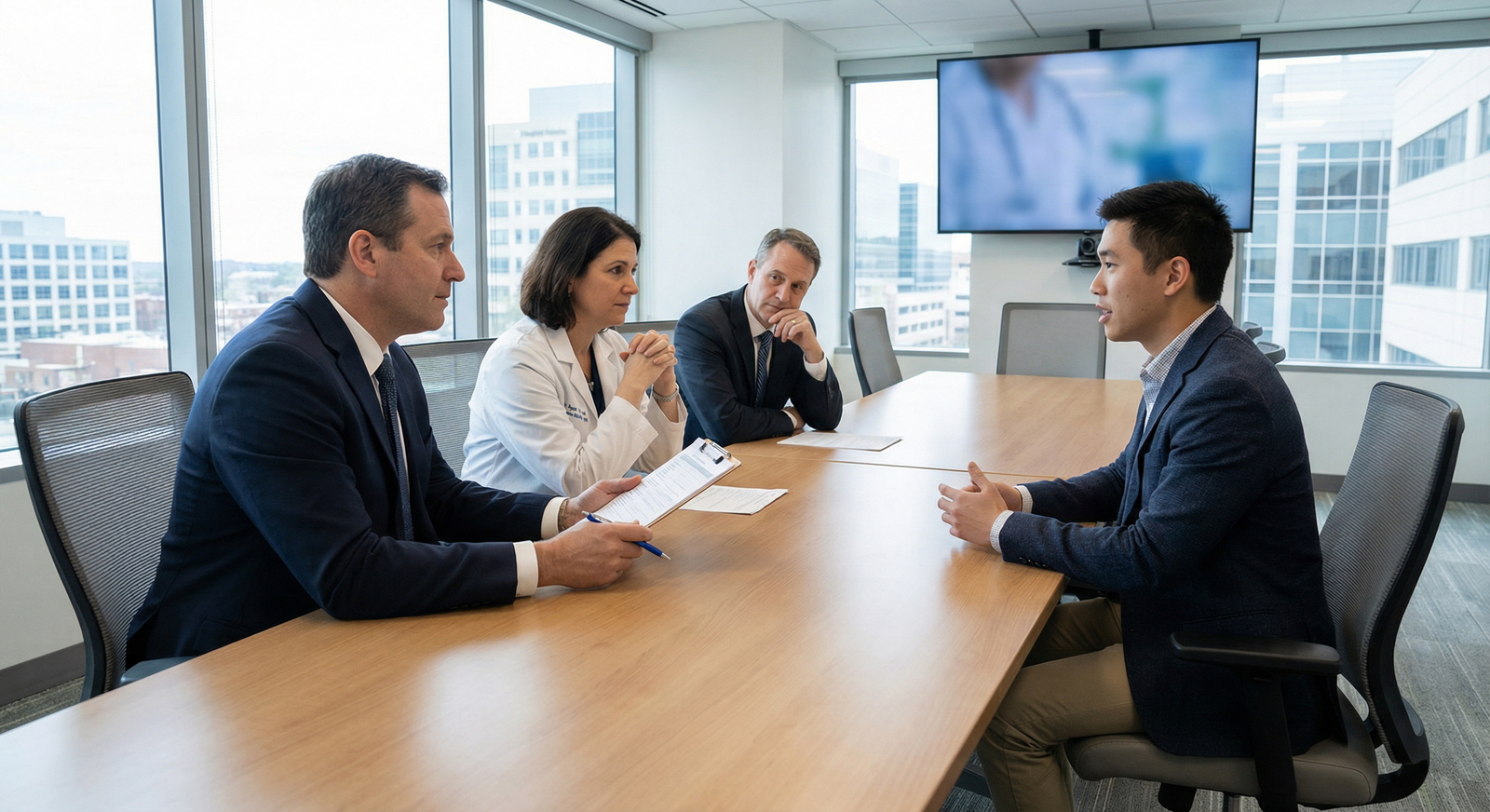
Include a panel-style mock
- Mimics the stress and dynamic of real interviews.
- Practice moving your gaze and engaging multiple people.
Record yourself
- Video (for in-person mannerisms) and audio (for virtual cadence and filler words).
- Assess nonverbal communication: eye contact, posture, facial expressions, excessive hand gestures.
Request specific feedback on:
- Clarity and organization
- Depth of specialty understanding
- Professionalism and humility
- Overly rehearsed or inauthentic responses
Set a schedule: for example, weekly mocks for 4–6 weeks before interviews begin.

Step 4: Preparing Questions You Will Ask – Showing Insight and Maturity
What you ask programs is almost as revealing as how you answer their questions. Thoughtful questions demonstrate insight, authenticity, and a genuine interest in the program’s training philosophy.
4.1 Principles for Strong Questions
Aim for questions that:
- Cannot be easily answered by reading the website.
- Reflect that you understand plastic surgery training.
- Help you gauge fit, not just impress the interviewer.
- Are tailored to each program’s strengths and features.
Avoid:
- Questions that revolve only around lifestyle or moonlighting early in the conversation.
- Questions clearly answered in their online materials.
- Overly aggressive questions about board pass rates or job placement (you can ask, but phrase them respectfully and usually later in the season or during second looks).
4.2 Example Questions for Program Leadership
- “How would you describe the type of resident who thrives in this program?”
- “What changes or innovations do you anticipate in the program over the next 3–5 years?”
- “How does the program support residents who are interested in academic careers in plastic surgery?”
- “Can you share how autonomy evolves from PGY-1 to PGY-6 in the OR?”
4.3 Example Questions for Current Residents
- “What do you think sets this plastic surgery residency apart from others?”
- “How do faculty support you when you’re managing complications or difficult patient interactions?”
- “Can you describe how the program has responded to resident feedback in the past few years?”
- “What does a typical week look like for a PGY-2 vs. PGY-5 on plastics service?”
4.4 Tailoring Questions to Your Interests
If you’re interested in:
Microsurgery:
“What is the typical microsurgical case volume by graduation, and do residents routinely act as primary surgeon on free flap cases?”Craniofacial:
“How is the craniofacial experience structured, and what opportunities are there for longitudinal care of pediatric patients?”Research:
“How do residents integrate research time with clinical responsibilities? Are there formal mentoring structures or research support staff?”
Have 4–6 questions prepared per program, organized by audience (faculty vs. residents). You won’t ask them all, but you’ll be ready for any interview format.
Step 5: Logistics, Professionalism, and Performance on Interview Day
Even the strongest MD graduate can be undermined by poor logistics or unpolished presentation. Pre-interview preparation includes meticulous attention to all the seemingly “small” details.
5.1 In-Person vs. Virtual: Different Preparation Tracks
While many integrated plastic surgery interviews have shifted toward virtual formats, some may involve in-person visits or second looks. Prepare for both.
For Virtual Interviews
Technology check
- Reliable internet connection; use Ethernet if possible.
- Test your video platform (Zoom, Thalamus, ERAS platform, etc.).
- Check audio with an external microphone or quality headset.
Environment
- Neutral, tidy background (plain wall, minimal distractions).
- Good lighting from in front or slightly to the side of your face.
- Camera at eye level; avoid looking down.
Professional image
- Full professional attire (not just top half).
- Minimal, professional accessories; neat grooming.
Do a full run-through with a friend: join a mock meeting, move between breakout rooms, and test screen name and display.
For In-Person Interviews
Travel planning
- Arrive one day early when possible.
- Plan contingencies for weather or flight delays.
- Have program contact information handy.
Materials
- Printed copies of your CV and personal statement.
- Small notebook or folder for jotting names and notes.
- Comfortable, professional shoes (hospital tours can be long).
Professional demeanor
- Assume you are being informally evaluated during all pre- and post-interview social events.
- Be collegial with other applicants; programs notice interpersonal behavior.
5.2 Body Language and Communication
Regardless of format:
- Sit upright with open posture.
- Maintain comfortable eye contact (look at the camera for virtual).
- Avoid obvious fidgeting or looking at your phone.
- Listen fully to questions; brief pauses to think are okay.
Speak clearly and at a moderate pace. Avoid:
- Overuse of “um,” “like,” and filler words.
- Overly casual language or slang.
- Excessive self-deprecation or arrogance.
5.3 Handling Difficult or Unexpected Questions
You may encounter challenging or unusual questions:
- “Tell me about a bad outcome you were involved in.”
- “What is something you’re working on improving in yourself right now?”
- “If you had to leave medicine, what would you do instead?”
Approach them by:
- Taking a breath and a brief pause.
- Answering honestly but professionally.
- Emphasizing learning, growth, and resilience.
If you don’t know the answer to a technical or scenario-based question, it’s acceptable to say:
“I’m not completely sure, but my thought process would be…”
Then walk through your reasoning. They’re often more interested in your thought process than in a perfect answer.
5.4 Post-Interview Debrief and Organization
Immediately after each interview day:
- Write down:
- Who you spoke with (names, roles, anything memorable).
- Program strengths and concerns.
- Your overall “gut feeling.”
- Any follow-up questions.
This will be crucial months later when you finalize your rank list and compare allopathic medical school match options among multiple programs.
If the program welcomes communication, a brief, sincere thank-you email to key faculty or coordinators can be appropriate. Keep it:
- Short (3–5 sentences)
- Specific (mention 1–2 things you appreciated)
- Professional (no assumptions about rank list position)
Putting It All Together: A 4–6 Week Pre-Interview Preparation Plan
For an MD graduate aiming at an integrated plastics match, a structured, time-bound plan keeps your residency interview preparation focused and balanced.
Weeks 1–2: Foundation and Self-Assessment
- Draft your personal professional narrative.
- Review your ERAS application and annotate talking points.
- Identify and organize all research, including updated abstracts or manuscripts.
- Start a list of common and plastic surgery–specific interview questions; draft bullet-point answers.
Weeks 2–3: Program Research and Question Development
- Build your program research template and begin populating it.
- Identify mentors and recent alumni to discuss programs and the specialty.
- Draft tailored “Why this program?” points for each scheduled interview.
- Develop 4–6 thoughtful questions to ask at each program.
Weeks 3–4: Mock Interviews and Performance Refinement
- Schedule at least 2–3 mock interviews (including one panel-style if possible).
- Record and review your performance; adjust body language, pacing, and content.
- Practice out loud—don’t just think through answers silently.
- Fine-tune responses to difficult questions and any red flags in your application.
Weeks 4–6: Logistics, Maintenance, and Confidence Building
- Finalize your interview wardrobe and technology setup.
- Perform test runs on interview platforms.
- Continue light practice to keep skills fresh.
- Prioritize sleep, nutrition, and exercise—burnout will show on screen or in person.
Remember: pre-interview preparation is not about memorizing scripts. It’s about:
- Knowing yourself and your story.
- Understanding the landscape of plastic surgery residency.
- Communicating with clarity, authenticity, and professionalism.
If you approach your plastic surgery residency interviews with the same rigor you bring to the OR and to your patients, you’ll present as the kind of MD graduate programs want: prepared, thoughtful, and ready to grow.
Frequently Asked Questions (FAQ)
1. How early should I start residency interview preparation for plastic surgery?
Begin structured preparation at least 4–6 weeks before your first interview. For an integrated plastics match, many candidates benefit from informal preparation even earlier in the year—especially refining their narrative and solidifying research talking points. The more competitive the program list, the more important it is not to cram in the days before your first interview.
2. What interview questions residency programs in plastic surgery most commonly ask?
Across programs, common interview questions residency applicants encounter include:
- “Tell me about yourself.”
- “Why plastic surgery?”
- “What are your strengths and weaknesses?”
- “Tell me about a challenging patient interaction.”
- “What are you looking for in a residency program?”
- “Where do you see yourself in 10 years?”
You should also expect plastic surgery–specific questions on clinical scenarios, your technical interests, and your plastic surgery research or rotations.
3. How can I stand out as an MD graduate in such a competitive specialty?
You stand out less by reciting accomplishments and more by:
- Presenting a coherent, authentic story of how you came to plastic surgery.
- Demonstrating insightful self-awareness about your strengths and growth areas.
- Showing genuine curiosity and engagement with each program’s training model.
- Communicating professionalism, humility, and maturity in discussing both successes and setbacks.
- Highlighting specific plastic surgery exposure and research that align with your career vision.
Programs expect excellence on paper; what differentiates candidates at the interview stage is how they think, interact, and fit into the team.
4. Are there differences in how MD graduates and DO graduates should approach plastic surgery residency interview preparation?
The core strategies—program research, mock interviews, narrative refinement—are the same. However, MD graduates applying through the allopathic medical school match often have greater access to integrated plastics mentors and home programs, which should be leveraged for:
- Specialty-specific mock interviews
- Honest feedback on program fit
- Connections to alumni at target programs
Regardless of degree, all applicants should approach residency interview preparation with the same level of rigor, professionalism, and attention to program-specific fit.