Understanding the Anesthesiology Interview Landscape as a Non‑US Citizen IMG
As a non-US citizen IMG (international medical graduate), the pre-interview phase often feels like the highest-stakes stretch of the anesthesia match journey. You must compete with US graduates, navigate visa issues, overcome unconscious bias, and communicate your strengths in a second (or third) language—often without having trained in the US health care system.
The good news: anesthesiology is a specialty that values composure under pressure, clear communication, teamwork, and pattern recognition. These are all qualities you can demonstrate very effectively in an interview if you prepare strategically.
This guide focuses on pre-interview preparation specifically for foreign national medical graduates applying to anesthesiology residency in the US. It covers what to do before interview day so that once you’re “in the room,” you can focus on connecting, not scrambling.
We will cover:
- Understanding what anesthesia programs look for
- Building a strong “story” and portfolio
- Deep specialty-specific preparation
- Practicing common interview questions (including behavioral and ethical)
- Logistics, technology, and professionalism
- Special considerations around visas and being a non-US citizen IMG
1. Know What Anesthesiology Programs Are Really Evaluating
Before you dive into question lists and practice answers, you need to understand what the interview is truly assessing. Most anesthesiology program directors are trying to answer four basic questions:
- Can this person safely and calmly manage high-stakes clinical situations?
- Will they be a reliable, low-drama team member at 3 a.m. in the OR?
- Can I trust them to learn quickly and communicate clearly with staff, surgeons, and patients?
- Will they stay in the program, pass boards, and contribute positively to our culture?
As a non-US citizen IMG, programs will often also think about:
- Will this resident be eligible for a visa we can sponsor (usually J-1, sometimes H-1B)?
- Are they likely to adapt successfully to US health care systems, cultural norms, and patient communication?
- Are their English communication skills sufficient for patient safety, especially in critical situations?
Your pre-interview preparation should be organized around proving—through stories, examples, and demeanor—that the answer to all of these questions is “yes.”
Core Attributes Anesthesia Programs Look For
Keep these themes in mind as you plan your preparation:
- Calm under pressure – Responding methodically in crises
- Attention to detail & vigilance – Classic anesthesiology traits
- Teamwork & communication – With surgeons, nursing, PACU, ICU
- Integrity & accountability – Especially around safety and medication handling
- Commitment to the specialty – Clear, sincere reasons for anesthesia
- Adaptability – Particularly important for a foreign national medical graduate entering a new system
When you prepare stories and answers, aim to demonstrate these attributes explicitly.
2. Crafting Your Anesthesiology Narrative and Application Story
Before any residency interview preparation, you should build a coherent personal narrative that connects:
- Your background as a non-US citizen IMG
- Your path to medicine
- Why anesthesiology
- Why training in the US
- What you bring that enriches a residency program
This narrative becomes the foundation for many of your answers.
Step 1: Clarify Your “Why Anesthesiology” Story
Expect to be asked this, explicitly or implicitly, in nearly every interview. An unconvincing or generic answer here can be fatal.
Avoid:
- “I like working with my hands and I like physiology” (too generic)
- “I enjoy procedures” (every anesthesiology applicant says this)
Aim for a specific, layered answer that combines:
- A formative clinical experience
- Your strengths (e.g., calmness, pattern recognition, communication)
- How those strengths fit with core anesthesiology values
Example structure:
- Brief origin moment
“During my ICU rotation as a final-year student in [country], I saw how anesthesiologists were the ones stabilizing the sickest patients…” - Personal trait alignment
“I realized that the aspects I naturally enjoy—thinking physiologically, anticipating problems, and staying calm in urgent situations—were exactly what anesthesia demands.” - Experience-based confirmation
“Later, during my anesthesia elective, managing pre-op optimization and seeing patients safely through high-risk surgeries confirmed this fit for me.” - Forward-looking motivation
“I’m especially interested in perioperative medicine and critical care, and I believe an anesthesiology residency in the US, with its structured training and multidisciplinary exposure, is the best environment for me to develop these skills.”
Write out your own version, refine it, and practice saying it out loud until it feels natural.
Step 2: Anticipate “Walk Me Through Your CV”
Program directors will often say: “Tell me about yourself” or “Walk me through your journey from medical school to now.”
As a foreign national medical graduate, your path may be more complex (gaps, extra exams, visas, observerships). Prepare a 2–3 minute, chronological, positive narrative that:
- Starts with your medical school
- Highlights key rotations and any anesthesiology exposure
- Addresses major transitions (moving countries, exam delays, research years)
- Ends with where you are now and why you’re applying this cycle
Keep it:
- Honest but non-defensive about gaps or delays
- Focused on growth (“This research year improved my critical appraisal skills and gave me time to prepare for US-style patient care.”)
- Anchored in anesthesiology where possible
Step 3: Pre-Plan Short “Anchor Stories”
Choose 6–8 specific experiences you can draw on to answer many interview questions residency programs ask, such as:
- Leadership story
- Failure or mistake you learned from
- Conflict with a colleague
- Ethical dilemma
- Time you handled stress or crisis
- Example of going above and beyond for a patient
Draft these using the STAR method:
- Situation
- Task
- Action
- Result (and what you learned)
Then tag each story with 2–3 attributes it demonstrates (e.g., teamwork, resilience, integrity). You will reuse these stories repeatedly.

3. Deep Specialty-Specific Preparation for Anesthesiology
Programs rarely expect interns to be mini-anesthesiologists already, but they do expect thoughtful, specialty-aware applicants. As a non-US citizen IMG, showing you understand the US anesthesiology environment helps overcome concerns about your clinical fit.
Understand the Role of an Anesthesiologist in the US
Be prepared to discuss:
- The perioperative care continuum: pre-op evaluation, intra-op management, post-op care, and pain control
- The anesthesiologist’s roles in:
- Operating room (OR)
- ICU
- Obstetrics (L&D)
- Procedural suites (endoscopy, cath lab, interventional radiology)
- Acute and chronic pain services
- Team interactions with:
- Surgeons
- CRNAs/AA-Cs (if applicable in that state)
- Nurses and techs
- PACU and ICU teams
Read from reliable sources:
- ASA (American Society of Anesthesiologists) website: sections on patient education and career information
- A classic anesthesia textbook’s introductory chapters (e.g., Miller, Barash, or Morgan & Mikhail)
Focus on: preoperative assessment, patient safety, monitoring standards, and basic airway management principles.
Prepare for Specialty-Relevant Interview Questions
Programs may ask “light” clinical or judgment questions to see how you think, not to test deep knowledge. Examples:
- “You are in the OR and a patient’s blood pressure suddenly drops—what is your approach?”
- “How would you explain the risks of anesthesia to a very anxious patient?”
- “What do you think is the most important role of an anesthesiologist in the OR?”
Prepare structured, safe answers:
- Prioritize safety and systematic assessment
- Airway, breathing, circulation; review monitors and equipment; call for help early if needed.
- Emphasize communication
- With the team and the patient/surgeon.
- Show awareness of core anesthesiology principles
- Vigilance, anticipation, patient-centered care.
You are not expected to give drug doses or detailed management plans as an applicant.
Anesthesia-Related Experiences: How to Present Them
If you have:
Anesthesia observerships
Electives
Research
QI projects
Prepare 1–2 clear takeaways from each:What you learned about the specialty (not just “I intubated a patient”)
How it shaped your decision to pursue anesthesia
Any lessons about patient safety, communication, or teamwork
For example:
“During my observership at [Hospital], I was struck by how the anesthesiologist set the tone for safety in the OR—leading time-outs, confirming equipment, and calmly coordinating with the surgeon during sudden blood loss. That experience reinforced my desire to be in a specialty where I can lead in safety and crisis management.”
4. Systematic Residency Interview Preparation: From Questions to Practice
Once your narrative and specialty knowledge are solid, focus on structured residency interview preparation. This is where you practice how to prepare for interviews efficiently.
Step 1: Build a Focused Question Bank
Don’t memorize scripts, but collect categories of questions:
Motivation & fit
- Why anesthesiology?
- Why our program?
- What are you looking for in a residency program?
- What are your career goals (fellowship, academic vs community)?
Behavioral questions
- “Tell me about a time you disagreed with a supervisor.”
- “Describe a situation where you had to make a difficult ethical decision.”
- “Tell me about a time you made a mistake and how you handled it.”
Personal & background
- “Tell me about yourself.”
- “What are your strengths and weaknesses?”
- “What do you like to do outside of medicine?”
IMG- and visa-related
- “Why did you choose to train in the US instead of your home country?”
- “What challenges have you faced as a non-US citizen IMG?”
- Visa status and long-term plans (some programs may ask indirectly).
Program-specific and questions for them
- Call schedule, ICU exposure, teaching methods, fellowship tracks, mentorship, wellness.
Use online lists of interview questions residency applicants commonly encounter, but prioritize quality of preparation over quantity of questions.
Step 2: Use the STAR Method for Behavioral Questions
For each behavioral question, practice answers that:
- Stay under 2–3 minutes
- Have a clear beginning, middle, and end
- End with what you learned or how it changed your behavior
Example (conflict with a colleague):
- S: “During my internal medicine rotation in [country], a colleague and I had different opinions about a patient’s management…”
- T: “We needed to present a unified plan to our attending.”
- A: “I suggested we review guidelines together and clarified our understanding, then we approached the attending together…”
- R: “The attending appreciated our initiative; we reached a safe plan and I learned the value of open, evidence-based discussion and not letting personal disagreement affect patient care.”
Step 3: Adapt Answers to the US System as a Non-US Citizen IMG
When reflecting on experiences from your home country:
- Translate terms into understandable US equivalents (e.g., “foundation year” to “intern year”; “house officer” to “resident”).
- Show humility and willingness to adapt: “In my training we did X; I know practices differ by country, and I’m eager to learn US standards.”
This reassures interviewers that you won’t insist on doing things “the way we did back home” if it conflicts with local practice.
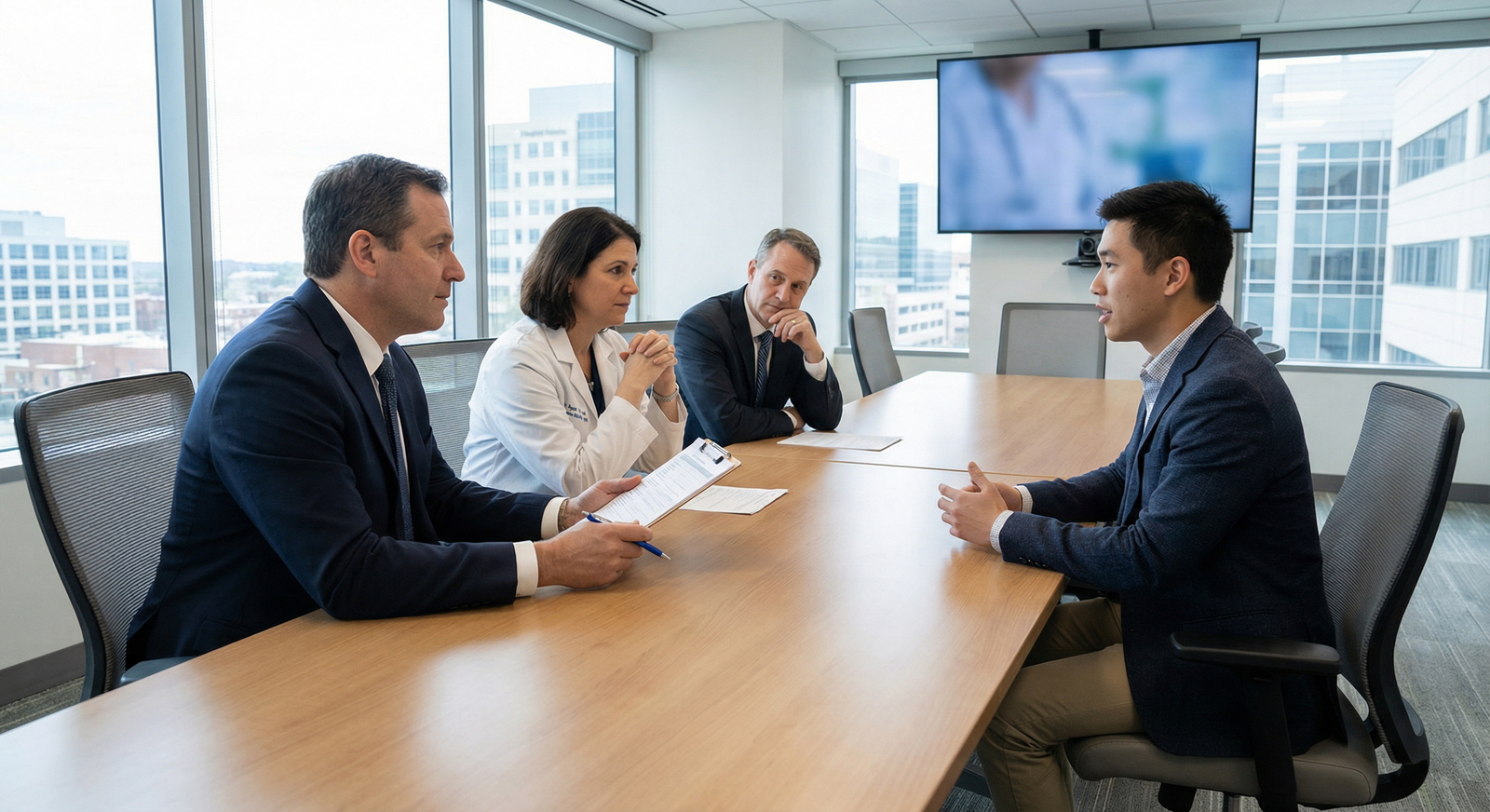
Step 4: Structured Mock Interviews
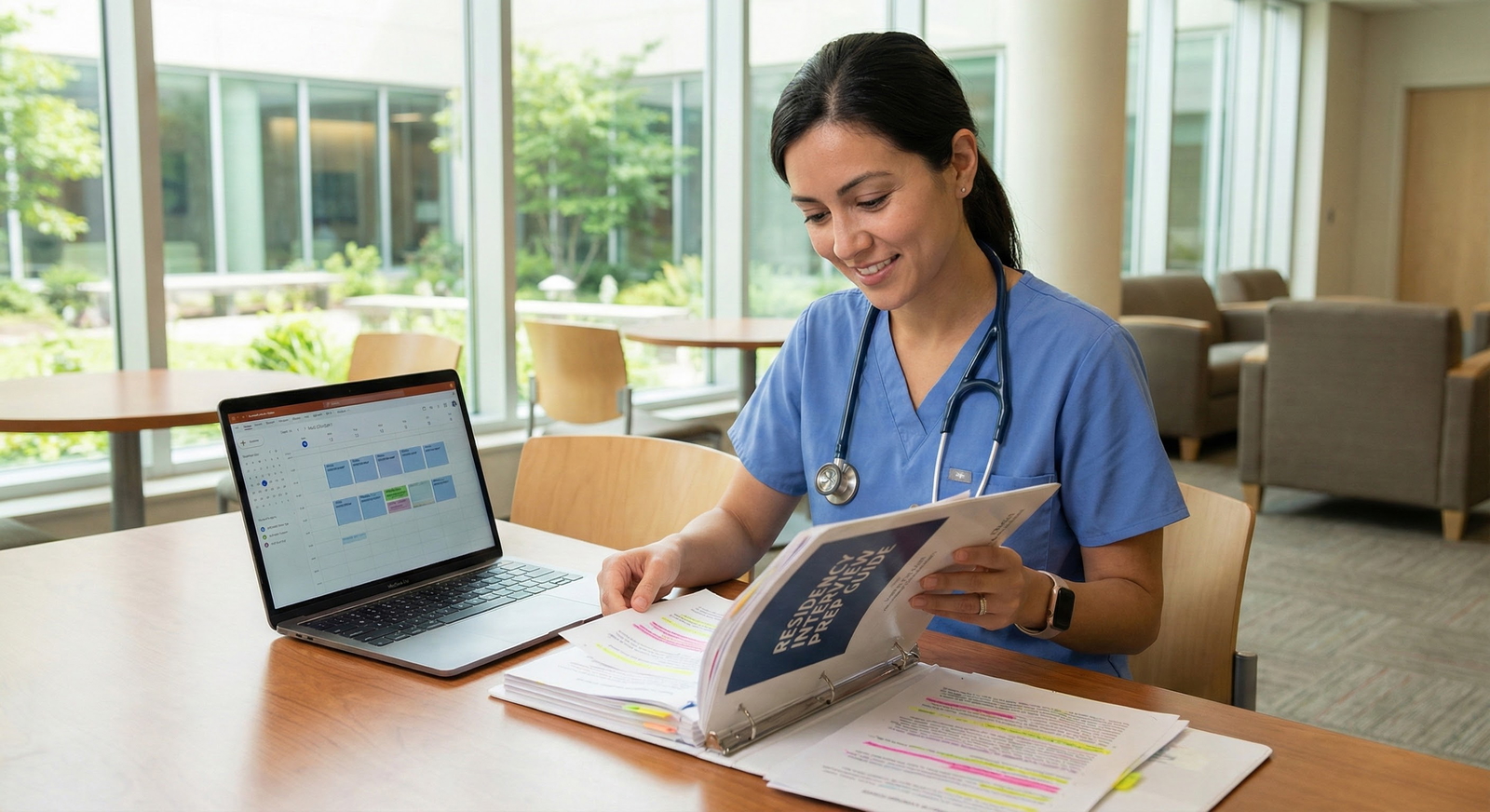
At least 4–6 weeks before interviews, schedule mock interviews:
- With US-based mentors if possible (faculty, fellows, or senior residents)
- If not available, with:
- Other IMG colleagues
- Online IMG networks
- University career services (if you have access)
Ask for feedback specifically on:
- Clarity and conciseness
- Non-verbal communication (eye contact, posture, tone)
- Accent comprehensibility (not correctness)
- How convincingly you communicate your interest in anesthesiology
Record yourself (video if possible). Many non-US citizen IMGs are surprised to see nervous fidgeting, looking away from the camera, or speaking too fast. These are all improvable with practice.
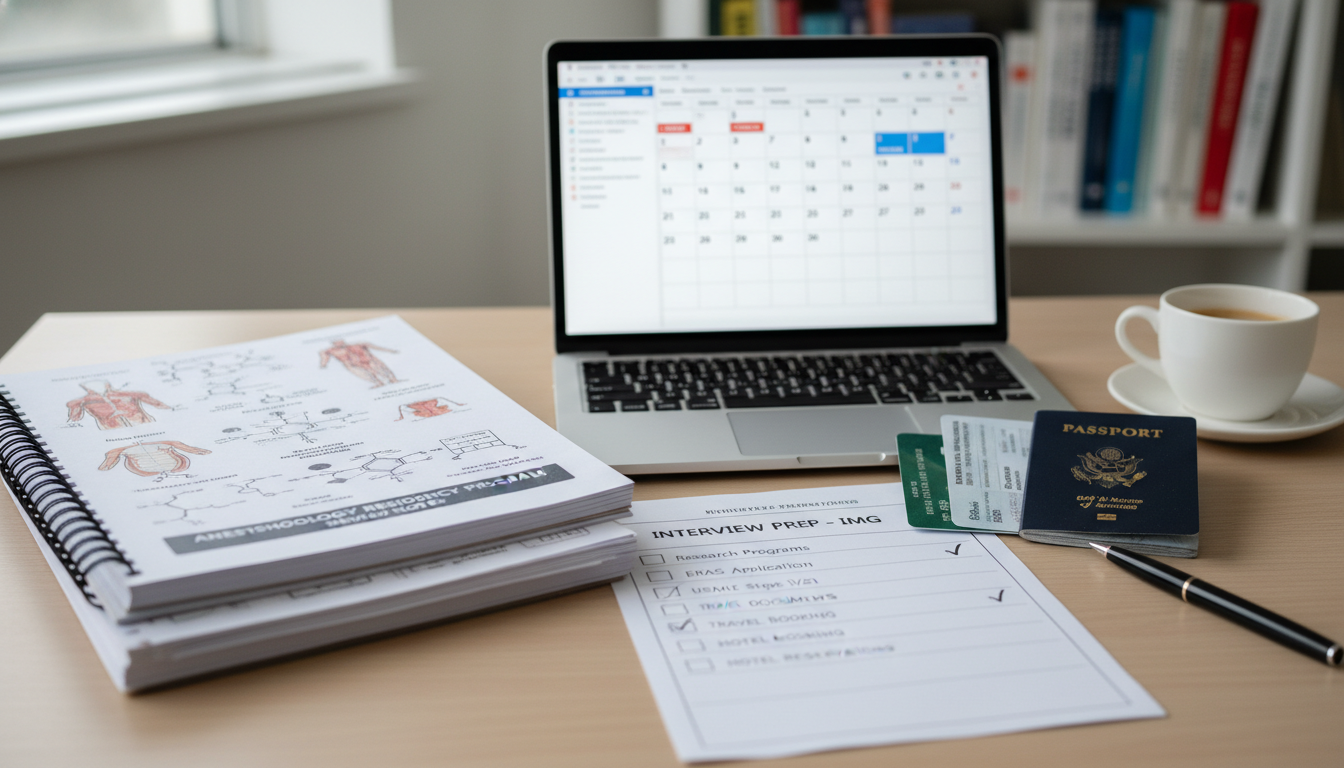
5. Logistics, Professionalism, and US-Specific Considerations
Pre-interview preparation is not only about what you say; it’s also about how smoothly and professionally you show up, especially with virtual interviews now common.
Organizing Program Research and Questions
Before each interview, spend 30–45 minutes doing focused research:
- Program website:
- Resident rotations (how much ICU, how much OB, etc.)
- Optional tracks (e.g., global health, research)
- Fellowship outcomes
- Any institutional values or missions (e.g., serving underserved populations)
- Resident bios: backgrounds, interests; this can help you connect
Create a one-page document per program including:
- 3–4 reasons this program fits you
- 3 program-specific questions you genuinely care about
- Any alumni or country connections you can mention
Example tailored question:
“I noticed your curriculum includes a dedicated rotation in perioperative echocardiography. As someone interested in cardiac anesthesia, how have residents found this prepares them for fellowship or advanced training?”
Preparing Questions You Will Ask Them
You will usually be asked, “What questions do you have for us?” Arriving without thoughtful questions suggests lack of interest.
Avoid:
- Questions easily answered by the website
- Salary or vacation focus as your first questions
Consider asking about:
- Mentorship: “How are residents matched with faculty mentors?”
- Feedback: “How is performance feedback given and how often?”
- IMG support: “Do you currently have IMGs in your residency, and how do you support their transition into the US system?”
- Educational structure: “How are didactics organized around busy OR schedules?”
Technology and Environment for Virtual Interviews
As a non-US citizen IMG, you may be interviewing from another country or from shared housing in the US. Plan early to optimize your environment.
Checklist:
- Internet: Stable connection; test speed and backup (mobile hotspot if possible)
- Device: Laptop preferred over phone; update software, test microphone and camera
- Lighting: Light source in front of you, not behind; avoid harsh shadows
- Background: Neutral and uncluttered; plain wall or neat bookshelf
- Noise: Quiet room; tell family/roommates your schedule; close windows and silence notifications
Do at least one full trial run using Zoom/Teams/etc. on the same device and location you’ll use for actual interviews.
Professional Appearance and Body Language
- Attire: Business formal (suit jacket, dress shirt/blouse); ensure it fits comfortably when you sit.
- Posture: Upright but relaxed; lean slightly forward to show engagement.
- Eye contact: Look into the camera when answering, not just at the interviewer’s image.
- Voice: Speak slightly slower than you think you should; pause briefly between ideas.
As a foreign national medical graduate, clear verbal communication is critical. Practice enunciating medical terms common in anesthesiology (e.g., “laryngoscope,” “neuromuscular blockade,” “perioperative”).
Visa and Legal Status: Be Prepared, Not Anxious
Programs may not always ask directly about visa needs, but you must know your own situation clearly.
Before interviews, be ready to answer:
- Are you currently in the US? On what status (F-1, B-1/B-2, etc.)?
- Will you require visa sponsorship? Which type (usually J-1; H-1B less common in anesthesia due to board exam timing and institutional policies)?
- Have you already passed all USMLEs required for ECFMG certification?
When discussing visa needs:
- Be honest, concise, and calm: “I will require J-1 visa sponsorship, and I have already obtained / will obtain ECFMG certification before residency start.”
- Avoid dramatizing visa issues; present them as a standard logistical requirement many foreign national medical graduates have.
If a program is vague, do not interrogate them about visa policy in the first minutes of the interview. It is often better to:
- Check their website or FREIDA profile first
- Ask politely in an appropriate context or via email with the coordinator after the interview if needed
6. Managing Stress, Culture, and Mindset Before Interviews
Even with strong preparation, interviews can be emotionally draining, especially across time zones or when English is not your first language. Pre-interview preparation should include mental and cultural readiness.
Time Zone and Scheduling Strategy
If you are interviewing from abroad:
- Convert all times accurately (use a reliable time zone converter).
- For very early US morning interviews that fall late at night for you, adjust sleep schedule gradually in the week before.
- Do at least one mock interview at the same time of day as your actual scheduled interview to adapt your energy and focus.
Cultural Preparation for US Professional Norms
US residency interviews typically value:
- Direct but polite communication
- A balance of confidence and humility
- Clear acknowledgment of mistakes and learning, without blaming others
- Respectful disagreement (“I see your point; in my experience X, I found that…”)
If you come from a culture where hierarchy is very strong, you may need to practice speaking up and taking ownership of your actions and ideas in a respectful way. Mock interviews with US-based clinicians or other IMGs already in training are especially helpful.
Managing Anxiety and Building Confidence
- Prepare short, grounding routines before each interview:
- 3–4 deep, slow breaths
- Quick posture check
- Remind yourself of 2–3 strengths you consistently bring
- Don’t review dense medical content in the last minutes before the interview—focus on your narrative and calm.
Remember: by the time you are invited to interview, programs already see you as a plausible match. Now they are checking for fit, communication, and professionalism—not repeating USMLE exams.
FAQs: Pre-Interview Preparation for Non‑US Citizen IMGs in Anesthesiology
1. How early should a non-US citizen IMG start residency interview preparation for anesthesiology?
Ideally, begin structured pre-interview preparation 4–6 weeks before your first scheduled interview. Earlier in the season (even before invites), start refining your “Why anesthesiology?” story, clarifying your career goals, and reading about US anesthesiology practice. Once invitations arrive, use 1–2 weeks to organize program-specific research, finalize anchor stories, and schedule mock interviews.
2. Will being a foreign national medical graduate hurt my chances in the anesthesia match?
Being a non-US citizen IMG is a challenge but not a disqualifier. Many anesthesiology programs match IMGs every year. Your goal is to counter common concerns—communication, adaptation to US practice, understanding of the specialty, and visa logistics—through thorough preparation, strong letters, observerships or US clinical exposure when possible, and confident yet humble interviewing.
3. What are the most important interview questions residency programs ask anesthesiology applicants to prepare for?
Focus especially on:
- “Why anesthesiology?” and “Why this program?”
- “Tell me about yourself / your journey.”
- Behavioral questions about conflict, mistakes, and handling stress.
- Questions about your future plans (fellowship interests, academic vs community).
- For IMGs, questions about your choice to train in the US and challenges you’ve faced.
Preparing thoughtful, specific answers to these and practicing them with feedback will cover most scenarios.
4. How can I show interest in critical care or pain without sounding like I don’t care about general anesthesiology?
Frame subspecialty interests as natural extensions of your love for anesthesiology, not as alternatives. For example: “I’m very interested in critical care because I enjoy managing complex physiology and long-term outcomes, but I also value strong general anesthesiology training as the foundation for any future path.” Programs want residents who will engage fully with the broad anesthesiology curriculum, even if they later subspecialize.
Thoughtful, early, and structured pre-interview preparation will not only make you a stronger anesthesiology candidate—it will also help you feel calmer and more authentic throughout the anesthesia match process as a non-US citizen IMG.