Understanding the EM Interview Landscape as a Non‑US Citizen IMG
For a non-US citizen IMG (international medical graduate), pre-interview preparation for emergency medicine (EM) residency is not just about answering questions well. It is also about understanding the unique expectations and constraints you face: visa issues, limited US clinical experience, program perceptions of foreign national medical graduates, and the high-volume, high-stakes nature of EM itself.
Emergency medicine programs want to know three core things:
- Clinical readiness for EM – Can you function in a fast-paced, undifferentiated, high-acuity environment?
- Team fit and communication – Can you work efficiently with nurses, techs, co-residents, consultants, and patients from diverse backgrounds?
- Logistical feasibility – Can the program rank you without worrying about visa hurdles or inability to start on time?
This article focuses on how to prepare for interviews before you ever log into Zoom or walk into an interview day. It covers both standard residency interview preparation and the extra layers that matter for a non-US citizen IMG aiming for an emergency medicine residency.
Step 1: Clarify Your EM Story and Unique IMG Value
Before you practice interview questions, you must be crystal clear on your own story: why emergency medicine, why the US, and why you as a non-US citizen IMG will be an asset in an EM residency.
Define Your “Why EM” Narrative
Every EM program will explore why you chose this specialty. A generic answer (“I like variety; I like procedures”) is not enough—especially as a foreign national medical graduate competing with US graduates.
Reflect on:
Trigger experiences:
- A night shift in a busy casualty department or A&E exposing you to undifferentiated emergencies
- A mass casualty incident or disaster response where you saw EM physicians lead
- Rotations where you realized you thrive in quick decision-making environments
Durable traits that fit EM:
- Comfort with uncertainty and incomplete information
- Ability to stay calm and organized under pressure
- Enjoyment of rapid team-based work
- Willingness to care for every patient, regardless of background or ability to pay
Convert these into a short, cohesive narrative. For example:
“In my medical school’s emergency unit, I often saw critically ill patients arrive with almost no history. I realized I loved the challenge of quickly stabilizing, prioritizing, and coordinating care. Over time, I saw how EM physicians function as leaders in chaos—communicating clearly, delegating tasks, and advocating for vulnerable patients. That environment fits my strengths: staying calm under pressure, making decisions with limited data, and working in close-knit teams around the clock. That is why I’m committed to emergency medicine in the US, where systems-based EM practice is highly developed.”
Highlight the Strengths of a Foreign National Medical Graduate
As a non-US citizen IMG, you bring specific advantages. Identify and rehearse them:
- Adaptability: Moving between countries, education systems, or health systems demonstrates resilience.
- Language and cultural competence: Comfort with multilingual, multicultural populations fits emergency department demographics.
- Resourcefulness: Experience practicing in lower-resource settings can translate into efficient use of diagnostics, quick clinical assessments, and strong physical exam skills.
- Global health perspective: Many programs value residents who understand global health, migrant health, and health disparities.
Be ready to connect these strengths directly to EM:
“Training in a resource-limited setting, I learned to rely on rapid clinical assessment when imaging wasn’t available, and to make the most of limited resources. In a US ED with more advanced diagnostics, I can pair efficient decision-making with broader tools to improve patient outcomes.”
Align Your Story with Program Priorities
Review each program’s website and any communication you’ve received:
- Does the program emphasize community EM, urban underserved, trauma, toxicology, global health, or critical care?
- Does it highlight diversity and inclusion, IMG friendliness, or visa support?
- Does it have affiliated EM fellowships that align with your interests?
Prepare 1–2 sentences that tie your story to that program:
“I’m particularly drawn to your program’s focus on caring for a diverse, underserved urban population and the longitudinal ultrasound curriculum—both areas that match my prior experience and my future goals in EM.”
Step 2: Strategic Program and Logistics Preparation
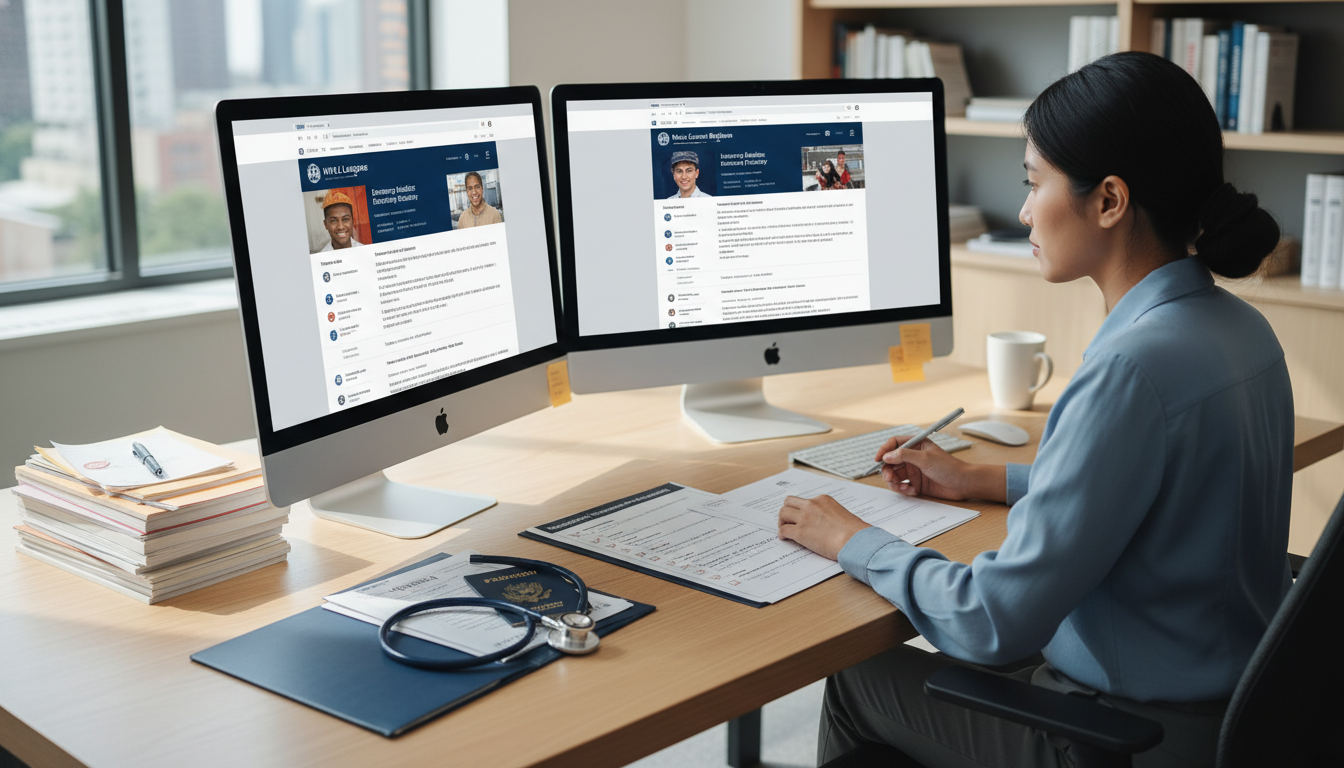
Pre-interview preparation for the EM match is not only about questions. It is also about ensuring you understand each program and can clearly communicate that you are viable from a visa and timeline perspective.
Research Each Program Deeply
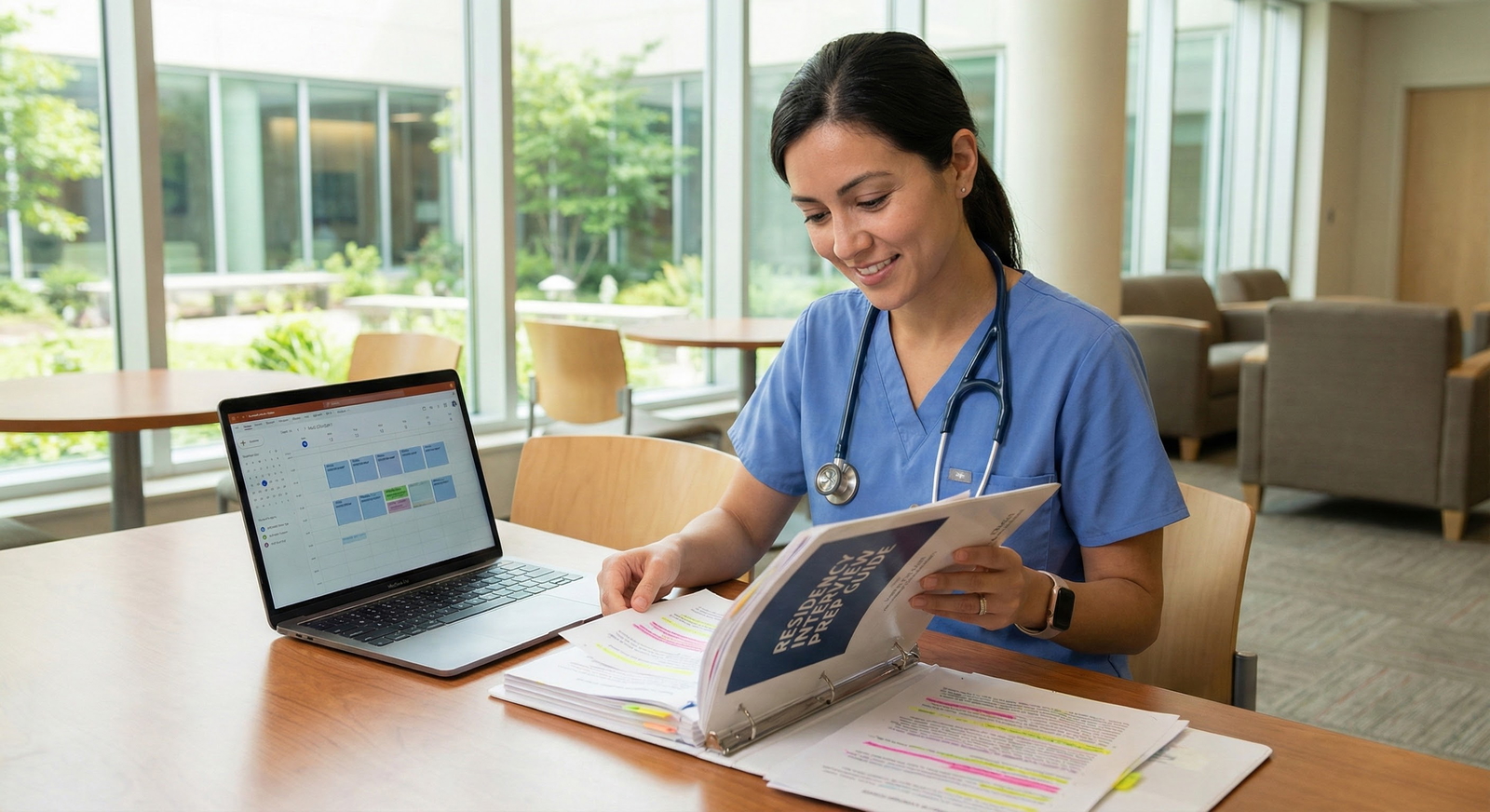
For effective residency interview preparation, create a structured program research system. For each program, capture:
Basic Information
- Program size, number of positions
- 3- vs 4-year curriculum
- Location and type (county, academic, community, hybrid)
- Patient population (urban underserved, suburban, rural, trauma level, etc.)
Curricular Features
- EM ultrasound curriculum
- Toxicology, EMS, or critical care exposure
- Global health or international electives
- Simulation and procedural training
Culture and Support
- Reputation for being IMG-friendly or foreign national–friendly
- Wellness initiatives, mentorship structures, diversity statements
- Faculty interests that match yours
Visa and IMG Information
- History of sponsoring J-1 or H-1B visas
- Recent IMGs in resident roster (check current residents’ bios)
- Any explicit mention of IMGs or non-US citizens in their FAQ
Keep this in a spreadsheet or note system. Before each interview, review it and identify 2–3 program-specific talking points you can weave into answers and questions.
Clarify Your Visa Status and Communicate It Confidently
As a non-US citizen IMG, visa clarity can reduce interviewer anxiety. Before interview season:
Know your visa options.
- Most EM programs commonly support the J-1 visa.
- Some support the H-1B, but this is more limited and often requires:
- All USMLE Steps passed (including Step 3 in many cases)
- Additional institutional approvals
Prepare a concise “visa readiness” statement. For example:
“I am a non-US citizen on an [X] status currently. I am fully eligible for a J-1 visa and understand that most EM programs sponsor J-1. I have already gathered the required documentation and will be ready to start on time. If needed, I’m happy to work with your GME office on any additional requirements.”
Have documents organized.
- Passport, prior visas, DS-2019 or I-20 (if applicable)
- USMLE score reports
- ECFMG certification or expected certification timeline
You typically won’t be asked to show these during interviews, but having them ready gives you confidence when discussing your situation.
Prepare for Time Zones and Technology
If you are interviewing from outside the US, logistics can affect performance.
Time zone conversion:
- Double-check interview time in both US local time and your local time.
- If time zones are extremely inconvenient (e.g., 2–3 AM your time), try to adjust your sleep schedule a few days before.
Technology check:
- Stable internet connection (preferably wired or very strong Wi-Fi)
- Updated Zoom/Teams software
- Neutral, well-lit background
- Functional microphone and webcam (test with a friend before your first real interview)
Step 3: Mastering Common EM Residency Interview Questions
You do not need memorized scripts, but you do need rehearsed frameworks. Below are categories of common interview questions for residency in EM, with strategies and examples tailored to a foreign national medical graduate.
Core Personal and Motivational Questions
“Tell me about yourself.”
- Structure: Present → Past → Future
- Present: Who you are now (IMG, where you are in training or current work)
- Past: Key experiences that shaped you
- Future: Your goals in EM and in their program
Example structure:
“I’m a non-US citizen IMG from [country], currently [doing observership/working as a physician assistant-equivalent/doing research] in [location]. I completed medical school at [institution], where I was drawn to emergency medicine after... [1–2 impactful experiences]. Since graduation, I’ve focused on building my EM skills through [US clinical experience, research, EMS volunteering, etc.]. Long term, I hope to become an EM physician who [teaches, works in underserved communities, contributes to global EM].”
- Structure: Present → Past → Future
“Why emergency medicine?”
- Use 2–3 specific experiences and connect them to EM traits:
- Acute care and stabilization
- Undifferentiated complaints
- Teamwork and interprofessional communication
- Continuity through follow-up and systems thinking (e.g., safety net role)
- Use 2–3 specific experiences and connect them to EM traits:
“Why the US and not your home country?”
- Emphasize training quality, systems-based EM, academic infrastructure, and the ability to bring skills back or contribute globally.
- Avoid negative comments about your home country’s system; instead, focus on positive reasons for the US.
Example:
“The US has one of the most structured and advanced systems for emergency medicine, with established training standards, strong simulation, and subspecialty exposure. Training here would give me skills in systems-based practice, quality improvement, and interdepartmental coordination that I can use to care for diverse populations and, eventually, help improve emergency care for similar communities internationally.”
Behavioral and Situational Questions
Emergency departments rely heavily on teamwork and calm under pressure. Typical EM match interviews include behavioral questions such as:
- “Tell me about a time you made a mistake.”
- “Describe a conflict with a colleague or nurse and how you handled it.”
- “Tell me about a particularly stressful situation in clinical care and what you did.”
Use the STAR method: Situation – Task – Action – Result.
Example (mistake):
- Situation: Describe brief context.
- Task: Your responsibility.
- Action: How you recognized and corrected the mistake.
- Result: What happened and what you learned.
As a non-US citizen IMG, you can draw on experiences from your home country, but:
- Explain setting differences (e.g., no electronic records, fewer labs, resource limitations) succinctly so US interviewers understand.
- Emphasize universal skills: communication, ownership, escalation of concerns, and learning from errors.
EM-Specific Questions and Scenarios
“What do you think will be the biggest challenge for you in EM residency?”
Good thoughtful answers for IMGs may include:
- Navigating a new health system and electronic medical records
- Understanding US malpractice and documentation standards
- Acculturating to US communication styles and expectations
- Speed and throughput in a busy US ED
Always pair the challenge with a concrete mitigation plan:
“I expect that adjusting to US documentation and medicolegal expectations will be a learning curve. To address this, I plan to study typical EM note formats, review chart examples, and seek early feedback from seniors and attendings. I’ve already been familiarizing myself with US ED charts during my observership, which has helped.”
“How do you handle multiple critical patients at once?”
Even if you haven’t been the primary physician yet, describe your approach:
- Triage by severity
- Use team resources
- Communicate clearly
- Reassess frequently
- Ask for help early
Ethical or professionalism scenarios:
- A patient refusing care
- Family anger in the ED
- Limited resources during a surge
Describe a structured approach: clarify the issue → ensure safety → communicate empathetically → involve seniors or support staff appropriately.
Questions Specific to Non-US Citizen IMGs
You may be asked explicitly or implicitly:
- “Do you think moving to the US and adjusting to this system will be difficult?”
- “You have been out of clinical practice for X years; how will you transition back?”
- “You don’t have much US clinical experience; how do you know EM in the US is right for you?”
Prepare honest but confident answers:
- Acknowledge the challenge.
- Provide evidence that you have already started adapting (observerships, research, US exams, courses like ACLS/BLS/ATLS).
- Highlight your adaptability and prior transitions (e.g., moving between regions, languages, systems).

Step 4: Intensive Practice and Feedback
Knowing how to prepare for interviews is one thing; implementing it with repetition and feedback is what makes you polished.
Set Up Mock Interviews
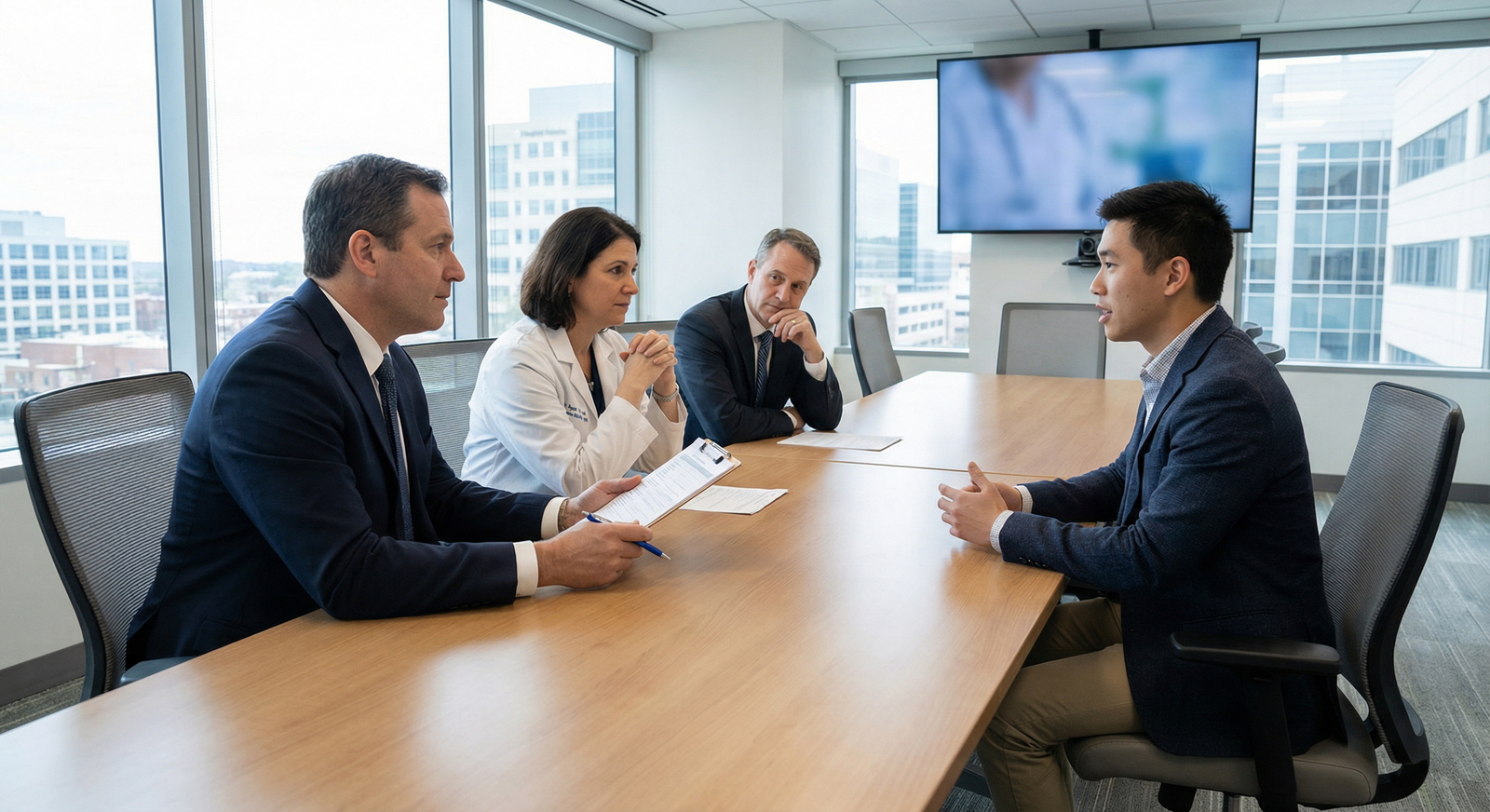
Aim for at least 3–5 structured mock interviews before your first real EM interview:
Who can help:
- Mentors in the US (attendings, fellows, senior residents)
- IMG-support organizations or alumni from your medical school
- Peers also applying this cycle (you can take turns as interviewer/interviewee)
- Career centers or faculty development offices (if you are at a university hospital or doing research)
Format:
- Simulate actual interview length (20–30 minutes per mock session).
- Use video conferencing (Zoom/Teams) to practice eye contact and camera presence.
- Ask them to include at least:
- 2–3 behavioral questions
- 2–3 EM-specific or situational questions
- 1–2 questions about IMGs, visa, or moving to the US
Record your practice sessions if possible and review:
- Your speaking pace
- Filler words
- Clarity of answers
- Body language and facial expressions
Build a Personal “Answer Bank,” Not a Script
Create a document with bullet-point frameworks for key questions:
- “Tell me about yourself”
- “Why EM?”
- “Why this program?”
- “Strengths and weaknesses”
- “A time you failed/made a mistake”
- “A time you worked in a team”
- “A time you dealt with conflict”
- “A time you showed leadership”
For each, list:
- 2–3 potential examples drawn from different contexts (medical school, internship, research, USCE)
- Key points you want to communicate
- What the story demonstrates (e.g., resilience, communication, cultural competence)
Do not memorize word-for-word scripts; instead, use the bullet points as a mental map.
Practice Clear, Concise English
As a foreign national medical graduate, even if your English is strong, interview day stress may affect fluency.
- Practice answering common questions in English out loud.
- Focus on:
- Clarity over complex vocabulary
- Moderated speaking speed
- Avoiding very long, meandering answers (aim for 1–2 minutes per question)
If you have a noticeable accent, that is absolutely fine—clarity matters more than accent-neutrality. Ask your mock interviewers if any words or phrases are hard to understand and adjust accordingly.
Step 5: Professionalism, Documents, and Final Pre-Interview Checklist
The final stage of pre-interview preparation is about details that can subtly influence how you are perceived.
Appearance and Setup (Virtual or In-Person)
Attire:
- Professional: suit or blazer with collared shirt or blouse.
- Neutral colors: navy, black, gray, white, light blue.
- Avoid flashy jewelry or distracting patterns.
Virtual background:
- Clean, quiet, uncluttered.
- Plain wall or simple bookshelf is fine.
- Position light in front of you, not behind.
Camera setup:
- Frame: head and upper torso visible, camera at eye level.
- Test audio and video in the exact environment you’ll use on interview day.
Organize Documents and Notes
Have easily accessible (but off-camera):
- Program-specific notes:
- 3 reasons you like the program
- 3 questions to ask them
- Personal “cheat sheet”:
- Key bullet points for major answers
- Visa status one-liner
- Names of program leadership (PD, APDs) and chief residents
- Contact information:
- Interview coordinator email and phone number in case of technical issues
Prepare Thoughtful Questions for Programs
You will almost always be asked, “What questions do you have for us?” Prepare at least 3–5 non-generic questions that show genuine interest in emergency medicine residency and that program specifically:
Examples:
- “How do residents at your program receive feedback on their performance in the ED?”
- “Can you describe how the program supports non-US citizen IMG residents, especially in the first few months of transition?”
- “How do residents get exposure to high-acuity trauma or critical care within your training?”
- “What qualities do you see in residents who thrive in your program’s environment?”
Avoid questions easily answered on their website, and avoid leading with questions about salary or vacation early in the day.
Plan for the Day Before and the Day Of
Day before:
- Review your spreadsheet or notes on the program.
- Rehearse core answers out loud briefly.
- Confirm interview time and meeting links.
- Set out clothes and prepare your interview space.
- Go to bed early; treat it as an exam.
Day of:
- Dress fully in interview attire (even for virtual interviews).
- Log in 10–15 minutes early to check technology.
- Keep water nearby.
- Turn off or silence notifications on phone and computer.
Frequently Asked Questions (FAQ)
1. As a non-US citizen IMG, how many EM interviews do I need for a reasonable chance to match?
While numbers vary each year, data and expert experience suggest:
- For a non-US citizen IMG, 10–12 EM interviews significantly improve the chance of matching, assuming your application is reasonably aligned with EM.
- If you have fewer interviews (e.g., 4–6), you must be especially prepared, professional, and strategic in how you present yourself and how you rank programs.
Pre-interview preparation becomes even more critical in that context.
2. How should I discuss my visa situation during the interview?
Keep it clear, concise, and reassuring:
- State your current status and what type of visa you will need (usually J-1).
- Emphasize you are familiar with the process and are fully eligible.
- Mention that you are prepared with documentation and flexible to work with their GME office.
Do not turn the entire conversation into a legal discussion; one or two well-prepared sentences are sufficient in most cases.
3. What if my emergency medicine clinical exposure is mostly outside the US?
That is common for non-US citizen IMGs. To address this:
- Clearly explain the setting of your prior EM experience (ED volume, acuity, resource level).
- Highlight universal EM competencies: rapid assessment, team communication, triage, managing limited resources.
- If you have any US observerships, electives, or shadowing in EM, emphasize what you learned about differences in practice and how you adapted.
- Use interview answers to demonstrate your understanding of US ED workflow and interprofessional collaboration.
4. Are there interview questions residency programs ask that I should avoid answering in detail (e.g., visa, personal life)?
Programs should not ask illegally discriminatory questions (e.g., about marital status, pregnancy plans, religion). However, as a foreign national medical graduate, you may still get borderline or uncomfortable questions.
If asked about future family plans, you can answer briefly and redirect:
“I’m very focused on my training and becoming the best EM physician I can be. I’m confident I can balance my personal and professional life when the time comes, as many residents do.”
If asked visa questions that feel too detailed or legalistic, keep your answer factual but limited and, if needed, say:
“I believe your GME and legal offices would be the best sources for specific legal details, but I can confirm that I am fully eligible for J-1 sponsorship and have started preparing all necessary documentation.”
By combining a strong understanding of your own EM story, clear communication about your status as a non-US citizen IMG, and rigorous residency interview preparation, you will enter each emergency medicine residency interview with confidence. Pre-interview work—reflection, research, practice, and organization—can transform your EM match experience from overwhelming to manageable and give programs a clear vision of you as a capable, resilient, and future-ready emergency physician.