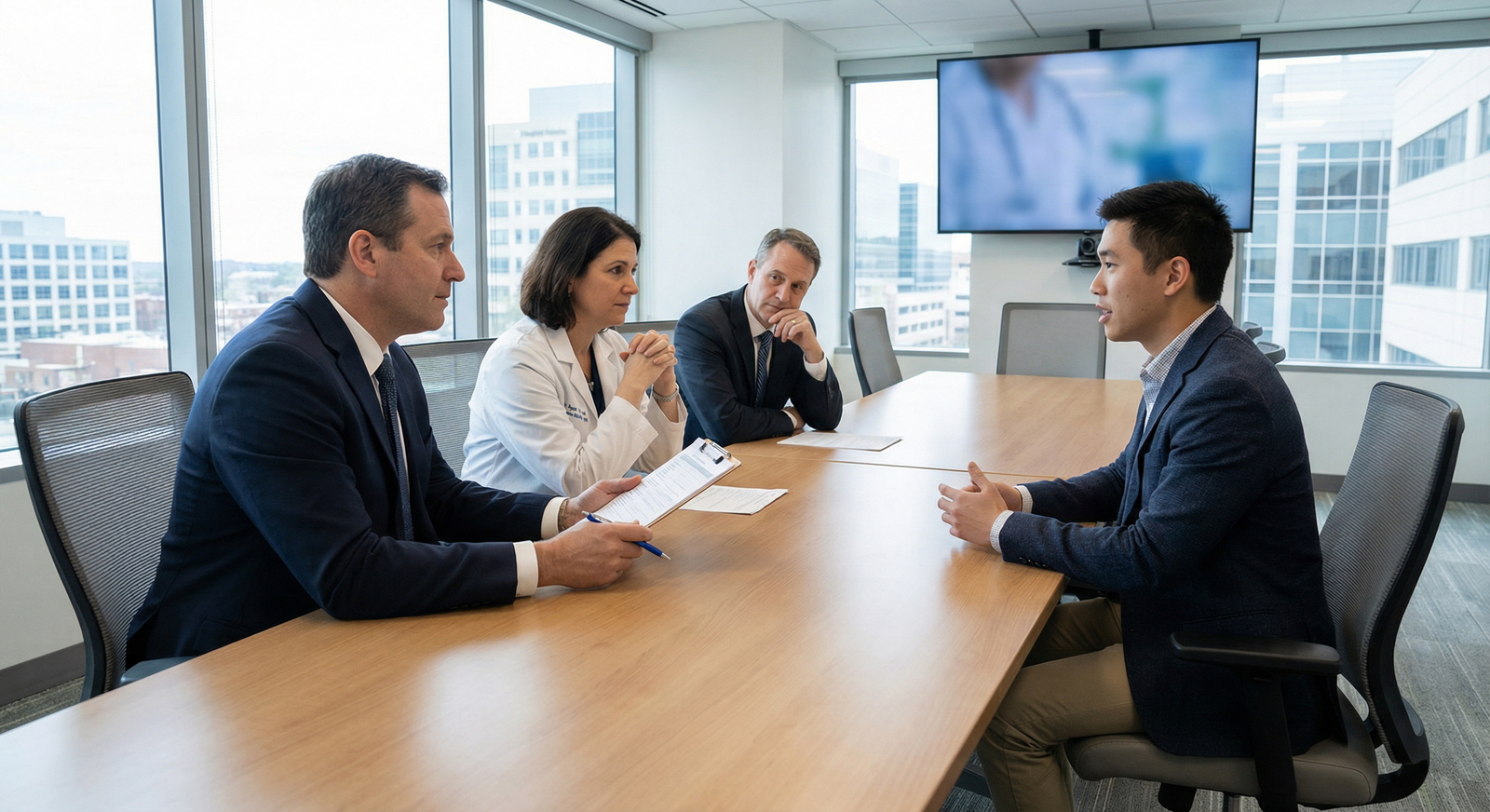
Understanding the OB GYN Interview Landscape as a Non‑US Citizen IMG
Applying for OB GYN residency in the United States as a non-US citizen IMG (international medical graduate) is entirely achievable—but it requires intentional, early, and structured pre-interview preparation. Programs know that foreign national medical graduates often bring strong clinical skills and rich life experience, but they also want reassurance that you can communicate effectively, function in a US healthcare system, and adapt to a fast-paced specialty.
Before you even receive an invitation, you should already be preparing. The way you prepare before interview day heavily influences:
- Whether programs decide to interview you
- How confident and articulate you feel during the interview
- How effectively you can signal your genuine interest in OB GYN
- Whether you match at programs that fit your goals and visa needs
This guide focuses on pre-interview preparation specifically for non-US citizen IMGs targeting Obstetrics & Gynecology. It will walk you through practical steps to strengthen your profile, anticipate common interview questions residency programs may ask, and build a clear strategy for the obstetrics match.
Step 1: Clarify Your Story and Your “Why OB GYN”
One of the most important aspects of residency interview preparation is shaping a coherent, memorable personal narrative. As a non-US citizen IMG, programs will look closely at:
- Why you chose OB GYN
- Why you chose the US
- How your background adds value to their residency
- How consistent your actions are with your stated goals
Build a Clear Personal Narrative
Your story should connect three elements:
- Past – Medical school, rotations, experiences in women’s health
- Present – What you are doing now (USCE, research, observerships, work)
- Future – Your career goals in OB GYN (fellowship interests, practice setting, academic vs community)
Ask yourself:
- When did I first become drawn to obstetrics and gynecology?
- What specific experiences (patients, mentors, rotations) made OB GYN feel “right”?
- How does OB GYN align with my values (advocacy, continuity of care, surgery, maternal health, global health)?
- Why is training in the US specifically important for my development?
Write this out as a one-page narrative. This will later help you answer:
- “Tell me about yourself.”
- “Why OB GYN?”
- “Why did you choose to come to the United States for training?”
- “How does your background as a non-US citizen IMG shape your perspective?”
Example: Turning Experience into a Narrative
Weak answer:
“I chose OB GYN because I like surgery and delivering babies and I found the rotations interesting.”
Improved narrative:
“During my OB GYN rotation in my fourth year, I cared for a young woman in early labor who had never seen a doctor before her pregnancy. I realized how much of women’s health is about access, education, and trust—not only procedures. I was drawn to OB GYN because it combines high-acuity decision making and surgery with the opportunity to build long-term relationships with patients across their lives. In my home country, maternal mortality is still a major problem, and I recognized how training in a US residency—where evidence-based protocols and multidisciplinary care are standard—could equip me to eventually contribute to improving systems of care for women. That combination of hands-on intervention and long-term impact is why I am dedicated to OB GYN.”
That type of answer is anchored in real experience, shows insight, and naturally explains why US training matters.
Step 2: Strengthen and Organize Your Application Materials Before Invites Arrive
Pre-interview preparation begins well before the first email invitation. Programs often review your ERAS application, personal statement, and letters right before or even during the interview. These documents must be internally consistent and support your story.
Align Your Personal Statement With Your Interview Answers
Your personal statement and your spoken answers should:
- Highlight the same core themes (e.g., maternal health equity, surgical interest, global women’s health, academic research in OB GYN)
- Use similar examples (not memorized word-for-word, but clearly belonging to you)
- Avoid contradictions (e.g., saying you want to be a community generalist in person but describing only subspecialty research in your statement)
As a non-US citizen IMG, also consider addressing briefly:
- Your transition from your home country to the US
- Any major gaps and how you used that time productively
- Your long-term commitment to OB GYN and to practicing in environments with diverse patient populations
Prepare a Clear, Updated CV for Easy Reference
Even though ERAS structures your application, keep an updated CV for your own interview preparation:
- Chronological list of education and training
- All obstetrics and gynecology experiences (rotations, electives, sub-internships)
- US clinical experience (OB triage, L&D, clinic, surgery)
- Research, quality improvement, or audits in women’s health
- Teaching, leadership roles, advocacy, or public health work
You will use this CV to:
- Refresh your memory before each interview
- Select the most relevant experiences to share with each program
- Quickly answer “Walk me through your CV” or “Tell me about your clinical experience in OB GYN.”

Step 3: Master the Common Residency Interview Questions (OB GYN Focus)
One of the most powerful aspects of residency interview preparation is deliberate, structured practice with high-yield interview questions residency programs commonly use. For OB GYN and non-US citizen IMGs, you should expect questions in several categories.
Core Personal and Motivation Questions
Prepare concise, authentic, and confident answers to:
“Tell me about yourself.”
- 60–90 seconds, starting from medical school or earlier if relevant.
- Include your origin (country/medical school), key women’s health experiences, current activities, and goals.
“Why OB GYN?”
- Mention 2–3 aspects: combination of surgery + continuity, maternal health, advocacy, diversity of practice.
“Why our program?”
- Reference specific features: volume of deliveries, early surgical exposure, resident autonomy, diversity of patient population, research areas, global health tracks.
“Why the United States?”
- Emphasize training quality, multidisciplinary care, exposure to diversity, opportunity to participate in research and quality improvement, mentorship.
Obstetrics & Gynecology–Specific Questions
Expect questions that test your understanding of the specialty and your fit:
- “What aspects of OB GYN are you most passionate about?”
- “Are you more interested in obstetrics or gynecology, and why?”
- “How do you handle being on call overnight for emergent deliveries?”
- “Tell me about a challenging OB patient you cared for and what you learned.”
- “How do you feel about dealing with fetal or maternal loss?”
Prepare examples that demonstrate:
- Emotional maturity and empathy
- Ability to function in emergencies
- Respect for patient autonomy and reproductive rights (very important in OB GYN)
- Awareness of ethical and cultural sensitivities around pregnancy and women’s health
Behavioral and Situational Questions
These are often asked in US residency interviews to evaluate professionalism and teamwork:
- “Tell me about a time you had a conflict in a team and how you handled it.”
- “Describe a situation where you made a mistake in patient care.”
- “Tell me about a time when you had to deliver bad news.”
- “How do you manage stress during a busy shift?”
Use the STAR framework (Situation, Task, Action, Result):
- Situation: Brief context (where/when)
- Task: Your role
- Action: What you did
- Result: Outcome + what you learned
IMG-Specific and Gap Questions
As a foreign national medical graduate, anticipate questions about:
- Gaps after graduation: “What have you been doing since graduation?”
- US clinical experience: “What US experience do you have in OB GYN?”
- Licensure exams: “How did you prepare for Step exams?” (if big score improvements or failures)
- Visa: Sometimes indirectly: “Do you have any visa requirements we should be aware of?”
Prepare honest, constructive answers:
- Emphasize productivity during gaps (research, observerships, language improvement, family responsibilities with reflection on what you learned).
- Frame weaknesses or failures as learning experiences with specific actions taken to improve.
Create a Personal “Answer Bank”
To make your residency interview preparation efficient:
- List 15–20 common questions.
- For each, write bullet points, not scripts:
- 2–3 key ideas you want to cover
- One short clinical or personal example
- Practice speaking them aloud until they sound natural.
Avoid memorized, robotic responses. Your goal is structured spontaneity: well-prepared but flexible.
Step 4: Develop Your Communication Skills for an English-Speaking Clinical Setting
Non-US citizen IMGs often have strong medical knowledge but struggle with nuances of English communication in high-stress situations. Pre-interview preparation must include spoken English and cultural communication practice, not just reading or writing.
Work on Clear, Concise Verbal Communication
Programs value residents who can communicate clearly with patients and team members. Focus on:
- Pacing – Speak a bit more slowly than usual; pause briefly between ideas.
- Clarity – Avoid overly long sentences; keep answers structured and direct.
- Volume – Ensure you are audible and confident, not whispering or rushing.
- Professional vocabulary – Use standard terms: “vaginal delivery,” “cesarean section,” “prenatal care,” “gynecologic oncology,” “family planning,” “shared decision-making.”
Practical steps:
- Practice answers with a friend, mentor, or online tutor familiar with the US system.
- Record yourself answering 3–4 common questions, then review:
- Do you sound organized?
- Are filler words excessive (“um,” “like”)?
- Are your examples clear?
Understand Cultural and Ethical Nuances in OB GYN
OB GYN in the US often intersects with complex ethical and cultural issues:
- Reproductive autonomy and patient-centered decision-making
- Confidentiality, especially for adolescents
- Varied cultural attitudes toward contraception, abortion, and childbirth
- Gender identity, sexual orientation, and inclusive care
Pre-interview, you should:
- Read a few ACOG (American College of Obstetricians and Gynecologists) Committee Opinions on ethics and patient autonomy.
- Reflect on how your cultural background differs and how you adapt to US norms of shared decision-making and respect for patient choices—even when they differ from your own beliefs.
If asked, “How would you handle a situation where a patient’s choice conflicts with your personal beliefs?” your answer should:
- Prioritize patient autonomy and evidence-based care
- Emphasize that you will never abandon or judge a patient
- Show you are able to work within hospital policies and legal frameworks

Step 5: Research Programs and Build a Strategic Interview Plan
Many candidates underestimate the importance of program-specific preparation. For the obstetrics match, especially as a non-US citizen IMG, you must be able to show genuine knowledge of each program’s OB GYN department and clearly state why you are a good match.
Create a Program Research Template
For each OB GYN program you apply to or expect an interview from, prepare a one-page summary with:
Basic details:
- Location, hospital type (academic/community)
- Approximate number of deliveries per year
- Number of residents per class
Strengths and features:
- Level of NICU, high-risk obstetrics exposure
- Surgical volume, minimally invasive surgery opportunities
- Subspecialties especially strong (MFM, Gyn Onc, REI, Urogynecology)
- Any global health, advocacy, or research tracks
What fits you:
- How it aligns with your interests (e.g., high-risk pregnancy, underserved populations, global women’s health)
- Why you would thrive there as a non-US citizen IMG (supportive culture, prior IMGs in program, structured teaching, diversity of patients)
Questions to ask:
- 2–3 questions to ask residents
- 2–3 questions to ask faculty or PD
This preparation will allow you to confidently answer, “Why do you want to join our OB GYN program?” with specific, credible points instead of generic compliments.
Focus on Visa and IMG-Friendliness (Pre-Interview)
As a foreign national medical graduate, you must factor visa sponsorship and IMG support into your planning:
- Before interview season, note which programs:
- Sponsor J-1 only or both J-1 and H-1B
- Historically match non-US citizen IMGs in OB GYN
- Use:
- Program websites
- NRMP data
- Past match lists
- IMG forums with caution (verify information wherever possible)
You do not need to bring up visa questions early in the interview unless you are asked, but you should know which programs are realistically compatible with your needs so you can rank and prepare wisely.
Step 6: Simulation and Mock Interviews – Turning Preparation Into Confidence
Knowing how to prepare for interviews is not enough; you must practice under realistic conditions. This is especially critical for non-US citizen IMGs, because the US interview style may differ from what you’ve experienced elsewhere.
Set Up Formal Mock Interviews
Aim for at least 2–3 mock interviews before the real season starts:
- One with:
- A faculty member or mentor (if available)
- One with:
- A peer who has already matched in OB GYN or another US specialty
- One with:
- A professional service or structured online session, if accessible
Simulate the real situation:
- Dress professionally
- Use the same platform (Zoom, Thalamus, Teams, or in-person if local)
- Use a neutral background and proper lighting
- Stick to time limits
Ask for specific feedback on:
- Clarity and organization of your answers
- Body language and eye contact
- How well you expressed your reasons for OB GYN
- How effectively you addressed your IMG status or visa needs if asked
Build a “Feedback and Improvement Log”
After each mock interview:
- Write down 3 strengths and 3 areas to improve.
- Identify recurring problems (e.g., too long answers, speaking too fast, lack of structure).
- Target those issues in the next practice session.
Over a few weeks, this deliberate practice will transform your confidence.
Step 7: Organize Logistics and Mental Preparation Before Interview Season
Strong pre-interview preparation also includes practical and mental readiness. Stress and disorganization can undermine good content.
Prepare Your Environment (Especially for Virtual Interviews)
Most OB GYN residency interviews now have a strong virtual component. Ensure:
- Quiet space with minimal background noise
- Simple, uncluttered background (plain wall or tidy bookshelf)
- Stable internet connection
- Laptop camera at eye level
- Professional attire: suit or blazer, neutral colors
Test:
- Audio and video with friends beforehand
- Platform-specific features (mute/unmute, breakout rooms, waiting room)
Plan Your Schedule and Time Zone Management
As a non-US citizen IMG, if you are outside the US:
- Anticipate time zone differences that may require very early or late interviews.
- Use calendar tools to convert times accurately.
- Plan sleep and meals to be alert during interviews.
Create:
- A calendar with all interview dates, times, and platforms
- A checklist of program-specific notes to review the night before each interview
Mental Preparation and Self-Care
Interview season is emotionally demanding. Prioritize:
- Sleep: Aim for consistent sleep schedule.
- Exercise: Light daily movement can reduce anxiety.
- Brief relaxation routines: Deep breathing, short walks, or mindfulness practice before interviews.
Entering the obstetrics match as a non-US citizen IMG is challenging, but sustained, structured preparation significantly increases your odds of success.
Frequently Asked Questions (FAQ)
1. As a non-US citizen IMG, how early should I start residency interview preparation for OB GYN?
Ideally, you should begin focused pre-interview preparation 3–4 months before the expected start of interviews. This includes refining your personal narrative, practicing answers to common interview questions residency programs ask, improving spoken English, and researching OB GYN programs. Mock interviews can start 4–6 weeks before interviews begin.
2. How can I explain gaps in my CV as a foreign national medical graduate without harming my chances?
Be honest, concise, and constructive. Briefly state the reason (e.g., exam preparation, family responsibilities, visa issues, research), then emphasize what you did to grow during that time—research projects, observerships, courses, language improvement, or volunteering. Always end with what you learned and how it prepared you to be a stronger OB GYN resident.
3. Should I mention my need for visa sponsorship during the interview?
You do not need to lead with it, but you should know each program’s typical visa policies from your pre-interview research. If directly asked about visa needs, answer clearly (e.g., “I will require J-1 sponsorship”). Most programs are accustomed to this question for non-US citizen IMGs; responding confidently and professionally is better than avoiding the topic.
4. What is the most important thing programs look for in an OB GYN residency candidate during interviews?
Across programs, three elements consistently matter:
- Communication and professionalism – Can you interact effectively with patients and teams?
- Genuine commitment to OB GYN – Do your experiences and goals align with the specialty?
- Fit with the program’s culture – Do you understand their training environment and show that you could thrive there? For non-US citizen IMGs, demonstrating adaptability, maturity, and clear motivation for training in the US is especially important.
By approaching pre-interview preparation systematically—shaping your narrative, mastering common questions, sharpening your communication skills, and understanding each OB GYN program—you position yourself as a strong, compelling candidate in the obstetrics match, even as a non-US citizen IMG.