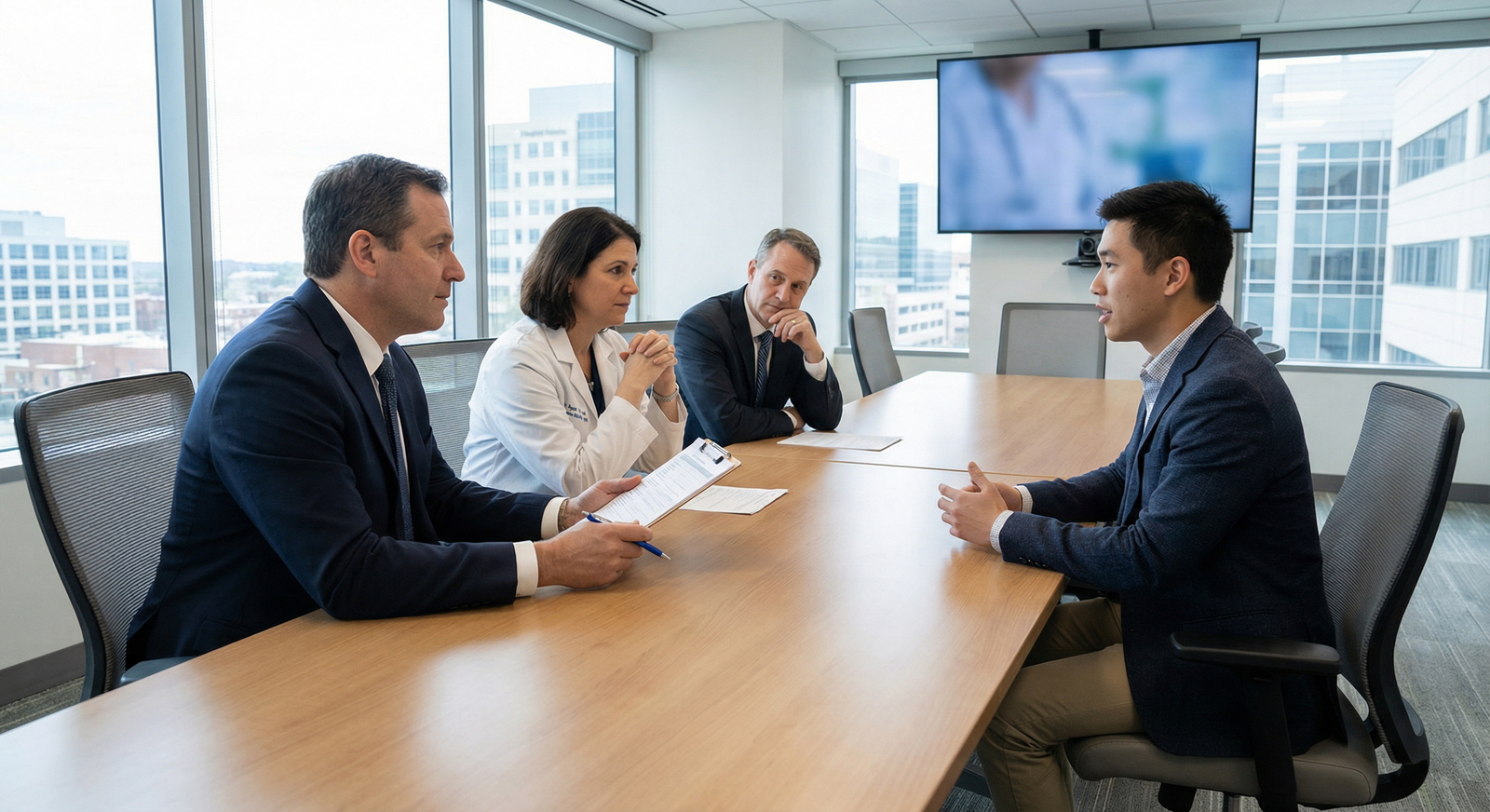
Understanding the EM-IM Landscape as a Non-US Citizen IMG
Emergency Medicine–Internal Medicine (EM-IM) combined programs are highly structured, intense, and relatively few in number. As a non-US citizen IMG or foreign national medical graduate, you are competing in a tight field where every interview invitation is precious—and how you prepare before the interview often determines whether you match.
Before you dive into residency interview preparation logistics, you need a clear picture of what EM-IM programs are seeking and how your profile is viewed.
What Makes EM-IM Different?
EM-IM combined training is not simply half Emergency Medicine and half Internal Medicine. Programs are looking for applicants who:
- Thrive in high-acuity, fast-paced environments (EM)
- Enjoy complex medical problem-solving, chronic disease management, and continuity of care (IM)
- Can switch mindsets between resuscitation and longitudinal care
- Have the maturity and stamina for a 5-year combined curriculum
Common career goals among EM-IM residents:
- Academic careers in ED–ICU interfaces, hospital medicine, or observation medicine
- Leadership in ED/hospital quality improvement, patient flow, and systems-based practice
- Critical care fellowship, ultrasound, or simulation-oriented careers
- Roles in international emergency and acute care systems
Your pre-interview preparation should show that you understand this culture and have intentionally chosen combined training, not simply applied broadly.
How Programs View Non-US Citizen IMGs
Many EM-IM programs are university-based and competitive. As a non-US citizen IMG, you may face:
- Visa considerations: Some programs sponsor only J-1, some J-1 and H-1B, and a few none at all.
- Perceived differences in training: Less familiarity with your home country’s medical system.
- Concerns about adaptation: Comfort with acute care in a US emergency department and US inpatient medicine environment.
Your pre-interview preparation must directly address these concerns by demonstrating:
- Strong clinical readiness and exposure to US-based practice (if possible)
- Clear understanding of EM and IM practice in the US
- Excellent English communication skills, including medical terminology and nuance
- Mature, realistic expectations about workload, night shifts, and team-based culture
Step 1: Strategic Research – Know Each EM-IM Program in Depth
Your preparation should start well before the interview with deep, targeted research. This is where many applicants—especially IMGs—fall short.
Build a Program Research Template
Create a spreadsheet or document with columns such as:
- Program name and location
- Visa sponsorship (J-1 / H-1B / none)
- Number of EM-IM positions per year
- Affiliated hospital type (county, academic, community)
- Patient population (urban underserved, rural, trauma center, tertiary care)
- EM and IM department strengths (toxicology, ultrasound, ICU, global health, QI)
- Program length and structure (scheduling pattern, rotations, ED–ward time distribution)
- EM-IM specific features (dedicated EM-IM clinics, EM-IM conferences, leadership tracks)
- Fellowship pathways of recent graduates
- Notable faculty (especially dual boarded EM-IM physicians)
- Any recent changes (new program director, new sites, accreditation changes)
This level of detail will allow you to craft program-specific talking points and questions to ask during interviews.
Sources of High-Value Information
Program website – Look for:
- EM-IM curriculum page
- Sample rotation schedules
- List of EM-IM faculty and current residents
- EM and IM departmental strengths and research interests
FREIDA and NRMP data – Confirm:
- Number of positions – EM-IM slots are usually very limited
- Visa policies
- Board pass rates and program accreditation status
Social media and resident blogs:
- EM or EM-IM program Instagram/Twitter/X accounts
- Resident-run podcasts or blogs about life in the program
- These often show culture, wellness initiatives, teaching style, and resident satisfaction
Networking with current residents:
- Email or LinkedIn messages: “As a non-US citizen IMG interested in EM-IM, I would appreciate a few minutes to hear about your experience in the program.”
- Craft 2–3 specific questions: e.g., “How has the program supported your visa process?” or “How is EM vs IM balance handled in your rotations?”
This research will feed directly into your answers when asked:
- “Why EM-IM combined training?”
- “Why our program specifically?”
- “What type of practice do you see yourself in after residency?”
Step 2: Clarify and Refine Your EM-IM Story
One of the most important parts of residency interview preparation is developing a coherent, authentic narrative that ties your experiences to your choice of EM-IM as a non-US citizen IMG.
Connect Your Background to Combined Training
Reflect and write out answers to:
Why Emergency Medicine?
- Examples:
- Loved acute care rotations, resuscitation cases, and rapid decision-making.
- Strong interest in ultrasound, trauma, or prehospital medicine.
- Examples:
Why Internal Medicine?
- Examples:
- Enjoyed complex diagnostic reasoning and multi-morbidity care.
- Found meaning in continuity clinics and chronic disease management.
- Examples:
Why EM-IM Combined (not one or the other)?
- This must be more than “I like both.”
- Link to:
- Planned career in ED-based observation units or hospital medicine
- Desire for systems-level leadership spanning ED and inpatient services
- Long-term plan for critical care, global acute care systems, or academic medicine
Why in the United States as a foreign national medical graduate?
- Exposure to US system through electives or observerships
- Desire to train in a system with advanced emergency and internal medicine infrastructure
- Long-term professional goals that align with US-based training
Build a 60–90 Second Personal “Anchor Story”
This is a concise, polished summary you can adapt when asked:
- “Tell me about yourself.”
- “Walk me through your journey to EM-IM.”
Example structure:
- Origin – Where you’re from and medical school background
- Key experiences – 2–3 pivotal clinical or research experiences showing your interest in both EM and IM
- Current state – What you’re doing now (observerships, research, clinical work)
- Future direction – Clear, realistic professional goals involving EM-IM
Practice this until it sounds natural, not memorized.

Step 3: Master Common Residency Interview Questions (EM-IM Focus)
A major component of how to prepare for interviews is rehearsing answers to high-yield interview questions residency programs use. For EM-IM, expect a blend of generic, EM-specific, IM-specific, and combined-training questions.
Core Traditional Questions to Prepare
Write out, refine, and rehearse answers to the following:
- Tell me about yourself.
- Why Emergency Medicine-Internal Medicine combined training?
- Why are you interested in this program specifically?
- What are your long-term career goals? (Academic vs community, ED vs inpatient vs ICU)
- What are your strengths and weaknesses?
- Describe a challenging clinical case and what you learned.
- Tell me about a conflict with a colleague or supervisor and how you handled it.
- How do you handle stress, high workload, and night shifts?
- As a non-US citizen IMG, what challenges do you anticipate in training here?
- How do you plan to contribute to our residency community?
EM-Focused Questions
- “Describe a time you had to make a rapid decision with limited information.”
- “How do you feel about uncertainty in clinical decision making?”
- “What aspects of Emergency Medicine energize you, and what do you find most challenging?”
- “How have you handled situations with very sick patients or codes?”
IM-Focused Questions
- “Tell me about a time when you managed a complex medical patient over several days.”
- “What do you enjoy about continuity of care?”
- “How do you approach diagnostic uncertainty in a medically complex patient?”
- “How do you stay organized with multiple inpatients and tasks?”
EM-IM Combined-Specific Questions
Expect nuanced questions such as:
- “Why EM-IM instead of doing EM and then a fellowship like critical care or hospital medicine?”
- “How will you handle the extra years of combined training?”
- “What kind of role do you see yourself in 10 years with dual training?”
- “What unique perspective do you think EM-IM physicians bring to a hospital?”
- “What are the downsides of EM-IM training, and how have you thought about them?”
Behavioral and Scenario-Based Questions
Programs increasingly use behavioral questions:
- “Tell me about a time you made a mistake in patient care.”
- “Describe a time you received critical feedback and how you responded.”
- “Tell me about a time you had to advocate for a patient.”
Use the STAR method (Situation, Task, Action, Result):
- Situation – Brief background
- Task – Your responsibility
- Action – What you did (focus on your behaviors)
- Result – Outcome and what you learned
Step 4: IMG-Specific Pre-Interview Preparation
As a non-US citizen IMG, you have additional layers of preparation beyond standard clinical and behavioral questions.
1. Clarify Your Visa and Legal Status
Be ready with concise, accurate information about:
- Current visa status (if in the US): F-1, J-1 research, etc.
- Whether you require J-1 or H-1B (or are flexible).
- Steps you have already taken (e.g., passed USMLE Step 3 if aiming for H-1B).
You do not need to lead with visa issues, but you must be ready if they come up. Answers should be:
- Reassuring (you understand the process)
- Brief (do not over-explain)
- Confident (do not appear uncertain about your own status)
Example (if asked):
“I will require J-1 sponsorship. I’ve reviewed your program’s policy and understand that you sponsor J-1 visas. I have passed Step 1 and Step 2 CK, and I am prepared to proceed with the necessary documentation if matched.”
2. Highlight US Clinical and Communication Readiness
Programs may worry about your ability to adapt to:
- Fast-paced ED communication
- Complex inpatient care with multidisciplinary teams
- Cultural nuances with patients and colleagues
Preparation steps:
- Review US emergency and inpatient terminology: discharge instructions, admission orders, ED triage categories, handoff language.
- Practice speaking out loud about clinical scenarios in English.
- Ask US-based mentors or peers to give feedback on your clarity and pace of speech.
If you have observerships or electives:
- Prepare to speak about them with very concrete examples:
- Types of patients you saw
- How you interacted with teams
- What you learned about US systems
3. Address Red Flags Proactively (If Applicable)
Common IMG “red flags”:
- Gaps after graduation
- Attempts or failures on USMLE
- Limited US clinical experience
- Changing specialties before EM-IM
Prepare a brief, honest, non-defensive explanation:
- Own what happened
- Explain what you learned
- Show how you improved and why you’re ready now
For example, if you had a delayed Step 1 pass:
“I needed two attempts for Step 1. At the time, I underestimated the exam’s style and did not use question banks effectively. After that experience, I changed my approach—used more practice questions, created a strict schedule, and sought peer study groups. My subsequent Step 2 CK score reflects that improvement, and I’ve continued using that disciplined method in my clinical work.”

Step 5: Simulation and Rehearsal – Turning Preparation into Performance
Research and reflection are vital, but you must practice delivering your thoughts clearly and confidently.
Conduct Mock Interviews
Aim for at least 2–3 structured mock interviews:
- Who can help:
- Faculty members who know US residency processes
- EM or IM residents (especially those familiar with EM-IM)
- IMG support organizations or online mentorship groups
- Format:
- 30–40 minutes of questions
- 15–20 minutes of feedback
Ask your mock interviewer to focus on:
- Clarity of answers and logical structure
- Filler words (“um, like, you know”)
- Facial expressions, eye contact (for video interviews)
- Speed of speaking (many IMGs speak either too fast or too softly)
- Strength of your EM-IM justification
Practice with Recording
Very few applicants do this, but it is powerful:
- Use your phone or computer to record:
- “Tell me about yourself.”
- “Why EM-IM combined?”
- “Why our program?”
- Watch the recording:
- Note your posture, tone, and facial expressions
- Identify phrases that sound unnatural or memorized
- Revise and try again
Your goal is to sound prepared but conversational, not robotic.
Prepare for Virtual Interview Logistics
Most programs now use virtual interviews, at least for initial rounds. Pre-interview preparation should include:
- Technology check:
- Reliable internet connection
- Updated Zoom/Teams/Webex client
- Good-quality webcam and microphone (test with a friend)
- Environment:
- Neutral, uncluttered background (plain wall or simple bookshelf)
- Good lighting (light source in front of you, not behind)
- Quiet environment – warn housemates, silence phone and notifications
- Professional appearance:
- Formal attire: suit jacket, professional shirt, minimal accessories
- Avoid busy patterns or distracting colors
Do a full test run at the same time of day as your interview if possible, to make sure lighting and noise levels are adequate.
Step 6: Crafting Program-Specific Questions and Closing Strategy
Your questions say as much about you as your answers. Thoughtful, EM-IM–specific questions show maturity and genuine interest.
High-Yield Questions to Ask EM-IM Programs
Prepare 6–8 questions in advance, then select 2–3 appropriate ones in the actual interview, depending on what has already been discussed.
Examples:
- “How do EM-IM residents integrate into both the EM and IM communities? Are there dedicated EM-IM conferences or mentorship structures?”
- “What kinds of careers have your recent EM-IM graduates pursued, and how does the program support those paths?”
- “How do you support EM-IM residents in balancing the demands of both departments, especially during transition months?”
- “What opportunities are available for EM-IM residents to be involved in quality improvement projects that span both the ED and inpatient services?”
- “How has the program supported non-US citizen IMG residents, particularly with visa and adaptation issues?”
Avoid questions that you can easily answer from the website (e.g., “How long is your program?”), unless you need clarification on something specific.
Plan Your Final Impression
Often you will be asked:
- “Do you have any questions for us?”
- “Is there anything else you would like us to know about you?”
Have a concise closing remark ready that:
- Reiterates your specific interest in EM-IM
- Shows your enthusiasm for their program
- Highlights one or two of your core strengths relevant to combined training
Example:
“Before we finish, I’d like to emphasize how strongly I feel that EM-IM training aligns with my long-term goal of working at the interface of the emergency department and inpatient services. I’m especially drawn to your program’s strength in critical care and your EM-IM mentorship structure. I believe my background as a non-US citizen IMG, my experience in high-acuity settings at home, and my commitment to systems-based quality improvement would allow me to contribute meaningfully to your team.”
Step 7: Day-Before and Day-Of Interview Checklist
All your long-term residency interview preparation leads to this.
Day-Before the Interview
- Re-review:
- Your application, personal statement, and CV
- Program website and your notes (remind yourself of specific features)
- Your prepared questions for the program
- Print or have ready:
- 1-page summary sheet per program (key names, features, your talking points)
- Backup copy of your interview schedule and contact details
- Technology:
- Re-test audio and video
- Ensure device is fully charged or plugged in
- Sleep:
- Aim for a regular bedtime; avoid last-minute cramming
Day-Of the Interview
- Dress fully in professional attire (even shoes—this psychologically prepares you).
- Set up 30–40 minutes early:
- Check lighting, sound, and camera framing
- Close non-essential programs and notifications
- Have nearby:
- A glass of water
- Your notes (out of camera view)
- Paper and pen for jotting down names and notes
- During the interview:
- Look at the camera when speaking, not at your own image
- Use the interviewer’s names
- Pause briefly before answering to gather your thoughts
- Be honest; if you don’t know something, say you would look it up and explain how
Immediately after:
- Write a quick post-interview reflection:
- Who you spoke with
- What you liked about the program
- How well your EM-IM interests align
- Any concerns or follow-up questions
This will help later when you create your rank list and when deciding whether to send follow-up communications.
FAQs: Pre-Interview Preparation for Non-US Citizen IMG in EM-IM
1. How many EM-IM programs should a non-US citizen IMG apply to and interview at?
EM-IM programs are limited in number and spaces. Most non-US citizen IMGs should:
- Apply broadly to all EM-IM programs that accept IMGs and sponsor your visa type
- Realistically, you may only secure a small number of EM-IM interviews
- Many applicants also apply to categorical EM and/or IM programs as part of a parallel plan
Pre-interview preparation should treat each EM-IM interview as high-stakes, since every invitation significantly impacts your chances of matching into combined training.
2. How can I best demonstrate “fit” for EM-IM as a foreign national medical graduate?
Demonstrate fit by:
- Having a clear, consistent EM-IM narrative: show why dual training is essential for your future goals
- Highlighting experiences where you functioned in:
- Acute care or ED-like environments, and
- Longitudinal or complex internal medicine settings
- Showing understanding of EM-IM culture and career paths (Q&I, ED–inpatient transitions, critical care, academic roles)
- Displaying resilience, adaptability, and teamwork, especially across different health systems or cultures
Use specific, concrete examples from your clinical, research, or leadership experiences.
3. Should I bring up my visa needs during the interview?
If the program’s visa policy is already clearly stated and your situation is straightforward, you do not need to lead with it. However:
- If asked directly, answer honestly and concisely.
- If there is ambiguity (e.g., you require H-1B and the program’s policy is unclear), it is reasonable to ask a brief, factual question to the program coordinator or during a designated administrative Q&A session, not necessarily during every faculty interview.
Your primary focus in faculty interviews should be your clinical, academic, and personal fit for EM-IM.
4. How can I stand out among other strong applicants during an EM-IM interview?
You stand out by:
- Offering a well-articulated, mature vision of your future role as an EM-IM physician
- Demonstrating deep knowledge of the program and how it supports your goals
- Showing self-awareness about the challenges of combined training and your realistic strategies to manage them
- Bringing a unique perspective as a non-US citizen IMG (e.g., experience in resource-limited settings, prior independent responsibilities, cross-cultural insights)
- Communicating clearly, confidently, and kindly, with genuine enthusiasm for both Emergency Medicine and Internal Medicine
If you invest heavily in thoughtful pre-interview preparation, especially for this combined specialty and as an IMG, you will be able to present yourself as a focused, resilient, and mission-driven future EM-IM physician.