Understanding the Unique Challenges for Non-US Citizen IMGs in Nuclear Medicine
Applying to a nuclear medicine residency in the US as a non-US citizen IMG (international medical graduate) is both exciting and uniquely challenging. Beyond the usual pressure of residency interview preparation, you must also navigate:
- Visa considerations (often J-1, sometimes H-1B)
- Limited number of nuclear medicine positions
- Program directors’ concerns about visa timing and credentialing
- Potential gaps in direct nuclear medicine exposure in your home training system
- Communication and cultural differences in US clinical environments
Recognizing these issues early allows you to organize your pre-interview preparation strategically, so that by the time you sit down for your nuclear medicine residency interview, you can focus on showcasing your strengths—not worrying about basic logistics.
This guide is tailored to the non-US citizen IMG or foreign national medical graduate targeting nuclear medicine. It focuses specifically on pre-interview preparation—what you should do before interview day to maximize your chances in the nuclear medicine match.
Step 1: Clarify Your Profile and Value as a Non-US Citizen IMG
Before you think about how to prepare for interviews, you need a clear understanding of who you are as a candidate and how that fits into nuclear medicine residency programs’ expectations.
A. Map Your Strengths to Nuclear Medicine
Nuclear medicine is a niche specialty focused on:
- Molecular imaging (PET/CT, SPECT/CT)
- Radionuclide therapy (e.g., I-131, Lu-177, Y-90)
- Quantitative imaging and image interpretation
- Close collaboration with radiology, oncology, surgery, and internal medicine
- Increasing role in theranostics and personalized medicine
List your experiences that map directly or indirectly to these areas:
- Radiology electives, especially in nuclear medicine
- Oncology, endocrinology, or cardiology rotations where nuclear imaging was used
- Research on PET, SPECT, radiopharmaceuticals, dosimetry, or molecular imaging
- Any work with AI, image analysis, or quantitative imaging techniques
- Presentations or posters involving imaging, cancer staging, or functional diagnostics
Action step:
Create a one-page “Candidate Snapshot” for yourself:
- Education and key clinical experiences
- Nuclear medicine–related exposure
- US clinical experience (USCE)
- Research and publications/posters
- Language skills and cross-cultural experience
- Visa status and flexibility (e.g., okay with J-1, needs H-1B, etc.)
You will use this snapshot to frame your stories and responses during residency interview preparation.
B. Anticipate Program Directors’ Concerns About Non-US Citizen IMGs
Program directors want to know:
- Will you be able to work here legally on time?
- Visa type, processing times, prior US stays, potential delays.
- Do you understand US clinical and communication standards?
- Comfort presenting cases, calling consults, reporting imaging findings.
- Will you adapt to a small, often close-knit specialty?
- Nuclear medicine programs are often small; teamwork is critical.
- Can you learn advanced imaging quickly?
- Ability to handle physics, radiobiology, and new technologies.
Pre-interview task: Write down 3–4 clear, concise responses that directly address:
- Your visa situation and flexibility
- Your familiarity with the US system
- Your commitment to nuclear medicine as a long-term career
- Your learning style and adaptability
You will refine these later into polished answers.
Step 2: Deep Research on Programs and the Specialty
Too many applicants approach pre-interview preparation by memorizing generic answers. For nuclear medicine, you must go deeper and be data-driven and specialty-specific.
A. Understand Today’s Nuclear Medicine Landscape
Before interview season, ensure you can confidently discuss:
- Current uses of PET/CT and SPECT/CT in:
- Oncology (e.g., FDG PET, PSMA PET, DOTATATE)
- Cardiology (myocardial perfusion)
- Neurology (dementia imaging, epilepsy)
- Emerging theranostics:
- PSMA-targeted therapy
- Lutetium-177 DOTATATE
- Radioiodine therapy updates
- Role of nuclear medicine physicians in multidisciplinary tumor boards
- Future of the field:
- Hybrid imaging (PET/MR)
- AI-driven image analysis
- Personalized dosimetry
Action step: Prepare a one-page “Nuclear Medicine Now” summary with:
- 3–4 key clinical applications you can describe clearly
- 2–3 future trends you find exciting
- 1–2 areas you might want to pursue in research or fellowship (e.g., theranostics, neuroimaging)
This will help you answer “Why nuclear medicine?” and program-specific questions with substance.
B. Program-Specific Research
For each program that invites you to interview:
Go through the program website thoroughly:
- Number of residents per year
- Length of training (1-year vs 2-year programs, direct vs combined with diagnostic radiology)
- PET/CT and SPECT/CT equipment
- Therapies offered (I-131, Lu-177, Y-90, Ra-223, etc.)
- Research focus areas and key faculty names
- Multidisciplinary clinics or tumor boards
Look beyond the website:
- Recent publications by faculty (PubMed search)
- Hospital reputation, cancer center designation (NCI, etc.)
- City and cost of living, especially relevant if you’re a foreign national medical graduate budgeting for relocation
Create a program dossier: For each program, prepare one document (1–2 pages):
- Core strengths (e.g., strong theranostics, heavy oncology, academic focus)
- Possible weaknesses (e.g., limited pediatrics exposure)
- Alumni paths (academia vs community vs industry)
- At least 3 personalized questions you can ask on interview day
This dossier will strongly differentiate you from applicants who ask generic, unresearched questions.
Step 3: Master the Core Interview Questions (With a Nuclear Medicine Lens)
When thinking about how to prepare for interviews, you should expect a mix of general residency questions and nuclear medicine–specific questions. As a non-US citizen IMG, you also need to be prepared for questions related to your background, visa, and adaptation to the US system.
A. General “Interview Questions Residency” Programs Commonly Ask
Prepare polished, authentic answers to these core questions:
“Tell me about yourself.”
Structure it:- Brief origin and education (including your country)
- Key experiences that led you toward imaging and nuclear medicine
- Current status (e.g., research fellow, observer, or practicing physician)
- 1–2 personal interests outside medicine
Aim for 1.5–2 minutes, conversational, not recited.
“Why nuclear medicine?”
As a foreign national medical graduate, show that your motivation transcends “radiology alternative.” For example:- A powerful clinical case where molecular imaging changed management
- Fascination with functional imaging and theranostics
- Interest in oncology and multidisciplinary care
- Alignment with your skills: analytical thinking, image interpretation, research inclination
“Why our program?”
Use your program dossier:- Specific imaging modalities, therapies, or research you’re excited to learn
- Faculty whose work matches your interests
- Program structure that fits your goals (e.g., strong PET/CT oncology focus if you want to do oncology imaging)
“What are your strengths and weaknesses?”
Choose strengths that matter in nuclear medicine:- Attention to detail
- Ability to synthesize clinical and imaging information
- Comfort with complex technology
- Collaborative mindset
For weaknesses, choose something truthful but improvable:
- Example: “Public speaking in large groups,” and then describe steps you’re taking to improve (case presentations, journal clubs).
“Where do you see yourself in 5–10 years?”
Show a realistic long-term vision:- Academic nuclear medicine physician involved in research and teaching
- Hybrid career with both clinical imaging and theranostic therapy
- Possibly subspecialty interests (e.g., neuroimaging, oncology, cardiac imaging)
B. Nuclear Medicine–Specific Interview Questions
Prepare for targeted questions like:
- “What is your understanding of the role of nuclear medicine in oncology?”
- “How would you explain PET/CT to a patient who is anxious about radiation?”
- “Tell me about a nuclear medicine or imaging case that changed your thinking.”
- “What do you see as the biggest future development in nuclear medicine?”
- “Are you more interested in imaging interpretation or therapies—or both?”
Action step (writing exercise):
Pick 5–7 nuclear medicine–specific questions and draft bullet-point answers. Then practice answering out loud until you can respond naturally, not as if reading from a script.
C. Non-US Citizen / IMG-Specific Questions
You may be asked:
- “What challenges have you faced as an international medical graduate, and what did you learn from them?”
- “How has your background trained you for work in a US hospital system?”
- “Tell us about your US clinical experience and how it influenced your decision.”
- “What is your visa situation, and do you have any restrictions?”
Plan clear, concise, confident responses. Avoid sounding uncertain or defensive. Instead, frame your IMG status as a strength:
- Broader exposure to different healthcare systems
- Adaptability and resilience
- Multilingual ability and cultural competence in patient care
Step 4: Structured Residency Interview Preparation Strategy
A strong pre-interview plan for the nuclear medicine match includes content preparation, performance practice, and logistics.
A. Build a Personal Story Bank
Interview answers are strongest when supported by specific stories. Prepare 10–12 short stories from your experience that demonstrate:
- Professionalism and ethics
- Teamwork and communication
- Dealing with a difficult clinical situation
- A time you made a mistake and learned from it
- Leadership or teaching
- Research perseverance (e.g., paper rejection, revising and resubmitting)
- Curiosity about imaging and diagnostics
Each story can be structured using the STAR method:
- Situation
- Task
- Action
- Result (and Reflection)
Label them so you can reuse stories for different questions. For example:
- “Challenging patient communication during nuclear scan” → can be used for:
- Communication skills
- Handling anxiety
- Patient-centered care
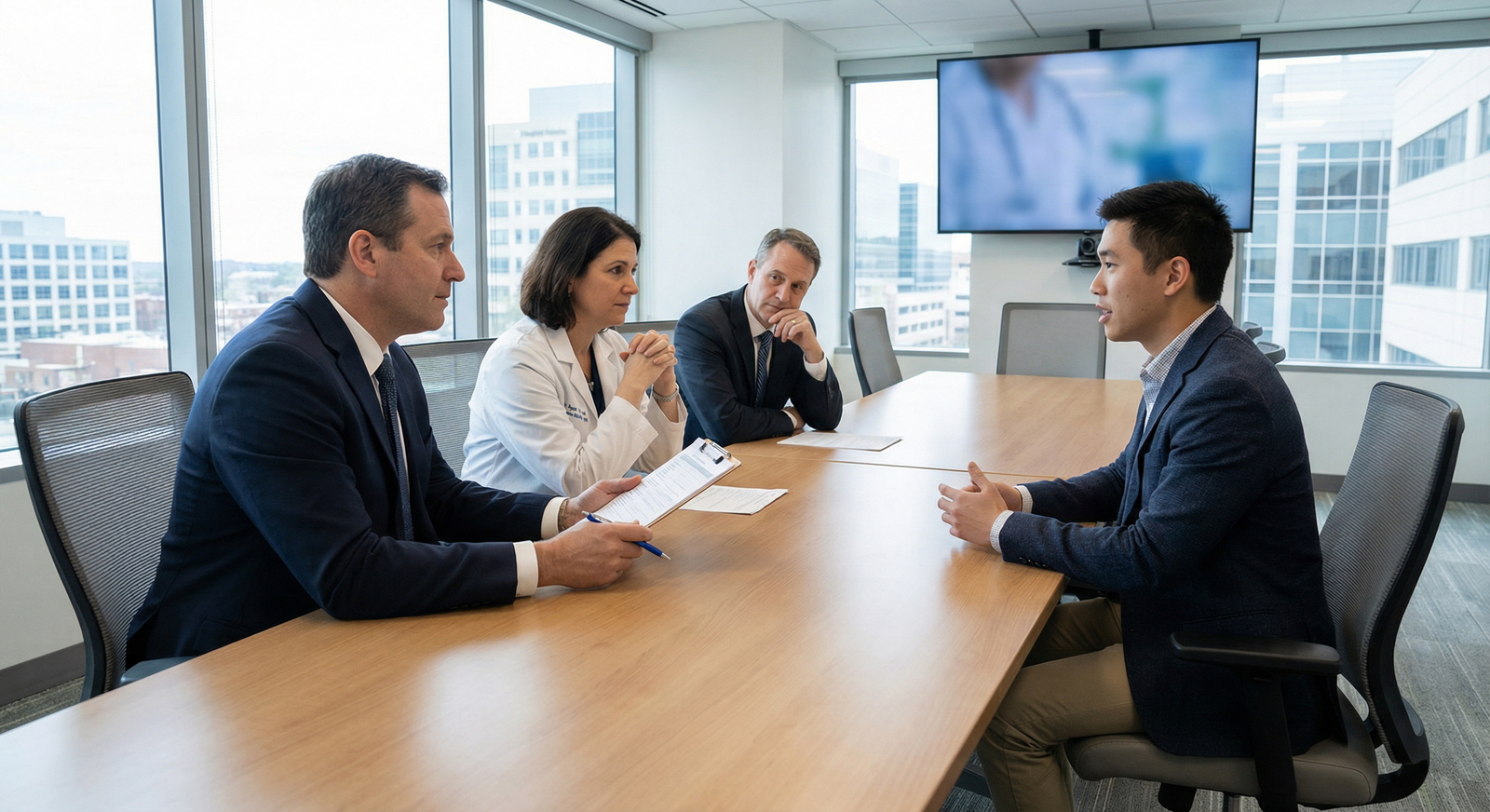
B. Mock Interviews: Practice Under Pressure
To translate preparation into performance:
Formal mock interviews:
- With a mentor, faculty member, or senior resident (ideally in radiology/nuclear medicine)
- Ask for honest, detailed feedback on:
- Clarity
- Brevity
- Professionalism
- Nonverbal communication
Peer mock interviews:
- Practice with other IMGs applying to residency, even in different specialties
- Rotate roles: interviewer, interviewee, observer (to provide feedback)
Self-practice with recording:
- Record yourself answering common questions
- Watch critically:
- Do you speak too fast due to nervousness?
- Are your answers too long or vague?
- Do you overuse filler words (“like,” “um,” “you know”)?
Goal: By interview season, your answers should sound confident, organized, and conversational, not memorized.

Step 5: Communication, Accent, and Cultural Nuances
For many non-US citizen IMGs, excellent knowledge and preparation can be overshadowed if communication is unclear or if cultural cues are misunderstood. This does not mean you must erase your accent; it means your message must be easy for interviewers to follow.
A. Clear Spoken English
Focus on:
- Pace: Speak slightly slower than you think you should.
- Structure: Use clear signposting:
- “There are three main reasons…”
- “First…, second…, finally…”
- Pauses: Brief pauses allow you to think and emphasize key points.
If you’re unsure about clarity:
- Ask a trusted US-based colleague or mentor to give feedback specifically on intelligibility.
- Consider short, focused online sessions with accent or communication coaches experienced with IMGs.
B. Culturally Appropriate Professionalism
In US residency interviews:
- Maintain eye contact (but not a constant stare).
- Address interviewers with titles initially (“Dr. Smith”) unless invited to use first names.
- Be respectful but not overly deferential; programs want colleagues, not just subordinates.
- Avoid overly personal or controversial topics (politics, religion) unless clearly relevant and handled professionally.
Practice small talk as well—common in US interviews:
- Weather, hobbies, recent moves, general interests
- Light comments about adapting to life in the US
Step 6: Logistics and Technical Preparation (Especially for Virtual Interviews)
Many nuclear medicine residency interviews are virtual. For non-US citizen IMGs, time zones, internet quality, and technology can be major stressors. Pre-interview preparation must include logistical rehearsal, not only content.
A. Technical Setup
Equipment:
- Laptop or desktop over mobile phone
- Reliable webcam (built-in is fine if clear)
- Headphones or headset to minimize echo
- Stable internet connection; if possible, wired Ethernet
Environment:
- Quiet room with minimal background noise
- Neutral, uncluttered background (or a simple professional backdrop)
- Good lighting (light source in front of you, not behind)
Software:
- Install and test Zoom, Microsoft Teams, or whatever platform the program uses.
- Create a professional username and display name:
- Example: “FirstName LastName, MD”
- Check microphone and camera settings a day before.
Backup plan:
- Have a phone number for the program coordinator.
- Identify an alternate location (friend’s place, co-working space) in case of connectivity issues.
B. Time Zone and Scheduling
As a foreign national medical graduate outside the US, ensure:
- You convert interview times correctly from US time zones to your local time.
- You adjust sleep schedule in the days before if interviews are at odd hours.
- You avoid scheduling back-to-back interviews when your local time would be very late or very early.
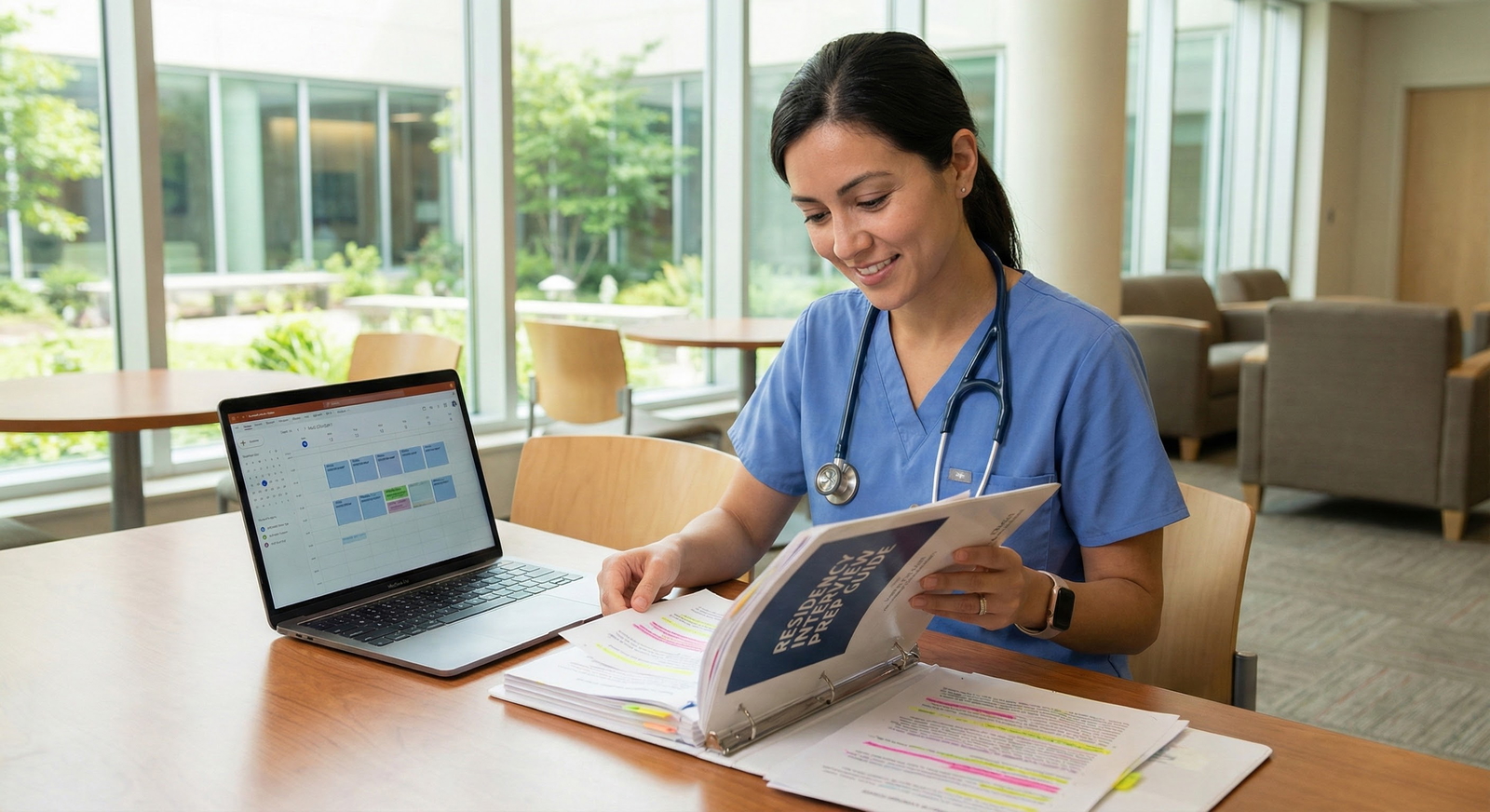
Keep a detailed calendar with:
- Program name
- Date and time (with time zone noted clearly)
- Platform link
- Contact information for the coordinator
- Any special instructions (breakout rooms, virtual social events)
Step 7: Pre-Interview Document and Visa Preparation
Even though this article focuses on pre-interview rather than post-match logistics, programs often bring up visa and documentation during the interview.
A. Know Your Visa Facts
You should be able to clearly explain:
- What visa you currently hold (if any) and where you are located
- Whether you are eligible and open to a J-1 visa (most common)
- Whether you require H-1B sponsorship and why
- Any previous stays in the US (student, research scholar, observership) and whether those involved visas like F-1 or J-1
Never guess. If you are uncertain, consult:
- The Educational Commission for Foreign Medical Graduates (ECFMG) resources
- The program coordinator (for clarification on types they sponsor)
- Official US government or institutional immigration advisors (if available)
B. Have Essential Documents Ready (Even Virtually)
Before interview season:
- Keep copies of:
- ECFMG certificate
- USMLE scores
- Medical school diploma and transcripts
- Updated CV
- List of publications and presentations
You may not be asked to show them during the interview, but being prepared helps you answer detailed questions confidently.
Step 8: Strategic Questions to Ask Programs
Programs will test your genuine interest by the quality of questions you ask them. For nuclear medicine, avoid generic questions that could apply to any specialty.
Examples of thoughtful, specialty-specific questions:
- “How is the balance between PET/CT, SPECT/CT, and therapies in your residents’ typical week?”
- “What opportunities exist for residents to be involved in theranostics development or clinical trials?”
- “How integrated are nuclear medicine residents in multidisciplinary tumor boards?”
- “Do residents have exposure to pediatric nuclear medicine or collaborations with pediatric hospitals?”
- “What kind of support is available for residents interested in research—protected time, mentorship, or funding?”
As a non-US citizen IMG, you may also carefully ask:
- “Do your previous or current residents include international medical graduates, and how has the program supported them in adjusting to the US system?”
- “Could you share how your institution typically handles visa sponsorship for residents?”
Ask these respectfully and only after you’ve researched the website to avoid asking what is easily found online.
Step 9: Mental Preparation and Confidence Building
Pre-interview preparation is not just about knowledge and logistics—it is also about mindset. As a non-US citizen IMG, you may sometimes feel at a disadvantage compared with US graduates. You must actively counter this with realistic but confident self-talk.
A. Reframe Your IMG Status as an Asset
You bring:
- Adaptability from working/training in different systems
- Multicultural sensitivity and often multilingual communication skills
- Unique insights into global health, which matter even in a high-tech field like nuclear medicine
- Often, strong exam discipline and perseverance
Programs increasingly value diversity and varied perspectives—use that to your advantage with confidence.
B. Pre-Interview Ritual
Develop a consistent routine for the night before and the morning of each interview:
- Light review of your program dossier (not cramming)
- Short reflection on your “why” for nuclear medicine
- Practicing a few key answers out loud to warm up
- Adequate sleep, hydration, and a light, non-sleep-inducing meal
This reduces anxiety and keeps you centered on your long-term goals in the nuclear medicine match.
FAQs: Pre-Interview Preparation for Non-US Citizen IMGs in Nuclear Medicine
1. As a non-US citizen IMG, how early should I start residency interview preparation for nuclear medicine?
Ideally, begin structured preparation 2–3 months before the expected interview season. Use the first month to deepen your understanding of nuclear medicine, build your story bank, and refine your CV narrative. Use the remaining time for mock interviews, accent/communication practice if needed, and detailed program research. Starting early is especially important if you must also navigate time zones, visa questions, and US clinical experience.
2. Will my limited nuclear medicine exposure in medical school hurt my chances?
Not necessarily, if you demonstrate:
- A clear understanding of what nuclear medicine is and is not
- Genuine motivation rooted in your clinical or research experiences
- Commitment to learning and to the evolving field (e.g., theranostics, PET/CT, molecular imaging) You can supplement limited exposure through electives, observerships, reading recent nuclear medicine literature, and attending virtual conferences or webinars. Be honest about your experience but proactive in showing your engagement.
3. How direct should I be about my visa needs during the interview?
Be transparent, concise, and factual. You do not need to lead with visa issues, but when asked—or when it is appropriate in a conversation about logistics—clearly state what visa you will need (e.g., “I am eligible for J-1 sponsorship and open to it,” or “I would require H-1B sponsorship”). Programs appreciate clarity and planning. Do not argue or pressure programs about policies; instead, focus on your fit and qualifications.
4. What is the biggest mistake foreign national medical graduates make in nuclear medicine interviews?
Common mistakes include:
- Giving generic answers that could apply to any specialty (“I like anatomy and diagnostics”) instead of focusing on functional imaging and theranostics
- Underexplaining or overexplaining their international background—either ignoring it or overemphasizing it
- Not preparing enough for communication and cultural nuances in the US setting
- Failing to research programs in depth, leading to weak answers to “Why our program?” Avoid these by following a structured residency interview preparation plan: know your story, know the field, know each program—and practice how you communicate all three.
By investing in thorough pre-interview preparation tailored to your situation as a non-US citizen IMG interested in nuclear medicine, you position yourself not merely as an applicant, but as a future colleague who understands the specialty, the system, and the responsibilities that come with being a nuclear medicine physician in the US.