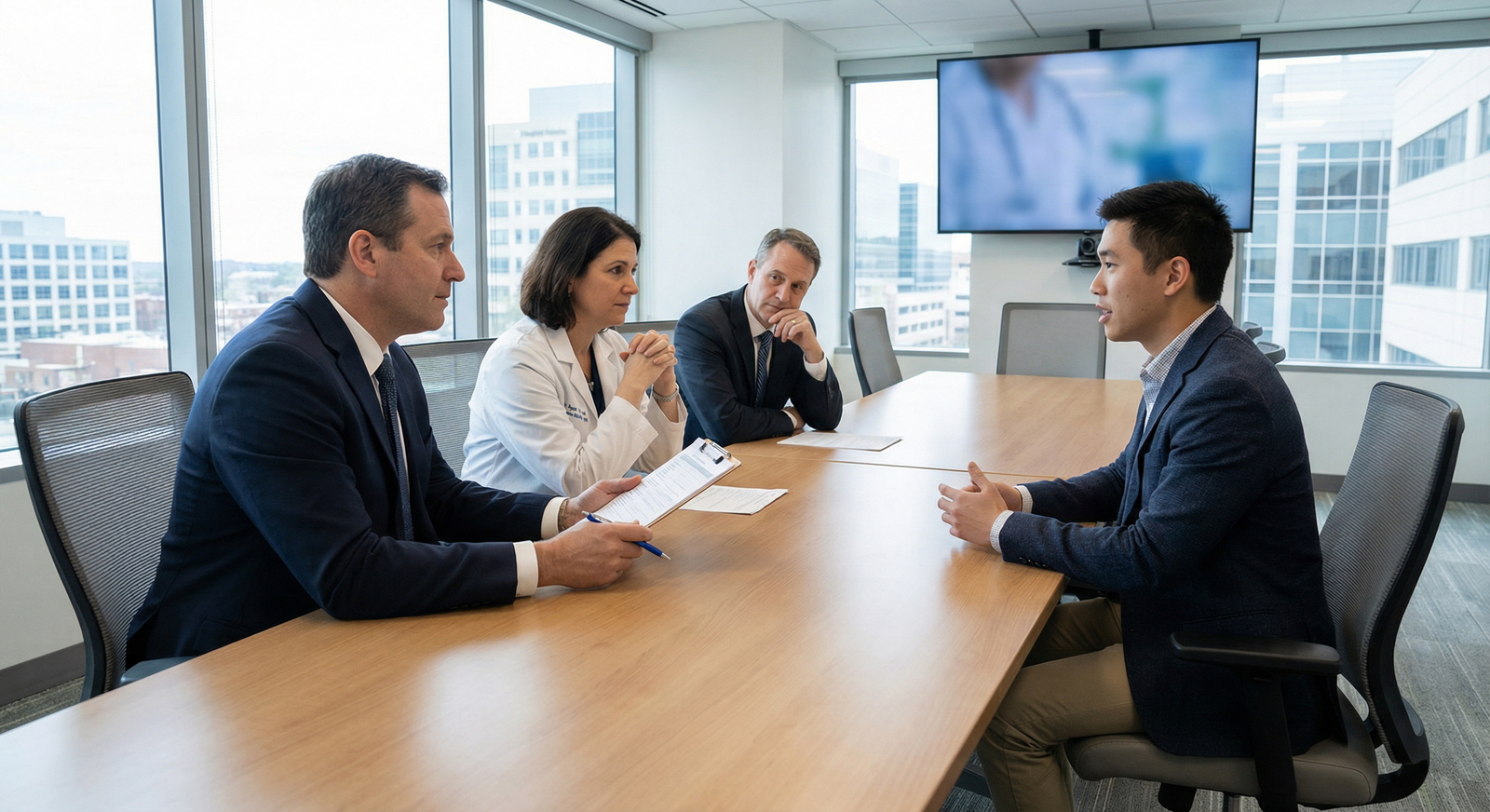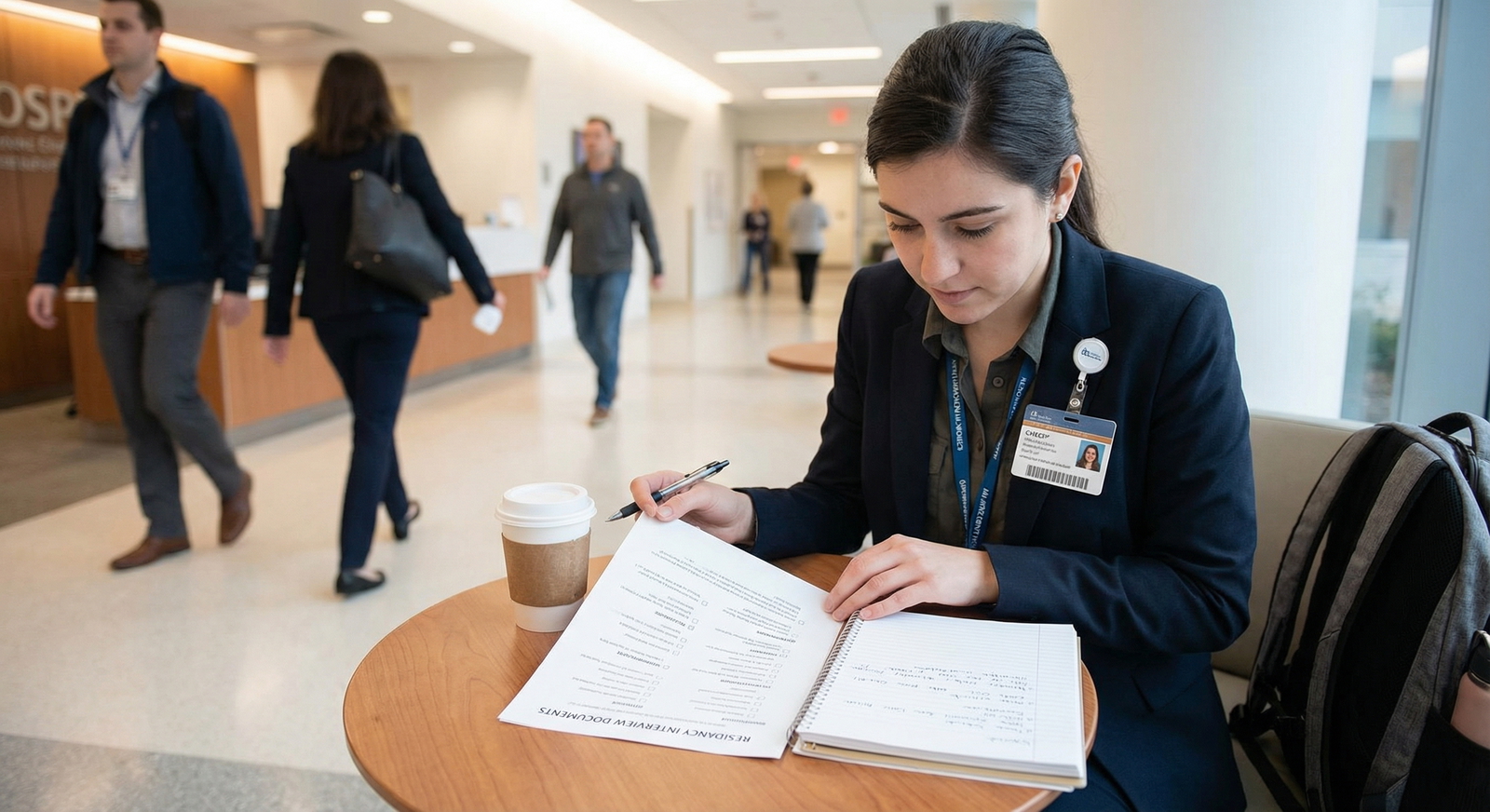
Understanding the Unique Landscape for Non-US Citizen IMGs in Pediatrics-Psychiatry
Pediatrics-Psychiatry—often pursued through a Triple Board residency (Pediatrics / General Psychiatry / Child & Adolescent Psychiatry)—is a small, competitive niche. For a non-US citizen IMG or foreign national medical graduate, pre-interview preparation is doubly important: you must show not only clinical readiness, but also that you understand US training systems, visa logistics, and the collaborative, family-centered nature of this specialty.
Before you focus on how to prepare for interviews, it helps to understand your strategic goals:
- Reassure programs you can function effectively within US healthcare systems (documentation, teamwork, communication).
- Demonstrate maturity and resilience, especially around cultural transition and working with vulnerable pediatric and psychiatric populations.
- Show a clear, realistic understanding of what a peds psych residency or triple board training pathway entails.
- Make it easy to say yes: your story, documents, and logistics are all organized, consistent, and professional.
This article walks you step-by-step through pre-interview preparation tailored specifically to international applicants targeting Pediatrics-Psychiatry, with practical examples, sample frameworks, and checklists you can adapt immediately.
1. Clarify Your Story: Why Pediatrics-Psychiatry, and Why You?
The foundation of residency interview preparation is a coherent story. Programs will explore this from many angles through classic interview questions residency committees love to ask.
1.1 Build a Clear “Narrative Spine”
Your narrative spine is a 3–4 sentence core summary that ties your background, interests, and goals together. For a foreign national medical graduate, this must also include the international dimension and visa reality.
Use this simple framework:
- Who you are now (clinical identity)
- What shaped your interest in pediatrics-psychiatry
- How your prior experiences prepared you
- Where you want to go (career goals in peds/psych)
Example (Non-US Citizen IMG, Triple Board focus):
“I am a non-US citizen IMG from India with strong clinical experience in pediatrics, psychiatry electives at a tertiary center, and recent US observerships in developmental pediatrics. During medical school, I worked in a child mental health outreach program in rural communities, where I saw how unaddressed mental illness in caregivers affected children’s health. This led me to pursue combined training in pediatrics and psychiatry through a triple board residency. Long-term, I hope to work in an academic children’s hospital building integrated behavioral health services for immigrant families.”
Write your own version and refine it until it feels natural but polished. This becomes the backbone of your answers to:
- “Tell me about yourself.”
- “Why pediatrics-psychiatry?”
- “Why triple board instead of separate residencies?”
- “How did you become interested in psychiatry/pediatrics?”
1.2 Clarify Your Pediatrics-Psychiatry Specific Motivation
Programs worry that some applicants choose triple board just because it’s “unique” or “a shorter way to get two specialties.” Show that your interest is grounded and realistic.
Reflect beforehand on:
- Which patients move you the most?
- Ex: children with autism and co-occurring ADHD; adolescents with chronic illnesses and depression; medically ill children with challenging behaviors on the pediatric ward.
- What patterns you’ve observed:
- When children’s physical conditions worsened because psychiatric issues weren’t addressed.
- When family mental health impacted pediatric outcomes.
- What you understand about training structure:
- 5-year combined curriculum (for most triple board programs).
- Rotations split between pediatrics, adult psychiatry, child & adolescent psychiatry.
- Frequent transitions between services and roles.
Be ready with a specific clinical story that illustrates the intersection of pediatrics and psychiatry for you (while maintaining confidentiality). Programs are more convinced by one well-told story than by generic passion statements.
Example anchor story themes:
- Child with poorly controlled asthma whose anxiety about school and domestic violence at home were root causes.
- Teen with recurrent abdominal pain and normal workups, later diagnosed with depression and school bullying issues.
- Child hospitalized for failure to thrive where maternal postpartum depression was the key problem.
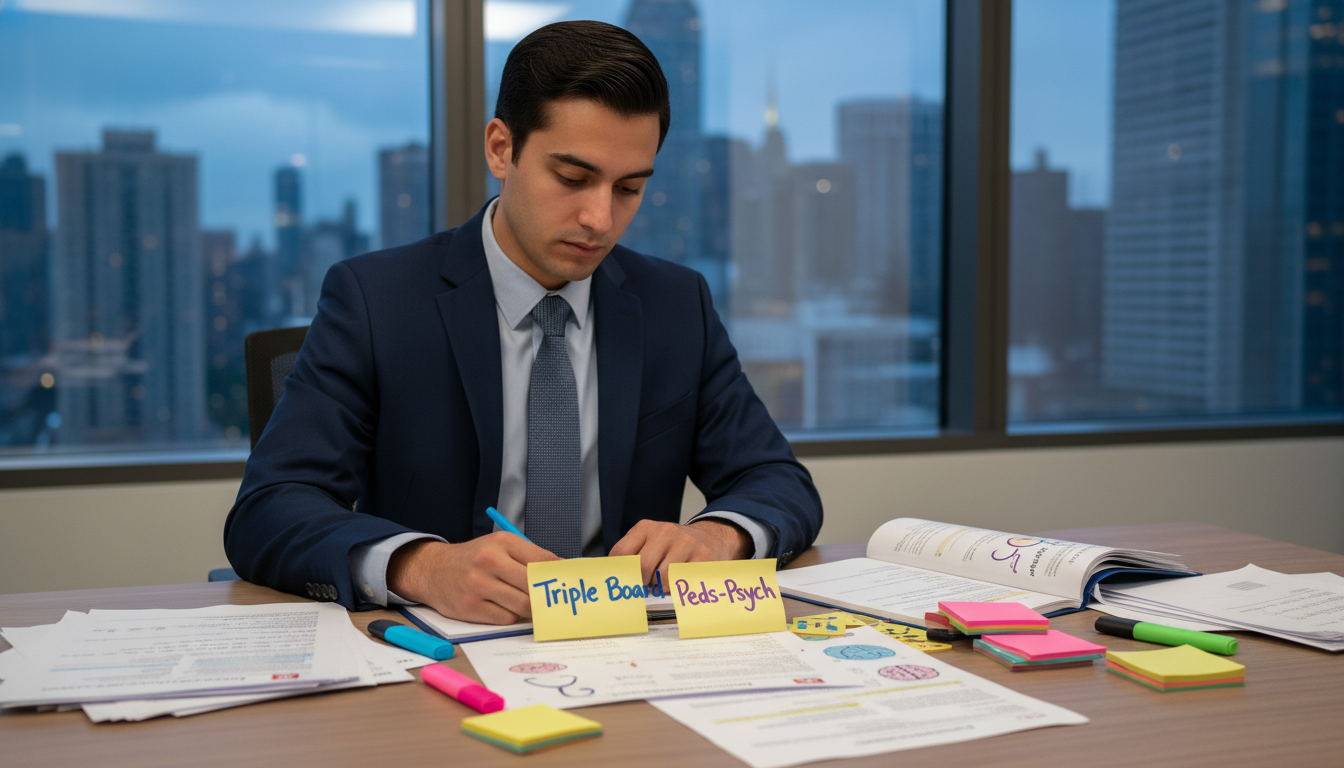
2. Strengthen Your Application Foundation Before the Interview
Even though interviews emphasize conversation, programs will continually refer back to your application. For a non-US citizen IMG, small inconsistencies or unclear items can raise avoidable concerns. Pre-interview preparation should include an “audit” of your submitted materials and supporting documents.
2.1 Re-Review Your ERAS Application and Personal Statement
Before each interview, carefully reread:
- ERAS application (experiences, publications, honors)
- Personal statement
- MSPE / Dean’s letter
- Letters of recommendation (if you have copies or remember key themes)
Make notes on:
- Key points you want to reinforce verbally, such as:
- A particular pediatric ward project.
- A psychiatry elective where you handled difficult conversations.
- Your involvement in child mental health advocacy or research.
- Potential weak points:
- Gaps in training or work.
- USMLE attempts or lower scores.
- Late graduation date.
- Limited US clinical experience.
Prepare clear, concise explanations for each potential red flag, framed around growth and resilience.
Example response structure for a low USMLE score:
- Briefly acknowledge the score.
- Explain contributing factors without making excuses.
- Show what you learned and how you improved.
- Highlight more recent, stronger performance (e.g., Step 2 CK, clinical evaluations).
2.2 Confirm Visa and Eligibility Information
As a non-US citizen IMG, visa issues are a major concern for programs, especially smaller ones or those without strong institutional support. Before interviews:
- Know exactly what visa you will need and why:
- Most common: J-1 (via ECFMG).
- Sometimes: H-1B, if you have Step 3, and the program/hospital supports it.
- Research each program’s typical visa policy:
- Check program websites or FREIDA.
- Note if they historically sponsor J-1, H-1B, both, or none.
- Prepare a short, confident explanation of your situation:
- “I am eligible for J-1 sponsorship through ECFMG and understand that your program has previously sponsored J-1 visas. I’ve reviewed the requirements and am prepared to complete any needed documentation promptly.”
If asked why you prefer one visa type, answer honestly but practically:
- J-1: more common, simpler pathway, training-focused.
- H-1B: potential long-term US career stability, but fewer programs sponsor and requires Step 3.
You do not need a detailed immigration law explanation, but you should not appear confused about your own status.
2.3 Organize a Professional Document Folder
Before your first interview:
- Create folders (digital and/or physical) with:
- Updated CV
- Copy of ERAS application
- Personal statement
- USMLE score reports
- ECFMG certificate (if available)
- Medical school diploma and transcript
- Visa documentation (if already in place)
- List of rotations, especially US-based observerships/externships
- Summaries of clinical or research projects
While programs don’t usually request extra documents on interview day, you should know your own history well enough to refer to specific dates, roles, and outcomes without confusion.
3. Master Core Interview Question Types for Peds-Psych and Triple Board
You cannot predict exact interview questions residency committees will ask, but you can prepare categories and frameworks.
3.1 Classic General Interview Questions
Prepare verbal “templates” you can adapt:
Tell me about yourself.
- Use your narrative spine (Section 1.1).
- Aim for 1.5–2 minutes: background → key experiences → why peds-psych → future goals.
Why this specialty / Why Pediatrics-Psychiatry / Why triple board?
- Start with early exposure or key observation.
- Add specific experiences with children and psychiatric issues.
- End with how combined training fits your long-term vision.
Why our program specifically?
Research each program’s:- Triple Board or peds-psych curriculum structure.
- Child psychiatry resources.
- Community populations served (immigrant, underserved, etc.).
- Unique tracks (global health, primary care, integrated behavioral health).
Structure your answer:
- “I’m particularly drawn to your program because [specific feature]. This aligns with my interests in [your focus area]. Additionally, I value [second specific feature], which would support my goal of [career plan].”
What are your strengths and weaknesses?
- Choose strengths that matter in peds-psych:
- Empathy with families.
- Comfort with uncertainty.
- Cross-cultural communication.
- Patience with complex developmental/behavioral issues.
- For weaknesses:
- Pick something real but manageable.
- Show steps you’re taking to improve (e.g., time management, setting boundaries, documentation speed).
- Choose strengths that matter in peds-psych:
3.2 Pediatrics-Psychiatry–Specific Questions
Expect questions such as:
- “Why not just pediatrics or just psychiatry?”
- “How will you handle frequent transitions between specialties?”
- “Tell me about a challenging interaction with a child or family.”
- “Describe a time you dealt with mental health stigma.”
- “How do you see yourself using your training 10 years from now?”
Preparation Strategy:
- Write 3–4 short clinical stories where:
- A mental health factor changed a physical health outcome (or vice versa).
- You navigated cultural differences around mental health.
- You collaborated with multiple disciplines (social work, psychology, pediatrics, psychiatry, schools).
Craft each story into a STAR format:
- Situation – brief context.
- Task – your role or responsibility.
- Action – what you did.
- Result – what happened and what you learned.
Then practice telling each in 60–90 seconds.
3.3 Behavioral and Ethics Questions
Especially in psychiatry, expect questions that test judgment:
- “Tell me about a conflict with a team member or supervisor.”
- “Describe a mistake you made and what you learned.”
- “How would you handle a parent who refuses recommended psychiatric evaluation for their child?”
- “What would you do if a patient disclosed abuse?”
Before interviews, review:
- Basic US mandatory reporting principles (child abuse, imminent harm to self/others).
- Concepts of shared decision-making, confidentiality, and cultural respect.
You’re not expected to be a US legal expert, but you should show:
- A protective stance for child safety.
- Willingness to follow institutional policy and involve supervisors.
- Respect for cultural differences while upholding core ethical principles.

4. Prepare for the Interview Format: Virtual, In-Person, and Hybrid
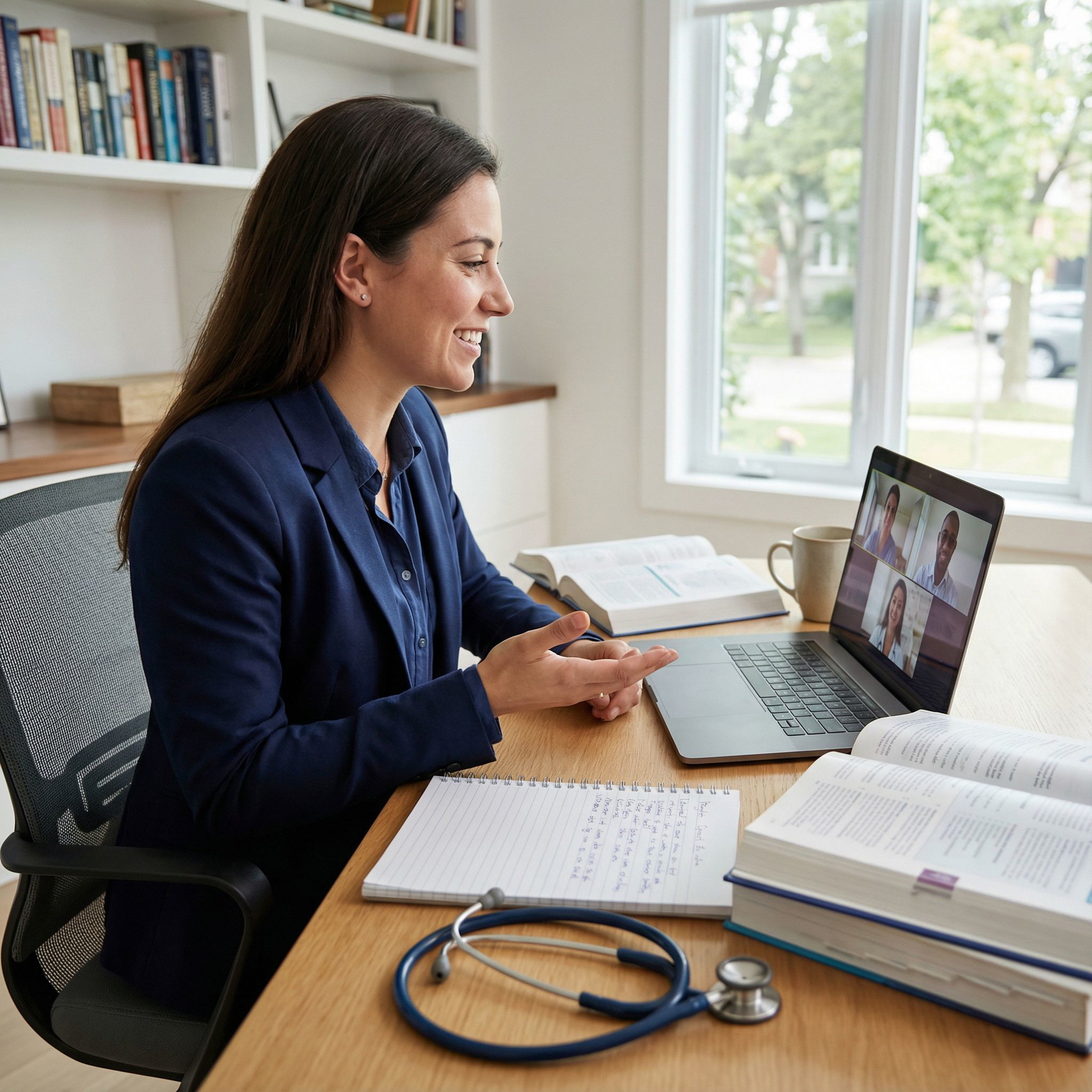
Many pediatrics and psychiatry residencies now use virtual interviews, some with optional in-person second looks. For a foreign national medical graduate, virtual interviews are often more accessible—but they require careful technical and environmental preparation.
4.1 Technical Setup for Virtual Interviews
At least two weeks before your first interview:
Test your hardware:
- Laptop (preferred over phone) with stable camera.
- External microphone or headset if built-in audio is poor.
- Reliable internet with backup option (mobile hotspot if possible).
Optimize your environment:
- Quiet, well-lit room with neutral background (plain wall; avoid busy decor).
- Camera at eye level; avoid awkward angles.
- Check framing: upper torso and face centered.
Platform readiness:
- Install and test Zoom, Microsoft Teams, or Thalamus, depending on instructions.
- Create a professional display name (Full Name, MD).
- Practice logging in from the same device and network you’ll use on interview day.
Contingency plan:
- Save program contact phone/email in case of connection problems.
- Prepare a one-sentence explanation for tech issues:
- “I apologize for the technical interruption; I’ve switched to my backup connection and I’m ready to continue.”
4.2 In-Person or Hybrid Considerations
If invited for an in-person second look:
- Travel documents:
Make sure your passport, visa (tourist or other), and any required permissions are in order. - Professional attire:
Solid-colored suit (dark blue, gray, or black) with modest shirt or blouse; comfortable but formal shoes. - Cultural adaptation:
Observe professional but warm greetings; handshakes or simple verbal greetings depending on local norms and post-pandemic practices.
Practice navigating:
- Small talk with residents.
- Asking genuine questions about their experience.
- Eating politely during lunch sessions (usually informal but still part of your impression).
5. Practice Communication Skills with a US Focus
For a non-US citizen IMG, your medical knowledge and passion might be strong, but communication in a new language and setting can feel intimidating. Thoughtful preparation can transform this into a strength.
5.1 Addressing Accent and Clarity Concerns
You do not need to sound “American”, but you do need to be understandable and confident.
Strategies:
- Record yourself answering common questions, then listen for:
- Speed (slow slightly for clarity).
- Overuse of filler words (um, like).
- Long, tangled sentences.
- Ask a US-based mentor, friend, or language tutor to give feedback on clarity and pacing.
- Practice short, structured answers to avoid rambling.
If you’re self-conscious about your accent, remember: programs care more about empathy, insight, and teachability than perfect pronunciation.
5.2 Conveying Empathy Across Cultures
Peds-psych and triple board programs look for high emotional intelligence. Before interviews, reflect on:
- How you convey empathy verbally in English:
- “I could see how difficult that was for the family.”
- “I realized I needed to slow down and listen more.”
- “I tried to understand the parent’s perspective before giving advice.”
- Cultural perspectives on mental health in your home country:
- How stigma presents.
- How families express distress.
- How these insights can help you serve diverse patients in the US.
Be ready to show how your international background is an asset:
- Comfort with multilingual families.
- Personal experience navigating systems as an immigrant.
- Understanding how culture shapes beliefs about illness, mental health, and treatment.
5.3 Practicing Behavioral Scenarios
Ask a friend, mentor, or fellow applicant to conduct mock interviews using scenario-based questions:
- “An adolescent with diabetes refuses insulin and becomes withdrawn. How would you approach this?”
- “A parent insists their child’s behavior is just ‘bad parenting’ and rejects the idea of ADHD. How do you respond?”
- “On a busy pediatric ward, you notice a child’s behavior suggesting possible abuse. What steps would you take?”
During practice, focus on:
- Clear, stepwise thinking (“First, I would…, then I would…”).
- Involving the healthcare team.
- Balancing empathy and safety.
- Acknowledging when you’d ask for supervisor guidance.
6. Plan Your Questions, Logistics, and Post-Interview Strategy
Effective interview preparation includes what you will ask, how you’ll present yourself logistically, and how you’ll follow up afterward.
6.1 Prepare Thoughtful Questions for Faculty and Residents
Never say you have no questions. Prepare a list and tailor some for each program. Examples for peds-psych / triple board:
For Program Leadership:
- “How do your residents balance their identities as pediatricians and psychiatrists throughout the five years?”
- “What types of integrated clinics or collaborative care experiences do triple board residents have?”
- “How do you support residents interested in global health or immigrant mental health?”
For Residents:
- “What do you think makes your program unique among triple board or combined programs?”
- “Can you describe a typical week on a pediatric rotation vs. a psychiatry rotation?”
- “How supportive has the program been of international graduates and visa issues?”
Avoid questions easily answered on the website (e.g., “How long is your residency?”); instead, ask for perspectives, examples, and lived experience.
6.2 Organize an Interview Day Checklist
Create a simple checklist you review the night before:
For Virtual Interviews:
- Laptop fully charged and plugged in
- Headphones/mic checked
- Internet speed tested; backup hotspot prepared
- Link and schedule verified (with time zone for your location)
- Professional attire ready
- Printed or digital notes:
- Program-specific highlights
- Your narrative spine
- Key stories (STAR format)
- Questions to ask
For In-Person:
- Directions and time to arrive 15–20 minutes early
- Professional outfit ironed / neat
- Folder with CV, notepad, pen
- Snacks/water for travel, if needed
6.3 Post-Interview Reflection and Communication
Immediately after each interview:
- Take 10–15 minutes to write:
- People you spoke with.
- Program strengths and concerns.
- How you felt about the culture.
- Any specific moments that stood out.
Later, these notes will help you create your rank list with more clarity.
Thank-you messages:
- Many programs say they’re optional; however, polite, concise emails can leave a positive impression.
- Aim to send within 48–72 hours.
- Keep them short:
- Thank them for their time.
- Mention 1–2 specific things you appreciated about the conversation or program.
- Reaffirm your interest without making promises you can’t keep.
Example:
“Dear Dr. Smith,
Thank you for taking the time to speak with me during my interview at XYZ Triple Board Program. I especially appreciated our discussion about your integrated pediatric-primary care and child psychiatry clinic, as this aligns strongly with my interest in immigrant family mental health. I enjoyed learning how the program supports residents transitioning between pediatrics and psychiatry rotations. I remain very interested in the opportunity to train at XYZ.
Sincerely,
[Name], MD”
FAQs: Pre-Interview Preparation for Non-US Citizen IMGs in Pediatrics-Psychiatry
1. As a non-US citizen IMG, do I have a realistic chance at a triple board or peds psych residency?
Yes, but it is competitive. Programs often take a small number of residents per year—sometimes just 2–4 total. As a non-US citizen IMG, you strengthen your chances by:
- Having strong USMLE scores (especially Step 2 CK) and a solid clinical record.
- Obtaining high-quality letters from US-based pediatric or psychiatry faculty when possible.
- Demonstrating clear, realistic understanding of the combined training.
- Showing how your international and cultural experiences will benefit diverse pediatric and psychiatric populations.
Thorough residency interview preparation is crucial; programs want applicants who are thoughtful, resilient, and genuinely committed to this unique path.
2. How can I explain limited US clinical experience during interviews?
Be honest and proactive:
- Briefly explain structural or visa barriers that limited early US experience, without sounding defensive.
- Highlight any observerships, externships, or research you do have—especially in pediatrics, psychiatry, or child mental health.
- Emphasize transferable skills from your home country:
- High patient volumes.
- Exposure to complex or underserved populations.
- Resource-limited medicine.
Then pivot to what you’re doing now to adapt to US practice: studying guidelines, learning documentation systems, and seeking mentorship from US-based physicians.
3. How much should I talk about visa issues during the interview?
Keep it focused and practical:
- Be ready with a brief, clear summary of what visa you’re eligible for (usually J-1, sometimes H-1B).
- If asked directly, answer transparently.
- Do not let visa discussions dominate your interview; your clinical and interpersonal qualities must remain the core.
When in doubt, focus on reassuring programs that you understand the process, have read the requirements, and are committed to fulfilling them responsibly.
4. What is the best way to practice for interview questions residency programs typically ask?
Use a structured approach:
- List common questions (tell me about yourself, why this specialty, strengths/weaknesses, ethical scenarios).
- Draft bullet-point answers using frameworks like STAR (Situation, Task, Action, Result).
- Practice aloud—first alone, then with a trusted friend or mentor.
- Record a few sessions to review your pacing, clarity, and nonverbal signals.
- If possible, schedule a mock interview with someone familiar with US residency interviews, ideally in pediatrics, psychiatry, or triple board.
The more you practice, the more natural and confident you’ll feel—and the easier it will be to adapt your prepared answers to real-time questions on interview day.
By approaching pre-interview preparation systematically—clarifying your story, aligning your documents, mastering key question types, refining your communication, and planning logistics—you can present yourself as a well-prepared, thoughtful, and resilient foreign national medical graduate ready to thrive in a pediatrics-psychiatry or triple board residency.