Understanding the Nuclear Medicine Interview Landscape as a US Citizen IMG
As a US citizen IMG (American studying abroad), your path to a nuclear medicine residency in the United States is very achievable—but it requires tailored, strategic preparation. Nuclear medicine is a small, highly specialized field with close-knit departments and faculty who pay careful attention to each applicant. Pre-interview preparation is where you can transform a “good” application into an outstanding, memorable interview performance.
Several factors shape your interview experience as a US citizen IMG in nuclear medicine:
- Smaller applicant pool, but more scrutiny: Programs may interview fewer candidates, so each interview slot is valuable. Interviewers will carefully assess your fit and commitment.
- Perception of training abroad: Even as a US citizen, faculty will want reassurance that your international medical education prepared you well for US residency and that you can transition smoothly.
- Evolving training structure: Nuclear medicine can be a dedicated residency or part of a combined program (like diagnostic radiology–nuclear medicine). You need to understand each program’s structure clearly before interviewing.
- Visa is usually not a barrier, but documentation still matters: As a US citizen IMG you avoid visa concerns, which is a major plus—but you still must be ready to address licensing, exams, and documentation questions efficiently.
This article focuses on how to prepare for interviews specifically for nuclear medicine if you are a US citizen IMG: what to do weeks before, how to handle typical interview questions, how to communicate your unique background, and how to enter each interview day with clarity and confidence.
Step 1: Clarify Your Story and Value as a US Citizen IMG
Before you think about questions or logistics, you need a clear narrative: who you are, why nuclear medicine, and why your IMG background is an asset—not a liability.
Build a concise personal narrative
You should be able to answer in 90 seconds:
- Who you are (background, education, key experiences)
- Why you chose nuclear medicine
- Why you will be an asset to that program
Draft a short “elevator pitch” that ties these together.
Example structure:
- Opening: “I’m a US citizen who completed medical school at [School] in [Country]…”
- Academic/clinical foundation: “During my clinical years, I was drawn to imaging-based diagnostics and had early exposure to PET/CT and thyroid imaging…”
- Nuclear medicine focus: “What solidified my interest in nuclear medicine was [specific rotation, research, patient story]…”
- IMG angle as strength: “Training abroad gave me experience with resource-limited settings and diverse patients, which sharpened my clinical reasoning and communication skills…”
- Future direction: “I’m particularly interested in [oncologic imaging/theranostics/cardiac PET/quantitative imaging] and hope to contribute through [research, teaching, QI].”
Practice this out loud until it feels natural and conversational, not memorized.
Frame your IMG background positively
As an American studying abroad, programs will almost certainly ask variations of:
- “Why did you attend medical school outside the US?”
- “How has your international training shaped you?”
Prepare honest, confident answers that:
- Avoid defensiveness or apology
- Emphasize opportunity, growth, and unique strengths
- Show that your foundation is solid and comparable to US training
Example framing:
“I chose to attend medical school in [Country] because it offered early clinical exposure and a strong imaging department. Training in a different healthcare system exposed me to varied disease presentations, different resource levels, and cultural perspectives. It’s made me adaptable, comfortable working with diverse teams, and especially appreciative of the resources and multidisciplinary environment in US nuclear medicine.”
Have 2–3 specific examples of things you learned abroad (e.g., handling limited imaging resources, dealing with language barriers, working in multidisciplinary tumor boards) and how they make you stronger as a future nuclear medicine physician.
Translate your experiences into nuclear medicine–relevant skills
Interviewers want to see that your experiences naturally lead to this specialty. Connect your background to nuclear medicine competencies:
- Strong anatomy and physiology foundation
- Comfort with chronic and oncologic patients
- Interest in physics and imaging technology
- Attention to detail and pattern recognition
- Teamwork with surgeons, oncologists, cardiologists, and radiologists
- Comfort with longitudinal patient follow-up (e.g., thyroid disease, radionuclide therapy)
Take your CV and personal statement and annotate them: for each major experience, write 1–2 lines about how it supports your nuclear medicine interest or skills. These notes will help you frame your answers during interviews.
Step 2: Master the Nuclear Medicine Content You’ll Be Asked About
You are not expected to function as a nuclear medicine attending, but you should be able to discuss the core clinical scope of the specialty intelligently. This is a key part of residency interview preparation for nuclear medicine.
Know the clinical and procedural scope
Be ready to discuss at a basic level:
- Major modalities:
- SPECT and SPECT/CT
- PET and PET/CT (and increasingly PET/MRI)
- Common nuclear medicine studies:
- Oncology: FDG PET/CT for lymphoma, lung cancer, colorectal cancer, etc.
- Cardiology: myocardial perfusion imaging, viability studies
- Endocrine: thyroid uptake and scan, radioactive iodine therapy
- Renal: DTPA/MAG3 renogram, DMSA scan
- Bone: whole-body bone scan
- Pulmonary: V/Q scan
- Infection/inflammation imaging: WBC-labeled scans, FDG in infection
- Theranostics and radionuclide therapy:
- Radioiodine for thyroid cancer and hyperthyroidism
- Lutetium-177 (e.g., Lu-177 DOTATATE, PSMA therapies)
- Yttrium-90 (e.g., microspheres for liver tumors)
You don’t need step-by-step protocols, but you should know what these tests are used for and have an example or two of clinical impact (e.g., “PET/CT can change management in lymphoma staging and response assessment”).
Understand training pathways and certification
Programs are reassured when candidates understand the career structure. Review:
- Typical training structure for nuclear medicine residency (e.g., dedicated 3-year programs or pathways after another residency such as diagnostic radiology)
- Board certification routes (ABNM, sometimes ABR + ABNM for dual-trained faculty)
- The growing emphasis on theranostics, oncology, and hybrid imaging
- How nuclear medicine interacts with diagnostic radiology at that institution (separate department vs. integrated division)
If you’re applying to a standalone nuclear medicine residency, know why you prefer that over (or alongside) a diagnostic radiology residency. If you have an interest in a dual pathway, be able to articulate this clearly.
Step 3: Prepare for Core Residency Interview Questions (With a Nuclear Medicine Spin)
When it comes to interview questions residency programs commonly ask, nuclear medicine interviews will include general questions plus some specialty-specific ones. Your goal is to practice thoughtfully, not memorize scripts.
Core questions you must be ready for
“Tell me about yourself.”
Use the narrative you developed: background → medical school → key experience → why nuclear medicine → what you want in a program.“Why nuclear medicine?”
Be specific and personal:- A case that influenced you (e.g., watching PET/CT change management in lymphoma)
- Your fascination with functional imaging and physiology
- Interest in oncologic imaging and theranostics
- Appreciation for longitudinal relationships with certain patient groups (thyroid, neuroendocrine tumors)
Tie this to your skills: strong clinical reasoning, love of imaging, interest in technology and physics, etc.
“Why did you choose to study medicine abroad?” / “Tell us about your IMG journey.”
As discussed earlier: confident, honest, growth-focused.“Why this program?”
Prepare for each program individually:- Specific faculty or research areas that interest you (e.g., theranostics, quantitative PET, PET/MRI)
- Training structure (case volume, level of resident responsibility, involvement in multidisciplinary tumor boards)
- Location and patient population
- Any ties (rotations, previous observerships, mentors)
Avoid generic praise like “great reputation.” Show that you’ve reviewed their website, publications, and case mix.
“What are your strengths and weaknesses?”
- Choose 2–3 strengths relevant to nuclear medicine (e.g., attention to detail, patient communication, calm under pressure, analytical reasoning).
- For weaknesses, pick something realistic and show what you are doing to improve (e.g., perfectionism leading to slower reporting early on; you’re working on time management and prioritization).
“Tell me about a time you faced a challenge or conflict.”
Use clinical examples from rotations, research, or cross-cultural experiences as an IMG. Show:- Insight
- Emotional intelligence
- Professionalism
- Problem-solving and communication
“Where do you see yourself in 5–10 years?”
Mention a plausible pathway:- Academic nuclear medicine with focus on [oncologic imaging/theranostics]
- Hybrid diagnostic radiology–nuclear medicine practice
- Community practice with strong radionuclide therapy component Emphasize flexibility and openness to evolving opportunities, but convey that you see nuclear medicine as your long-term field.
Specialty-specific questions you might encounter
You may be asked content-light but concept-heavy questions such as:
- “Describe a nuclear medicine study you found particularly interesting and why.”
- “How would you explain a PET/CT scan to a patient who is anxious about radiation?”
- “What excites you most about the future of nuclear medicine?”
- “How do you see theranostics changing oncology care?”
Prepare 1–2 clinical stories that you can adapt:
Example:
“During my nuclear medicine elective, I followed a patient with lymphoma undergoing FDG PET/CT for response assessment. Seeing how the imaging changed the oncologist’s treatment plan and the patient’s prognosis really impressed me. It highlighted the impact of nuclear medicine on personalized care, especially as we move toward more targeted therapies and theranostics.”
Having concrete cases ready makes your answers memorable and authentic.
Step 4: Optimize Application Materials and Logistics Before Interview Day
Strong pre-interview preparation goes far beyond rehearsing questions. It includes strategic planning around your documents, scheduling, and overall readiness.
Review and “own” your application
You must be completely fluent with your:
- ERAS application
- Personal statement
- CV
- Publications and abstracts
- USMLE/COMLEX scores
- Transcript and MSPE (Dean’s letter)
Programs may ask:
- “Tell me more about this research project.”
- “What did you learn from your clerkship in [X]?”
- “I see a gap or delay in your training—can you walk me through that?”
To prepare:
- Re-read every line of your application.
- For each research project, make sure you can discuss:
- The question
- Your role
- Methods (briefly)
- Key results
- What you learned
- For any gaps, exam failures, or red flags, craft a short, honest, owning-the-responsibility explanation with emphasis on growth and subsequent improvement.
Prepare a compelling “nuclear medicine portfolio”
Highlight nuclear medicine in your materials and your preparation:
- Rotations/electives: Be ready to describe what you actually did: reading room exposure, direct patient contact, procedures (e.g., injections, thyroid uptake measurements), multidisciplinary meetings.
- Research: Even if not purely nuclear medicine, relate it to imaging, oncology, or outcome-driven care.
- Shadowing/observerships: Particularly in the US; be specific about what you saw and how it confirmed your career choice.
- Courses or certifications: Online courses in imaging, radiation safety, or statistics can show initiative.
Consider preparing a one-page summary (for yourself) of your nuclear medicine–related experiences and insights. This will help you speak confidently and consistently during interviews.
Plan technology and timing (especially for virtual interviews)
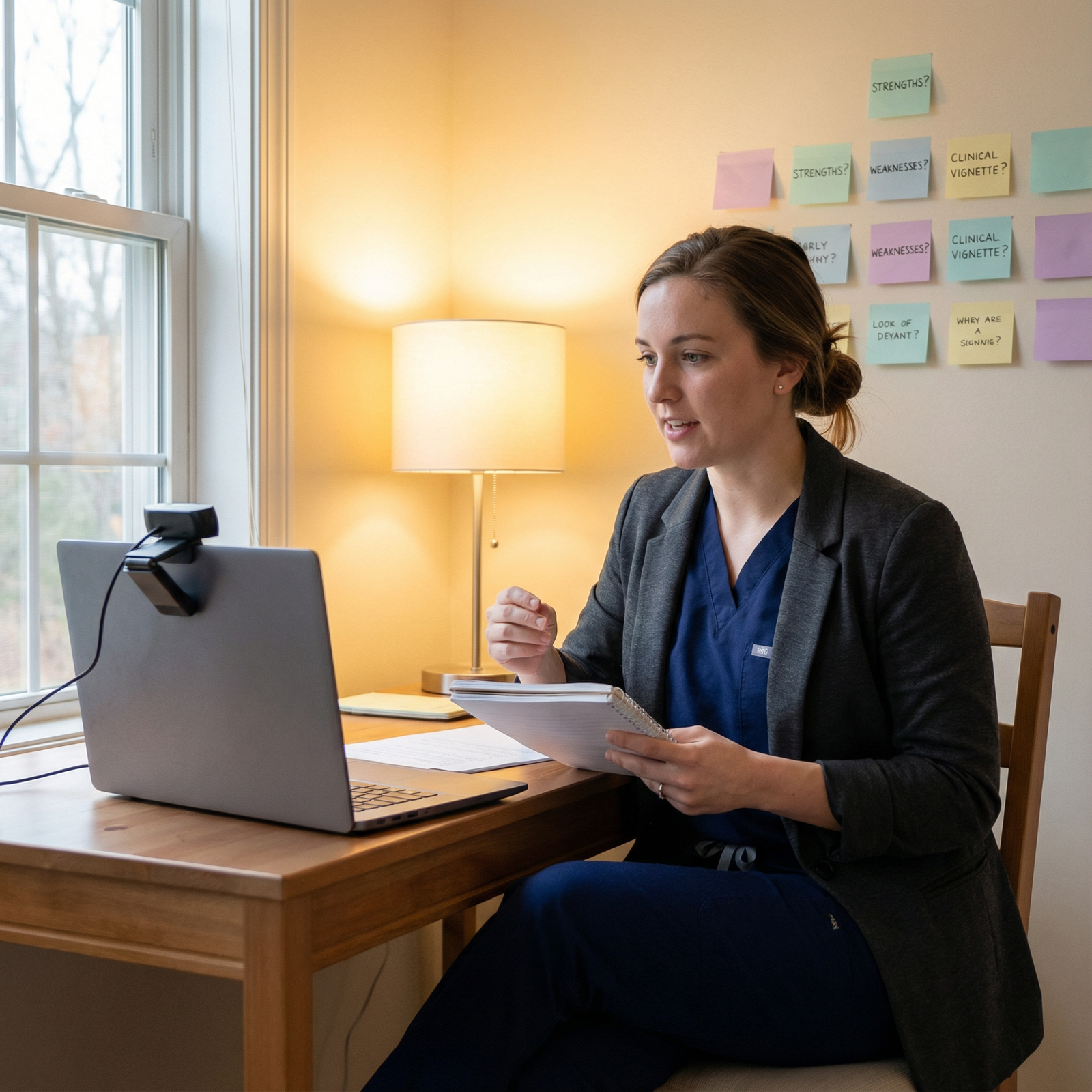
Most programs still rely heavily on virtual interviews, particularly in early cycles. As an American studying abroad, time zones and connectivity can be major stressors—planning ahead is essential.
- Technology check:
- Reliable laptop or desktop
- HD webcam and clear microphone (test with a friend)
- Stable, high-speed internet connection (~10+ Mbps recommended)
- Quiet, well-lit, neutral background
- Time zone management:
- Convert all interview times to your current location and double-check.
- Consider staying with friends/family in the US for the interview season if possible, to avoid middle-of-the-night sessions and fatigue.
- Professional appearance:
- Dress in full professional attire, even for virtual interviews.
- Test how your clothing appears on camera (avoid busy patterns and overly bright colors).
Print or save a one-page schedule for each interview day: times, Zoom links, interviewer names, and any program-specific instructions.

Step 5: Practice Communication, Questions, and Professionalism
How you communicate often matters as much as what you say. Focused practice will significantly improve your confidence and performance.
Conduct targeted mock interviews
Design mock sessions specifically for nuclear medicine residency interview preparation:
- Ask a faculty member, mentor, or senior resident (ideally in radiology or nuclear medicine) to conduct at least 1–2 mock interviews.
- If that’s not possible, use:
- Your school’s career office
- An IMG mentoring group
- Fellow applicants (peer mock interviews can still be very helpful)
Focus your practice on:
- Answer structure: clear beginning, middle, and end
- Brevity: most answers 1–2 minutes unless asked to elaborate
- Maintaining eye contact (camera for virtual interviews)
- Managing filler words (“um,” “like”) and rambling
Record a mock interview session (with permission) and review your posture, tone, and clarity.
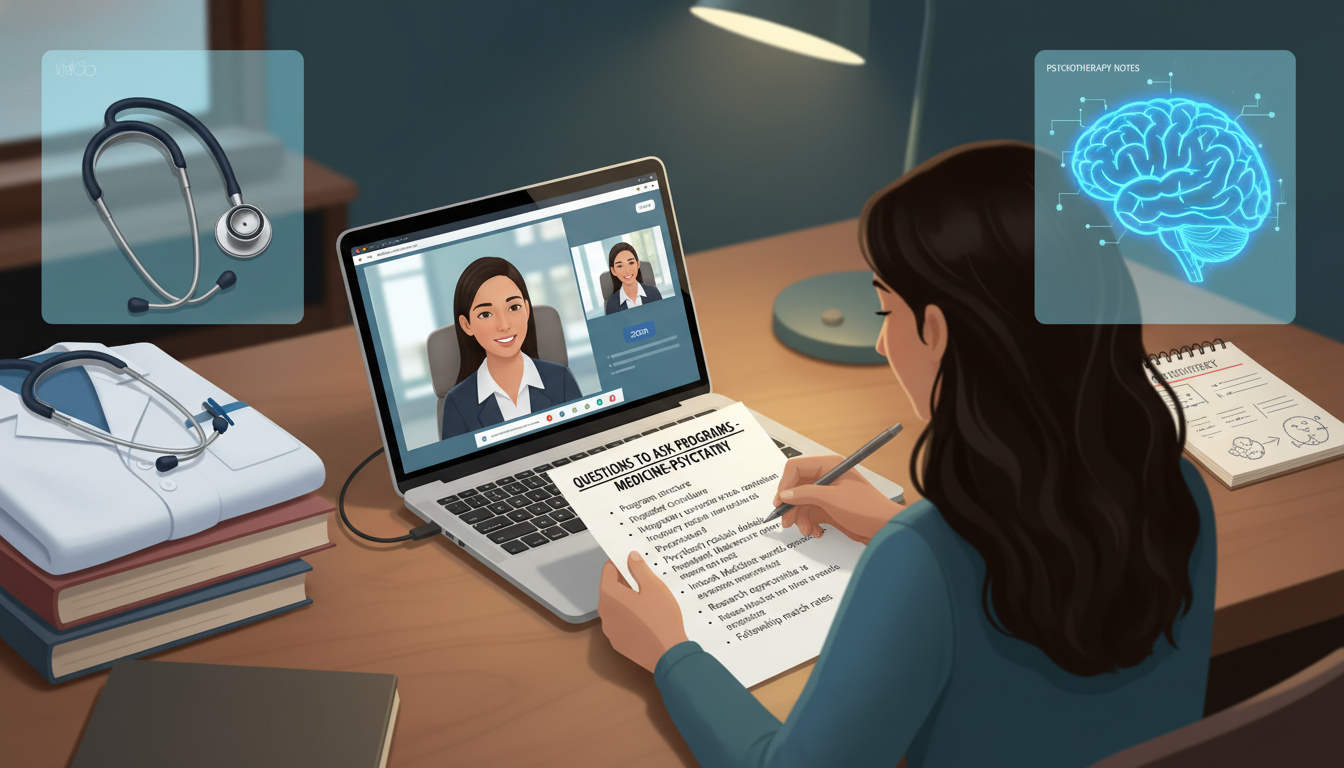
Prepare insightful questions to ask programs
Programs expect you to ask questions—it shows interest and maturity. Avoid questions you could easily answer from their website. Instead, ask about:
Training and curriculum:
- “How is resident independence in reading studies developed over the year(s)?”
- “How much exposure do residents have to radionuclide therapy and theranostics?”
- “What is the typical case mix between oncology, cardiology, and general nuclear medicine?”
Mentorship and career development:
- “How are mentors assigned, especially for residents interested in academic careers?”
- “What are recent graduates doing now (fellowships, practice types)?”
Research opportunities:
- “Are residents expected or encouraged to participate in research?”
- “What kind of support is available for residents to present at national meetings like SNMMI?”
Program culture:
- “What qualities do you see in successful residents here?”
- “Can you describe the interaction between nuclear medicine and diagnostic radiology residents?”
Prepare a short list (6–8 questions) and bring it to each interview, adjusting based on what is covered during the day.
Refine your professional presence
Consider the subtle but important aspects of professionalism:
- Punctuality: Log in 10–15 minutes early.
- Email etiquette: Respond to interview invites promptly, use professional language and signatures.
- Body language:
- Sit upright, but relaxed.
- Smile naturally, nod to show engagement.
- Avoid distractions (phone, notifications, background noise).
As a US citizen IMG, demonstrating “cultural fluency” with US professional norms is reassuring to programs.
Step 6: Pre-Interview Research and Strategic Follow-Up
The best-prepared applicants know the programs, the people, and how they will fit in.
Research each program in depth
For every program you interview with:
- Review:
- Program website
- Faculty profiles
- Recent publications (especially in nuclear medicine journals)
- Case volume and modalities offered (PET/CT, SPECT/CT, PET/MRI, therapy services)
Make notes on:
- Unique features of the program (e.g., strong theranostics, pediatric nuclear medicine, collaboration with a cancer center)
- Faculty whose work aligns with your interests
- Questions you want to ask based on what you find
This research directly supports strong answers to “Why our program?” and helps you stand out as a prepared and serious candidate.
Plan your communication around the nuclear medicine match
As part of nuclear medicine match strategy:
- Confirm all interview dates and formats.
- Keep a detailed spreadsheet:
- Program name
- Interview date
- Faculty you met
- Pros/cons
- Impressions of fit, case mix, research
- After each interview, write a brief reflection the same day. This will be critical later for your rank list.
Thoughtful, timely thank-you emails (usually within 24–48 hours) can reinforce positive impressions:
- Keep them brief, specific, and genuine.
- Mention a point from your conversation or something unique you appreciated.
- Reaffirm your interest in the program and in nuclear medicine generally.
Example:
“Thank you for taking the time to speak with me about the nuclear medicine residency at [Institution]. I especially appreciated our discussion about expanding theranostics and the strong collaboration with oncology. Our conversation reinforced my enthusiasm for training in a program that values both cutting-edge imaging and patient-centered care. I would be honored to contribute to your department as a resident.”
Frequently Asked Questions (FAQ)
1. As a US citizen IMG, do programs view me differently from non-US IMGs?
Programs are often relieved that visa issues are off the table, which is a significant advantage for a US citizen IMG. However, your medical education is still international, so they will assess:
- How well your training prepared you for US-based practice
- Your exposure to US clinical environments (electives, observerships)
- Communication skills and professionalism
- Understanding of the US healthcare system
You can counteract any concerns by highlighting your US clinical experiences, strong exam scores, and clear understanding of nuclear medicine training in the US.
2. How much nuclear medicine experience do I need before interviews?
You do not need extensive subspecialty-level experience, but you should have:
- At least one solid rotation or observership in nuclear medicine or related imaging
- Basic familiarity with common nuclear medicine studies and PET/CT indications
- A clear and genuine explanation for why you chose nuclear medicine
Even if your medical school lacked strong nuclear medicine exposure, you can compensate with US-based electives, shadowing, self-study, and interest in imaging or oncology.
3. What if I get asked technical or physics-heavy interview questions?
Most nuclear medicine interviews are not designed to test detailed physics knowledge. If you are asked something technical:
- Stay calm and answer to the extent that you can.
- Focus on clinical context if the technical details escape you.
- It is acceptable to say, “I’m not sure about the exact physics details, but my understanding is that…” and then give a general explanation.
Programs are more interested in your clinical reasoning, honesty, and willingness to learn than in whether you can recite specific physics formulas.
4. How can I stand out among other nuclear medicine applicants?
You can stand out by combining three elements:
Clear, genuine passion for nuclear medicine
- Concrete clinical stories
- Knowledge of where the field is heading (theranostics, PET/MRI, molecular imaging)
Well-articulated IMG journey
- Confident explanation of your choice to train abroad
- Demonstrated adaptability and cross-cultural experience
- Strong US-based clinical exposure
Professional, prepared presence
- Thoughtful questions about each program
- Familiarity with faculty interests and program strengths
- Organized, punctual, and engaged throughout the interview process
Pre-interview preparation is where you assemble all of these pieces. With deliberate planning, honest self-reflection, and targeted practice, you can approach each nuclear medicine residency interview as a confident, well-prepared US citizen IMG ready to contribute meaningfully to this evolving and impactful specialty.