Understanding the PM&R Interview Landscape as a US Citizen IMG
Physical Medicine & Rehabilitation (PM&R, or physiatry) is increasingly competitive, and as a US citizen IMG (American studying abroad), you’ll navigate both the usual interview challenges and unique IMG-specific barriers. Solid pre-interview preparation can close most of that gap.
Key realities to keep in mind:
- Rising competitiveness: PM&R used to be “under the radar,” but interest has grown. Many programs now receive hundreds of applications for a small number of spots.
- Program concerns about IMGs: Programs worry about variable clinical training, communication skills, EHR familiarity, and ability to adapt to US healthcare culture. Your preparation must directly address these.
- Holistic review trend: More programs consider life experiences, prior careers, language skills, leadership, and clear passion for physiatry—areas where many IMGs can shine if they articulate them well.
- US citizen IMG advantage over non‑US IMGs: You don’t need visa sponsorship, which can be a major plus. You should highlight this clearly and confidently in applications and conversations.
Your core goal in pre-interview preparation is to show that you are:
- Clinically ready for a PGY-1/PGY-2 role in the US.
- Clearly committed to PM&R, not using it as a fallback.
- A strong cultural and interpersonal fit for a team-based, patient-centered specialty.
- Easy to onboard from a systems standpoint (EHR, communication, visa-free, etc.).
The rest of this guide focuses on how to prepare systematically so that when interview invitations arrive, you transition smoothly into confident, polished performance.
Step 1: Clarify Your PM&R Story and Career Direction
Before you rehearse “interview questions residency programs might ask,” you need a coherent, authentic story. Interviewers are very attuned to whether an applicant genuinely understands physiatry.
A. Define Your “Why PM&R” Narrative
PM&R interviewers will almost certainly ask some version of:
- “Why PM&R?”
- “What does a physiatrist do?”
- “How did you become interested in rehabilitation medicine?”
As an American studying abroad, you must show that despite training outside the US, you have a mature understanding of contemporary US physiatry, not just what you saw in textbooks or a single inpatient rehab rotation overseas.
Reflect on:
Clinical experiences
- What concrete patient encounters drew you to functional restoration (e.g., stroke rehab, spinal cord injury, amputee care, chronic pain)?
- Where did you see the impact of interdisciplinary teams—PT, OT, SLP, prosthetics/orthotics, psychology?
Personal experiences
- Family member with disability? Sports injury? Volunteering with adaptive sports?
- How did those experiences shape your view of recovery, function, and quality of life?
PM&R philosophy fit
- Emphasis on function over disease label
- Longitudinal patient relationships
- Team-based, goal-directed care
- Use of procedures (e.g., injections, EMG, spasticity management) while staying patient-centered
Draft a 1–2 minute narrative that:
- Starts with a brief, vivid experience (e.g., “During my internal medicine rotation, I followed a stroke patient from the ICU to inpatient rehab…”).
- Connects that to the core values of PM&R (function, independence, quality of life).
- Finishes with your forward-looking vision (e.g., interest in inpatient rehab, pain, sports, or neurorehab).
B. Map Out Your Career Interests in PM&R
Programs appreciate that interests evolve, but they still want a sense of direction.
Consider:
- Do you lean toward inpatient (SCI, stroke, TBI, complex medical rehab) or outpatient (pain, MSK, sports, EMG)?
- Are you curious about certain fellowships (Pain, Sports, SCI, TBI, Pediatric Rehab, Neurorehab)?
- Any research areas you might want to pursue (functional outcomes, spasticity management, prosthetics, quality improvement, rehab technology)?
Prepare a concise way to discuss this without sounding inflexible. Example:
“Right now I’m most drawn to inpatient neurorehabilitation because I enjoy managing complex medical issues while focusing on function and family education. I’m also open to exploring outpatient musculoskeletal and EMG during residency, and I could see myself pursuing fellowship based on where I find the best fit.”
This shows both direction and openness, which programs value.
Step 2: Master Core PM&R & General Residency Interview Questions
Pre-interview preparation means going beyond generic “how to prepare for interviews” advice. For a physiatry match, you should anticipate specialty-specific content plus general residency themes.
A. High-Yield PM&R-Specific Questions
Create bullet-point outlines (not scripts) to answer these smoothly:
“What is PM&R to you?” or “How do you define physiatry?”
- Mention: function, interdisciplinary team, goal-setting, patient-centered care, and the spectrum from acute inpatient to outpatient, procedures, and longitudinal follow-up.
“Tell me about a patient who influenced your decision to pursue PM&R.”
Practice a short clinical vignette:- Setting (e.g., stroke rehab unit)
- Functional issues (mobility, ADLs, cognition)
- Team involvement
- Your role and what you learned about rehabilitation and patient resilience
“What areas of PM&R interest you most?”
- Name 1–2 areas and connect them to strengths you’ve demonstrated (e.g., communication, continuity, procedural curiosity, sports background).
“How do you see PM&R evolving in the US healthcare system?”
- Think: aging population, post-ICU debility, post-COVID sequelae, value-based care, tele-rehab, wearable tech.
“What experiences have you had with PT/OT/SLP and other rehab professionals?”
- Highlight time you actively collaborated, attended team meetings, wrote or contributed to functional goals.
Think in structures:
- Situation → Your role → Observation → Takeaway
- Or: Past experience → Skill developed → Application in residency
B. Common General Interview Questions for Residency
For residency interview preparation, expect variations of:
- “Tell me about yourself.”
- “Why this program?”
- “What are your strengths and weaknesses?”
- “Tell me about a time you had a conflict with a team member.”
- “Describe a time you made a mistake in patient care.”
- “How do you handle stress or burnout?”
- “Where do you see yourself in 5–10 years?”
Build a story bank of 8–10 experiences that you can flexibly adapt:
- Leadership (e.g., student group, project)
- Difficult feedback you received and how you responded
- Cultural or language challenges you navigated abroad
- Time you advocated for a patient
- Interprofessional collaboration
- Time management under pressure
- Academic challenge or exam setback
Each story should use a concise behavioral format:
- STAR (Situation, Task, Action, Result) or
- CAR (Challenge, Action, Result)
Example (conflict with team member):
- Situation: ICU rotation with disagreement over plan for a hemodynamically stable but functionally limited patient.
- Action: You requested a brief team huddle, listened first, shared rehab perspective objectively, sought input.
- Result: Agreed to involve PM&R earlier; team later recognized benefit. You learned how to advocate diplomatically and early for functional needs.
C. Addressing IMG-Specific Questions as an American Studying Abroad
You may be asked:
- “Why did you choose to study medicine abroad?”
- “How have you prepared for practicing in the US system?”
- “What challenges have you faced as a US citizen IMG?”
Prepare honest, confident answers that emphasize:
- Proactive adaptation: US clinical experiences (USCE), electives, observerships, research with US faculty.
- Strengths of your background: Diverse patient populations, resilience, independence, cross-cultural communication.
- No visa issues: Briefly underscore that you do not require visa sponsorship.
Example response:
“I chose to study medicine abroad for a combination of affordability and the opportunity to experience healthcare in a different system. Knowing I wanted to practice in the US, I deliberately arranged multiple US clinical experiences in PM&R and internal medicine, completed USMLE exams early, and sought mentors in US programs. This combination of international training and targeted US exposure has made me flexible, comfortable with diverse patients, and well prepared to transition into residency without visa-related barriers.”
Step 3: Researching Programs Deeply and Strategically
One of the most overlooked aspects of how to prepare for interviews is program-specific research. For the physiatry match, this is crucial.
A. What to Research for Each PM&R Program
For each program, you should know:
Program structure
- Inpatient vs outpatient balance
- Main clinical sites (university hospital, VA, rehab hospital)
- Call schedule and night float model
- EMR used (Epic, Cerner, etc.)
Clinical strengths
- Strong SCI, TBI, stroke, pediatric rehab, pain, or sports programs?
- Affiliated services (prosthetics & orthotics, spasticity clinics, intrathecal baclofen, amputee clinics, EMG labs).
Research and academic focus
- Key faculty with notable publications.
- Ongoing trials or quality improvement projects.
Training environment
- Resident wellness initiatives
- Didactic schedule
- Simulation labs, ultrasound training, EMG curriculum
Use:
- Program website and current residents’ bios
- Recent publications from faculty (PubMed)
- Social media (Twitter/X, Instagram) for resident activities
- FREIDA and program-specific info sheets
B. Translating Research into Interview Talking Points
With your notes, prepare:
Two to three program-specific reasons you’re interested.
Example:“I’m particularly drawn to your strong spinal cord injury program and the chance to rotate at both the VA and the freestanding rehab hospital. I was also impressed by your structured ultrasound curriculum starting early in PGY-2.”
Thoughtful, specific questions to ask:
- “How do residents interested in pain or sports get early exposure and mentorship?”
- “Can you share examples of QI projects residents have completed in the last few years?”
- “How has your program adapted rehab care since COVID, particularly regarding tele-rehab or home-based follow-up?”
Avoid questions easily answered on the website (e.g., number of residents per year). Focus instead on culture, teaching style, and resident experience.
C. Organizing Your Program Notes
Set up a spreadsheet or digital notebook with tabs such as:
- Program overview
- Strengths/unique features
- Potential concerns (e.g., location, call structure)
- Names of faculty and residents you might meet
- Questions you want to ask
- Notes after interview day (for ranking)
Pre-interview organization also helps avoid embarrassing mix-ups (mentioning wrong city or features belonging to a different program).
Step 4: Communication, Mock Interviews, and Virtual Setup
Polishing your communication is non-negotiable, especially as a US citizen IMG aiming for PM&R, where interpersonal skills and team interactions are critical.
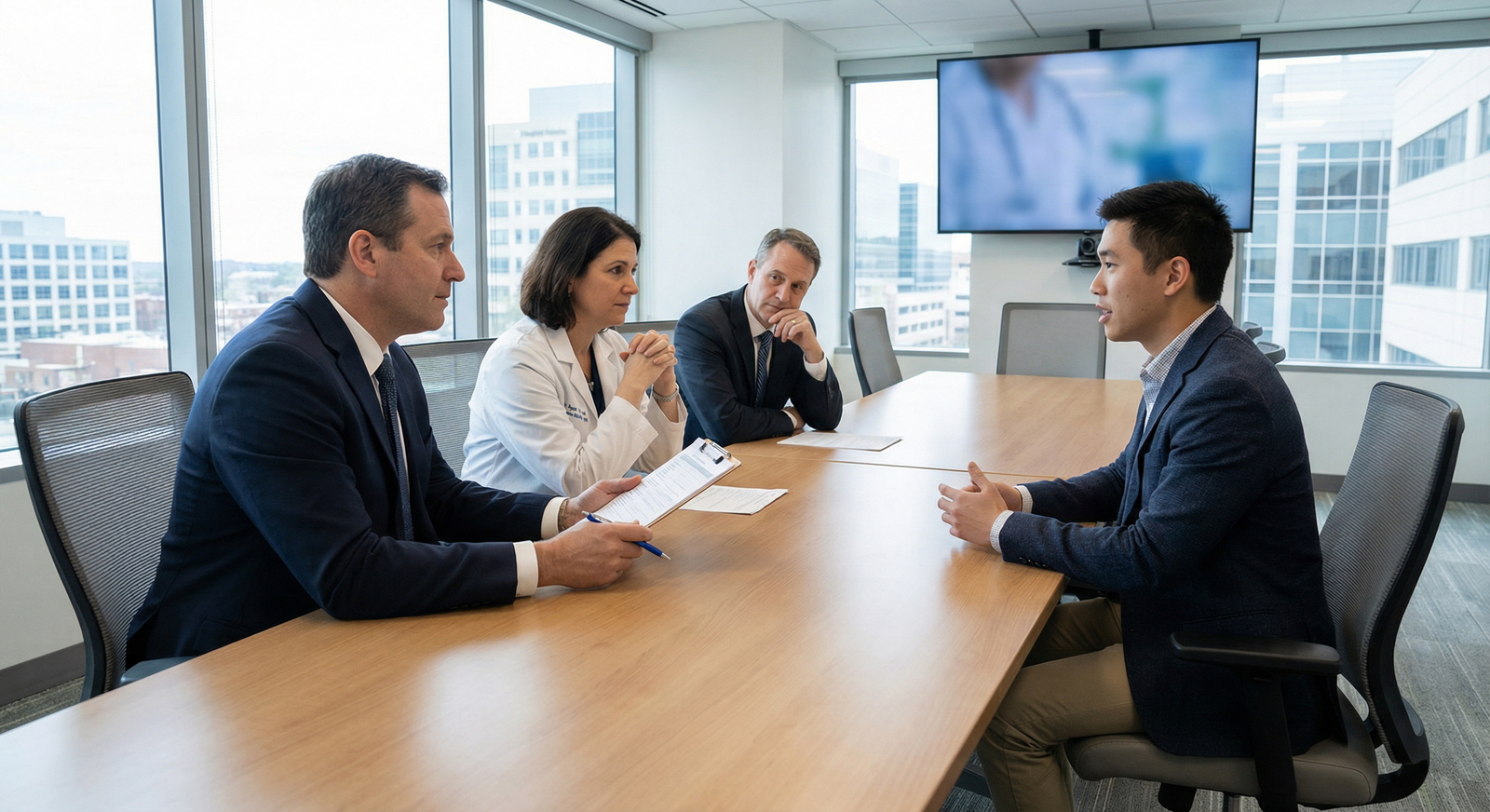
A. Structured Practice: Mock Interviews
Set up at least 3–5 mock interviews:
- With a faculty mentor familiar with US residency interviews
- With a physiatry mentor when possible
- With peers who can simulate panel interviews
Ask for feedback on:
- Clarity and concision
- Ability to answer the question directly
- Use of concrete examples vs vague generalities
- Nonverbal communication (eye contact, posture, tone)
- Tendency to talk too fast or too softly
Record at least one mock interview (video and audio). Review:
- Filler words (um, like, you know)
- Rambling vs structured responses
- Facial expressions—do you look engaged and approachable?
B. Practicing for Behavioral and Ethical Scenarios
Interview questions residency programs like to use increasingly include:
- “Tell me about an ethical dilemma you faced.”
- “What would you do if you saw a resident colleague cutting corners?”
- “How would you respond if a patient refuses therapy or is non-adherent?”
For PM&R specifically:
- Handling safety concerns (e.g., unsafe discharge home)
- Navigating goals-of-care in patients with severe disability
- Dealing with families with unrealistic expectations
During pre-interview preparation, outline your approach:
- Identify the ethical principles (autonomy, beneficence, non-maleficence, justice).
- Emphasize communication and collaboration (with patient, family, team, supervisor).
- Highlight systems-based thinking (social work, case management, home services).
C. Virtual Interview Logistics (Now Standard)
Many PM&R interviews remain virtual or hybrid. Your technical setup directly affects first impressions.
Key steps:
- Background: Neutral wall, tidy space, minimal distractions. Avoid cluttered bedrooms if possible.
- Lighting: Face a window or use a ring light. Avoid strong backlighting.
- Camera: Eye-level, not looking down at a laptop. Test framing: top of head to mid-chest visible.
- Audio: Use a reliable microphone or headset. Run test calls with friends.
- Internet: Wired connection if possible; have a backup hotspot plan.
Simulate an actual interview session using the platform your program will use (Zoom, Teams, Webex). Confirm:
- Proper display name
- Muting/unmuting, camera controls
- Ability to share screen if needed (rare but helpful).
D. Professional Appearance and Presence
For PM&R, business formal or business professional attire is standard:
- For all genders:
- Solid or subtle-pattern shirt/blouse
- Blazer/jacket in neutral color
- Minimal, neat accessories
- Clean, natural-looking grooming
Remember to:
- Sit upright but relaxed
- Smile naturally at greeting and closing
- Look at the camera periodically, not just the screen (to simulate eye contact)
Step 5: Logistics, Documents, and Mental Readiness
Strong performance demands that you are organized and mentally centered well before interview day.
A. Prepare Your Supporting Materials
Even though interviews are not oral exams, interviewers may reference:
- Your personal statement
- CV / ERAS application
- USCE experiences
- Research and publications
Pre-interview, you should:
- Re-read your personal statement and CV before each interview.
- Be ready to explain any gaps, red flags, or changes in specialty interest.
- Prepare 2–3 talking points for each major experience listed (research, leadership, volunteer work).
For research, anticipate:
- “What was your role on this project?”
- “What did you learn from this research experience?”
- “Any ongoing or future plans to continue research in PM&R?”
B. Scheduling and Time Zone Management
As an American studying abroad, time zones can be a major trap.
- Confirm interview times in both local time and Eastern Time (ET).
- Use a digital calendar (Google, Outlook) with time zone conversion.
- Block out buffer time before and after each interview:
- 30–60 minutes pre-interview to center yourself.
- 30–60 minutes afterward to write notes and decompress.
If you anticipate any conflict (e.g., two interviews on the same day), email programs early and professionally to request minor adjustments when absolutely necessary.
C. Mental and Physical Preparation
Interviews are emotionally taxing, especially when you’re managing multiple sessions over weeks.
Establish a routine:
Night before:
- Light review of program notes—do not cram.
- Confirm internet, camera, audio.
- Lay out interview clothes.
- Aim for 7–8 hours of sleep.
Day of:
- Hydrate and eat something easy to digest.
- Brief mindfulness or breathing exercise to calm nerves.
- 10–15 minutes of “warm-up talking” (practice a few answers aloud so your voice and thoughts are ready).
After each interview:
- Immediately jot down:
- People you met
- Pros/cons you noticed
- Your emotional impression
- This will be critical later during rank list creation.
- Immediately jot down:
D. Handling Stress and Rejection
Even well-prepared candidates face rejections or fewer invites than hoped. As a US citizen IMG, this can be particularly anxiety-provoking.
Strategies:
- Focus on what you can control: preparation, professionalism, and performance.
- Maintain perspective: PM&R is small; a few interviews can still lead to matching if you perform well and rank wisely.
- Use a trusted mentor or peer group to debrief and normalize the stress.
- If you feel overwhelmed, seek professional support early; programs often appreciate candidates who can openly and maturely discuss healthy coping strategies when asked “How do you handle stress?”
Step 6: Tailoring Your Story as a US Citizen IMG for PM&R
Your background as a US citizen IMG is not just a “risk factor”—it can be a unique strength if framed well.
A. Highlight Unique Strengths in Your Training
Think about what your international environment gave you that many US grads may not have:
- Exposure to limited-resource settings and creative problem-solving.
- Managing patients with advanced disease due to late presentation.
- Working in multilingual, multicultural settings.
- Learning to adapt quickly to new systems and expectations.
Explain how this prepares you for physiatry:
- Comfort with challenging prognoses and functional limitations.
- Sensitivity to cultural beliefs about disability and recovery.
- Ability to work with families from diverse backgrounds.
B. Emphasize No Visa Barrier, Clear US Commitment
You should respectfully but clearly reassure programs that:
- You are a US citizen (or permanent resident) and do not need visa sponsorship.
- Your long-term goal is to practice in the US.
- You have intentionally sought US-based clinical and research experiences.
You do not need to dwell on this, but you may state it succinctly when appropriate (for example, if they ask about your background or future plans).
C. Anticipate Concerns About Clinical Readiness
Programs may silently wonder: “Can this IMG adapt quickly to our workflow?”
Pre-empt this by:
- Highlighting specific US clinical experiences (core rotations, electives, sub-internships, or observerships in PM&R or related fields).
- Describing your familiarity with common US practices: interdisciplinary rounds, documentation, patient handoffs, EHR use.
- Providing concrete examples of positive feedback you received from US faculty or residents.
Example:
“During my US inpatient rehab elective, I carried a small patient list under supervision, presented during interdisciplinary rounds, and documented daily progress notes in Epic. My attending specifically commented on my efficient communication and my ability to integrate functional goals into problem lists.”
This directly addresses the program’s unspoken concerns about onboarding and supervision.
FAQs: Pre-Interview Preparation for US Citizen IMGs in PM&R
1. How many interviews do I need to feel “safe” for the physiatry match as a US citizen IMG?
Numbers vary each year, but historically, many applicants feel more comfortable with 8–10+ PM&R interviews. However, quality matters as much as quantity. A well-prepared US citizen IMG with strong US clinical experience, focused interest in PM&R, and 6–8 interviews can still match successfully. Your goal is to optimize every interview through deliberate pre-interview preparation and to rank all programs where you’d be willing to train.
2. What are the most important interview questions residency programs in PM&R will ask me as an IMG?
Expect heavy emphasis on:
- “Why PM&R?” and “What is your understanding of physiatry?”
- “Why this program?”
- “Tell me about your experience with rehabilitation teams (PT/OT/SLP, etc.).”
- “Why did you study abroad, and how have you prepared for the US system?”
- Behavioral questions about communication, conflict, resilience, and ethical challenges.
Preparing honest, structured answers backed with concrete examples is key.
3. How can I stand out as an American studying abroad without a home PM&R program?
You can differentiate yourself by:
- Securing US PM&R electives or observerships and strong letters from US physiatrists.
- Demonstrating sustained interest: PM&R-related research, volunteer work (adaptive sports, disability advocacy), or educational projects.
- Articulating a clear, values-based commitment to rehabilitation and function that ties your diverse background to your future in US physiatry.
- Showing excellent communication skills and maturity in your interviews.
4. Any last-week tips on how to prepare for interviews efficiently?
In the week before your first interview:
- Finalize and organize your program-specific notes.
- Run a full test of your technology and interview environment.
- Do at least one timed mock interview focusing on PM&R questions.
- Re-read your ERAS application and personal statement.
- Prepare 2–3 concise questions for each program.
- Sleep, hydrate, and avoid last-minute cramming—focus on clarity, not quantity of preparation.
Well-planned, targeted preparation will allow you to show programs that you are not just an IMG trying to match anywhere, but a thoughtful, committed future physiatrist ready to contribute meaningfully to their team.