Understanding Your Unique Position as a US Citizen IMG in Ophthalmology
As a US citizen IMG aiming for ophthalmology residency, you occupy a very specific—and often misunderstood—space in the application landscape. You’re an American studying abroad, but program directors may still view you initially through the same lens as international graduates from non‑US systems. That’s why pre-interview preparation is not optional—it’s your lever to transform a “maybe” into a “must-interview” and eventually a “rank-to-match” candidate.
Ophthalmology is competitive, and the ophtho match tends to favor applicants with strong clinical performance, specialty exposure, and polished communication skills. For a US citizen IMG, the interview is where you can:
- Demonstrate that your training is equivalent in rigor and quality
- Show that you understand US health care and ophthalmology practice
- Counter any unconscious bias about IMGs through clarity, professionalism, and maturity
- Prove that you’ll integrate smoothly into the team and training environment
This guide focuses on what you should do before the interview day—the deep, strategic preparation that separates a merely “good” performance from one that truly stands out.
We’ll cover:
- How to research and understand ophthalmology programs as an American studying abroad
- Step-by-step residency interview preparation tailored to ophtho
- How to prepare for interviews: behavioral, fit, and clinical questions
- US‑specific and IMG‑specific issues you’ll likely be asked
- Mock interview strategies, logistics, and mental preparation
Throughout, the emphasis is practical and actionable—what to do this week, not just theory.
Deep Program Research: Turning “Generic” into “Tailored”
Most applicants say they research programs; very few do it well enough that it shows in the interview. As a US citizen IMG, deep preparation here is crucial because it allows you to:
- Signal genuine interest (important for ophtho, where programs want committed trainees)
- Connect your background to what the program actually values
- Ask higher quality questions that showcase your understanding
Step 1: Build a Structured Program Research Template
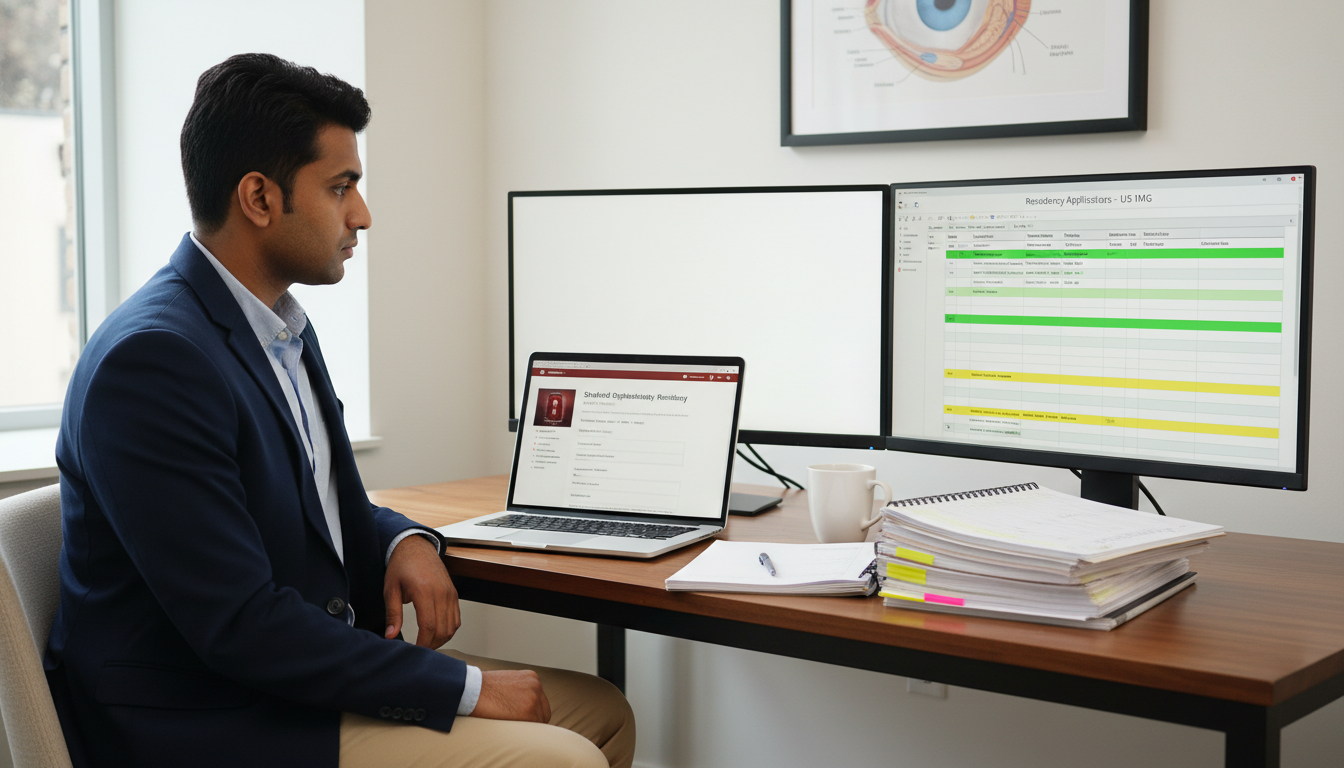
Create a simple spreadsheet or document with the following fields for each program:
- Program basics: Location, affiliated medical school, size (number of residents per year)
- Clinical strengths: Retina, glaucoma, cornea, pediatrics, oculoplastics, neuro‑ophthalmology, uveitis, etc.
- Resident experience: Call structure, clinic vs. OR exposure, autonomy, typical graduating case numbers
- Academic profile: Research requirements, NIH funding, notable faculty, major subspecialty fellowships
- IMG friendliness: Current or past IMGs on the roster (especially US citizen IMG), visa policies (even if you don’t need one, this shows they are open to IMGs)
- Culture & values: Mission statements, diversity initiatives, language about teaching and resident wellbeing
- Your fit: Specific reasons you’d thrive there and what you’d contribute
This template becomes your master reference during residency interview preparation and helps you tailor your talking points.
Step 2: Research Beyond the Program Website
Most “About Us” pages are generic. Look deeper:
Faculty profiles
- Note which attending’s interests overlap with yours (e.g., global ophthalmology, AI in imaging, corneal transplantation).
- Look up 1–2 recent publications from a faculty member whose work you find compelling. You don’t need to be an expert; just know enough to ask a thoughtful question.
Current residents
- Check residency pages and LinkedIn to see if any residents are:
- US citizen IMG
- From your school or similar international schools
- With nontraditional backgrounds (career change, research heavy, etc.)
- This helps you anticipate whether they’re receptive to international training backgrounds.
- Check residency pages and LinkedIn to see if any residents are:
Program-specific priorities
- Some programs emphasize serving underserved communities.
- Others focus heavily on surgical volume or academic output.
- As a US citizen IMG, align your story with those priorities—especially if your overseas training exposed you to resource‑limited or diverse patient populations.
Step 3: Distill Three “Fit Anchors” Per Program
Before each interview, identify three concrete reasons the program fits you, each linked to your own experience:
Example (for a US citizen IMG who studied in the Caribbean):
- “I trained in a system with high diabetic retinopathy prevalence, so I’m particularly drawn to your retina‑heavy clinic exposure at the VA.”
- “Your emphasis on outreach to underserved communities resonates with my experience organizing cataract screening camps during medical school.”
- “I’m excited that residents can pursue cornea research early; my elective work in keratoconus management made me interested in crosslinking outcomes.”
Memorize these. They will feed directly into your answers to “Why this program?”, “Why ophthalmology here?”, and your questions for the interviewers.
Mastering Your Personal Narrative as a US Citizen IMG
Your story is your most powerful tool. Many applicants prepare answers; fewer prepare a cohesive narrative that makes sense of their path as an American studying abroad and aspiring ophthalmologist.
Core Elements of Your Narrative
You should be able to clearly and confidently answer:
- Why medicine?
- Why ophthalmology?
- Why are you a US citizen IMG / American studying abroad?
- Why now, and why this match cycle?
Each of these answers should be consistent and mutually reinforcing.
1. Why Medicine?
Keep this concise, sincere, and specific. Avoid clichés like “I’ve always wanted to help people.” Focus on a defining set of experiences:
- A longitudinal patient relationship
- A family member’s illness that led you to learn deeply about medicine
- Exposure to physicians as teachers, advocates, or scientists
Link it to something you have done, not just how you have felt.
2. Why Ophthalmology?
The ophtho match is competitive, so programs want to see genuine conviction. Strong answers usually include:
- A clinical moment (e.g., first time seeing a cataract surgery or a dramatic improvement in vision)
- A cognitive or procedural draw (e.g., love of microsurgery, imaging, neuro‑ophthalmology, or optics)
- A long-term vision (e.g., global blindness prevention, building a retina practice, academic leadership)
Example structure:
“In medical school, I was initially drawn to neurology and surgery. During my neurology rotation, I encountered a patient with optic neuritis and realized how much I enjoyed the visual pathways and examination. Later, in my ophthalmology elective, watching a phacoemulsification where a patient went from counting fingers to 20/25 the next day showed me how powerful microsurgery can be. I love that ophthalmology combines neuroanatomy, imaging, longitudinal patient care, and delicate surgery all in one field. It’s the only specialty where all those interests intersect for me.”
3. Why a US Citizen IMG?
Programs will absolutely wonder about this; you should answer it confidently and without defensiveness. Your goal is to:
- Normalize your decision (“This was a deliberate, considered path”)
- Show maturity and self‑awareness
- Emphasize what you gained, not what you lacked
Possible, honest angles (choose what applies):
- Late decision to pursue medicine; international school provided you the opportunity.
- Desire for early clinical exposure or problem‑based learning at your specific school.
- Interest in global health, diverse patient populations, or bilingual training.
- Family reasons (e.g., supporting relatives, timing issues) framed responsibly, not as an excuse.
Example:
“I decided to pursue medicine after completing a degree in biomedical engineering, which made my timeline nontraditional for US schools. My Caribbean medical school offered an opportunity to start training immediately in a system with strong clinical exposure and US‑based rotations. Studying abroad also gave me experience caring for diverse, often underserved populations, which has shaped my interest in community‑oriented ophthalmology. I’ve complemented that with US clerkships to ensure familiarity with the US health system and expectations.”
4. Why This Year and This Path?
Be ready to explain:
- Any gaps in education or work
- Any delays in taking USMLE/COMLEX
- Parallel interests (research years, other degrees)
Frame each in terms of growth and readiness.
Building Your 60‑Second “Tell Me About Yourself”
This is often the first of the interview questions in residency interviews, and your answer sets the tone. A strong structure for an ophthalmology candidate who is a US citizen IMG:
- Present position: Who you are and where you trained
- Key strengths/themes: 2–3 themes that run through your experiences (e.g., visual neuroscience, underserved care, surgical interest)
- IMG context briefly: Why you trained abroad, in one or two lines
- Connection to ophtho & this match: Why you’re here now
Example:
“I’m a US citizen who completed medical school at X University in the Caribbean, with most of my clinical rotations in US teaching hospitals. Throughout training, I gravitated toward specialties that combined neurology, imaging, and procedures, which led me to ophthalmology. My research in diabetic retinopathy and my volunteer work in community vision screening reinforced how powerful restoring sight can be for patients’ independence and quality of life. I chose to study abroad to pursue medicine on a nontraditional timeline while gaining experience with diverse, resource-limited patient populations. Now I’m excited to apply to ophthalmology programs like yours that combine strong clinical training with a commitment to serving underserved communities.”
Practice this until it feels natural, not memorized.
Content Preparation: Anticipating Common Ophthalmology Interview Questions
Knowing how to prepare for interviews means consciously working through the types of interview questions residency programs routinely ask—and then tailoring your framing as a US citizen IMG in ophthalmology.
Common Categories of Questions
Motivation and fit
- Why ophthalmology?
- Why this program?
- Where do you see yourself in 5–10 years?
- What are you looking for in a residency?
Performance and resilience
- Tell me about a time you failed.
- Describe a conflict with a team member and how you handled it.
- How do you handle stress and long hours?
- What is your biggest weakness?
Clinical reasoning / professionalism
- Describe a challenging patient encounter.
- Tell me about an ethical dilemma you faced.
- How do you handle uncertainty in clinical decision-making?
Ophthalmology-specific (more common in ophtho match interviews)
- Which subspecialty currently interests you and why?
- Tell me about an ophthalmology patient who impacted you.
- What ophthalmology-related project or research are you most proud of?
- How have you explored ophthalmology given your training environment?
US citizen IMG–specific
- Why did you choose to study abroad?
- How did your international training prepare you for US residency?
- Have you had challenges transitioning to the US system?
- Do you foresee any limitations due to your medical school background?
Using the STAR Method for Behavioral Questions
For behavioral questions (“Tell me about a time when…”), use STAR:
- Situation – Brief context
- Task – Your specific role
- Action – What you did, in detail
- Result/Reflection – Outcome and what you learned
Example (Conflict with a team member):
- S: During a US internal medicine rotation, a co‑student was consistently late to pre-rounding.
- T: As senior student, you were responsible for coordinating student presentations.
- A: You had a direct yet respectful conversation, clarified expectations, and adjusted the workflow to help them succeed.
- R: Team function improved; you learned to address issues early and focus on shared goals.
Practice several stories that you can adapt for different prompts: leadership, failure, conflict, ethical concerns, and working with diverse patients.
Ophthalmology-Relevant Talking Points to Prepare
Because your specialty is ophthalmology, have prepared:
- A favorite ophthalmology case you’ve been involved with (know the diagnosis, workup, management rationale, and follow‑up).
- A brief summary of any ophtho research, including:
- Question/hypothesis
- Your exact role
- Main findings
- What you learned (even if the result was negative or trivial)
- One or two ophthalmology articles or guidelines you’ve read recently and found interesting. You don’t need a journal club‑level critique, just a conceptual understanding.
Practicing Out Loud
Reading answers in your head is not enough. During residency interview preparation:
- Record yourself on video answering common questions.
- Pay attention to:
- Pace (avoid speaking too fast)
- Filler words (“like,” “um”)
- Eye contact and body language (for virtual interviews, looking into the camera)
- Aim for responses that are structured but conversational, 1–2 minutes each.

Practical Logistics: Setting Yourself Up for a Smooth Interview Season
Even the best content preparation can be derailed by poor logistics. As an American studying abroad, you may be managing travel, time zones, and technology—especially if you’re still overseas for some interviews.
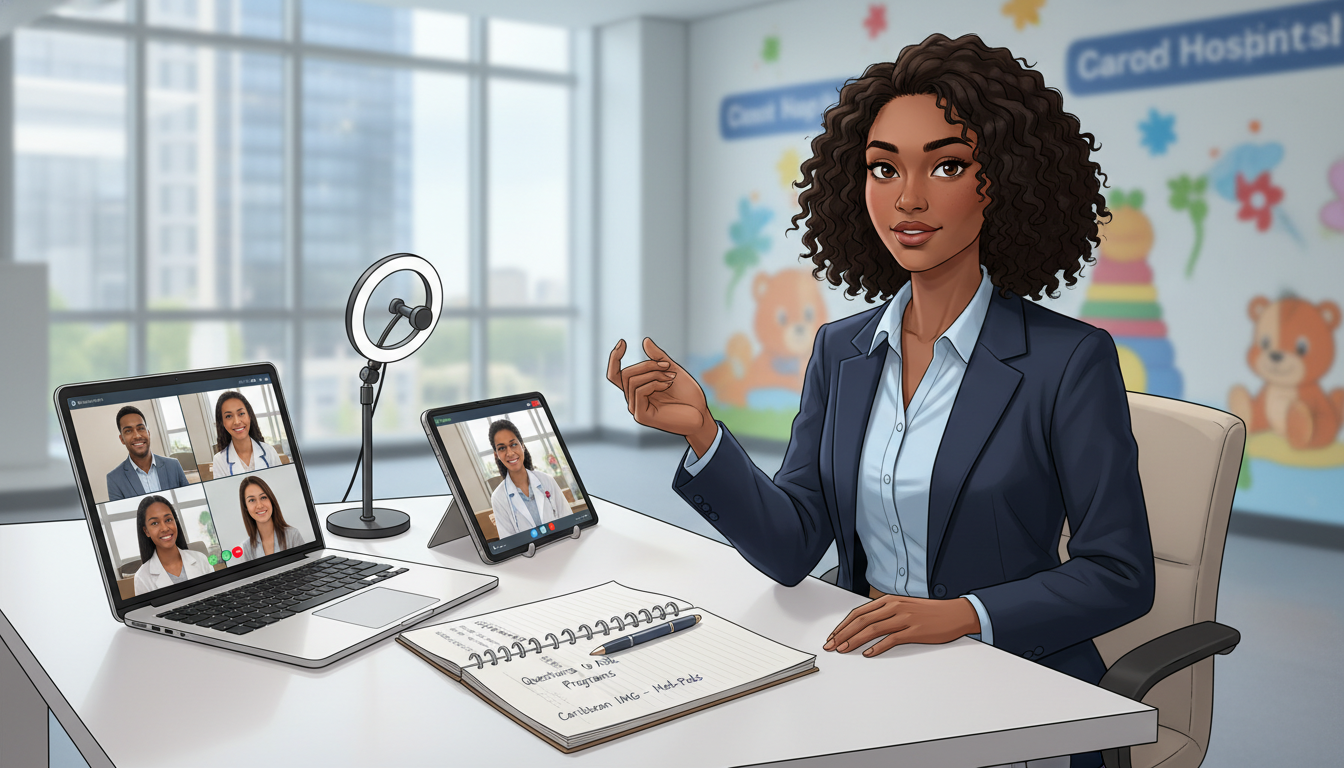
Technical Setup for Virtual Interviews
Many ophthalmology programs now conduct at least part of their interview process virtually. Make sure:
Internet: Reliable, high‑bandwidth connection; test at the exact time of day your interview will occur to simulate conditions.
Hardware:
- Laptop or desktop with a good webcam (avoid using a phone if possible)
- Clear microphone (a simple USB mic or quality headset helps)
- Backup device ready (tablet or second laptop)
Environment:
- Neutral, uncluttered background (plain wall, simple bookshelf, or professional decor)
- Good front‑facing lighting (window light or ring light)
- Quiet space with minimal risk of interruption
Software:
- Install and test Zoom, Teams, or program‑specified platforms in advance.
- Use your full name as display name, not a nickname or generic device label.
Run at least one mock interview in full setup—same chair, lighting, devices, clothes, and format you’ll use on interview day.
Clothing and Professional Appearance
Ophthalmology is a surgical and clinic-based specialty, but the dress code for interviews remains formal:
- Men: Suit (navy, dark gray, or black), conservative shirt, tie, polished shoes.
- Women: Suit (pants or skirt), blouse, closed‑toe shoes.
- Minimal jewelry, neutral makeup if used, neat hair, trimmed facial hair.
If you are overseas, verify that what reads as professional in your training environment aligns with US norms—view US residency interview photos or ask mentors practicing in the US.
Managing Time Zones and Scheduling
As a US citizen IMG who may still be abroad:
- Convert all interview times to your local time and also label them in US Eastern Time to minimize confusion.
- Use a digital calendar with alerts (Google, Outlook).
- For back-to-back interviews or different time zones, allow buffer time; do not schedule interviews too close together.
If travel is involved:
- Arrive at least a day early when possible.
- Pack interview clothes in carry-on luggage to avoid baggage delays ruining your attire.
- Print or save offline copies of schedules and directions in case of connectivity problems.
Preparing Your Questions for Interviewers
Programs expect you to ask questions; thoughtful questions show engagement and preparation. Avoid questions you could easily answer from the website. Instead, focus on:
Resident experience:
- “How would you describe the balance between autonomy and supervision, especially in the OR?”
- “What qualities do your residents share that make them successful here?”
Education and feedback:
- “How is feedback typically given to residents after clinic or surgical cases?”
- “How does the program support residents who may struggle in a particular area?”
Ophtho-specific development:
- “How early do residents typically get hands‑on experience in cataract surgery?”
- “What opportunities are there for involvement in subspecialty clinics as a junior resident?”
Support for IMGs / diversity:
- “How has the program supported residents from diverse educational backgrounds, including international graduates?”
Have 4–6 questions prepared; you won’t use them all, but you’ll be ready for different interview formats.
Mental Preparation, Confidence, and IMG-Specific Mindset
High‑stakes interviews often trigger imposter syndrome, especially for US citizen IMG applicants in a competitive field like ophthalmology. Pre‑interview preparation must include mindset work, not just content and logistics.
Reframing Your IMG Status
You cannot change where you went to medical school—but you can control how you present it:
Focus on what your path gave you:
- Adaptability to different health systems
- Experience with resource‑limited settings
- Cultural humility and language skills
- Initiative (securing US rotations, research, observerships)
Avoid apologizing for your training. Instead:
- Acknowledge it briefly when relevant
- Emphasize how you ensured you’re prepared for US residency (US rotations, USMLE scores, letters from US ophthalmologists)
Programs selected you for an interview because you cleared their initial filters. The interview is not about defending your right to be there; it is about demonstrating you are the right fit.
Building a Pre‑Interview Routine
On the days leading up to each interview, establish a consistent routine that signals to your brain, “I’m prepared and ready”:
1–2 days before:
- Re‑review your application, personal statement, and CV.
- Skim your research and key ophthalmology notes.
- Review your program research template and fit anchors.
- Lay out interview clothes and test your setup (for virtual interviews).
Night before:
- Stop heavy preparation 1–2 hours before bed.
- Do something relaxing (light reading, stretching, short walk).
- Aim for adequate sleep—don’t sacrifice rest for last-minute cramming.
Morning of:
- Briefly review your 60‑second introduction and key stories.
- Eat a light, familiar meal.
- Use 5–10 minutes of deep breathing or mindfulness to center yourself.
Practicing Calm Under Pressure
During mock interviews, deliberately simulate stress:
- Ask a friend or mentor to interrupt you, ask follow‑up questions, or push on weak points (e.g., USMLE timing, school reputation).
- Practice staying calmly curious instead of defensive:
- “That’s a fair question. Here’s how I approached that situation…”
- “I can see why that might raise concerns. What I learned from that experience was…”
Confidence doesn’t mean having a perfect record; it means showing you own your story, including its imperfections, and have grown from them.
FAQs: Pre-Interview Preparation for US Citizen IMGs in Ophthalmology
1. As a US citizen IMG, will interviewers focus heavily on why I went abroad, and how should I address it?
They will often ask, especially in competitive fields like ophthalmology. Address it directly, succinctly, and confidently. Provide a clear rationale (timing, opportunities, personal reasons), emphasize what you gained from the experience, and then pivot to how your US rotations and exam performance demonstrate readiness for US residency. Avoid sounding apologetic; frame your path as nontraditional but purposeful.
2. How much ophthalmology knowledge do I need to show during interviews? Will they quiz me clinically?
Most ophtho interviews are not formal oral exams, but some interviewers will probe your interest with basic clinical discussion: a case you saw, your research, or a topic you mentioned. You should be comfortable discussing:
- One or two ophthalmology cases in detail
- The basics of your research or projects
- Why you’re drawn to certain subspecialties
You do not need to know subspecialty-level details, but you should show curiosity, foundational understanding, and an ability to reason through problems.
3. What are the most common mistakes US citizen IMGs make in ophthalmology interviews?
Common pitfalls include:
- Over‑explaining or defensively justifying their IMG status
- Giving generic answers to “Why ophthalmology?” or “Why this program?”
- Not reviewing their own CV/research—then stumbling when asked details
- Neglecting technical setup for virtual interviews (poor lighting, background noise)
- Asking superficial questions that show they haven’t researched the program
Avoid these by rehearsing your core narrative, preparing specific program‑based talking points, and running full mock interviews.
4. How early should I start residency interview preparation for the ophtho match?
Aim to start 3–4 months before interview season:
- Month 1: Clarify your narrative, update your CV, organize your experiences.
- Month 2: Build program research templates, draft answers to common questions.
- Month 3: Conduct mock interviews, refine delivery, test your setup (especially if abroad).
- Final weeks: Tailor your prep to each specific program and focus on mindset and logistics.
Starting early lets you move from memorized answers to natural, confident conversation—a key differentiator in a competitive specialty like ophthalmology.
Pre‑interview preparation is your opportunity to turn your identity as a US citizen IMG from a perceived liability into a clear strength. With thoughtful narrative crafting, targeted program research, practiced communication, and strong logistics, you can walk into every ophthalmology residency interview ready not just to answer questions, but to genuinely connect—and to show programs why you will be a valuable colleague, surgeon, and future ophthalmologist.