Understanding the Context: US Citizen IMGs in Diagnostic Radiology
US citizen IMGs (American studying abroad at international medical schools) face a unique landscape when applying to diagnostic radiology residency. You’re competing in a historically competitive specialty while also overcoming common concerns programs have about IMGs: clinical preparedness, communication skills, and familiarity with the US healthcare system.
Pre-interview preparation is where you can close much of that gap.
Diagnostic radiology programs, especially those that routinely rank US citizen IMG applicants, often say they are looking for:
- Strong communication and teamwork skills
- Maturity and professionalism
- Clear understanding of what radiology actually involves (not just “I like puzzles”)
- Evidence of US clinical exposure and cultural competence
- A realistic career plan in radiology (including subspecialty interests and practice goals)
Your goal before interview season is to arrive at every encounter—virtual or in person—showing that you are clinically grounded, radiology-informed, and prepared to function as a colleague in a US academic or community environment.
This guide walks step-by-step through how to prepare for interviews as a US citizen IMG applying to diagnostic radiology, with specific strategies for residency interview preparation, example answers to common interview questions residency programs ask, and checklists you can act on immediately.
Step 1: Clarify Your Radiology Story and Personal Narrative
Before you can answer “Tell me about yourself” confidently, you need a coherent narrative that connects:
- Who you are
- Why you chose medicine
- Why radiology
- Why you are a good fit for this specialty and for training in the US
Build a Clear, Memorable “Radiology Narrative”
As an American studying abroad, your path is already less conventional. Programs will want to understand:
- Why you chose to study abroad
- How that experience shaped you
- How you developed a specific interest in diagnostic radiology
Create a concise story that ties those elements together.
Example framework (adapt this, don’t memorize it):
- Background (1–2 sentences): Where you’re from, undergraduate background, and medical school location.
- Why abroad (1–2 sentences): Brief, non-defensive explanation of why you trained outside the US.
- Why radiology (2–3 sentences): Concrete cases or experiences that sparked and deepened your interest.
- Current goals (1–2 sentences): What you’re looking for in a radiology residency and career.
Sample answer (outline style):
- “I grew up in [US city] and did my undergrad at [college] where I was drawn to imaging through [research / engineering / anatomy coursework].
- I chose to attend [international school] because [explain: opportunities, cost, connection, interest in global health—avoid sounding like it was a ‘last resort’].
- During my clinical years, I became increasingly drawn to diagnostic radiology, especially after [specific example: working on a multidisciplinary tumor board, an ED rotation where imaging changed management, or an imaging-related research project].
- Those experiences showed me that radiology is where I can combine [analytical thinking, pattern recognition, technology interest] with meaningful impact on patient care.
- Looking ahead, I’m interested in training in a US diagnostic radiology program with strong [e.g. teaching culture, case diversity, early responsibility, or niche like MSK/neuro/IR exposure].”
You should be able to deliver this kind of narrative smoothly in 60–90 seconds.
Prepare Your “Why Radiology?” Answer in Detail
Radiology-focused interviewers will immediately pick up on vague answers. Avoid clichés like “I like puzzles” unless they’re paired with specific radiology experiences.
Anchor your answer in:
- Specific clinical cases: “On my internal medicine rotation, a CT pulmonary angiogram that we reviewed with radiology changed our entire plan for a patient with suspected PE…”
- Experience shadowing radiologists or doing electives in radiology (especially any US rotations).
- Concrete aspects of the work: pattern recognition, integration of clinical data, communication with referring teams, teaching, multidisciplinary conferences, or interest in imaging technology/AI.
You should have 3–4 detailed examples ready that you can weave into answers.
Step 2: Research Programs Strategically as a US Citizen IMG
For US citizen IMGs, program research before interviews is more than a formality—it’s a way to demonstrate that you understand where you fit and what you can contribute.
Build a Program Dossier for Each Interview
For each program where you’re invited to interview, create a 1–2 page reference document (digital or printed) with:
Program Basics
- Location and type (academic, community, hybrid)
- Size of residency and fellowship options
- Notable strengths (e.g., strong MSK, high-volume trauma, NCI-designated cancer center)
Program-Specific Details to Reference in Answers
- Specific faculty whose interests overlap with yours
- Unique imaging facilities (e.g., PET/MR, cardiac CT program, 3T MRI, advanced IR suite)
- Teaching structure: early call, night float, structured teaching conferences, resident-run readouts, etc.
Evidence They Are IMG-Friendly
- Past or current residents who are US citizen IMG or other IMGs
- Any publicly available statements about accepting IMGs
- Program’s match lists or resident profiles on their website
Personalized “Why This Program?” Talking Points
- 2–3 clear reasons you are drawn to this program
- 1–2 reasons you would fit well (ties to geography, family, future practice plans, research)
Use Your IMG Status Strategically, Not Defensively
As an American studying abroad, you should be ready for subtle or explicit versions of:
- “Why did you go to medical school outside the US?”
- “How ready do you feel to work in a US clinical system?”
Prepare honest, confident, short explanations, and then pivot back to your strengths.
Example approach:
- Brief explanation: “I chose [school] because it offered [explain: strong clinical training, opportunity to work in diverse settings, financial feasibility].”
- Acknowledge any perceived gap: “I know that training outside the US sometimes raises questions about familiarity with US systems.”
- Reassure with specific evidence: “To address that, I completed [X] months of US clinical rotations, including [if possible: radiology electives or US-based IM/ED rotations], where I worked directly with EMR, multidisciplinary teams, and US-based protocols. My supervisors commented on [relevant strengths].”
This kind of framing shows awareness, maturity, and proactive preparation.
Step 3: Master Core Interview Questions Residency Programs Ask
Most radiology interviews will mix general residency questions with specialty-specific and behavioral questions. Effective residency interview preparation involves drafting, practicing, and refining your responses—not memorizing paragraphs, but preparing structures for answers.
Below are key question categories you should prepare for as a US citizen IMG in diagnostic radiology.
Category 1: Classic “Get to Know You” Questions
1. “Tell me about yourself.”
Focus on: background → med school → key experiences → current goals. Keep to 1–2 minutes.
2. “Why diagnostic radiology?”
Use your prepared radiology narrative (cases + experiences + personality fit).
3. “Why this program?”
Connect:
- Program features (teaching style, case volume, mentorship, research)
- Location and personal considerations (family, support system, future practice region)
- How you will contribute (teaching interest, research background, tech skills)
Category 2: IMG-Specific and Training Background Questions
Examples:
- “Why did you choose to study medicine abroad?”
- “What challenges have you faced as an American studying abroad, and how did you overcome them?”
- “How will you transition into the US system?”
Show that you:
- Take ownership of your decisions
- Have adapted to different environments
- Have deliberately gained US clinical exposure
Avoid sounding apologetic; frame your path as an asset that built resilience and cross-cultural competence.
Category 3: Radiology-Specific Questions
Radiology programs often expect at least a basic understanding of what radiologists do daily.
Possible prompts:
- “Describe a case that solidified your interest in radiology.”
- “What do you think the biggest challenges are for radiology in the next 10 years?”
- “How do you see AI affecting the field?”
You are not expected to have fellowship-level knowledge, but you should demonstrate:
- Understanding of radiology’s central role in patient care
- Awareness of communication and teamwork with referring providers
- Interest in evolving technologies, including AI and informatics, without overhyping them
Example outline for an AI question:
- Acknowledge potential: improved efficiency, triage, pattern recognition.
- Emphasize limitations: need for human oversight, clinical integration, ethics.
- Position yourself: “I see AI as a tool that will change how we work, not eliminate the need for radiologists; I’m particularly interested in learning how to interpret and communicate results effectively in an AI-augmented environment.”
Category 4: Behavioral Questions (“Tell Me About a Time…”)
Behavioral questions assess professionalism, resilience, and teamwork—areas where IMGs may be scrutinized for “fit” in US systems.
Common examples:
- “Tell me about a time you had a conflict in a team and how you resolved it.”
- “Tell me about a time you made a mistake and what you learned.”
- “Tell me about a stressful situation and how you handled it.”
Use the STAR method:
- Situation – brief context
- Task – what you needed to do
- Action – what you actually did
- Result – outcome + what you learned
Choose cases that:
- Take place in clinical settings that interviewers will understand (US rotations if possible)
- Show you can accept feedback, adapt, and improve
- Avoid significant ethical or safety lapses that could raise red flags
Category 5: Red-Flag or Difficult Questions
As a US citizen IMG, you may also be asked about:
- Gaps in training
- Failed exams (USMLE Step 1/2/3)
- Lack of US radiology electives
Prepare brief, non-defensive explanations and focus heavily on what you changed and how you improved.
Example pattern:
- State the issue without excuses.
- Provide context (briefly) if relevant.
- Focus on concrete steps you took afterward.
- End with a positive result or skill gained.

Step 4: Practice Delivery – From Content to Performance
Knowing how to prepare for interviews is only half the battle; you must also work on how you sound, how you look, and how you connect—especially important for virtual interviews.
Set Up Mock Interviews Regularly
Use multiple sources:
- Your medical school’s career or dean’s office (even if abroad)
- US-based mentors or attendings from your electives
- Radiology residents you’ve met (ask for a 20–30 minute practice)
- Peers also applying to competitive specialties
Ask them to simulate:
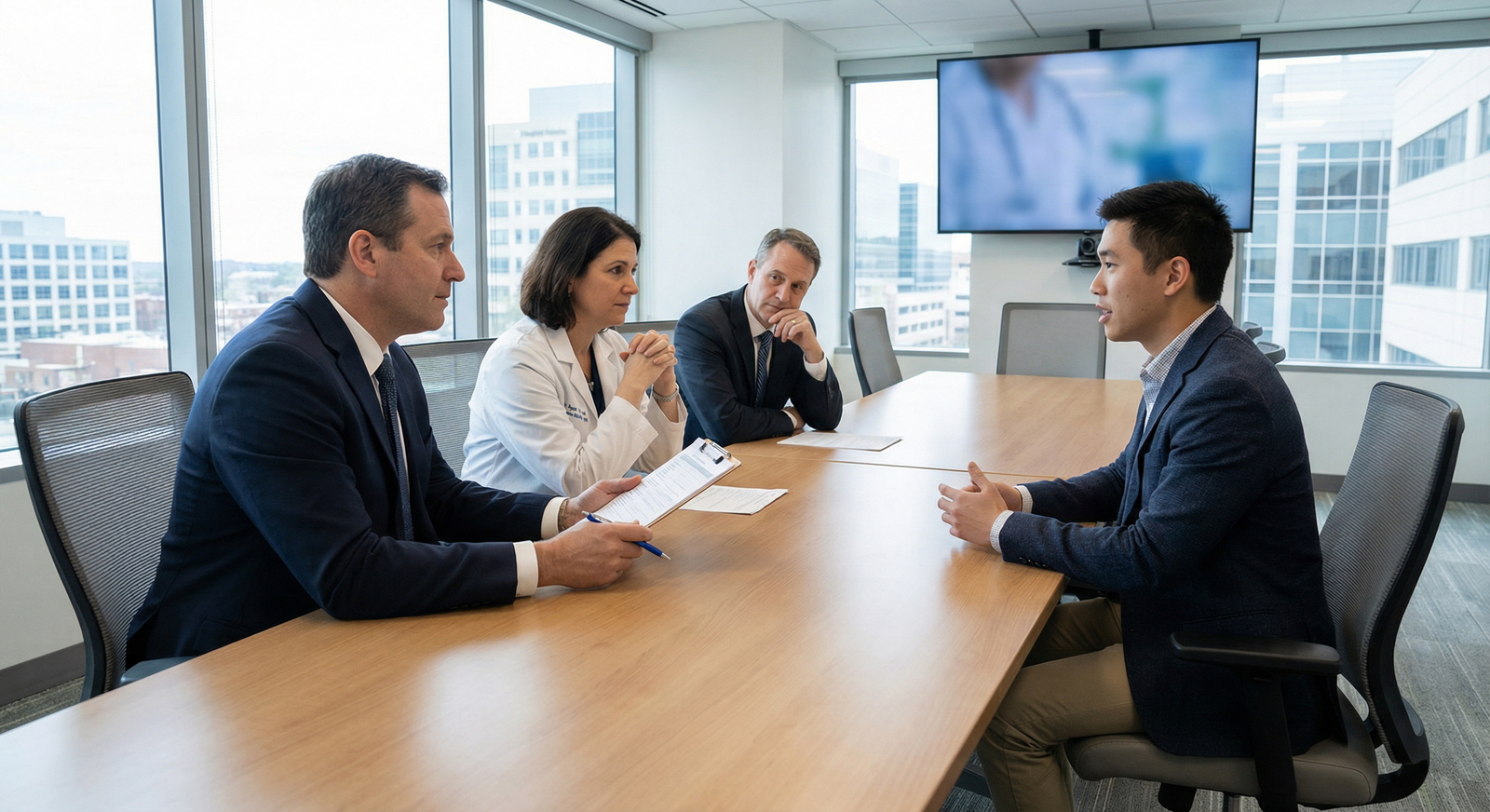
- Standard faculty interview (15–20 minutes, broad questions)
- Resident interview (more conversational, lifestyle- and culture-focused)
- Stress questions (rapid-fire or challenging questions)
Record mock interviews if possible, then review:
- Filler words (“um,” “like,” “you know”)
- Rambling answers vs clear structure
- Eye contact and posture (for virtual interviews, looking at the camera, not the screen)
Optimize Your Virtual Interview Setup
Most diagnostic radiology programs now use virtual or hybrid formats. As a US citizen IMG possibly interviewing from abroad or a different time zone, you must project professionalism despite distance.
Checklist:
- Camera: Eye-level, stable, with good resolution.
- Lighting: Source in front of you, not behind. Avoid harsh overhead lighting; use a lamp if needed.
- Background: Neutral, uncluttered (bookshelf, plain wall, simple decor). Avoid personal or distracting items.
- Audio: Test your microphone and internet connection; have wired headphones as backup.
- Backup plan: Phone hotspot, alternate device, phone number of coordinator in case of connectivity issues.
Practice logging into your platform (Zoom, Thalamus, Microsoft Teams) the week before and the day before each interview.
Refine Your Nonverbal Communication
For radiology, where so much work is “behind the scenes,” programs will be keen to see that you can still communicate effectively with colleagues and trainees.
Focus on:
- Speaking at a measured pace (not too fast, especially with accents or over Zoom)
- Nodding and using brief verbal affirmations to show engagement
- Leaning slightly forward when answering questions to convey interest
- Smiling naturally at the start and end of each interaction
Step 5: Prepare High-Impact Questions to Ask Programs
Interview questions residency programs expect FROM applicants can be as revealing as your answers. Avoid generic questions that show you didn’t prepare (“So, tell me about your program”).
Instead, develop a bank of thoughtful questions tailored to:
- Faculty interviewers
- Residents
- Program leadership (PD/APD)
Questions for Program Directors / Faculty
- “How would you describe the department culture—particularly how radiology interacts with other services like ED and surgery?”
- “What qualities have you seen in residents who thrive here?”
- “How does the program support residents who are interested in [your interest: research, informatics, global health, teaching]?”
- “How do you see the program evolving over the next 5 years?”
Questions for Residents
- “What does a typical day on a [body / neuro / night float] rotation look like for a PGY-2?”
- “How comfortable do you feel calling critical findings to clinical teams? How is that skill taught and supervised?”
- “As a new resident, what kind of feedback did you receive, and how often?”
- “How supportive is the program when residents have personal or family issues arise?”
Questions Related to Being a US Citizen IMG
You don’t need to center your IMG status in every question, but you can explore:
- “How has the program supported residents who trained outside the US or had non-traditional paths?”
- “Are there any particular resources for residents who are returning to the US system after international training?”
Having 5–7 well-thought-out questions in your notes for each interview day will help you adapt in real-time and avoid awkward silences.
Step 6: Logistics, Timeline, and Mental Preparation
Organize Your Interview Season
For the diagnostic radiology match, your calendar can become crowded quickly. As an American studying abroad, you may also be dealing with time zone challenges.
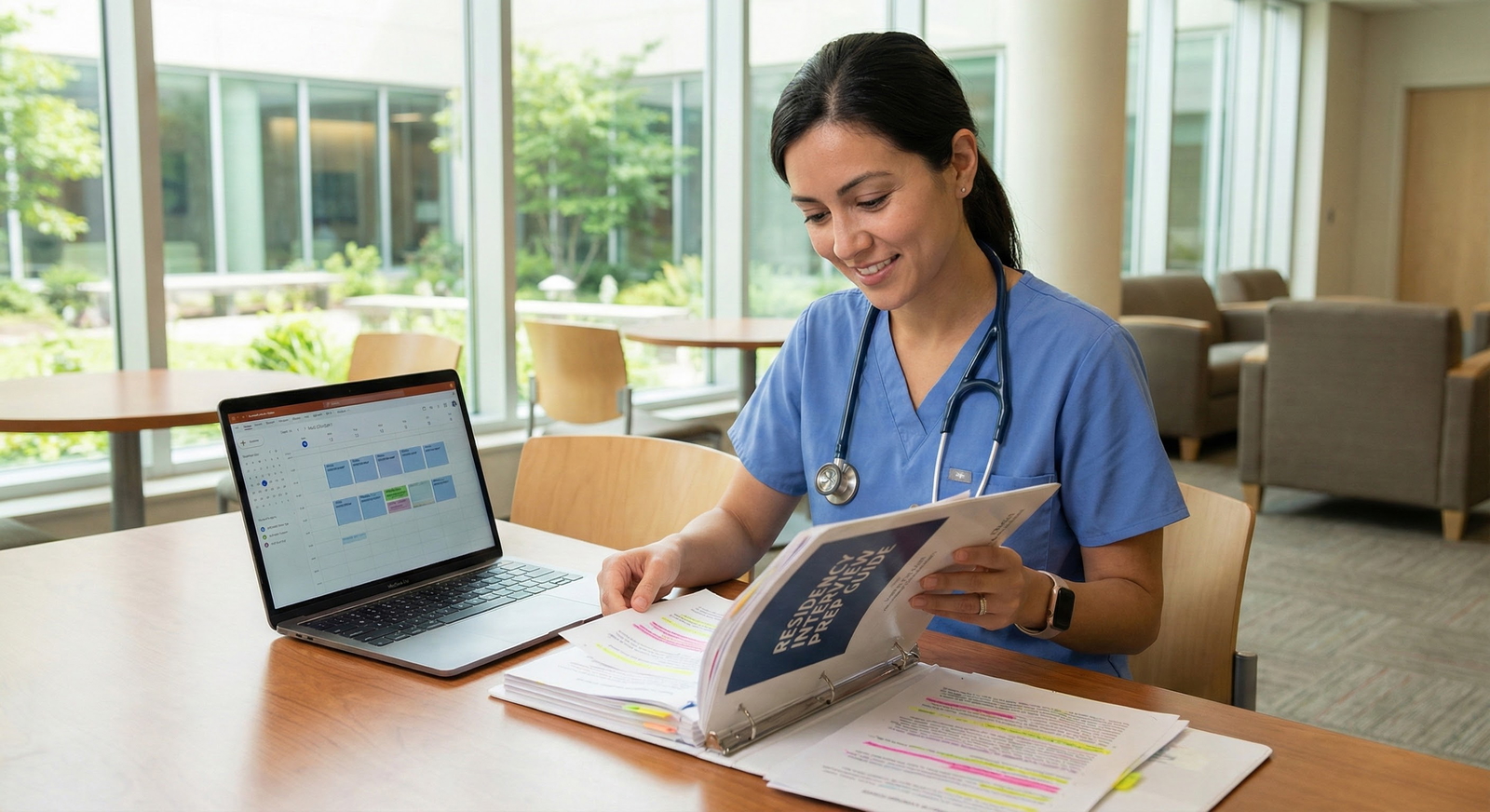
Create a master spreadsheet including:
- Program name and location
- Interview date(s) and time zone conversion
- Platform used (Zoom/Thalamus/etc.) and access links
- Interview structure (from invitation emails – number of rooms, social events, resident room)
- Notes on program strengths and your “Why this program?” talking points
- Post-interview impressions (fill in on the same day)
This will support both pre-interview preparation and post-interview ranking.
Day-Before Checklist
- Re-read the program dossier for the next day’s interviews.
- Verify time zones and platform links.
- Lay out interview attire (business formal or neat business casual depending on norms; radiology tends to be slightly less formal, but always err on the professional side).
- Print or pull up on screen your:
- CV and ERAS application
- Personal statement
- List of key experiences and cases
- Questions to ask
Get adequate sleep; avoid staying up all night re-writing answers.
On the Day of the Interview
- Eat something light but sustaining.
- Dress fully (top and bottom) in professional attire, in case you need to stand.
- Log in 10–15 minutes early.
- Have a glass of water, pen, and small notepad for quick notes (but avoid constantly looking down).
Between interviews, do brief resets:
- Stand up, stretch, deep breaths.
- Remind yourself of one concrete thing you’re proud of in your application.
After the Interview
Within 24 hours:
- jot down:
- Who you met (names, roles)
- Impressions of culture, teaching, resident happiness
- Any red flags or especially positive moments
- Optionally send brief, individual thank-you emails (if programs have not discouraged it). Focus on something specific you discussed, and keep it short.
Frequently Asked Questions (FAQ)
1. As a US citizen IMG, do I need US clinical experience before radiology interviews?
US clinical experience is strongly recommended and often expected. For diagnostic radiology in particular:
- Direct radiology electives in the US are ideal, but
- US internal medicine, surgery, or emergency medicine rotations also help demonstrate you understand the US system and can work on multidisciplinary teams.
If your US experience is limited, be prepared to emphasize:
- Any tele-rotations or observerships in radiology
- Research collaborations with US radiologists
- Concrete examples from any US clinical setting showing communication and professionalism.
2. How much radiology knowledge do I need before interviews?
Programs do not expect you to function at the level of a radiology resident pre-match, but they do expect:
- Familiarity with basic imaging modalities (X-ray, CT, MRI, ultrasound, nuclear medicine) and typical clinical scenarios where they’re used.
- An understanding of radiology’s role in common clinical pathways (stroke, trauma, cancer staging, PE workup).
- Awareness of emerging topics like AI, appropriateness criteria, radiation safety, and communication of critical findings.
Reading an introductory radiology textbook or online resource and reviewing cases (e.g., from free teaching files) in the month or two before interviews is very helpful.
3. How should I address a Step exam failure or academic gap in interviews?
Be transparent, concise, and growth-focused:
- State the issue plainly: “I failed Step 1 on my first attempt.”
- Provide brief context if important (e.g., health, family, adjustment issues)—without over-excusing.
- Emphasize what you changed: new study strategies, support systems, time management.
- Highlight improved performance afterwards: higher Step 2 score, better clinical evaluations, timely graduation.
The goal is to show maturity, insight, and a track record of successful adaptation.
4. What makes a US citizen IMG stand out positively in the diagnostic radiology match?
You stand out when you combine:
- Strong metrics (Step scores, clerkship grades) with
- Demonstrated commitment to radiology (electives, research, shadowing, radiology-focused personal statement), and
- Evidence you’ll be an excellent colleague (strong communication skills, thoughtful behavioral answers, positive feedback from US supervisors).
Being an American studying abroad can also signal resilience, adaptability, and cross-cultural competence—traits that are valuable in modern radiology departments. Your pre-interview preparation should make those strengths obvious in every interaction.
By approaching your diagnostic radiology residency interview preparation systematically—building a compelling narrative, researching programs, mastering core interview questions residency programs ask, and practicing delivery—you can transform your status as a US citizen IMG from a perceived hurdle into a distinctive asset.