Understanding the Vascular Surgery Interview Landscape as a US Citizen IMG
Vascular surgery is a small, highly specialized field with limited residency positions and intensive training demands. As a US citizen IMG (American studying abroad), you’re competing not only with US MD and DO students but also with a small but strong pool of other IMGs who have usually been very intentional about their preparation.
Unlike some other specialties, the integrated vascular program (5+2 vs 0+5) structure and the relatively small faculty groups at each institution mean programs often know their applicants in detail. This raises the bar for pre‑interview preparation—but it also means that a well-prepared US citizen IMG can truly stand out.
Key realities to recognize:
- Small program size: Many integrated vascular surgery residency programs take only 1–3 residents per year.
- High emphasis on fit: Faculty look closely at your maturity, technical curiosity, long‑term career vision, and ability to thrive in a small team.
- IMG status is a known variable: As a US citizen IMG, visa issues may be simpler, but programs will still evaluate how well you understand and can navigate US training culture and healthcare systems.
- Interviews are holistic: Programs will probe your academic record, US clinical experience, professionalism, and your understanding of vascular surgery as a lifelong career.
Because of this, residency interview preparation for vascular surgery needs to be deliberate and specialty-specific. The stronger your preparation before interview season, the more confidently you can present yourself as a future vascular surgeon rather than “an IMG trying to match.”
Building the Foundation: Know Your Story, Your Specialty, and Your Program List
Before you practice a single answer, you need clarity on three things: who you are, why vascular surgery, and where you’re applying.
1. Clarify Your Personal and Professional Story
You will be asked variants of:
- “Tell me about yourself.”
- “Walk me through your CV.”
- “How did you end up as an American studying abroad and pursuing vascular surgery?”
As a US citizen IMG, you should anticipate and own your path confidently. Prepare a brief, coherent narrative that covers:
- Background: Where you’re from, where you study medicine abroad, and any prior degrees or work.
- Decision to study abroad: A short, honest explanation (cost, opportunity, timing, personal reasons) framed positively—not as a fallback.
- Evolution toward vascular surgery: Specific experiences that moved you toward vascular (not just “I love surgery”).
Actionable exercise:
Write a 60–90 second answer to “Tell me about yourself” that:
- Starts with your background (10–15 seconds),
- Briefly explains studying abroad as a deliberate choice (10–20 seconds),
- Highlights 2–3 key experiences that led you to vascular surgery (30–40 seconds),
- Ends with your current goals (20 seconds).
Practice saying it until it’s conversational, not memorized.
2. Deepen Your Understanding of Vascular Surgery
Programs expect you to understand what you’re getting into. Pre‑interview preparation should include:
Core scope of practice:
- Peripheral arterial disease and critical limb ischemia
- Aortic aneurysms and dissections
- Carotid disease and stroke prevention
- Dialysis access
- Venous disease and thromboembolism
- Trauma and acute limb ischemia
Modalities:
- Open surgery vs endovascular procedures
- Hybrid procedures
- Use of imaging (fluoroscopy, ultrasound, CT angiography)
Lifestyle and culture:
- High‑acuity emergencies
- Frequent call and urgent cases
- Long-term patient relationships (chronic vascular disease)
Actionable resources to review before interviews:
- Society for Vascular Surgery (SVS) website: resident resources, patient information pages.
- Recent “landmark” or practice-changing trials (e.g., EVAR vs open AAA repair, carotid stenting vs endarterectomy).
- At least 3–5 recent vascular surgery review articles or guidelines (you don’t need full details, but you should know the general concepts).
You don’t need fellowship-level knowledge, but you do need to show credible curiosity and an understanding that vascular is a high-stakes, longitudinal specialty.
3. Organize and Understand Your Program List
For an integrated vascular program, program-specific knowledge matters. Pre-interview, create a program dossier for each place you applied to or received an invitation from:
Include for each program:
- Number of positions per year and integrated vs independent structure.
- Main training hospitals (academic center, VA, community).
- Notable strengths (e.g., complex aortic work, limb salvage, endovascular volume, research, rural outreach).
- Key faculty (especially program director, chair, and any faculty you interacted with during away rotations, conferences, or emails).
- Case volumes and board pass rates if available.
- Recent news: expansions, grants, major trials, new hybrid OR, leadership changes.
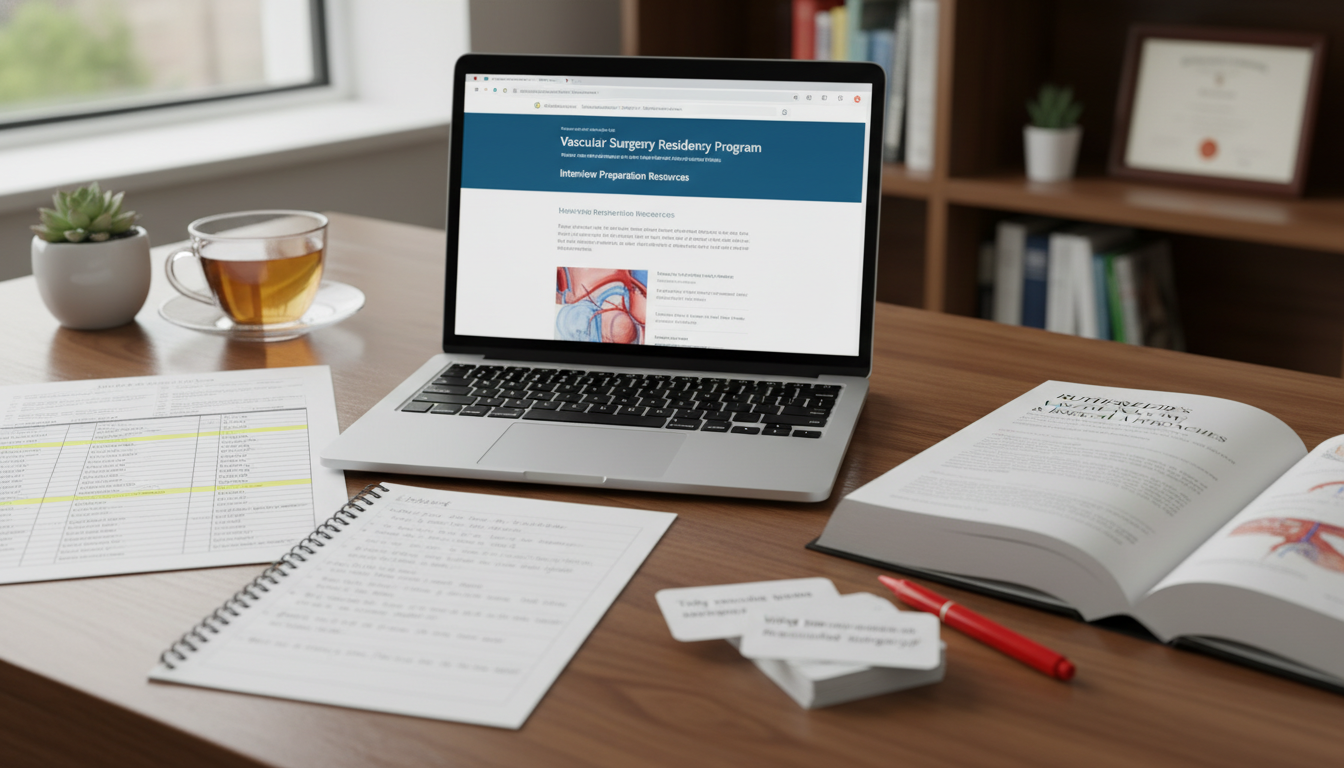
Practical tip: Maintain an organized spreadsheet with columns for:
- Program name
- Region/city
- Interview date
- Key strengths
- People you want to mention or ask about
- Personal connection/fit notes
- Questions to ask faculty and residents
This spreadsheet becomes your central tool for residency interview preparation and helps you individualize your conversations.
Mastering Core Interview Content: Questions, Answers, and Red Flags for US Citizen IMGs
Interviewers in vascular surgery will test several domains: motivation, resilience, technical curiosity, teamwork, and professionalism. As a US citizen IMG, you should be especially prepared for questions that touch on training environment differences, adaptability, and communication.
1. Essential “Why” Questions You Must Be Ready For
These are almost guaranteed:
- “Why vascular surgery?”
- “Why an integrated vascular program instead of general surgery first?”
- “Why do you think you’ll be a good fit for our program?”
- “Why did you choose to study medicine abroad, and how has that shaped you?”
How to prepare strong answers:
- Use specific clinical experiences rather than generic traits.
- Show evidence that you understand the reality of vascular surgery (not just “I like procedures”).
- Link your US citizen IMG experience to strengths: adaptability, resilience, comfort in diverse systems.
Example framework for “Why vascular surgery?”
- Initial exposure: A clear, concrete moment (e.g., seeing a limb salvage case, participating in aneurysm management).
- Reinforcement: Multiple experiences (away rotation, research, clinic) that confirmed your interest.
- Fit with your personality and values: Enjoyment of complex decision-making, longitudinal care, technical precision, collaboration with other specialties.
- Long-term vision: How you see yourself contributing (clinical, academic, underserved populations, technology).
2. Common “Interview Questions Residency” Programs Ask in Vascular Surgery
Prepare concise, honest answers to at least the following:
- “Tell me about a complication or adverse outcome you witnessed and what you learned from it.”
- “Describe a time you received critical feedback and how you responded.”
- “Tell me about a time you had conflict with a team member or nurse. How was it resolved?”
- “What is your greatest weakness?”
- “How do you handle stress and fatigue, especially on call?”
- “Have you ever made a mistake in patient care? What did you do?”
For each, use the STAR method (Situation, Task, Action, Result), keeping your answer 1.5–3 minutes long.
IMG-specific additions you should anticipate:
- “How has training abroad prepared you—or not prepared you—for a US residency?”
- “What challenges do you foresee transitioning into a US surgical environment?”
- “What have you done to gain US clinical experience and letters of recommendation?”
Actionable step:
Write bullet‑point STAR outlines for at least:
- 2 examples of handling conflict,
- 2 examples of mistakes or near misses,
- 2 examples of leadership on a team,
- 2 examples of resilience during a difficult rotation or exam period.
Do not memorize full paragraphs—memorize the story arc and key phrases.
3. Addressing Your US Citizen IMG Status Strategically
Your background as an American studying abroad will likely come up. Approach it:
- Confidently: This is part of your story, not a flaw to hide.
- Briefly: Offer a concise explanation, then pivot to what you’ve gained.
- Positively: Focus on growth, adaptability, cultural flexibility, and initiative.
Example elements to include:
- Exposure to different healthcare systems and resource settings.
- Experience working with diverse patient populations.
- Necessity of self-directed learning and independence away from traditional US support systems.
- Efforts to “translate” that experience to the US: US clinical electives, research, conferences, mentorship with US vascular surgeons.
Avoid overly defensive tones like “I had no choice but to go abroad” without context. Instead, frame: “This path turned out to be incredibly formative because…”
4. Anticipating Questions About Gaps, Scores, and Weaknesses
Programs may dig into:
- USMLE/COMLEX performance, especially any low scores or failures.
- Gaps in training (leave of absence, extended time).
- Limited US clinical experience.
- Lack of vascular-specific research.
Preparation tips:
- Have direct, non-defensive explanations for any red flags.
- Focus on what you learned and what has changed since then.
- Show specific steps you took to remediate (tutoring, study course, new system, more structured schedule).
- Always end by pivoting to strengths or evidence of improvement.
Example structure for a failed exam explanation:
- Brief, factual description of what happened (1–2 sentences).
- Honest contributing factors (but no blaming).
- Specific corrective actions (changes in study habits, mentorship, practice exams).
- Evidence of improvement (later scores, clinical performance).
- Reassurance that the underlying issue has been addressed.
Practical Interview Skills: From Mock Interviews to Body Language
Beyond what you say, how you say it and how you present yourself matter significantly in a small specialty like vascular surgery.
1. Mock Interviews and Feedback Loops
At least 4–6 weeks before interview season:
- Arrange mock interviews with:
- Faculty mentors (ideally in surgery or vascular if possible),
- Senior residents (even from other specialties),
- Career counseling or student affairs offices,
- Trusted peers who can be honest and critical.
Conduct different types of mocks:
- Traditional one-on-one (typical faculty interview).
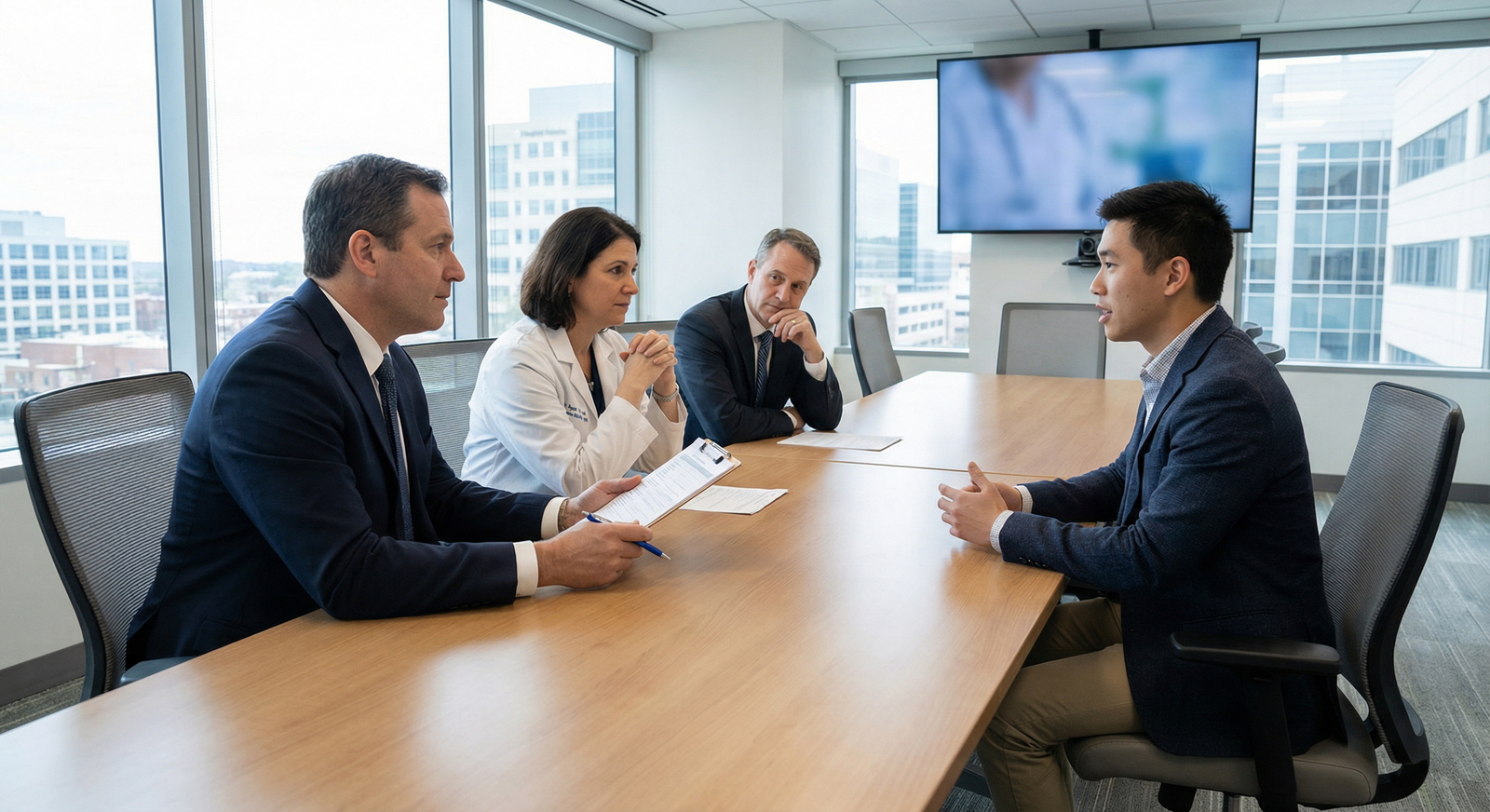
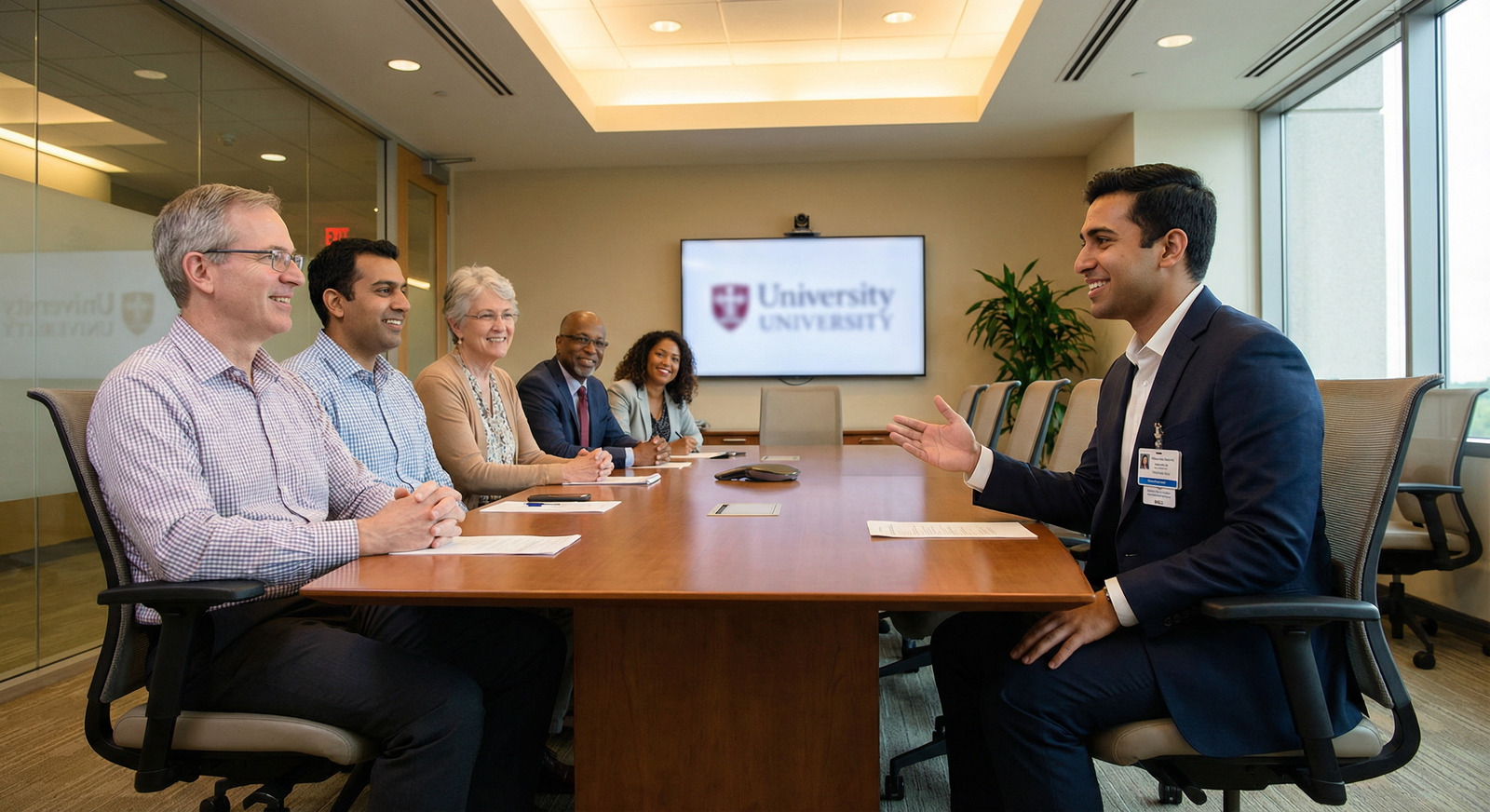
- Panel-style (multiple interviewers).
- Behavioral focus (only conflict, feedback, mistake questions).
- Vascular interest focus (why vascular, future plans, technical curiosity).
Record 1–2 sessions (video if possible). Watch for:
- Overuse of filler words (“um,” “like,” “you know”).
- Rambling or going off-topic.
- Inconsistent eye contact or fidgeting.
- Overly rehearsed or robotic delivery.
Refine and repeat. Aim to feel natural and conversational while still structured.
2. Nonverbal Communication and Professional Presence
Vascular surgeons will be evaluating whether they can trust you in high-stakes environments.
Key elements to practice:
- Body language:
- Upright posture, shoulders relaxed.
- Hands visible but calm (avoid excessive gesturing).
- Lean slightly forward to show engagement.
- Eye contact:
- Look at the interviewer, not off-screen (for virtual interviews).
- If panel, shift your gaze naturally between speakers.
- Voice and pace:
- Moderate speed, clear articulation.
- Brief pauses are better than filler words.
- Listen actively:
- Allow interviewers to finish.
- Paraphrase or clarify complex questions before answering.
Practical exercise:
Practice 3–5 questions per day in front of a mirror or your webcam. Focus not only on words but on how you appear—from the first second you start speaking.
3. Fine-Tuning Content for Vascular Surgery
To stand out in an integrated vascular program interview:
Be prepared with 1–2 cases you found particularly impactful:
- What was the pathology?
- What decisions were made (open vs endovascular, timing, risk assessment)?
- What was your role?
- What did you learn clinically and personally?
Be ready to discuss:
- Your level of comfort in the OR and with procedures you’ve performed or observed.
- How you approach pre-op assessment and post-op care (at a basic, student level).
- Times where you followed a vascular patient longitudinally, even as a student.
These conversations help faculty visualize you as a future colleague rather than a generic applicant.

Logistics and Strategy: Pre-Interview Preparation Beyond the Questions
Interview performance is heavily influenced by everything around the conversation: technology, scheduling, documents, and self-care. For US citizen IMGs, especially those still abroad, this planning is critical.
1. Technical and Environmental Setup (Especially for Virtual Interviews)
Many vascular surgery programs conduct at least part of the interview process virtually. Prepare 2–3 weeks in advance:
Equipment:
- Reliable laptop or desktop (avoid using just a phone).
- Test your webcam and microphone.
- Have a backup device if possible.
Internet:
- Use wired connection if you can.
- Run speed tests at interview time of day.
- Identify a backup location with reliable Wi-Fi (library, coworking space).
Environment:
- Neutral, clean background (simple wall, bookshelf, or tidy desk).
- Avoid distracting posters or clutter.
- Good front lighting; avoid bright light directly behind you.
Software:
- Install and test Zoom, Teams, or the platform specified by each program.
- Create a professional username (e.g., FirstName.LastName).
- Make sure your profile photo is neutral and professional.
Create a virtual interview checklist:
- Devices charged and plugged in.
- All software updated.
- Notifications silenced (phone, computer, messaging apps).
- Headphones ready (if needed to reduce echo).
- Water within reach.
2. Document and Details Preparation
Organize all application-related materials before interview season intensifies.
Update and review:
- ERAS application: Know exactly what you wrote—faculty may quote your own words back to you.
- Personal statement: Be able to expand on any story or theme.
- CV: Have a one-page version and know the timeline of all positions.
- Research: Be able to discuss:
- Your precise role in each project.
- Hypothesis, methods, and main conclusions.
- Any vascular-specific angles or transferable skills (stats, QI, systematic reviews).
Have accessible digital and physical copies of:
- CV
- Personal statement
- Abstracts or publications (if the topic comes up)
- Letters of recommendation list
You don’t need to show these in the interview, but they keep you grounded and consistent.
3. Researching Each Program and Preparing Tailored Questions
Generic questions like “What is a typical day like for residents?” rarely leave an impression. For each program, prepare 3–4 thoughtful, specific questions for:
- Faculty
- Program director
- Residents
Examples:
- “I noticed your program has strong experience with complex aortic work. How are junior residents gradually introduced to these cases from an educational standpoint?”
- “Can you describe how integrated residents are involved in outpatient vascular clinics early in training?”
- “How does the program balance open and endovascular training, given the shift toward endovascular-first in many pathologies?”
- “What characteristics have you noticed in residents who thrive here versus those who struggle?”
As a US citizen IMG, consider also asking:
- “How has the program supported residents who trained in different medical education systems as they transition to your expectations and workflow?”
- “Are there specific institutional resources for international graduates, even if US citizens, during onboarding?”
Write these questions in your program spreadsheet and bring a small notebook (virtual or in-person) to refer to discreetly.
4. Scheduling, Time Zones, and Travel (If In-Person)
If you are still abroad during interview season:
- Track time zones carefully; use calendar tools that auto-adjust to your local time.
- Avoid scheduling two interviews too close together in case of overruns.
- Keep at least 15–30 minutes buffer before and after each interview block.
If any interviews are in person:
- Book travel early to reduce financial strain.
- Arrive at least the night before to avoid delays.
- Plan professional attire that is comfortable and consistent across interviews.
- Have a folder with:
- Itinerary
- Contact info for the program coordinator
- Addresses and directions
- Quick notes about the program
These steps reduce avoidable stress, letting you focus on performance and authentic engagement.
Mindset, Reflection, and Post-Interview Strategy
Your pre‑interview preparation should also include how you’ll reflect and follow up after each encounter. This not only improves your future interviews but supports your eventual rank list decisions.
1. Building a Resilient Mindset
Vascular surgery interviews can be intense and sometimes intimidating. To maintain confidence:
- Remind yourself of your unique strengths as a US citizen IMG: adaptability, cross-cultural competence, determination.
- Normalize occasional “off” moments during interviews; one awkward answer rarely decides your fate.
- Use structured routines before interviews:
- Light meal and hydration.
- 5–10 minutes of deep breathing or mindfulness.
- Review your “top 5 strengths” and 2–3 major clinical stories.
Avoid last-minute cramming of facts. The night before, prioritize sleep and light review of your personal narrative and program-specific notes.
2. Post-Interview Debriefing and Tracking
Immediately after each interview day (or the same evening):
- Write down:
- Faculty and residents you spoke with, with brief descriptions.
- 2–3 positive impressions of the program.
- Any concerns or red flags.
- Questions you wished you had asked.
- Overall “gut feeling” on culture and fit.
Use your spreadsheet to rate:
- Clinical training strength (open/endovascular balance).
- Educational structure and support.
- Research and academic potential (if important to you).
- Resident happiness and cohesion.
- Location and personal factors.
This record becomes invaluable when you are constructing your rank list months later.
3. Thank-You Emails and Professional Follow-Up
Not all programs expect thank-you emails, but they are generally viewed positively if they are:
- Specific,
- Professional,
- Not excessive.
Guidelines:
- Send brief emails to:
- Program director,
- Key faculty with whom you had substantive conversations,
- Residents only if there was a particularly meaningful interaction.
Keep messages:
- 3–6 sentences.
- Mention one specific thing from your conversation or about the program.
- Reinforce your interest without implying ranking promises.
Do not over-email or send weekly updates; it can feel pushy and may backfire in a small specialty.
Frequently Asked Questions (FAQ)
1. As a US citizen IMG, do I have a realistic chance at an integrated vascular surgery residency?
Yes—US citizen IMGs can and do match into integrated vascular programs, though it is competitive. Your chances improve substantially if you:
- Have strong USMLE scores and solid clinical evaluations.
- Complete US-based vascular or surgical rotations with strong letters.
- Demonstrate clear commitment to vascular surgery (research, conferences, SVS involvement, targeted electives).
- Prepare thoroughly for interviews so you come across as mature, self-aware, and realistic about the specialty.
Your pre-interview preparation is one of the few controllable factors at this stage—take it seriously.
2. How is residency interview preparation for vascular surgery different from other surgical specialties?
The core principles are similar, but vascular surgery:
- Has more emphasis on endovascular skills and imaging, so discussing your interest in technology and complex decision-making is valuable.
- Is a small field, so fit and interpersonal dynamics matter even more.
- Involves extreme consequences to decisions (limb loss, stroke, death), so interviewers often probe your emotional maturity, resilience, and thoughtfulness.
Tailor your answers to reflect genuine understanding of these aspects rather than generic “I like surgery and working with my hands” responses.
3. How should I answer if I’m asked why I chose to study medicine abroad?
Be honest, concise, and positive. A solid structure:
- Brief motivation (cost, opportunity, timing, family reasons).
- Acknowledge any challenges (distance, system differences).
- Emphasize growth: independence, adaptability, broader healthcare perspectives.
- Connect it to why you’ll be a strong resident in the US (resilience, ability to handle steep learning curves, comfort in unfamiliar environments).
The goal is to show that your path has made you stronger, not to justify or apologize for it.
4. What are the best ways to practice “how to prepare for interviews” on my own if I don’t have many mentors?
If you have limited direct mentorship:
- Use online lists of interview questions residency programs often use, especially behavioral ones.
- Record yourself answering 5–10 questions per day; review for clarity and body language.
- Partner with a peer (even in another specialty) via video call and alternate doing mock interviews.
- Join IMG or surgery-focused online communities where mock interview groups are organized.
- Read or watch content from academic surgical departments on interview preparation; adapt their tips to vascular-specific situations.
Combine this with the structured steps above—narrative building, program research, and logistical prep—and you can still present yourself as polished, confident, and committed to a vascular surgery career.
Thoughtful, early, and structured pre-interview preparation is one of the most powerful levers you have as a US citizen IMG aiming for vascular surgery. By knowing your story, understanding the specialty deeply, refining your communication, and managing the details around your interviews, you can walk into each conversation ready to be viewed not as “just an IMG,” but as a future vascular surgeon and valued colleague.