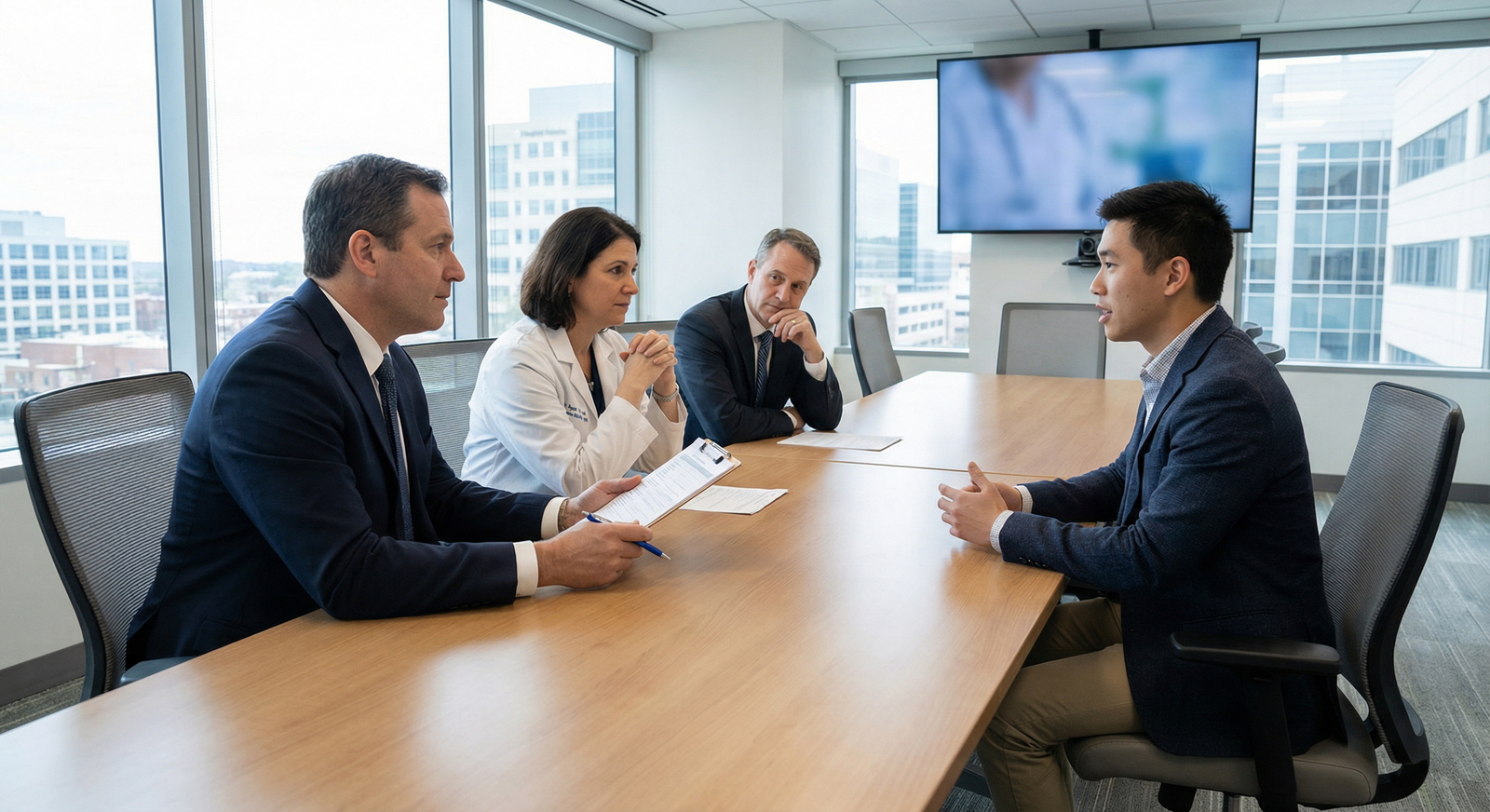
Understanding the Otolaryngology (ENT) Interview Landscape as a DO Graduate
Otolaryngology is one of the most competitive specialties, and as a DO graduate you face both tremendous opportunity and specific challenges in the otolaryngology match. Effective pre-interview preparation can significantly narrow the perceived gap between MD and DO applicants and showcase what you bring as an osteopathic physician.
Before you plan how to prepare for interviews, it helps to understand the context:
- Competitiveness: ENT residency positions are limited, and programs often receive hundreds of applications for a small number of spots.
- DO representation: DO applicants now match into ENT at increasing rates, especially with the single accreditation system, but some programs still have limited experience with DO trainees.
- Holistic review: Many programs emphasize attributes beyond test scores—clinical performance, fit, communication skills, and professionalism—areas where a well-prepared DO graduate can excel.
Your goal in pre-interview preparation is to:
- Demonstrate you can thrive in a demanding surgical specialty.
- Highlight the strengths of osteopathic training (hands-on approach, whole-person care, communication).
- Leave programs confident that you will be an engaged, reliable resident and future colleague.
The rest of this guide walks step-by-step through what to do in the weeks to months before your otolaryngology residency interviews.
Step 1: Clarify Your ENT Story and DO Identity
Before you practice any interview questions, you need a clear personal narrative. Programs will remember stories more than statistics. As a DO graduate, you also want to intentionally frame how your osteopathic background strengthens your candidacy.
Build Your ENT-Specific Narrative
Start by answering these questions in writing:
- Why ENT and not another surgical field?
- When did you first become interested in otolaryngology?
- Which patients or cases sparked that interest?
- What parts of ENT resonate with you most?
- Head and neck oncology? Rhinology? Otology? Laryngology? Pediatric ENT?
- Is it the microsurgery, the combination of clinic and OR, the anatomy, the opportunity to restore core senses (hearing, airway, voice)?
- What have you done to explore ENT?
- ENT rotations (home and away/auditions)
- Research projects, QI projects, or case reports
- ENT interest group leadership, conferences, or shadowing
Convert these points into a concise “ENT story”:
- A 2–3 sentence origin story (“how you got here”)
- A 2–3 sentence explanation of what you enjoy about ENT now
- A 2–3 sentence outlook on your future in the specialty (academic, community, sub-specialty interest)
You’ll reuse these elements in answers to “Tell me about yourself,” “Why ENT?”, and “Where do you see yourself in 10 years?”
Integrate Your Osteopathic Identity
As a DO graduate, don’t hide the “O” in your degree—leverage it:
Clarify what osteopathic training means in practice
Be ready with specifics, not generalities such as “treating the whole person.” For example:- More time interacting directly with patients in early clinical years.
- Emphasis on musculoskeletal and functional assessments.
- Structured training in communication and rapport-building.
Link osteopathic principles to ENT care Examples:
- Understanding how cervical spine or TMJ dysfunction can overlap with ear or throat complaints.
- A whole-person approach to chronic sinusitis (environmental factors, allergy, sleep, mental health).
- Using hands-on exam skills to evaluate head and neck complaints comprehensively.
Address OMM/OMT thoughtfully You are unlikely to use regular OMT in most ENT residencies, but your training is still valuable. You might say:
- OMT taught you precise palpation skills and three-dimensional thinking about anatomy.
- Even if you do not perform OMT daily, your diagnostic touch and appreciation for structure-function relationships enhance your ENT examination.
Write down 2–3 specific examples where your DO training directly improved your care of an ENT-relevant patient (e.g., neck pain with ear symptoms, dizziness with musculoskeletal components). These become powerful interview stories.
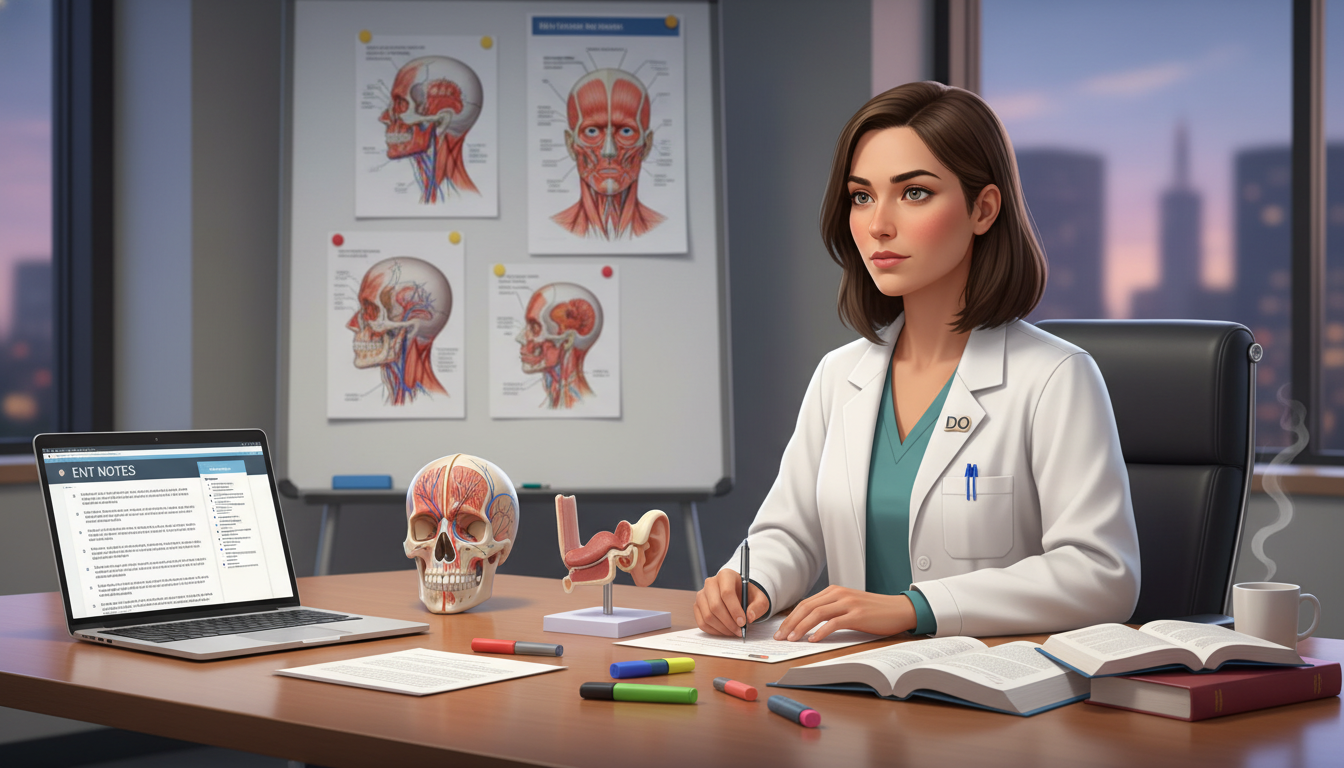
Step 2: Master ENT-Relevant and General Residency Interview Questions
Strong residency interview preparation requires both content and delivery. You need clear, structured answers to common interview questions residency programs ask—especially for a competitive field like ENT—and you need to practice saying them out loud.
Core Question Categories to Prepare
Organize your practice around these high-yield categories:
Personal Background & Motivation
- “Tell me about yourself.”
- “Why otolaryngology?”
- “Why did you choose medicine, and then ENT?”
- “Why are you pursuing ENT as a DO graduate?”
Program Fit & Career Goals
- “Why this program?”
- “What are you looking for in a residency?”
- “Where do you see yourself in five or ten years?”
- “Academic vs. community practice? Fellowship?”
Strengths, Weaknesses, and Challenges
- “What are your strengths?”
- “Tell me about a weakness or area for improvement.”
- “Describe a setback or failure and how you responded.”
- “What has been the biggest challenge of medical school?”
Teamwork, Communication, and Professionalism
- “Tell me about a conflict with a team member and how you handled it.”
- “Describe a time you received critical feedback.”
- “Describe a time you went above and beyond for a patient or team.”
Ethical and Difficult Situations
- “Tell me about a time you witnessed unprofessional behavior.”
- “How would you handle a patient requesting something you think is not in their best interest?”
- “Describe a time when you made a mistake.”
ENT-Specific and Clinical Questions
- “What ENT cases have impacted you the most?”
- “What aspects of ENT do you find most challenging?”
- “How do you handle high-stress situations, such as airway emergencies or long OR days?”
- Rarely, simple clinical reasoning questions about common ENT presentations.
Questions Related to Being a DO Graduate
- “Why did you choose a DO school?”
- “How has osteopathic training shaped you as a physician?”
- “How do you see OMM/OMT fitting into your future practice, if at all?”
Using Structured Frameworks (Like STAR) for Behavioral Questions
For behavioral questions (“Tell me about a time…”), use the STAR method:
- Situation – Context and background
- Task – What you needed to do or what problem you faced
- Action – What you specifically did
- Result – Outcome and what you learned
Example (conflict with a team member):
- S: During your ENT audition rotation, a co-student repeatedly arrived late to pre-rounds.
- T: Patient care and the team’s efficiency started slipping, and residents asked you for help coordinating.
- A: You spoke privately with the student, clarified expectations, offered to review prerounding workflow, and checked in with the resident to ensure expectations were communicated consistently.
- R: The student improved, the team functioned better, and you learned how early, respectful communication can resolve conflict without escalation.
Write out 6–8 STAR stories touching on:
- A difficult patient interaction
- A time you made a mistake
- A time you showed leadership
- A time you advocated for a patient
- A conflict on the team
- A time you responded to unexpected change or stress
These same stories can answer multiple interview questions with minor adjustments.
ENT-Specific Stories You Should Be Ready to Share
Because your target is the otolaryngology match, include a few specialty-specific examples:
- A memorable head and neck cancer patient and what you learned about communication and prognosis.
- A pediatric airway or recurrent otitis patient that highlighted family-centered care.
- An experience in the OR where you had to balance eagerness to learn with patient safety and team dynamics.
- A hearing-impaired or voice-dependent patient whose life changed through ENT care.
Anchor each case in what it taught you about ENT and why it reinforced your commitment to the field.
Step 3: Deep Program Research and Tailored Talking Points
General answers are the death of a competitive interview. Pre-interview preparation should include a structured approach to researching each program so that you can show genuine interest and make a case for fit.
How to Research ENT Programs Effectively
For each program where you’ll interview, build a one-page “program sheet” including:
Program basics
- Location, size (number of residents per year), call schedule structure.
- Hospital types (university, VA, children’s hospital, community affiliates).
Clinical strengths and subspecialties
- Strong in head and neck oncology, otology, rhinology, facial plastics, laryngology, pediatrics?
- Any unique rotations (e.g., skull base surgery, cochlear implant programs, advanced airway center)?
Research environment
- NIH funding, major labs, clinical research focus areas.
- Resident opportunities: protected research time, ENT research requirement, projects presented at national meetings.
Culture and education
- Didactics schedule, simulation labs, dissection labs.
- Reputation for being “malignant” vs. supportive? Resident testimonials on their website or social media.
- Diversity, resident wellness initiatives, mentoring programs.
Osteopathic inclusion
- Current or recent DO residents or faculty.
- Any explicit statement about welcoming DO applicants.
- History of DO graduates matching there (look up alumni or ask upperclassmen).
Use the program’s website, FREIDA, Doximity (cautiously), PubMed, and social media (department Twitter/X, Instagram, LinkedIn).
Crafting “Why This Program?” Answers
Once you have your program sheet, build specific points:
Geographic/Personal Fit
- Family in the area, prior training there, familiarity with the patient population.
Clinical/Educational Alignment
- Strong in the subspecialty you’re drawn to (e.g., head and neck cancer, otology).
- Robust operative experience early in training.
- Evidence of strong mentorship or faculty whose work aligns with your interests.
Research and Career Goals
- Ongoing projects that dovetail with your interests.
- Track record of graduates going into fellowships you might pursue.
Example structure:
“I’m particularly drawn to your program because of its strong exposure to complex head and neck oncology through both the university hospital and VA, and the chance to work with Dr. X, whose work in survivorship and quality of life overlaps with my research background. I also appreciate your structured simulation curriculum in airway management and sinus surgery, which aligns with my interest in developing strong technical skills early on, and your history of supporting DO residents makes me confident I would be well-supported here.”
Prepare 3–4 distinct reasons for each program. Avoid generic statements you could say anywhere (“strong surgical training,” “great faculty,” “supportive residents”).
Prepare Thoughtful Questions to Ask Programs
Interviewers will always ask, “What questions do you have for us?” Your questions should:
- Show you have done your homework.
- Reveal what you value in your training.
- Avoid easily Googleable information.
Examples tailored to ENT:
- “How does the program ensure progressive autonomy in the OR, particularly in complex cases like neck dissections or mastoidectomies?”
- “Can you describe how residents are supported when they pursue subspecialty fellowships, particularly in [head and neck, otology, etc.]?”
- “How do residents typically become involved in research, and what kind of mentorship is available for DO graduates who may not have started with as much research exposure?”
- “How has the program supported resident wellness during high-intensity rotations such as trauma and heavy head and neck cancer blocks?”
Write 5–7 questions for each program (you’ll use 2–3 per interview depending on time).

Step 4: Practical Rehearsal and Logistics for Residency Interview Preparation
After you’ve built your narrative and done program research, your next task is structured practice—both verbal and logistical. This step is where theoretical planning becomes confident performance.
Conduct Realistic Mock Interviews
Use multiple formats:
Faculty or Mentor Mock Interviews
- Seek ENT faculty, your home program PD, or surgery faculty.
- Ask for honest, detailed feedback on:
- Clarity of your ENT motivation
- Professionalism and maturity
- How well you explain your DO background and any red flags (e.g., score gaps, leaves of absence).
Peer Mock Interviews
- Practice with classmates applying to other competitive specialties.
- Time each other (e.g., 2–3 minutes max per answer).
- Give feedback on filler words, eye contact, wordiness.
Self-Recording
- Record 2–3 practice sessions on video.
- Review:
- Posture, facial expressions, nervous habits.
- Speed and clarity of speech.
- Whether you fully answer the question asked.
Aim for at least 3–5 formal mock interview sessions before your first real interview.
Fine-Tune Your Communication Style
Pre-interview practice should address not only what you say, but how:
- Be concise: Answer thoroughly, but avoid meandering. Practice 60–90 second answers for most typical questions, and 2–3 minutes for complex behavioral ones.
- Avoid jargon without explanation: ENT faculty will understand, but not all interviewers will be surgeons. Explain specialized terms if needed.
- Show, don’t tell: Instead of saying “I’m hardworking,” give an example of a time you carried extra responsibilities (e.g., managing research plus a heavy rotation).
- Balance confidence and humility: Acknowledge what you still need to learn while clearly expressing readiness for residency-level responsibility.
Prepare for Virtual vs. In-Person Interviews
Many ENT programs now mix virtual and in-person components. For both, pre-interview logistics matter.
Virtual interview setup:
- Technology:
- Stable internet connection (test at different times of day).
- Updated Zoom/Webex/Teams software.
- Headset or microphone to reduce echo.
- Environment:
- Neutral, uncluttered background.
- Good lighting (face lit from the front, not backlit).
- Camera at eye level to simulate eye contact.
- Dry run:
- Log into dummy meetings to test framing, sound, and any screen-sharing if needed (e.g., for a research talk).
In-person interview logistics:
- Book travel and lodging as soon as you receive the invitation, especially during busy seasons.
- Bring:
- Several copies of your CV and ERAS application.
- A small notebook and pen.
- Comfortable but professional shoes (tours can be long).
- Plan to arrive in the city at least the night before to account for delays.
Professional Appearance and Body Language
- Attire:
- Conservative, well-fitted suit (navy, black, or charcoal).
- Minimal jewelry, clean grooming, professional hairstyle.
- ENT is surgical; professionalism and neatness matter more than fashion.
- Body language:
- Sit upright, lean slightly forward to show engagement.
- Make eye contact (with the camera for virtual interviews).
- Nod and respond to social cues from the interviewer.
All of these “little things” reduce cognitive load on interview day and let you focus on connecting with your interviewers.
Step 5: Strategic Self-Assessment, Red Flags, and DO-Specific Considerations
Pre-interview preparation is also the time to anticipate concerns programs may have and plan your responses.
Addressing Academic or Application Red Flags
If you have any of the following, prepare a calm, honest explanation:
- COMLEX or USMLE scores below program averages
- A failed exam attempt
- Leave of absence
- Course or rotation repeat
- Limited ENT exposure or late switch into the specialty
Use a variation of this structure:
- Own it clearly – No excuses or blame.
- Explain concisely – Provide relevant context (health, family, adjustment to medical school) without over-sharing.
- Demonstrate insight and growth – Specific steps you took to address the issue.
- Show sustained improvement – Better performance on later exams/rotations, strong clinical evaluations.
Example:
“In my second year, I underperformed on COMLEX Level 1. I underestimated how much I needed to prioritize question-based learning early, and my test-taking strategy was not effective. I met with academic support, changed my study approach for Level 2 to emphasize timed question blocks and weekly self-assessments, and consistently improved my scores on practice exams. As a result, I performed significantly better on Level 2 and have had strong clinical evaluations, confirming that my current methods are working. This experience taught me to identify weaknesses quickly and to seek help early—skills I’ll apply in residency as well.”
Navigating COMLEX and USMLE as a DO Applicant
Programs vary in how they view COMLEX-only applications:
- Some ENT programs explicitly require or prefer USMLE.
- Others are COMLEX-friendly and comfortable converting scores.
If you took both:
- Be ready to discuss any discrepancies between COMLEX and USMLE.
- Focus on the trajectory (improvement over time, stronger clinical performance).
If you took COMLEX only:
- Highlight your clinical performance, audition rotations, letters of recommendation, and any ENT research.
- Emphasize that standardized test scores are only one component and that your hands-on clinical performance demonstrates readiness.
Leveraging Away Rotations and ENT Research
For a DO graduate residency applicant in a competitive specialty like ENT, away (audition) rotations can be especially influential. Before interviews:
- Review your rotation evaluations and any feedback.
- Note specific cases, faculty, and experiences you might reference during interviews.
- If you rotated at a program where you’re interviewing:
- Recall names of residents and faculty.
- Mention specific experiences that made you want to train there.
- Be consistent with how you spoke to people on rotation.
For research:
- Prepare 2–3 minute summaries of each major project.
- Be ready to describe:
- Your exact role (data collection, analysis, writing).
- What you found or learned.
- If projects are ongoing, what the next steps are.
Don’t exaggerate your role. ENT faculty are experienced researchers; they will quickly sense inflation.
Managing Stress and Burnout During Interview Season
The otolaryngology match interview cycle can be emotionally and logistically draining, especially for DO applicants who may feel extra pressure to prove themselves.
Before interview season:
- Establish a simple wellness routine:
- Brief daily exercise or stretching.
- Regular sleep schedule as much as possible.
- Short decompression rituals after interviews (walk, journaling, quick debrief with a trusted friend).
- Plan realistic limits:
- Decide how many interviews you can reasonably attend without compromising your wellbeing.
- Prepare coping strategies:
- Recognize imposter syndrome and reframe: you have interviews because programs see potential.
- Reflect on positive feedback from rotations and mentors.
If you present to interviews as exhausted and disengaged, all your preparation will be undermined. Taking care of yourself is a key part of pre-interview preparation.
FAQs: Pre-Interview Preparation for DO Graduates in Otolaryngology (ENT)
1. As a DO graduate, how can I stand out in the otolaryngology match?
- Show a clear, sustained commitment to ENT through rotations, research, and involvement.
- Use your osteopathic background as a strength, emphasizing your hands-on skills and whole-person focus.
- Obtain strong letters from ENT faculty, ideally including at least one from a program director or chair.
- Demonstrate professionalism, humility, and teachability during interviews and away rotations.
- Be exceptionally prepared and polished—programs remember applicants who can clearly articulate their story and fit.
2. What ENT-specific interview questions should I especially focus on?
Pay particular attention to:
- “Why otolaryngology?” and “Why surgery versus another field?”
- “Tell me about a meaningful ENT patient or case.”
- “What aspects of ENT do you find most challenging?”
- “What subspecialty areas within ENT interest you and why?”
- “How do you handle high-stress situations, like airway emergencies or long OR days?”
Prepare 3–4 well-structured cases and experiences that highlight your clinical insight, empathy, and technical interest in ENT.
3. How should I talk about OMM/OMT during ENT residency interviews?
- Acknowledge that you may not use OMT daily in ENT practice.
- Emphasize the skills it gave you:
- Refined palpation and three-dimensional anatomical understanding.
- Comfort with physical examination and patient touch.
- An integrated view of structure and function.
- If asked how you’ll use OMT in the future, you can say you will:
- Apply its principles to assessment and diagnosis.
- Remain open to using OMT selectively when evidence-based and appropriate, but your priority will be providing standard, high-quality ENT care expected of any otolaryngologist.
4. How early should I start preparing for residency interviews, and what should I do first?
Ideally, begin your pre-interview preparation 2–3 months before the typical ENT interview season:
Month 1:
- Clarify your ENT story and DO identity.
- Draft answers to core questions and build STAR stories.
- Update your CV and review your ERAS application.
Month 2:
- Start program research and build one-page sheets.
- Arrange mock interviews with faculty and peers.
- Optimize your virtual interview setup and attire.
Month 3 (and ongoing):
- Refine answers based on feedback.
- Tailor program-specific talking points and questions.
- Plan travel logistics (for in-person) and maintain a wellness routine.
Starting early will help you feel prepared, confident, and authentic—allowing your strengths as a DO applicant in otolaryngology to come through clearly on interview day.