Understanding the Clinical Informatics Landscape as a US Citizen IMG
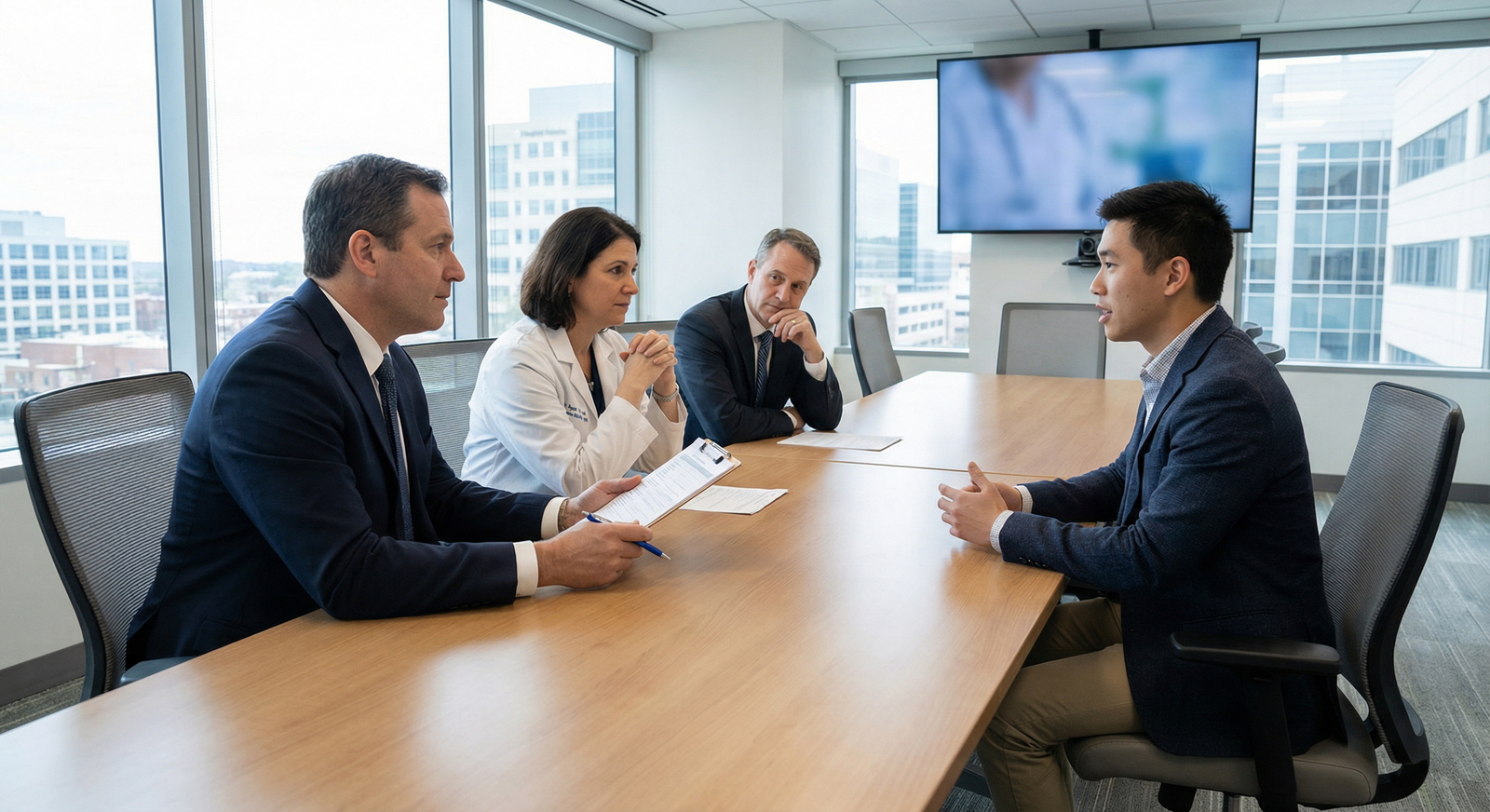
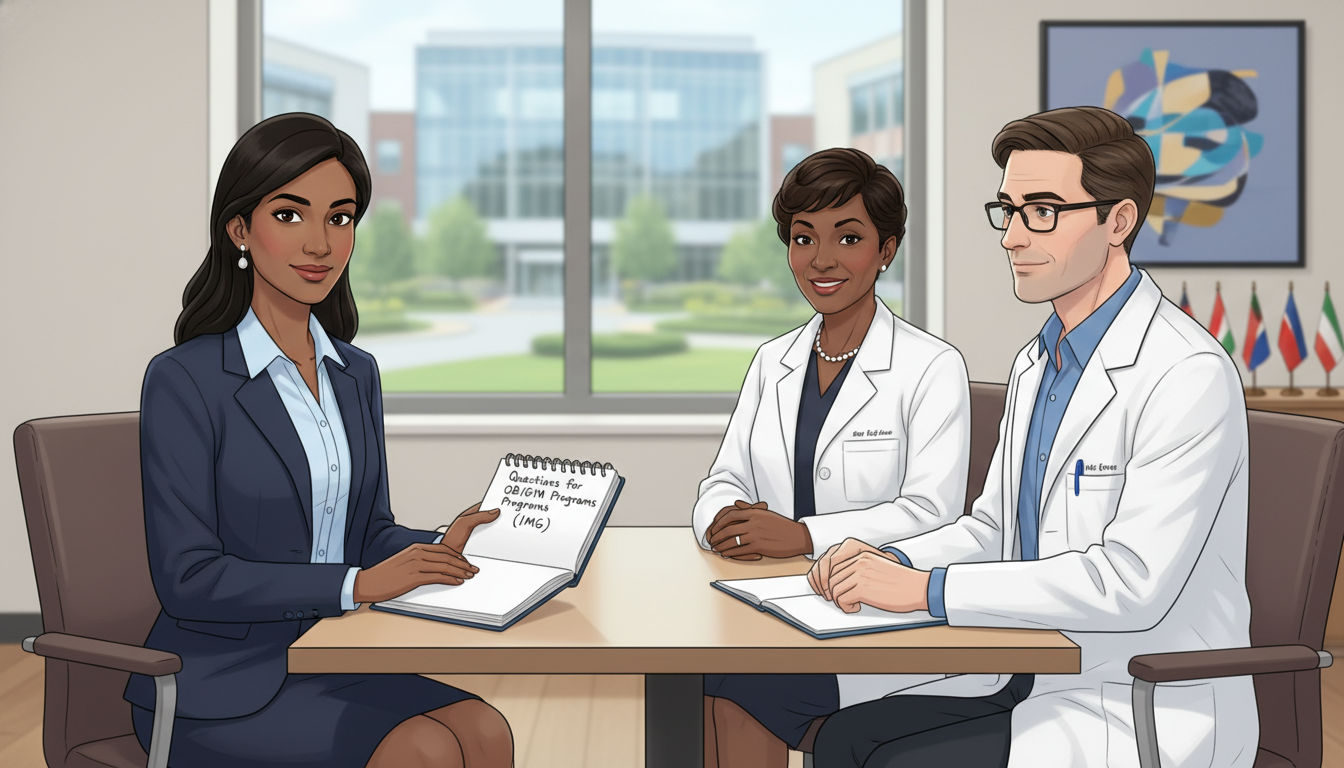
Clinical Informatics is a relatively new, highly interdisciplinary field that blends medicine, data, and technology to improve patient care. For a US citizen IMG (American studying abroad), understanding this landscape before you step into residency interview season is critical—both for how you present yourself and how you decide where to apply.
What Is Clinical Informatics in the Residency Context?
Most physicians enter Clinical Informatics in one of two ways:
Dedicated Clinical Informatics Fellowship (ACGME-accredited)
- Typically pursued after a primary residency (e.g., Internal Medicine, Pediatrics, EM, Pathology, Anesthesiology).
- 2-year programs focused on:
- Health IT training
- EHR optimization and governance
- Data analytics and decision support
- Quality improvement and patient safety
- Clinical workflow redesign
Informatics-Heavy Residency or Track (Pre-fellowship stage)
- Some programs (e.g., IM, EM, Pathology) offer:
- Clinical informatics tracks
- Research opportunities in health IT
- Protected time with the hospital IT/analytics teams
- Some programs (e.g., IM, EM, Pathology) offer:
As a US citizen IMG, you’re in a unique spot: programs do not need to sponsor a visa, but they may still wonder whether your international training prepared you for cutting-edge informatics work in the US health system. Interviewers will often test:
- Your understanding of US healthcare systems and payment models.
- Your familiarity with EHRs used in the US (Epic, Cerner, etc.).
- Your ability to translate clinical experience into informatics thinking.
Being ready for these themes is a core part of pre-interview preparation.
Why Program Directors Scrutinize US Citizen IMGs
Compared with non-US IMGs, you have an advantage in citizenship status; but you still face:
- Concerns about clinical training quality abroad.
- Questions about your understanding of US clinical culture, documentation, and regulations (HIPAA, MACRA, etc.).
- Curiosity about why an American chose to study medicine outside the US, and how that experience shapes your approach to technology and patient care.
In Clinical Informatics–interested applicants, PDs and faculty especially look for:
- Evidence you truly understand what clinical informatics fellowship entails.
- Demonstrated interest in data, systems, and quality improvement, not just “I like computers.”
- Ability to work cross-functionally with:
- Clinicians
- IT staff
- Administrators
- Analysts and data scientists
A key pre-interview task is to align your story so that it directly shows you are ready for this trajectory.
Building Your Clinical Informatics Story Before Interviews
If you want to stand out in residency interview preparation as a future informatician, you must go into every conversation with a coherent, credible narrative.
Step 1: Clarify Your Long-Term Goal
Before you practice any interview questions for residency, answer this for yourself in writing:
- Do you see yourself:
- Completing a primary residency → Clinical Informatics fellowship → Health system leadership / CMIO track?
- Becoming a hybrid clinician-informatician working on implementation projects?
- Working at the interface of health IT, data analytics, and quality improvement?
Write a 2–3 sentence “career vision” statement, such as:
“I aim to become a hospitalist with a focus on clinical informatics, pursuing a clinical informatics fellowship after residency. I want to work on EHR optimization and clinical decision support to improve diagnostic safety and reduce clinician burnout.”
You won’t recite this verbatim in interviews, but it anchors all your answers.
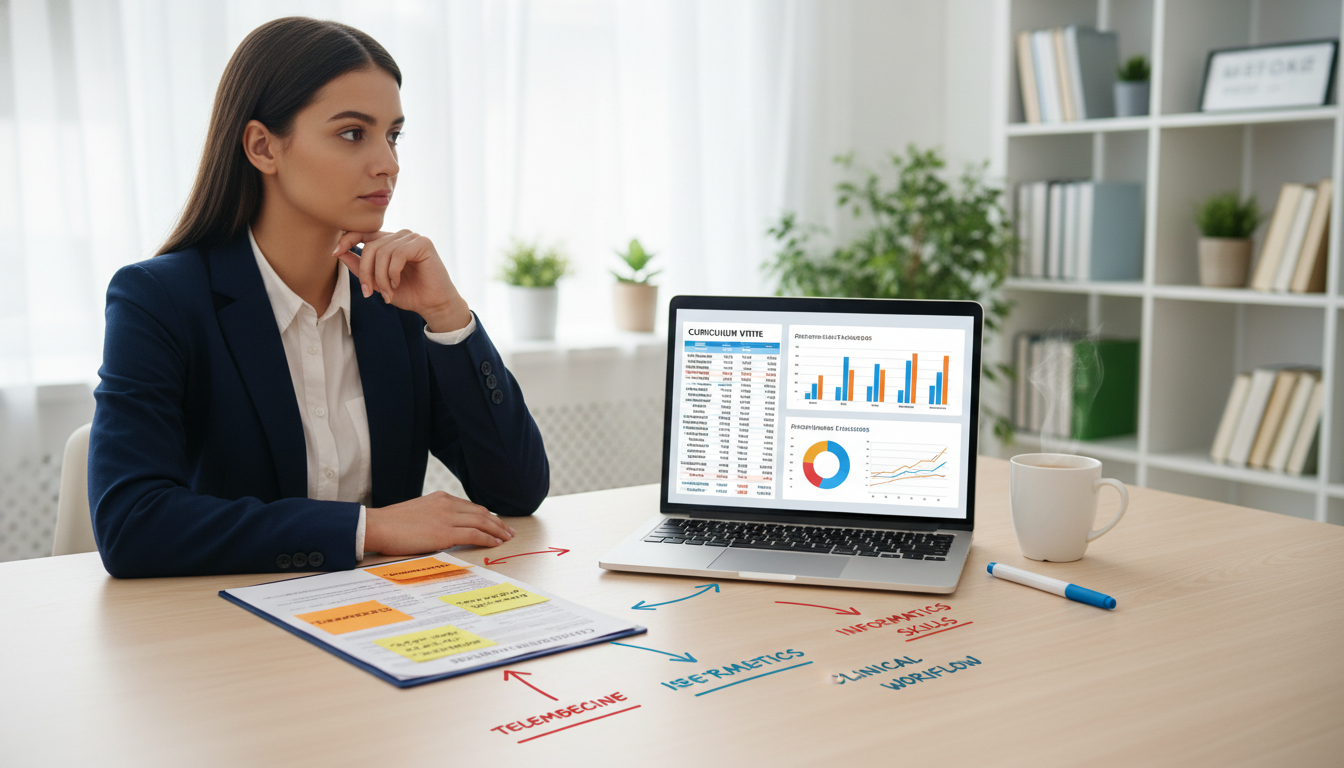
Step 2: Identify and Frame Your Informatics-Relevant Experiences
As a US citizen IMG, your experiences may not fit traditional US roles, but many are more relevant than you think. Look for:
EHR and digital tools
- Experience using:
- Local or regional EHRs
- Telemedicine platforms
- Electronic prescribing systems
- Any time you:
- Helped classmates learn system shortcuts
- Created templates or order sets
- Identified system issues and suggested fixes
- Experience using:
Data, research, and QI projects
- Retrospective chart reviews (even on paper) → talk about data abstraction and standardization.
- Audit projects (e.g., antibiotic use, documentation compliance) → connect to quality metrics and continuous improvement.
- Research using databases or spreadsheets → connect to data management and analysis mindset.
Technical or analytical skills
- Self-taught or formal:
- Basic coding (Python, R, SQL)
- Data visualization (Tableau, Power BI, Excel)
- Online courses in informatics, health IT training, or data science
- Personal tech projects (websites, apps, automation scripts) if you can relate them to clinical workflows or patient care.
- Self-taught or formal:
Translate each experience into a 3-part story:
- Context – Where and why did this happen?
- Action – What you specifically did.
- Impact – What changed or what you learned.
Example (for a chart audit in a Caribbean school):
“In my internal medicine rotation, we noticed delays in antibiotic de-escalation. I led a small project where we manually reviewed charts to track timing of culture results and antibiotic changes. I standardized a simple data collection template in Excel, which helped us see clear delays at shift-change times. We presented to the ward team and piloted a handoff checklist that reduced missed culture follow-ups over the next month.”
This sounds inherently informatics-oriented when framed well.
Step 3: Craft a Coherent Personal Narrative as a US Citizen IMG
You will almost certainly get some version of:
- “Why did you study medicine abroad as an American?”
- “How do you see that experience helping you as a resident and future informatician?”
Prepare a concise, positive narrative that:
- Explains your path without defensiveness.
- Emphasizes resilience, adaptability, cultural competence, and systems thinking.
- Connects international training to your interest in Clinical Informatics.
Example structure:
- Decision: Describe briefly why you went abroad.
- Growth: Highlight what you gained: resourcefulness, exposure to different health systems, early responsibility.
- Informatics link: Show how seeing diverse systems sparked interest in health IT and data-driven improvement.
“I chose to study abroad because it offered an opportunity to pursue medicine when US seats were limited, and I was determined to become a physician. Training in [Country] exposed me to very different health IT environments—from mostly paper-based systems to partial EHRs. Seeing how much variation there was in documentation, data availability, and clinical workflows is what initially drew me to Clinical Informatics. I want to use that global perspective to help design more usable, equitable digital systems in the US.”
Write this out, refine it, and rehearse until it feels natural.
Academic and Knowledge Preparation: What You Should Know Cold
Before any interview, you should do more than rehearse answers. For Clinical Informatics–oriented applicants, there is content knowledge that will set you apart.
Core Topics to Review
Basic Informatics Concepts
- Clinical decision support (CDS)
- Order sets and care pathways
- Interoperability and data standards:
- HL7, FHIR, ICD, CPT, LOINC, SNOMED (just basic awareness)
- Data governance and data quality
- User-centered design and workflow analysis
US Healthcare and Regulatory Environment
- HIPAA basics (privacy, security, PHI)
- Meaningful Use / Promoting Interoperability (historical context)
- Quality metrics and reporting, value-based care
- The role of CMS and payers in shaping health IT
EHRs and Clinical Workflow
- Common EHR vendors:
- Epic
- Cerner
- Meditech, Allscripts, etc.
- Common clinician frustrations (alert fatigue, documentation burden).
- Examples of informatics interventions:
- Sepsis alerts, stroke pathways, clinical dashboards.
- Common EHR vendors:
You don’t need fellowship-level depth yet, but you should sound like someone who has thought deeply about how technology affects care, not just someone who likes gadgets.
Practical Pre-Interview Study Plan (2–4 Weeks Out)
Week 1–2: Foundations
- Read up on:
- AMIA’s overview of Clinical Informatics.
- At least 3–4 short review articles on Clinical Informatics from journals or reputable websites.
- Take a short online course:
- Coursera, edX, or AMIA introductory modules.
- Read up on:
Week 3: Application
- For each rotation or project on your CV, ask:
- How could informatics improve this workflow?
- How could data be used to monitor or improve this process?
- Prepare 5–7 talking points where you can naturally mention:
- CDS
- Workflow redesign
- Data-driven decision making
- For each rotation or project on your CV, ask:
Week 4: Final Review
- Skim current topics:
- AI in medicine
- EHR burnout
- Interoperability and information blocking rules
- Be ready with a balanced view:
- Benefits and limitations of AI and advanced analytics.
- Need for clinician oversight and ethical safeguards.
- Skim current topics:
Strategic Program Research and Customization
Clinical Informatics is not uniformly developed across residency programs. Part of how to prepare for interviews is to research and categorize programs based on their informatics environment.
What to Look for on Program Websites
Informatics Faculty and Leadership
- Any faculty with titles like:
- CMIO (Chief Medical Information Officer)
- Associate CMIO
- Director of Clinical Informatics
- Faculty involved in:
- Quality and safety
- Data analytics
- Digital innovation centers
- Any faculty with titles like:
Exposure to Health IT Training
- Formal tracks:
- “Clinical Informatics Track”
- “Healthcare Data Science Pathway”
- Electives:
- EHR optimization rotations
- QI / patient safety rotations
- IT or analytics lab electives
- Formal tracks:
Affiliated Health Systems and EHRs
- Does the hospital use:
- Epic, Cerner, or another major EHR?
- Large academic medical center vs. community site?
- Participation in:
- Health information exchanges
- Data collaboratives
- Quality improvement collaboratives
- Does the hospital use:
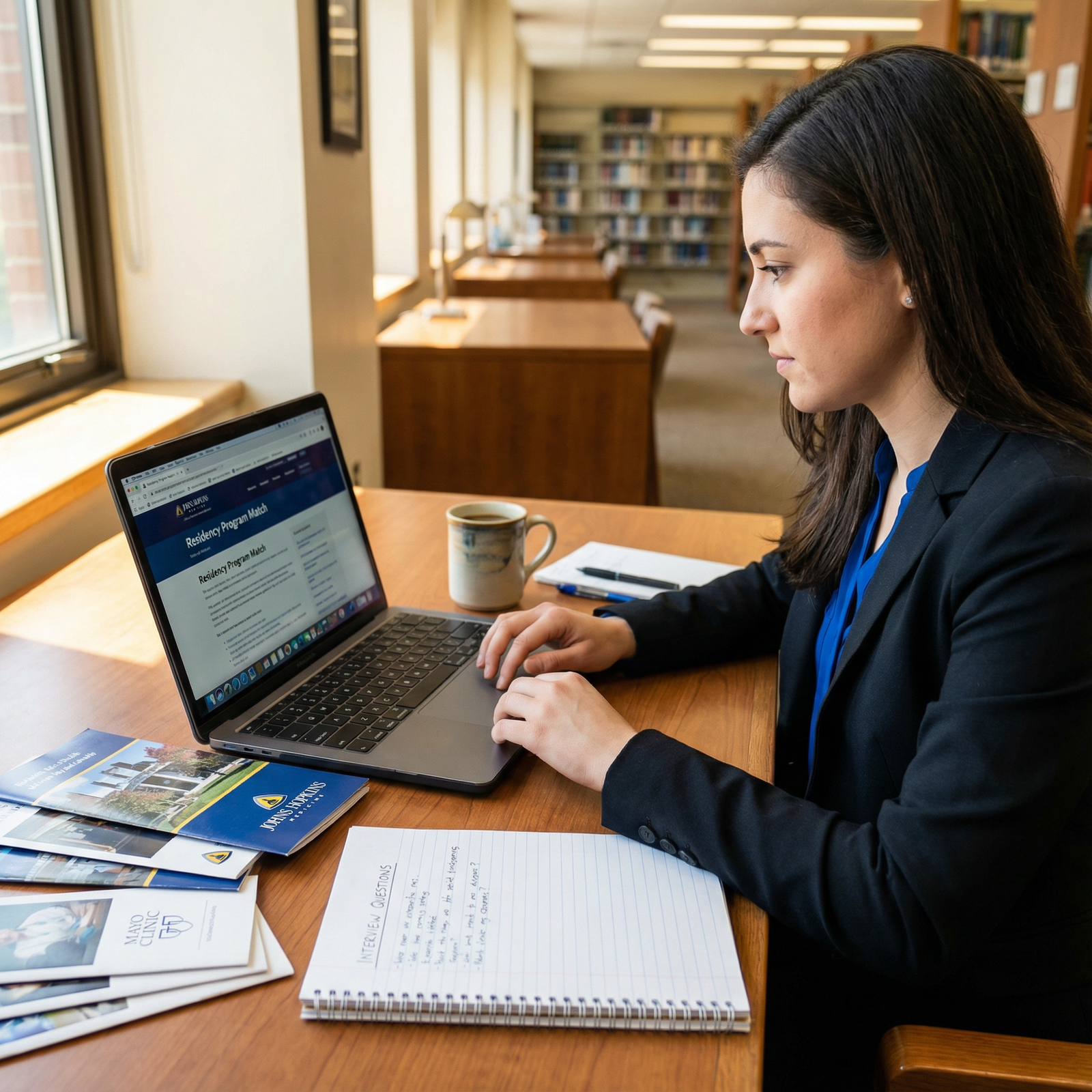
From this research, create a simple one-page profile for each program with:
- EHR type
- Informatics-related faculty names
- Any specific informatics or QI opportunities
- Related publications or projects
Bring this knowledge into your questions and answers during the interview.
Customizing Your Story for Each Program
Once you know a program’s environment, you can pre-plan program-specific talking points, such as:
“I saw that your institution uses Epic and has a dedicated Clinical Informatics committee. During residency, I’d love to get involved with any resident-facing optimization projects, especially those focused on order sets or documentation efficiency.”
“I noticed your PD is involved in quality improvement and sepsis pathway development. My interest in clinical informatics grew out of seeing how inconsistent sepsis recognition can be, and I’d like to contribute to CDS or pathway improvement efforts here.”
Pre-writing 2–3 sentences like this for each program makes you sound highly prepared and genuinely interested, which is especially important as an American studying abroad who may not have as many US-based networks.
Mastering Residency Interview Preparation: Questions, Answers, and Practice
Most residency programs won’t ask you only informatics questions—they’ll assess you as a clinician first, then as a future informatician. Prepare across four domains:
- Standard behavioral and fit questions
- US citizen IMG–specific questions
- Informatics and technology questions
- Ethics, professionalism, and systems-thinking questions
1. Standard Questions: Answer Frameworks
Common interview questions residency programs ask:
- “Tell me about yourself.”
- “Why this specialty?”
- “Why our program?”
- “What are your strengths and weaknesses?”
- “Tell me about a time you had a conflict on a team and how you handled it.”
- “Describe a time you made a mistake.”
Use the STAR method (Situation, Task, Action, Result) or CAR (Context, Action, Result) to keep answers structured and concise.
Example with an informatics twist:
Q: “Tell me about yourself.”
Answer outline:
- Brief background (US citizen IMG, training location).
- Clinical interest in the specialty.
- Emerging focus on Clinical Informatics.
- One sentence connecting to their program.
“I grew up in [State] and completed my medical degree at [International School], where I developed a strong interest in [specialty] and how technology supports patient care. During my clinical years, I led several small QI and data-focused projects and became increasingly interested in Clinical Informatics, especially optimization of documentation and decision support. I’m looking for a residency that offers strong clinical training with opportunities to get involved in informatics and quality work, which is what drew me to your program.”
2. US Citizen IMG–Focused Questions: Prepare Directly
Anticipate and rehearse answers to:
- “Why did you decide to attend medical school abroad?”
- “What has been the most challenging part of your international training?”
- “How have you kept up with US clinical guidelines and practice standards?”
- “Tell me about your US clinical experiences and what you learned from them.”
Key principles:
- Be honest but constructive—don’t blame or sound resentful.
- Highlight:
- Adaptability
- Resourcefulness
- Cultural competence
- Practice seeing system-level issues
- Always bring it back to how this makes you a better resident and potential informatician.
3. Informatics and Technology Questions: Likely Themes
You may not be asked formal “informatics exam” questions, but informatics will appear in subtle ways, especially if you advertise it as an interest.
Possible questions:
- “What does Clinical Informatics mean to you?”
- “How do you see technology changing medicine in the next 5–10 years?”
- “Can you tell me about a time when you used data to improve care or solve a problem?”
- “What are some downsides to EHRs or clinical decision support?”
Strategies:
- Avoid buzzword-only answers; show practical understanding.
- Balance enthusiasm with caution about limitations.
Example:
“To me, Clinical Informatics is about using information, data, and technology to support better decision making and workflows at the point of care. That includes how we design EHR interfaces, order sets, and alerts so they fit clinicians’ workflows and reduce errors rather than adding more clicks. It’s also about how we measure outcomes and learn from data. I’ve seen how poor documentation structures can make it hard to track outcomes, and I’m interested in working on those foundational issues.”
4. Ethical and Systems-Thinking Questions
Given current trends (AI, big data), you may be asked:
- “What concerns do you have about AI in healthcare?”
- “How would you handle a situation where a new EHR policy makes documentation harder for residents?”
- “Can you think of a time when a system issue, not an individual’s mistake, led to a problem in patient care?”
Show that you:
- Understand patient privacy and safety.
- Think in terms of systems, not just individuals.
- Appreciate the importance of multidisciplinary collaboration.
Logistics, Practice, and Presentation: Getting the Details Right
Beyond content, how you present yourself—especially on virtual interviews—matters significantly.
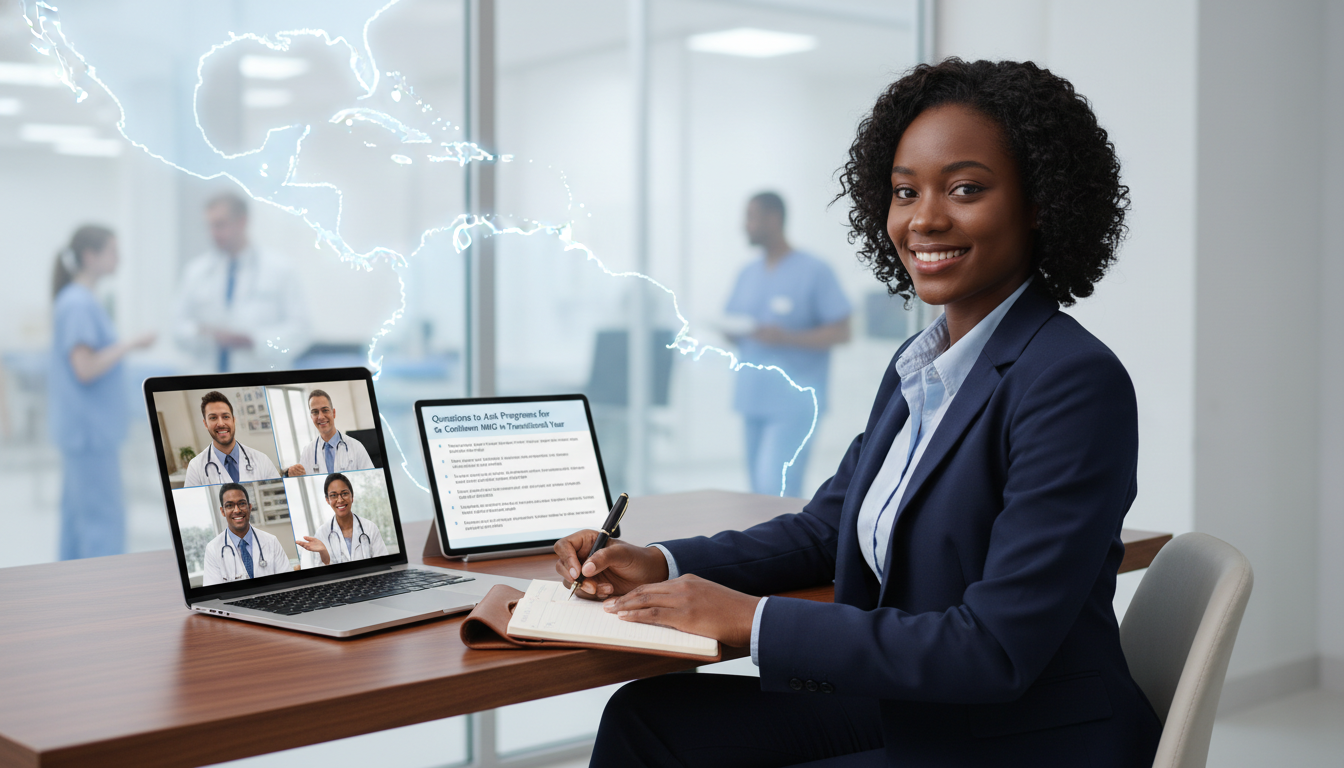
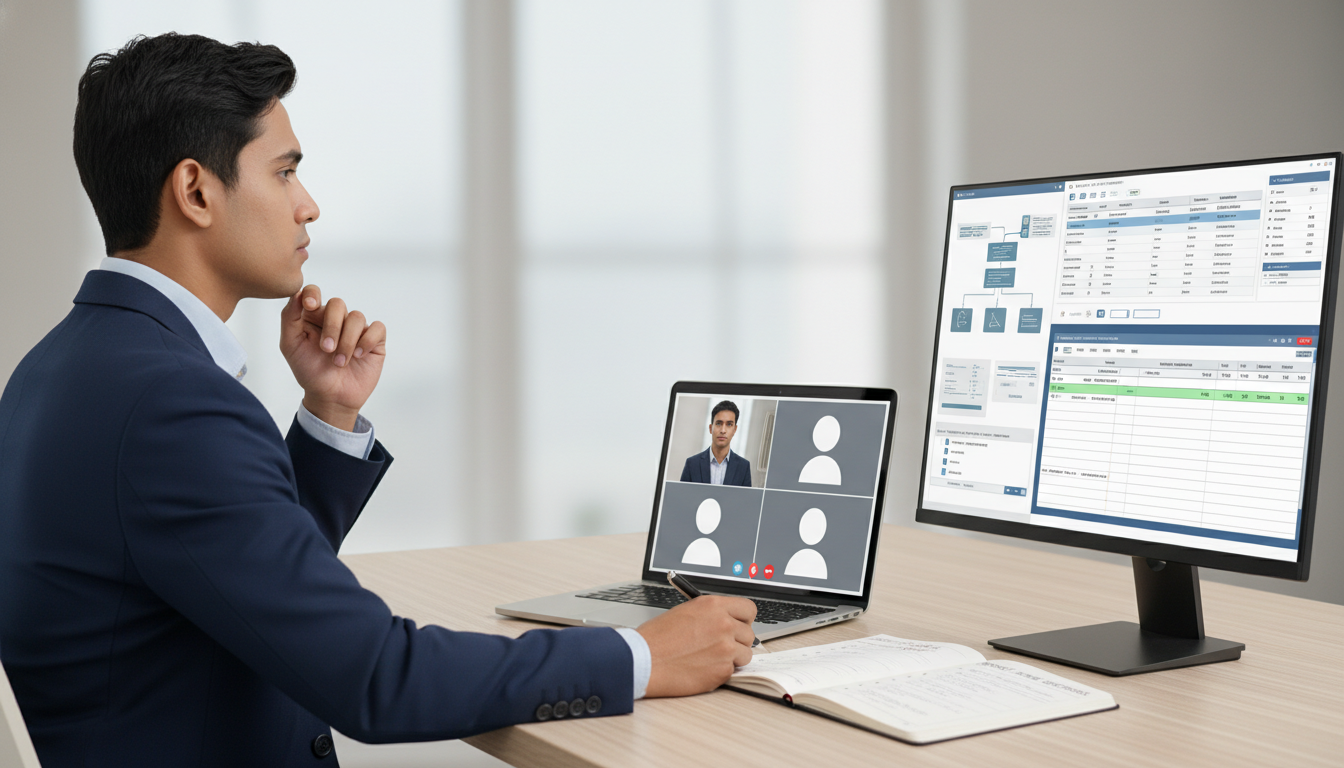
Technical Setup for Virtual Interviews
Equipment
- Reliable laptop or desktop
- External webcam (if your laptop camera is poor)
- Headset or quality microphone
- Stable, wired internet if possible
Environment
- Neutral, uncluttered background
- Good front lighting (avoid backlighting)
- Camera at eye level
- Quiet space, phone silenced, notifications off
Platform Familiarity
- Test Zoom, Microsoft Teams, Webex, or whatever platform they use.
- Practice screen name (First Last, MD or Medical Student).
- Check audio and video settings.
Practicing Interview Delivery
Mock Interviews
- With:
- Mentors
- Career advisors
- Peers also applying
- Focus on:
- Articulation
- Concision
- Professional demeanor
- With:
Recording Yourself
- Practice 3–4 common questions and watch the recording:
- Eye contact (look at camera)
- Filler words (“um”, “like”)
- Body language and posture
- Practice 3–4 common questions and watch the recording:
Question Bank Preparation
- Make a list of 20–30 likely questions:
- General
- IMG-specific
- Informatics-focused
- Bullet 2–3 key points under each—don’t memorize full scripts.
- Make a list of 20–30 likely questions:
Pre-Interview Day Routine
Days before
- Confirm interview times and time zones.
- Save contact numbers/emails in case of technical issues.
- Print or keep open:
- Your ERAS application
- CV
- Program notes (faculty names, EHR, tracks)
Night before
- Set out professional attire.
- Check all equipment.
- Sleep adequately; avoid last-minute cramming.
Day of
- Log in 10–15 minutes early.
- Have water nearby.
- Keep a pen and paper for jotting down interviewer names and question ideas.
FAQs: Pre-Interview Preparation for US Citizen IMGs in Clinical Informatics
1. How can I demonstrate interest in Clinical Informatics if I don’t have formal informatics research?
Focus on transferable experiences:
- QI or audit projects
- Data-based research
- Experience with EHRs or digital tools
- Online courses or certificates in informatics, data science, or health IT training
Frame them in terms of:
- Workflow analysis
- Data-driven decision making
- Systems improvement
Also, show self-directed learning—mention books, courses, or AMIA resources you’ve explored.
2. Will programs see my informatics interest as a distraction from clinical training?
If presented poorly, yes. To avoid this:
- Emphasize that clinical excellence is your foundation, and informatics is how you plan to enhance care, not avoid patient contact.
- Clearly state:
- You want strong clinical training first.
- Informatics is a way to contribute to system-level improvement.
Align your narrative with the idea that a good informatician must be a good clinician.
3. Do I need to know the details of a Clinical Informatics fellowship before residency interviews?
You don’t need every detail, but as someone openly interested, you should know:
- It is a 2-year ACGME-accredited fellowship after primary residency.
- It focuses on:
- EHR optimization
- Data analytics
- Clinical decision support
- Health IT implementation and governance
- It prepares physicians for roles like:
- CMIO
- Informatics leadership
- Health system innovation roles
Mention that you’re interested and still exploring specific paths, which is honest and appropriate at the residency stage.
4. As a US citizen IMG, how can I address concerns about my international training during interviews?
Prepare a confident, concise response that:
- Explains your decision to study abroad without defensiveness.
- Highlights what you gained—adaptability, broader perspective, exposure to diverse systems.
- Describes your US clinical experiences and how you aligned yourself with US standards.
- Connects your international exposure to your interest in systems and informatics, such as seeing different documentation styles or technology gaps.
Rehearse this answer carefully so it feels natural, positive, and forward-looking.
By systematically building your informatics story, deepening your conceptual understanding, researching programs, and rigorously practicing how to prepare for interviews, you can turn your status as a US citizen IMG into a strength. You’ll present not only as a capable future resident, but as someone with the insight and motivation to grow into a clinical informatics leader.