Understanding the Transitional Year Landscape as a Caribbean IMG
Pre-interview preparation for Caribbean IMGs applying to Transitional Year (TY) programs is strategically different from applying to categorical specialties. You’re not just “getting ready for interviews”; you’re:
- Positioning yourself as a safe, reliable intern
- Showing program directors you understand the unique role of a TY program
- Demonstrating that a Caribbean medical school residency path has prepared you to succeed in a U.S. environment
Before you practice a single answer, clarify these three points for yourself:
What a Transitional Year program actually is
A TY program is typically a one-year, broad-based clinical internship. It’s often used by applicants entering:- Radiology
- Anesthesiology
- Dermatology
- PM&R
- Neurology
- Ophthalmology …or as a bridge year for those still figuring out their ultimate path.
Programs want residents who are:
- Adaptable and teachable
- Strong in clinical fundamentals
- Low-drama, dependable team members
Your specific pathway as a Caribbean IMG
As a Caribbean graduate, you may face implicit questions about:- The rigor of your clinical training
- Your ability to adapt to U.S. systems
- Any USMLE attempts, gaps, or delays
Your pre-interview preparation needs to proactively address these in a confident, factual, and non-defensive way.
Your target narrative
Every answer you give should reinforce a clear, consistent story:- Who you are as a clinician and person
- Why you chose a Caribbean medical school
- Why you’re pursuing a Transitional Year residency
- How the TY program fits into your long-term plan (even if your ultimate specialty is not finalized)
Write this out in a short paragraph for yourself—this will anchor everything you do during residency interview preparation.
Step 1: Know Your Application Inside Out
Before you worry about “common interview questions residency programs ask,” you must know your own file better than anyone else who reads it.
Master Your ERAS Application and Personal Statement
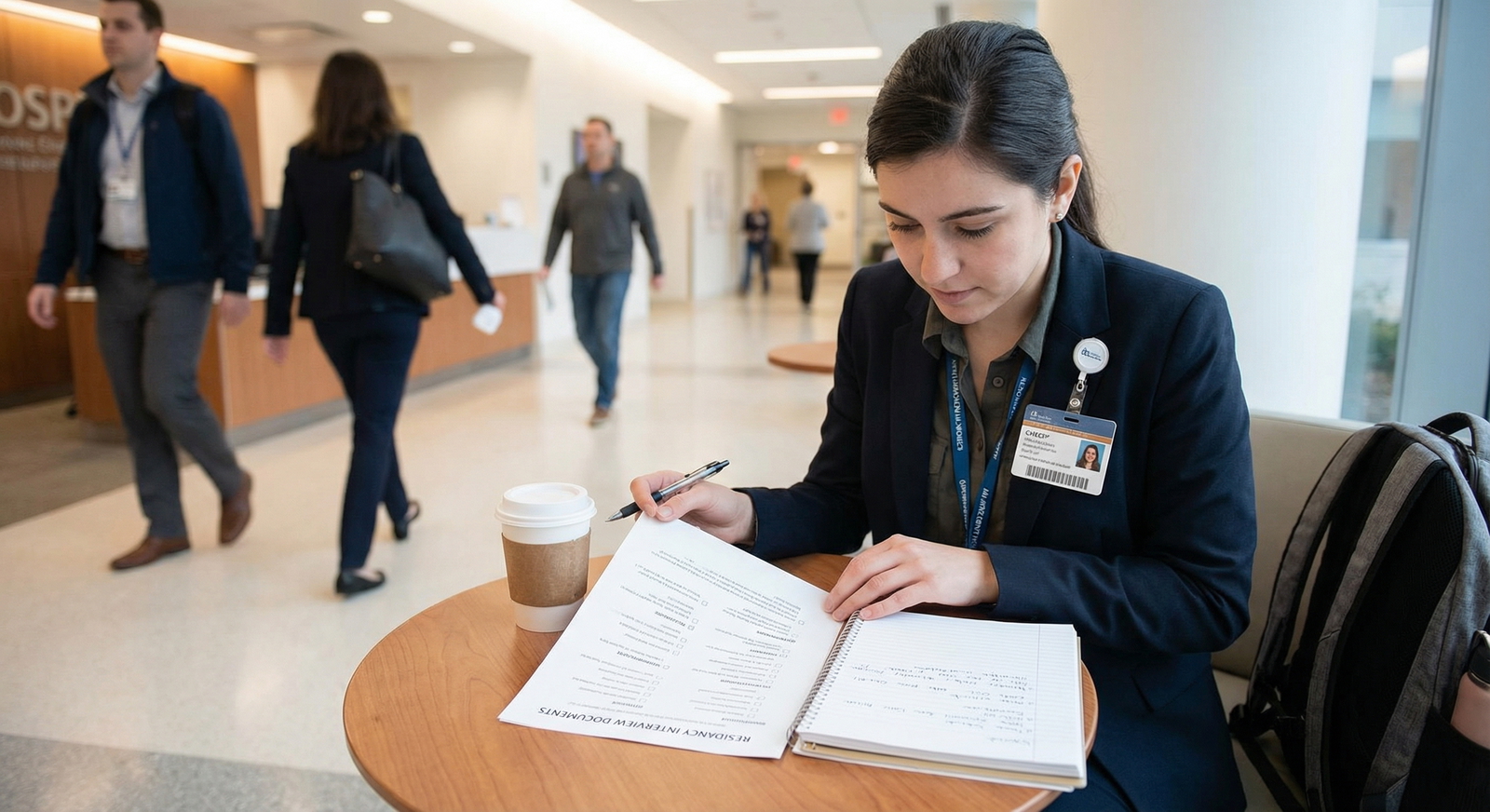
Print (or PDF view) your entire application and annotate it:
Education & timeline
- Be ready to explain any:
- LOAs (leaves of absence)
- Extended preclinical years
- Delays between Caribbean medical school and residency applications
- Practice one concise, neutral explanation for each timeline irregularity.
- Be ready to explain any:
USMLE scores and attempts
- If you had:
- Multiple attempts
- Significant score gaps Prepare:
- A 30–45 second explanation: what happened, what you learned, and how your performance later improved.
- If you had:
Clinical experiences and electives
- Highlight key U.S. clinical rotations, especially:
- Medicine
- Surgery
- Sub-internships
- Any rotations in community hospitals similar to TY settings
- Identify 2–3 cases from each major rotation that:
- Demonstrate clinical reasoning
- Show teamwork or communication skills
- Reflect responsibility and ownership
- Highlight key U.S. clinical rotations, especially:
Research and scholarly activity
- For each project, know:
- Your exact role
- Methods used (in simple, clear language)
- Main conclusion or finding
- Any poster/oral presentations
- For each project, know:
Personal statement
- Know the core themes and stories you used.
- Be prepared to expand on:
- Why Transitional Year fits your goals
- How your Caribbean medical school residency journey (education + rotations) shaped your values
Build a One-Page “Interview Snapshot”
Create a single-page document you can review repeatedly leading up to interviews:
- 3 key strengths (with concrete examples)
- 2 growth areas (and how you are actively improving)
- 3–4 clinical cases that showcase your abilities
- 2–3 leadership/volunteering stories
- 1–2 memorable personal stories (resilience, cross-cultural adjustment, etc.)
- 1–2 concise explanations of any “red flags” (if relevant)
This becomes your personal “cheat sheet” for residency interview preparation.
Step 2: Understand Transitional Year Programs and This Career Stage
TY programs vary dramatically. Your pre-interview preparation should include researching how each program defines its mission and expectations.
Clarify Your Own Goals for a TY Year
Before they ask, you should know your answer to:
- “What do you hope to gain from a Transitional Year residency?”
- “Where do you see yourself after this year?”
Prepare honest but strategic responses, such as:
If you already have an advanced position (e.g., Radiology PGY-2 secured):
Emphasize wanting:- Strong inpatient medicine foundation
- Exposure to acute care
- Team-based practice skills
If you do not have an advanced spot yet:
Frame it as:- Building a robust clinical foundation
- Earning strong U.S. letters of recommendation
- Clarifying your long-term specialty in a structured, supervised environment
Avoid sounding like you are using a TY program as a “backup” or a “holding place.” Programs want interns who are fully invested in doing excellent work for that year.
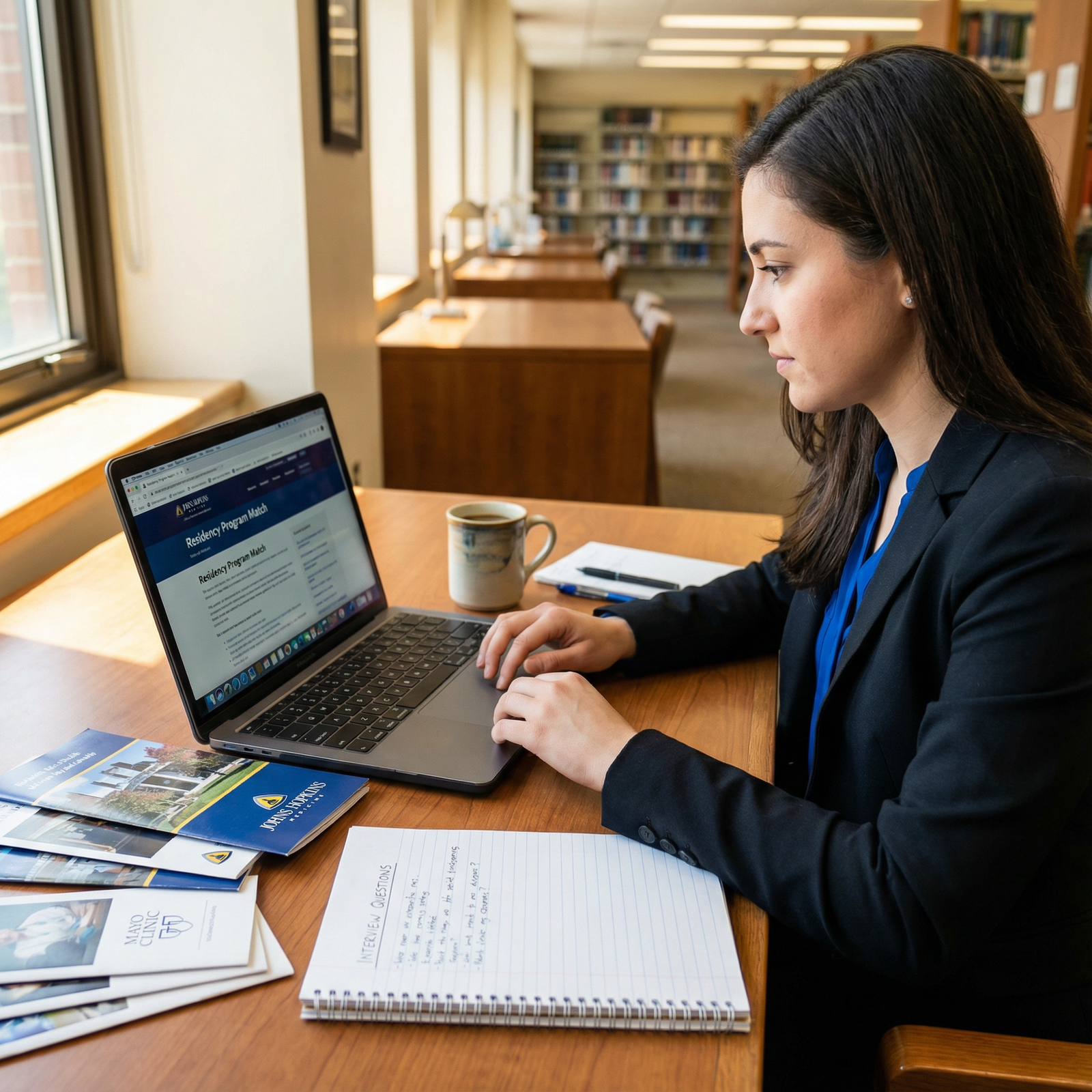
Research Each TY Program’s Identity
Go beyond the ERAS description. For each program:
Check their website and note:
- Typical TY resident destinations after PGY-1 (specialties & institutions)
- Emphasis areas: e.g., ICU time, elective options, community vs academic
- Call schedule and rotation distribution
Look at:
- Resident bios (Are there other IMGs? Caribbean grads? SGU residency match examples?)
- Any mention of partnerships with advanced programs (radiology, anesthesia, etc.)
Capture this in a simple spreadsheet:
- Program name
- Location & hospital type
- Key strengths / unique features
- What they highlight most (education, wellness, research, procedures, etc.)
- 2–3 thoughtful questions to ask them during the interview
This structured research will give your answers specificity and credibility.

Step 3: Anticipate and Practice Core Interview Questions
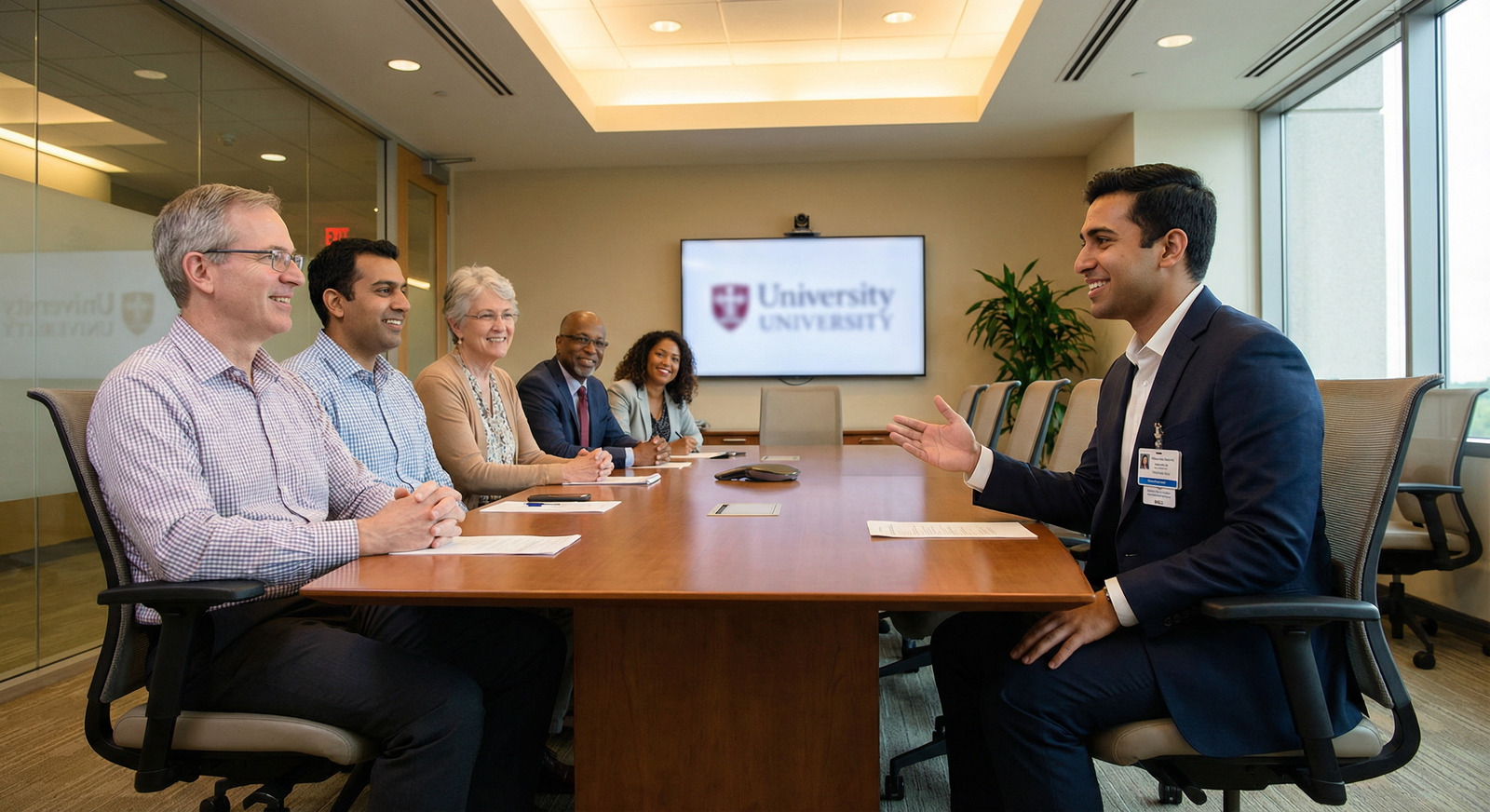
Transitional Year interviews still cover the standard interview questions residency programs typically ask, but you should tailor answers to your TY context and Caribbean IMG background.
Below are key categories and templates you should rehearse in advance.
1. Your Story and Motivation
Common questions:
- “Tell me about yourself.”
- “Walk me through your journey from medical school to now.”
- “Why did you choose a Caribbean medical school?”
Preparation strategy:
Structure your answer (60–90 seconds)
Use a simple chronological arc:- Brief background (where you grew up / undergrad)
- Why medicine
- Why Caribbean route (honest, neutral explanation)
- Key clinical experiences in medical school
- Why TY now
Address the Caribbean piece confidently
Avoid apologetic language. A solid response might include:- Limited seats in home country or U.S. schools
- Desire for early clinical exposure or diverse patient populations
- Clear evidence you made the most of that opportunity (honors, leadership, research, strong US rotations)
End with a forward look
- How the Transitional Year fits into your long-term goals
- Emphasize commitment to:
- Strong intern performance
- Lifelong learning
- Being an excellent team member
2. “Why Transitional Year?” and “Why This Program?”
You will almost certainly be asked:
- “Why are you applying to Transitional Year programs?”
- “What specifically attracts you to our TY program?”
Prepare:
Your global “Why TY?” answer Weave in:
- Desire for a broad-based clinical foundation
- Value of flexibility as you solidify or prepare for your advanced specialty
- Interest in both inpatient and outpatient settings
- Readiness to handle the responsibilities of an intern across disciplines
Program-specific answers Using your research:
- Mention 1–2 concrete program features:
- Example: “Your emphasis on ICU rotations and night float will help me build strong acute care skills before I move into radiology.”
- Example: “The elective time you offer allows residents to shape their year, which is particularly valuable as I refine my long-term specialty choice.”
- Mention 1–2 concrete program features:
Align with their mission If they emphasize:
- Community care → talk about your service and diverse patient experience.
- Academics → highlight research, QI, or teaching you’ve done.
- Wellness → mention your approach to resilience and balance during demanding rotations.
3. Clinical Competence and Teamwork
Sample questions:
- “Tell me about a challenging clinical case.”
- “Describe a time you made a mistake and what you learned.”
- “How do you handle working with a difficult teammate or nurse?”
Your preparation steps:
Select 3–4 strong clinical stories
Ideally from:- U.S. core rotations (internal medicine, surgery)
- Sub-internships or acting internships For each story, outline:
- Situation
- Your role
- Actions you took
- Clinical reasoning
- Outcome
- What you learned
Use the STAR method (Situation, Task, Action, Result)
Keep answers:- Specific (include details, but stay within 1–2 minutes)
- Patient-centered
- Focused on your thinking and communication, not just “what happened”
Highlight your readiness as an intern
- Show you:
- Escalate appropriately
- Ask for help early when needed
- Document carefully
- Communicate clearly with patients and staff
- Show you:
4. Addressing Gaps, Red Flags, or USMLE Issues
Sample questions:
- “Can you explain the gap between your graduation and application?”
- “What happened with your Step 1/Step 2 attempt?”
Preparation guidelines:
- Be direct, honest, and concise.
- Avoid long personal justification.
- Use a 3-part structure:
- Briefly state what happened (1 sentence).
- What you changed or learned (1–2 sentences).
- Evidence of improvement or current readiness (1–2 sentences).
Example:
- “I needed a second attempt on Step 1. At the time, I underestimated how much I needed to adapt my study strategy to U.S.-style questions. After that experience, I changed my approach, used structured question banks and self-assessments, and created a strict schedule. This led to a much stronger performance on Step 2 and more consistent shelf exam scores, which I believe better reflect my current readiness for residency.”
5. Behavioral and Ethical Scenarios
You may be asked:
- “Tell me about a time you had a conflict with a supervising physician.”
- “Describe an ethical dilemma you encountered.”
- “How would you respond if a senior resident asked you to do something you felt was unsafe?”
Your pre-interview plan:
- Prepare 2–3 stories that show:
- Professionalism
- Respectful disagreement
- Patient safety as your top priority
- Cultural humility and teamwork
Keep your tone non-judgmental and emphasize:
- Communication
- Seeking supervision
- Following institutional policies
Step 4: Practice, Feedback, and Refinement
Knowing what to say is different from being able to say it smoothly in a high-stakes conversation. Systematic practice is essential.
Structured Mock Interviews
Arrange at least 2–3 full-length mock sessions before interview season begins:
Who can help:
- Faculty from your Caribbean medical school (particularly those familiar with SGU residency match or similar Caribbean medical school residency outcomes)
- Recent graduates now in U.S. residency (especially in TY or prelim programs)
- Career advisors or IMG-focused mentoring organizations
What to simulate:
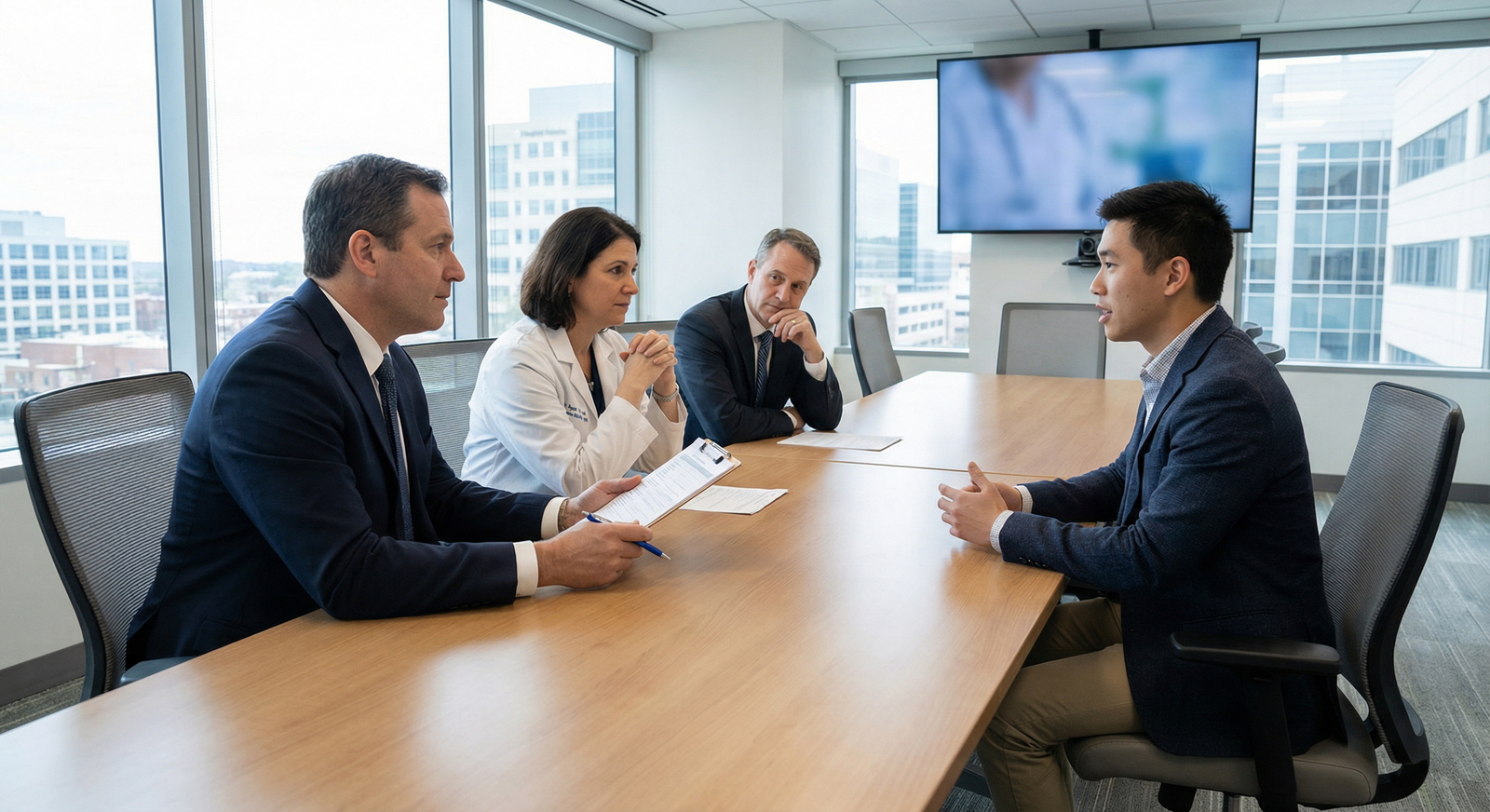
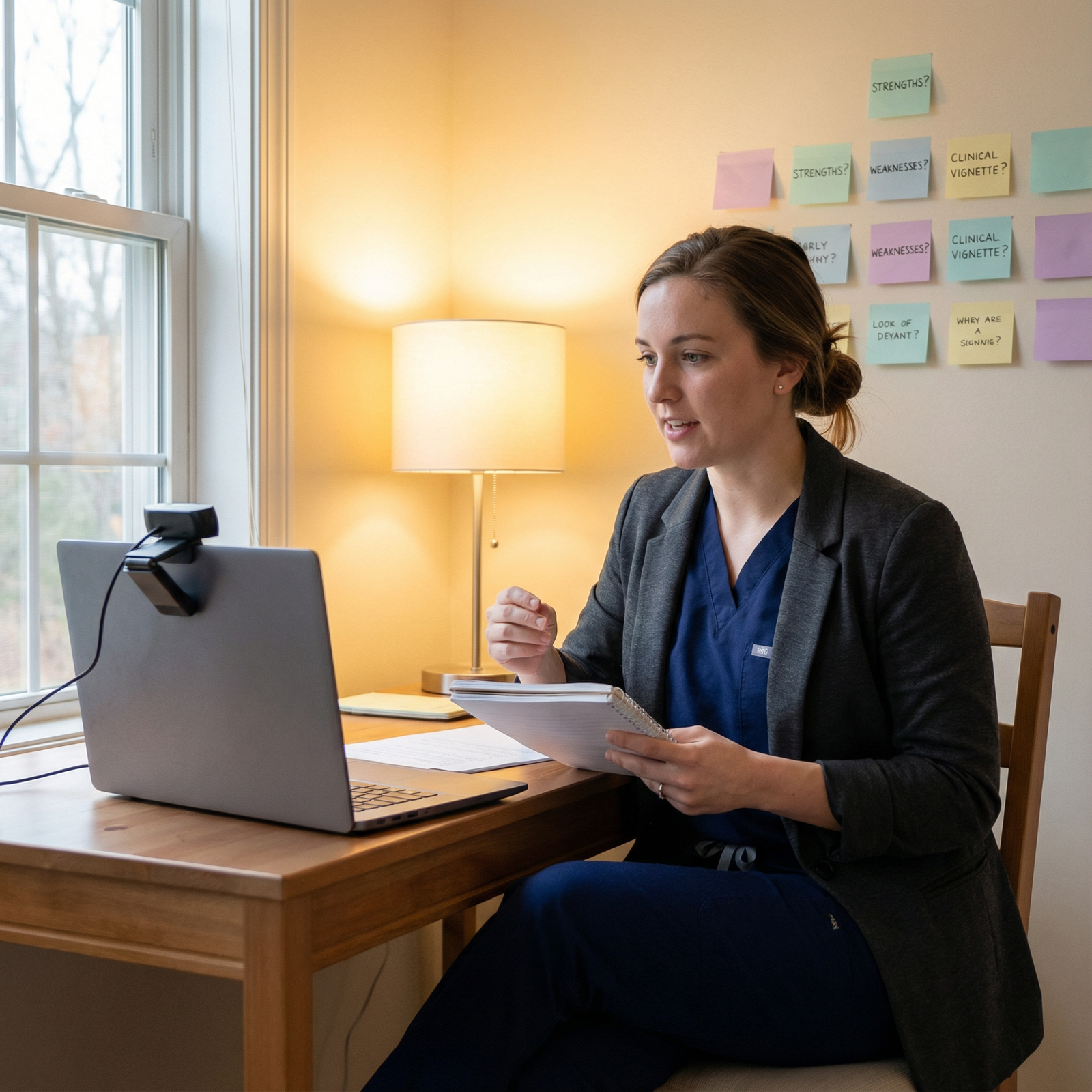
- 30–60 minute Zoom-style interview
- Standard questions + “curveball” questions
- Discussion of any sensitive areas in your application
Ask for feedback on:
- Clarity and structure of answers
- Body language and eye contact
- Speed (avoid rushing)
- Overused filler words (“um,” “like,” “you know”)
Record at least one session (with permission) and review your own performance critically.
Solo Practice and Script Refinement
Write bullet-point outlines, not full scripts, for:
- “Tell me about yourself.”
- “Why this program?”
- “Why Transitional Year?”
- Explanations for any red flags or gaps
Practice out loud:
- Stand up and speak as though someone is in front of you.
- Time your answers (aim for 60–90 seconds for most open questions).
Refine for authenticity:
- Avoid memorized-sounding speeches.
- Keep your own natural language and style, just more organized.
Step 5: Logistics, Professionalism, and Virtual Setup
For most Caribbean IMGs, interviews will be primarily virtual. Treat them with the same seriousness as in-person meetings.
Technical Preparation
At least one week before interview season:
Equipment check:
- Stable internet (test speed and backup options)
- Functional webcam with clear image
- Working microphone (external mic or good headset is ideal)
- Updated Zoom/Teams/Webex software
Environment:
- Neutral, uncluttered background (plain wall, bookshelf, simple art)
- Good lighting (face lit from front or side; avoid backlighting)
- Quiet space; inform family/roommates of your schedule
Dry run:
- Log into the exact platform each program will use.
- Test links ahead of time where possible.
- Practice joining from the same device and room you’ll use on interview day.
Professional Appearance and Nonverbal Communication
Even from the Caribbean or abroad, your presentation should align with U.S. professional norms:
Attire:
- Business formal: suit jacket, dress shirt/blouse, conservative colors
- Neat grooming; minimal distractions (large jewelry, flashy backgrounds)
Body language:
- Sit up straight; avoid slouching.
- Look at the camera periodically (not just the screen).
- Nod occasionally to show active listening.
- Keep gestures moderate and within the camera frame.
Have water nearby, and keep your phone on silent but accessible in case of any technical emergency communication.

Step 6: Program Research and Crafting Questions You’ll Ask
Your questions tell programs how seriously you take both the Transitional Year and their specific institution.
Pre-Interview Research Checklist
For each TY program on your list, note:
Curriculum details:
- Proportion of months in:
- Internal medicine
- Surgery
- ICU
- Emergency medicine
- Electives
- Call schedule and night float structure
- Proportion of months in:
Resident support:
- Orientation structure
- Mentorship programs
- Didactics, morning reports, noon conferences
Resident outcomes:
- Which specialties graduates enter
- Any connection to advanced programs (radiology, anesthesiology, etc.)
IMG friendliness:
- Proportion of IMGs in the program
- Any clear track record of Caribbean IMGs (e.g., from SGU, AUC, Ross, etc.)
Questions You Can Prepare to Ask
Have 5–7 questions ready and choose 2–3 based on the conversation:
Examples:
- “How are rotations assigned to Transitional Year residents, and how much flexibility is there in choosing electives?”
- “What qualities have you seen in your most successful TY interns?”
- “How are TY residents integrated with categorical residents in terms of teaching and call responsibilities?”
- “What kind of mentorship or career advising is available, especially for those still finalizing their specialty choice?”
- “How often do your TY residents match into advanced positions after completing the year, and what kinds of support do you offer in that process?”
Avoid:
- Questions that can be easily answered on the program website.
- Early questions about salary or vacation (save for later or HR contact).
Step 7: Mental Preparation, Mindset, and Resilience
Being a Caribbean IMG can add emotional pressure to interview season. Strong mindset work is part of pre-interview preparation.
Normalize the Challenges
It’s entirely common for Caribbean IMGs to worry about:
- Comparison with U.S. grads
- USMLE performance history
- Visa status or geographic restrictions
- Perceptions about the Caribbean medical school residency path
Acknowledge these concerns privately—but don’t carry them into the interview room. Your on-camera demeanor should reflect:
- Confidence without arrogance
- Gratitude for the opportunity
- A growth mindset focused on what you’ve learned and how you contribute
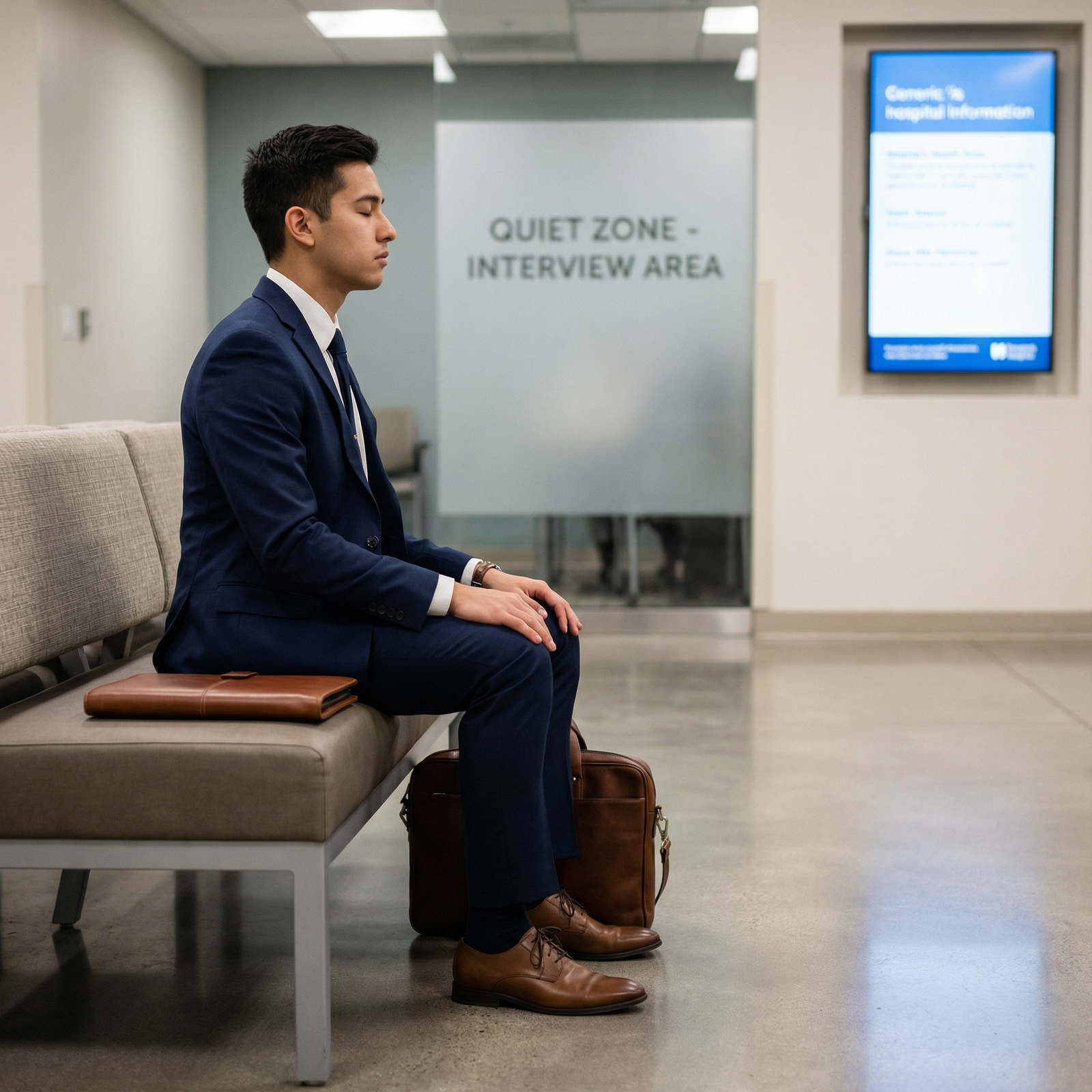
Build a Simple Pre-Interview Routine
Before each interview day:
- Review your one-page interview snapshot.
- Scan your research notes about that specific program.
- Do a 5–10 minute warmup:
- Speak full answers out loud.
- Practice your “Tell me about yourself” response once or twice.
- Use brief breathing exercises (e.g., 4–7–8 breathing) to settle nerves.
After each interview:
- Immediately jot down:
- Who you spoke with
- Key points discussed
- Program features you liked or disliked
- Your gut feeling about fit
These notes will help later when building your rank list and in post-interview communication.
Step 8: After the Interview – Professional Follow-Up
Even though the focus is pre-interview preparation, planning your follow-up ahead of time creates a complete strategy.
Thank-You Emails
Prepare a simple template you can adapt:
- Send within 24–48 hours.
- Address to:
- Program director
- Any faculty who interviewed you (if contact details provided)
- Chief residents or coordinators if they were heavily involved
Keep it:
- Brief
- Specific (mention 1–2 things you genuinely appreciated or learned)
- Professional (avoid implying ranking commitments)
Ongoing Organization
Use a spreadsheet or tracker with columns for:
- Program name
- Interview date
- Interviewers’ names
- Your impression (1–10)
- Pros and cons
- Follow-up sent (Y/N)
- Any notes about fit, location, or vibe
This disciplined approach shows the same attention to detail programs want in their interns.
FAQs: Pre-Interview Preparation for Caribbean IMG in Transitional Year
1. How is interview preparation for a Transitional Year residency different from categorical programs?
For a TY program, you must clearly articulate:
- Why you want a broad-based clinical year
- How this year fits into either a planned advanced specialty or your process of deciding one
- That you are fully committed to excelling during the TY year, not just “passing time”
Compared to categorical interviews, there is often:
- More focus on general intern readiness than on specific specialty expertise
- More scrutiny on your long-term planning and ability to adapt to diverse rotations
2. As a Caribbean IMG, how can I address bias or concerns about my training?
Do this indirectly and positively:
- Highlight strong U.S. clinical rotations, honors, and strong evaluations.
- Emphasize adaptability to different health systems and diverse patient populations.
- Provide clear, structured clinical stories that show your reasoning and communication skills.
- If your school (e.g., SGU) has a strong match history, you can factually mention that the SGU residency match and similar Caribbean medical school residency outcomes demonstrate your school’s record in U.S. graduate medical education.
Never sound defensive; focus on performance, not perception.
3. What are the most important elements of residency interview preparation for Caribbean IMGs?
For a Caribbean IMG in Transitional Year programs, prioritize:
- Mastery of your own application and narrative
- Specific, program-directed answers for “Why TY?” and “Why this program?”
- Well-practiced responses for common interview questions residency programs ask, including:
- “Tell me about yourself.”
- “Why did you choose a Caribbean medical school?”
- “Explain this gap/USMLE attempt.”
- Technical and environmental readiness for virtual interviews
- Structured mock interviews with targeted feedback
4. I’m undecided on my long-term specialty. Will that hurt my chances in TY programs?
Not necessarily—if framed well. Many TY residents are still clarifying their path. Present it as:
- You are certain you want to be a strong, clinically capable physician.
- You see the TY program as ideal for:
- Building core skills
- Exploring different fields under supervision
- Obtaining strong letters and mentorship
- You are thoughtful and proactive about planning, even if your exact specialty is not fixed.
Programs are more concerned with your performance during the year than with whether you have every step of your future already finalized.
By building a clear narrative, practicing targeted answers, understanding the Transitional Year environment, and presenting yourself professionally and confidently, you significantly increase your chances of a successful match as a Caribbean IMG. Pre-interview preparation is your chance to transform your unique journey into a compelling, credible story that shows you are ready to contribute on Day 1 of intern year.