Understanding the EM Residency Interview Landscape as a DO Graduate
The emergency medicine (EM) residency interview is fast-paced, personality-driven, and highly competitive. For a DO graduate, the landscape has evolved significantly in the single accreditation era: EM programs now evaluate osteopathic and allopathic candidates in one pool, but that doesn’t mean the process is identical for everyone.
How this impacts your pre-interview preparation as a DO graduate:
- Your osteopathic identity is an asset—particularly if you can clearly articulate how your holistic training and OMM background enhance your care in the emergency department.
- Program directors expect you to understand EM’s workflow and culture. They want residents who can handle chaos, communicate clearly, and function well on a team from day one.
- The EM match (EM match) is getting tighter. Strong interview performance is often the differentiator among candidates with similar scores and experiences.
- Your goal before interview day: Be so well prepared that you can focus on connection and authenticity, instead of scrambling to recall details or improvise answers.
This article will walk you step-by-step through pre-interview preparation for a DO graduate in emergency medicine, from program research to mock interviews, with practical tools tailored to the osteopathic residency match and the unique culture of emergency medicine residency.
Researching Programs Like a Pro
One of the most common weak spots in residency interview preparation is superficial program research. In EM, where culture and fit are critical, this can cost you.
1. Understand the Program’s EM Identity
Every EM residency has a “personality.” Before interview day, you should be able to describe each program’s:
- Clinical environment
- Trauma level (e.g., Level I vs Level III)
- Patient volume and acuity
- Urban vs suburban vs rural setting
- Presence of pediatric ED, observation units, etc.
- Academic structure
- 3-year vs 4-year EM program
- Simulation resources and ultrasound training
- Research expectations or scholarly tracks
- Patient population
- Safety net hospital vs community-based
- Demographics (underserved, migrant, urban underserved, etc.)
- Local public health challenges (e.g., opioids, violence, rural access)
Action step: Create a program research template.
For each interview, fill out a one-page summary the night before (or sooner):
- Hospital type and ED volume
- Notable strengths (e.g., toxicology, ultrasound, global health, disaster medicine)
- Resident responsibilities (intubations, central lines, trauma resuscitation roles)
- Unique features (EMS involvement, air care, combined EM/IM rotations)
- What appeals most to you as a DO interested in EM
This helps you give tailored answers such as, “One aspect of your EM residency that really stands out to me is your early exposure to high-acuity trauma and integrated ultrasound curriculum…”
2. Clarify Their DO-Friendliness
As a DO graduate, you should know:
- Historical DO representation in the EM program’s classes
- Whether there are DO faculty or leadership (PD, APD, core faculty)
- Program history with the osteopathic residency match (pre-single accreditation)
- How they frame osteopathic training on their website or in EMRA/AAEM/SAEM program guides
Action step: Check:
- Current resident roster on the program site – look for “DO” next to degrees
- Social media (Instagram, X/Twitter) for resident spotlights
- Current DO residents’ med schools—helps you see how broadly they recruit
You don’t need to ask, “Are you open to DO applicants?” during the interview—it can unintentionally sound insecure. Instead, show you understand your osteopathic background as a strength: your training in whole-person care, MSK exam skills, and OMM for pain and function in an ED setting.
3. Align With EM Program Values
Most EM programs prioritize:
- Teamwork under pressure
- Resilience and emotional maturity
- Strong communication with staff, consultants, and patients
- Adaptability to changing clinical scenarios
Action step: Before each interview, identify 2–3 aspects of your background that match those values. For example:
- Teamwork: “Leading a multidisciplinary resuscitation simulation as senior EM rotator”
- Resilience: “Remediating a failed exam and turning it into a growth story”
- Communication: “De-escalating an agitated patient using verbal techniques”
Prepare to weave these into your answers, especially during behavioral questions.
Clarifying Your Story as a DO EM Applicant
Before you dive into specific residency interview preparation, you need a clear, coherent story: who you are, why EM, and why a DO EM resident is uniquely positioned to thrive.
1. Refine Your Core Narrative
Your “core narrative” should connect:
- Your path to medicine
- Your decision to become a DO
- Your motivation for emergency medicine
- Your vision of yourself as an EM physician
Write this as a short paragraph, then practice saying it aloud until it feels natural. For example:
“I chose osteopathic medicine because I was drawn to a holistic view of patients and the emphasis on function, not just disease. During my clinical years, I found that I thrived in the emergency department—where whole-person care, rapid problem-solving, and teamwork come together under pressure. I see myself as an EM physician who not only stabilizes patients in crisis but also recognizes the underlying social and functional contributors to their illness, and my DO training has shaped how I approach that.”
This narrative serves as your backbone when answering “Tell me about yourself” or “Why emergency medicine?”—both classic interview questions residency programs ask.
2. Integrate Your Osteopathic Identity Without Over- or Underplaying It
Your goal is to present your DO background as a natural, valuable part of your professional identity—not a defensive footnote.
Specific tactics:
- Connect OMM to EM realities.
- Musculoskeletal injuries
- Headaches, back pain, rib dysfunction impacting breathing
- Non-pharmacologic pain management in an opioid-conscious environment
- Highlight holistic thinking in time-limited encounters.
EM is not just resuscitation; it often involves navigating social determinants of health, behavioral crises, and follow-up barriers.
Example interview line:
“In the ED, time is short, but my osteopathic training has helped me quickly identify how a patient’s functional status, support system, and environment contribute to their presentation. That has changed how I prioritize workup and discharge planning, especially for patients with limited resources.”
You don’t have to discuss OMM in every answer; just be ready to use it when it genuinely fits the question.
3. Build Your “Anchor Experiences”
Before interviews begin, identify 5–7 key experiences you can reuse across multiple questions:
- A challenging patient encounter
- A conflict within the healthcare team
- A leadership role (e.g., EM interest group, student government, QI project)
- A time you made a mistake and learned from it
- A moment you demonstrated resilience (mental health, academic struggle, personal difficulty)
- An example of providing compassionate care under pressure
These become your “anchors” for behavioral questions like:
- “Tell me about a time you had a conflict with a colleague.”
- “Describe a time you made a mistake.”
- “When did you feel you made a difference for a patient?”
Action step: Use the STAR framework (Situation, Task, Action, Result) to outline each experience in 4–5 bullet points. This is one of the most efficient ways to prepare for how to prepare for interviews in a structured, transferable way.
Mastering Common EM Residency Interview Questions
Emergency medicine interviews often balance structured behavioral questions, traditional questions, and conversational discussion about your application. Targeted practice with high-yield interview questions residency programs use can dramatically improve your performance.
1. Classic Questions You Must Be Ready For
At minimum, prepare thoughtful, specific answers to:
- “Tell me about yourself.”
- “Why emergency medicine?”
- “Why this program?”
- “What are your strengths and weaknesses?”
- “Tell me about a time you made a mistake and how you handled it.”
- “Describe a difficult patient encounter.”
- “What do you do to handle stress or burnout?”
For each question, your answer should:
- Be specific and backed with an example
- Tie your response back to qualities EM programs value
- Show insight and growth, not just self-promotion
Example: “What are your weaknesses?”
Avoid generic or fake weaknesses (“I care too much”). Instead:
“Early in third year, I sometimes hesitated to speak up when I wasn’t completely sure of myself. During an ED rotation, I saw how that could delay care, so I worked on bringing concerns forward clearly but humbly. Now I’ll say, ‘I may be off, but I’m concerned about X because…’ I’ve gotten feedback that this has helped the team and built trust with my seniors.”
This shows self-awareness, a growth mindset, and alignment with EM’s need for clear communication under uncertainty.
2. EM-Specific Questions to Anticipate
Emergency medicine programs frequently probe your specialty fit:
- “What do you enjoy most about emergency medicine?”
- “What aspects of EM do you find most challenging?”
- “How do you feel about night shifts and variable schedules?”
- “Tell me about a time you had to make a decision with incomplete information.”
- “How do you manage frequent interruptions and multitasking?”
Action step: Prepare 2–3 ED-specific stories from your rotations (HEENT emergencies, trauma, resuscitation, psych crisis, etc.) that show:
- Comfort with uncertainty
- Composure under pressure
- Team collaboration (nurses, techs, EMS, consultants)
- Respectful communication with patients in crisis or discomfort
You want interviewers to finish thinking: “This person clearly understands what real EM is like and still wants to be here.”
3. Questions About Being a DO Graduate
You may occasionally get:
- “Why did you choose a DO program?”
- “How do you see osteopathic training impacting your EM practice?”
- “Tell me about your experience with OMM.”
Prepare concise answers that:
- Avoid sounding defensive or apologetic
- Emphasize the added value of your training
- Show readiness for any osteopathic-related opportunities (e.g., OMM consults, MSK care, pain control strategies)
Example:
“I chose a DO program because I wanted a curriculum that emphasized prevention, function, and hands-on musculoskeletal training from the beginning. In EM, that has helped me with focused exams in trauma and pain presentations, and it’s given me additional tools for managing pain safely, especially when we’re trying to limit opioids.”
Building a Strategic Practice Plan: Mock Interviews, Feedback, and Self-Assessment
Effective residency interview preparation is not just reading question lists—it’s deliberate practice with feedback.

1. Schedule Mock Interviews Early
Give yourself time to improve. Ideally:
- Start 3–4 weeks before your first EM interview
- Aim for at least 3–5 structured mock interviews
Sources of mock interviews:
- EM faculty or program leadership at your home institution
- EM rotation attendings or mentors
- Career services or student affairs office
- Alumni currently in EM residency (especially DO graduates)
- Peers doing EM or other competitive specialties
Ask them to simulate a real EM interview format: 20–30 minutes, classic and behavioral questions, then feedback.
2. Record and Review Your Performance
If allowed, record your mock interviews (video is best). When you watch them:
- Take note of:
- Filler words (“um,” “like”)
- Body language (eye contact, posture, fidgeting)
- Length of answers (target 1–2 minutes for most questions)
- Whether you actually answered the question asked
- Listen for:
- Overly scripted or robotic responses
- Vague, generic statements
- Missed opportunities to mention EM- or DO-specific strengths
Ask your mock interviewer for brutally honest feedback, especially on:
- Professionalism and maturity
- Clarity and organization
- Whether you come across as someone they’d want on an EM shift at 3 a.m.
3. Develop a Feedback-to-Action Loop
Every practice session should lead to specific adjustments:
- “I ramble on ‘tell me about yourself’ → I’ll tighten it to a 60–90 second answer.”
- “I avoid talking about my Step/COMLEX performance → I’ll prepare a direct, non-defensive explanation if asked.”
- “I fidget with my hands → I’ll rest them lightly on the table or in my lap.”
Keep a running document with:
- Nerve-triggering questions
- Strong answers you want to reuse (adapted to each program)
- Phrases or transitions that help you sound natural, not canned
Logistics, Presentation, and Mental Preparation
Even the best-prepared answers can be undermined by poor logistics or mindset. Pre-interview preparation must also cover appearance, timing, technology, and mental readiness—especially when dealing with multiple EM interviews back-to-back.
1. Professional Appearance for EM Residency Interviews
While EM is often viewed as more “laid back” than some specialties, professionalism still matters.
- Attire:
- Well-fitting suit (dark or neutral color)
- Conservative blouse or shirt; tie is generally recommended for male-presenting candidates
- Clean, polished shoes; minimal or professional accessories
- Grooming:
- Neat, professional hairstyle; facial hair trimmed
- Avoid heavy perfume/cologne
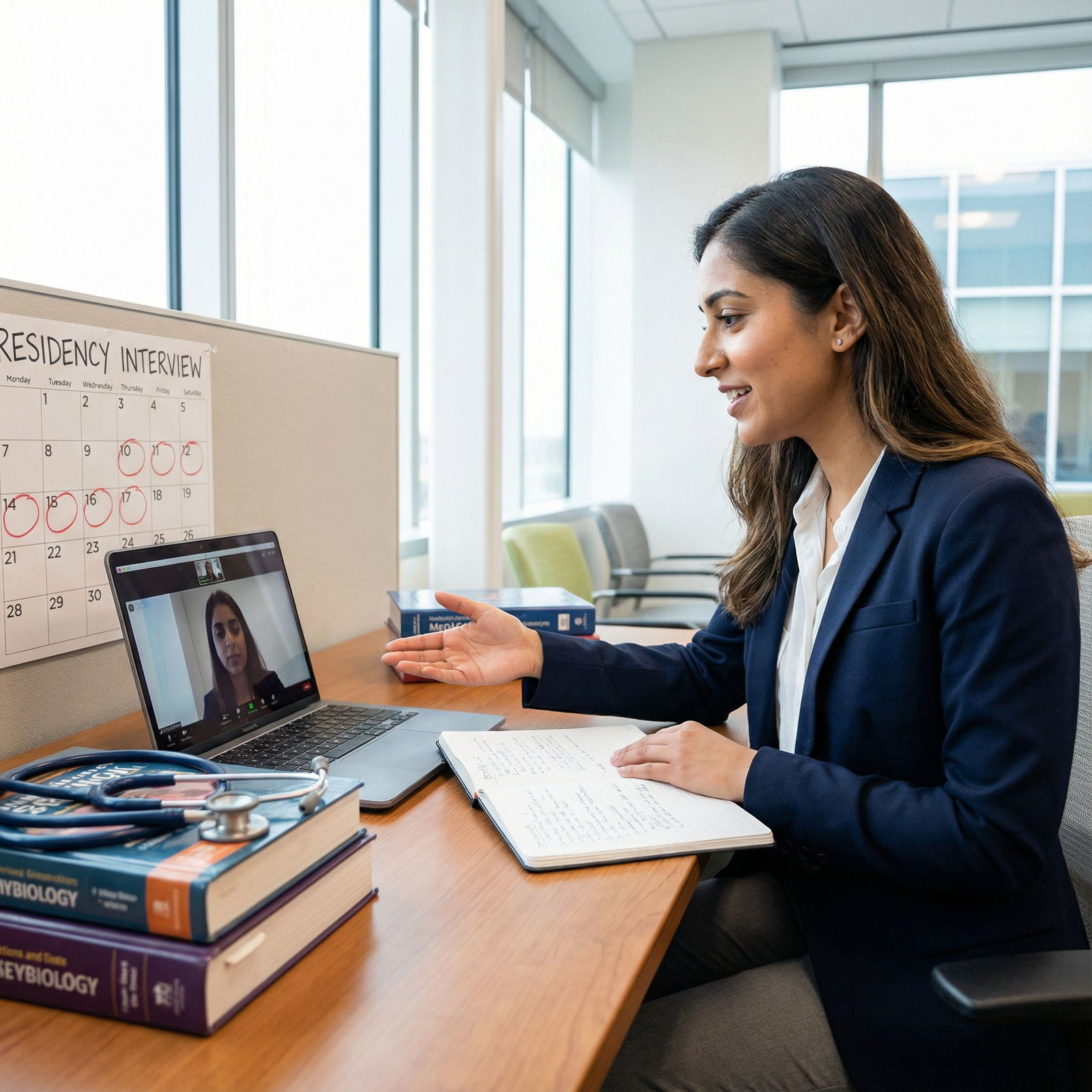
- Virtual interviews:
- Neutral, non-distracting background
- Good lighting (face clearly visible)
- Camera at eye level; test audio and video ahead of time
As a DO graduate, you may want your degree visible in a frame behind you if virtual, but don’t clutter the space.
2. Managing Interview Logistics
For in-person interviews:
- Confirm:
- Exact location and building entrance
- Parking or public transit details
- Hotel distance and backup transportation
- Aim to arrive 20–30 minutes early to allow for nerves and navigation.
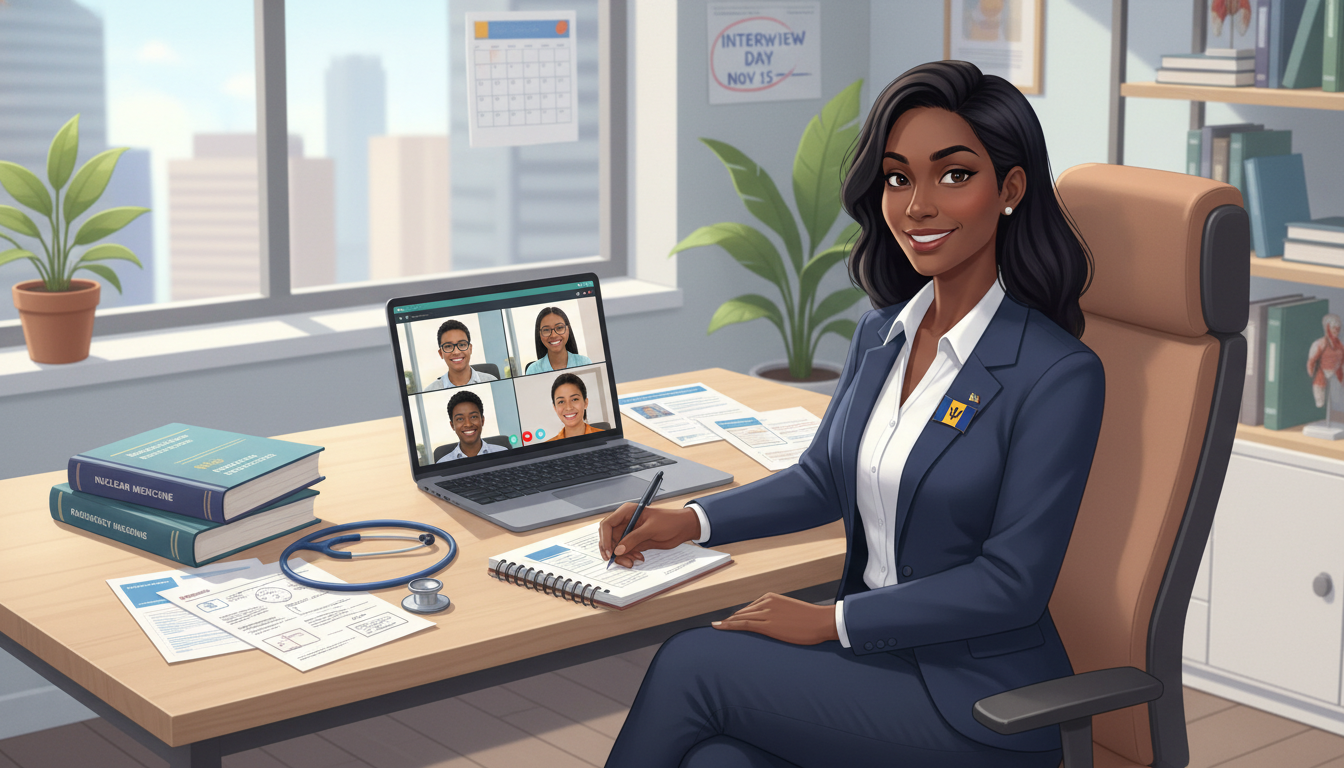
For virtual interviews:
- Test:
- Internet connection
- Zoom/Webex/Teams link and software updates
- Microphone and speakers
- Have a backup plan: hot spot, alternate device, or phone number for the coordinator.
Prepare a one-page “cheat sheet” for each program next to you (especially for virtual interviews):
- PD and APD names
- A few resident names (especially DOs)
- 3–4 features you like about the program
- 2–3 program-specific questions you plan to ask
3. Crafting High-Quality Questions to Ask Programs
Your questions reveal what you value and how much thought you’ve put into the EM program.
Examples tailored to emergency medicine residency:
- “How does your program support wellness and resilience in residents, especially with night shifts and high-acuity trauma?”
- “Can you tell me about the progression of responsibility in the ED from PGY-1 to PGY-3?”
- “How have your graduates recently fared in the EM match for fellowships like ultrasound, critical care, or toxicology?”
- “Are there any unique opportunities for DO graduates to be involved in OMM, MSK care, or teaching within the hospital?”
Avoid questions easily answered on the website (“Do you have an ultrasound curriculum?” if it’s clearly listed).
4. Mental and Physical Preparation
EM interviews can be emotionally draining, especially if you’re stacking several in the same week.
In the days before:
- Prioritize sleep, exercise, and nutrition
- Avoid last-minute cramming the night before; review your notes, then disconnect
- Practice a short confidence routine (breathing, power pose, or visualization of a successful interview)
Morning of:
- Eat something light but sustaining
- Hydrate (but not to the point of discomfort during long sessions)
- Re-read your one-page program summary and your key anchor experiences
Mindset reframe:
You are not just being evaluated; you are also evaluating the program. Ask yourself: “Could I see myself thriving in this ED at 3 a.m. with this team?” That perspective can reduce anxiety and improve your authenticity.
Positioning Yourself for a Strong EM Match as a DO Graduate
Pre-interview preparation is ultimately about positioning yourself for the best possible osteopathic residency match outcome in emergency medicine. The interview is where programs decide whether your file on paper matches the person they will work with in the ED.
Key themes to embody on interview day:
- Competence – You can handle EM’s cognitive and procedural demands.
- Communication – You are clear, respectful, and efficient in how you speak.
- Team fit – You’d be a colleague they trust on a busy shift.
- Resilience – You understand stress and have strategies to cope.
- Osteopathic added value – Your DO training enhances your EM practice.
If you’ve done the work before interview day—research, practice, logistics, mindset—then your job in the moment is simple: be present, be prepared, and be yourself as a future EM physician.
FAQ: Pre-Interview Preparation for DO Graduates in EM
1. As a DO graduate, do I need to address being a DO in every EM interview?
No. You don’t need to lead every answer with “as a DO,” but you should be ready to:
- Explain why you chose a DO program if asked
- Articulate how osteopathic training influences your EM approach
- Mention OMM or holistic care when it genuinely fits the question
Aim for confidence and normalcy, not defensiveness or overemphasis.
2. How is preparing for an emergency medicine residency interview different from other specialties?
EM interviews tend to:
- Focus more on personality, team fit, and behavior under pressure
- Use behavioral questions about conflict, uncertainty, and multitasking
- Emphasize your understanding of ED workflow, shift work, and high acuity
Your preparation should therefore prioritize stories from the ED, examples of teamwork and resilience, and a clear understanding of why EM is the right environment for you.
3. What should I do if my COMLEX or USMLE scores are not as strong as I’d like?
Prepare a brief, honest, and non-defensive explanation if asked:
- Acknowledge the score(s) without making excuses
- Share what you learned and specific steps you took to improve
- Highlight stronger clinical performance, EM rotation feedback, or other indicators of success
Then pivot to your strengths: strong SLOEs, robust ED performance, leadership, or notable growth.
4. How many mock interviews should I do for optimal residency interview preparation?
Aim for 3–5 structured mock interviews before your first real EM interview:
- At least one with EM faculty or a resident
- One with career services or a non-EM mentor for general communication skills
- Optionally, one peer-to-peer session focusing on tough behavioral questions
After each, review feedback, refine your answers, and adjust your nonverbal communication. Quality and reflection matter more than sheer quantity.
By investing in thorough pre-interview preparation tailored to emergency medicine and your identity as a DO graduate, you significantly increase your chances of not just matching—but matching into an EM residency where you will thrive clinically, academically, and personally.