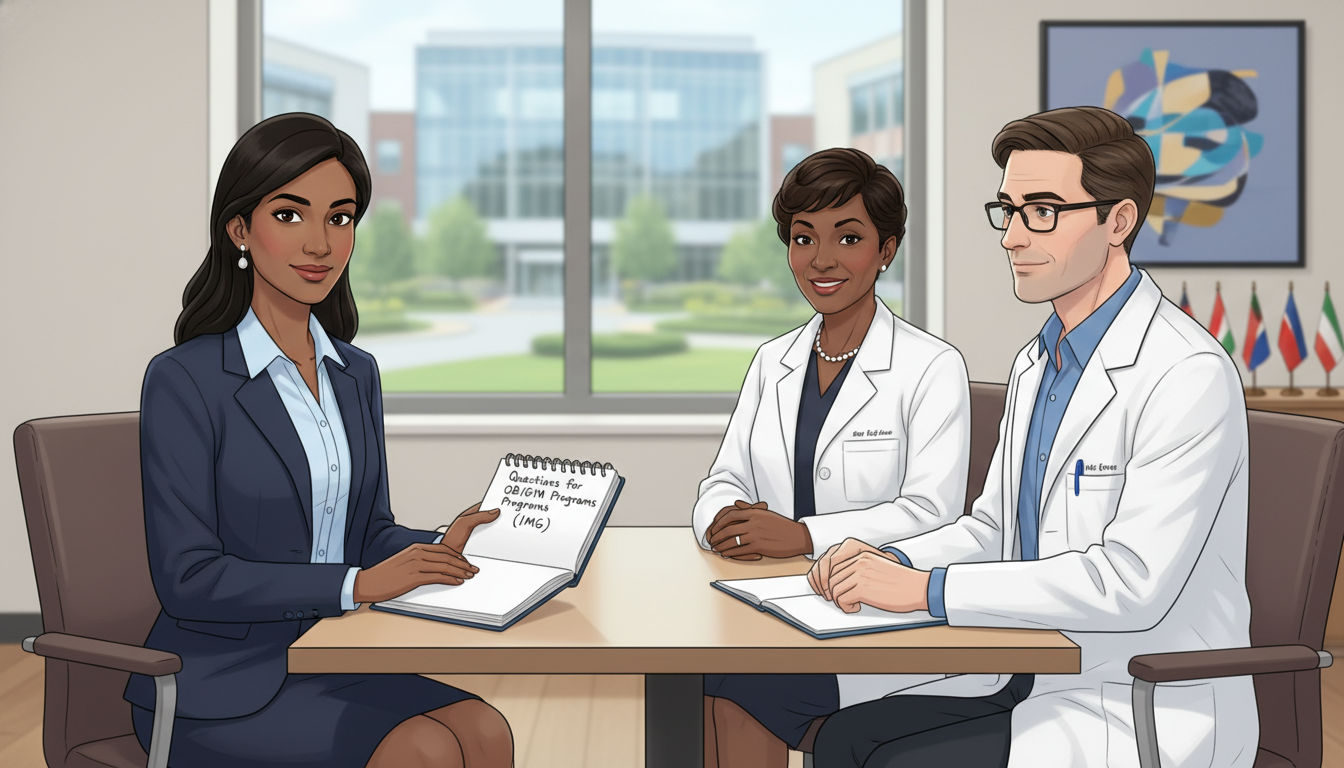
Understanding the Clinical Informatics Landscape as a Non-US Citizen IMG
Clinical informatics is a unique and highly interdisciplinary field, sitting at the intersection of medicine, data, and technology. As a non-US citizen IMG (international medical graduate) or foreign national medical graduate, your pre-interview preparation must cover not only standard residency interview preparation, but also:
- The specifics of clinical informatics fellowships and tracks
- The US residency and visa environment
- The language, concepts, and tools of health IT training
Before you start practicing how to prepare for interviews, you must understand the context in which programs will evaluate you.
What Is Clinical Informatics in the US Context?
In the US, Clinical Informatics is recognized as a subspecialty that focuses on:
- Improving clinical workflows using technology
- Optimizing Electronic Health Records (EHRs)
- Using data to improve quality, safety, and outcomes
- Designing decision support tools
- Leading health IT implementations and change management
Programs may be:
- Formal ACGME-accredited Clinical Informatics fellowships (usually after primary residency, e.g., IM, Pediatrics, EM, Pathology)
- Residency tracks or pathways in informatics within core specialties
- Combined or associated roles (e.g., chief resident in quality and safety with informatics emphasis, or research fellow with informatics focus)
As an interviewee, you are expected to:
- Demonstrate solid clinical foundation
- Show clear understanding of informatics concepts
- Convey how your background as a non-US citizen IMG adds value
- Communicate long-term career goals in health IT, quality, and data-driven care
Unique Considerations for Non-US Citizen IMGs
Programs will silently (or explicitly) assess:
- Visa status and needs (J-1, H-1B, or others)
- US clinical experience and EHR familiarity
- Ability to adapt to US healthcare culture
- Communication skills in high-tech, high-stakes environments
Your pre-interview preparation needs to directly address these areas, so you can confidently answer questions about:
- Why you chose the US for health IT training
- How you will handle working in a new system
- How your visa and long-term career plans align with program realities
Step 1: Clarify Your Narrative – Why You, Why Informatics, Why the US?
Before you work on specific interview questions residency programs might ask, you must be crystal clear on your story. This narrative becomes the foundation for almost every answer.
1. Define Your Three Core Messages
Write down three key points the interviewers should remember about you after you leave the (virtual or in-person) room. For a foreign national medical graduate targeting informatics, examples might be:
- You are a clinically sound physician with proven experience using or improving digital tools in patient care.
- You have specific, demonstrated interest and skills in clinical informatics (projects, courses, QI initiatives, data work).
- You have a realistic, well-thought-out plan for a career in health IT or informatics leadership, and you understand how US training plus your international background will get you there.
Everything you say in the interview should reinforce at least one of these core messages.
2. Build a Clear “Why Clinical Informatics?” Answer
Programs will look for authenticity and depth. Go beyond “I like computers” or “I love data.”
Structure your answer in three parts:
Origin – Where your interest began
- Example: “During my internship in [country], our hospital transitioned from paper charts to an EHR. I saw how poor design created frustration, errors, and inefficiency, and I became the resident people turned to for tips and workarounds.”
Development – How you actively pursued this interest
- Examples:
- Completed online courses in health informatics / data analytics
- Participated in an EHR optimization committee
- Led a quality improvement project that involved data extraction or clinical decision support
- Worked on a telemedicine or mobile health initiative
- Examples:
Future Vision – Where you want to go with this
- Example: “I see myself working as a clinician-informatician in a large health system, leading EHR optimization and data-driven quality projects, especially focused on equitable care for diverse populations, including immigrants.”
Practice articulating this concisely in 60–90 seconds.
3. Craft “Why the US?” and “Why Our Program?” From an IMG Perspective
Why the US?
Address both professional and personal dimensions:
- Access to advanced EHR systems and analytics infrastructure
- Structured health IT training and clinical informatics fellowships
- Exposure to multi-disciplinary teams (IT, data scientists, clinicians)
- Desire to contribute to globally relevant solutions from a high-resource setting
Why this program?
Research each program in detail:
- Does it have a dedicated informatics track?
- Involvement in EHR implementation or optimization projects
- Partnerships with a university informatics department or health system IT
- Quality improvement and patient safety initiatives
- Ongoing data science, AI, or telehealth projects
Then prepare 2–3 specific, evidence-based reasons tailored to each program:
“I’m particularly drawn to your program’s clinical informatics pathway, especially the rotation with the health system’s IT department and the opportunity to work on Epic optimization projects. Your faculty’s work on sepsis alerts also aligns with my interest in decision support to improve outcomes in resource-limited environments.”

Step 2: Master the Content – Clinical Informatics Knowledge to Review
While residency interviews are not formal exams, for clinical informatics–focused positions, you will often be asked to demonstrate familiarity with concepts and tools.
1. Key Domains to Review
You do not need to be an expert, but you should be conversant in:
EHR Basics and Workflow
- What an EHR is and how it supports clinical care
- Common vendors (Epic, Cerner/Oracle, Allscripts, etc.)
- Order entry (CPOE), documentation, and note templates
- Clinical decision support alerts and how they can cause alert fatigue
Data and Standards
- Basic terminology: structured vs unstructured data
- Common standards (at a high level): ICD-10, CPT, SNOMED CT, LOINC, HL7, FHIR
- Data quality issues: missing data, inconsistent coding, duplicate records
Quality Improvement and Patient Safety
- PDSA cycles
- Basic quality metrics (readmissions, LOS, adherence to guidelines)
- How informatics tools can track or influence these metrics
Telemedicine and Digital Health
- Opportunities and challenges, especially across borders and low-resource settings
- Privacy, security, and equity considerations
AI and Clinical Decision Support (at a general level)
- Risk prediction models
- Benefits and potential biases
- Importance of physician oversight and interpretability
2. Prepare Examples That Show Applied Knowledge
Programs prefer practical examples over abstract ideas. Convert your past work into informatics language:
If you participated in an audit or quality project:
- How was data collected?
- How did you clean or analyze it?
- How did the results change practice or workflow?
If you used an EHR in your home country:
- What worked well?
- What problems did you observe?
- What would you improve if you had the tools and authority?
If you haven’t used EHRs, focus on:
- Paper-based systems and their limitations
- How digital tools could solve these problems
- Any digital health or telemedicine initiatives you’ve seen
Translate stories into informatics terms: workflow optimization, data capture, reporting, decision support, user-centered design, interoperability.
3. Use Free Resources for Rapid Orientation
In the weeks before interviews, schedule short, regular review:
- Online introductory courses (e.g., Coursera, edX) on health informatics
- Open-access articles from journals like JAMIA, Applied Clinical Informatics
- YouTube or institutional lectures on:
- Basics of EHRs
- Clinical decision support
- Quality improvement in informatics
Take notes and convert what you learn into potential talking points:
“I recently completed an introductory course on clinical informatics where we discussed how FHIR APIs can allow apps to integrate with EHRs. It helped me understand how more modular and interoperable systems could support innovation even in resource-limited settings.”
Step 3: Systematic Residency Interview Preparation for IMGs
Now that your narrative and content foundation are clear, focus on how to prepare for interviews in a structured way, with attention to typical IMG challenges.
1. Anticipate Common Interview Themes
Most interview questions residency programs ask fall into these themes:
Motivation and Fit
- Why this specialty? Why this program?
- Tell me about yourself.
- Where do you see yourself in 5–10 years?
Clinical and Professionalism
- Discuss a challenging case you managed.
- Tell me about a time you made or observed a medical error.
- How do you handle conflict with colleagues?
Informatics and Innovation
- What excites you about clinical informatics?
- Have you been involved in any health IT-related projects?
- How do you think AI will impact clinical practice?
IMG and Cultural Adaptation
- Why did you choose to leave your home country?
- How have you adapted to the US healthcare system?
- What challenges do you anticipate as a non-US citizen IMG, and how will you address them?
Visa and Long-Term Plans
- What is your visa status?
- Do you need visa sponsorship?
- What are your long-term career plans in the US or elsewhere?
Prepare bullet points for each of these areas and practice turning them into fluid answers.
2. Strengthen Communication and Accent Clarity
As a foreign national medical graduate, communication is often scrutinized more closely. Your goal is not to eliminate your accent, but to enhance clarity and confidence.
Strategies:
Record yourself answering 5–10 common questions; replay, and note:
- Speed (slower is usually better)
- Filler words (“uh,” “like,” “you know”)
- Long, complex sentences that can be simplified
Practice with native or fluent English speakers (friends, mentors, online conversation partners):
- Ask for feedback on clarity and professionalism
- Work on standard medical and informatics vocabulary (EHR, interoperability, algorithm, workflow)
Use STAR (Situation–Task–Action–Result) structure for behavioral answers:
- This keeps you organized and prevents you from getting lost in details or translation.
Example (conflict with colleague):
- Situation: Describe the setting (ward, ICU, project team)
- Task: Your responsibility or goal
- Action: Steps you took to address the problem
- Result: Outcome and what you learned
3. Practice Informatic-Specific Questions
Especially if the program has a strong informatics track, prepare for:
- “Describe a time you used data to improve patient care.”
- “If you could redesign one part of the EHR, what would it be and why?”
- “How would you balance clinical duties with informatics projects?”
- “Do you see yourself pursuing a formal clinical informatics fellowship after residency?”
Outline 2–3 examples you can reuse across questions, such as:
- A QI project (e.g., improving antibiotic use, reducing unnecessary tests)
- A process you helped streamline (handovers, documentation)
- An experience with telemedicine or digital tools

Step 4: Logistics, Documents, and Technology – Before Interview Day
Pre-interview preparation is not just about answers; it’s also about professional execution, especially for virtual interviews.
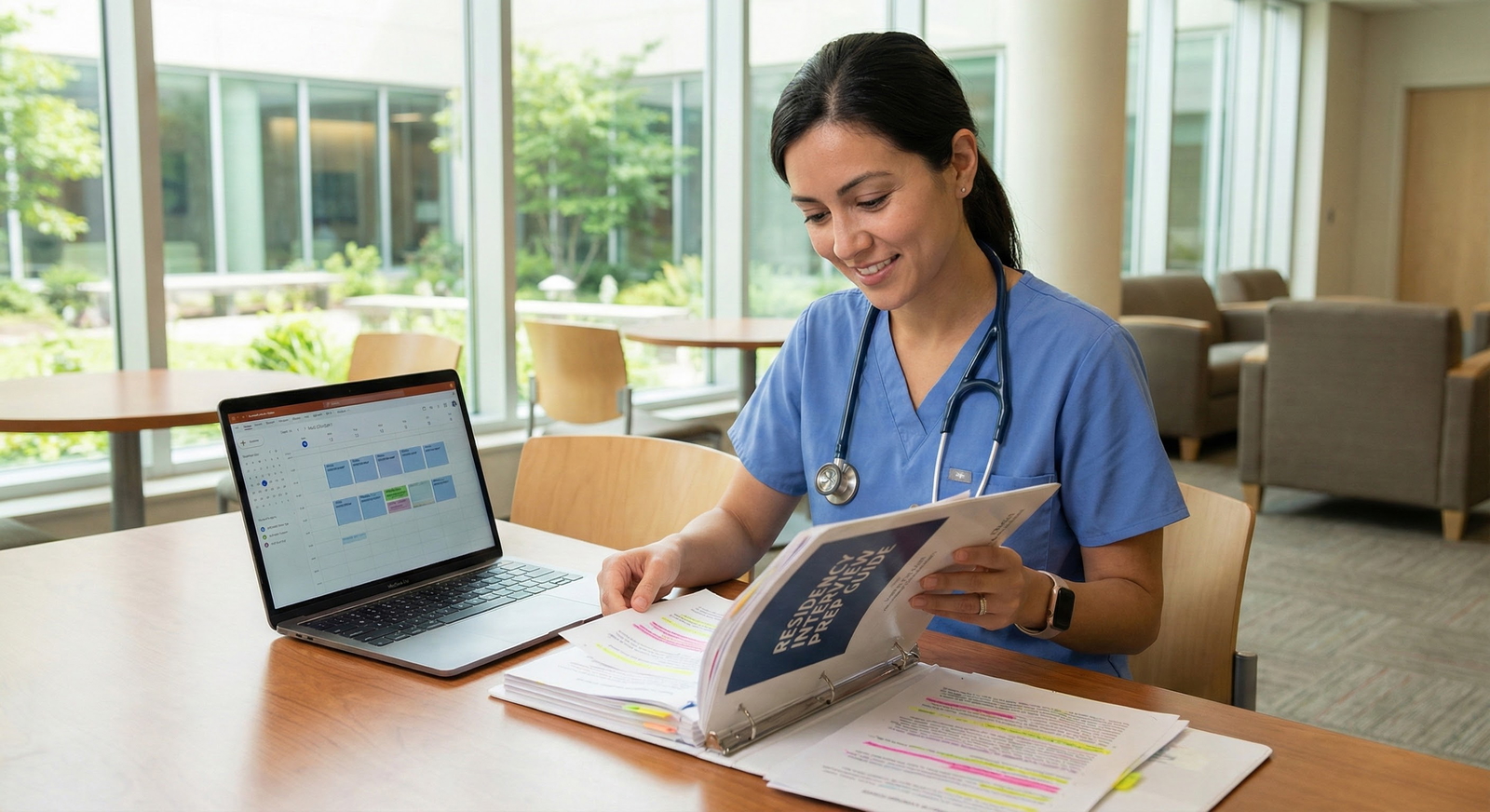
1. Review Your Application Packet Thoroughly
Expect interviewers to reference:
- Personal statement
- CV and ERAS application
- Research and publications
- US clinical experience (USCE) and letters of recommendation
- Any explicit mention of informatics, IT, or research
Action steps:
- Print or save a copy of your application AND each program’s website.
- Highlight:
- Any informatics-related content you included (EHR work, data projects, QI, coding)
- Experiences that might raise questions (gaps, low scores initially, career change)
- Prepare concise, honest explanations or expansions for each.
2. Organize Visa and Immigration Talking Points
Programs may not ask directly at every interview, but you must be prepared:
Know exactly:
- What visa you currently have, if any
- What you will need (e.g., J-1, H-1B)
- Any constraints (return home requirement, long-term plans)
Frame it positively and clearly:
- “I will require J-1 visa sponsorship, and I am very comfortable with the two-year home residency requirement. I see long-term potential in contributing both to the US system and to healthcare improvement projects in my home country.”
Avoid sounding uncertain or uninformed; do basic research in advance.
3. Optimizing Your Virtual Interview Setup
Many residency interview preparation plans ignore the technical side. As a non-US citizen IMG, you may face issues with time zones, internet stability, and environment.
Checklist:
Equipment
- Laptop with working camera and microphone
- Headphones/earbuds to avoid echo
- Backup device (e.g., smartphone with Zoom/Teams installed)
Environment
- Quiet room with neutral background (plain wall, simple bookshelf)
- Avoid strong backlighting; position light in front of you
- Test camera framing: head and shoulders visible, centered
Technology Test
- Run a mock call a few days before with a friend or mentor
- Check:
- Audio/video clarity
- Internet stability
- Ability to share screen if requested (for some informatics-oriented second looks or meetings)
Time Zone Management
- Double-check the interview time in US local time and convert to your time zone using a reputable tool.
- Set multiple alarms and calendar reminders.
- If the time is in the middle of the night for you, consider:
- Adjusting your sleep schedule several days before
- Having caffeine and water ready
- Ensuring your family/housemates know not to interrupt
Step 5: Strategic Questions to Ask – Showing Informatics Interest and Maturity
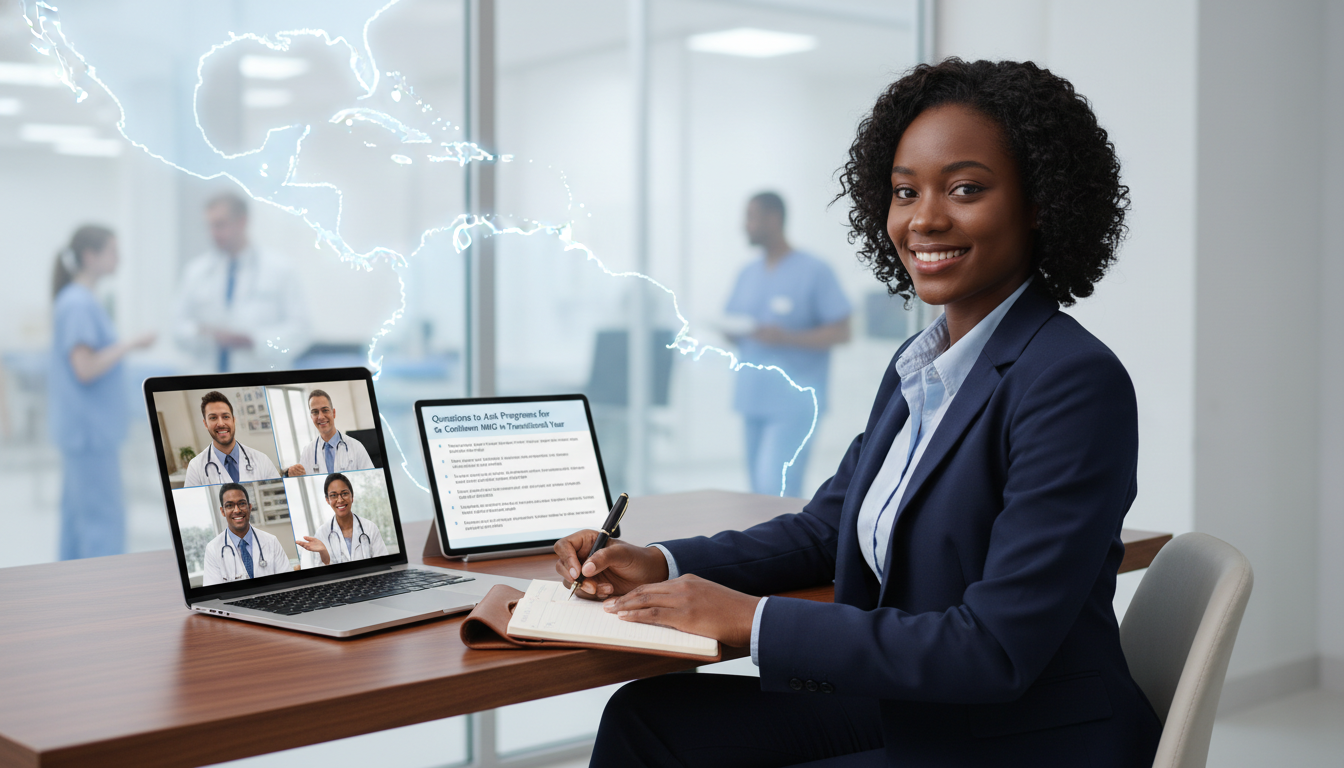
Interviewers will almost always ask, “Do you have any questions for us?” This is your chance to:
- Reinforce your interest in clinical informatics
- Show that you’ve researched the program
- Demonstrate insight about your path as a non-US citizen IMG
1. Informatics-Focused Questions
Tailor these to each program, but consider topics like:
- “Could you describe opportunities for residents to participate in EHR optimization or decision support projects?”
- “Are there collaborations between residents and your health system’s IT or data analytics teams?”
- “Do your residents have access to training or electives related to clinical informatics or data science?”
- “Have past graduates gone on to clinical informatics fellowship training, and how did your program support that path?”
These questions show serious, long-term engagement with health IT training rather than superficial interest.
2. IMG-Specific and Support Questions
Ask respectfully and professionally:
- “What kind of support do you provide for international medical graduates, particularly in adjusting to documentation and EHR workflows?”
- “Do you have experience sponsoring visas for non-US citizen residents, and are there specific policies I should be aware of?”
This helps you assess feasibility without making the entire conversation about visas.
3. Questions That Demonstrate Reflective Thinking
Examples:
- “What do you see as the biggest informatics-related challenge facing your program or health system in the next few years?”
- “How do you involve residents in quality improvement and patient safety initiatives that use EHR data?”
Such questions convey that you are thinking like a future clinician-leader, not just an applicant seeking a position.
Step 6: Final 72-Hour Checklist and Mental Preparation
In the last few days before your interviews, consolidate everything into a manageable plan.
1. Review and Rehearse
Revisit:
- Your three core messages
- “Tell me about yourself,” “Why clinical informatics?,” “Why our program?”
- 3–4 clinical cases that demonstrate your clinical judgment
- 2–3 informatics-related examples from your past experience
Conduct at least one full mock interview:
- Simulate actual timing and video conditions
- Ask for feedback on clarity, structure, and confidence
2. Prepare a One-Page “Interview Snapshot”
Create a physical or digital one-pager you can review quickly before each interview:
- Top bullet points about:
- Your background and strengths
- Informatics experiences and projects
- Program-specific facts and personalized questions
- A brief reminder:
- Speak slowly
- Use STAR structure
- Smile and maintain eye contact (look at the camera, not just the screen)
3. Mental and Physical Readiness
As a non-US citizen IMG, you may be juggling time zones, anxiety about visas, and financial constraints. Protect your performance by:
- Getting adequate sleep in the 2–3 days leading up to interviews
- Planning meals and hydration around your interview times
- Using brief relaxation techniques (deep breathing, short walks) before logging on
- Reminding yourself:
- You bring unique value – multilingual skills, cross-cultural experience, adaptability
- Clinical informatics thrives on diverse perspectives and global thinking
FAQs: Pre-Interview Preparation for Non-US Citizen IMGs in Clinical Informatics
1. Do I need prior formal informatics or IT training before interviewing for informatics-oriented residency programs?
No formal degree is required, but programs favor applicants who demonstrate genuine interest and basic understanding. Online courses, small data or QI projects, experience with EHRs or telemedicine, and self-directed learning in health IT can effectively show commitment. Be prepared to describe what you learned and how it impacted patient care or workflow.
2. How can I discuss my visa status during the interview without sounding risky to the program?
Be direct, concise, and well-informed. Clearly state what visa you will require (e.g., J-1), confirm that you understand the relevant obligations (such as home-country return requirements), and briefly align your long-term goals with what is realistic under that visa. Avoid lengthy legal discussions; focus on clarity and planning rather than uncertainty.
3. As a non-US citizen IMG with limited US clinical experience, how can I still be competitive for informatics-focused positions?
Highlight transferable strengths: strong clinical training in your home country, adaptability, teamwork, and any engagement with digital tools or quality improvement. Emphasize informatics-relevant experiences (audits, data collection, EHR or telemedicine exposure), complete at least some US-based observerships or tele-rotations if possible, and show that you’ve studied the US healthcare and EHR environment. Your global perspective is an asset—frame it as such.
4. What types of “interview questions residency” programs may ask specifically about clinical informatics, and how should I answer them?
Common informatics-related questions include: “What interests you about clinical informatics?”, “Describe a time you used data to improve care,” and “How do you see technology changing clinical practice in the next decade?” Answer by connecting a concrete experience (even small-scale) to broader informatics principles—workflow, data, decision support, or patient safety—then conclude with your vision of how you want to contribute through residency and potentially a future clinical informatics fellowship.
By preparing your story, mastering core informatics concepts, anticipating IMG-specific questions, and optimizing your logistics and communication, you will enter each interview as a confident, informed, and distinctive candidate for clinical informatics–oriented training in the US.