Understanding the Pediatrics Residency Interview Landscape
For an MD graduate seeking a pediatrics residency, the interview is not just a formality—it is often the decisive factor in the allopathic medical school match. Programs use interviews to distinguish between applicants with similar scores and credentials, and to assess your readiness for the demands and rewards of caring for children and their families.
Before diving into detailed residency interview preparation, ground yourself in three key realities of the pediatrics residency interview process:
Pediatrics is relationship-centered.
More than many other fields, pediatrics prioritizes communication skills, empathy, teamwork, and the ability to partner with families. Interviewers are looking for a colleague they’d trust with their most vulnerable patients—children.Your “fit” matters as much as your metrics.
Strong USMLE/COMLEX scores and solid evaluations get you the interview; your interactions, insight, and professionalism during the interview heavily influence your ranking. Programs want to know if your values and goals align with theirs.Preparation is a professional responsibility.
Thoughtful preparation demonstrates respect for the program, for patients, and for your own career. It signals that you are intentional, organized, and self-aware—core qualities of a successful pediatrician.
In this guide, we’ll focus on pre-interview preparation tailored to MD graduates applying to pediatrics residency. You’ll find practical steps, examples, and specific strategies for the peds match, with an emphasis on how to prepare for interviews in a way that makes you stand out positively and authentically.
Clarifying Your Pediatric Identity and Story
Before you rehearse any interview questions residency programs might ask, you must be able to clearly articulate who you are as an emerging pediatrician. This work starts well before interview day.
1. Define Your “Why Pediatrics?”
Expect some variation of this question at almost every pediatrics residency interview:
- “Why pediatrics?”
- “Why did you choose pediatrics over other specialties?”
- “What does being a pediatrician mean to you?”
To prepare:
a. Reflect on concrete experiences, not vague statements.
Avoid generic answers like “I love kids” or “I want to help people.” Instead, identify 3–5 specific experiences that shaped your interest:
- A meaningful pediatric rotation patient you followed
- A longitudinal experience in a free clinic or school-based health setting
- Research or advocacy work focused on child health
- A mentorship relationship with a pediatrician who inspired you
For each experience, jot down:
- What happened
- What you did
- What you felt
- What you learned about children, families, or the healthcare system
- How it influenced your decision to pursue pediatrics
b. Distill your core themes.
From those experiences, pull out 2–3 core themes that define your interest in pediatrics, such as:
- Longitudinal relationships with families
- Preventive medicine and population health
- Advocacy for vulnerable children
- Interdisciplinary teamwork (e.g., working with social work, PT/OT, school systems)
- Global child health or underserved care
These themes will recur across multiple answers, giving your story coherence and depth.
c. Craft a concise personal narrative.
Aim for a 1–2 minute “peds story” you can adapt:
- Opening: A key experience or turning point
- Middle: What that taught you about children, families, and your professional values
- Closing: How this led you specifically to pediatrics and how it shapes your career goals
This isn’t a memorized script but a well-rehearsed mental outline you can deliver naturally.
2. Align Your Story With Pediatrics-Specific Competencies
Programs want to see evidence that you are ready for the realities of pediatrics. As you refine your story, explicitly highlight traits that matter in pediatrics residency:
- Communication with children and families (e.g., explaining illness at a child’s developmental level)
- Patience and adaptability (kids cry, parents panic, systems are imperfect)
- Interdisciplinary teamwork (nurses, child life, respiratory therapists, social workers)
- Cultural humility and working with diverse family structures
- Resilience and emotional maturity when dealing with child suffering or loss
Create a brief list of personal examples that show, rather than tell, that you possess these qualities. You will re-use these examples in responses across multiple interview questions.
3. Anticipate Your “Red Flags” or Complexities
Pre-interview preparation also includes honest reflection about any elements in your file that might raise questions:
- Gaps in training
- Leaves of absence or extended time to graduate
- Fails or low scores on Step exams
- Course or clerkship remediation
- Career shifts (e.g., switching from another specialty to pediatrics)
- Limited pediatrics exposure
Plan clear, concise, non-defensive explanations that:
- Acknowledge what happened
- Take responsibility where appropriate
- Explain what you learned
- Highlight specific changes you made and evidence of improvement
Being prepared here will help you answer confidently if asked, and will reduce anxiety heading into interviews.

Strategic Research: Knowing Programs and the Peds Landscape
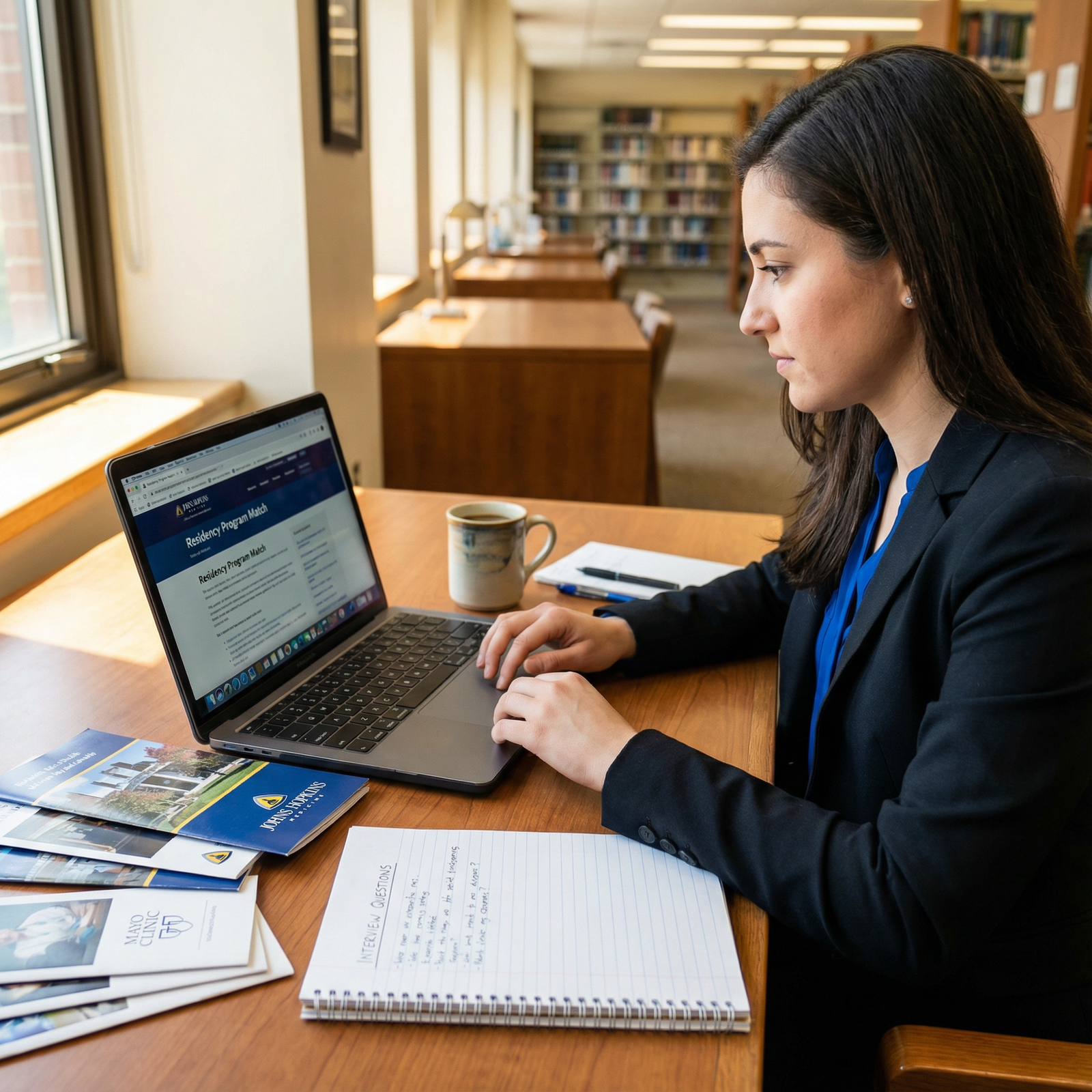
Solid residency interview preparation for the allopathic medical school match requires targeted research. This helps you tailor your answers, ask meaningful questions, and show genuine interest.
1. Build a Program Snapshot for Each Interview
Create a simple one-page summary per program you will interview with. Include:
- Program name and location
- Size (number of residents per year)
- Tracks (e.g., primary care, hospitalist, advocacy, global health)
- Affiliated children’s hospital(s)
- Unique program features (e.g., continuity clinic model, community sites)
- Strengths in subspecialties (e.g., NICU, heme/onc, developmental-behavioral)
- Call/night float structure
- Recent innovations or initiatives (wellness, DEI, QI, telehealth)
- Leadership background (PD, APD, Chair with brief notes)
- Any alumni or mentors you know there
Use sources such as:
- Official program websites
- FREIDA / AAMC resources
- Program social media (Twitter/X, Instagram)
- Virtual open houses or Q&A sessions
- Alumni or upperclass residents
Aim to identify 2–3 program-specific features that genuinely attract you (e.g., strong advocacy curriculum, emphasis on community pediatrics, robust global health opportunities).
2. Understand the Broader Pediatrics Training Environment
Showing that you understand broader challenges and trends in pediatrics elevates your conversations:
Read or familiarize yourself with:
- Major pediatric health issues (obesity, mental health, vaccine hesitancy, health disparities)
- The role of the pediatric medical home and family-centered care
- Current topics: adolescent mental health crisis, social determinants of health, climate change and child health
- Basic structure of pediatric training (PL-1, PL-2, PL-3 responsibilities)
- Typical career paths after residency (primary care, hospitalist, fellowship, public health, policy)
This context will help you answer questions like:
- “What do you see as some of the major challenges in pediatrics today?”
- “How do you think pediatrics will change over the next 10 years?”
- “Where do you see yourself contributing within pediatrics?”
3. Prepare Tailored “Why Our Program?” Answers
Nearly every program will ask some version of:
- “Why are you interested in our program?”
- “How do you see yourself fitting in here?”
- “What drew you to apply to us?”
Use your program snapshots to develop a 1–2 minute, specific answer for each program. A strong structure:
Values alignment
- Connect their mission or culture with your values (“I’m particularly drawn to your emphasis on community-based pediatrics and longitudinal relationships with underserved families…”)
Curriculum and opportunities
- Name concrete program features (“…and your advocacy track with longitudinal projects, as well as the strong NICU experience, align with my interests in health equity and future fellowship options.”)
Fit and contribution
- Describe how you would contribute (“I see myself contributing to your community health initiatives and quality improvement efforts, especially around adolescent mental health screening.”)
Write down bullet points for each program; don’t memorize sentences, but know your main talking points by heart.
Mastering Core Pediatrics Residency Interview Questions
Preparation for interview questions residency programs will ask can transform anxiety into confident, authentic conversation. You do not need scripted responses, but you do need structured thinking and rehearsed stories.
1. Common General Interview Questions (With a Pediatrics Angle)
Here are typical questions tailored to the MD graduate residency applicant in pediatrics, and how to prepare:
“Tell me about yourself.”
Use a 60–90 second structure:
- Brief background (school, where you’re from)
- Key experiences leading to pediatrics
- Current interests and goals in pediatrics
- A personal detail or two that humanizes you
Example outline:
- Origin: “I grew up in a small town in [State] and attended [Allopathic Medical School].”
- Turning point: “Early in medical school, I was drawn to pediatrics through a longitudinal clinic with…”
- Values: “I realized I enjoy building long-term relationships with families and working in teams…”
- Future: “I’m now particularly interested in [primary care / hospitalist / NICU / advocacy] and looking for a residency with strong [specific aspects].”
“What are your strengths and weaknesses?”
Strengths: Pick 2–3 that are relevant to pediatrics (communication, teamwork, patience, adaptability, advocacy) and link each to a specific example from clinical work.
Weaknesses: Choose a real but non-catastrophic area for growth (e.g., delegating, saying no, comfort with uncertainty), then:
- Describe how you identified it
- Explain what you’ve done to improve
- Provide a brief example of improvement
Avoid clichés like “I care too much” and avoid weaknesses that are core safety issues (e.g., poor work ethic, disorganization) unless you can clearly demonstrate substantial improvement with evidence.
“Describe a challenging clinical situation and how you handled it.”
Use the STAR framework (Situation, Task, Action, Result):
- Choose a pediatrics-related or team-based case if possible
- Emphasize communication, empathy, and collaboration
- Discuss what you learned and how you’ve changed
“Tell me about a time you made a mistake.”
Programs value ownership and growth:
- Be honest; choose an example with real stakes but without severe harm
- State the mistake clearly without excessive blame on others
- Focus on:
- How you recognized it
- How you disclosed or addressed it
- What you learned
- Concrete changes since then
2. Pediatrics-Specific Scenarios You Should Expect
Beyond generic questions, pediatrics residency interviews will often probe your comfort and insight around child- and family-centered care.
Prepare stories for:
Communicating with a worried parent
Example: a parent fearful about a vaccine, a new diagnosis, or a hospitalization.Working with a child at a specific developmental stage
How you explained a procedure to a preschooler vs. an adolescent.Coping with sick or dying children
How you emotionally processed a poor outcome, used support systems, and maintained professionalism.Ethical or social dilemmas
Undervaccination, suspected abuse or neglect, confidentiality with teens, disagreements between family and medical team.
For each theme, reflect on:
- One concrete case
- What you did well
- What you might do differently now
- What it taught you about being a pediatrician
Write bullet-point outlines and rehearse telling these stories aloud.
3. Behavioral & Teamwork Questions
Programs are increasingly using behavioral questions such as:
- “Tell me about a time you had a conflict in a team and how you handled it.”
- “Describe a time you advocated for a patient.”
- “Give an example of a time you received critical feedback.”
Anticipate and prepare 4–6 stories that you can adapt to many of these prompts. Strong domains:
- Team conflict and resolution
- Advocacy for a vulnerable child or family
- Responding to critical feedback and changing behavior
- Time management under pressure on rotation
- Working with interprofessional teams (nurses, social workers)
- Leading a small QI or research project
Again, use the STAR format and end each story with a clear lesson learned.

Practical Skills: Communication, Virtual Setup, and Logistics
Even the best content preparation can be undermined by poor communication, technical problems, or disorganized logistics. Pre-interview preparation must include practical skills and setup, especially in an era where many interviews remain virtual.
1. Sharpening Your Communication Style
Interviewers in pediatrics are assessing how you would interact with young patients, parents, and colleagues.
Tone and language:
- Aim for clear, warm, and concise responses.
- Avoid excessive medical jargon; speak as if you’re explaining your journey to a well-informed parent.
- Be mindful of non-verbal communication: eye contact, posture, nodding, and facial expressions.
Practice strategies:
Record yourself answering common questions; review for:
- “Um,” “like,” and filler words
- Rambling beyond 2–3 minutes
- Lack of structure
Practice with:
- Peers or co-applicants
- A faculty mentor or pediatric resident
- Your institution’s career or advising office
Ask for targeted feedback on:
- Clarity of answers
- Professionalism
- Warmth and authenticity
- Brevity vs. detail balance
2. Virtual Interview Setup for the Peds Match
For MD graduates in the allopathic medical school match, virtual interviews are now standard at many programs. Pre-interview preparation should include:
Technical checklist:
- Reliable computer with functioning camera and microphone
- Stable high-speed internet (consider wired connection if possible)
- Updated version of Zoom, Teams, or platform specified by the program
- Headphones or earbuds to reduce echo if needed
- Test run with a friend to check sound and video quality
Environment checklist:
- Quiet space with minimal background noise
- Neutral, clean background; avoid clutter or distractions
- Good lighting (natural light from in front of you if possible, or a soft lamp / ring light)
- Camera at eye level; you should be centered with head and shoulders visible
Appearance:
- Professional attire (typically suit or blazer, minimal distracting accessories)
- Consider that pediatrics is family- and child-centered; you can still be fully professional while conveying warmth (e.g., subtle color instead of all-black)
Make sure you have:
- Printed or digital copy of your CV and personal statement
- Notepad and pen
- Program snapshot sheet (key points and questions)
- A glass of water
3. Managing Logistics and Time
Disorganization can increase stress and hurt performance. In the weeks before interviews:
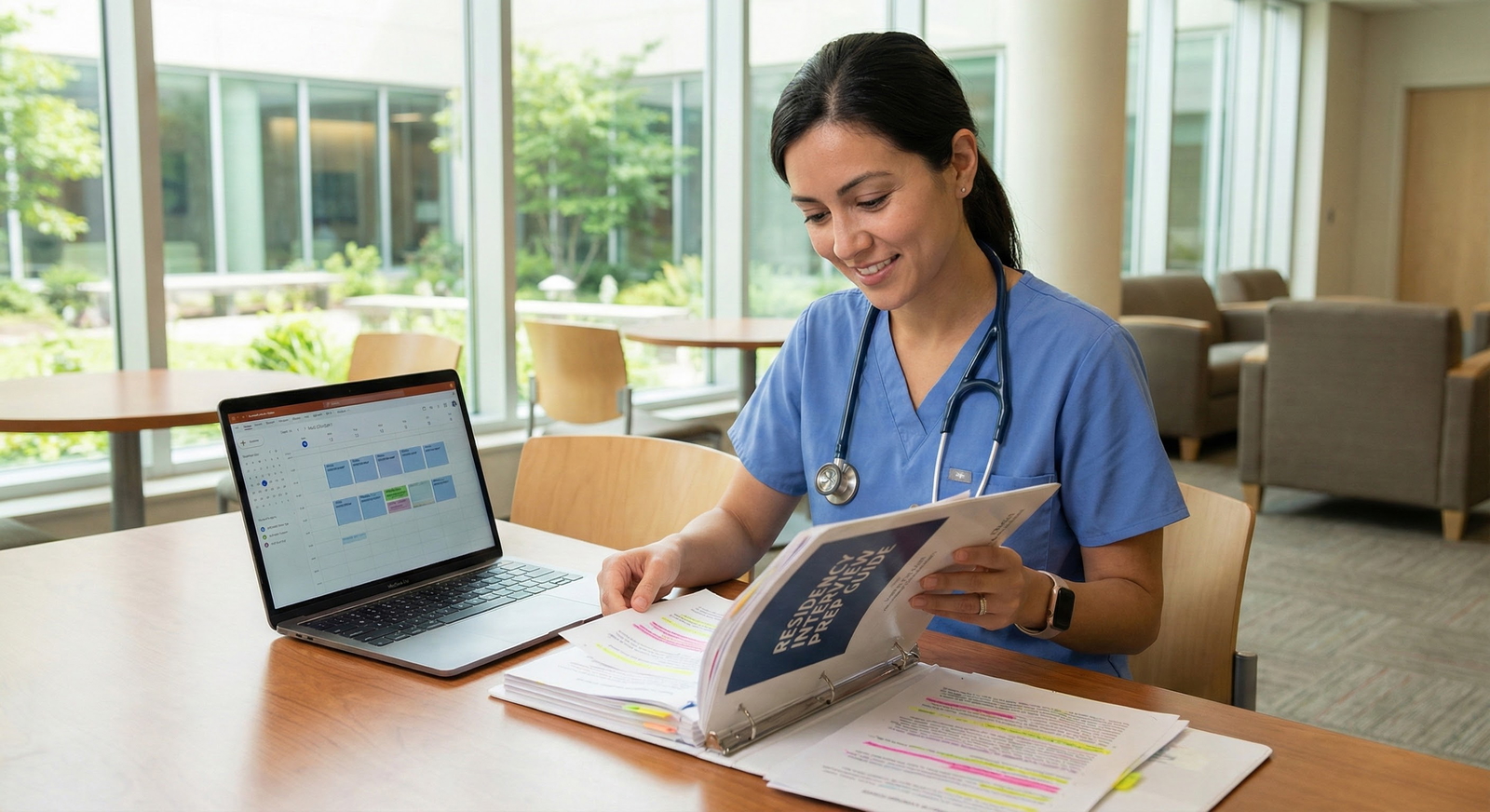
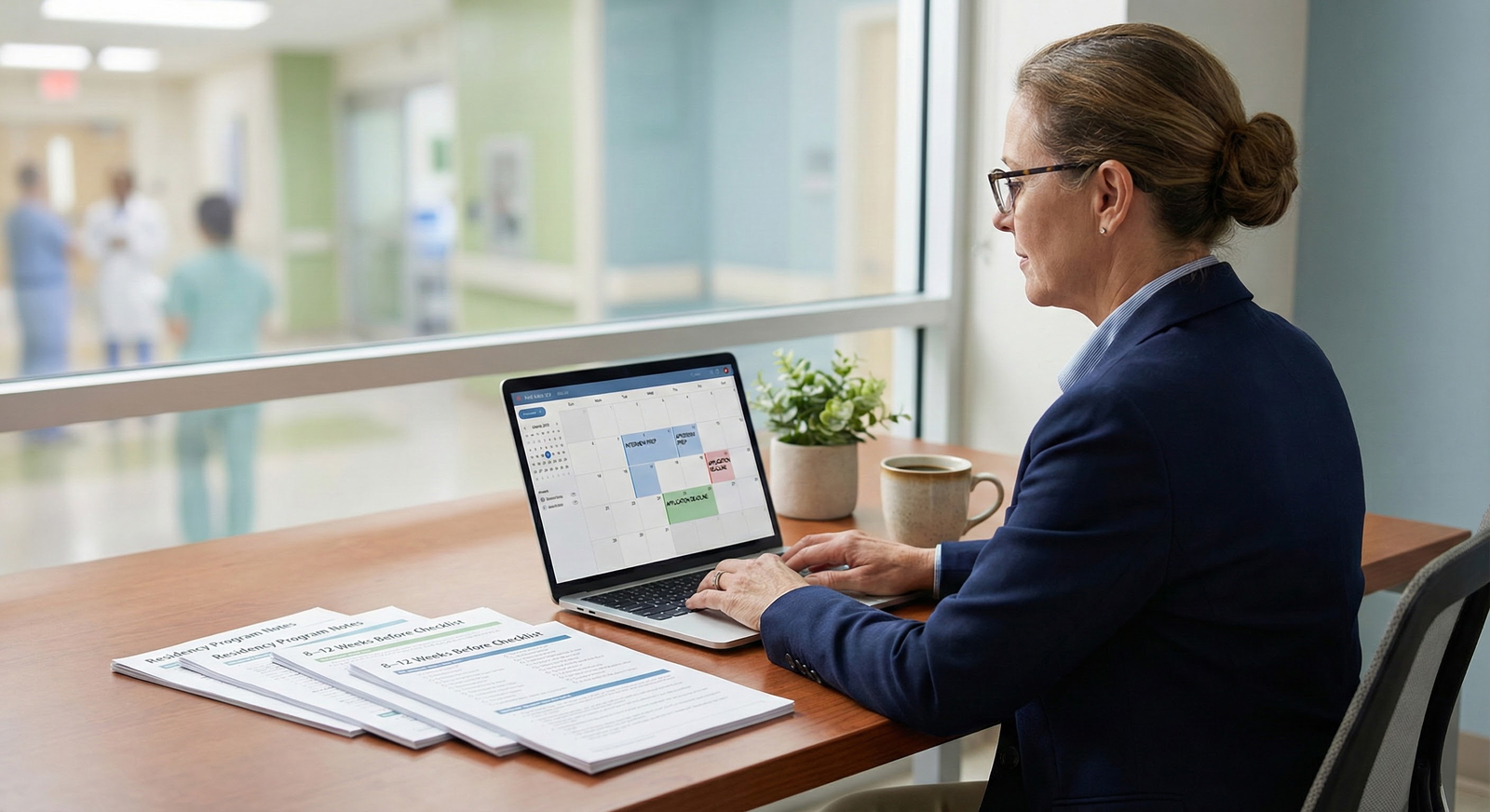
Create a master schedule:
- List all interview dates and times (with time zones)
- Include pre-interview socials or Q&A sessions
- Update immediately when invitations arrive or changes occur
Before each interview day:
- Reconfirm the platform and login link
- Know the interview format:
- Number of interviews
- Length of each session
- Individual vs. panel vs. multiple mini interview (MMI)
- Plan your route if in-person; confirm parking, building entrances, and arrival times
Day-of routines:
- Wake up early; allow extra time for unexpected delays
- Eat something light to maintain energy
- Log in 15–20 minutes early to address any technical issues
- Silence phone notifications and computer alerts
Having predictable routines reduces cognitive load and lets you focus on connecting with your interviewers.
Asking Insightful Questions and Planning for Post-Interview Reflection
Interviewers will inevitably ask, “What questions do you have for us?” Pre-interview preparation includes curating meaningful, program-specific questions and planning how you will capture impressions for your rank list.
1. Prepare Tiered Question Lists
Avoid questions easily answered by a quick website glance (“How many residents do you take per year?”). Instead, prepare:
For Program Directors / Leadership:
- “How does the program support residents who are interested in [primary care, subspecialty, advocacy, global health, etc.]?”
- “Can you describe how feedback is given to residents and how residents participate in shaping the program?”
- “What characteristics do your most successful residents typically share?”
For Current Residents:
- “What drew you to this pediatrics residency, and what has surprised you since starting here?”
- “How does the program support work-life balance and wellness, especially during more demanding rotations like NICU or PICU?”
- “How would you describe the culture between residents and faculty? Between residents across classes?”
- “Can you share examples of residents’ advocacy or QI projects and how the program supported them?”
For Chiefs / Senior Residents:
- “How have your responsibilities and autonomy changed from intern year to now?”
- “What changes has the program made in response to resident feedback during your time here?”
- “Where do most graduates go after residency from this program (primary care vs. fellowship vs. hospitalist)?”
Keep your questions organized by role so you can quickly refer to them during the day.
2. Use Questions to Demonstrate Fit and Insight
Frame some questions to subtly highlight your interests and preparation. For example:
- “I’m very interested in community pediatrics and school-based health. How does your continuity clinic or community experiences expose residents to these settings?”
- “Given growing awareness of adolescent mental health needs, how is your program adapting rotations or curricula to prepare residents for this challenge?”
These questions convey not only curiosity, but also your understanding of current pediatric issues and your proactive mindset.
3. Plan a Systematic Post-Interview Debrief
Immediately after each interview day (or during a short break), take 10–15 minutes to answer:
- How did the residents seem? Could I see myself as part of this group?
- How did faculty and leadership talk about residents?
- Did the program mission and culture align with my values?
- How did the location, hospital environment, and patient population feel?
- What unique strengths stood out?
- Any concerns or “red flags” I noticed?
Assign each program quick ratings (e.g., 1–5) for features important to you:
- Resident camaraderie
- Faculty support and mentorship
- Depth of community/advocacy experiences
- Fellowship and career preparation
- Wellness and schedule
- Location and family/social considerations
These notes will be invaluable when you’re finalizing your rank list weeks later, when memories blend together.
FAQs: Pre-Interview Preparation for Pediatrics Residency
1. When should I start my pediatrics residency interview preparation as an MD graduate?
Begin structured preparation at least 4–6 weeks before your first scheduled interview. Early on, focus on:
- Reflecting on your pediatric experiences and defining your story
- Creating your master CV and updating your ERAS application details
- Drafting and refining responses to major themes (why pediatrics, strengths/weaknesses, clinical challenges)
As interviews approach, shift to:
- Program-specific research and “Why our program?” answers
- Practicing mock interviews (virtual and in-person style)
- Finalizing your interview wardrobe and virtual setup
2. How many mock interviews should I do for effective residency interview preparation?
Aim for 2–4 mock interviews before your first real interview. Try to include:
- At least one with a pediatric faculty member or resident (for content and specialty-specific feedback)
- One with a career advisor or dean’s office representative (for professionalism and behavioral questions)
- Optionally, one recorded self-interview session to review your own communication habits
Use each mock to refine your answers, body language, and time management. Focus on improvement, not perfection.
3. What are some classic interview questions residency programs in pediatrics almost always ask?
While each program varies, you should be ready for:
- “Why pediatrics?” / “Why did you choose pediatrics over other specialties?”
- “Tell me about yourself.”
- “Why are you interested in our program?”
- “What are your strengths and weaknesses as a clinician?”
- “Describe a challenging clinical situation (or patient) and how you handled it.”
- “Tell me about a time you received critical feedback and what you did with it.”
- “What do you see yourself doing after residency?” (even if you’re unsure, describe possibilities honestly)
Additionally, expect ethical or communication scenarios with children or families, reflecting the relationship-based nature of pediatrics.
4. How can I stand out positively in a peds match interview without seeming rehearsed?
You stand out not by delivering a perfect script, but by combining authenticity, reflection, and specificity:
- Use concrete examples from your pediatrics experiences, not generic statements.
- Show insight into your own growth—how you’ve changed and what you learned from challenges.
- Demonstrate understanding of current pediatric issues (mental health, disparities, vaccines).
- Ask thoughtful, program-specific questions that reflect your values and goals.
- Let some of your genuine warmth, humor, or personality show—pediatricians are drawn to colleagues who connect well with others.
Consistent, thoughtful pre-interview preparation will allow you to be both well-structured and naturally yourself, which is exactly what pediatrics residency programs are hoping to see.