Understanding the Psychiatry Residency Interview Landscape
For an MD graduate targeting psychiatry residency in the US, pre-interview preparation is more than rehearsing answers. It’s about understanding how programs think, what they look for, and how you can authentically present yourself as a future psychiatrist.
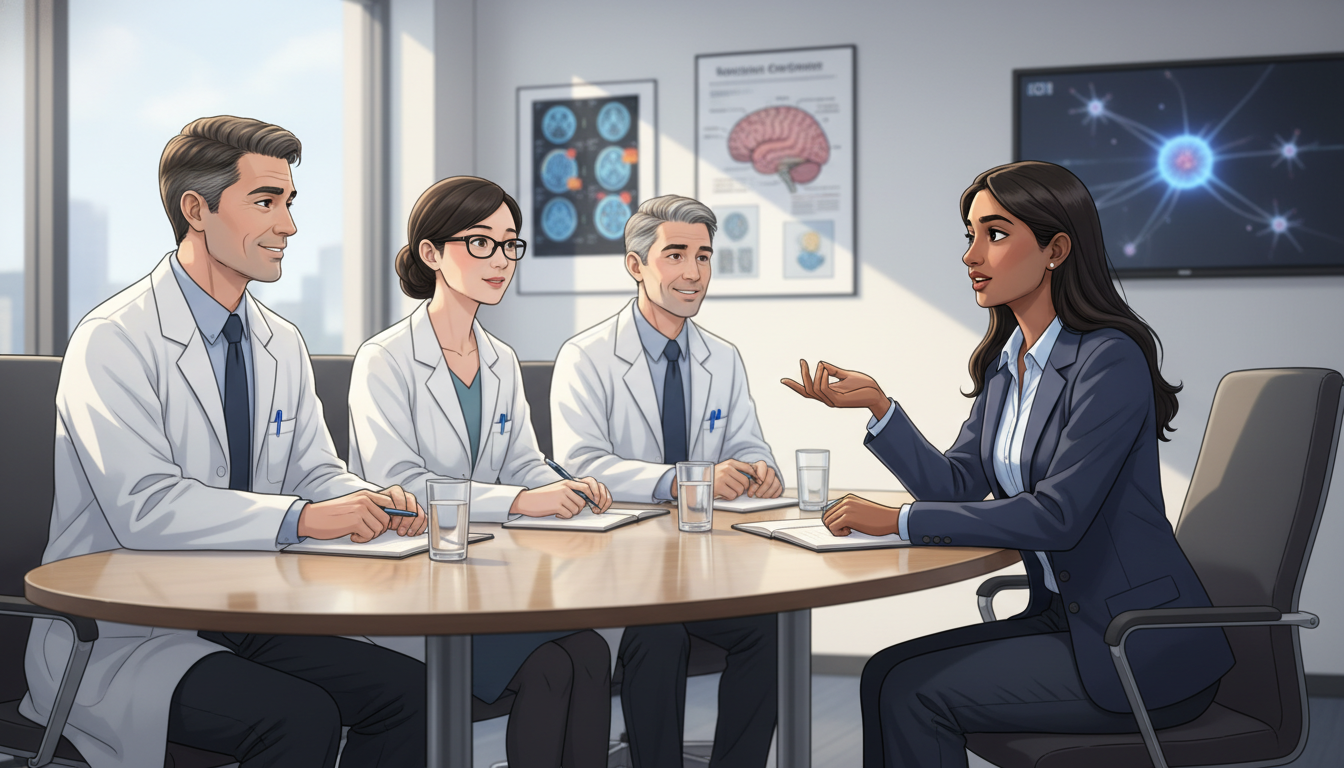
Psychiatry is a relationship-driven specialty. Programs weigh interpersonal skills, emotional maturity, and self-awareness just as heavily as scores and CVs. Your allopathic medical school match prospects in psychiatry will be influenced greatly by how you perform in these conversations—formal and informal.
Key features of psychiatry residency interviews:
Emphasis on “fit” and personality
Programs focus on your insight, empathy, communication style, and ability to work in teams. They want colleagues they can trust at 2 a.m. on call with a suicidal patient.Interest in your story and motivations
You’ll be asked repeatedly: Why psychiatry? Why now? Why this program? They’re assessing depth of commitment, not just curiosity.Attention to professionalism and boundaries
Your demeanor, how you talk about patients, colleagues, and your own vulnerabilities all signal how you’ll handle complex therapeutic relationships.Holistic review
Psychiatry is often more open to applicants with non-linear paths, prior careers, or red flags, if you can articulate insight, growth, and accountability.
Understanding this landscape will shape your entire approach to residency interview preparation—what to highlight, what to clarify, and how to communicate like a developing psychiatrist, not just a medical student.
Laying the Foundation: Self-Assessment and Career Narrative
Before you practice any interview questions for residency, you need a clear internal narrative. This is the “why” behind everything on your ERAS application and in your life leading up to this point.
1. Clarify Your “Why Psychiatry?” Story
Programs want to know not only why you chose psychiatry, but why psychiatry fits you.
Reflect on:
Key formative experiences
- A patient encounter that shifted your perspective on mental illness
- A psychiatry clerkship or sub-I that felt “right” in a way other rotations didn’t
- Research or advocacy that exposed you to stigma or systems issues
Your inherent strengths
- Are you curious about people’s life stories and internal worlds?
- Do you stay calm in emotional crises?
- Do you enjoy long-term relationships and gradual change rather than procedures and immediate fixes?
Your core values
For example: respect for patient autonomy, social justice, trauma-informed care, interdisciplinary work, or interest in neuroscience.
Turn this into a concise, authentic narrative:
“I’m drawn to psychiatry because I value understanding the whole person—biological, psychological, social. On my inpatient rotation, working with a patient with severe depression taught me how transformative it can be when someone finally feels heard and understood. That experience, plus my interest in neurobiology and health policy, made it clear this is where I want to build my career.”
Avoid generic statements like “I want to help people” unless you ground them in specific examples and reflections.
2. Map Your Professional Identity as a Future Psychiatrist
Your pre-interview preparation should include a clear picture of who you are professionally, not just personally.
Ask yourself:
What kind of psychiatrist do I see myself becoming?
- Inpatient vs outpatient
- Academic vs community
- Psychotherapy-heavy vs medication-focused vs balanced
- Subspecialty interests: child & adolescent, addiction, forensics, C‑L (consult-liaison), geriatrics, women’s mental health, etc.
What settings/communities matter to me?
- Underserved or rural care
- Public psychiatry
- Working with specific populations (LGBTQ+, refugee, incarcerated populations, etc.)
How do my activities reflect this trajectory?
- Research projects
- Volunteer or advocacy work
- Leadership roles
- Electives and sub-internships
You don’t need a rigid 10-year plan—programs understand your plans will evolve—but you should demonstrate thoughtful consideration.
3. Identify Strengths and Development Areas Honestly
Psychiatry programs appreciate candidates who demonstrate insight and humility.
List 3–5 core strengths relevant to psychiatry:
- Active listening
- Patience and tolerance of ambiguity
- Empathy with good boundaries
- Clear communication and teamwork
- Cultural humility
List 2–3 areas for growth:
- Time management, documentation efficiency
- Comfort with medical complexity or neurology
- Navigating conflict within teams
- Balancing emotional involvement and self-care
Prepare to discuss each with a brief example and how you’re addressing it. This turns perceived weaknesses into evidence of maturity and growth.
Building Program-Specific Knowledge and Strategy
Effective residency interview preparation for an MD graduate in psychiatry requires targeted research. Generic answers make you forgettable; specific, informed comments about a program make you memorable.
1. Research Every Program Before the Interview
For each program on your psych match list, gather:
Core structural details
- Size of the program and number of residents per class
- Primary hospital sites (academic, VA, community)
- Call structure and night float systems
- Inpatient vs outpatient balance across years
Educational features
- Protected didactic time and psychotherapy training
- Access to ECT, TMS, ketamine, neuromodulation
- Opportunities in different therapy modalities (CBT, psychodynamic, DBT, family therapy)
- Simulation training or standardized patient experiences
Special strengths
- Subspecialty clinics (e.g., early psychosis, perinatal, gender clinic, addiction, trauma)
- Research opportunities and ongoing major studies
- Integrated care models (collaborative care, psychiatry in primary care)
- Emphasis on public psychiatry or health equity
Program culture
- Resident happiness and wellness initiatives
- Diversity, equity, and inclusion (DEI) work
- Faculty approachability and mentorship structure
- How feedback is given and resident voices are incorporated
Use:
- Program websites and social media
- FREIDA and other directories
- Virtual open houses and webinars
- Former alumni or current residents (if you have appropriate connections)
2. Organize Program Notes Systematically
Create a spreadsheet or document with:
- Key features of each program
- What uniquely attracts you to that program
- Potential concerns or questions
- Specific faculty or clinical services that interest you
This will support:
- Crafting tailored responses to “Why this program?”
- Asking thoughtful questions at the end of interviews
- Building more accurate rank lists later

Mastering Common Psychiatry Residency Interview Questions
Knowing how to prepare for interviews means predicting what will be asked and preparing structured, flexible answers. Below are high-yield interview questions for residency in psychiatry and how to approach them.
1. Classic Questions and How to Shape Responses
“Tell me about yourself.”
Goal: Provide a concise, professional introduction linking your background to psychiatry.
Structure:
- Brief personal context (1–2 sentences, optional and professional)
- Medical training path (where, any notable focus)
- Key psychiatry-related experiences
- One or two themes that define you as a candidate
Example:
“I grew up in a bilingual household, which drew me early to issues of culture and communication. I attended [Medical School], where I found myself most engaged on my psychiatry and neurology rotations. I’ve spent the last two years working on a project exploring barriers to mental healthcare in primary care clinics, and I served as a peer mentor focused on student wellness. These experiences confirmed how much I value longitudinal relationships and understanding patients in their life context, which is why I’m excited to pursue psychiatry.”
“Why psychiatry?”
In psychiatry residency, this is central. Address:
- A formative clinical or personal experience (without oversharing)
- Intellectual interests (neuroscience, psychotherapy, social determinants)
- How your strengths and values align with the specialty
Avoid purely negative motivations (“I didn’t like other rotations”) and superficial reasons (“work-life balance” alone).
“Why this program?”
Use your pre-interview program research:
- Mention 2–3 specific program features that genuinely appeal to you
- Connect them to your goals or experiences
- Show you understand not only what they offer, but how you would use those opportunities
Example:
“I’m particularly drawn to your strong psychotherapy training, especially the early exposure to CBT and psychodynamic supervision in the PGY-2 year. I’m also impressed by your public psychiatry track and the partnership with the county mental health system. My long-term goal is to work with underserved populations while maintaining a strong foundation in talk therapy, so I see your program as an ideal fit.”
2. Behavioral and Situational Questions
Psychiatry interviews frequently explore how you function under stress, in teams, and when things go wrong.
Use the STAR method (Situation, Task, Action, Result) for structure.
Common questions:
- “Tell me about a time you had a conflict with a team member. How did you handle it?”
- “Describe a challenging patient interaction and what you learned.”
- “Tell me about a time you received critical feedback and how you responded.”
- “Describe a situation where you made a mistake.”
Guidelines:
- Choose real examples, not hypotheticals.
- Emphasize insight, empathy, and accountability.
- Highlight what you changed in your behavior afterward.
3. Psychiatry-Specific Clinical Scenarios
You might be asked to talk through how you’d approach:
- A suicidal patient in the ED
- A patient refusing medications
- A patient with new-onset psychosis
- An agitated or aggressive patient
They’re not testing you as a finished psychiatrist, but they’re assessing:
- Your ability to prioritize safety
- Your respect for autonomy and capacity assessment
- Your use of basic frameworks (e.g., risk assessment for suicide: ideation, intent, plan, means, protective factors)
- Your willingness to ask for help and work in teams
Before interviews:
- Review basics of psychiatric interviewing (HPI, MSE, risk assessments)
- Refresh key emergency psychiatry concepts
- Focus on process and reasoning over memorized algorithms
4. Questions About Red Flags or Non-Linear Paths
If you have:
- A failed course or exam
- A leave of absence
- A change in specialty
- Gaps in training
Prepare a brief, honest explanation that:
- States what happened without defensiveness
- Explains the underlying issue (only as much detail as is appropriate)
- Emphasizes what you learned
- Demonstrates concrete steps you took to improve
Example:
“During my second year, I failed Step 1. At the time, I was struggling with time management and was reluctant to ask for help. Afterward, I met with academic support, built a structured study plan, and took practice exams under test conditions. I also worked with a counselor to address my anxiety around high-stakes exams. I passed comfortably on my retake, and I’ve since applied those strategies to my clinical work—seeking feedback early, planning ahead, and using available support systems.”
Psychiatry programs particularly value insight and personal growth; these conversations can actually strengthen your application if handled well.
Practicing Delivery: Mock Interviews, Communication Skills, and Virtual Setup
Once you have your content, the next stage of residency interview preparation is how you deliver it—especially since many psychiatry interviews remain virtual or hybrid.
1. Engage in Multiple Mock Interviews
Aim for at least 3–5 mock interviews:
- With your medical school’s career office or advising office
- With mentors in psychiatry
- With peers applying to other specialties (for general practice)
Focus on:
- Clarity and conciseness of answers
- Eye contact and nonverbal communication
- Avoiding filler words and overly long monologues
- Comfort discussing sensitive topics (e.g., mental health, conflict)
Ask for specific feedback, such as:
- “Did my answer to ‘why psychiatry’ feel authentic?”
- “Did I come across as too rehearsed or too vague?”
- “What one thing should I change to make a stronger impression?”
Record at least one mock interview (with consent) and review your body language, tone, and pace.

2. Optimize Your Verbal and Nonverbal Communication
Psychiatry programs watch how you connect with people in real time.
Key behaviors to cultivate:
Active listening
- Wait for the full question to be asked
- Nod and maintain eye contact
- Briefly reflect or acknowledge complex questions before answering (“That’s a really important issue; in my experience…”)
Structured responses
- Start with a clear, direct answer
- Then add supporting example or explanation
- End with a brief concluding sentence
Professional but warm demeanor
- Calm, steady tone of voice
- Avoid sarcasm or dark humor; it may be misinterpreted
- Show curiosity and openness
Because psychiatry values self-reflection, it’s fine to take a brief pause to think before answering. You don’t need to respond instantly to every question.
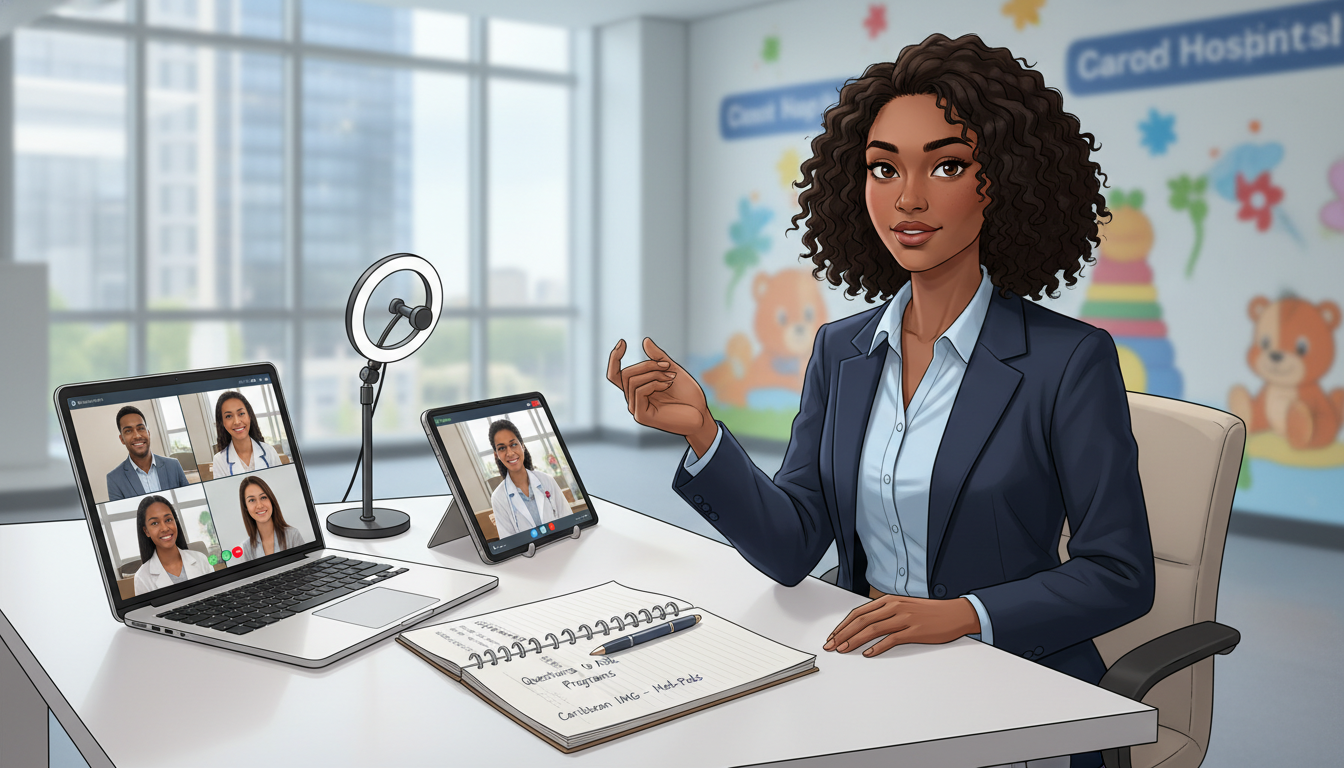
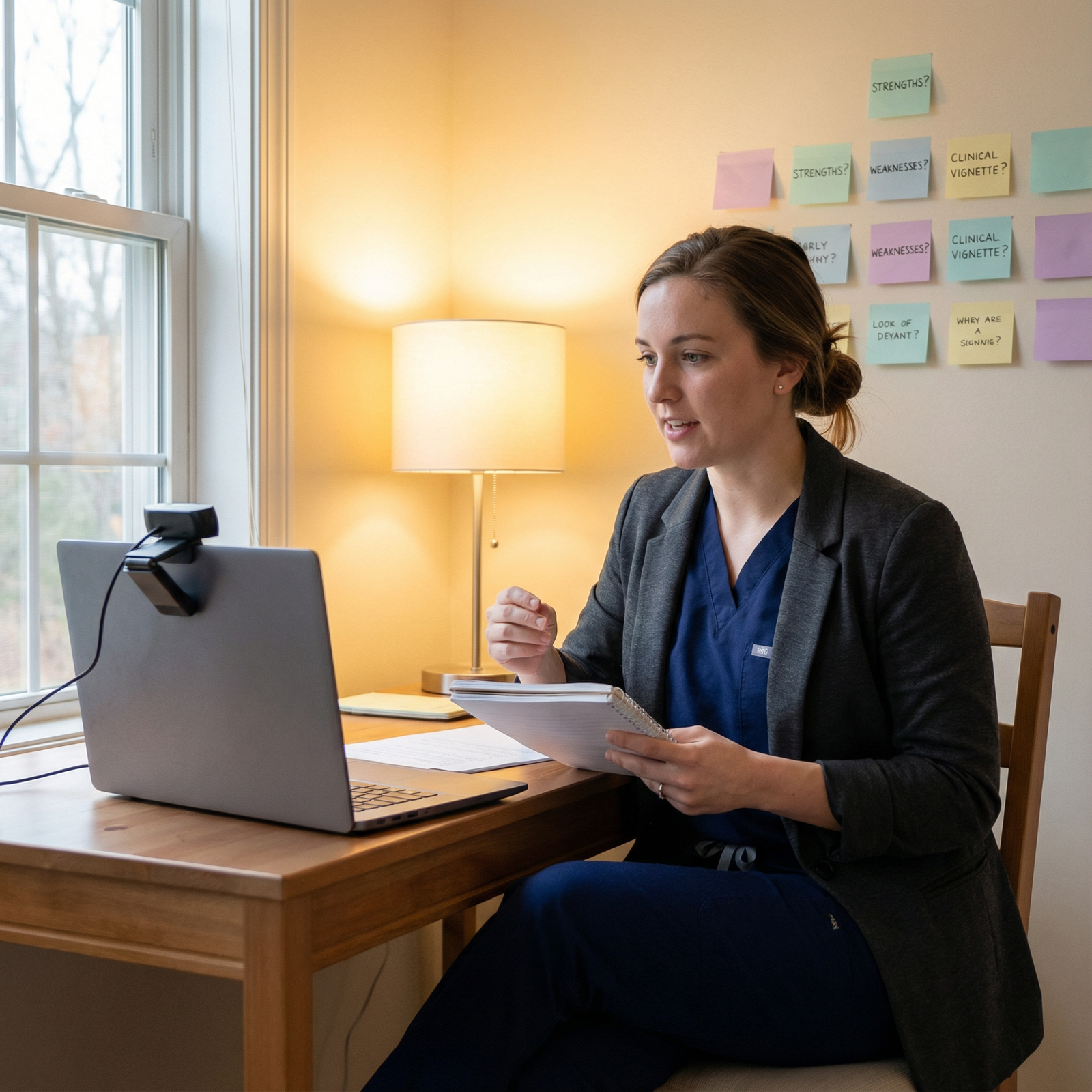
3. Virtual Interview Logistics and Setup
For MD graduates in today’s allopathic medical school match, strong virtual interview etiquette is part of professionalism.
Checklist:
Technology
- Stable internet connection (use Ethernet if possible)
- Updated Zoom/Webex/Teams client
- Test audio and video in advance
- Have a backup device or hotspot ready
Environment
- Quiet space where you won’t be interrupted
- Neutral, uncluttered background (or a simple virtual one if approved)
- Good lighting from in front of you, not behind
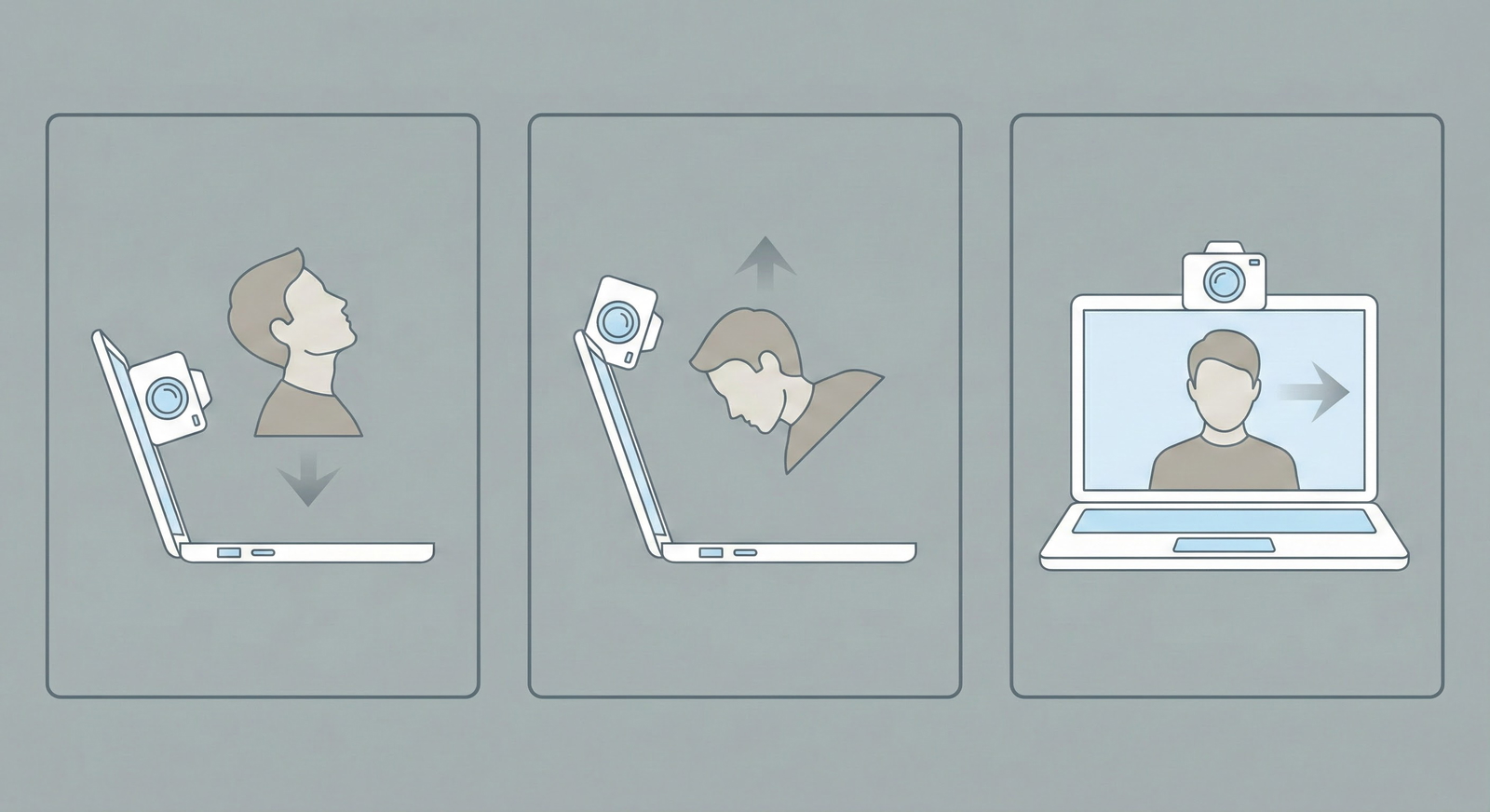
- Camera at eye level (use books or a stand to raise your laptop)
Appearance
- Professional attire (blazer or equivalent)
- Minimal distracting patterns
- Consider how colors look on camera
Practice a brief “tech run” on the actual platform each program uses to reduce day-of anxiety.
Strategic Preparation Beyond Q&A: Questions, Etiquette, and Wellness
Strong candidates don’t just answer questions well—they ask the right ones, navigate the social aspects of interviews, and manage their own mental health during the psych match season.
1. Prepare Thoughtful Questions for Programs
You will almost always be asked, “What questions do you have for us?” This is a chance to signal your priorities and show engagement.
Avoid questions easily answered on the website. Instead, ask:
About training and mentorship
- “How does the program support residents in developing psychotherapy skills over the four years?”
- “Can you describe the mentorship structure and how residents typically find mentors?”
About culture and wellness
- “How would you describe the program’s culture in terms of resident support and feedback?”
- “What does the program do to support resident wellness, especially during demanding rotations?”
About growth and change
- “How has the program changed in the last few years, and what are you hoping to improve going forward?”
About fit
- “What kind of resident tends to thrive in this program?”
Ask different questions of different interviewers (faculty vs residents vs PD) and keep a running list of answers to help later with ranking decisions.
2. Understand Professional Etiquette
Some key etiquette points for MD graduate residency applicants:
- Punctuality: Log in 10–15 minutes early; for in-person, arrive at the building 20–30 minutes ahead of time.
- Names and titles: Address interviewers as “Dr. [Last Name]” unless invited to use first names.
- Gratitude and follow-up: Consider brief, individualized thank-you emails to program directors or key faculty within 24–48 hours—polite but not obsequious.
- Social events: Treat resident-only socials as part of the interview. Be authentic, but maintain professionalism; avoid oversharing or negative comments about other programs or people.
3. Protecting Your Own Mental Health During Interview Season
Ironically, applying in psychiatry can be emotionally taxing. Proactive wellness planning is part of your pre-interview preparation:
- Set realistic expectations about the number of interviews you’ll attend and your bandwidth.
- Create a schedule with days blocked for rest and non-medical activities.
- Debrief with a trusted friend, mentor, or therapist about stressful encounters or disappointments.
- Avoid constant comparison with classmates or online forums; use them for information, not self-judgment.
- Reconnect with your reasons for choosing psychiatry whenever impostor feelings arise.
Programs recognize you’re under pressure; being able to maintain perspective and self-care strategies will serve you well both now and as a resident.
Putting It All Together: A 2–3 Week Pre-Interview Preparation Timeline
For a typical MD graduate residency applicant in psychiatry, here’s how you might structure your pre-interview preparation in the weeks before your first interview:
Week 1: Foundation and Content
- Finalize your career narrative:
- 60–90 second answers for “tell me about yourself,” “why psychiatry,” and “why this program type.”
- Review your ERAS application and personal statement line by line; be prepared to discuss every activity.
- Identify 3–4 key clinical stories and 3–4 personal/professional stories you can adapt to different behavioral questions.
- Draft a short explanation for any red flags or gaps, if relevant.
Week 2: Program Research and Mock Interviews
- Build or update your program spreadsheet with specific features and reasons for interest in each program.
- Draft questions to ask each type of interviewer (PD, faculty, residents).
- Do at least 2–3 mock interviews—one general, one psychiatry-focused, and one recorded.
- Adjust your answers based on feedback for clarity and authenticity, not for memorization.
Week 3: Fine-Tuning and Logistics
- Set up and test your virtual interview environment (camera, lighting, audio, background).
- Plan professional outfits and have them ready.
- Create a pre-interview routine (brief review of notes, calming practice, water/snack available).
- Practice concise responses to difficult or sensitive questions.
- Sleep, eat well, and protect time for exercise or relaxation.
By the time interview day arrives, the goal is not to be scripted, but to be prepared enough to be yourself—a thoughtful, reflective MD graduate ready to begin training as a psychiatrist.
FAQs: Pre-Interview Preparation for Psychiatry Residency
1. How many psychiatry programs should I research in-depth before interviews?
Focus deeply on programs that have actually invited you to interview. Once interview offers come in, aim to research each interviewing program thoroughly. Surface-level research across dozens of programs is less useful than detailed understanding of the 10–20 programs that are actively considering you.
2. Should I disclose my own mental health treatment or therapy experiences during interviews?
You are not obligated to disclose personal health information, including mental health treatment. If your experiences in therapy genuinely shaped your professional identity and you feel comfortable sharing in a professional, boundaried way, you can do so—but avoid overly intimate detail. Focus on insight and growth, not on raw disclosure. If you’re unsure, discuss with a trusted mentor beforehand.
3. How specific do I need to be about my long-term career plans in psychiatry?
You don’t need a rigid plan, but you should have a thoughtful, credible direction. It’s reasonable to say you’re exploring options (e.g., undecided between outpatient and inpatient or between subspecialties), as long as you can articulate what currently interests you and what experiences you hope to gain in residency.
4. Are thank-you emails necessary after every psychiatry residency interview?
They are not strictly required for the allopathic medical school match process and are unlikely to dramatically change your rank. However, brief, sincere emails to the program director and possibly one or two key faculty can leave a positive impression. Avoid sending long or formulaic messages to every single interviewer; quality and sincerity matter more than quantity.
With thoughtful self-reflection, structured practice, and strategic research, you can approach your psychiatry residency interviews with confidence and authenticity—showing programs not just that you want to match, but that you’re ready to grow into the kind of psychiatrist patients and colleagues will trust.