Understanding the Residency Interview Landscape as an MD Graduate
Residency interviews are not just conversations; they are structured assessments of your readiness to begin supervised independent practice. As an MD graduate, especially from an allopathic medical school, program directors assume you meet a certain academic and clinical benchmark. What differentiates you is not just your USMLE scores or clerkship grades, but how you present your judgment, professionalism, communication, and “fit” for a given program.
Key realities to keep in mind:
- You are being evaluated from the first email to the final thank-you note. Professionalism, responsiveness, and clarity matter.
- Programs are assessing both competence and compatibility. They want residents who will work well with the team, handle stress, communicate clearly, and reflect the program’s values.
- Virtual interviews are now common. This changes some logistics but not the core expectations.
- The interview day is an extension of your application. Everything on your CV and personal statement is “fair game” for discussion.
The goal of pre-interview preparation is to move from “reactive” (improvising answers on the spot) to “deliberate and authentic” (responding thoughtfully, confidently, and consistently with who you are and what you want).
Step 1: Strategic Self-Assessment Before You Start Practicing
Before diving into residency interview preparation, start with structured self-reflection. This ensures your answers feel coherent and genuine across programs and interviewers.
Clarify Your Professional Identity and Goals
Ask yourself, and write out answers to:
Why this specialty?
- What specific patient populations, pathologies, procedures, or longitudinal relationships appeal to you?
- Which experiences during medical school tipped the balance toward this specialty?
What kind of physician do you want to become?
- Clinical educator, researcher, community physician, academic leader, subspecialist, rural or urban practice?
What do you want from a residency program?
- High-volume procedural experience?
- Strong research infrastructure?
- Community-based training?
- Emphasis on underserved populations?
- A specific geographic region or support system?
This clarity is essential for matching your responses with the program’s mission and for avoiding vague or generic answers.
Identify Your Strengths and “Red Flags”
Take an honest inventory:
Strengths:
- Strong clinical evaluations in core clerkships
- Leadership (student organizations, quality improvement, curriculum design)
- Research, publications, or presentations
- Teaching or mentoring roles
- Multilingual ability or experience with diverse patient populations
Potential concerns or “red flags”:
- USMLE/COMLEX failures or low scores
- Extended time to graduation
- Leaves of absence
- Fewer letters of recommendation than typical
- Gaps or inconsistencies in your CV
- A change in specialty interest late in training
For each concern, prepare a concise, honest, non-defensive explanation that shows growth and insight:
- Briefly state what happened
- Take responsibility where appropriate
- Emphasize what you learned
- Describe specific changes you made and evidence of improvement
Example (low Step 1 score):
During my second year, I struggled with balancing content review and question practice, and my Step 1 score did not reflect my true potential. Recognizing this, I overhauled my study strategy for Step 2, focusing heavily on timed questions, weekly self-assessments, and spaced repetition. This led to a significant improvement in my Step 2 CK score and greater confidence in my clinical decision-making.

Step 2: Researching Programs and Aligning Your Story
Effective allopathic medical school match preparation requires more than submitting ERAS. Your pre-interview work should include deep program research so you can tailor your conversations and ask meaningful questions.
Build a Systematic Program Research Template
For each program, create a one-page summary. Use a spreadsheet or document with:
Program basics:
- Location, size, type (university, community, hybrid)
- Number of residents per year
- Primary training sites (VA, county, private, academic center)
Program focus and strengths:
- Notable clinical strengths (e.g., trauma, transplant, sickle cell, HIV, geriatrics)
- Research emphasis (NIH funding, dedicated research tracks)
- Procedural exposure or subspecialty depth
- Community engagement or global health opportunities
Culture and values:
- Mission statement
- Diversity, equity, and inclusion initiatives
- Wellness programs and resident support
- Call schedule, night float structure, time-off policies
Outcomes:
- Fellowship matches
- Board pass rates
- Alumni practice settings
People:
- Program director and associate PDs
- Chiefs and resident leadership
- Faculty with interests overlapping yours
This information becomes the backbone of your tailored answers and specific questions during residency interview preparation.
Align Your Application with Each Program
Before each interview, review:
- Your own application (CV, personal statement, ERAS entries).
- Program-specific features that align well with your story.
Prepare 2–3 talking points per program, such as:
- “I’m particularly drawn to your program’s strong emphasis on X, which aligns with my experience in Y.”
- “Your community partnerships with Z resonate with my work in [student-run free clinic, global health project, etc.].”
This transforms your interview from generic to intentional, signaling that you’ve done your due diligence and can envision yourself in their environment.
Step 3: Mastering Core Interview Questions for Residency
While you can’t predict every question, there is a relatively stable set of “core” topics that appear across interview questions residency programs use. Systematically preparing for these will dramatically increase your confidence.
Essential Content Areas and Sample Questions
Below are common categories and guidance on how to prepare:
1. Motivation and Fit
- “Tell me about yourself.”
- “Why this specialty?”
- “Why our program?”
- “What are you looking for in a residency program?”
Preparation strategy:
- For “Tell me about yourself”, craft a 60–90 second answer that:
- Starts with who you are now (MD graduate, specialty interest)
- Highlights key formative experiences
- Connects to your current goals and why you’re applying here
- For “Why our program?”, use your program research template:
- Mention 2–3 specific features (not just geography)
- Tie each feature to your values, experiences, or goals
2. Strengths, Weaknesses, and Personal Qualities
- “What are your strengths?”
- “What is your greatest weakness?”
- “How would your colleagues describe you?”
Preparation strategy:
- Choose 2–3 strengths with concrete examples:
- Communication, work ethic, adaptability, teaching, empathy, organization, leadership
- For weaknesses, avoid clichés like “I’m a perfectionist” without depth. Instead:
- Choose a real but manageable area (e.g., delegating tasks, speaking up in large groups)
- Describe how you recognized it, what you’re doing to improve, and evidence of progress
3. Teamwork, Conflict, and Professionalism
- “Describe a conflict with a colleague and how you handled it.”
- “Tell me about a time you disagreed with a supervisor.”
- “How do you handle feedback?”
Preparation strategy:
- Use STAR format (Situation, Task, Action, Result):
- S: Brief context
- T: Your role
- A: What you did
- R: Outcome and what you learned
- Emphasize professionalism, respect, and patient-centered priorities.
4. Clinical Reasoning and Patient Care
Some programs incorporate clinical or behavioral scenarios:
- “Tell me about a challenging patient care situation.”
- “Describe a time you made a mistake.”
- “How do you prioritize tasks on a busy call night?”
Preparation strategy:
- Choose cases that:
- Show clinical complexity or ethical tension
- Highlight your communication, teamwork, and judgment
- If discussing a mistake:
- Focus on accountability
- Avoid blaming others
- Emphasize system improvements or personal learning
5. Career Goals and Future Plans
- “Where do you see yourself in 5–10 years?”
- “Are you interested in fellowship?”
- “What role do research/teaching/leadership play in your career?”
Preparation strategy:
- Be honest but flexible:
- It’s fine if you’re undecided about fellowship; frame this as openness and curiosity.
- Align your stated interests with what the program can realistically support.
6. Behavioral and “Tell Me About a Time” Questions
These are increasingly common interview questions residency programs use to evaluate competencies such as resilience, leadership, and ethical reasoning:
- “Tell me about a time you went above and beyond for a patient.”
- “Describe a time you had to adapt quickly to a new situation.”
- “Tell me about a time you advocated for a patient or colleague.”
Preparation strategy:
- Develop a story bank (5–8 experiences) that can be adapted:
- A demanding patient care scenario
- A leadership challenge
- A time you received critical feedback
- An example of ethical tension
- A cross-cultural or language barrier situation
- Organize each story using STAR and highlight the core competency demonstrated.

Step 4: Building and Executing a Structured Practice Plan
Knowing how to prepare for interviews conceptually is not enough; you need deliberate practice that simulates the real pressure and flow of a residency interview.
Stage 1: Individual Preparation (Content and Structure)
- Write bullet-point responses (not scripts) for:
- Tell me about yourself
- Why this specialty?
- Why our program?
- Strengths and weaknesses
- Most common “behavioral” scenarios
- Refine for:
- Clarity and conciseness (most answers 1–2 minutes)
- Specific examples instead of abstractions
- Alignment with your actual experiences
Then practice out loud:
- Record yourself on your phone or laptop.
- Evaluate:
- Pace and clarity
- Filler words (“um,” “like,” “you know”)
- Rambling vs. focused responses
Stage 2: Peer or Faculty Mock Interviews
Seek out:
- Advisers or faculty mentors
- Recent residents or senior students who have successfully navigated the allopathic medical school match
- Your school’s career or residency advising office (many offer formal mock interviews)
Ask for:
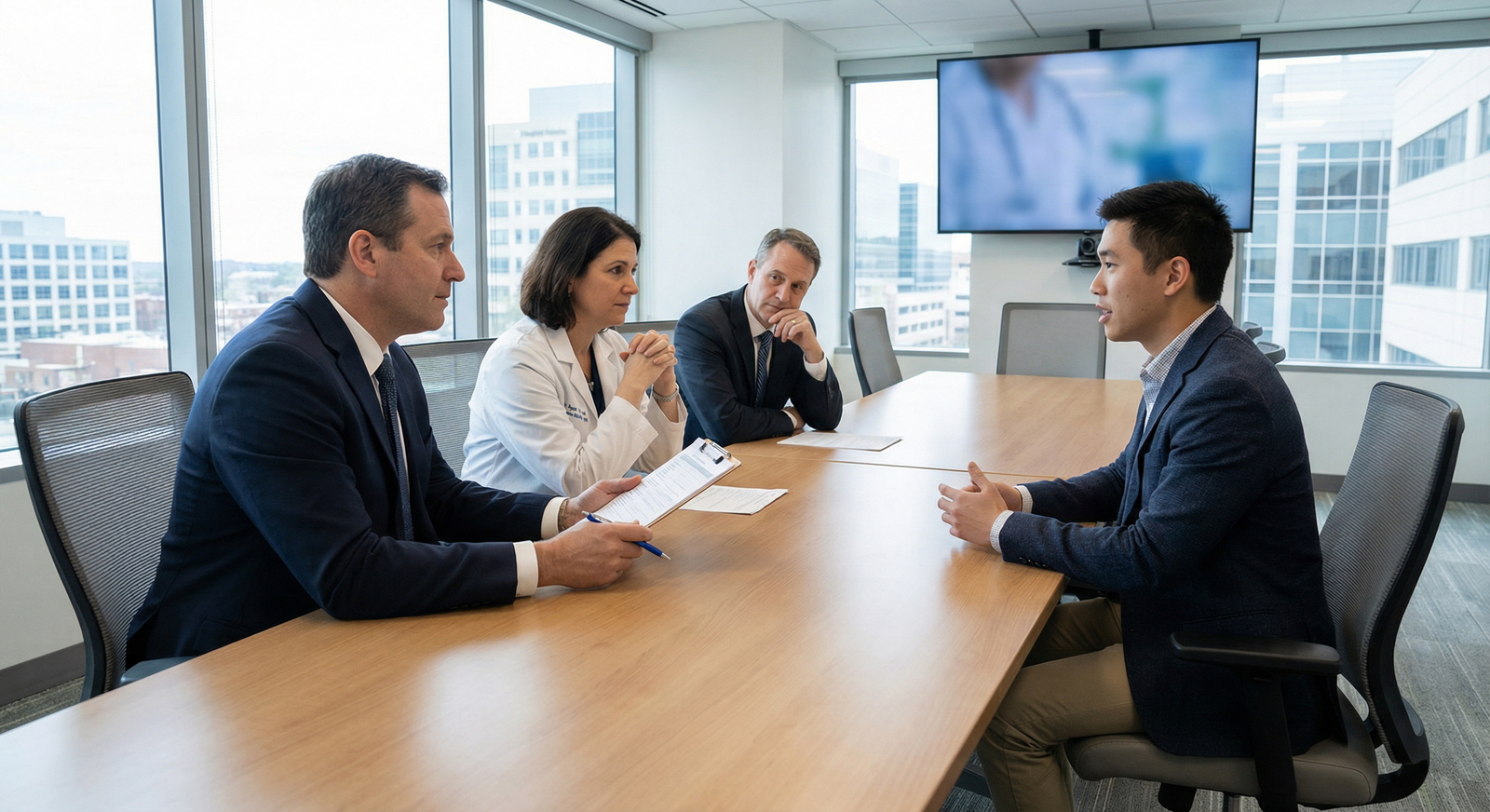
- At least 2–3 mock interviews in different formats:
- Traditional one-on-one
- Panel (2–3 interviewers)
- Virtual (Zoom/Teams)
Provide your mock interviewer:
- Your CV and personal statement
- The specialty you’re applying to
- Sample interview questions residency programs may ask
Request specific feedback on:
- Clarity and organization of answers
- Nonverbal communication (eye contact, posture, facial expression)
- Professionalism and overall impression
- Any “red flags” or confusing statements
Stage 3: Refining and Personalizing
After each mock session:
- Note recurring feedback patterns.
- Adjust your responses—not by memorizing—but by:
- Tightening your introduction
- Choosing clearer examples
- Reducing jargon when unnecessary
- Improving transitions (e.g., “That experience really shaped how I…”)
You should feel:
- Familiar with, not rehearsed in, your story.
- Comfortable adapting answers to unexpected twists in questions.
Step 5: Logistics, Professionalism, and Virtual Interview Readiness
Residency interview preparation is not only intellectual; logistics and presentation can strongly affect how you’re perceived.
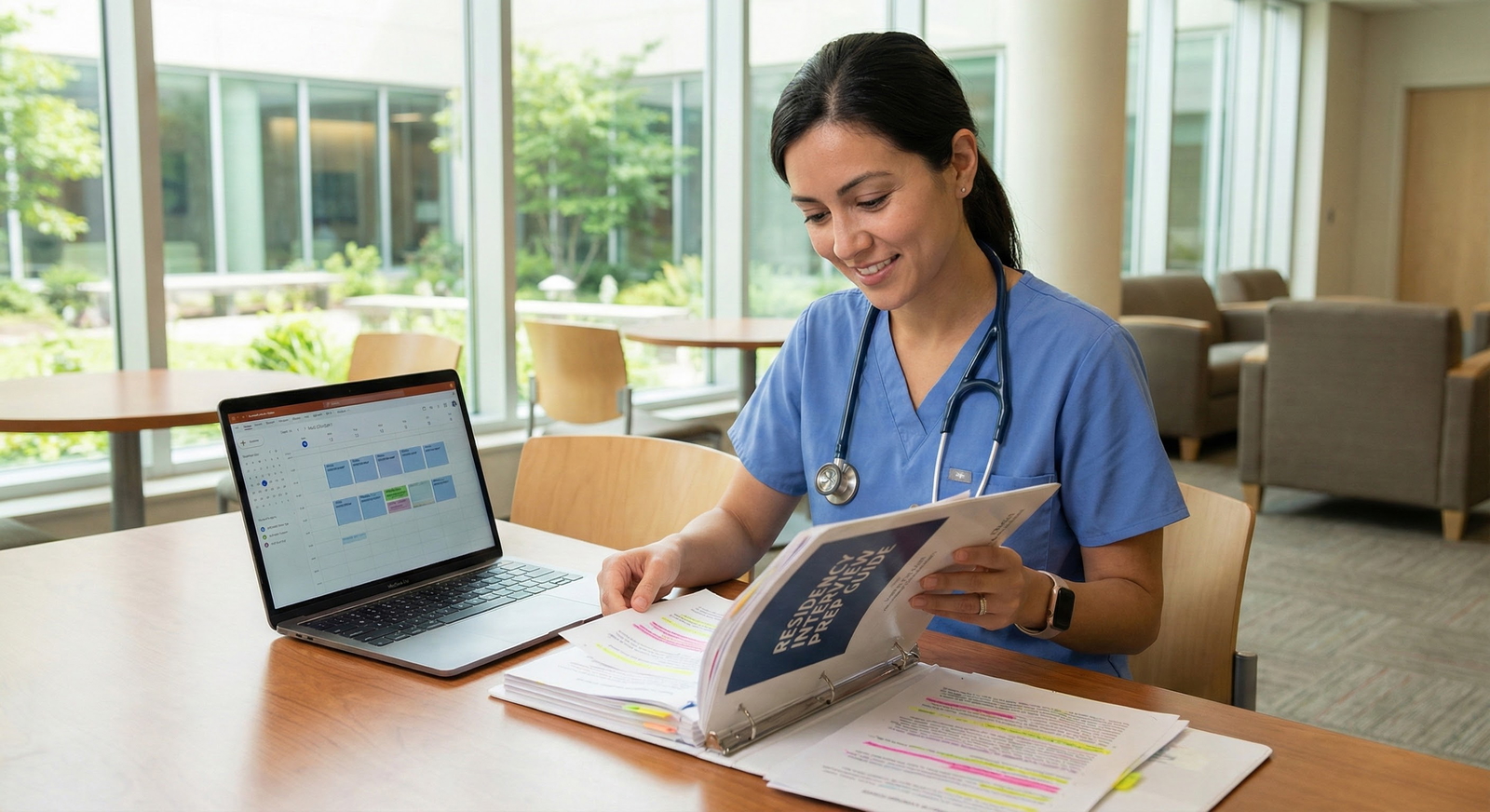
Organizing Your Interview Season
Create a central system with:
- Calendar (digital with reminders) including:
- Interview dates and times
- Time zone (especially for virtual interviews)
- Pre-interview social events
- Spreadsheet or tracker listing:
- Program name and specialty
- Interview date(s)
- Interview format (virtual vs. in-person)
- Interviewer names and roles (once known)
- Key program features and your tailored talking points
- Space for post-interview reflections
This organization supports better recall later when you’re finalizing your rank list.
Professional Communication
- Respond to invitations promptly and courteously.
- Use professional email etiquette:
- Address by title (Dr., Program Coordinator name)
- Clear subject lines (e.g., “Residency Interview Confirmation – [Your Name]”)
- Thank them for the opportunity
- If you must cancel or reschedule:
- Do so as early as possible
- Apologize briefly and professionally
- Avoid overly detailed personal explanations
Professional Appearance and Materials
Prepare in advance:
- Interview attire:
- Conservative, well-fitted suit (dark or neutral colors)
- Clean, polished shoes
- Minimal, professional accessories
- Documents (if in-person):
- Several copies of your CV
- Copies of abstracts or publications (optional)
- Notepad and pen
For both virtual and in-person sessions, practice sitting and speaking in your outfit to ensure comfort and confidence.
Virtual Interview-Specific Preparation
Even MD graduate residency applicants with strong clinical skills can falter due to poor virtual setup. Address the following at least a week before:
- Technology:
- Reliable computer with functioning camera and microphone
- Stable internet connection (if possible, wired)
- Familiarity with Zoom, Teams, or the platform being used
- Environment:
- Quiet space with a neutral, uncluttered background
- Good lighting (natural light or a ring light in front of you)
- Avoid backlighting (e.g., sitting with your back to a bright window)
- Camera framing:
- Camera at eye level (use books or a stand if needed)
- Head and upper torso visible
- Look into the camera when speaking to simulate eye contact
Run at least one full mock interview using the exact technology and environment you’ll use on interview day.
Mental and Physical Preparation
Residency interviews can be draining, especially with multiple interviews in a week.
Before interview day:
- Sleep adequately the night before.
- Have a light, balanced meal.
- Hydrate, but not excessively right before the interview.
- Use brief pre-interview rituals:
- Deep breathing exercises
- Visualization of a successful conversation
- Positive but realistic self-talk:
- “I know my story, and I’m ready to share it.”
- “I don’t need to be perfect; I need to be authentic and thoughtful.”
Step 6: High-Yield Day-Before and Day-Of Checklists
The Day Before Each Interview
Review the program:
- Your one-page summary
- 2–3 personalized reasons you’re interested
- 3–5 specific questions you plan to ask
Review your application:
- CV, ERAS entries, and personal statement
- Research projects: methods, your role, results, and what you learned
- Key clinical experiences you may discuss
Plan logistics:
- In-person:
- Confirm address, parking, transit, and travel time
- Lay out your clothing, documents, and bag
- Virtual:
- Re-test camera, microphone, and background
- Charge all devices and have a backup plan (phone hotspot, alternate device)
- In-person:
Practice your opener:
- “Tell me about yourself” once or twice out loud
- Not to rehearse, but to refresh your flow
Wind down:
- Avoid late-night intensive study
- Do something relaxing to calm your mind
The Morning of the Interview
- Dress fully in interview attire, even for virtual interviews.
- Check your schedule and time zones again.
- Log in 10–15 minutes early for virtual interviews.
- Keep:
- A list of your key stories and bullet points nearby (but do not read directly from them).
- A glass of water.
- A notepad for jotting names, questions, or key points.
During the interview:
- Listen carefully; don’t rush to respond.
- It’s okay to pause briefly before answering.
- Keep answers focused; avoid going off on tangents.
- Smile naturally and maintain open, engaged body language.
- Ask thoughtful questions that reflect genuine interest (avoid questions easily answered on the website).
After the interview:
- Jot down:
- People you met
- What you liked and any concerns
- Overall “gut feeling”
- Within 24–48 hours, send brief, professional thank-you emails when appropriate, focusing on something specific you appreciated from the conversation.
Frequently Asked Questions (FAQ)
1. How early should I start residency interview preparation as an MD graduate?
Begin structured preparation as soon as you start receiving interview invitations, typically in the fall of your application year. However, foundational reflection—clarifying your specialty choice, values, and career goals—can and should begin even earlier, during your final year of medical school. Plan for at least 2–3 weeks of focused residency interview preparation that includes research, mock interviews, and logistics.
2. How many mock interviews do I really need?
Most MD graduate residency applicants benefit from 2–4 formal mock interviews, ideally with:
- At least one faculty member or adviser familiar with the specialty.
- A peer or recent graduate who has successfully matched in that field. More is helpful if you tend to be very anxious or have significant communication concerns, but quality feedback matters more than sheer quantity.
3. What if I’m asked about a low score, failed exam, or gap in my training?
Address it directly, briefly, and constructively:
- State what happened without excessive detail or blame.
- Take responsibility where appropriate.
- Emphasize what you learned and concrete changes you made.
- Highlight subsequent evidence of improvement (better clinical evaluations, stronger later exam scores). Programs understand that setbacks happen; they are evaluating your insight, maturity, and growth.
4. How should I prepare for unexpected or “curveball” questions?
You can’t anticipate every question, but you can prepare core principles:
- Pause and think for a moment rather than rushing.
- Ask for clarification if the question is unclear.
- Use your story bank of experiences and the STAR format to construct structured responses.
- If truly stumped, it’s acceptable to say, “That’s a great question; let me think for a second,” and then offer your best thoughtful answer. Deliberate practice, self-awareness, and a calm, reflective mindset will help you navigate these questions effectively.
By approaching your MD graduate residency interviews with intentional self-assessment, careful program research, structured practice, and disciplined logistics, you’ll present not just your credentials, but a clear, compelling picture of the resident—and future physician—you are becoming.