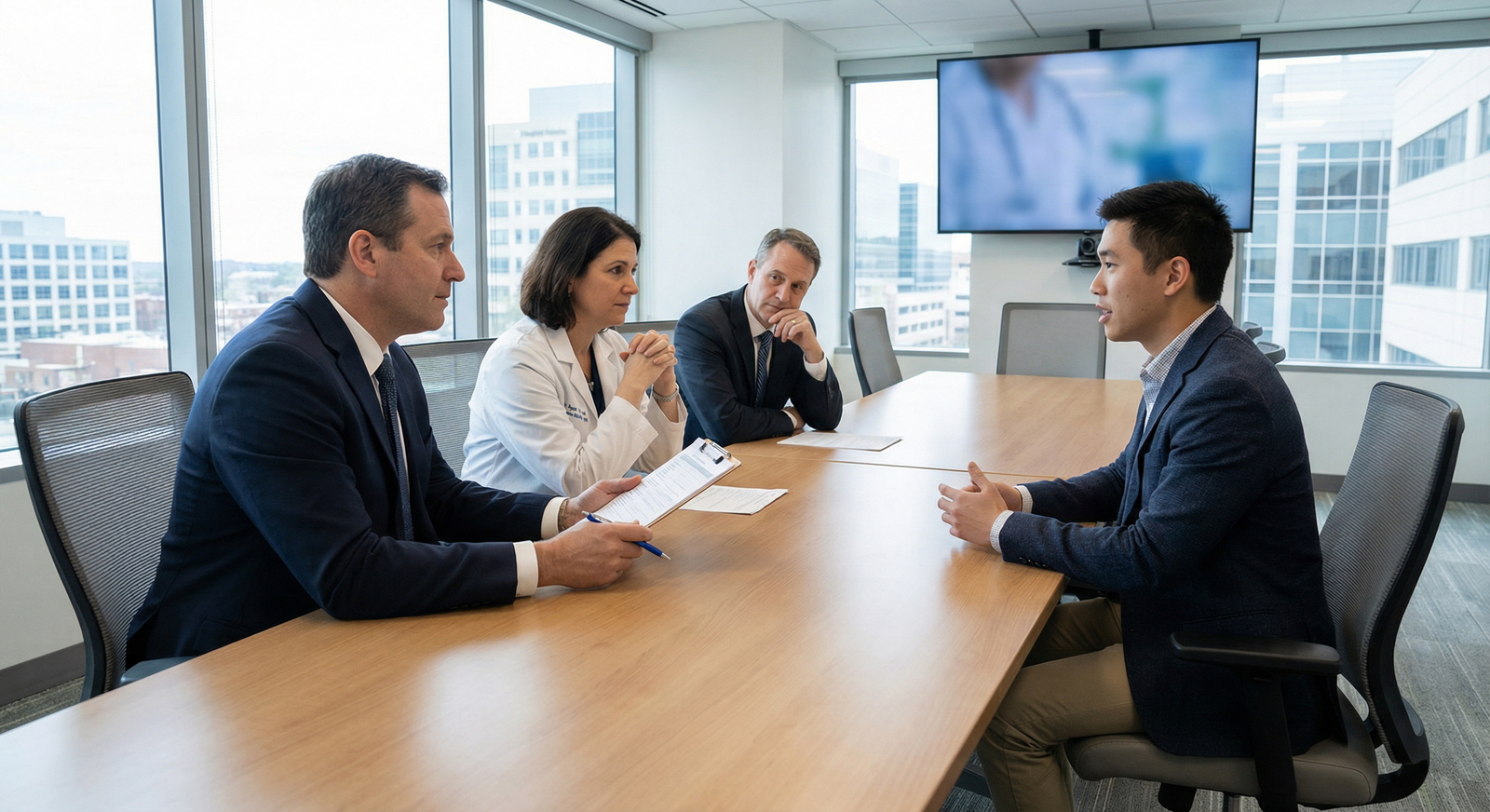
Understanding the Unique Challenges for Non-US Citizen IMGs
As a non-US citizen IMG (international medical graduate), your residency interview is more than a conversation about your CV—it is an assessment of your readiness for US clinical training, communication skills, cultural fit, and sometimes even your visa feasibility. Effective pre-interview preparation can significantly increase your chances of matching.
Before you dive into common interview questions residency programs ask, you need to understand the specific factors program directors consider when evaluating a foreign national medical graduate:
- Perception of training background: Programs may be less familiar with your medical school, grading system, or clinical rotations.
- Communication and cultural fluency: They want to be sure you can communicate clearly, work in teams, and handle US medical culture.
- Visa considerations: Being a non-US citizen IMG means programs need to consider J-1 vs H-1B sponsorship, timelines, and administrative burden.
- Gaps and transitions: Time since graduation, research years, or non-clinical periods may need clear explanation.
- Commitment to the specialty and the US system: Programs want to know you are committed long-term and not using residency as a short-term step.
Understanding these concerns will shape how you prepare and how you answer residency interview questions. Your pre-interview preparation should be systematic and deliberate, not improvised.
Step 1: Strategic Program Research and Prioritization
Thorough research is one of the most powerful—yet underused—pre-interview preparation strategies. It helps you tailor your answers, ask strong questions, and demonstrate genuine interest.
1.1 Build a Program Snapshot for Every Interview
For each invited program, create a one-page “Program Snapshot” that you can review before the interview day. Include:
- Basic details
- Program name and location
- Accreditation status
- Size of residency class
- Community vs academic vs hybrid
- Curriculum highlights
- Rotation structure (e.g., number of ICU months, electives, continuity clinic setup)
- Unique tracks (research, global health, primary care, hospitalist, etc.)
- Patient population and hospital type
- Safety-net vs private vs VA
- Urban vs suburban vs rural
- IMG and visa friendliness
- Percentage of current residents who are IMGs
- Number of non-US citizen IMGs in recent classes
- Visa types historically sponsored (J-1 only vs J-1 + H-1B)
- Faculty and leadership
- Program director and associate program directors
- Any faculty or alumni from your country or region
- Notable research interests
- Recent news or changes
- New program director
- Major hospital merger
- New fellowship or track
Use program websites, FREIDA, Doximity, program social media, and alumni from your school to fill these in.
Example
If you have an interview at “City General Internal Medicine Residency,” your snapshot might include:
- 19 categorical internal medicine residents per year
- Large safety-net hospital; high proportion of underserved patients
- About 60–70% of residents are IMGs, including several non-US citizen IMG trainees
- Sponsors J-1 and has historically sponsored a few H-1B visas
- Strong emphasis on primary care and hospital medicine
- Program director’s interests: medical education and quality improvement
When asked, “Why our program?” you can now give a specific, credible answer instead of a generic one.
1.2 Use Research to Tailor Your Narrative
A key part of residency interview preparation is aligning your story with each program’s identity.
Ask yourself:
- How does this program’s patient population fit your interests or experience?
- Which parts of the curriculum match your strengths (e.g., strong ICU, global health track)?
- What about the location aligns with your professional and personal goals?
- How can your background as a non-US citizen IMG add value here?
Write a 2–3 sentence “fit statement” for each program:
“At [Program Name], I’m particularly drawn to your strong safety-net mission and high proportion of immigrant patients, which aligns well with my experience in [country] and my long-term goal to work with underserved communities in the US.”
This kind of statement stands out, especially as a foreign national medical graduate trying to show genuine interest rather than mass-applying.

Step 2: Building and Rehearsing Your Core Story
Every residency interview, regardless of specialty, revolves around a group of core themes: who you are, why this specialty, why the US, what you bring, and what you want to do in the future. Pre-interview preparation means crafting clear, concise, and authentic narratives for each.
2.1 Develop Your “Elevator Pitch”
You’ll almost certainly be asked some version of “Tell me about yourself.” As a non-US citizen IMG, this is your chance to connect your international journey to your current goals.
Structure a 60–90 second answer:
- Brief background
- Medical school, country, any salient personal detail (briefly)
- Key professional experiences
- Rotations, research, US clinical experience, leadership
- Current focus and goals
- Why you’re applying to this specialty and what you hope to achieve
Example (Internal Medicine, non-US citizen IMG):
“I completed my medical training at [University] in [Country], where I became especially interested in managing complex chronic diseases in resource-limited settings. During my final years, I worked in a government hospital that served a large rural population, which taught me to think carefully about evidence-based care while accounting for patients’ social circumstances.
After graduating, I pursued [research/observerships/USCE] in the US, where I was able to see how multidisciplinary teams manage similar conditions with more integrated systems. These experiences confirmed that internal medicine is the right field for me and that I want to contribute to a system where I can be involved in both direct patient care and quality improvement. I am now looking for a residency program where I can deepen my skills in caring for underserved populations and continue learning in a diverse, team-based environment.”
Practice this until it feels natural, not memorized.
2.2 Prepare Your Specialty Motivation Story
Programs want to know that your specialty choice is thoughtful and grounded in real experience, not based only on prestige or lifestyle.
Reflect on:
- 1–2 patient cases that pushed you toward the specialty
- Specific aspects you enjoy (procedures, diagnostic reasoning, continuity, acute care, etc.)
- Mentors who influenced you
- How your international background shaped your interest
Outline a 2–3 minute answer that clearly connects your experiences to your decision.
2.3 Anticipate and Shape Your “Non-US Citizen IMG Narrative”
As a foreign national medical graduate, you should be prepared for questions that indirectly relate to your IMG and visa status, even if they are not asked explicitly.
Common areas you need to address confidently:
- Why the US healthcare system?
- Emphasize what you value and what you want to learn, not what you dislike about your home system.
- How your international experience helps you in US residency
- Focus on adaptability, resilience, exposure to diverse pathologies, resourcefulness.
- Gaps or non-traditional paths
- Research years, exam delays, or other changes are acceptable if explained honestly and constructively.
You do not need to overshare immigration details, but you should be ready to discuss them briefly when appropriate (especially during more detailed conversations with program leadership or coordinators).
Step 3: Mastering Common Interview Questions and Behavioral Scenarios
Practicing answers to commonly asked residency interview questions is one of the highest-yield ways to prepare. You should especially be ready for behavioral questions—those that begin with “Tell me about a time when…”
3.1 High-Yield Traditional Questions
Below are some core questions you should practice for any residency interview, tailored to the non-US citizen IMG context:
- “Tell me about yourself.”
- “Why this specialty?”
- “Why did you choose to pursue residency in the US rather than your home country?”
- “Why our program?”
- “What are your strengths and weaknesses?”
- “What are your long-term career goals?”
- “Tell me about a challenging patient you cared for.”
- “Explain any gap in your CV.”
- “What will be your biggest challenge in starting residency in the US?”
- “How do you handle stress or burnout?”
Write bullet-point frameworks for each answer rather than full scripts. This keeps you flexible and natural.
Example: “What will be your biggest challenge starting residency in the US?”
Your answer should:
- Acknowledge a real challenge (e.g., system navigation, documentation, cultural nuances)
- Demonstrate insight and humility
- Show concrete strategies you’re already using to improve
Sample structure:
- Biggest challenge: adapting to the electronic medical record and US documentation standards
- Why: in my home country, documentation was less detailed; EMRs were not widely used
- Mitigation: during observerships, I shadowed residents as they documented, attended EMR trainings, and used online modules; I’m comfortable learning new systems and asking for feedback
- Reassurance: I have a strong foundation in clinical reasoning and am confident I can quickly adapt to the documentation style required
3.2 Behavioral Questions: Use the STAR Method
Behavioral questions assess how you think, communicate, and function on a team. Common examples:
- “Tell me about a time you had a conflict with a team member.”
- “Tell me about a time you made a mistake.”
- “Describe a situation where you had to work with limited resources.”
- “Tell me about a time you had to quickly adapt to a major change.”
Use the STAR method:
- Situation – Brief context
- Task – What was your role?
- Action – What did you do?
- Result – What happened? What did you learn?
As a non-US citizen IMG, you can draw on experiences from your home country, research, USCE, or even non-medical jobs—just connect them clearly to residency-relevant skills: communication, professionalism, adaptability, teamwork.
Example (Limited resources scenario):
- S: Worked in a district hospital with frequent medication shortages
- T: Responsible for managing a patient with uncontrolled diabetes
- A: Collaborated with pharmacy to identify available alternatives, educated the patient on diet and lifestyle given limited medication options, arranged follow-up using community health workers
- R: Patient’s HbA1c improved on follow-up, and the experience taught you how to prioritize core principles of care despite limitations—skills you will bring to underserved US settings as well.
3.3 Prepare Thoughtful Questions to Ask Programs
Interviewers will typically ask, “Do you have any questions for me?” Having strong questions shows maturity and genuine interest.
Avoid:
- Questions easily answered on the website
- Questions focused only on salary or vacation
- Highly detailed visa questions in the first 1:1 meeting (these are usually better directed to the coordinator or PD if appropriate)
Better questions for a non-US citizen IMG might include:
- “How do residents receive feedback and mentorship, especially in their first year?”
- “How does the program support residents transitioning from international medical schools?”
- “Can you describe the patient population and how residents are involved in caring for underserved or immigrant communities?”
- “What are recent graduates doing now, and how does the program support different career paths (hospitalist, fellowship, primary care)?”
Write 5–7 questions in advance and choose 2–3 that best fit each interviewer.
Step 4: Communication Skills, Accent, and Cultural Fluency
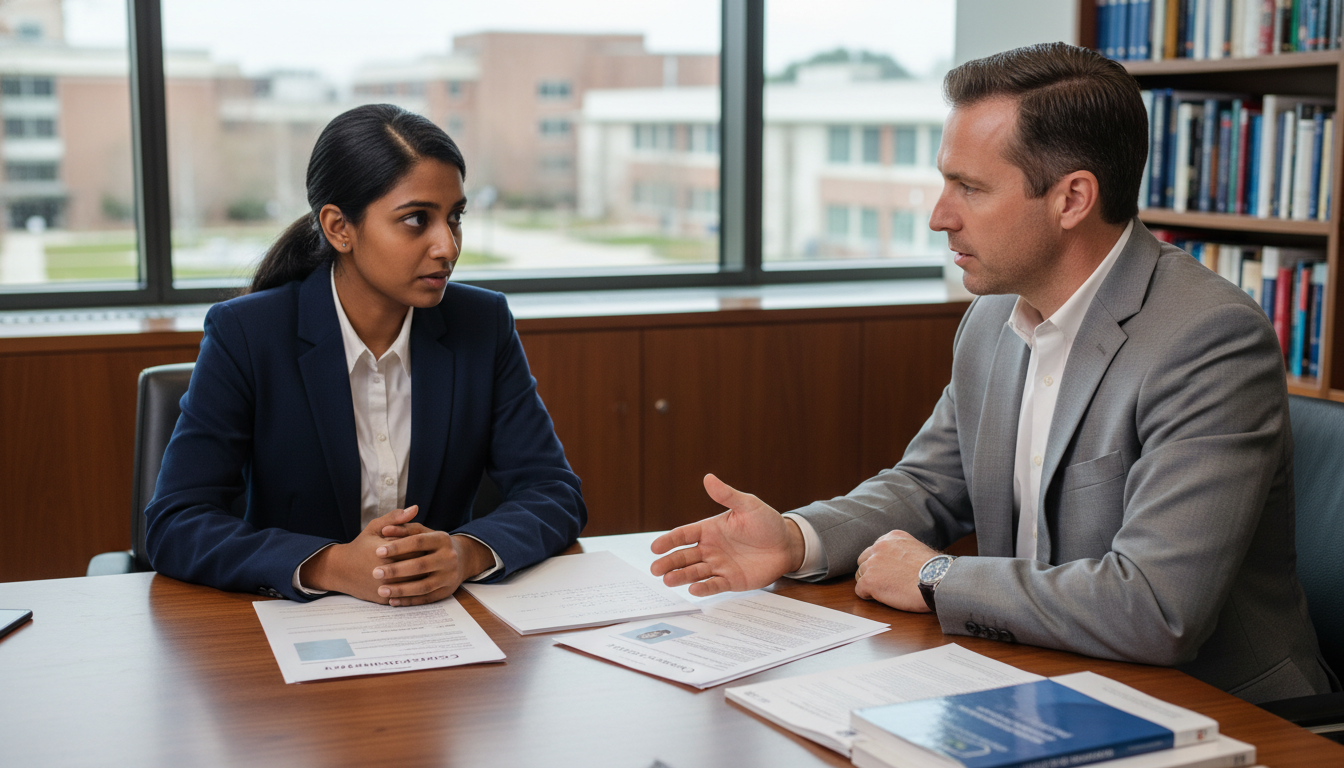
Residency interview preparation for foreign national medical graduates must include communication practice. Your clinical knowledge is important, but your ability to communicate clearly and work within US cultural norms is equally critical.
4.1 Enhance Spoken English and Clarity
You do not need a “perfect” American accent. You do need:
- Clear, understandable speech
- Appropriate pace (many IMGs speak too fast when nervous)
- Confident but polite tone
Actionable steps:
- Record yourself answering 5–6 common questions; watch and self-critique.
- Practice with native speakers when possible (friends, colleagues, language exchange).
- Work on fillers (“um,” “like,” “you know”) and long pauses; brief pauses to think are fine.
- Use shorter sentences if you tend to speak in very long, complex phrases.
If you worry about being misunderstood, pre-empt it professionally:
“English is not my first language, so please let me know if I should repeat or clarify anything—I am happy to do so.”
This shows awareness and professionalism, not weakness.
4.2 Understand US Professional Etiquette
Small cultural details can make you appear more polished:
- Addressing people: Use “Dr. [Last Name]” unless invited to use first names.
- Handshake or greeting: A simple “Hello Dr. [Name], it’s nice to meet you” with eye contact is sufficient (in virtual interviews, a warm verbal greeting plus a nod works).
- Formality: It is safer to start more formal and then adjust if the interviewer is very relaxed.
- Honesty and boundaries: It is acceptable to say “I don’t know” or “I’m not sure” rather than inventing an answer.
4.3 Practice for Virtual Interview Formats
Many programs still use virtual or hybrid formats. For a non-US citizen IMG abroad, this can be a major advantage—but only if you prepare.
Checklist:
- Time zone: Triple-check interview times in your local time; use calendar reminders.
- Technology: Test your camera, microphone, internet, and Zoom/Teams platform a few days before.
- Backup plan: Have a hotspot or alternative device ready in case of connection issues.
- Background: Clean, professional, with good lighting (preferably natural light facing you).
- Eye contact: Look at the camera when speaking, not the screen, at least part of the time.
Have 1–2 mock virtual interviews with friends, mentors, or advisors and ask for feedback on nonverbal communication, clarity, and energy.
Step 5: Logistics, Documents, and Mental Preparation
Strong interview performance depends on invisible preparation: organization, logistics, and mindset.
5.1 Organize Documents and Key Information
Before each interview, prepare:
- Updated CV: Even if programs already have it, keep one easily accessible.
- Personal statement: Reread it; interviewers may quote from it.
- ERAS/other application materials: Be ready to discuss any part of your file.
- List of interviewers: If provided, quickly review their profiles; note any shared interests.
- Program Snapshot: Review your one-page summary on interview morning.
If you’re asked about something you don’t remember in detail, it’s better to say:
“That project was some time ago, so I don’t remember all the numbers exactly, but the key findings were…”
than to guess in a way that later appears inconsistent.
5.2 Plan Your Day-of Logistics
For in-person interviews:
- Plan the route, transportation, and timing the day before.
- Bring:
- Notebook and pen
- Printed schedule (if available)
- Light snack, water
- Professional bag—not overstuffed
- Dress code: business formal (suit jacket, conservative colors, comfortable but polished shoes).
For virtual interviews:
- Dress fully (not just the top half).
- Have water and tissues nearby.
- Silence phone notifications and computer alerts.
- Log in 10–15 minutes early.
5.3 Mental Preparation and Stress Management
As a non-US citizen IMG, you may feel extra pressure: financial investment, visa uncertainty, family expectations. This can affect performance if not managed.
Strategies:
- Create a pre-interview routine: 10 minutes of deep breathing or light stretching; reviewing 3–4 key strengths; glancing at your Program Snapshot and elevator pitch.
- Reframe anxiety as excitement: Physiologically, they are similar. Tell yourself, “My body is preparing to perform.”
- Accept imperfection: Almost no interview is flawless. Your goal is to be authentic, reflective, and professional, not robotic.
If you have multiple interviews in a row, schedule short breaks to decompress and reset between them.
Frequently Asked Questions (FAQ)
1. As a non-US citizen IMG, should I bring up my visa status during the interview?
You usually don’t need to proactively discuss visas in every conversation, especially with individual faculty. Programs that interview non-US citizen IMGs are generally aware of typical visa pathways.
- It’s perfectly acceptable to confirm visa options with the program coordinator or program director, preferably by email either before or after the interview day.
- If directly asked during an interview, answer briefly and factually, e.g., “I will need J-1 visa sponsorship,” or “I am eligible for H-1B based on my USMLE completion.”
Avoid turning the interview into a detailed immigration discussion; keep the focus on your fit, skills, and goals.
2. How can I explain gaps or low scores without hurting my chances?
Honesty and reflection are crucial. For gaps or lower scores:
- Give a concise explanation: one or two sentences about the cause (e.g., illness, family responsibilities, needing more time to adjust to the exam style).
- Emphasize what you learned and changed: study strategies, time management, using resources, or seeking mentorship.
- Show evidence of improvement: later scores, US clinical evaluations, research productivity.
Programs understand that international transitions are complex; they are more concerned with whether you are transparent, resilient, and able to grow.
3. What if my clinical experiences are mostly from my home country? Will that hurt me?
Many non-US citizen IMGs match with primarily home-country clinical experience. You should:
- Highlight transferable skills: managing limited resources, complex pathologies, leadership roles, high patient volumes.
- Connect these experiences to what you will do in US residency: teamwork, communication, clinical reasoning.
- If you have some US clinical experience (observerships, externships), use those to demonstrate awareness of the US system, but don’t undervalue your home experience.
Your international perspective can be a strength if you present it as added value rather than a deficit.
4. How many mock interviews should I do, and with whom?
Aim for at least 3–5 mock interviews before your first real one:
- 1–2 with people familiar with US residency (faculty, fellows, or residents)
- 1–2 with peers or mentors focusing on behavioral questions
- At least 1 in the exact format you expect (virtual, same platform, similar time of day)
After each mock, identify 2–3 specific areas to improve (e.g., shorter answers, clearer structure, stronger eye contact) rather than trying to fix everything at once.
Effective residency interview preparation for non-US citizen IMGs is not about memorizing perfect answers. It is about understanding your unique journey, anticipating program concerns, and presenting yourself as a thoughtful, adaptable, and committed future colleague. With deliberate pre-interview preparation—program research, core story development, communication practice, and logistical planning—you can turn interviews into genuine professional conversations that showcase your strengths and help you move closer to your goal of training in the US.